Method
Prepare the vegetables and aromatics
Peel 600 g of sweet potatoes and cut them into 2.5 cm (1 in) cubes. Chop 200 g of yellow onion. Mince 12 g of garlic cloves, then peel and finely grate 20 g of fresh ginger. Drain and rinse 240 g of no-salt-added chickpeas. Wash 115 g of fresh spinach and shake off excess water.
Soften the aromatics and bloom the spices
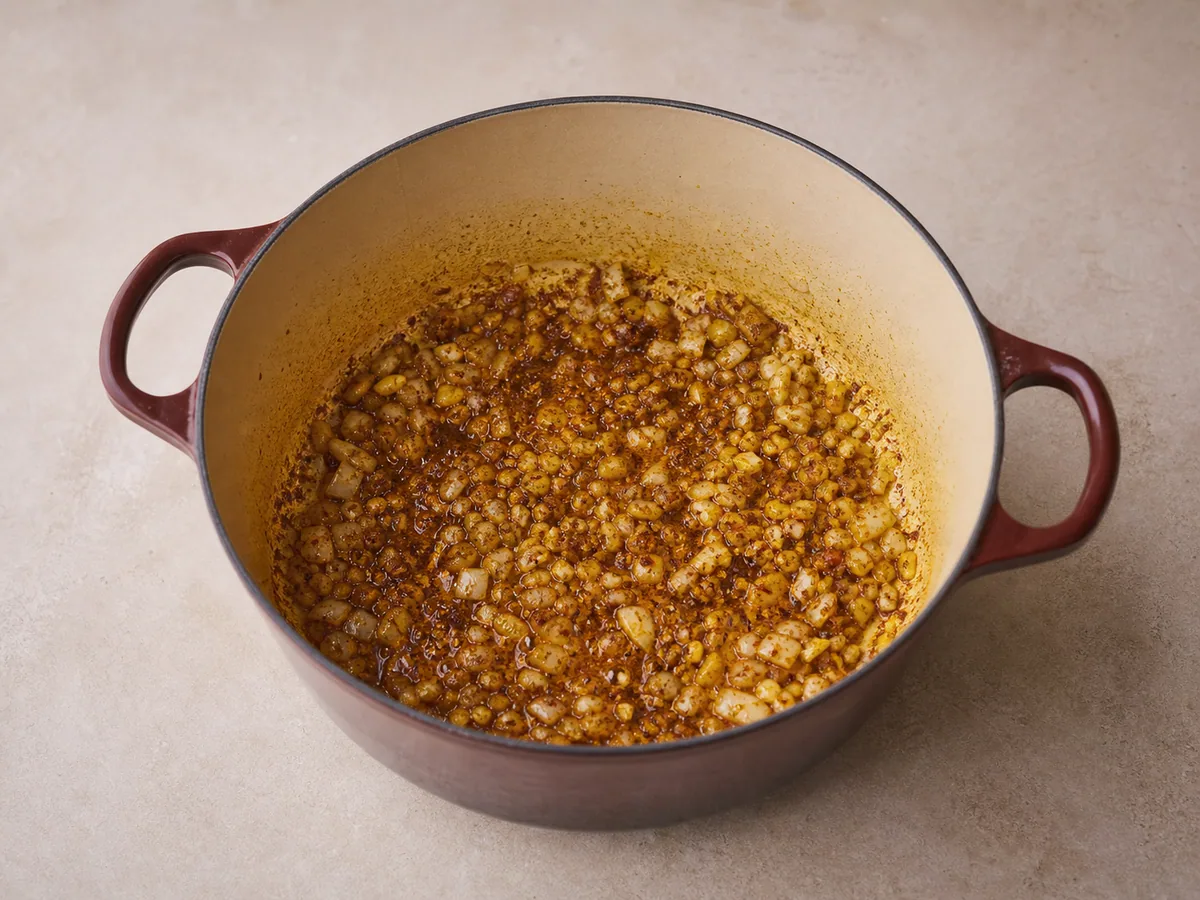
Heat 15 ml of peanut oil in a large, heavy pot over medium heat. Add 200 g of yellow onion and cook for 6 to 8 minutes, stirring often, until softened and lightly golden at the edges; start checking at 6 minutes. Add 12 g of garlic cloves and 20 g of fresh ginger and cook for 1 minute. Stir in 4 g of ground cumin, 3 g of ground coriander, 2 g of ground paprika, and 1/2 g of ground cayenne, then cook for 30 seconds, just until fragrant.
06:00Build the peanut-tomato sauce
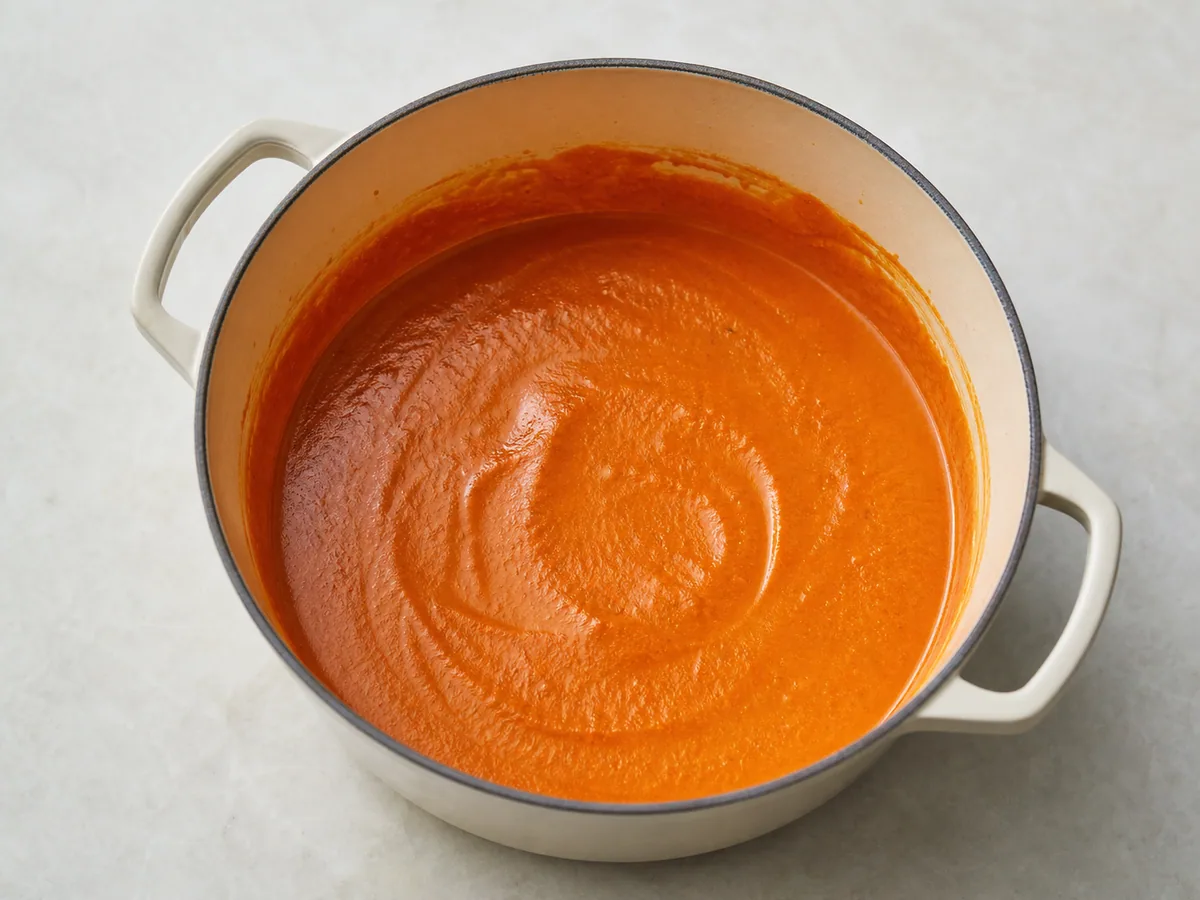
Add 45 g of tomato paste and cook for 2 minutes, stirring constantly, until it darkens slightly and coats the bottom of the pot. Stir in 400 g of no-salt-added diced tomatoes and scrape up the flavorful film from the pot. Pour in 720 ml of low-sodium vegetable broth, then whisk in 120 g of unsweetened smooth peanut butter until the sauce is smooth with no pale streaks. Increase the heat and bring the sauce to a gentle simmer.
02:00Simmer the sweet potatoes and chickpeas
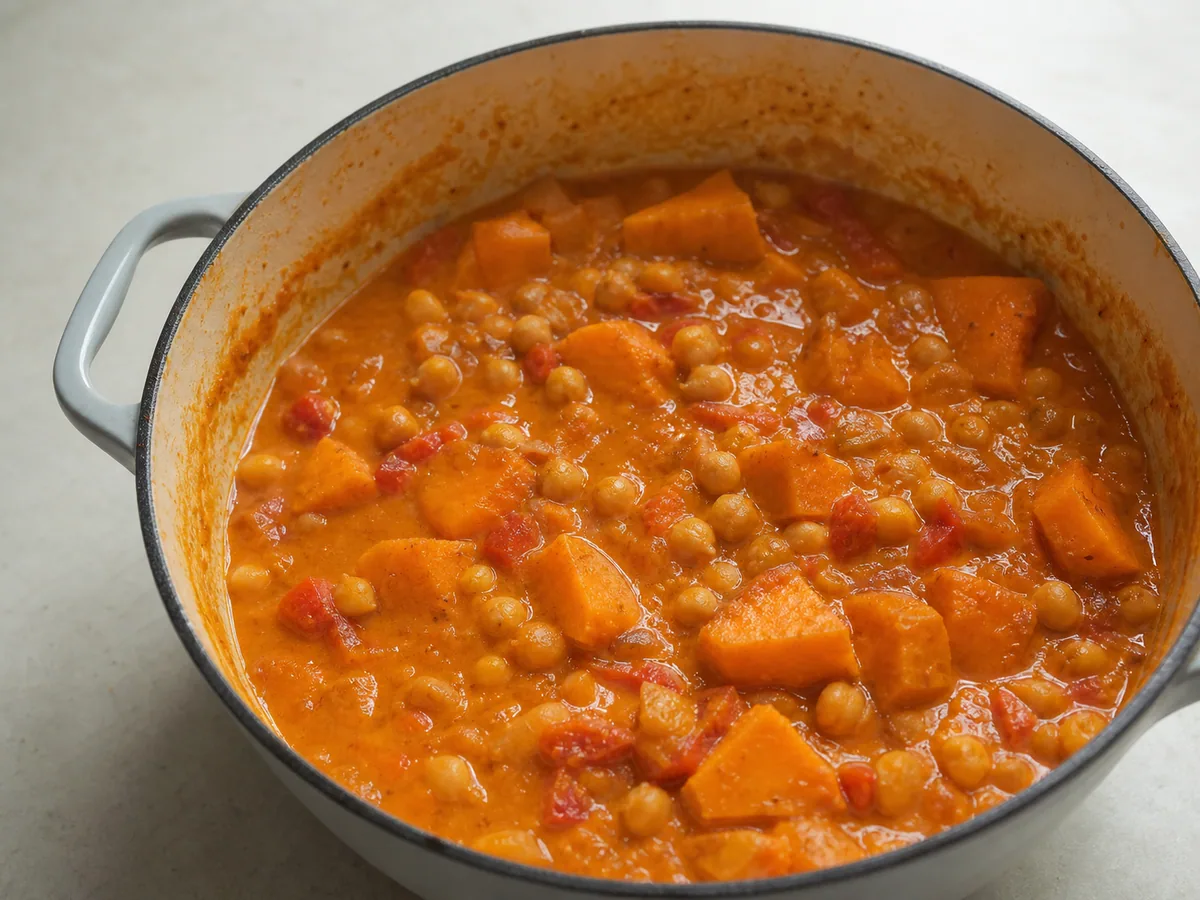
Add 600 g of sweet potatoes and 240 g of no-salt-added chickpeas. Adjust the heat to maintain a gentle simmer, partially cover the pot, and cook for 18 to 22 minutes, stirring along the bottom every few minutes, until a knife slides easily into the largest sweet potato pieces. Start checking at 18 minutes, and lower the heat if the sauce spits or begins to catch.
18:00Wilt the spinach and finish the stew
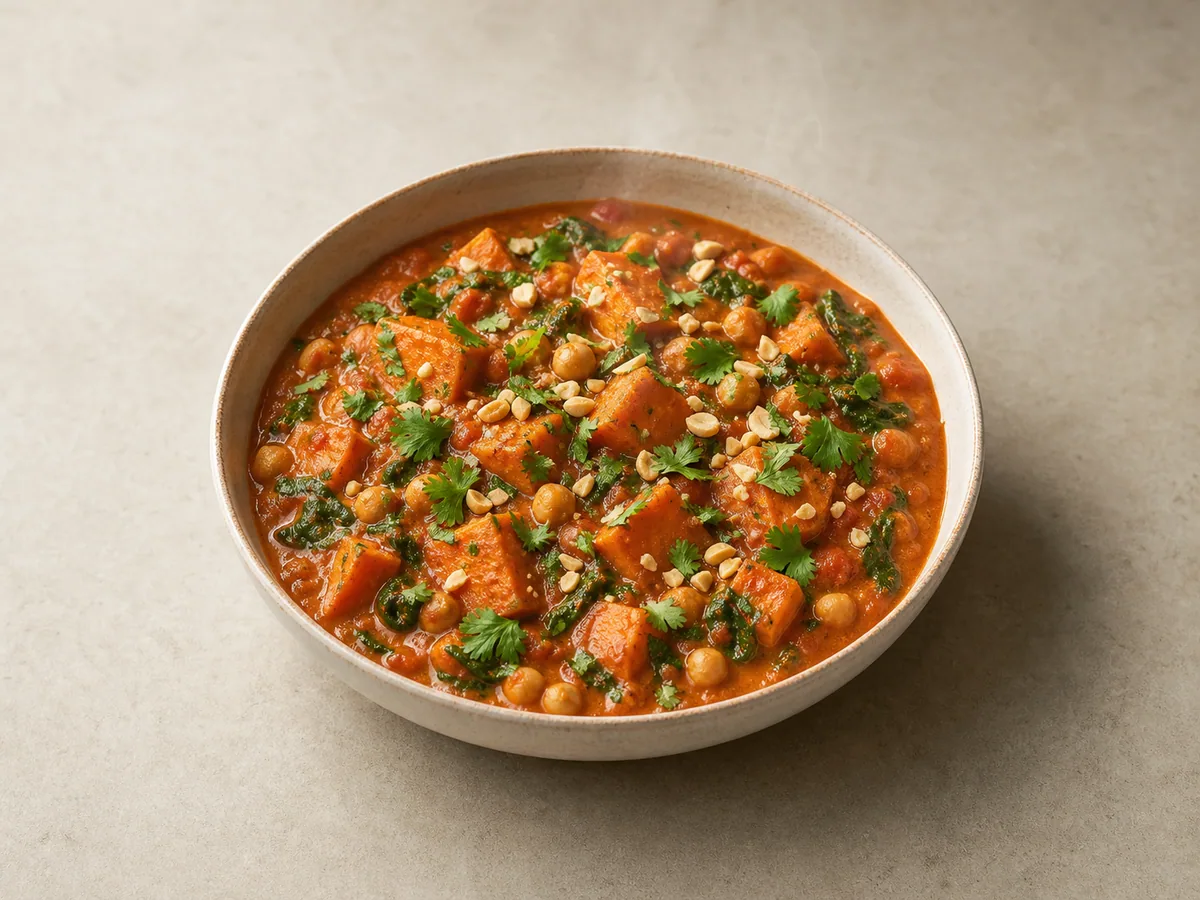
Stir in 115 g of fresh spinach in handfuls and cook for 2 to 3 minutes, until wilted and bright green; start checking at 2 minutes. Remove the pot from the heat and stir in 30 ml of fresh lime juice, 3 g of kosher salt, and 1 g of black pepper. Taste and adjust the seasoning, loosening the stew with a splash of water if it is thicker than you like. Spoon into bowls, finish with fresh cilantro (optional) and roasted peanuts (optional), and serve with cooked rice (optional).
02:00


Smart Substitutions
- No chickpeas? Use drained black-eyed peas or cannellini beans in the same amount.
- No spinach? Use thinly sliced collard greens and add them during the final 8 to 10 minutes of simmering.
- No peanut oil? Use sunflower, canola, or another neutral cooking oil.
- Need a different spread? Use unsweetened sunflower seed butter; the sauce will taste less peanut-forward but will thicken similarly.
Tips and Variations
- Stir natural peanut butter thoroughly before measuring so the sauce receives both the peanut solids and oil.
- Cut the sweet potatoes evenly so the pieces become tender at the same time without the smaller ones collapsing.
- Keep the simmer gentle and scrape the bottom of the pot regularly because a peanut-rich sauce can catch as it thickens.
What Went Wrong?
- Stew is too thick Stir in a splash of water over low heat until the sauce flows easily from the spoon.
- Stew is too thin Simmer uncovered for a few minutes, stirring often, or mash several sweet potato pieces into the sauce.
- Peanut butter will not blend in Whisk a ladleful of hot broth with the peanut butter in a bowl, then stir that smooth mixture back into the pot.
- Sweet potatoes are breaking apart Stop stirring vigorously and fold the stew gently; the softened pieces will still help thicken the sauce.
Nutrition Estimate
- Fiber: 16 g per serving
- Sodium: 600 mg per serving
Nutrition disclaimer:This recipe is provided for general cooking information only. Nutrition values are estimates and may vary by ingredients, brands, preparation methods, and serving sizes. Check ingredient labels and follow appropriate food-safety practices. This content is not medical, dietary, allergy, or professional food-safety advice.
FAQ
Found an error or have a suggestion?
Help us improve this recipe. Send us your feedback and include the recipe name so we can take a look.