Method
Mix and knead the dough
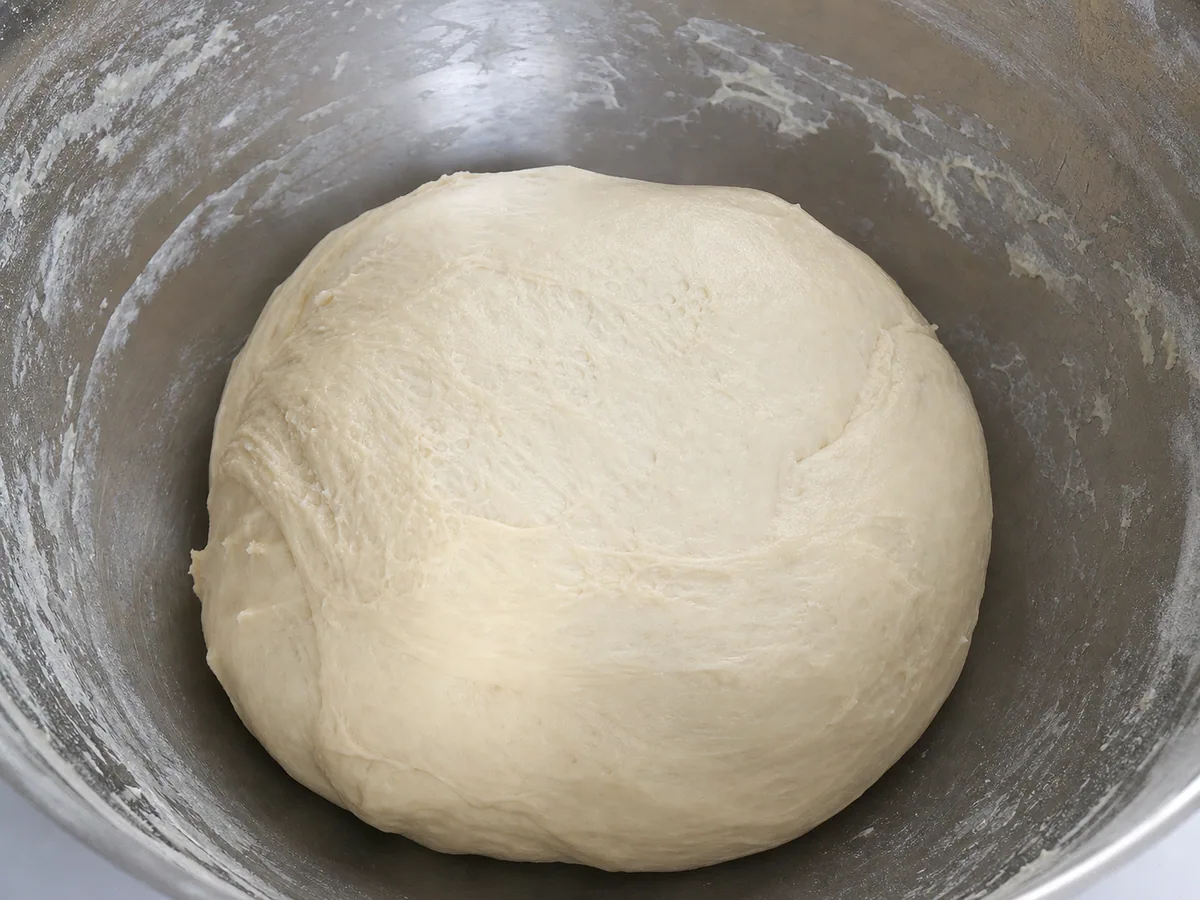
Whisk 300 g of bread flour, 7 g of instant yeast, 5 g of granulated sugar, and 4 g of fine salt in a large bowl. Pour in 180 ml of warm water and 15 ml of olive oil, then stir until no dry flour remains. Turn the rough dough onto a lightly floured surface and knead for 7 to 8 minutes, until smooth, elastic, and slightly tacky rather than sticky. Check the texture at 7 minutes and knead another minute if the surface still tears easily.
07:00Let the dough rise and heat the oven
Return the dough to a clean bowl, cover, and let it rise in a warm place for 50 to 60 minutes, until close to doubled. Start checking at 50 minutes. During the final 30 minutes, position racks in the upper and lower thirds and heat the oven to 245°C (475°F). Line enough baking sheets to hold one pide per serving without crowding; for larger scaled batches, bake in additional rounds.
50:00Cook the lamb and vegetable filling
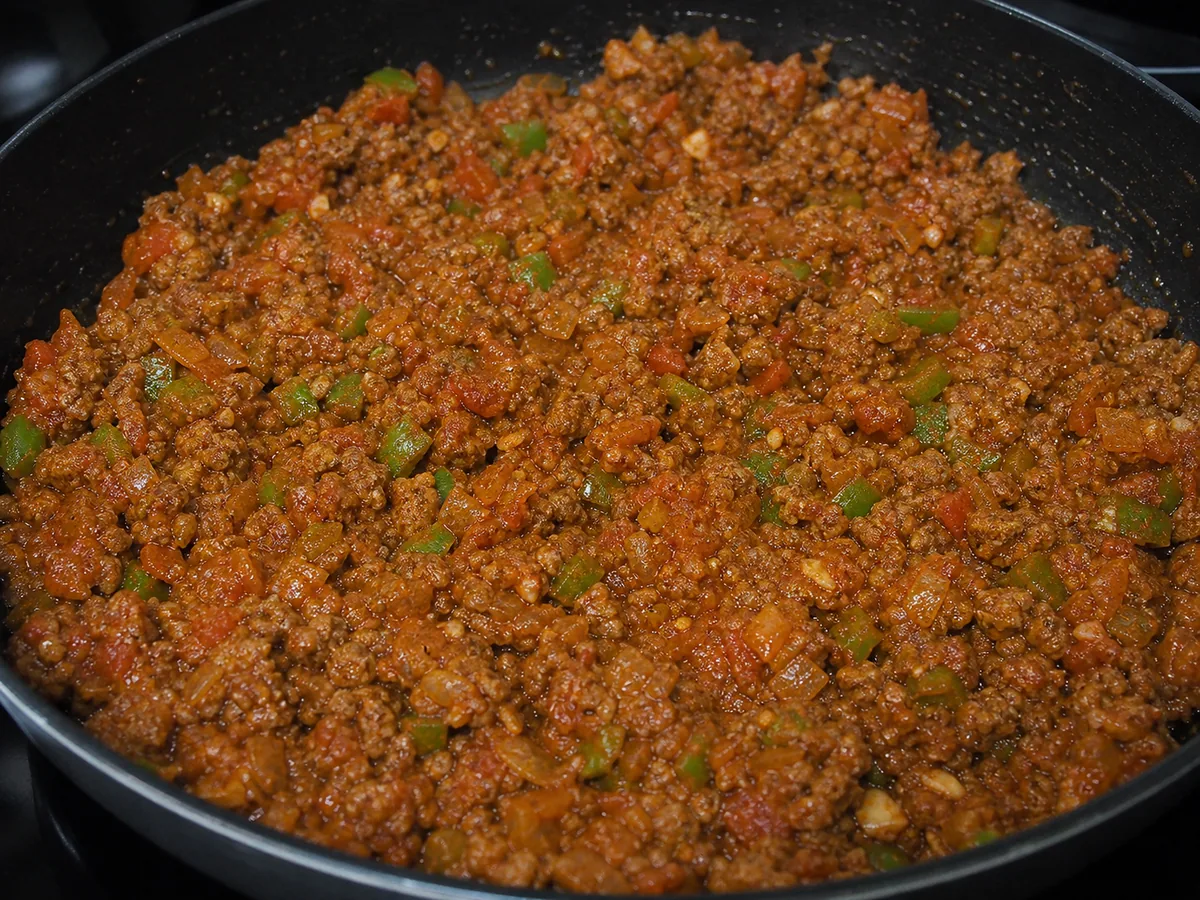
Dice 120 g of yellow onion, 100 g of green bell pepper, and 180 g of ripe tomatoes, then mince 6 g of garlic cloves. Warm 15 ml of olive oil for the filling in a wide skillet over medium-high heat. Add 120 g of yellow onion and 100 g of green bell pepper and cook for 3 to 4 minutes, stirring, until beginning to soften. Add 6 g of garlic cloves and stir for 30 seconds. Add 400 g of ground lamb, break it into small crumbles, and cook until no pink remains. Stir in 180 g of ripe tomatoes, 30 g of tomato paste, 3 g of fine salt for the filling, 2 g of ground cumin, 2 g of sweet paprika, 1 g of Aleppo pepper, and 1 g of black pepper. Cook for 4 to 5 minutes, stirring often, until thick enough to spread without pooling liquid. Start checking at 4 minutes. Use a food thermometer to confirm the lamb reaches 71°C/160°F in the thickest crumbles. Wash hands and sanitize any board or utensil that touched raw meat before continuing.
04:00Cool the filling and portion the dough
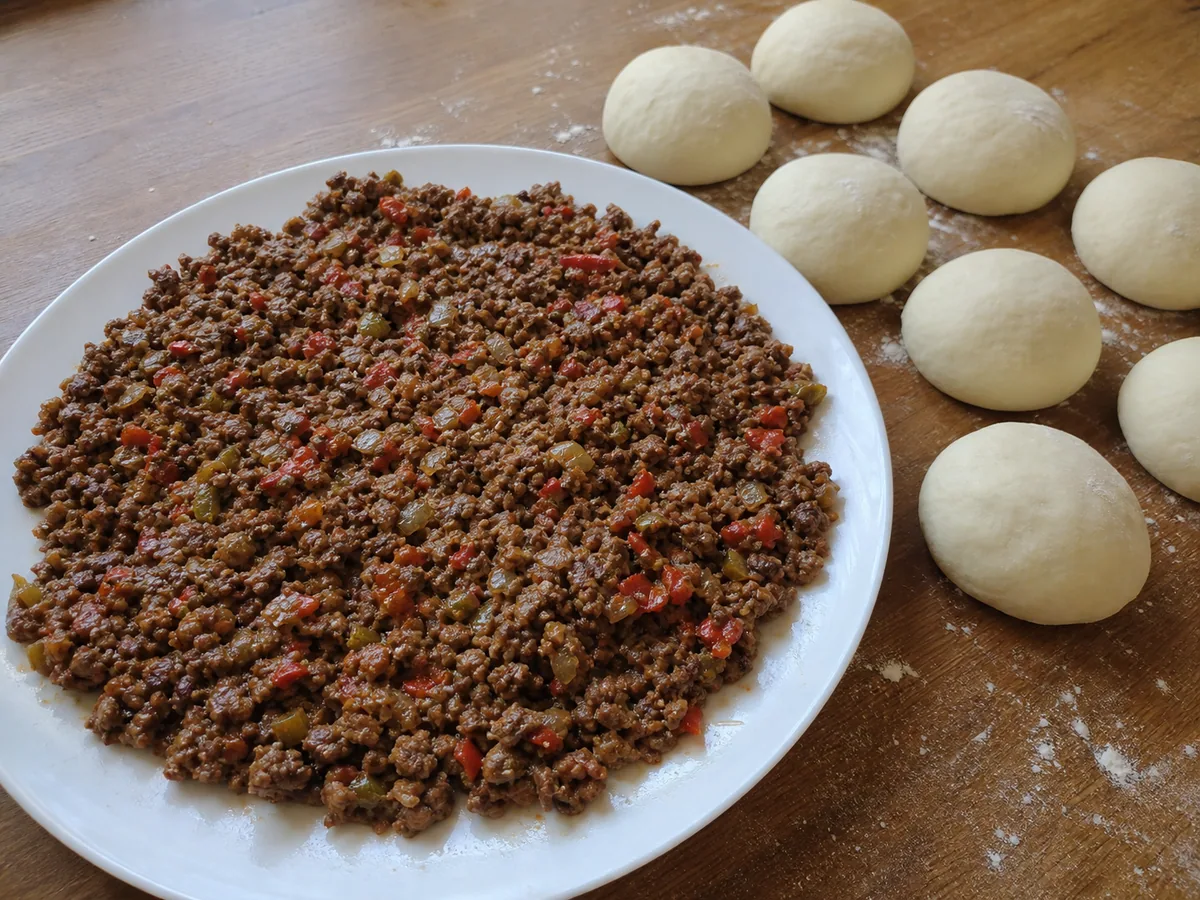
Spread the cooked filling on a wide plate so steam can escape. Gently press the risen dough to release excess gas, then divide it into one equal piece per serving. Shape each piece into a ball, cover, and rest for 10 minutes so the dough rolls without springing back. The filling should be warm or cooler before it goes onto the dough.
10:00Shape and fill the pide
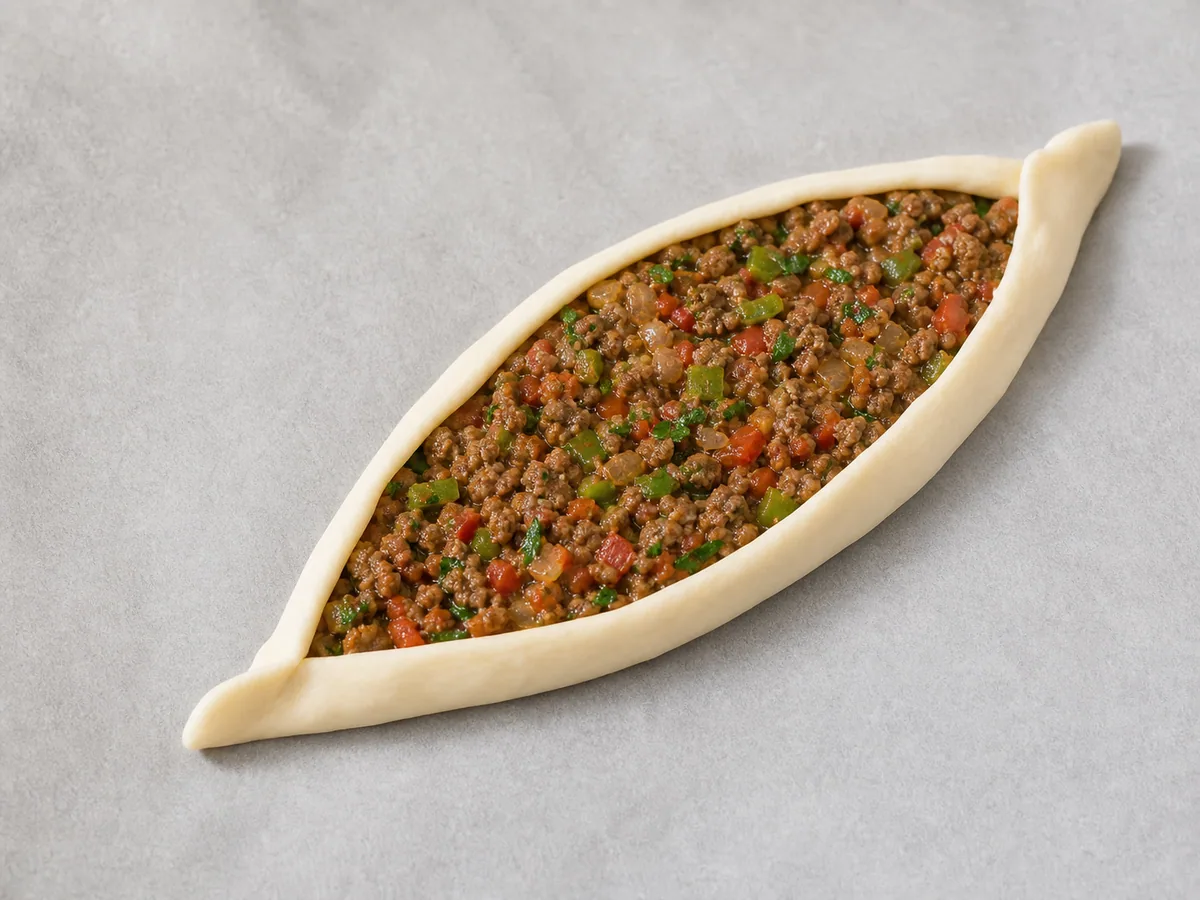
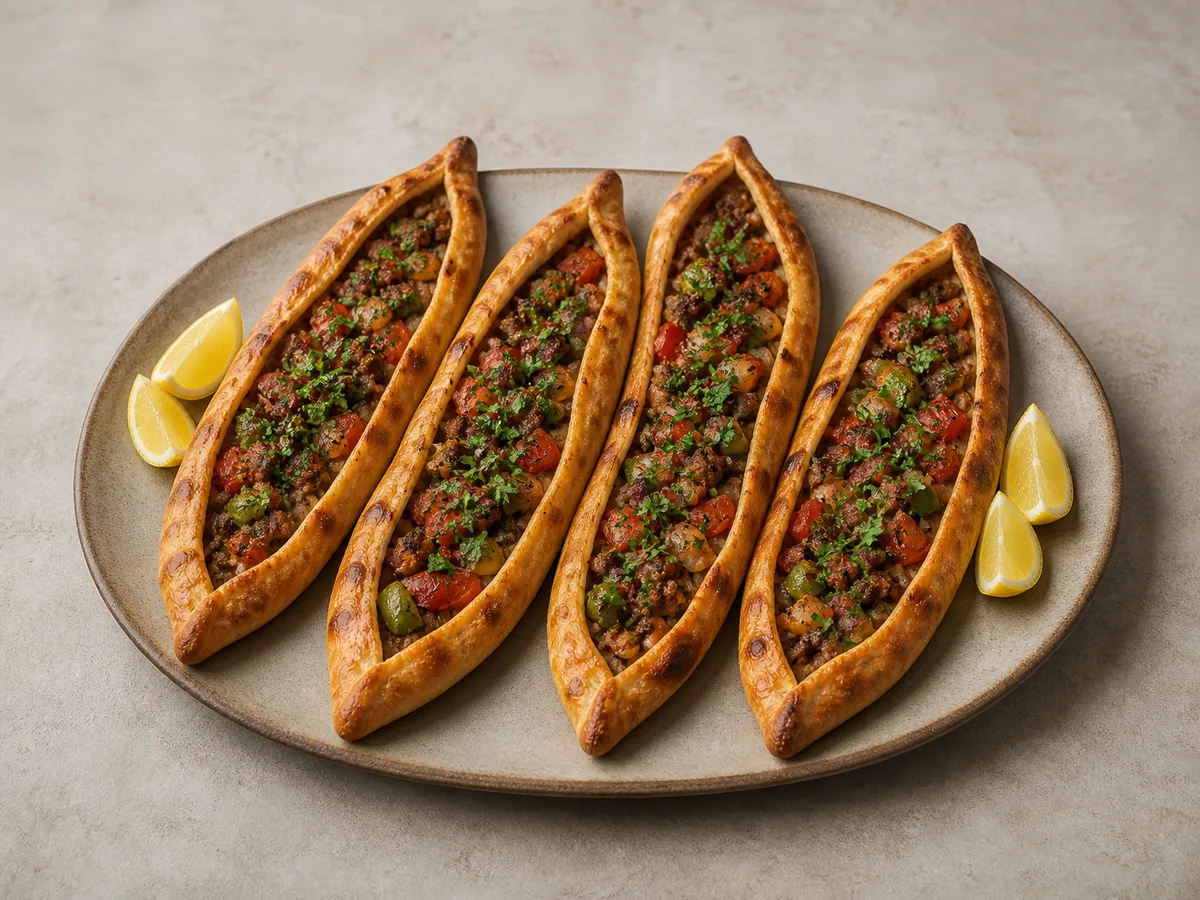
Roll each dough ball into a thin oval about 25 x 12 cm (10 x 5 in), keeping the center slightly thinner than the rim. Transfer the ovals to the prepared sheets. Divide the filling evenly down the centers, leaving a 2.5 cm (1 in) clear border. Fold the long edges inward to make a narrow boat, then pinch and twist both ends firmly so they stay pointed during baking.
Bake until crisp and bronzed
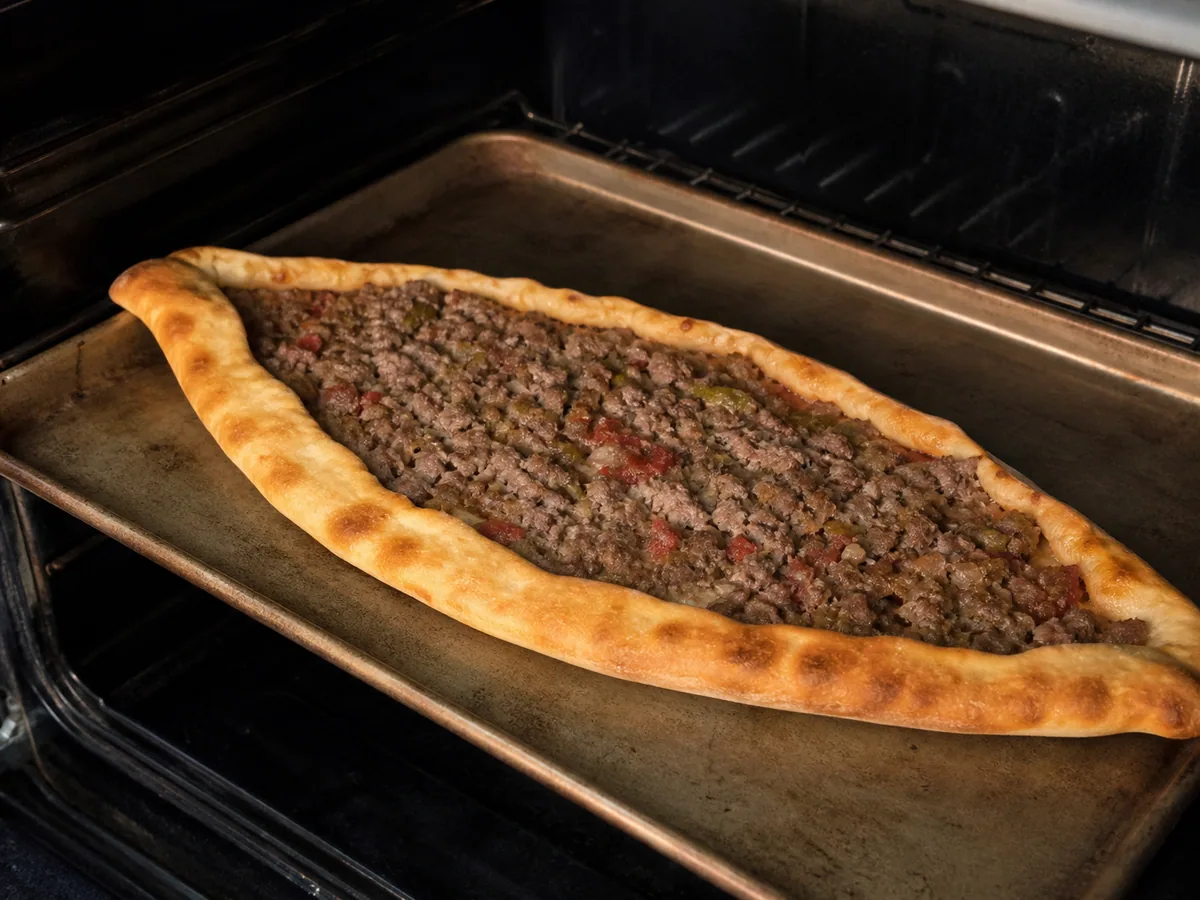
Bake for 12 to 15 minutes, swapping the sheets between racks and rotating them halfway through, until the folded edges are deeply golden, the undersides feel crisp, and the filling is sizzling. Start checking at 12 minutes; thicker pides may need the full time.
12:00Finish with parsley and lemon
Brush the hot crusts with 10 ml of olive oil for finishing. Chop 15 g of fresh flat-leaf parsley and scatter it over the filling, then cut each pide crosswise into easy-to-share slices. Serve with lemon wedges (optional).


Smart Substitutions
- No bread flour? Use all-purpose flour and hold back a spoonful of water until the dough texture is clear.
- Prefer beef? Use ground beef with a similar fat level and cook it to the same 71°C/160°F minimum temperature.
- No Aleppo pepper? Use mild red pepper flakes with a small pinch of sweet paprika for rounded heat.
- No green bell pepper? Use a long Turkish green pepper or a red bell pepper.
Tips and Variations
- Keep the filling in small crumbles so every slice gets an even layer of lamb and vegetables.
- Use only a light dusting of flour when rolling; excess flour makes the baked rim dry.
- Pinch the pointed ends more firmly than seems necessary because the dough relaxes in the hot oven.
What Went Wrong?
- The pide opened while baking Overlap the folded edges slightly and pinch each pointed end with a firm twist before baking.
- The base is pale or soft Let the oven fully preheat, keep the filling thick rather than wet, and avoid crowding the baking sheets.
- The dough keeps shrinking back Cover the portions and give them the full 10-minute rest before rolling again.
- The filling slides out Leave the clear border, spread a thin even layer, and keep the folded sides high enough to contain it.
Nutrition Estimate
- Fiber: 5 g per serving
- Sodium: 760 mg per serving
Nutrition disclaimer:This recipe is provided for general cooking information only. Nutrition values are estimates and may vary by ingredients, brands, preparation methods, and serving sizes. Check ingredient labels and follow appropriate food-safety practices. This content is not medical, dietary, allergy, or professional food-safety advice.
FAQ
Found an error or have a suggestion?
Help us improve this recipe. Send us your feedback and include the recipe name so we can take a look.