Method
Prepare the vegetables and bread
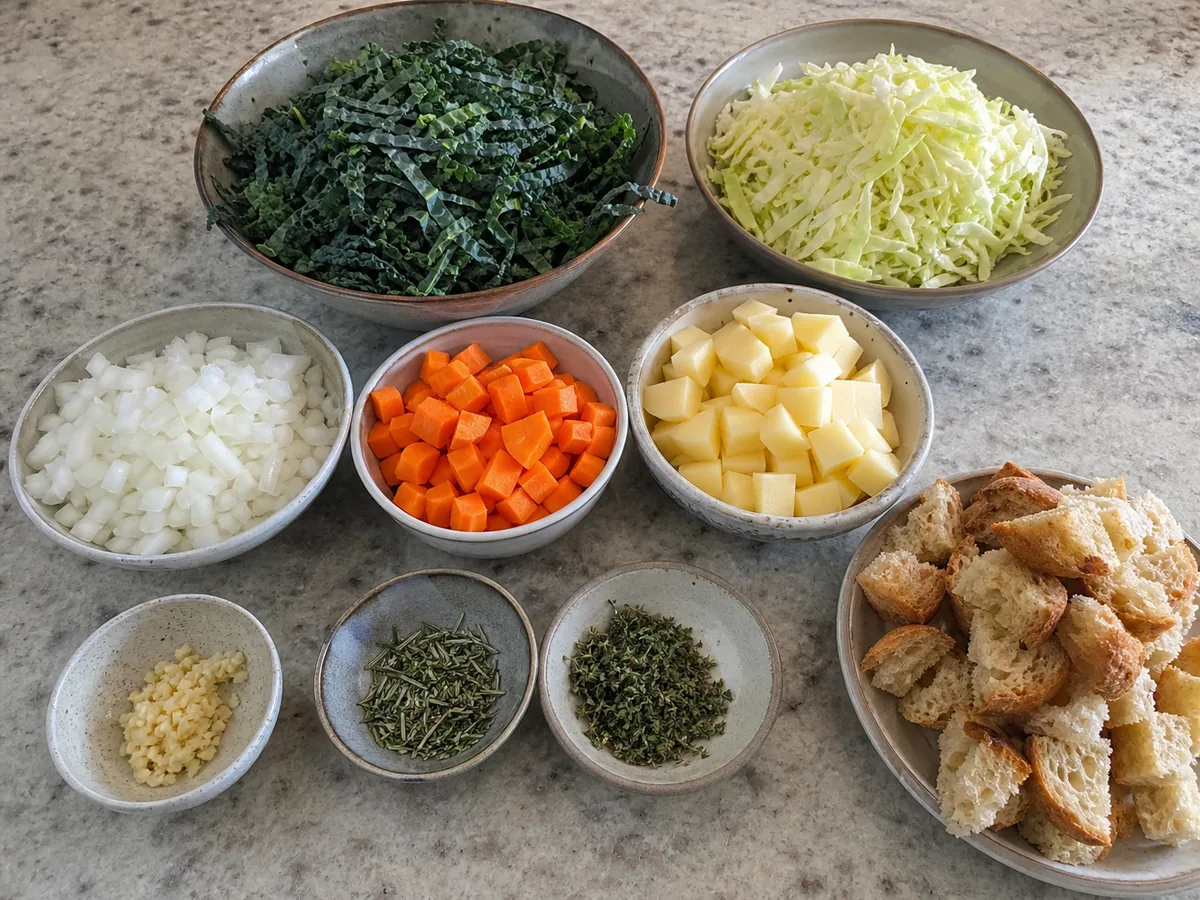
Cut 150 g of yellow onion into small dice. Mince 4 garlic cloves. Cut 150 g of carrots, 120 g of celery stalks, and 250 g of Yukon Gold potato into 1 cm pieces. Strip the tough stems from 180 g of lacinato kale and slice the leaves into ribbons. Slice 200 g of Savoy cabbage into 1 cm strips. Chop 2 g of fresh rosemary and strip the leaves from 1 g of fresh thyme. Tear 160 g of stale rustic country bread into rough 3 cm pieces.
Soften the vegetables
Heat 30 ml of extra-virgin olive oil in a large heavy pot over medium-low heat. Add 150 g of yellow onion, 150 g of carrots, and 120 g of celery stalks. Cook for 8 to 10 minutes, stirring often, until glossy and softened but not browned; start checking at 8 minutes.
08:00Cook the garlic and herbs
Add 4 garlic cloves, 2 g of fresh rosemary, and 1 g of fresh thyme to the softened vegetables. Cook for 1 minute, stirring constantly, until fragrant without letting the garlic brown.
01:00Cook the tomato paste
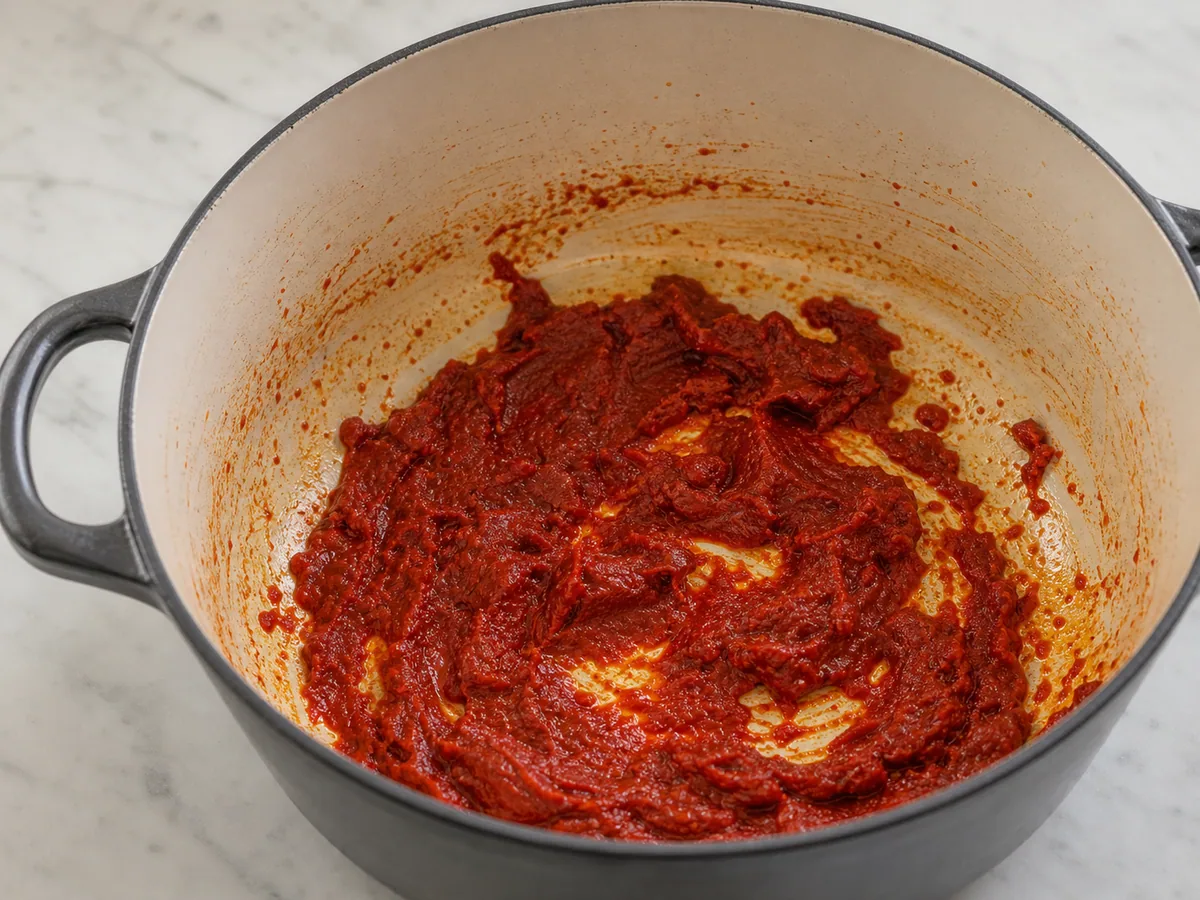
Stir in 30 g of tomato paste and cook for about 1 minute, stirring and pressing it into the vegetables, until the paste turns brick-red and begins to cling lightly to the bottom of the pot.
01:00Simmer the potato
Pour in 1200 ml of low-sodium vegetable broth, scraping the bottom of the pot to release the tomato-rich bits. Add 250 g of Yukon Gold potato, 3 g of fine sea salt, and 1 g of black pepper. Increase the heat to medium-high and bring to a boil, then reduce the heat to maintain a steady simmer. Partially cover and cook for 15 minutes, until the potato edges are beginning to soften but the centers still resist a knife.
15:00Cook the beans and greens
Set aside about one-third of 480 g of no-salt-added cannellini beans in a bowl. Add the rest of the beans to the pot with 180 g of lacinato kale and 200 g of Savoy cabbage. Simmer uncovered for 18 to 22 minutes, stirring occasionally, until the greens are tender and the potato can be pierced easily; start checking at 18 minutes.
18:00Mash the reserved beans
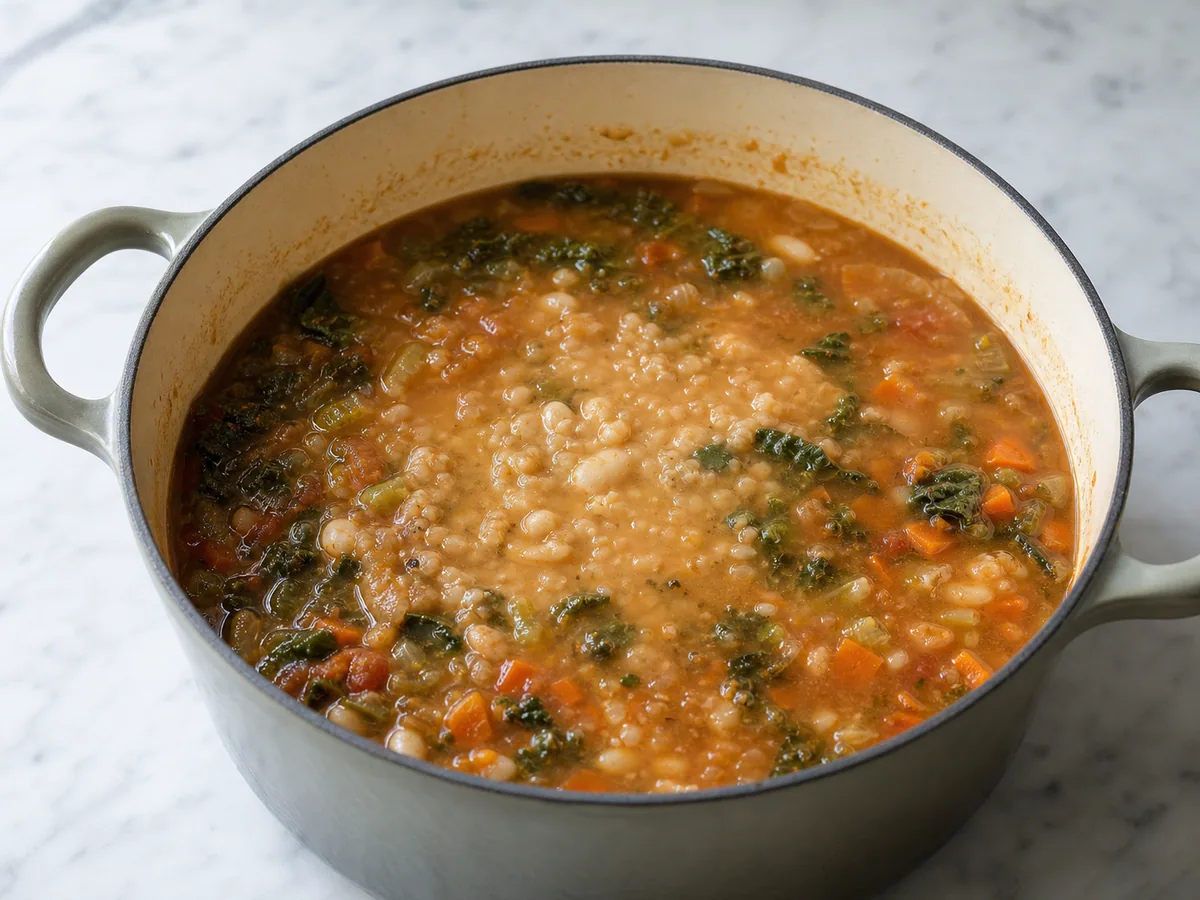
Ladle enough hot broth from the pot into the reserved beans to loosen them. Mash the beans thoroughly with a fork until creamy, then stir the mash into the soup until evenly incorporated. The broth should gain body but remain looser than the finished ribollita.
Thicken the soup with bread
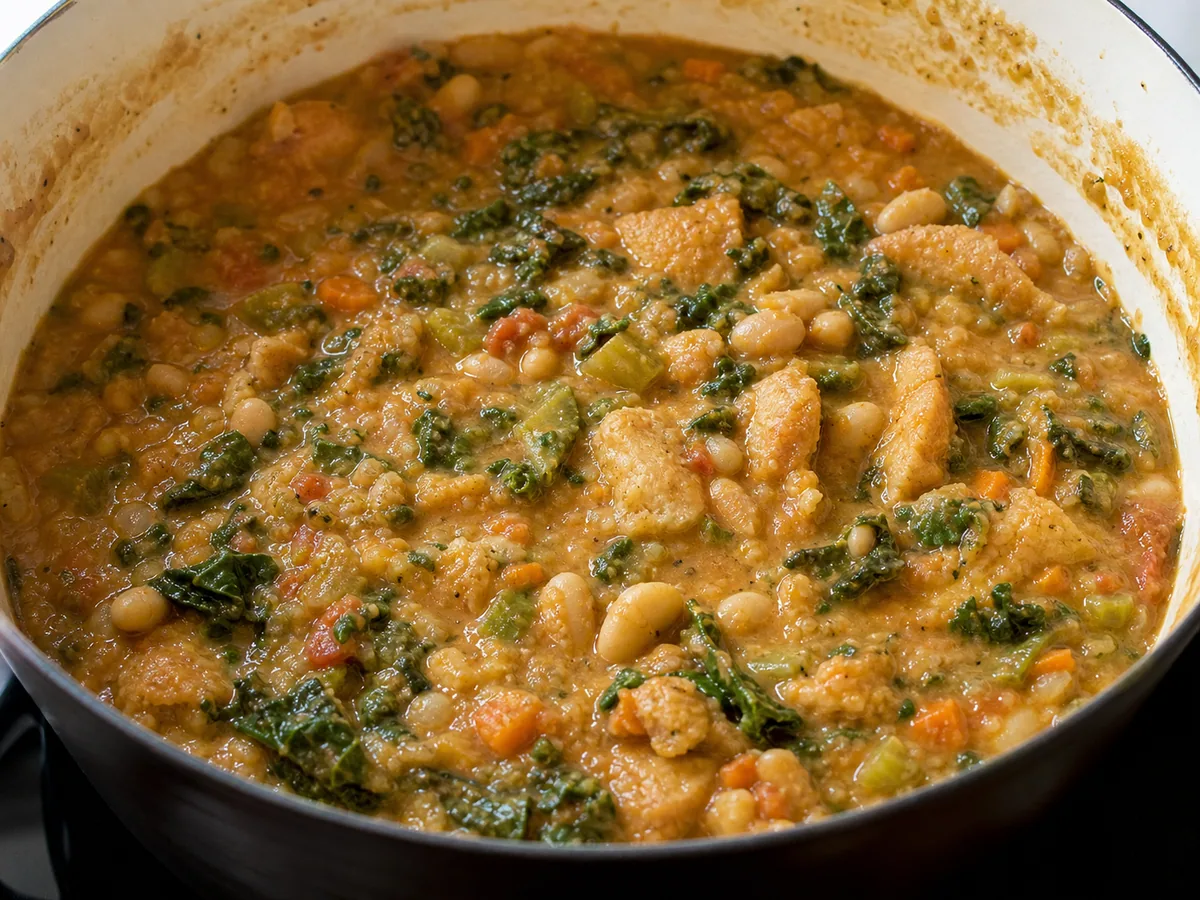
Add 160 g of stale rustic country bread gradually, folding after each addition so it hydrates evenly. Keep the heat low and simmer for 8 to 10 minutes, stirring from the bottom to prevent catching; start checking at 8 minutes. The broth should become thick and spoonable while a few softened bread pieces remain visible. Add a small splash of hot water only if the mixture becomes too tight before the bread softens.
08:00Rest the soup
Remove the pot from the heat, cover, and let the soup stand for 10 minutes so the bread and beans settle into a cohesive texture.
10:00Reboil and serve
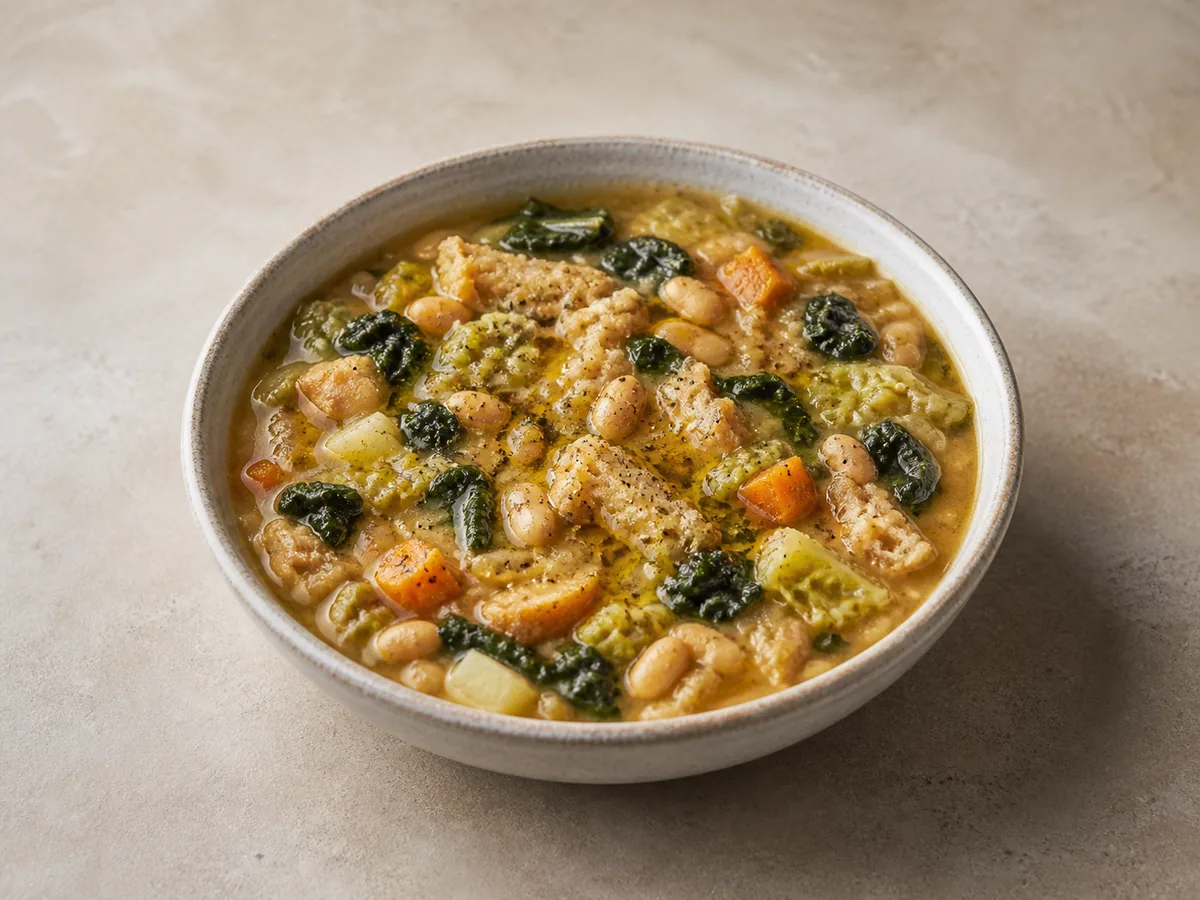
Return the pot to medium heat and bring the soup back to a gentle boil, stirring frequently. Cook for 3 to 5 minutes, until piping hot and thick enough to mound softly on a spoon; start checking at 3 minutes. Taste and adjust the seasoning. Offer extra-virgin olive oil for serving (optional) at the table.
03:00


Smart Substitutions
- No lacinato kale? Use curly kale or Swiss chard. Add Swiss chard during the final 10 minutes because it softens faster.
- No Savoy cabbage? Use green cabbage or spring greens in the same weight.
- No cannellini beans? Use cooked Great Northern beans or navy beans for a similarly creamy texture.
- No country bread? Use a sturdy white sourdough or an unsalted Italian-style loaf with a firm crumb.
Tips and Variations
- Rinse and drain canned beans well so their flavor stays clean and the broth does not become overly salty.
- Keep the simmer gentle after adding the greens; vigorous boiling can break the potato before the cabbage becomes tender.
- Mash only part of the beans. The puree thickens the broth, while the whole beans keep each bowl substantial.
What Went Wrong?
- Soup is watery Simmer uncovered, stirring often, until the bread and bean starches tighten the broth.
- Soup is too stiff Stir in hot water a little at a time until the mixture loosens but still holds together on a spoon.
- Greens are chewy Continue simmering gently until the thick stems and cabbage ribbons are fully tender.
- Flavor tastes dull Adjust the salt and black pepper first, then finish the bowl with a little extra-virgin olive oil.
Nutrition Estimate
- Fiber: 15 g per serving
- Sodium: 700 mg per serving
Nutrition disclaimer:This recipe is provided for general cooking information only. Nutrition values are estimates and may vary by ingredients, brands, preparation methods, and serving sizes. Check ingredient labels and follow appropriate food-safety practices. This content is not medical, dietary, allergy, or professional food-safety advice.
FAQ
Found an error or have a suggestion?
Help us improve this recipe. Send us your feedback and include the recipe name so we can take a look.