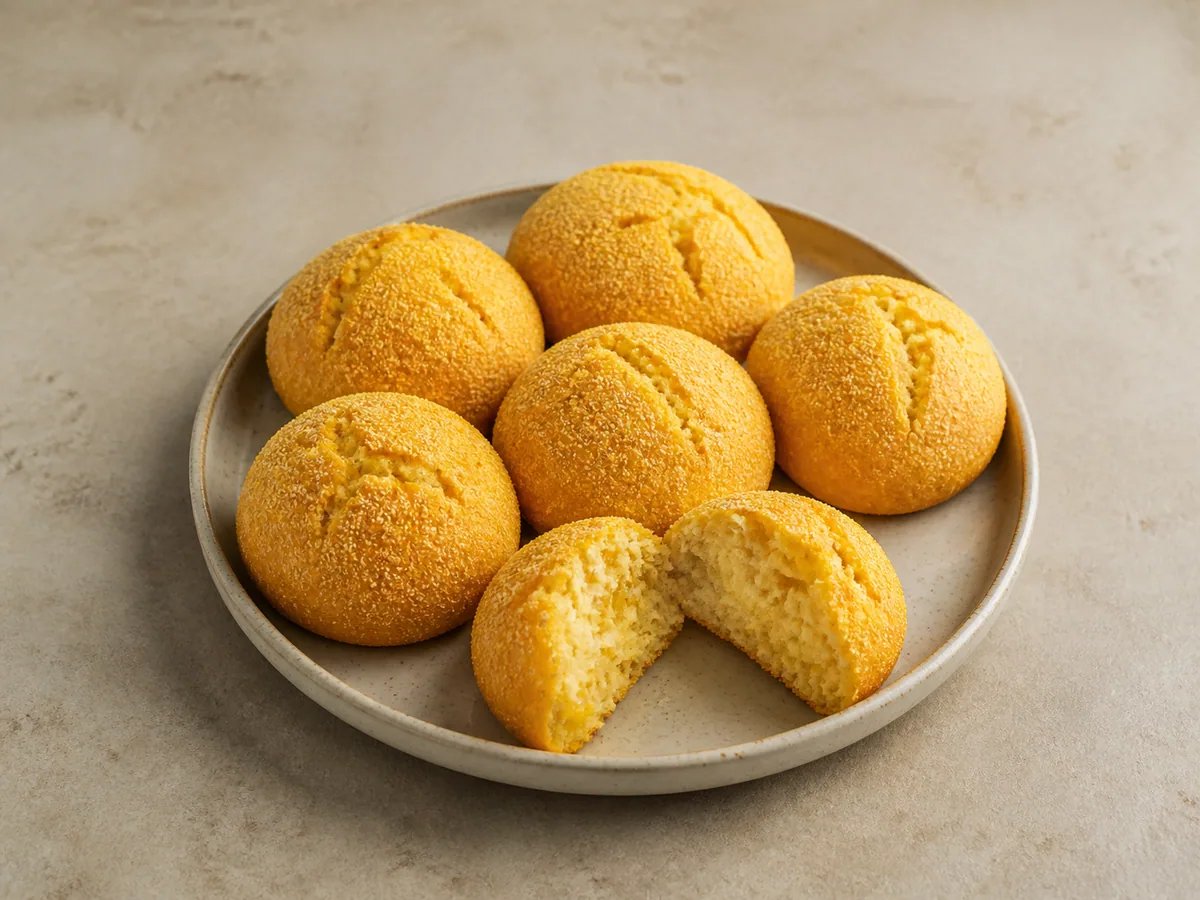
Method
Prepare the oven and baking sheet
Preheat the oven to 220°C (425°F). Cover a large baking sheet with parchment, then spread 20 g of fine yellow cornmeal for coating across it in a thin, even layer. Keep the prepared sheet beside the work area so the shaped dough can be baked immediately.
Cook the cornmeal dough
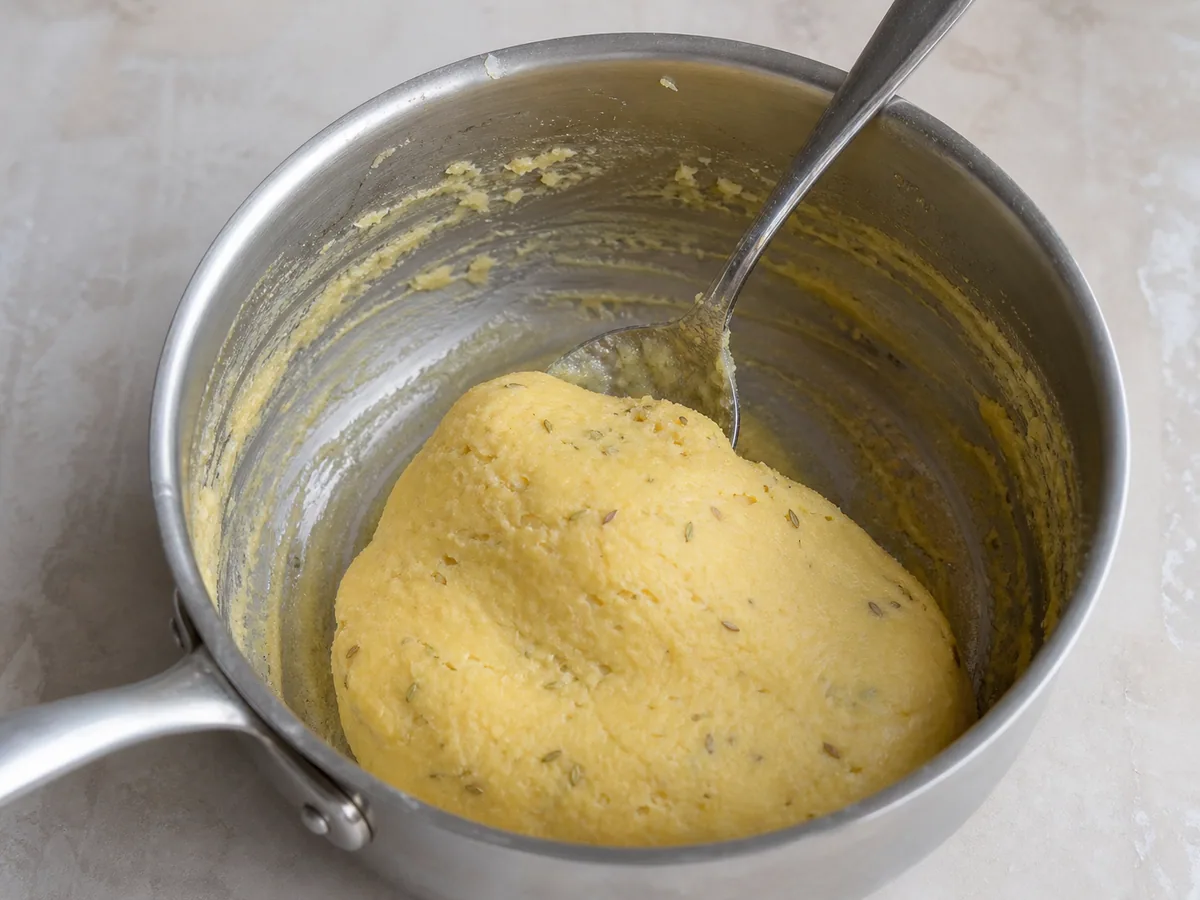
Add 120 ml of whole milk, 120 ml of water, 60 g of unsalted butter, 30 g of granulated sugar, 3 g of fine salt, and 2 g of fennel seeds to a medium saucepan and set it over medium heat. Stir as the butter melts and bring the liquid to an active simmer. Tip in 75 g of fine yellow cornmeal for dough and 90 g of all-purpose wheat flour together. Using a sturdy spoon, stir and press the mixture against the pan for 2 to 3 minutes, scraping the base and sides, until it gathers into a smooth mass and leaves a thin film behind on the saucepan.
03:00Cool the dough and work in the eggs
Scrape the hot dough into a mixing bowl. Stir it for about 5 minutes so steam can escape and the mixture becomes warm rather than hot. Crack 3 large eggs into a clean separate bowl and beat until combined. Mix the beaten egg into the dough in small additions, waiting until each addition is mostly absorbed before adding more. Although the mixture may briefly look slick or broken, continued mixing should produce a smooth, glossy dough that drops from the spoon in a thick ribbon. Wash your hands and clean any surface that contacted raw egg before moving on.
05:00Add the cheese and shape the breads
Grate 80 g of semi-cured Minas cheese or mild semi-hard cheese and fold it through the dough until the pieces are evenly dispersed. Portion the dough onto the prepared sheet as equal rounded mounds, making one mound for each serving and spacing them about 5 cm (2 in) apart. Dust the tops with some of the cornmeal already on the sheet, and shape upward so the mounds remain tall instead of spreading them flat.
Puff the breads at high heat
Bake at 220°C (425°F) for 15 minutes, keeping the oven door closed throughout this first stage. By the end, the rounds should be visibly expanded, set at the edges, and marked with the first fine cracks on top.
15:00Finish baking until firm and golden
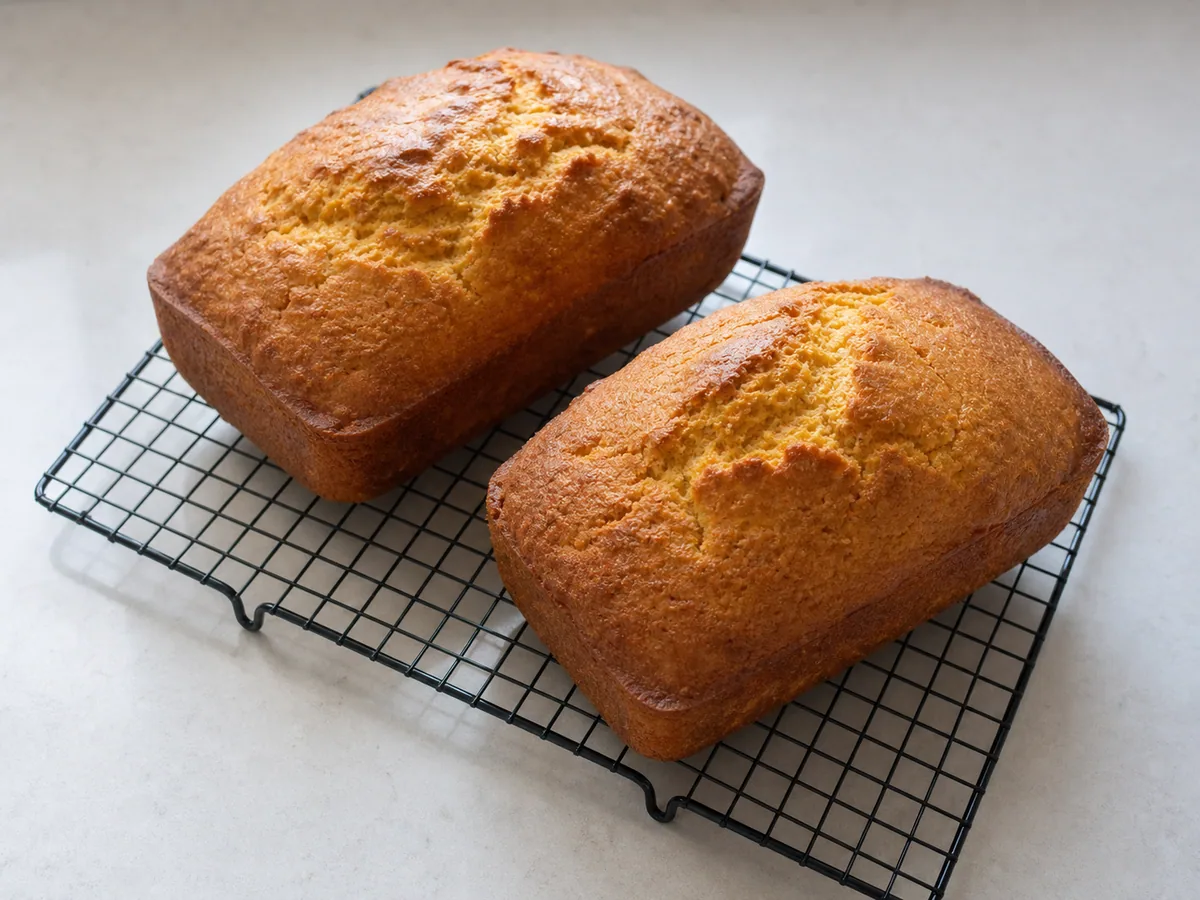
Reduce the oven temperature to 180°C (350°F) and bake for another 20 to 25 minutes, checking the breads after 20 minutes. They are done when the crusts are evenly golden, the rounds feel firm and unexpectedly light, and an instant-read thermometer inserted into the thickest center registers at least 71°C/160°F.
20:00Set the crumb and serve
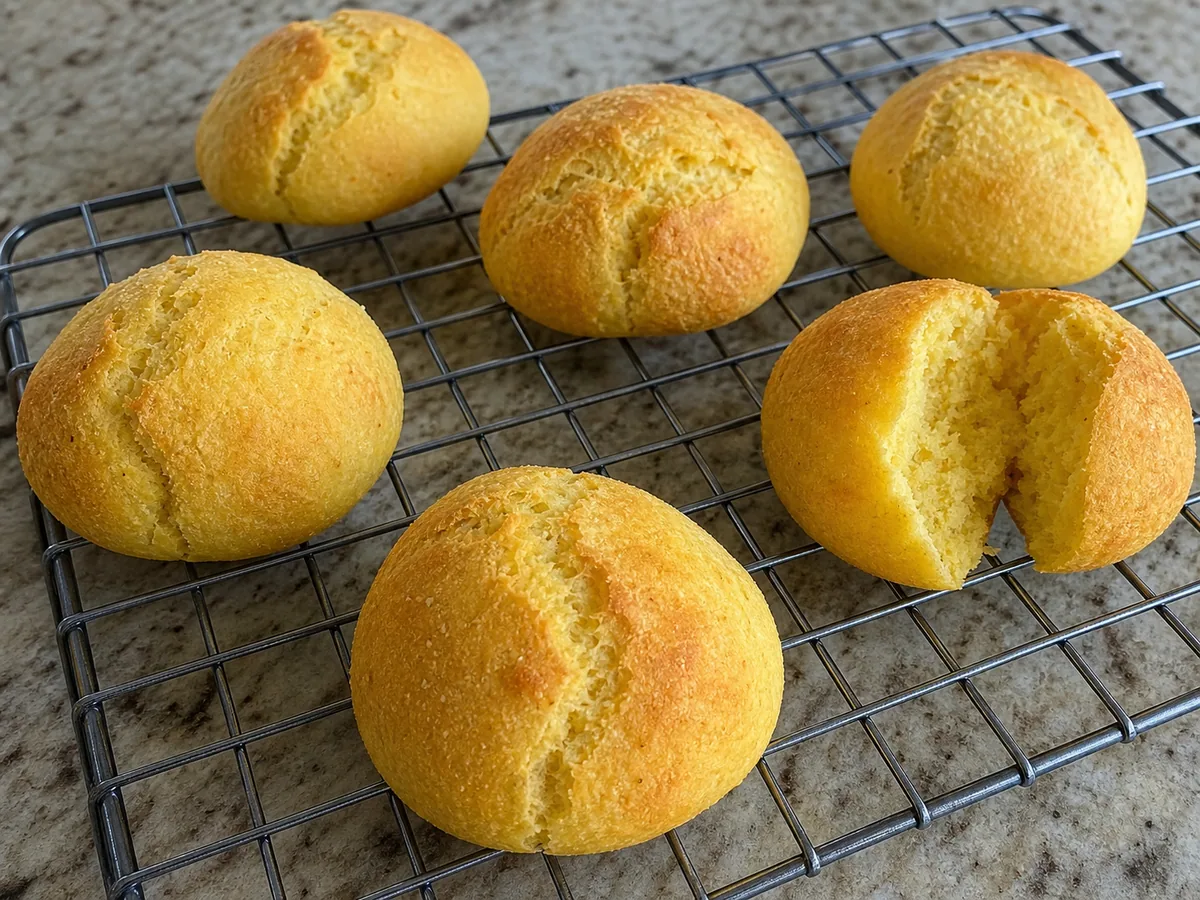
Transfer the baked rounds to a wire rack and leave them undisturbed for 10 minutes. This pause releases excess steam and allows the interior to settle into a tender, airy crumb. Serve the breads warm for breakfast or as an afternoon snack.
10:00


Smart Substitutions
- No Minas-style cheese? Use mild cheddar, aged Gouda, or low-moisture mozzarella. Choose a cheese that can be grated and is not watery.
- No fennel seeds? Omit them for a plainer corn flavor, or use a smaller amount of anise seed for a similar aromatic note.
- No whole milk? Use 2% milk. The breads will be slightly less rich but should puff in the same way.
- No all-purpose flour? Bread flour works well and gives the shell a little more chew.
Tips and Variations
- Use fine cornmeal rather than coarse polenta; coarse grains do not hydrate quickly enough for a smooth dough.
- Add the beaten eggs gradually. The dough often looks separated before it turns glossy and cohesive.
- Keep the oven door closed during the first high-heat bake so the trapped steam can lift the breads.
- Shape the mounds upward instead of spreading them wide; height helps create a lighter center.
What Went Wrong?
- Dough looks curdled after adding eggs Keep mixing firmly. The cooked flour base may resist the egg at first, but it should become smooth and glossy as the liquid is absorbed.
- Breads spread instead of puffing The stovetop dough may have been undercooked or the egg may have been added too quickly. Cook until a dry film forms on the pan and add egg in stages.
- Centers are gummy Continue baking at 180°C (350°F) until the breads feel firm, the cracks look dry, and the thickest center reaches at least 71°C/160°F.
- Breads collapse after baking They likely needed more time in the lower oven. A deeply golden, firm shell is what supports the airy center.
Nutrition Estimate
- Fiber: 1 g per serving
- Sodium: 325 mg per serving
Nutrition disclaimer:This recipe is provided for general cooking information only. Nutrition values are estimates and may vary by ingredients, brands, preparation methods, and serving sizes. Check ingredient labels and follow appropriate food-safety practices. This content is not medical, dietary, allergy, or professional food-safety advice.
FAQ
Found an error or have a suggestion?
Help us improve this recipe. Send us your feedback and include the recipe name so we can take a look.