Method
Heat the water and prepare the glasses
Heat 240 ml of filtered water to 91–93°C (195–200°F). Divide 60 ml of sweetened condensed milk evenly among heatproof serving glasses and set a clean phin filter securely over each glass on a stable surface.
Grind and bloom the coffee
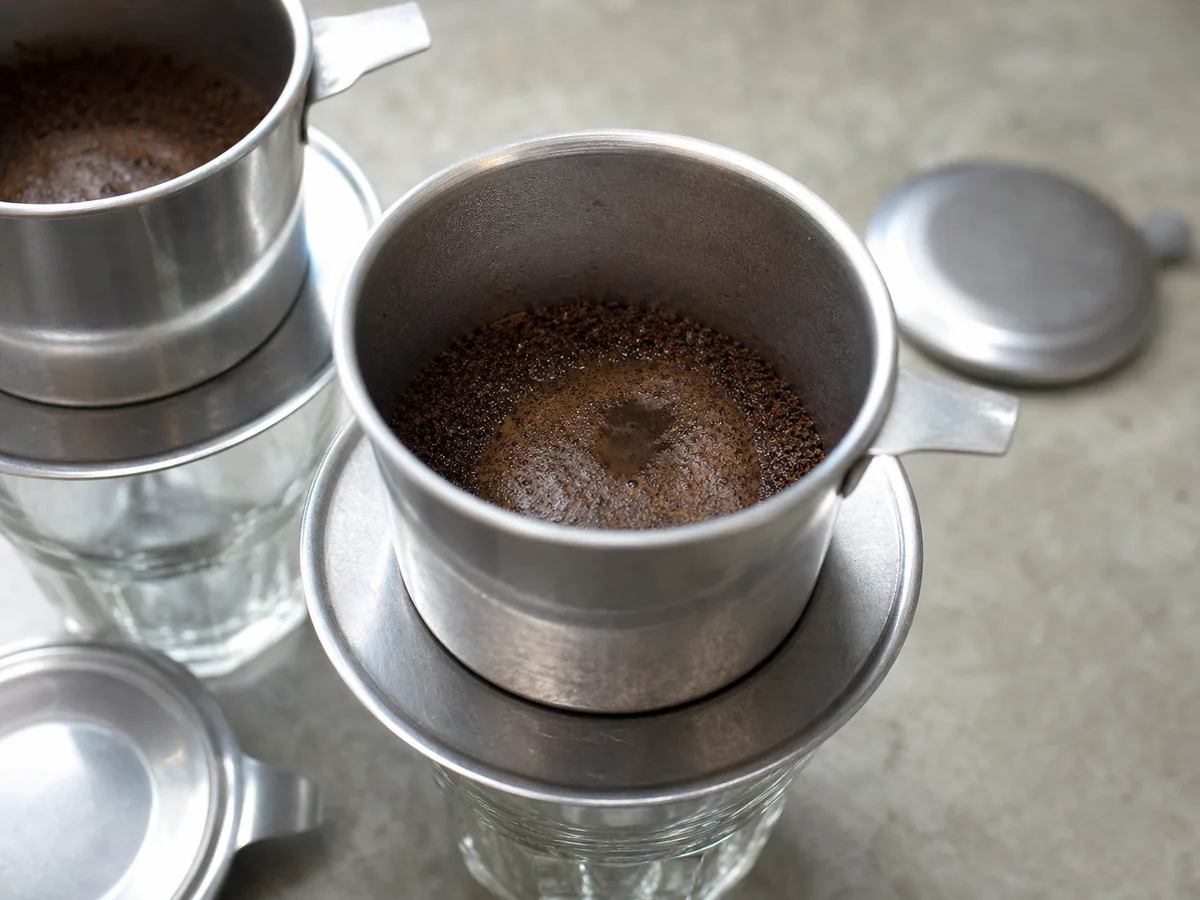
Grind 28 g of dark-roast Vietnamese coffee beans to a medium-fine texture similar to fine sand. Divide it evenly among the phins, shake each chamber gently to level the bed, and place the press disk on top without tamping hard. Pour in just enough hot water to wet all the grounds, then let them bloom for 45 seconds.
00:45Brew to a slow, steady drip
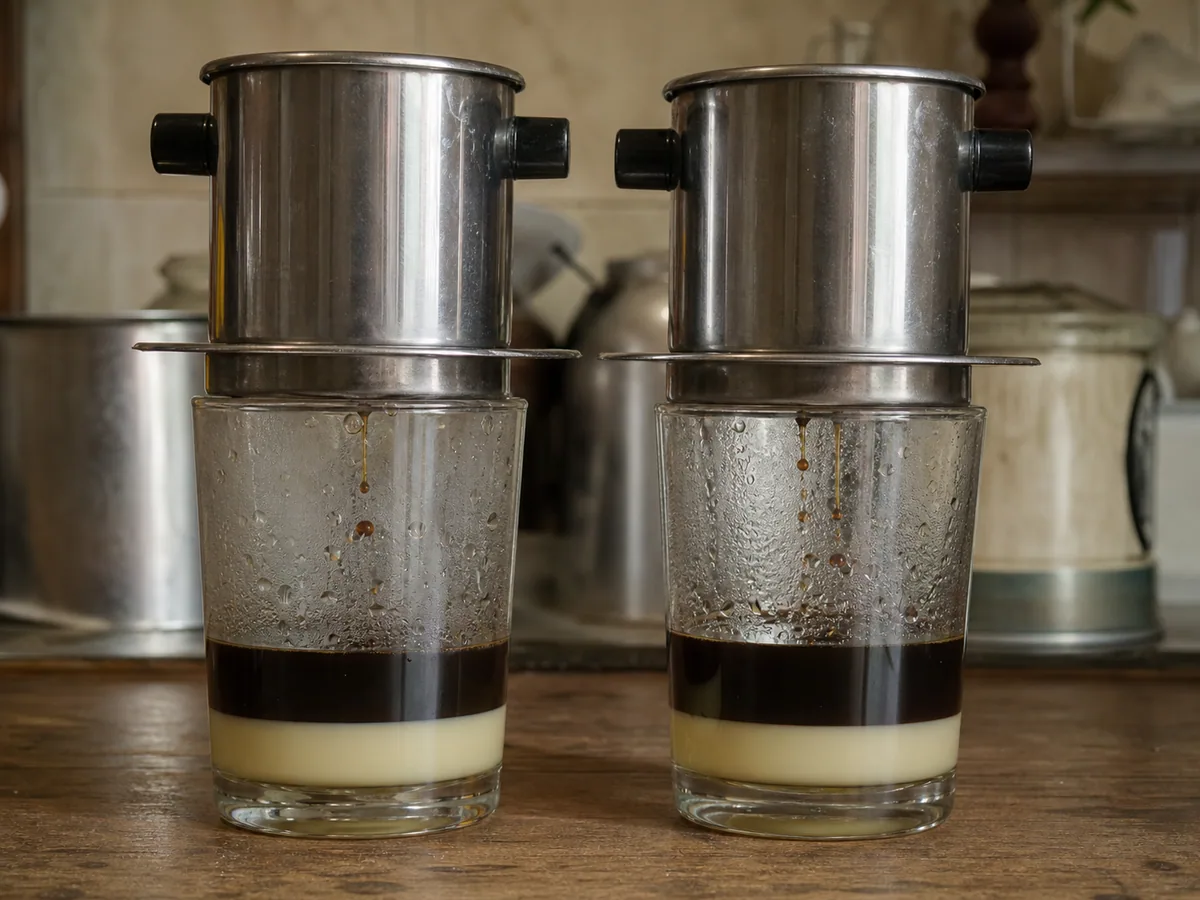
Pour the remaining hot water into the phins and cover them. The first drops should appear within about 2 minutes. Let the coffee drip until the chambers are nearly empty, beginning to check for completion at 4 minutes; the final drops should fall at about 5 minutes, and a full brew normally takes 4 to 6 minutes. If a phin finishes much sooner, the grind is too coarse. If it stalls, lift the press disk slightly to release excess pressure.
05:00Stir until creamy and add ice
Remove the phins carefully, holding them by the edges because the metal may be hot. Stir each coffee until the condensed milk is completely dissolved and the color is evenly caramel-brown. Divide 280 g of ice among the glasses, stir once more to chill, and serve immediately.


Smart Substitutions
- No Vietnamese robusta? Use a dark-roast robusta-arabica blend or another full-bodied dark roast.
- No phin filter? Brew a small, concentrated cup with a metal pour-over or French press, keeping the coffee strong enough to hold its flavor over ice.
- Prefer it less sweet? Reduce the sweetened condensed milk, then taste the stirred coffee before adding ice.
- Avoiding dairy? Use sweetened condensed coconut milk for a creamy variation with a noticeable coconut flavor.
Tips and Variations
- Level the coffee bed before adding the press disk so water moves through it evenly.
- Set the press disk gently; hard tamping can stop the phin from dripping.
- Stir the hot coffee and condensed milk thoroughly before adding ice for the smoothest texture.
What Went Wrong?
- Coffee runs through in a thin stream Use a slightly finer grind and make sure the grounds are level before setting the press disk.
- Phin barely drips Use a slightly coarser grind or lift the press disk briefly; the coffee bed may be packed too tightly.
- Drink tastes watery Let the phin finish at a slow drip and avoid adding ice until the coffee and condensed milk are fully mixed.
- Drink tastes too sweet Use less condensed milk in the next serving or brew the coffee slightly stronger.
Nutrition Estimate
- Fiber: 0 g per serving
- Sodium: 45 mg per serving
Nutrition disclaimer:This recipe is provided for general cooking information only. Nutrition values are estimates and may vary by ingredients, brands, preparation methods, and serving sizes. Check ingredient labels and follow appropriate food-safety practices. This content is not medical, dietary, allergy, or professional food-safety advice.
FAQ
Found an error or have a suggestion?
Help us improve this recipe. Send us your feedback and include the recipe name so we can take a look.