Method
Mix the enriched dough
Warm 180 ml of whole milk to 38°C to 43°C (100°F to 110°F); it should feel comfortably warm, not hot. Add 180 ml of whole milk, 1 large egg, and 10 ml of Mexican vanilla extract for dough to the bowl of a stand mixer. In a separate bowl, whisk 320 g of bread flour for dough, 50 g of granulated sugar for dough, 6 g of instant yeast, and 5 g of fine sea salt until evenly combined, then add the dry mixture to the mixer bowl. Mix with the dough hook on low speed until no dry flour remains. Cut 60 g of unsalted butter for dough into small pieces and add them gradually, waiting until each addition begins to disappear into the dough. After handling the egg, wash your hands and clean any separate utensil or work surface splashed with raw egg before touching other equipment or ingredients. Keep the mixer bowl and dough hook in use for the dough, then wash them after the dough has been transferred.
Knead until elastic
Knead on medium-low speed for 8 to 10 minutes. The dough will remain soft and slightly tacky, but it should pull into a smooth elastic mass and stretch into a thin translucent sheet before tearing. Scrape down the bowl once or twice rather than adding extra flour. Start checking at 8 minutes and knead longer only if the dough still tears immediately.
08:00Let the dough rise
Shape the dough into a ball and place it in a lightly buttered bowl. Cover and let it rise in a warm, draft-free place for 75 to 90 minutes, until it looks airy and has expanded to roughly one and three-quarter times its original size. Begin checking at 75 minutes; a gently pressed fingertip should leave an indentation that slowly eases back.
1:15:00Make the vanilla shell topping
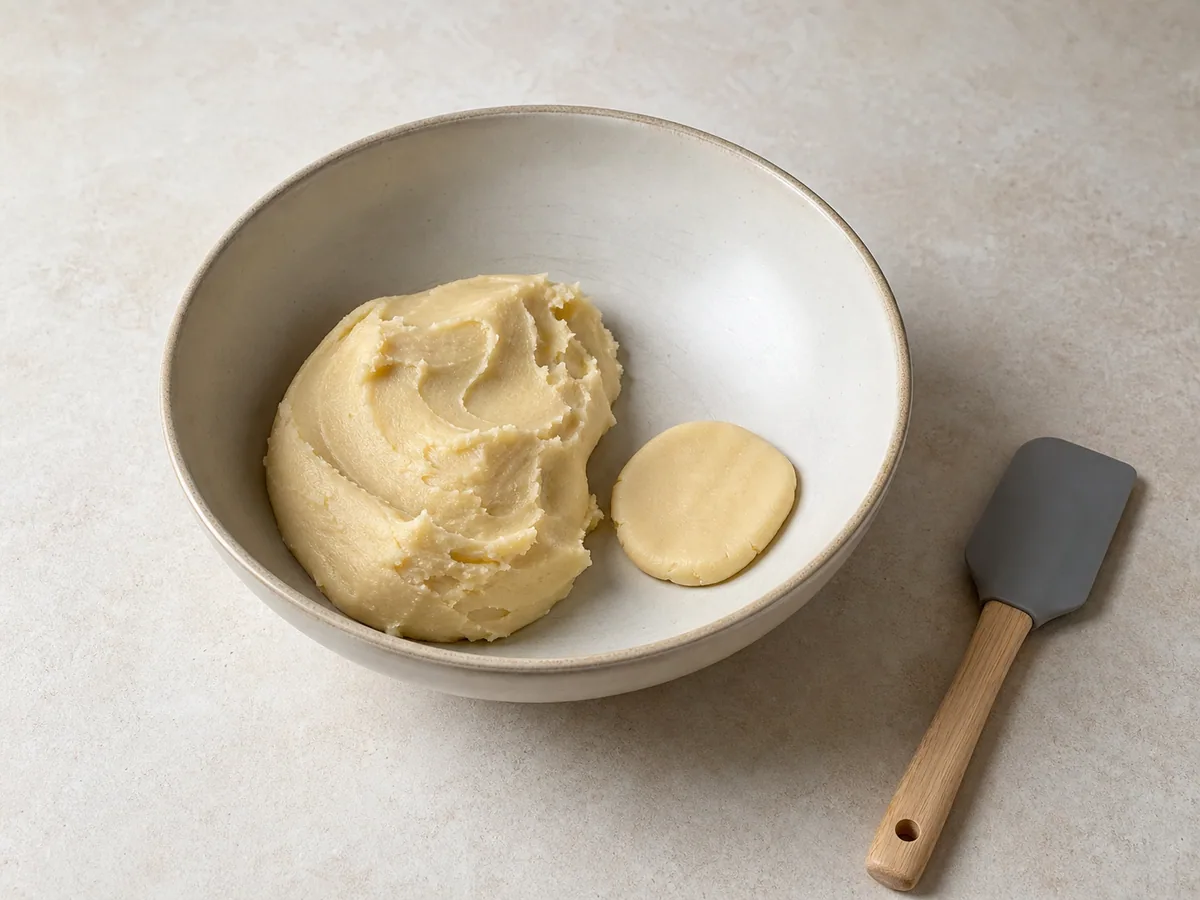
Beat 60 g of unsalted butter for topping, 80 g of confectioners' sugar for topping, and 5 ml of Mexican vanilla extract for topping until smooth and creamy. Add 80 g of all-purpose flour for topping and mix just until a soft, uniform paste forms. Press a small piece between your fingers: it should flatten without sticking heavily or breaking into dry crumbs. Cover the topping while the dough finishes rising so its surface stays pliable.
Shape and score the conchas
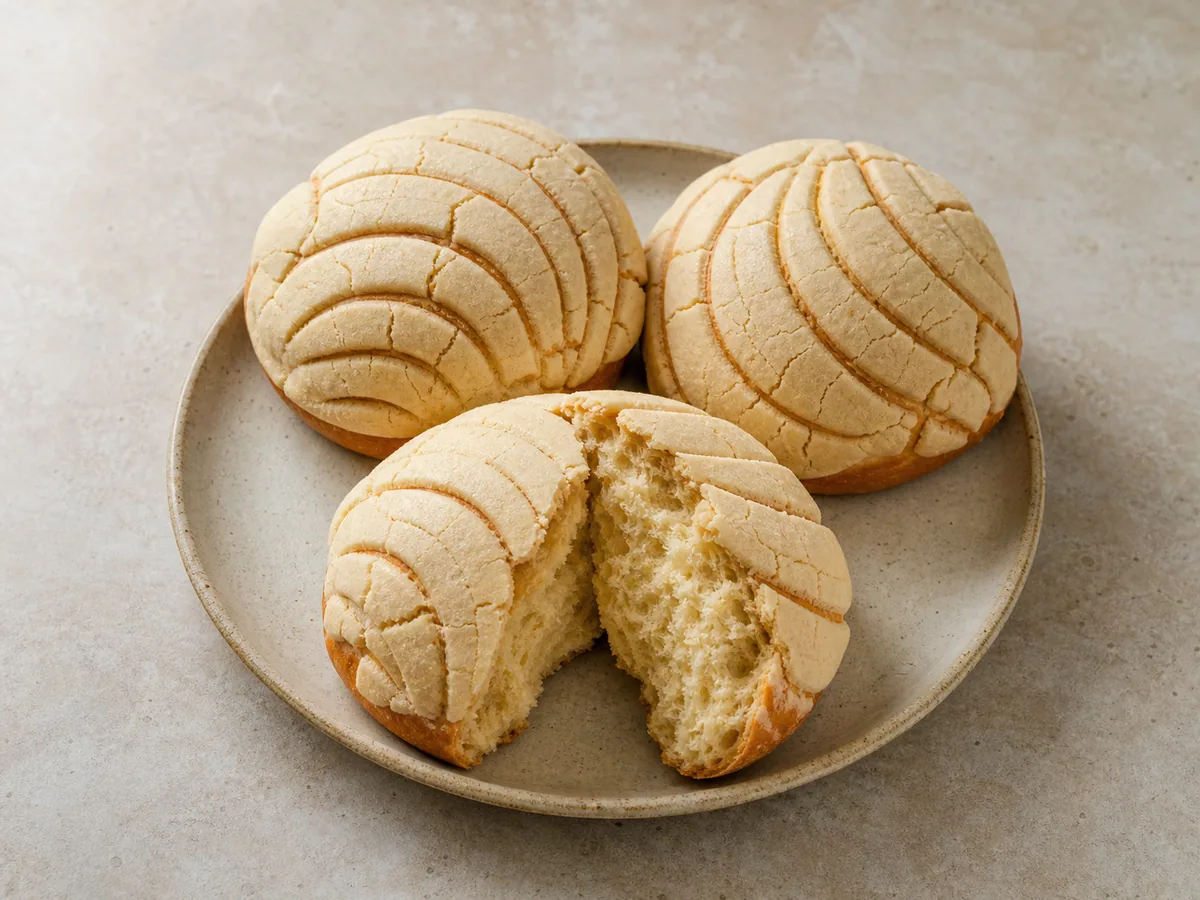
Line a baking sheet with parchment. Divide the dough into the number of pieces shown by the servings selector; for the default batch, each piece will weigh about 85 g. Round each piece firmly against an unfloured surface to create a taut top, then space the buns well apart on the sheet. Divide the topping into the same number of portions. Flatten each portion between two small sheets of parchment into a disk slightly smaller than its bun, peel away the paper, and press the disk gently onto the dough. Use a concha cutter or the blunt edge of a small knife to score curved shell lines through the topping without cutting into the bread dough.
Proof the shaped buns
Cover the shaped buns loosely and let them rise for 35 to 45 minutes, until visibly puffy and the scored grooves have widened slightly. Begin checking at 35 minutes; the dough exposed between the topping lines should look rounded rather than tight. During the final 20 minutes, heat the oven to 175°C (350°F) with a rack in the center.
35:00Bake until lightly golden
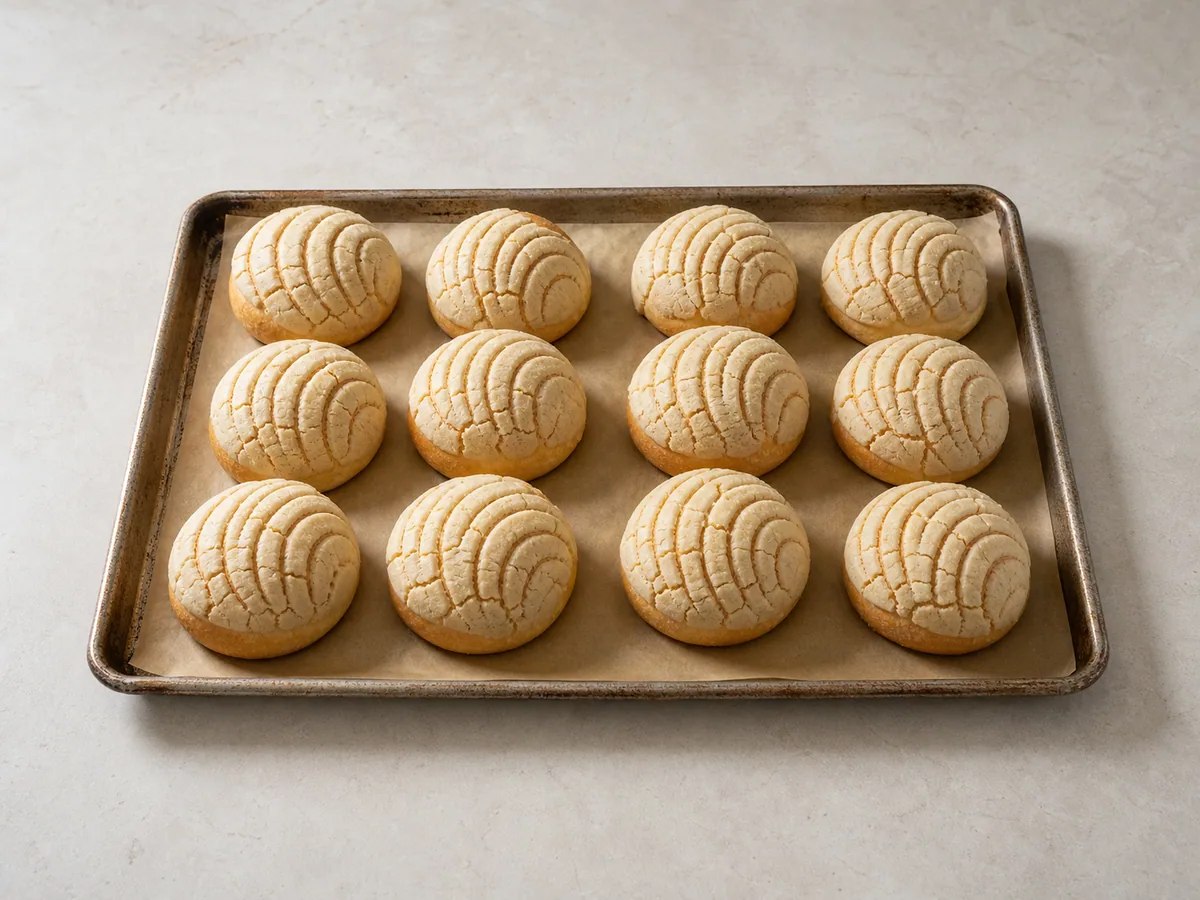
Bake for 18 to 22 minutes, rotating the sheet once if the oven browns unevenly. Start checking at 18 minutes. The topping should look dry and set, the exposed bread should be lightly golden, and an instant-read thermometer inserted through the side into the center of a bun should register at least 88°C (190°F), safely above the 71°C/160°F minimum used for cooked egg mixtures. Transfer the buns to a wire rack.
18:00Cool before serving
Let the conchas cool on the rack for 15 minutes. The crumb finishes setting during this pause, while the vanilla topping firms into a tender, crisp shell. Serve while still gently warm or at room temperature.
15:00


Smart Substitutions
- No Mexican vanilla? Use the same amount of pure vanilla extract. A tiny pinch of ground cinnamon can add warmth without turning the topping into a cinnamon concha.
- No bread flour? Use all-purpose flour in the dough. For the default eight-concha batch, reserve 1 tablespoon (15 ml) of the milk at first, then add it in 1-teaspoon (5 ml) increments only if the dough feels firm rather than soft and slightly tacky.
- Prefer shortening? Replace the butter in the topping with vegetable shortening for a crisper, more sharply defined shell pattern.
- No whole milk? Use 2% milk. The crumb will be slightly less rich but the dough will still rise and shape well.
Tips and Variations
- Weigh the flour when possible. A heavily packed cup can make the dough stiff and mute the soft panadería-style crumb.
- Keep the topping covered until shaping. If its surface dries, the scored shell can split into ragged pieces.
- Nest the baking sheet inside a second empty sheet if the bottoms brown before the tops are ready.
What Went Wrong?
- Dough feels stiff Check that the flour was not overmeasured. Knead for two minutes before adding a small splash of whole milk; enriched dough often softens as the butter disperses.
- Topping crumbles while flattening Knead it briefly between your fingers. If it still breaks, work in a few drops of whole milk until it bends without cracking.
- Shell pattern disappears Score more deeply through the topping, but stop when the knife reaches the bread dough. Very shallow lines close as the buns expand.
- Conchas bake up dense Give both rises enough time and judge by volume and puffiness rather than the clock alone. A cool kitchen can slow the yeast considerably.
Nutrition Estimate
- Fiber: 2 g per serving
- Sodium: 270 mg per serving
Nutrition disclaimer:This recipe is provided for general cooking information only. Nutrition values are estimates and may vary by ingredients, brands, preparation methods, and serving sizes. Check ingredient labels and follow appropriate food-safety practices. This content is not medical, dietary, allergy, or professional food-safety advice.
FAQ
Found an error or have a suggestion?
Help us improve this recipe. Send us your feedback and include the recipe name so we can take a look.