Method
Prepare and brown the beef
Trim visible surface fat from 450 g of beef chuck and cut it into 2 cm (3/4 in) cubes. Pat the cubes dry. Heat a heavy soup pot over medium-high heat and add 30 ml of olive oil. Brown the beef in batches without crowding the pot; for the default 6 servings, use about two batches and allow 8 to 10 minutes total, turning until several sides are deeply colored. Transfer each batch to a clean plate. After handling raw beef, wash your hands, knife, cutting board, and any splashed surfaces with hot soapy water before preparing ready-to-eat garnishes.
08:00Soften the onion and carrots
Reduce the heat to medium. Dice 1 yellow onion and 2 carrots, add them to the pot, and scrape up the browned bits as their moisture releases. Cook for about 8 minutes, stirring often, until the onion is translucent and the carrots have begun to soften without taking on dark color.
08:00Cook the pickle-tomato base
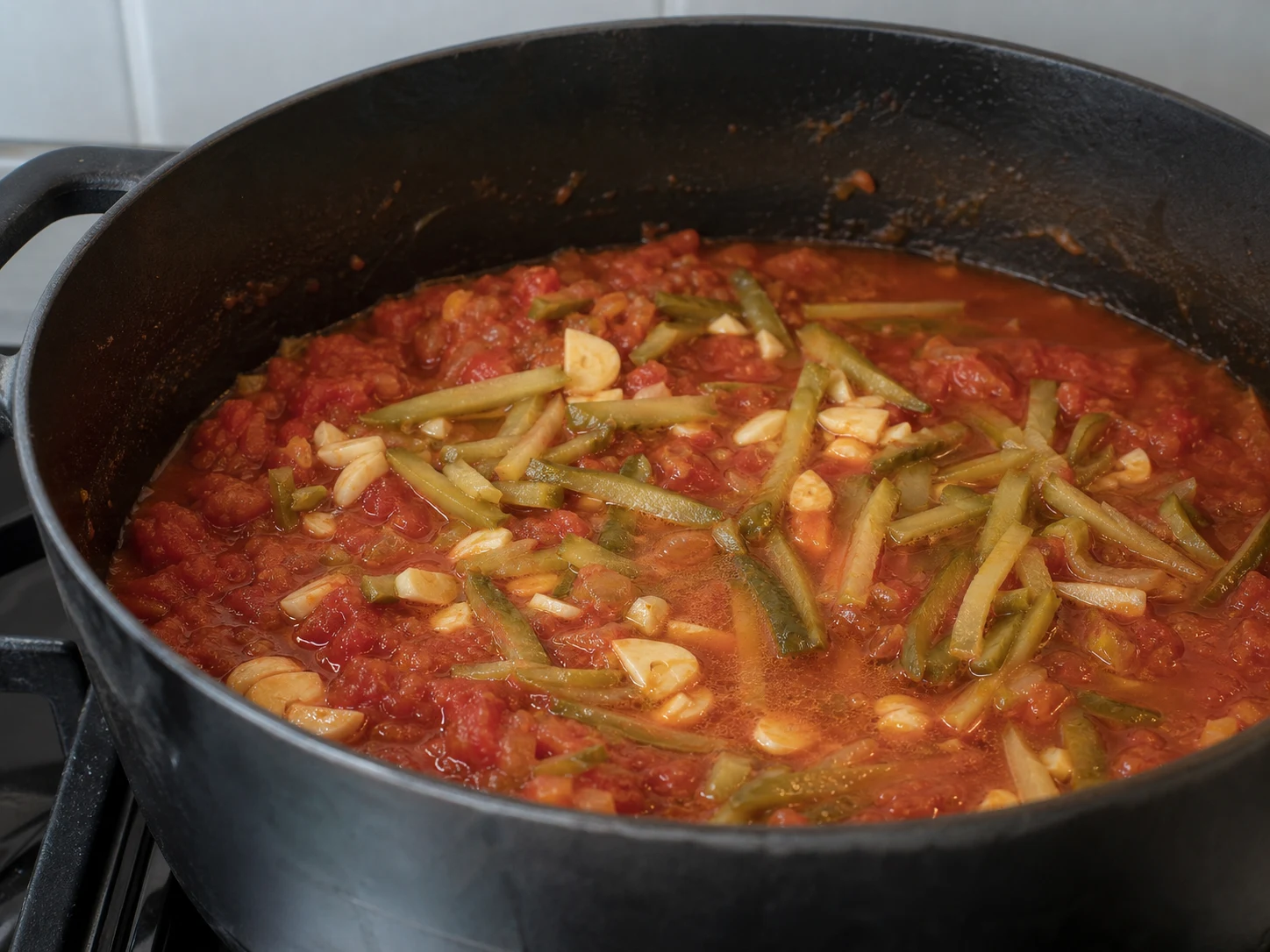
Mince 3 garlic cloves and stir it into the vegetables until aromatic. Cut 200 g of dill pickles into short matchsticks, add them with 45 g of tomato paste, and cook for about 4 minutes, stirring and pressing the paste against the pot, until the mixture is thick, brick red, and lightly glossy.
04:00Simmer the beef until tender
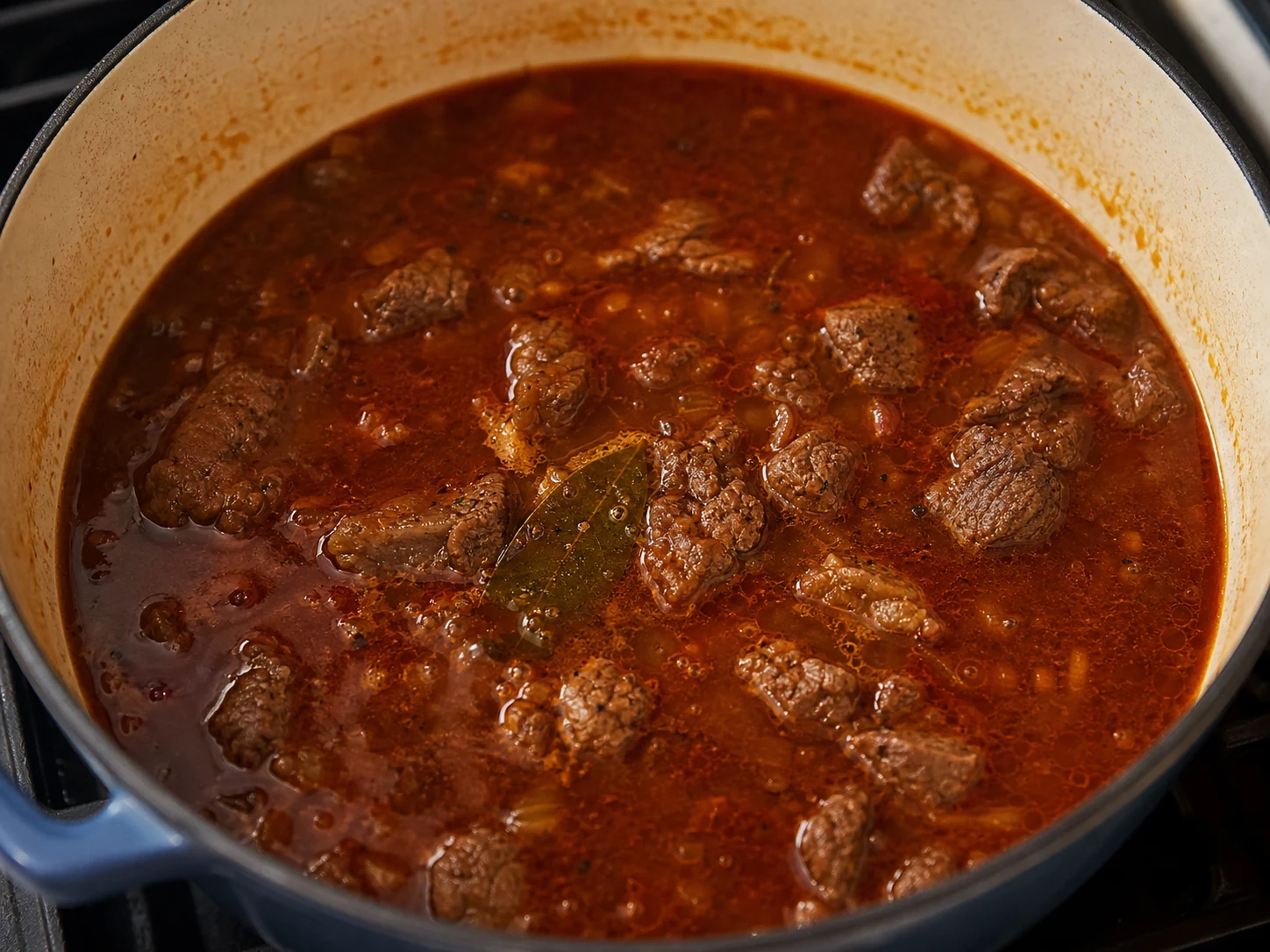
Return the browned beef and its juices to the pot. Add 1440 ml of unsalted beef broth, 2 bay leaves, and 1 g of black pepper. Bring the soup to a boil, skim away any foam, then reduce the heat to low and partly cover. Simmer gently for 50 to 60 minutes, beginning the tenderness check at 50 minutes. The beef should yield easily to a spoon. Check the thickest pieces with a food thermometer and make sure they reach at least 63°C/145°F, then keep them in the simmering broth for at least 3 minutes and while you finish the soup.
50:00Add the smoky and briny ingredients
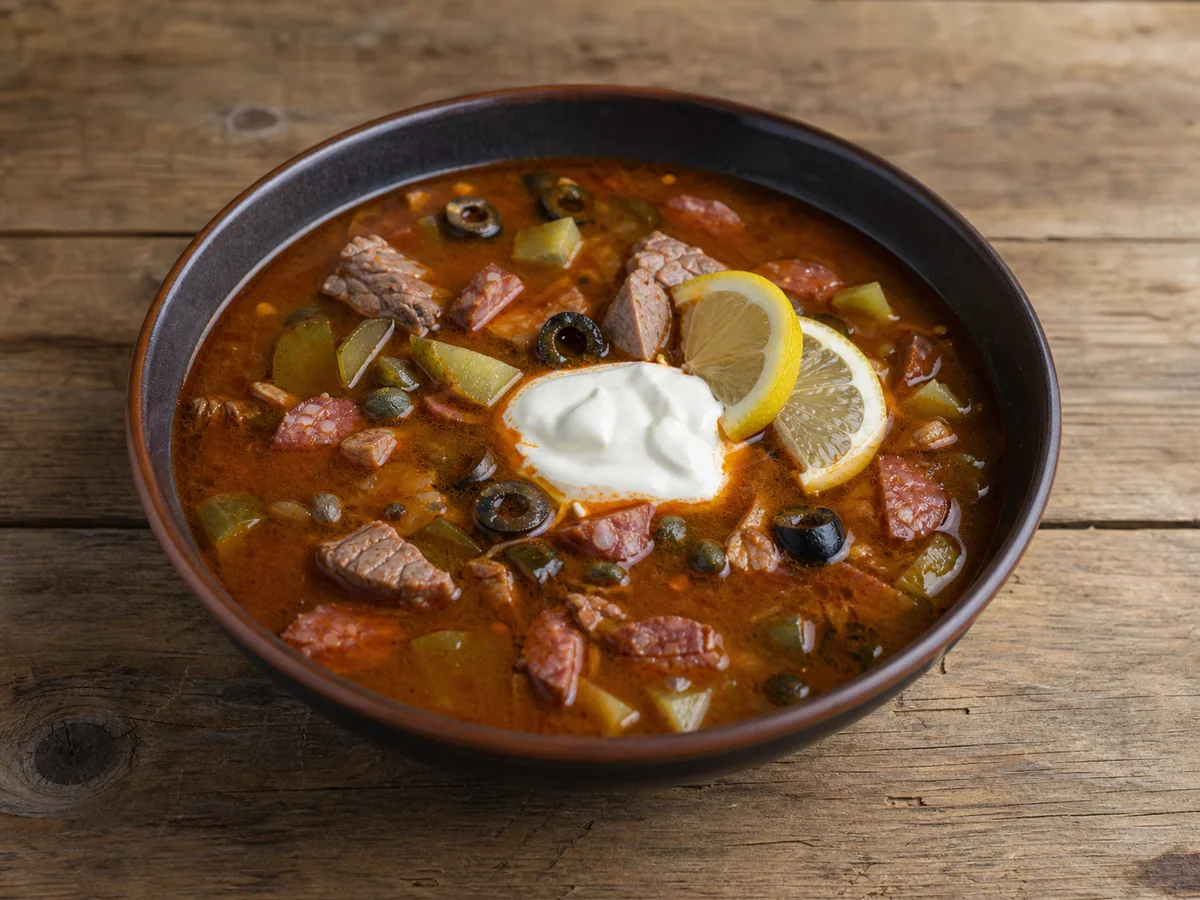
Slice 170 g of fully cooked smoked kielbasa into thin half-moons, confirming that the package identifies it as fully cooked. Add it to the pot with 75 g of pitted green olives, 13 g of capers, and 80 ml of pickle brine. Simmer uncovered for 12 to 15 minutes, beginning the flavor and temperature check at 12 minutes, until the sausage is steaming hot throughout and reaches 74°C/165°F at the center of the thickest piece, the broth is slightly fuller, and the pickle tang has blended into the tomato base. Taste before adding any salt; the cured and brined ingredients may provide enough.
12:00Finish and serve
Remove the bay leaves. Chop 5 g of fresh dill, loosely packed sprigs and cut 1 lemon into wedges. Ladle the hot solyanka into deep bowls, divide 90 g of sour cream among the servings, scatter dill over the top, and serve the lemon wedges alongside so each person can sharpen the broth to taste.


Smart Substitutions
- No kielbasa? Use another fully cooked smoked sausage with a firm texture and moderate seasoning.
- No capers? Add a few extra chopped green olives and adjust the pickle brine after tasting.
- No sour cream? Use plain full-fat Greek yogurt for a similarly cool, tangy finish.
- Want a leaner soup? Choose well-trimmed beef chuck and a fully cooked lean smoked turkey sausage.
Tips and Variations
- Cut the beef into even cubes so the pieces become tender at roughly the same time.
- Use unsweetened dill pickles; sweet pickles pull the broth away from solyanka's savory, sour balance.
- Taste only after the olives, capers, and brine have simmered, because their salt spreads through the broth gradually.
What Went Wrong?
- Beef is still tough Keep the soup at a gentle simmer and check again in 10-minute intervals; chuck becomes tender only after its connective tissue has had enough time to soften.
- Soup tastes too salty Add unsalted beef broth in small amounts, then restore brightness with a squeeze of lemon rather than more pickle brine.
- Broth tastes flat Add a little pickle brine, capers, or lemon, tasting after each addition so the sourness stays balanced.
- Soup looks greasy Skim excess fat from the surface with a wide spoon while keeping enough for a rounded, savory mouthfeel.
Nutrition Estimate
- Fiber: 2 g per serving
- Sodium: 1040 mg per serving
Nutrition disclaimer:This recipe is provided for general cooking information only. Nutrition values are estimates and may vary by ingredients, brands, preparation methods, and serving sizes. Check ingredient labels and follow appropriate food-safety practices. This content is not medical, dietary, allergy, or professional food-safety advice.
FAQ
Found an error or have a suggestion?
Help us improve this recipe. Send us your feedback and include the recipe name so we can take a look.