Method
Rinse the sprouts and prepare the seasonings
Rinse 450 g of soybean sprouts thoroughly under cold running water, gently turning them with your hands. Discard any darkened beans, damaged stems, and loose skins, then drain well. Mince 2 garlic cloves and thinly slice 30 g of scallions so both are ready before the sprouts leave the pot.
Cook the sprouts under a closed lid
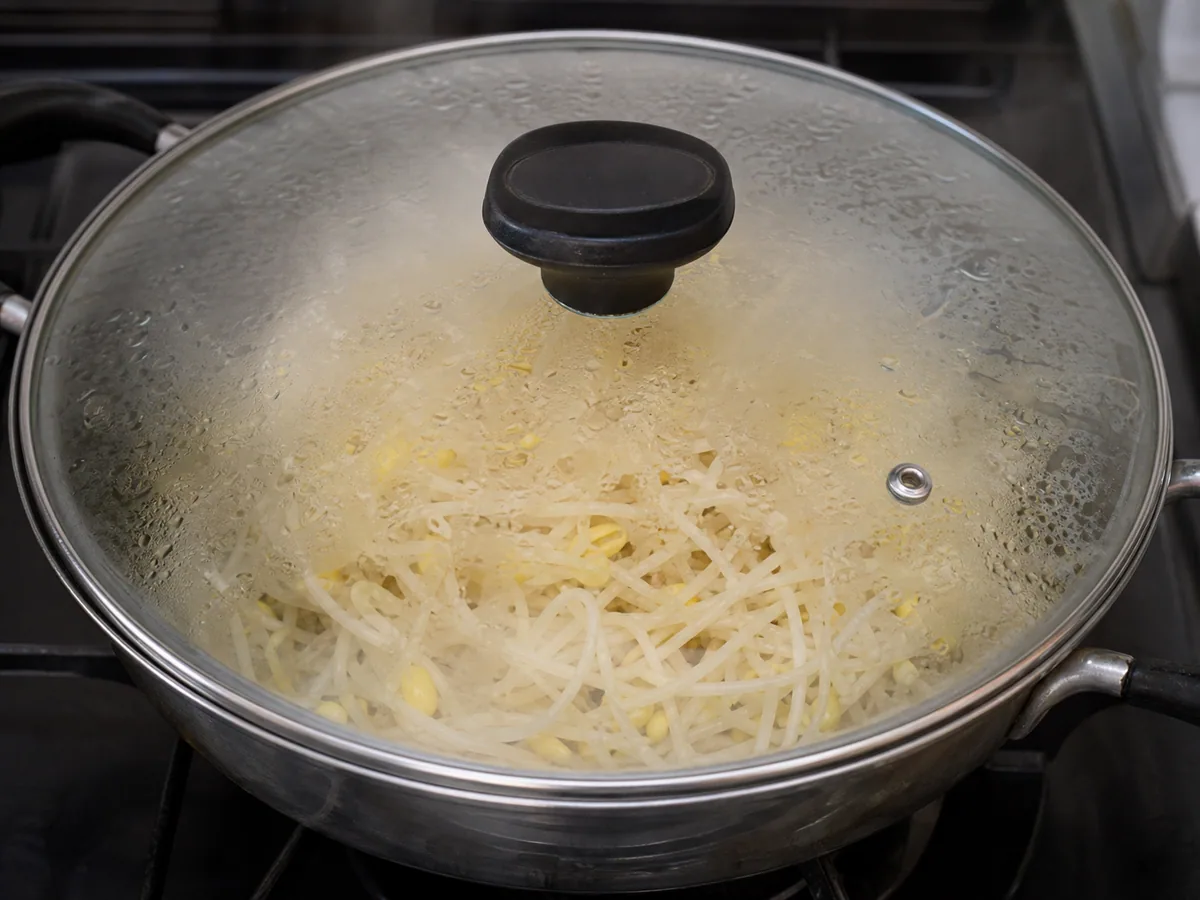
Place 450 g of soybean sprouts and 120 ml of water in a wide pot and cover the pot tightly. Bring to a steady boil over medium-high heat. As soon as steam gathers firmly around the lid, start the timer and cook for 4 minutes without lifting the lid. The finished sprouts should be steaming hot throughout, with flexible stems and tender bean heads that still hold their shape.
04:00Drain until the surface moisture is gone
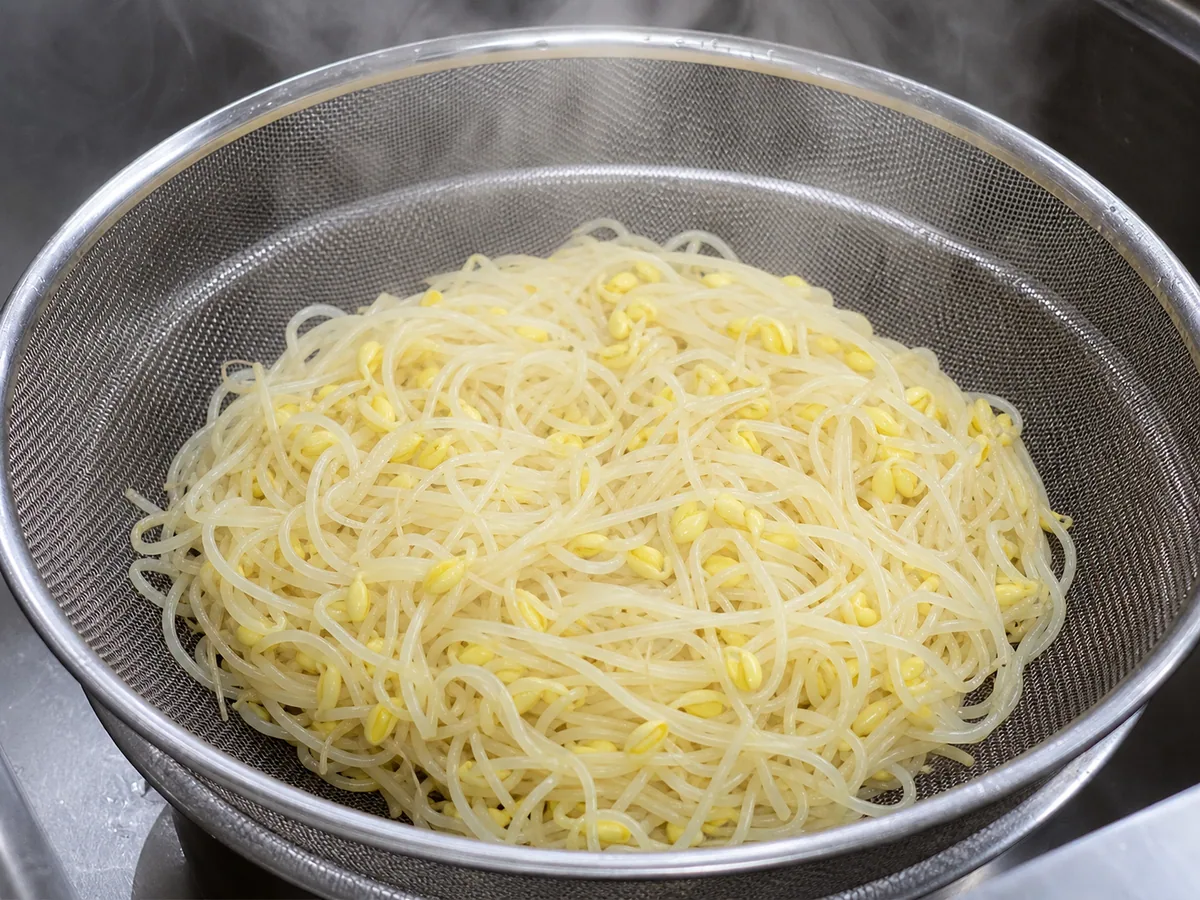
Immediately tip the cooked sprouts into a colander. Spread them slightly so steam can escape, then shake the colander several times and let the sprouts drain for about 2 minutes. They should remain warm but should not leave a puddle when moved to the mixing bowl.
02:00Season the warm sprouts and serve
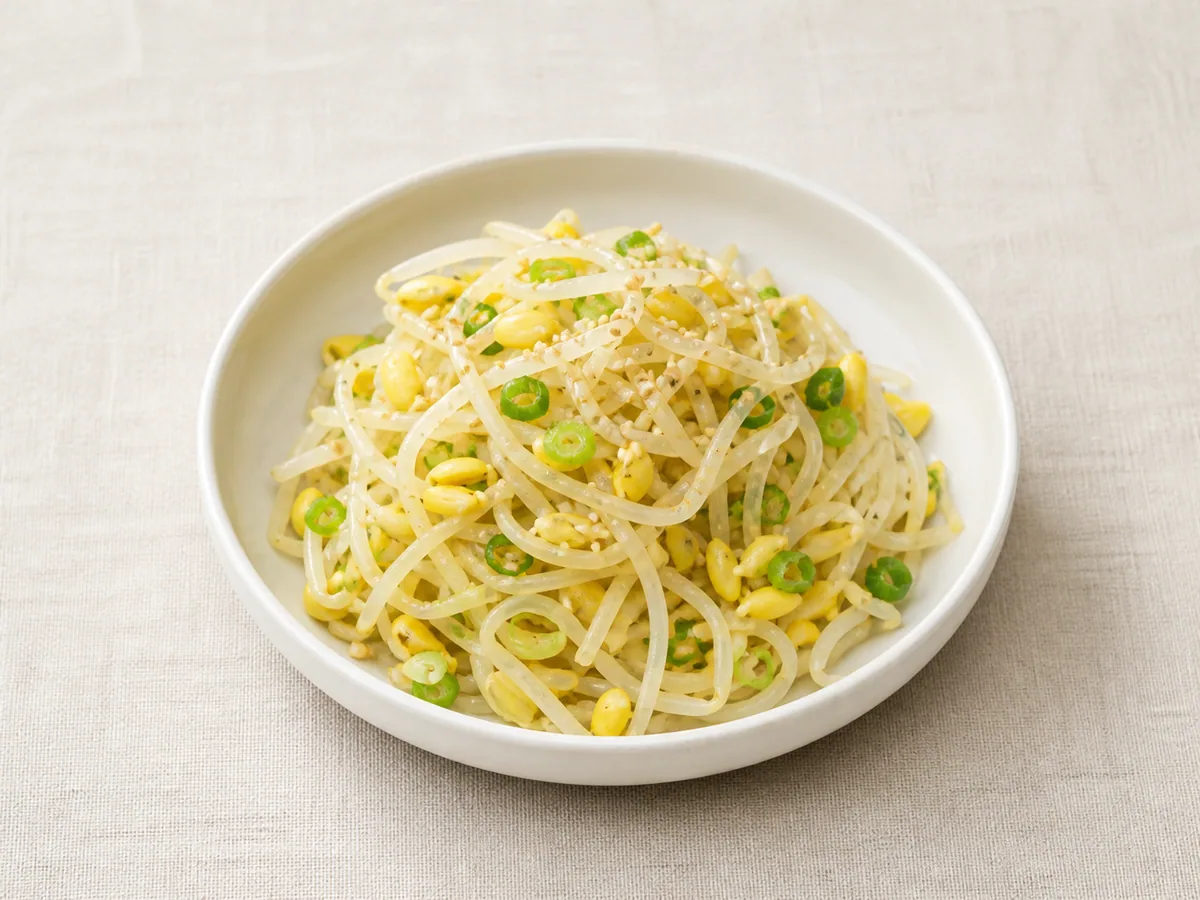
Transfer the warm sprouts to a mixing bowl. Add 2 garlic cloves, 30 g of scallions, 15 ml of toasted sesame oil, 9 g of toasted sesame seeds, 3 g of fine sea salt, and 1/2 g of ground black pepper. Toss gently from the bottom until the seasoning is evenly distributed without crushing the bean heads. Taste one stem, adjust the balance with a small extra pinch of salt only if needed, and serve as a banchan alongside rice and other Korean dishes.


Smart Substitutions
- No soybean sprouts? Use mung bean sprouts and shorten the covered cooking time to 4 to 5 minutes; the result will be lighter and less nutty.
- No toasted sesame oil? Use perilla oil for another distinctly Korean nutty finish, or use a neutral oil and increase the toasted sesame seeds slightly.
- No scallions? Use garlic chives or common chives for a fresh green note.
- Want a spicy version? Add gochugaru to taste with the seasonings and use less black pepper.
Tips and Variations
- Start the 4-minute timer only after the covered pot reaches a steady boil.
- Leave the lid closed during cooking so the sprouts heat evenly and their raw-bean aroma dissipates.
- Drain aggressively before seasoning; even a small amount of trapped cooking water can mute the sesame flavor.
What Went Wrong?
- The sprouts smell strongly raw Return them to the covered pot with a splash of water and cook at a steady boil for 1 to 2 minutes longer.
- The seasoning collects at the bottom Drain the sprouts more thoroughly, then toss again from the bottom while they are still warm.
- The sprouts are too soft On the next batch, begin timing at a full boil and reduce the covered cooking time by 1 minute.
- The sesame flavor is harsh Use toasted sesame oil as a finishing seasoning rather than heating it in the pot, and toss it in only after draining.
Nutrition Estimate
- Fiber: 3 g per serving
- Sodium: 300 mg per serving
Nutrition disclaimer:This recipe is provided for general cooking information only. Nutrition values are estimates and may vary by ingredients, brands, preparation methods, and serving sizes. Check ingredient labels and follow appropriate food-safety practices. This content is not medical, dietary, allergy, or professional food-safety advice.
FAQ
Found an error or have a suggestion?
Help us improve this recipe. Send us your feedback and include the recipe name so we can take a look.