Method
Slice and coat the beef
Pat 570 g of beef top sirloin dry with paper towels. With a sharp knife, cut it across the grain into pieces about 3 mm (1/8 in) thick; ask a butcher for bulgogi-cut beef when available. Grate 180 g of Asian pear and half of 150 g of yellow onion into a large bowl. Mince 4 garlic cloves and grate 4 g of fresh ginger, then whisk both into the bowl with 60 ml of reduced-sodium soy sauce (contains soy and wheat), 25 g of light brown sugar, 15 ml of toasted sesame oil (contains sesame), and 1 g of black pepper. Add the beef and turn until every slice is evenly coated, then continue directly to the next preparation step. Wash the knife, cutting board, bowl rim, and hands with hot soapy water after handling raw beef.
Prepare the vegetables
Thinly slice the remaining onion. Slice 120 g of fresh shiitake mushrooms. Slice 3 green onions, keeping the pale pieces separate from the dark green tops. Place the vegetables on a clean plate away from utensils that touched raw beef.
Brown the vegetables
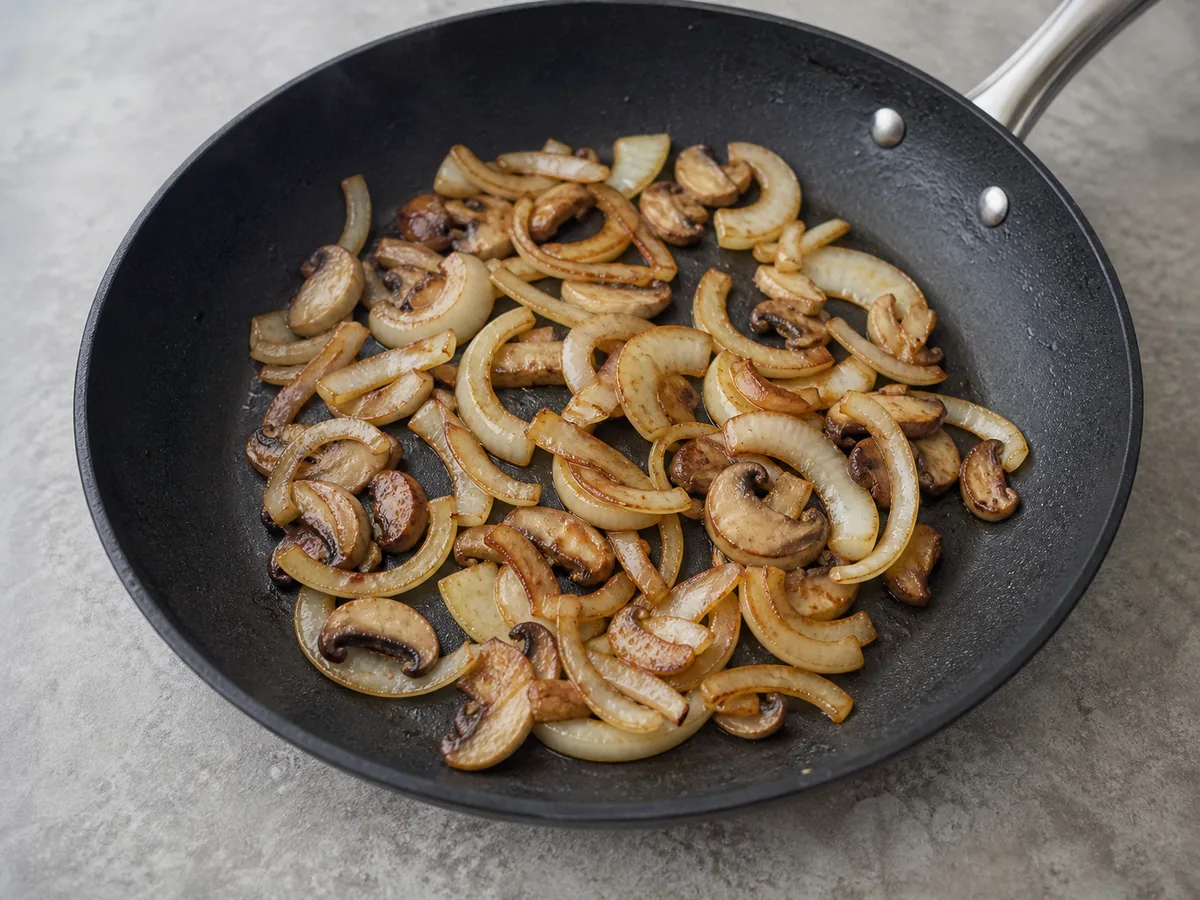
Heat a large heavy skillet or griddle over medium-high heat until a drop of water evaporates almost at once. Add 15 ml of neutral vegetable oil, then add the sliced onion, 120 g of fresh shiitake mushrooms, and pale green onion pieces. Stir-fry for 3 to 4 minutes, starting to check at 3 minutes, until the onion bends easily and the mushroom edges begin to brown. Transfer the vegetables to a clean plate.
03:00Sear the beef in batches
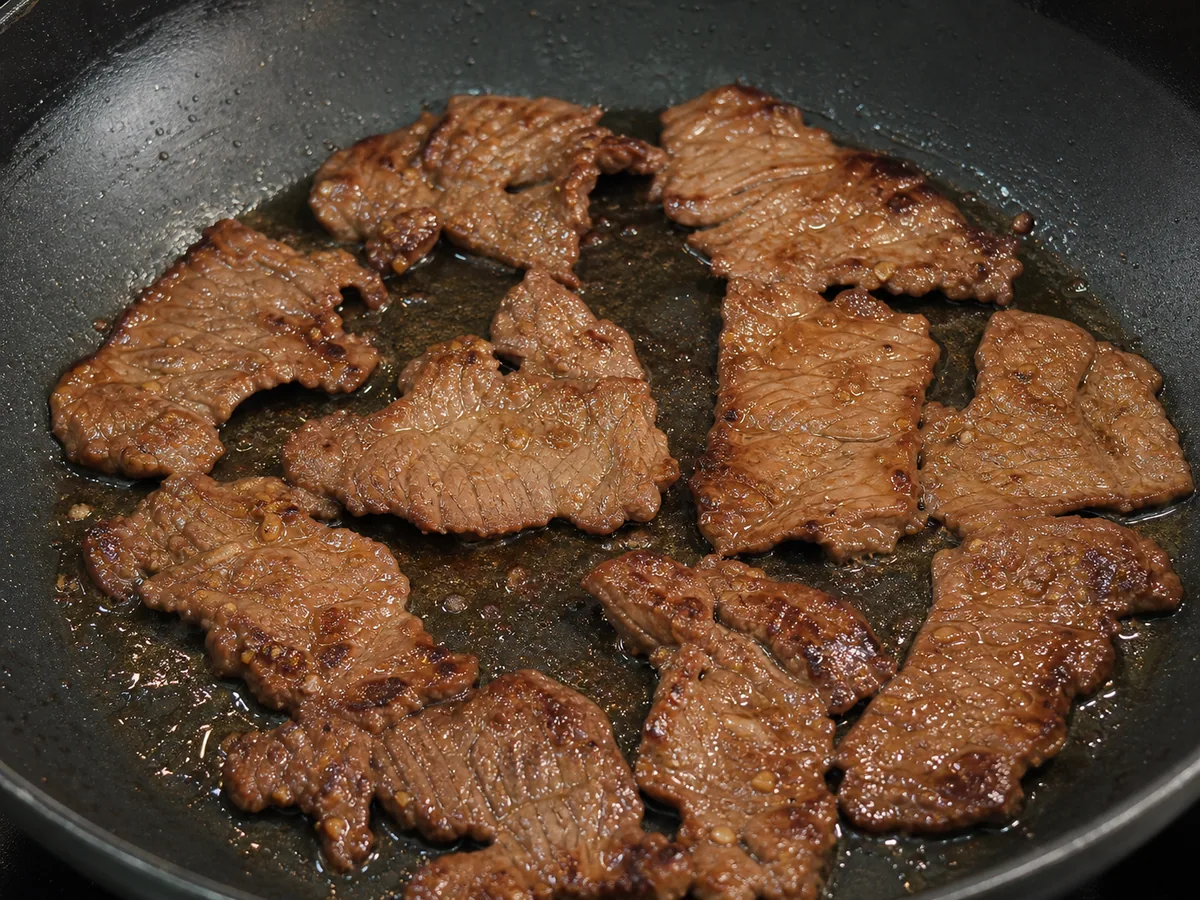
Raise the heat to high. Lift the beef from the marinade with tongs, letting excess drip back into the bowl, and arrange it in uncrowded single-layer batches. Discard any uncooked marinade. Sear each batch for 2 to 3 minutes, turning once and starting to check at 2 minutes, until the edges are browned and no raw center remains. Use an instant-read food thermometer on the thickest folded piece; it must reach at least 63°C/145°F. Transfer each cooked batch to a clean plate, and keep raw tongs separate from serving utensils.
02:00Glaze the beef and vegetables
Return the cooked beef and vegetables to the skillet. Toss over high heat for 1 minute, just until everything is glossy and any released juices are bubbling.
01:00Rest and serve
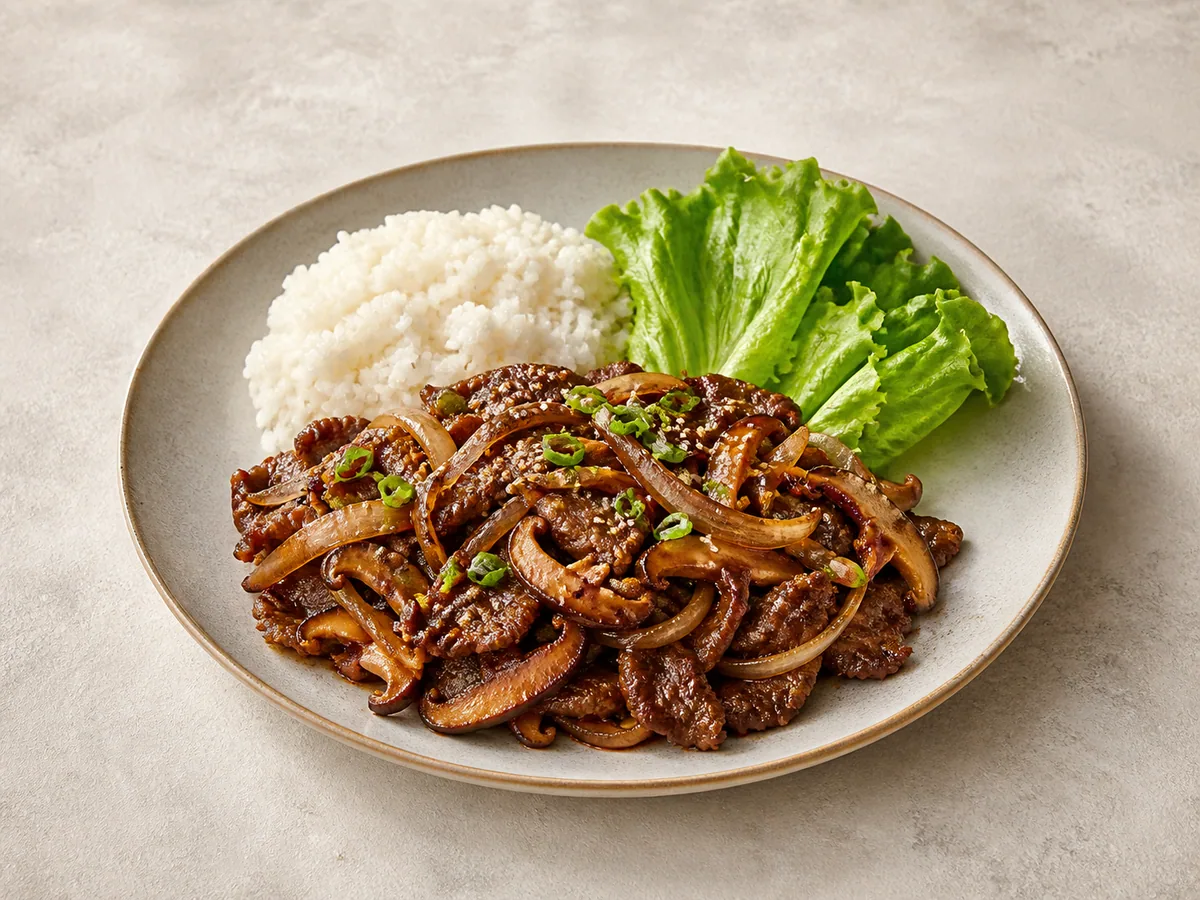
Remove the skillet from the heat and let the beef rest for 3 minutes. Sprinkle with 9 g of toasted sesame seeds (contains sesame) and the reserved dark green onion tops. Serve immediately with steamed short-grain rice (optional) and crisp lettuce leaves (optional).
03:00


Smart Substitutions
- No Asian pear? Use an equal weight of a sweet, crisp apple. The flavor will be slightly less floral, but the grated fruit will still soften and sweeten the marinade.
- No shiitake mushrooms? Use cremini or oyster mushrooms and cook them until their edges take on color.
- Prefer another beef cut? Ribeye is especially tender. Flank steak also works when cut very thinly across the grain and evenly coated with the pear-soy mixture before cooking.
- Need a wheat-free soy sauce alternative? Use reduced-sodium tamari whose ingredient label suits your needs; sodium and intensity vary by brand, so avoid adding extra salt.
Tips and Variations
- Cut across the grain so the short muscle fibers stay tender after the quick sear.
- Leave visible space between slices in the skillet; crowded beef releases steam before it can brown.
- Use a clean plate and clean serving utensils for cooked beef rather than reusing items that held it raw.
What Went Wrong?
- Beef is steaming instead of browning The pan is crowded or not hot enough. Remove some beef, let the skillet regain heat, and cook in smaller batches.
- Beef feels tough The slices may be too thick or cut with the grain. Cut thinner pieces across the grain and avoid cooking beyond the point needed for safe doneness.
- Marinade scorches Sugar can catch on an overheated pan. Wipe away blackened residue between batches and lower the heat slightly while keeping the skillet hot enough to sizzle.
- Finished bulgogi tastes too salty Soy sauce strength varies. Use a lower-sodium product and measure it carefully; do not add separate salt to the marinade.
Nutrition Estimate
- Fiber: 4 g per serving
- Sodium: 680 mg per serving
Nutrition disclaimer:This recipe is provided for general cooking information only. Nutrition values are estimates and may vary by ingredients, brands, preparation methods, and serving sizes. Check ingredient labels and follow appropriate food-safety practices. This content is not medical, dietary, allergy, or professional food-safety advice.
FAQ
Found an error or have a suggestion?
Help us improve this recipe. Send us your feedback and include the recipe name so we can take a look.