Method
Make and rest the dough
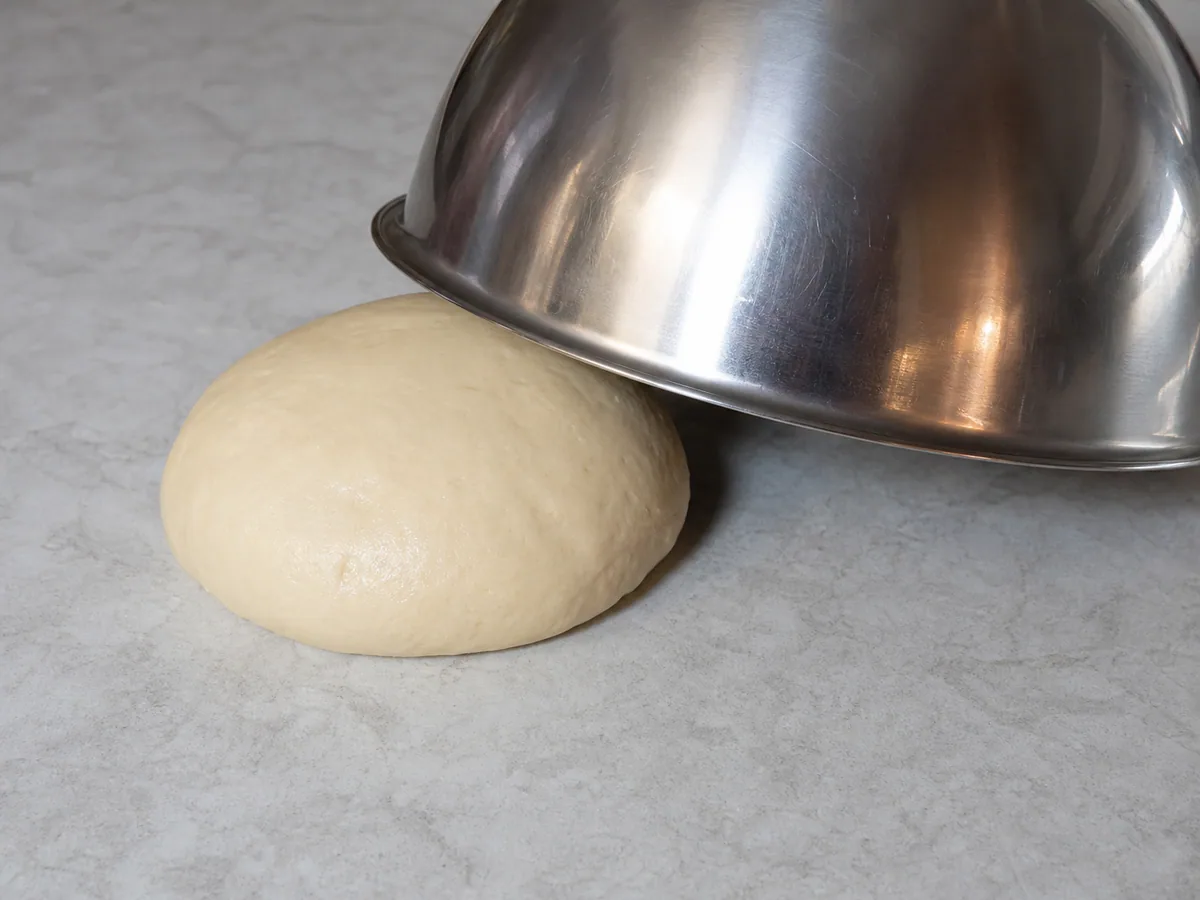
Combine 250 g of all-purpose flour for dough and 3 g of fine salt in a wide bowl. Add 125 ml of warm water, 15 ml of neutral oil, and 5 ml of apple cider vinegar, then stir until a rough dough forms. Knead on a clean, unfloured surface for 8 to 10 minutes, pressing and folding until the dough feels smooth, supple, and slightly tacky but no longer sticks to your hands. Shape it into a ball, cover it with an inverted bowl, and rest for 30 minutes at room temperature so the gluten can relax.
30:00Toast the breadcrumbs
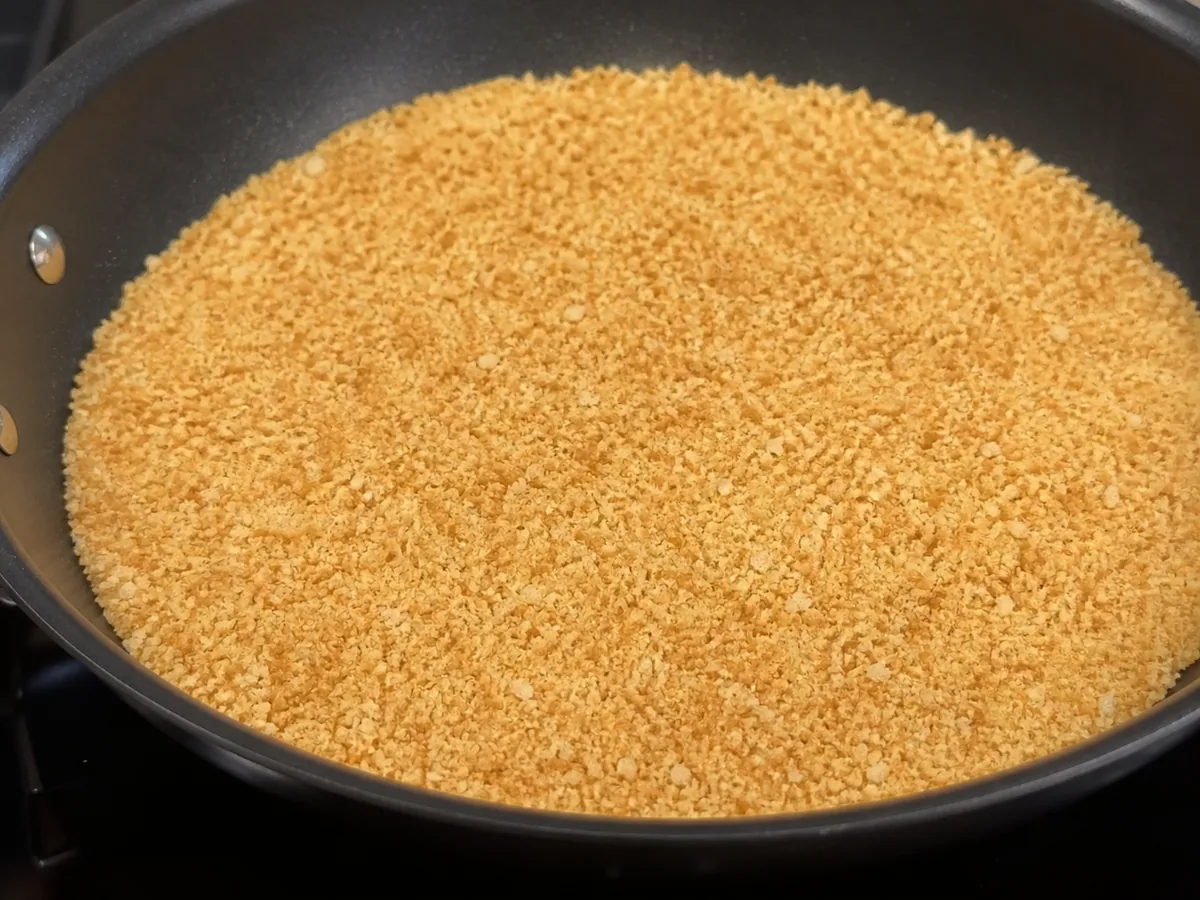
While the dough rests, melt 30 g of unsalted butter for breadcrumbs in a wide skillet over medium heat. Add 70 g of plain dry breadcrumbs and cook for 4 to 6 minutes, stirring often, until evenly golden and fragrant. Start checking at 4 minutes and lower the heat if the crumbs darken in patches. Transfer the toasted crumbs to a plate so they stop browning.
04:00Prepare the apple filling
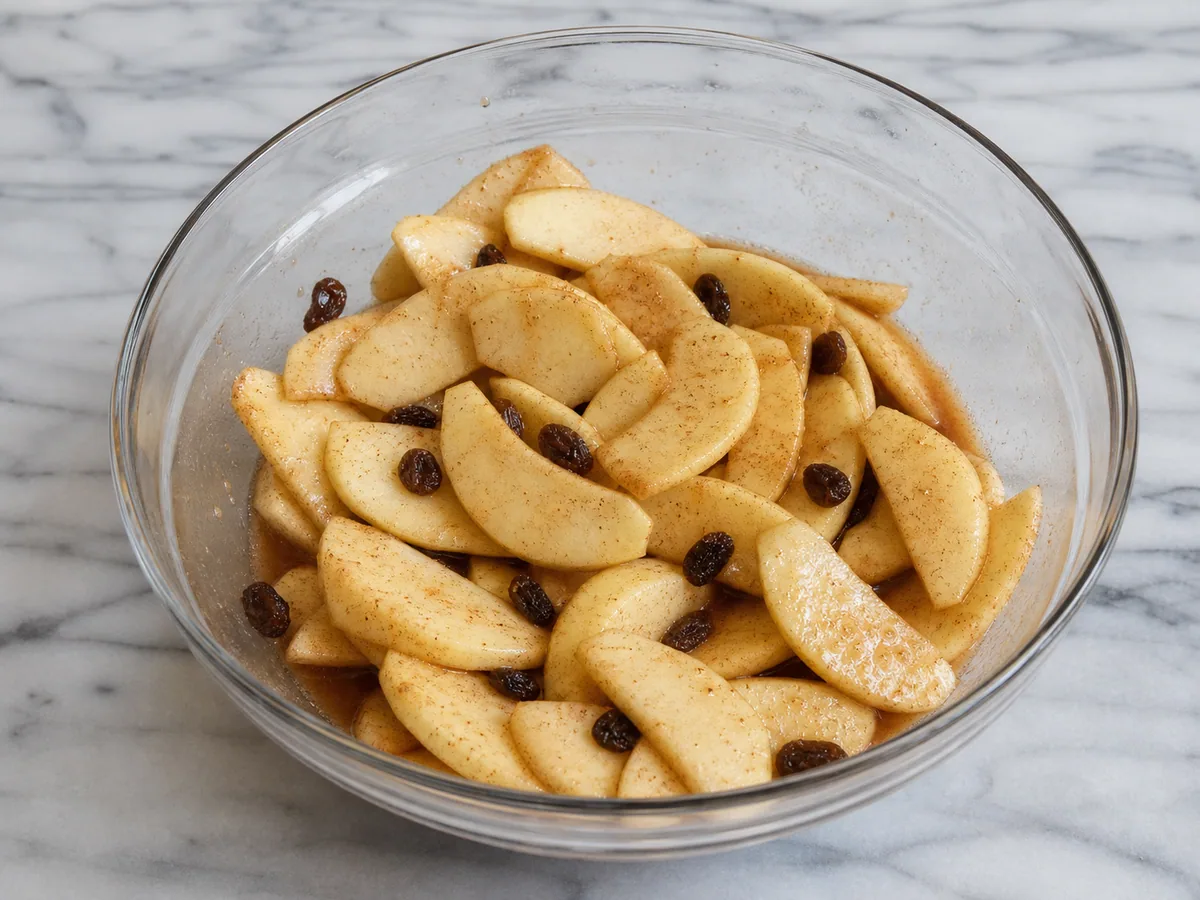
While the dough continues to rest, peel and core 900 g of firm tart apples, then cut them into thin, even slices about 3 mm thick. Toss them immediately with 30 ml of lemon juice, 100 g of granulated sugar, 5 g of ground cinnamon, and 70 g of seedless raisins. Mix until the sugar and spice coat the fruit evenly, then leave the filling in the bowl while you stretch the dough; do not drain away the juices.
Stretch the dough paper-thin
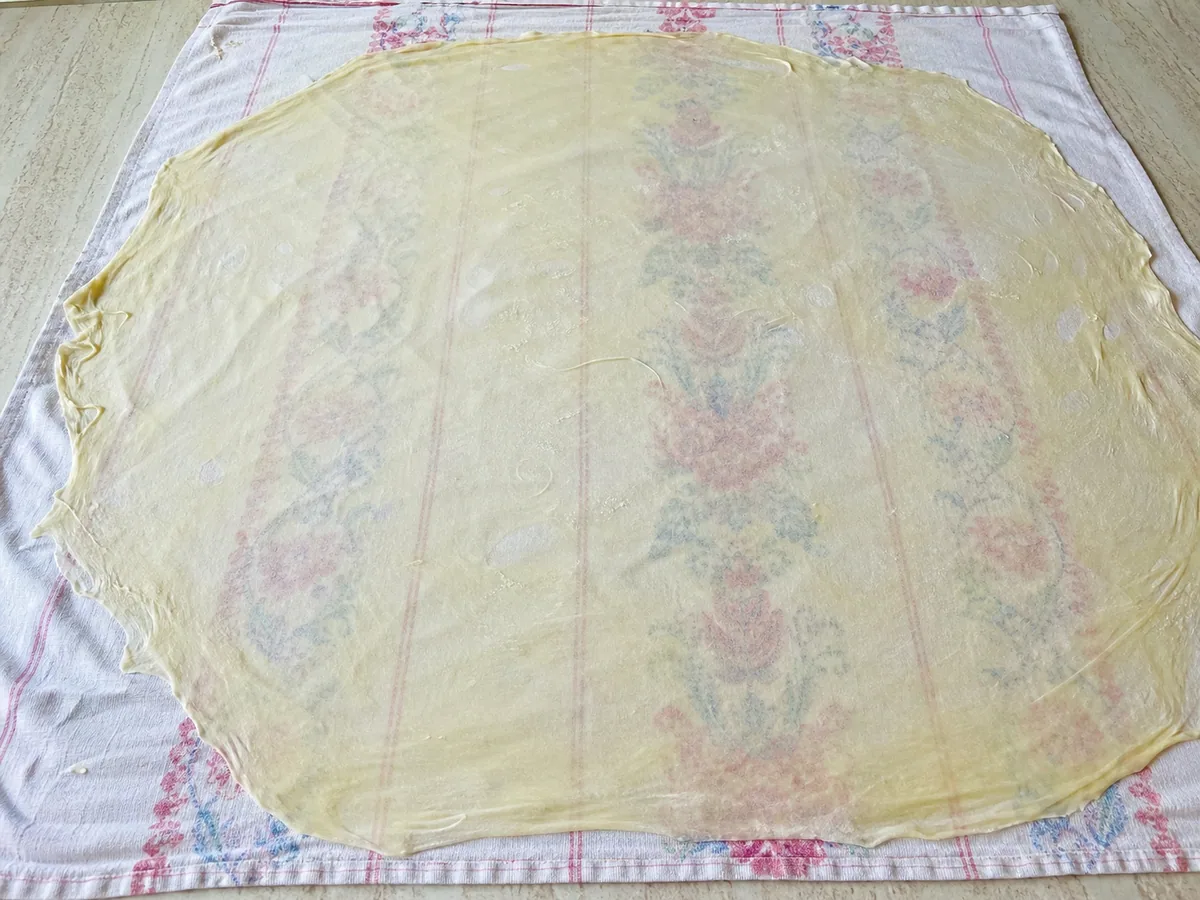
Heat the oven to 190°C (375°F) and line a rimmed baking sheet with parchment. Spread a clean cotton cloth over a large table and dust it lightly with 15 g of all-purpose flour for dusting. Put the rested dough in the center, roll it into a thin rectangle, then slide the backs of your hands underneath and gently stretch from the center outward. Work around the sheet until it is very thin and translucent enough to see the cloth pattern through it. Lay it flat and trim away any thick rope-like edge.
Fill and roll the strudel
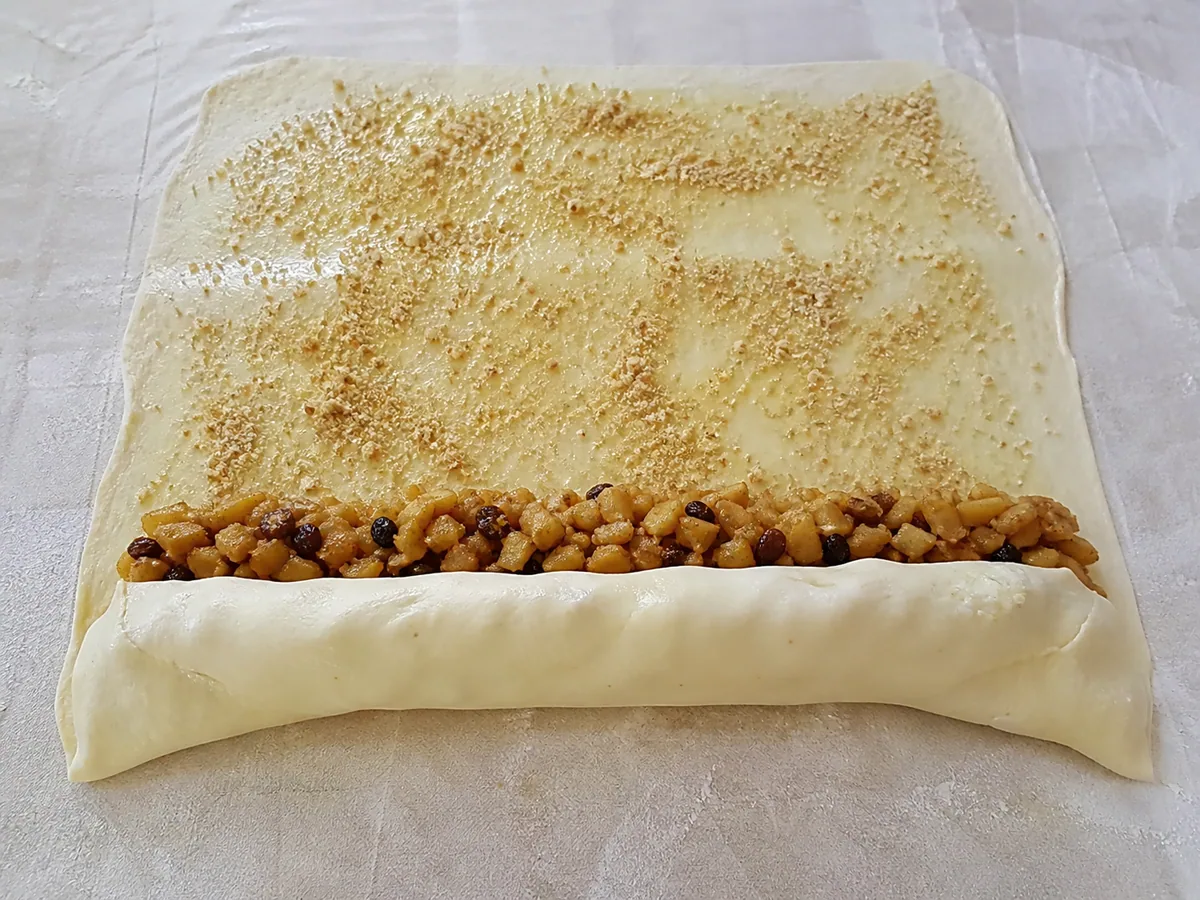
Brush 30 g of unsalted butter for dough over the stretched dough, reaching close to the edges. Spread the toasted breadcrumb mixture over the lower third, then arrange the apple filling in a compact, even band along one long edge, leaving a clear border at both ends. Fold the short sides inward over the filling. Lift the cloth from the filled edge to roll the dough around the apples without squeezing, stopping with the seam underneath. Transfer the strudel to the prepared baking sheet and curve it gently only if needed to fit.
Bake until deeply golden
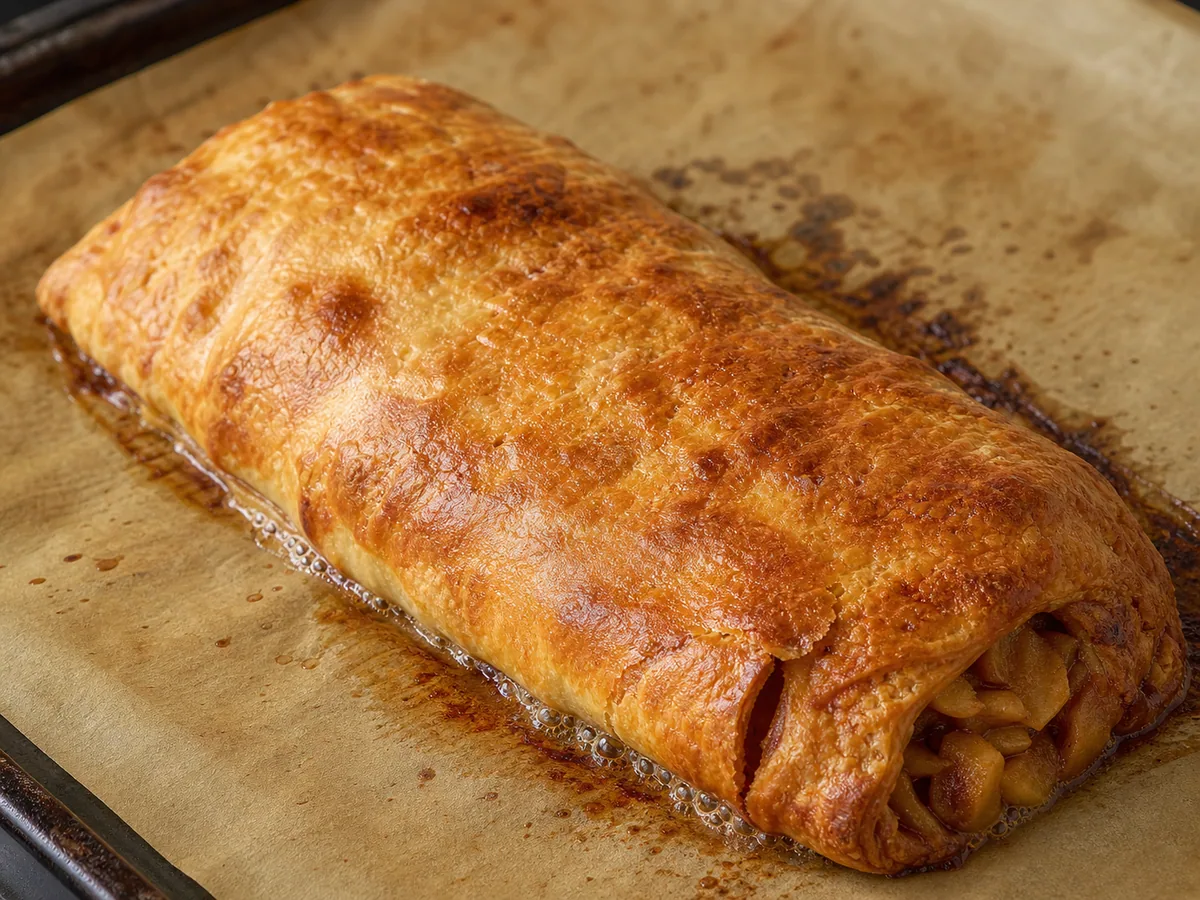
Brush 30 g of unsalted butter for baking over the top and sides of the strudel. Bake on the lower-middle rack for 40 to 45 minutes, rotating the baking sheet halfway through, until the pastry is deeply golden, crisp, and dry-looking rather than pale or soft. Start checking at 40 minutes; a little bubbling apple juice at the seam is normal, but the dough should be fully browned before it leaves the oven.
40:00Rest, dust, and slice
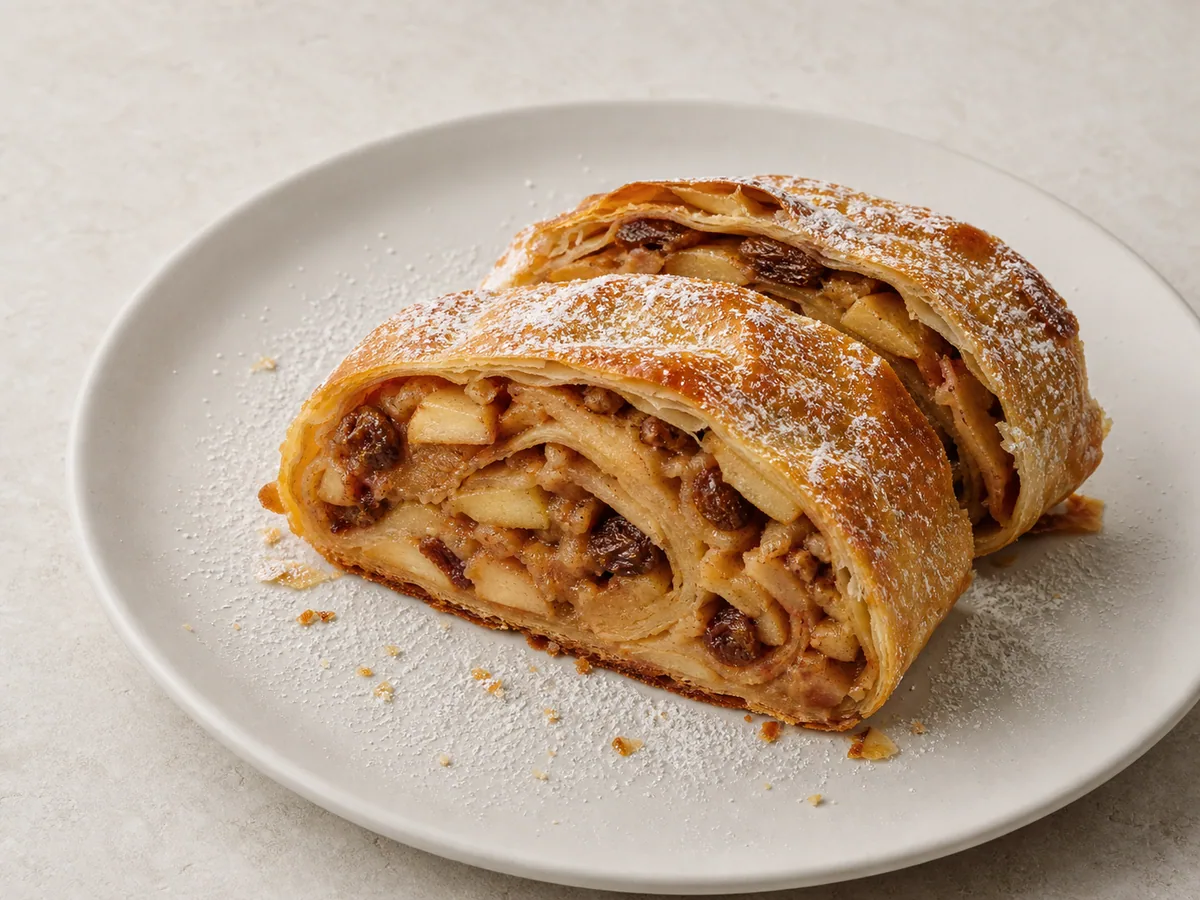
Move the strudel, still on its parchment, to a wire rack and let it stand for 20 minutes. This pause allows the apple juices to settle so the spiral slices cleanly while remaining warm. Dust with 15 g of powdered sugar, then cut with a serrated knife using a gentle sawing motion.
20:00


Smart Substitutions
- No raisins? Use dried currants for smaller bursts of sweetness, or omit the dried fruit for a cleaner apple flavor.
- No tart apples? Use firm Braeburn, Pink Lady, or Honeycrisp apples, and reduce the granulated sugar by 2 tablespoons (25 g) if most of the fruit tastes sweet.
- No plain breadcrumbs? Use 70 g (about 2/3 cup) finely crushed unseasoned crackers and toast them gently in the butter just as you would the breadcrumbs.
- Prefer a shortcut dough? Use 8 large phyllo sheets. Melt the butter for dough and baking together, brush each sheet lightly as you stack, add the toasted breadcrumbs and apple filling along one long edge, fold in the sides, and roll. Brush the top with the remaining butter and bake at 190°C (375°F) for 30 to 35 minutes, until deeply golden and crisp.
Tips and Variations
- A warm room and a warm, well-rested dough make stretching much easier than a cold kitchen does.
- Slice the apples evenly so they soften at the same rate and form a neat spiral instead of bulky pockets.
- Keep the filling in a compact band rather than spreading it across the whole sheet; the remaining dough creates the crisp inner layers.
What Went Wrong?
- Dough keeps springing back Cover it and let it relax for another 10 minutes, then continue stretching from the center outward without forcing the edges.
- Dough tears while stretching Patch a large tear with a thin trimmed scrap and press lightly. Ignore tiny pinholes because the rolled layers will overlap them.
- Strudel has a soggy underside Toast the breadcrumbs until truly golden, keep the filling compact, and bake on the lower-middle rack until the pastry is deeply browned.
- Filling leaks from the ends Leave a clear border, fold both short sides inward before rolling, and avoid squeezing the apple band as the cloth moves the dough.
Nutrition Estimate
- Fiber: 4 g per serving
- Sodium: 220 mg per serving
Nutrition disclaimer:This recipe is provided for general cooking information only. Nutrition values are estimates and may vary by ingredients, brands, preparation methods, and serving sizes. Check ingredient labels and follow appropriate food-safety practices. This content is not medical, dietary, allergy, or professional food-safety advice.
FAQ
Found an error or have a suggestion?
Help us improve this recipe. Send us your feedback and include the recipe name so we can take a look.