Method
Prepare the chicken and vegetables
On a clean board, chop 300 g of yellow onions, mince 16 g of garlic cloves, and cut 500 g of gold potatoes, 300 g of carrots, 300 g of orange-fleshed sweet potatoes, and 200 g of parsnips into chunky 4 cm (1 1/2 in) pieces, keeping each vegetable separate. On a separate board or sanitized surface, pat 900 g of boneless skinless chicken thighs dry and place it in a bowl reserved for raw poultry. Combine 4 g of ground coriander, 4 g of mild curry powder, 2 g of smoked paprika, 3 g of kosher salt for chicken, and 1 g of black pepper, then coat the chicken evenly. Wash hands and clean every utensil and surface that touched raw chicken before continuing.
Brown the chicken
Set a 5- to 6-liter (5- to 6-quart) cast-iron potjie or heavy Dutch oven (for 6 servings) over medium heat; for scaled batches, choose a pot that keeps the ingredient layers at a similar depth. Add 30 ml of olive oil. Brown 900 g of boneless skinless chicken thighs in a single layer, working in batches if needed, until deep golden patches form on both sides, about 8 minutes per batch. Transfer the chicken to a clean plate; it will not be fully cooked yet. Reduce the heat to medium-low.
08:00Soften the onions
Add 300 g of yellow onions to the pot. Cook over medium-low heat for 6 minutes, stirring and scraping up the browned bits, until the onions are soft and lightly golden rather than dark.
06:00Build the spiced broth
Add 16 g of garlic cloves and 1 g of dried thyme and cook for 1 minute, stirring constantly. Stir in 30 g of tomato paste and 20 g of apricot jam until the mixture looks glossy, then pour in 480 ml of low-sodium chicken stock. Add 2 bay leaves and 3 g of kosher salt for potjie. Bring the liquid to a gentle simmer; avoid a hard boil.
01:00Layer the chicken and root vegetables
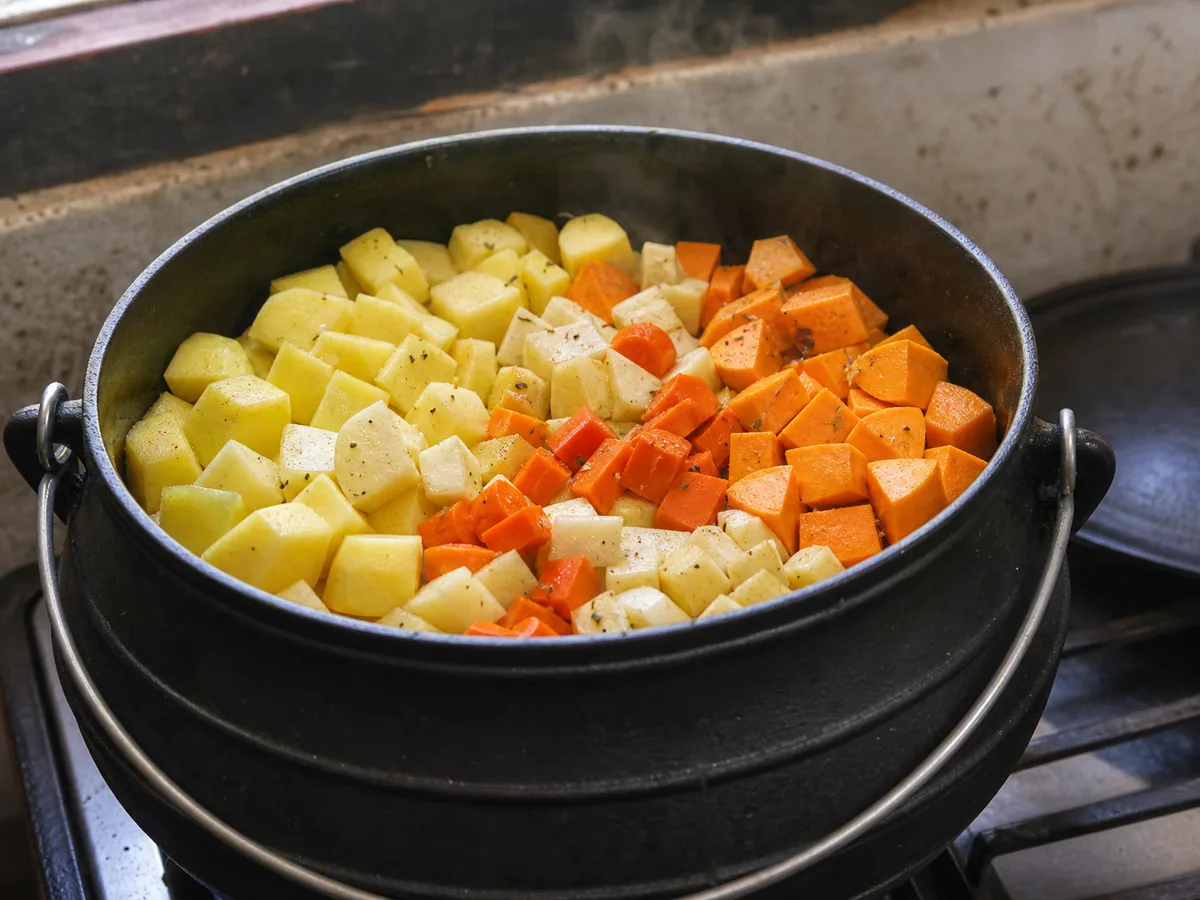
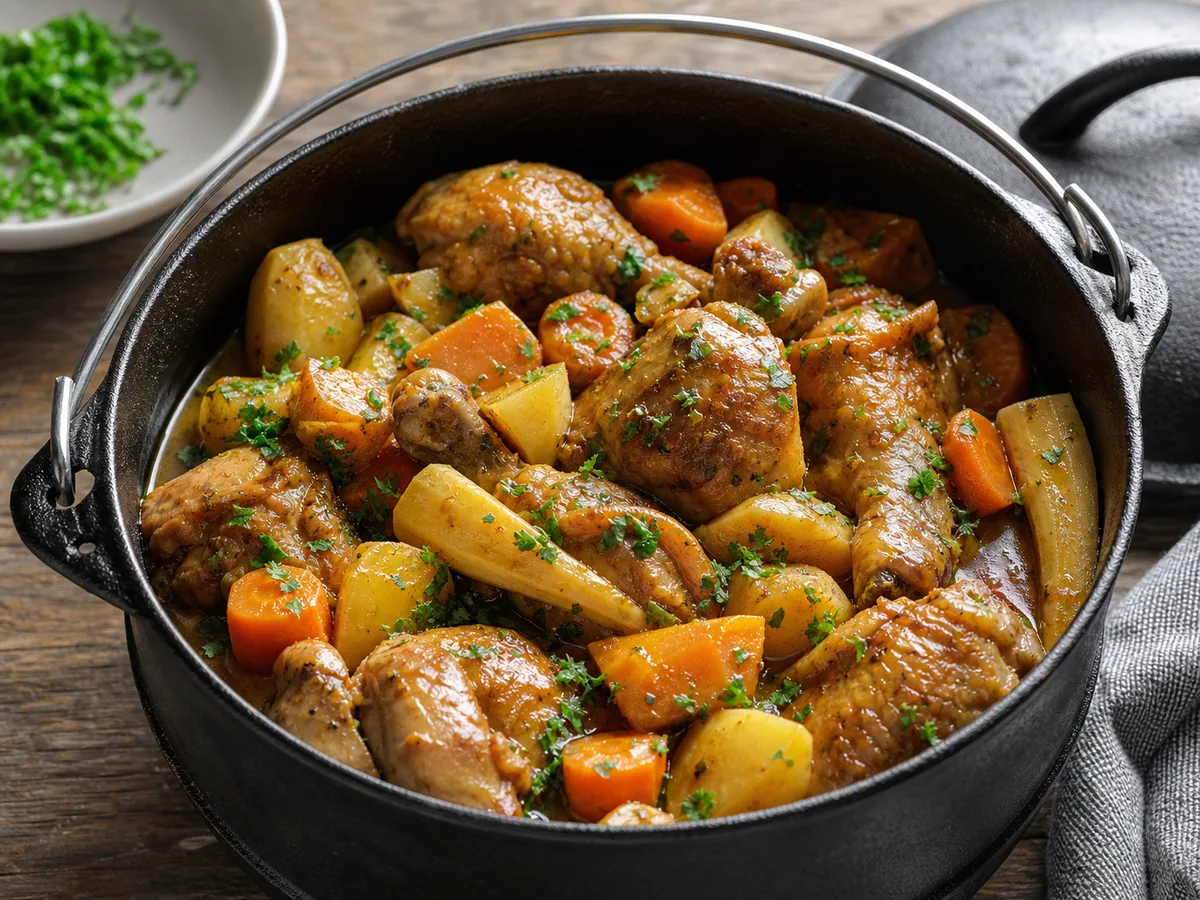
Return 900 g of boneless skinless chicken thighs and any juices on the plate to the pot. Arrange 500 g of gold potatoes over the chicken, followed by 300 g of carrots, 200 g of parsnips, and 300 g of orange-fleshed sweet potatoes in distinct layers. Do not stir. Cover tightly and simmer over low heat for 50 to 60 minutes, adjusting the heat so only an occasional bubble reaches the surface. Start checking at 50 minutes: the root vegetables should be tender when pierced, and a food thermometer inserted into the thickest chicken piece must register 74°C/165°F.
50:00Finish and serve the potjie
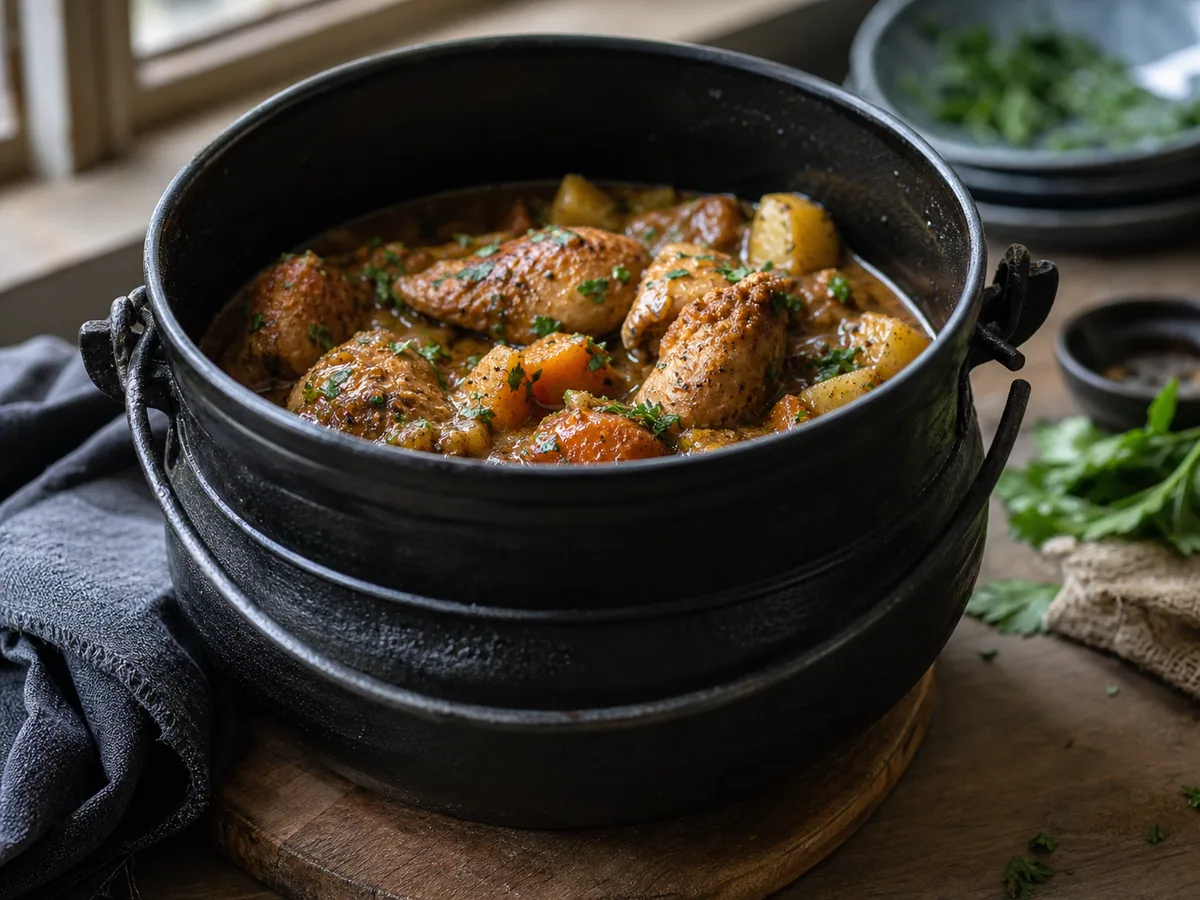
Remove the pot from the heat and keep it covered for 5 minutes so the gravy settles. Discard 2 bay leaves, then gently fold the layers once or twice, lifting from the bottom without crushing the vegetables. Taste the gravy and adjust the seasoning only if needed. Finish with fresh parsley (optional) and serve immediately from the pot.
05:00


Smart Substitutions
- No parsnips? Use peeled rutabaga, turnip, or the same weight of extra carrots.
- No apricot jam? Use peach preserves or a mild fruit chutney for the same gentle sweet-and-tangy balance.
- No potjie pot? Use a heavy Dutch oven with a tight lid and keep the burner low enough for a slow simmer.
- Prefer bone-in chicken? Use the same weight of skinless bone-in thighs. Start checking after 60 minutes and continue the gentle simmer until the thickest thigh reaches 74°C/165°F and the root vegetables are tender.
Tips and Variations
- Keep the root vegetable pieces close in size so they become tender at roughly the same time.
- Layer sweet potato near the top, where the gentler heat helps it hold its shape.
- Resist lifting the lid repeatedly; trapped steam is what cooks the upper vegetable layers evenly.
What Went Wrong?
- Vegetables are breaking apart The heat was probably too high or the pot was stirred early. Lower the heat and fold only once at the end.
- Gravy is too thin After the chicken reaches 74°C/165°F, remove the lid and simmer gently for 5 to 10 minutes before folding the layers.
- Chicken is dry Keep the pot at a quiet simmer and start checking at 50 minutes. Remove it from the heat once the thickest chicken pieces reach 74°C/165°F and the root vegetables are tender.
- Root vegetables are still firm Add a small splash of hot water, cover again, and continue the gentle simmer until a knife slips through the largest pieces.
Nutrition Estimate
- Fiber: 8 g per serving
- Sodium: 660 mg per serving
Nutrition disclaimer:This recipe is provided for general cooking information only. Nutrition values are estimates and may vary by ingredients, brands, preparation methods, and serving sizes. Check ingredient labels and follow appropriate food-safety practices. This content is not medical, dietary, allergy, or professional food-safety advice.
FAQ
Found an error or have a suggestion?
Help us improve this recipe. Send us your feedback and include the recipe name so we can take a look.