Method
Soften the onion
Heat 30 ml of olive oil in a wide, heavy saucepan over medium heat. Chop 150 g of yellow onion and add it to the pan. Cook for 3 minutes, stirring often, until it begins to soften without browning.
03:00Add and soften the pepper
Remove the stem and seeds from 120 g of green bell pepper, cut it into small pieces, and stir it into the pan with 150 g of yellow onion. Cook for 4 to 5 minutes more; start checking at 4 minutes, when both vegetables should be tender but not browned.
04:00Build the tomato base
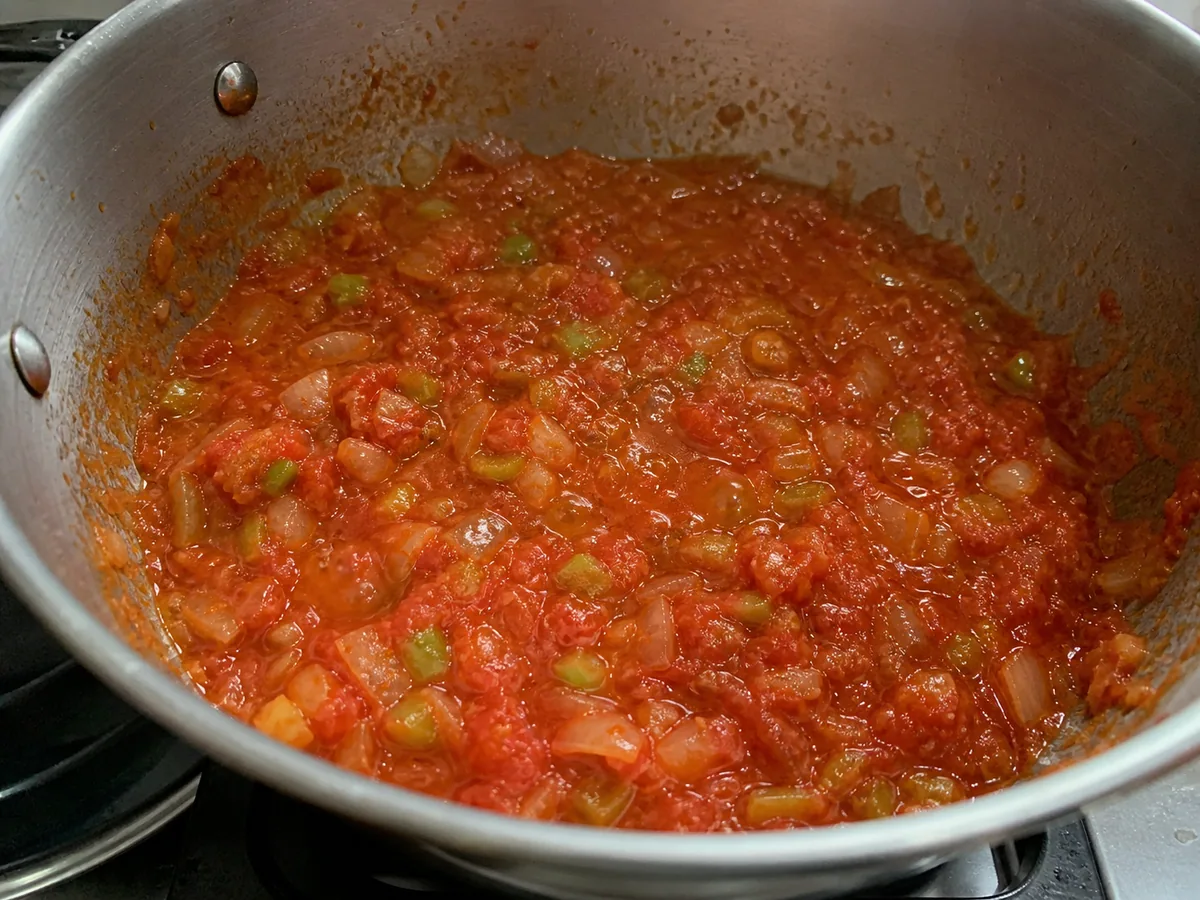
Core 200 g of ripe tomatoes and grate them directly over the pan, stopping when only the skins remain. Stir in 35 g of no-salt-added tomato paste, 4 g of kosher salt, 1 g of black pepper, and 2 g of Aleppo pepper. Cook for 2 to 3 minutes over medium heat, stirring frequently; start checking at 2 minutes, when the paste should darken slightly and the tomato juices should look glossy.
02:00Coat the bulgur and add water
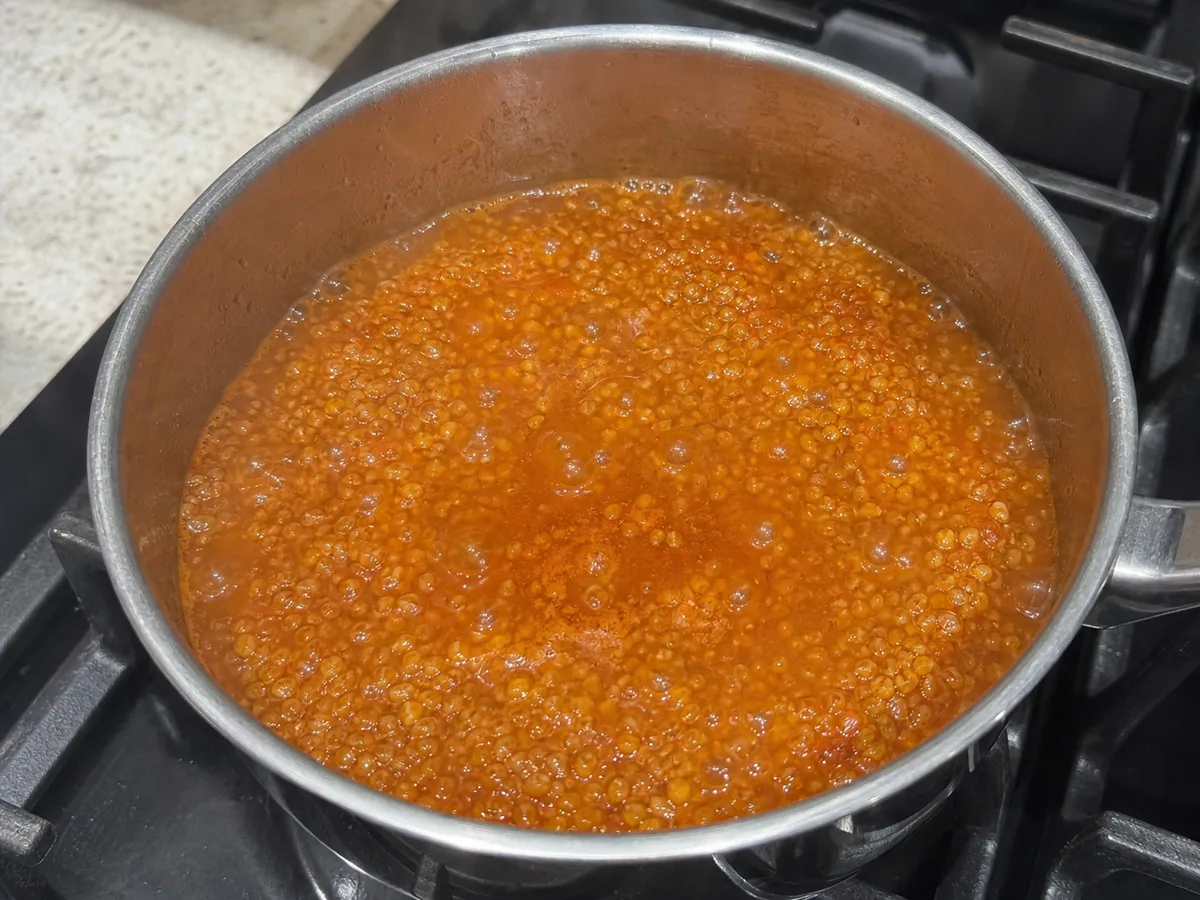
Add 300 g of coarse bulgur wheat and stir for 1 to 2 minutes, until the grains are evenly coated and smell lightly nutty. Pour in 600 ml of water, scrape the bottom of the pan, and raise the heat to high. Bring the mixture to a full boil, then stir once, reduce the heat to low, and cover tightly.
01:00Simmer until the liquid is absorbed
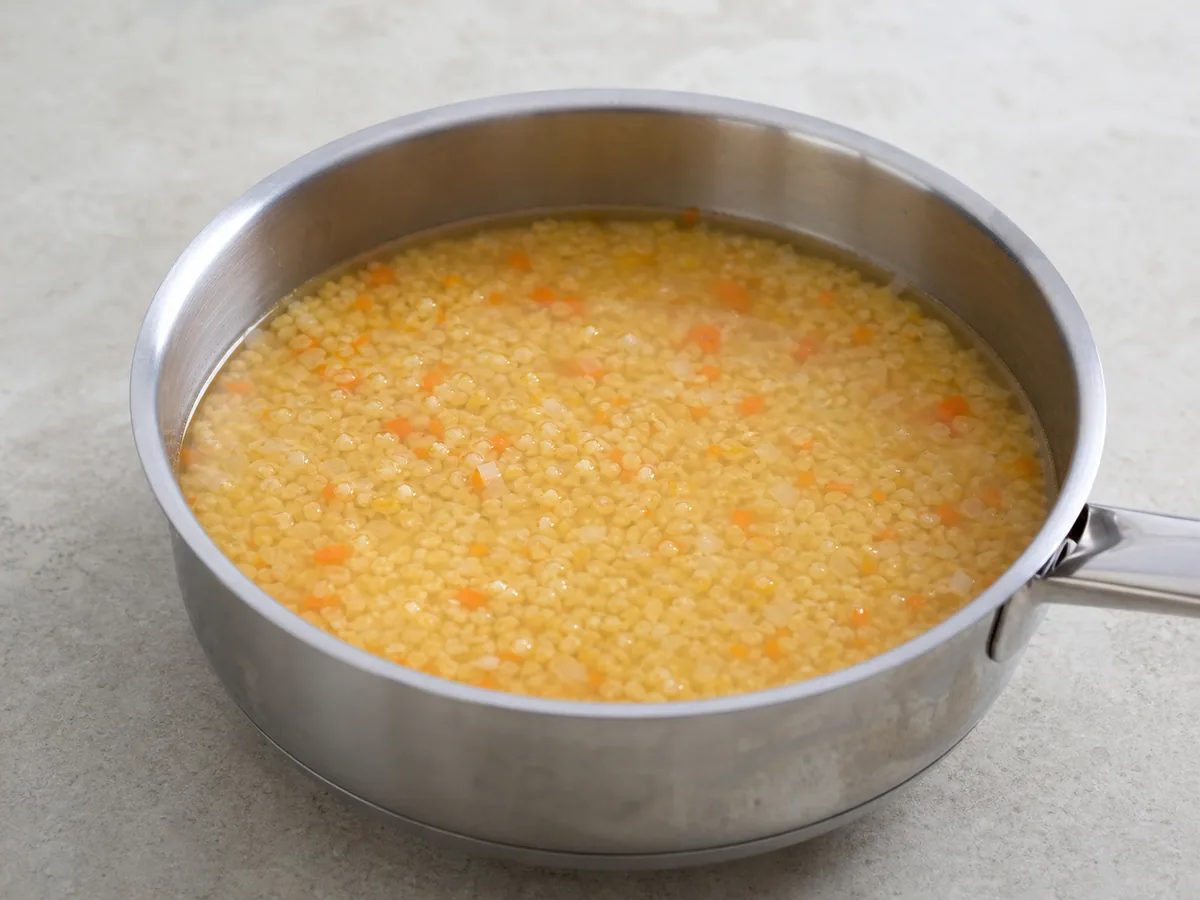
Cook without lifting the lid for 15 to 18 minutes; start checking at 15 minutes. The surface should look dry, small steam holes should be visible, and the bulgur should be tender with a slight chew.
15:00Cook a little longer if needed
When checking, draw a spoon gently along the bottom. If liquid remains or the grains are still too firm, cover the pan again and cook over low heat for 2 minutes more, then check once more.
02:00Rest, fluff, and serve
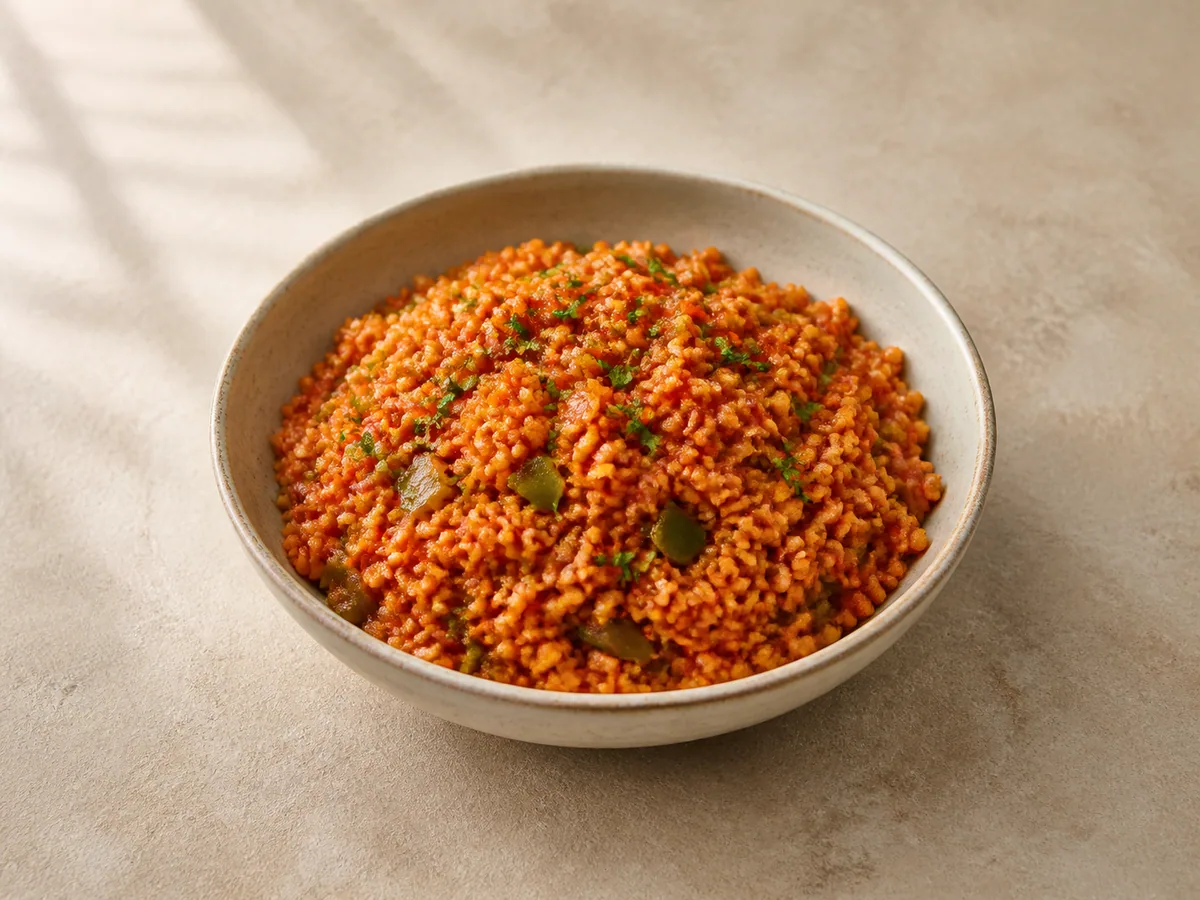
Remove the pan from the heat and leave it covered for 10 minutes so the grains finish absorbing moisture. Uncover and fluff gently with a fork, lifting from the bottom rather than stirring. If using, chop fresh flat-leaf parsley (optional) and scatter it over the pilaf, then serve immediately.
10:00


Smart Substitutions
- No Aleppo pepper? Use sweet paprika with a small pinch of cayenne for similar color and gentle heat.
- No green bell pepper? Use a mild long green pepper, cubanelle pepper, or red bell pepper.
- No fresh tomatoes? Use 200 g (7 ounces) of no-salt-added diced tomatoes and reduce the water by 60 ml (1/4 cup).
- Prefer a richer pilaf? Replace half of the olive oil with unsalted butter for a rounder finish.
Tips and Variations
- Choose a wide pan so the bulgur cooks in a shallow, even layer and absorbs liquid at the same rate.
- Stir only once after the liquid reaches a boil; repeated stirring can make the grains clump.
- Let the grated tomato cook until glossy before adding the bulgur so the flavor tastes concentrated rather than watery.
What Went Wrong?
- Bulgur is still firm Add a small splash of hot water, cover, and cook over low heat for 2 to 3 minutes before checking again.
- Pilaf is wet Cook uncovered over low heat for 1 to 2 minutes, then remove from the heat and complete the covered rest.
- Grains turned pasty Use coarse bulgur next time and avoid stirring once the liquid comes to a boil.
- Tomato flavor tastes sharp Cook the tomato base for another minute before adding the bulgur, and make sure the paste darkens slightly.
Nutrition Estimate
- Fiber: 11 g per serving
- Sodium: 430 mg per serving
Nutrition disclaimer:This recipe is provided for general cooking information only. Nutrition values are estimates and may vary by ingredients, brands, preparation methods, and serving sizes. Check ingredient labels and follow appropriate food-safety practices. This content is not medical, dietary, allergy, or professional food-safety advice.
FAQ
Found an error or have a suggestion?
Help us improve this recipe. Send us your feedback and include the recipe name so we can take a look.