Method
Prepare the onions and toppings
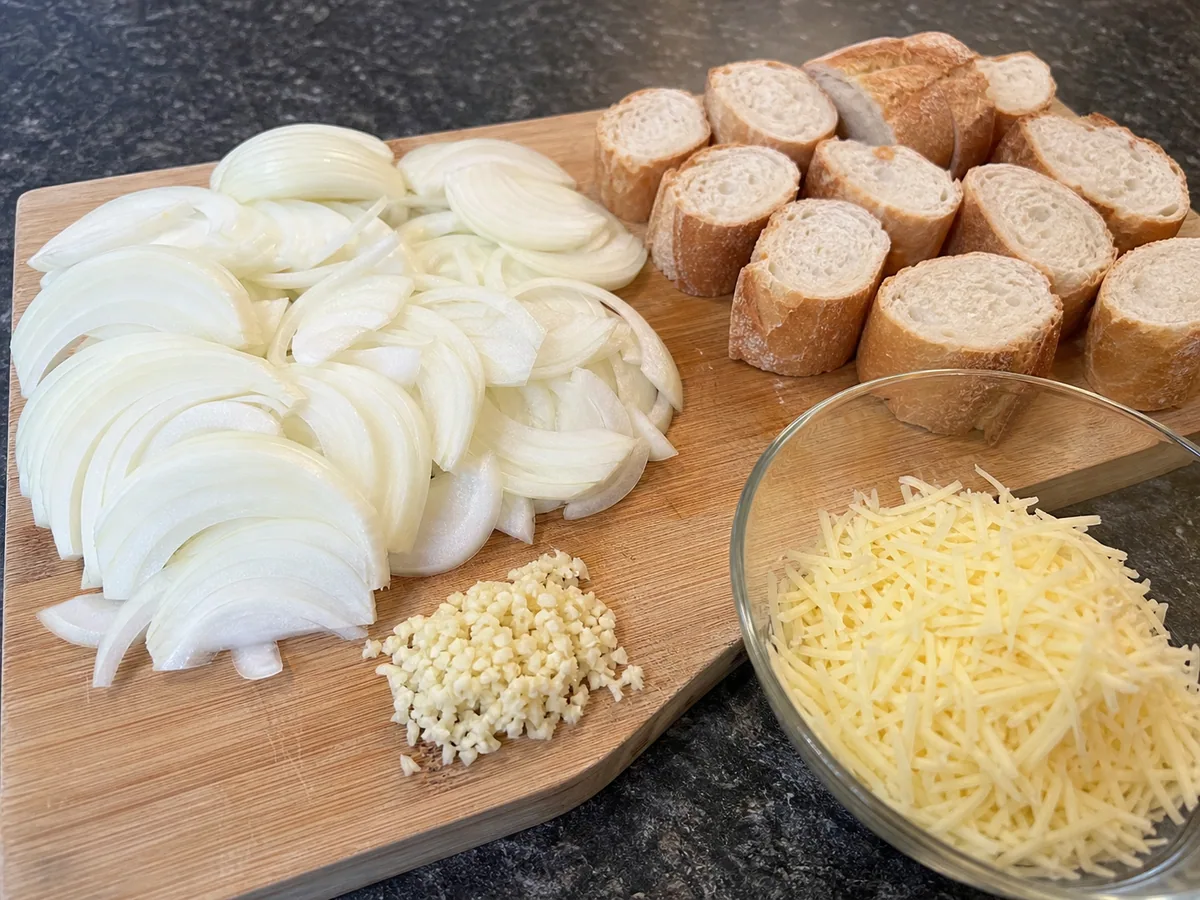
Halve and peel 1000 g of yellow onions, then slice them from root to stem into thin, even half-moons. Peel 2 garlic cloves and mince it. Cut 170 g of baguette into one sturdy slice per serving, each about 2 cm (3/4 in) thick, and grate 140 g of Gruyere cheese. Keep the bread and cheese separate while the soup cooks.
Soften the onions
Melt 42 g of unsalted butter in a wide, heavy pot over medium heat. Add 1000 g of yellow onions and 3 g of fine sea salt, toss thoroughly, and cover. Cook for 10 minutes, stirring once halfway through, until the onions have softened and released a noticeable amount of liquid.
10:00Caramelize the onions
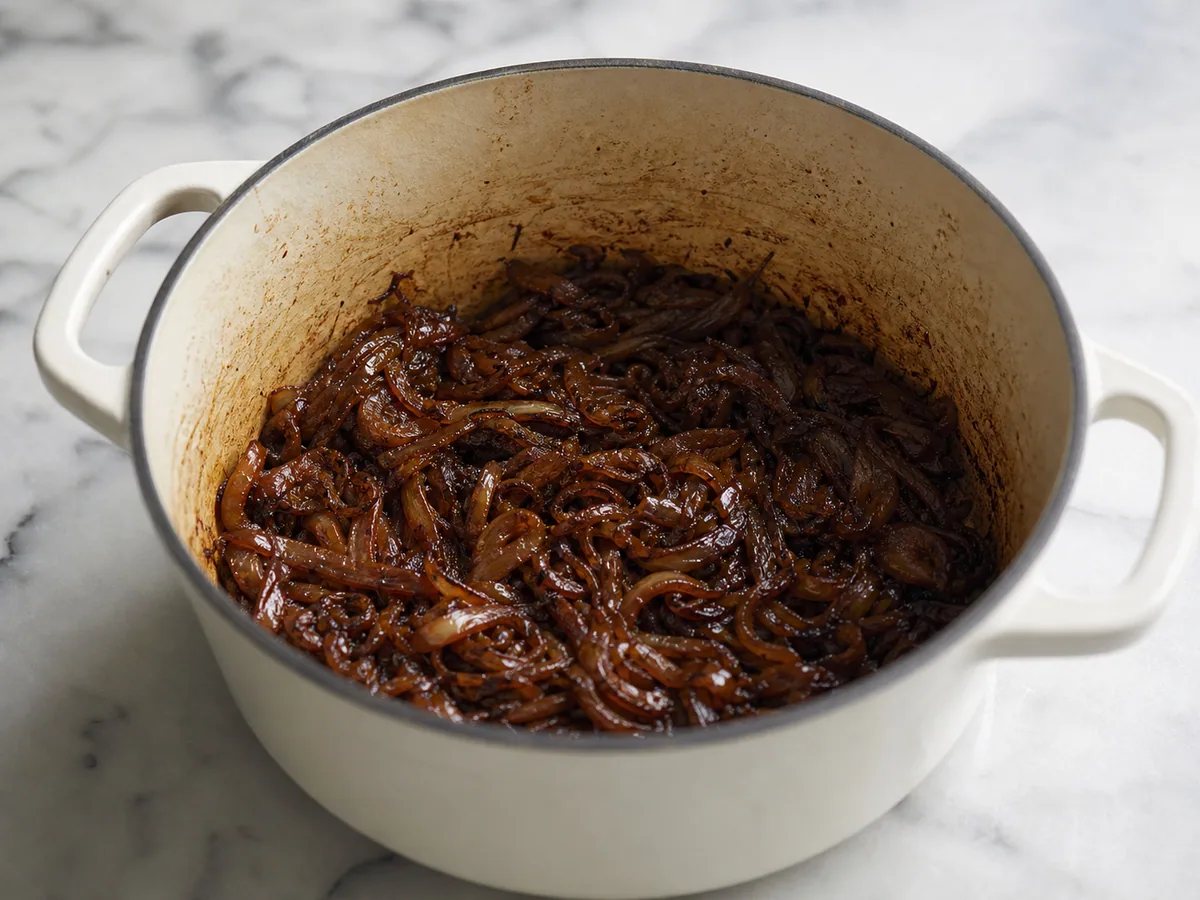
Uncover the pot and reduce the heat to medium-low. Cook for 45 to 60 minutes, stirring every 5 minutes at first and more often as the onions darken. When a brown film forms on the pot, add a small splash of water and scrape it into the onions. Begin checking at 45 minutes; continue until the onions are very soft, reduced in volume, and an even deep amber without blackened edges.
45:00Build and simmer the soup
Stir 2 garlic cloves into the onions and cook for 30 seconds until fragrant. Sprinkle in 16 g of all-purpose flour and stir for 1 minute so no dry flour remains. Pour in 15 ml of sherry vinegar and scrape the bottom of the pot, then gradually add 1200 ml of unsalted beef stock while stirring. Add 4 fresh thyme sprigs, 2 bay leaves, and 1 g of black pepper. Bring the soup to a gentle simmer, partially cover, and cook for 20 minutes. Remove and discard the thyme sprigs and bay leaves, then taste and adjust the seasoning only if needed.
20:00Toast the baguette
While the soup simmers, heat the oven to 200°C (400°F). Arrange 170 g of baguette on a baking sheet and bake for 8 to 10 minutes, turning once, until dry at the center and lightly golden at the edges. Begin checking at 8 minutes so the slices stay sturdy rather than brittle.
08:00Gratinate and serve
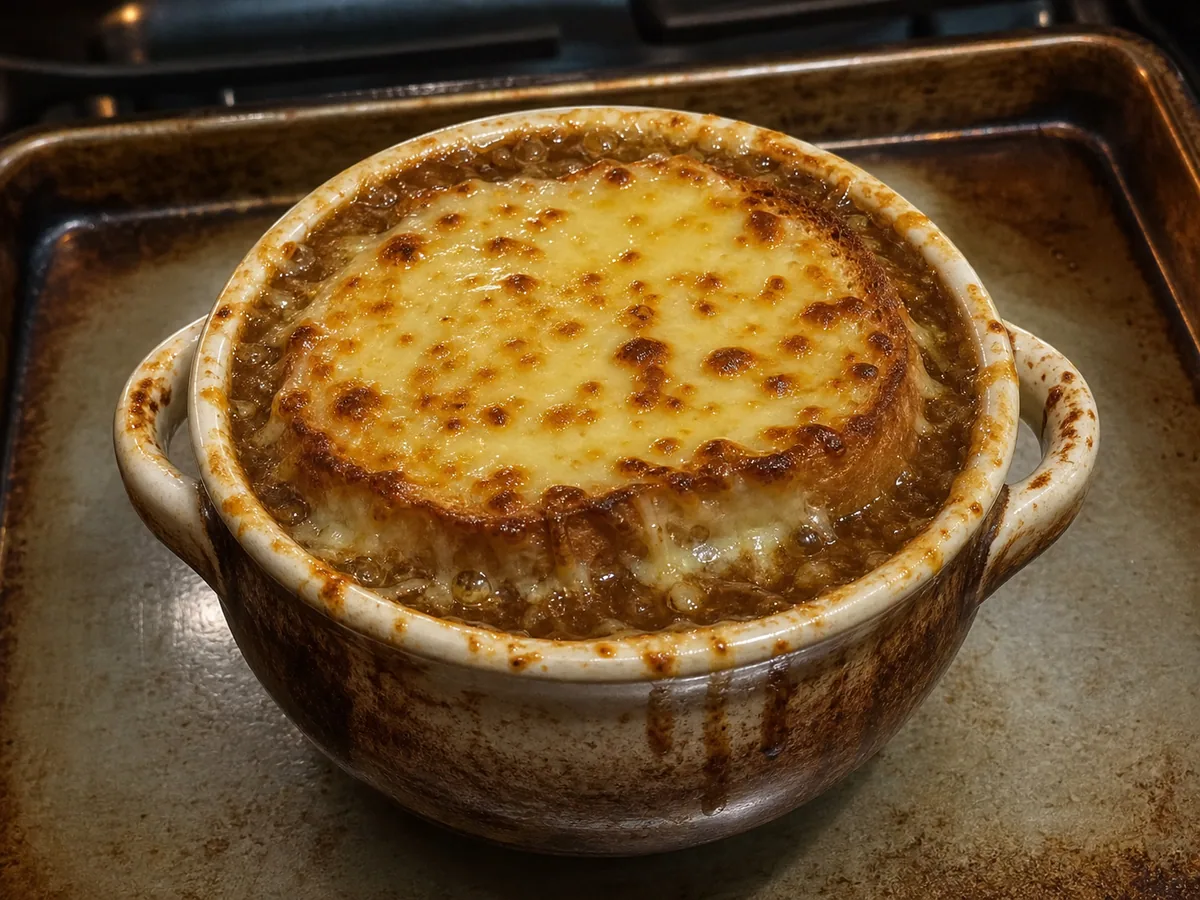
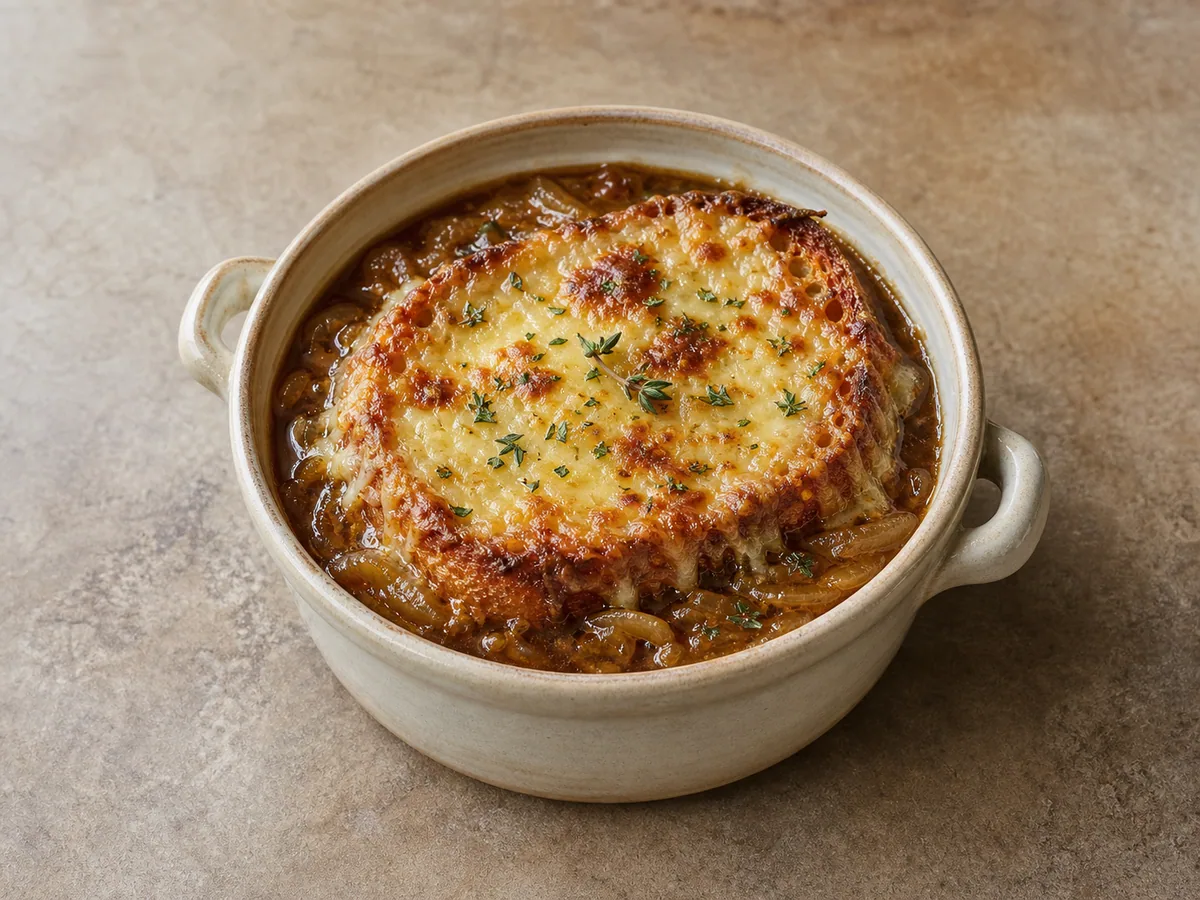
Switch the oven to high broil and place an oven rack so the tops of the bowls will sit about 15 cm (6 in) from the heat. Set broiler-safe soup bowls on a rimmed baking sheet, ladle in the hot soup, and place one toast on each bowl. Divide 140 g of Gruyere cheese evenly over the bread. Broil for 2 to 4 minutes, watching continuously, until the cheese is fully melted, bubbling, and browned in spots. Begin checking at 2 minutes. Let the bowls stand for 2 minutes, warn diners that the rims are very hot, and serve immediately.
02:00


Smart Substitutions
- No Gruyere? Use Comte, Emmental, or a well-aged Swiss-style cheese that melts smoothly and browns under the broiler.
- No beef stock? Use a full-flavored unsalted mushroom stock; the soup will be lighter but still savory.
- No sherry vinegar? Use red wine vinegar or apple cider vinegar in the same amount.
- No baguette? Use sturdy sourdough or country bread cut thick enough to float without dissolving.
Tips and Variations
- Use a wide pot rather than a narrow saucepan so moisture can evaporate and the onions brown evenly.
- Grate the cheese finely enough to melt before the bread edges become too dark under the broiler.
- Set every bowl on a rimmed baking sheet before filling it; the sheet catches drips and makes the hot bowls easier to move together.
What Went Wrong?
- Onions are still pale after 45 minutes Keep cooking over medium-low heat and stir more often. A crowded or narrow pot can add 10 to 20 minutes.
- Onions are catching or turning black Lower the heat immediately and scrape in a small splash of water. Remove any truly burned pieces before continuing.
- Soup tastes too sweet Add a few drops of sherry vinegar and a small pinch of salt, then taste again before adding more.
- Cheese browns before it fully melts Move the oven rack slightly farther from the broiler and use a finer, more even layer of cheese.
Nutrition Estimate
- Fiber: 5 g per serving
- Sodium: 975 mg per serving
Nutrition disclaimer:This recipe is provided for general cooking information only. Nutrition values are estimates and may vary by ingredients, brands, preparation methods, and serving sizes. Check ingredient labels and follow appropriate food-safety practices. This content is not medical, dietary, allergy, or professional food-safety advice.
FAQ
Found an error or have a suggestion?
Help us improve this recipe. Send us your feedback and include the recipe name so we can take a look.