Method
Rinse and soak the rice and dal
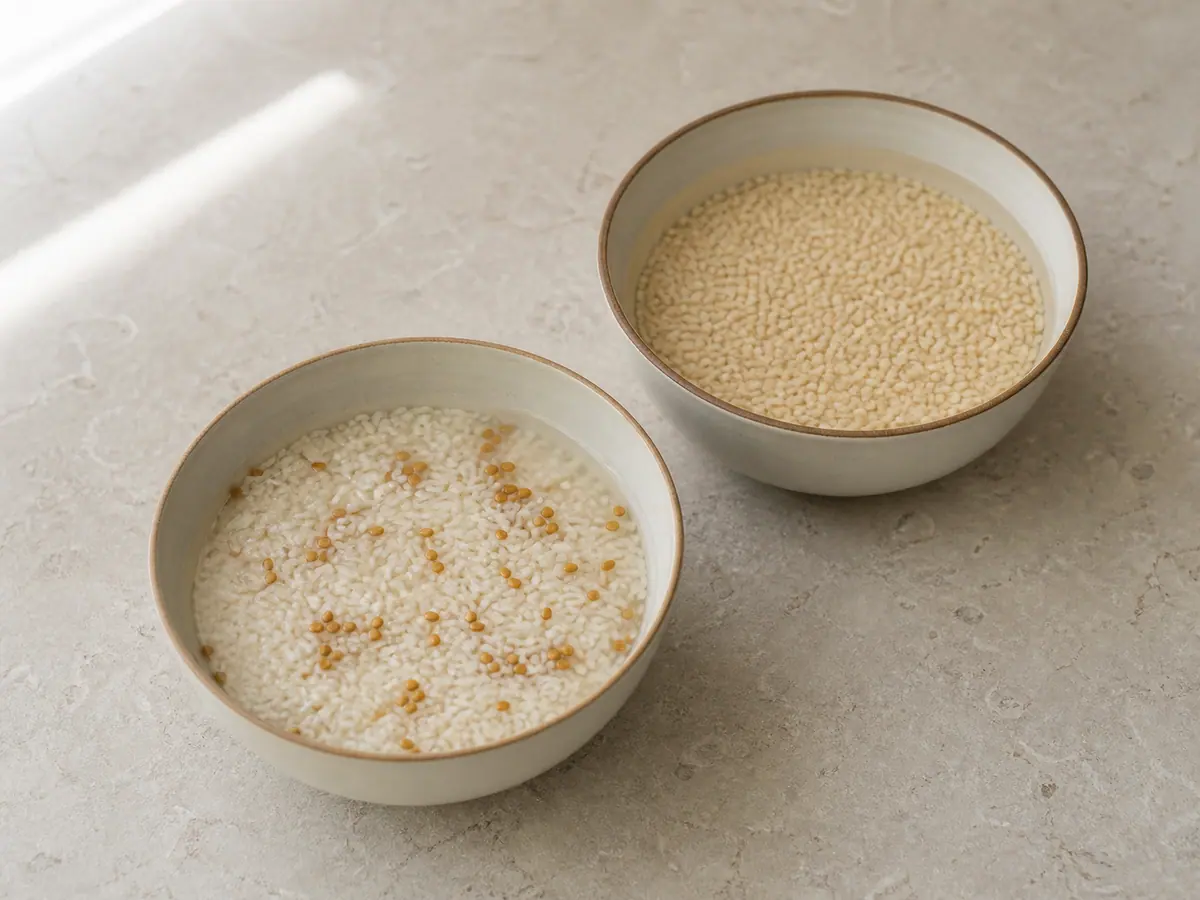
Rinse 240 g of parboiled idli rice with 2 g of fenugreek seeds until the water is mostly clear. Rinse 60 g of hulled urad dal separately. Put the rice mixture and dal in separate bowls, cover each generously with cool water, and soak for 4 hours. Drain both thoroughly before grinding.
4:00:00Grind and combine the batter
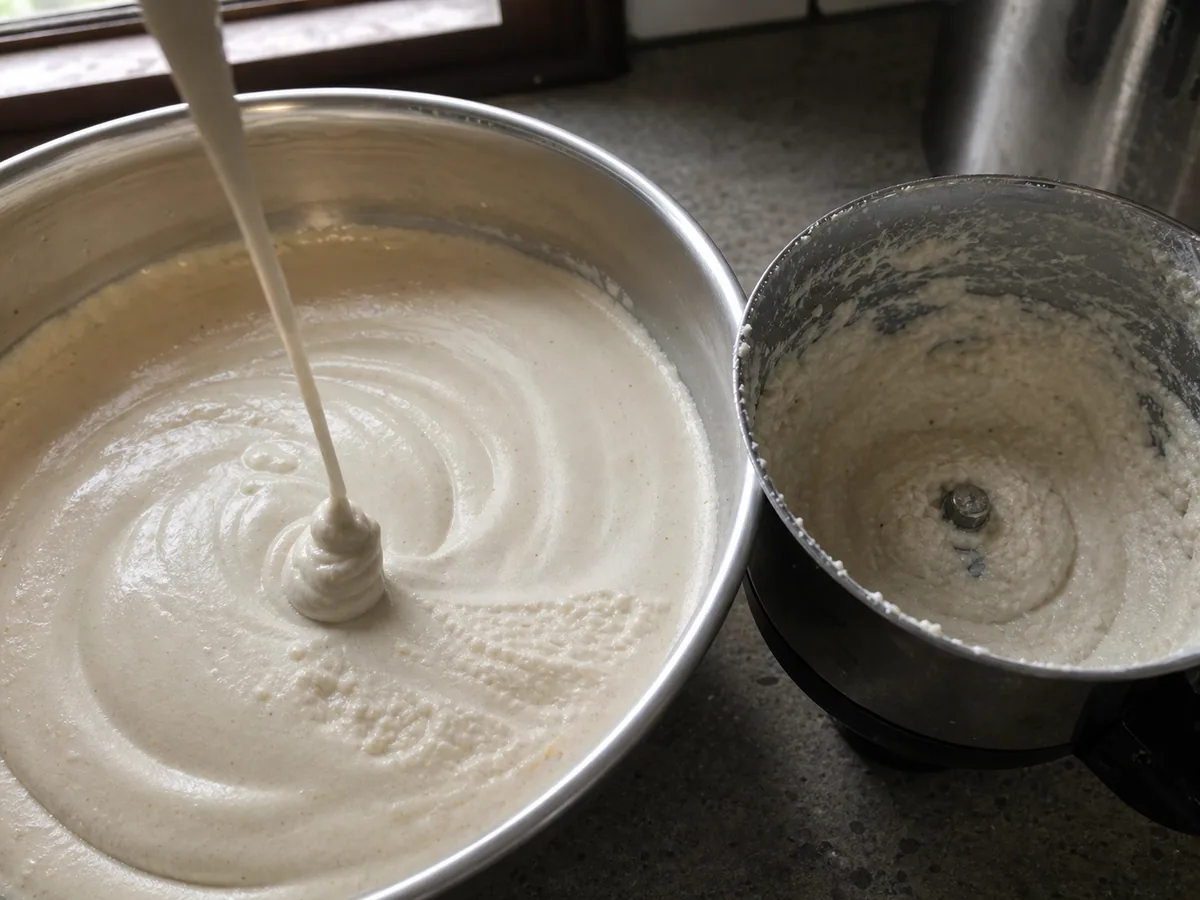
Use 300 ml of water for batter gradually between the two batches. Grind 60 g of hulled urad dal first in a wet grinder or high-powered blender until pale, airy, and smooth, pausing to scrape and keep the mixture cool. Grind 240 g of parboiled idli rice with 2 g of fenugreek seeds until the texture resembles fine semolina rather than a completely smooth puree. Combine both batters in a large nonreactive bowl, stir in 4 g of fine sea salt for batter, and beat firmly with a spoon for 1 minute to incorporate air. The batter should fall in a thick ribbon and still show a faint graininess.
01:00Ferment until risen and bubbly
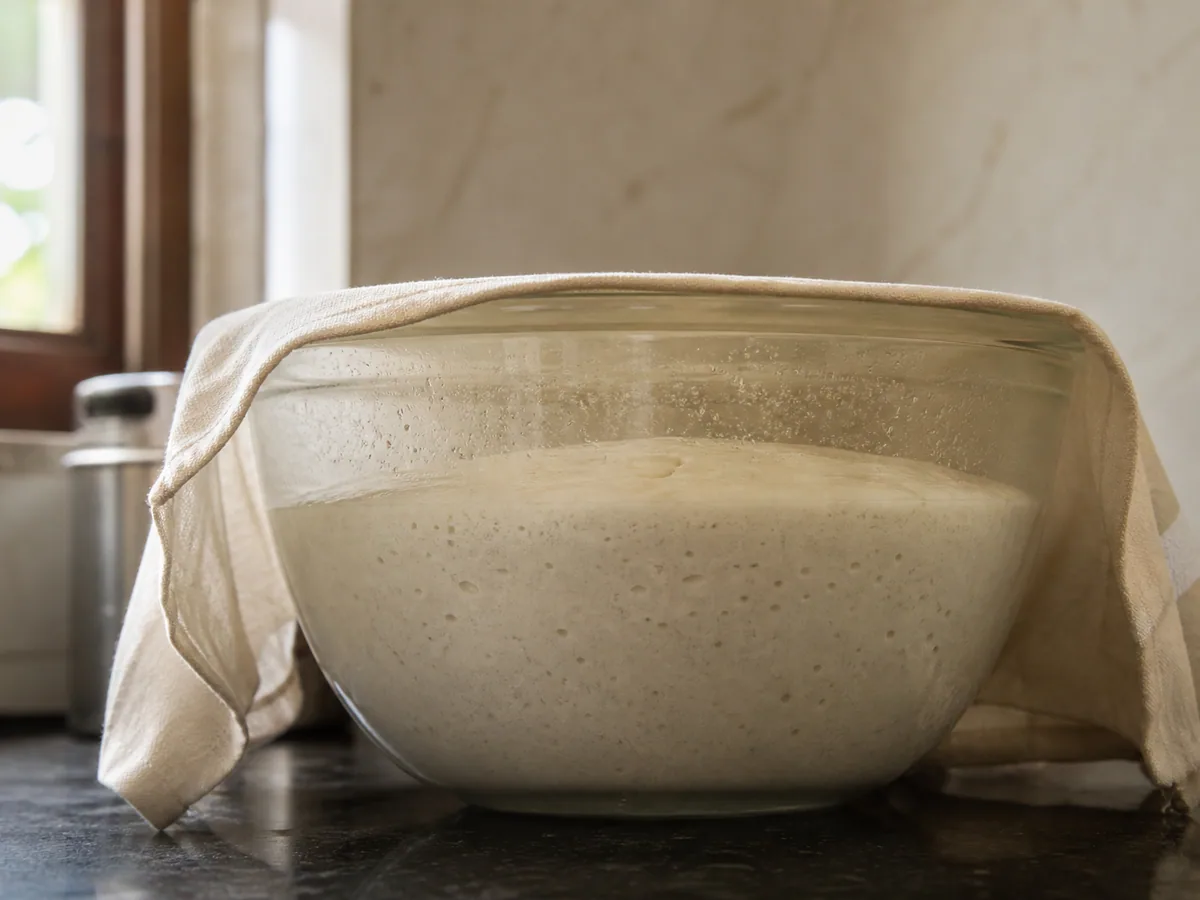
Cover the bowl loosely and leave it in a warm, draft-free place, ideally 27–32°C (80–90°F), for 8 to 12 hours. Check at 8 hours. The batter is ready when it has increased by roughly half, fine bubbles show along the sides and surface, and the aroma is clean and gently tangy. Avoid stirring it down aggressively.
8:00:00Blend the coconut chutney
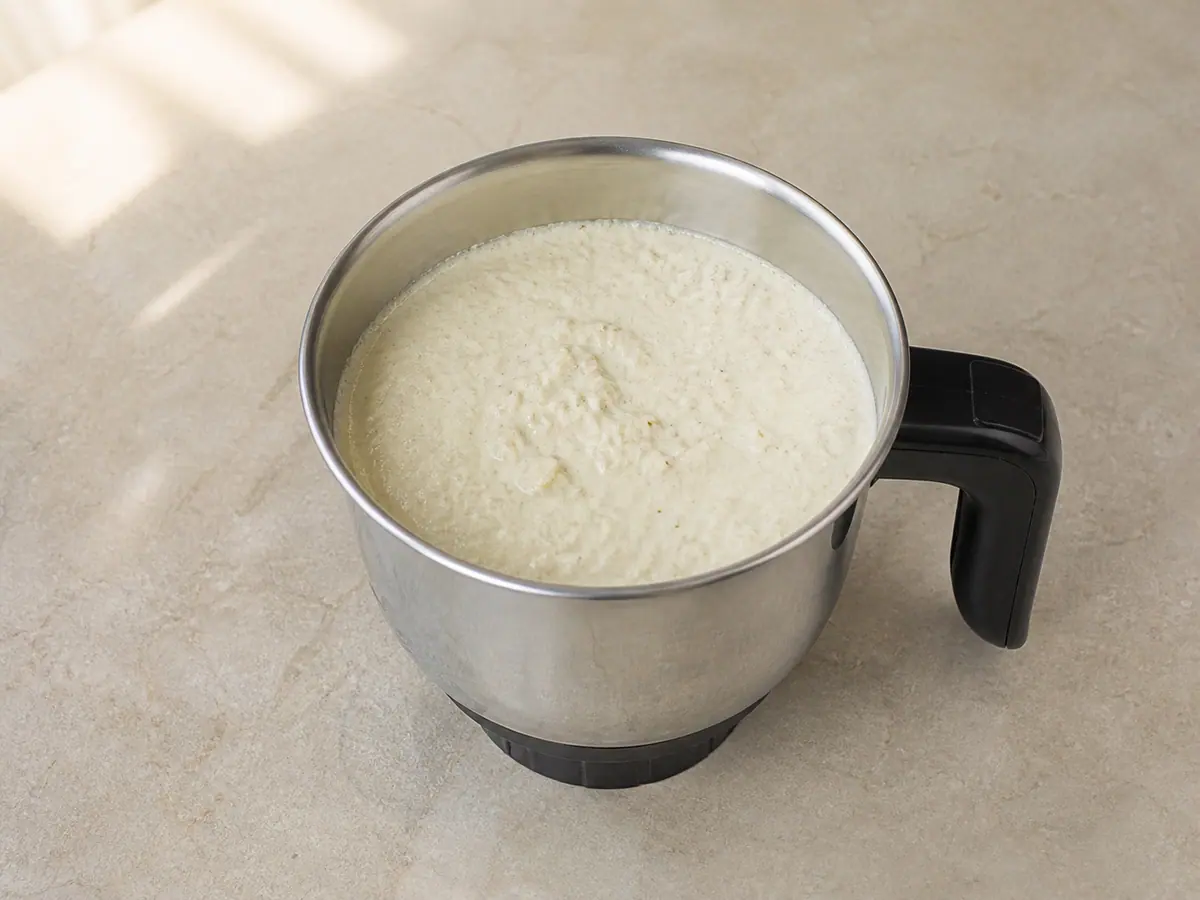
Add 100 g of fresh coconut, 25 g of roasted chana dal, 2 green chiles, 10 g of fresh ginger paste, 5 g of tamarind paste, 2 1/2 g of fine sea salt for chutney, and 120 ml of water for chutney to a blender. Blend in short bursts, scraping the jar as needed, until creamy but still lightly textured. The chutney should mound softly on a spoon; add a small splash of water only if the blades stall.
Temper and finish the chutney
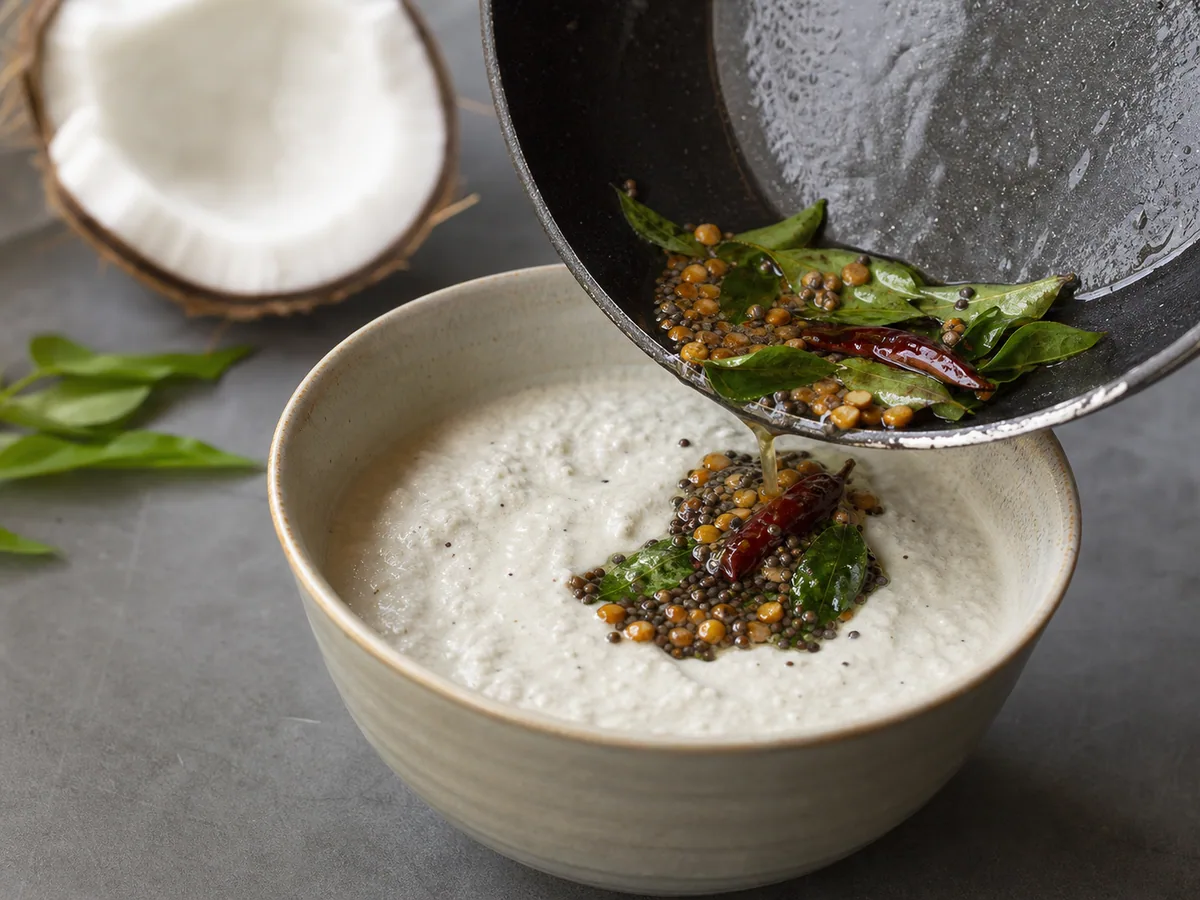
Warm 10 ml of coconut oil in a small skillet over medium heat. Add 2 g of black mustard seeds and wait until the popping slows. Add 5 g of urad dal for tempering, break 1 dried red chile in half, and add it with 8 fresh curry leaves and 1/2 g of asafoetida; stand back because the leaves can splutter. Stir for 30 to 45 seconds, checking at 30 seconds, until the dal is golden and the leaves are crisp. Immediately pour the tempering over the chutney and stir once.
00:30Fill the molds and steam the idlis
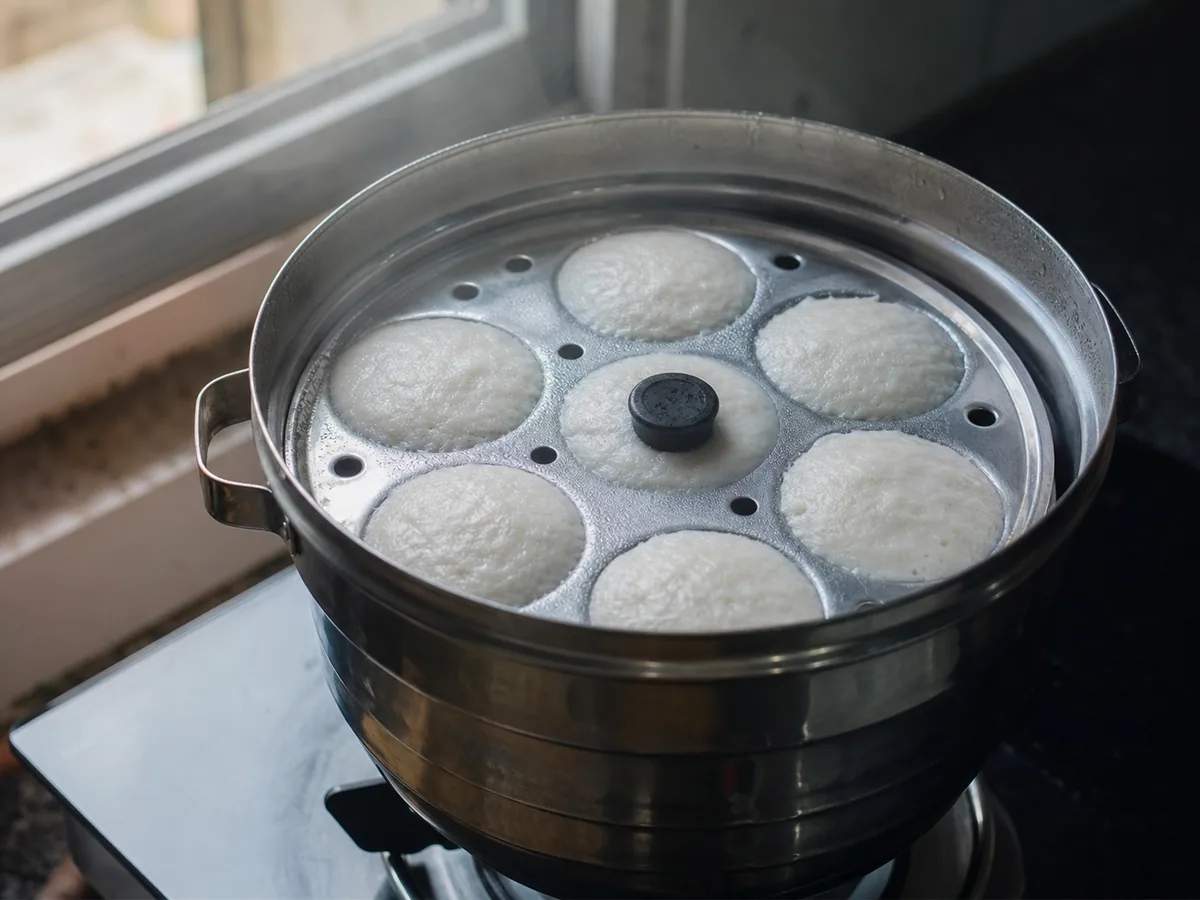
Bring 2.5 cm (1 in) of water to a steady simmer in an idli steamer. Lightly coat the molds with 5 ml of sesame oil for molds. Fold the fermented batter gently 2 or 3 times, then fill each mold about three-quarters full without packing it down. Stack the trays above the water, cover, and steam for 10 to 12 minutes. Check at 10 minutes: the idlis should look set, spring back lightly when touched, and leave no wet batter on a skewer.
10:00Rest, unmold, and serve
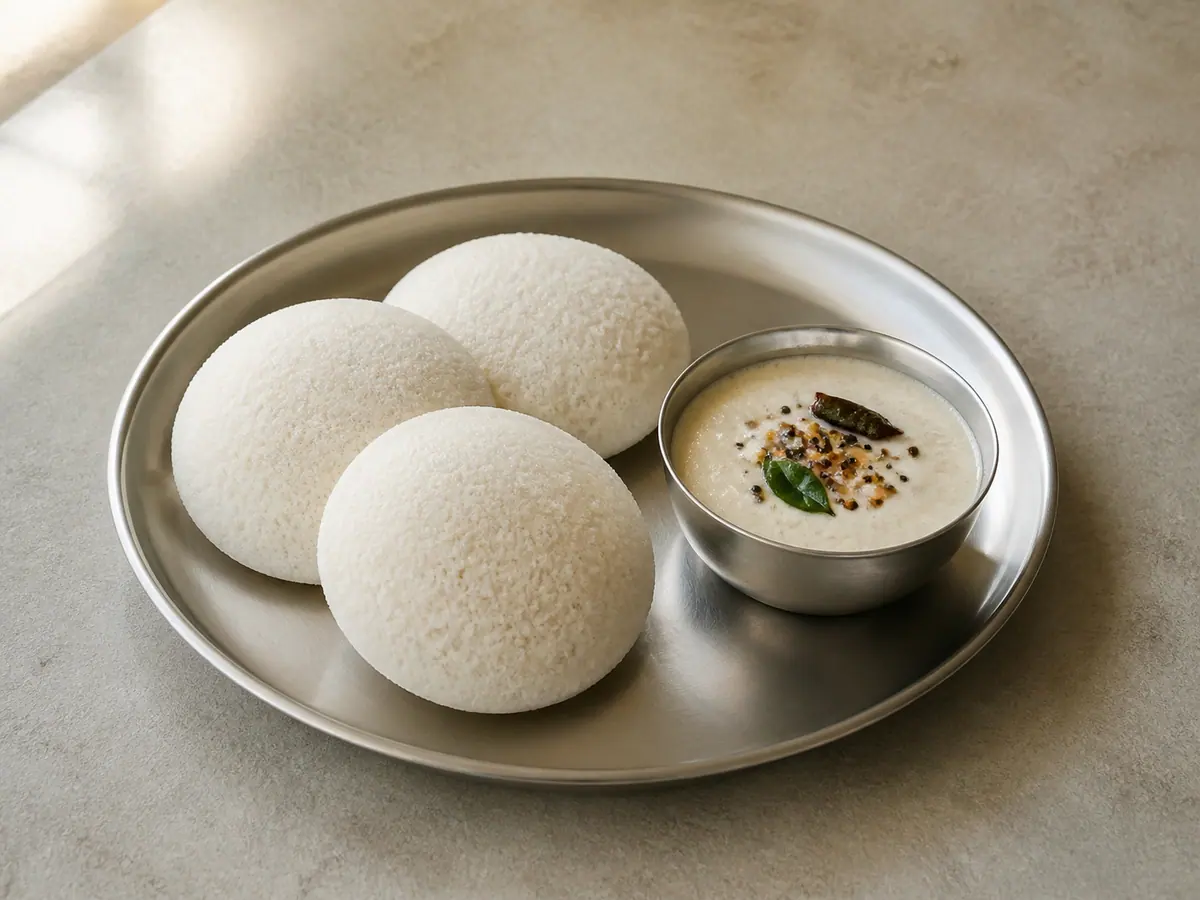
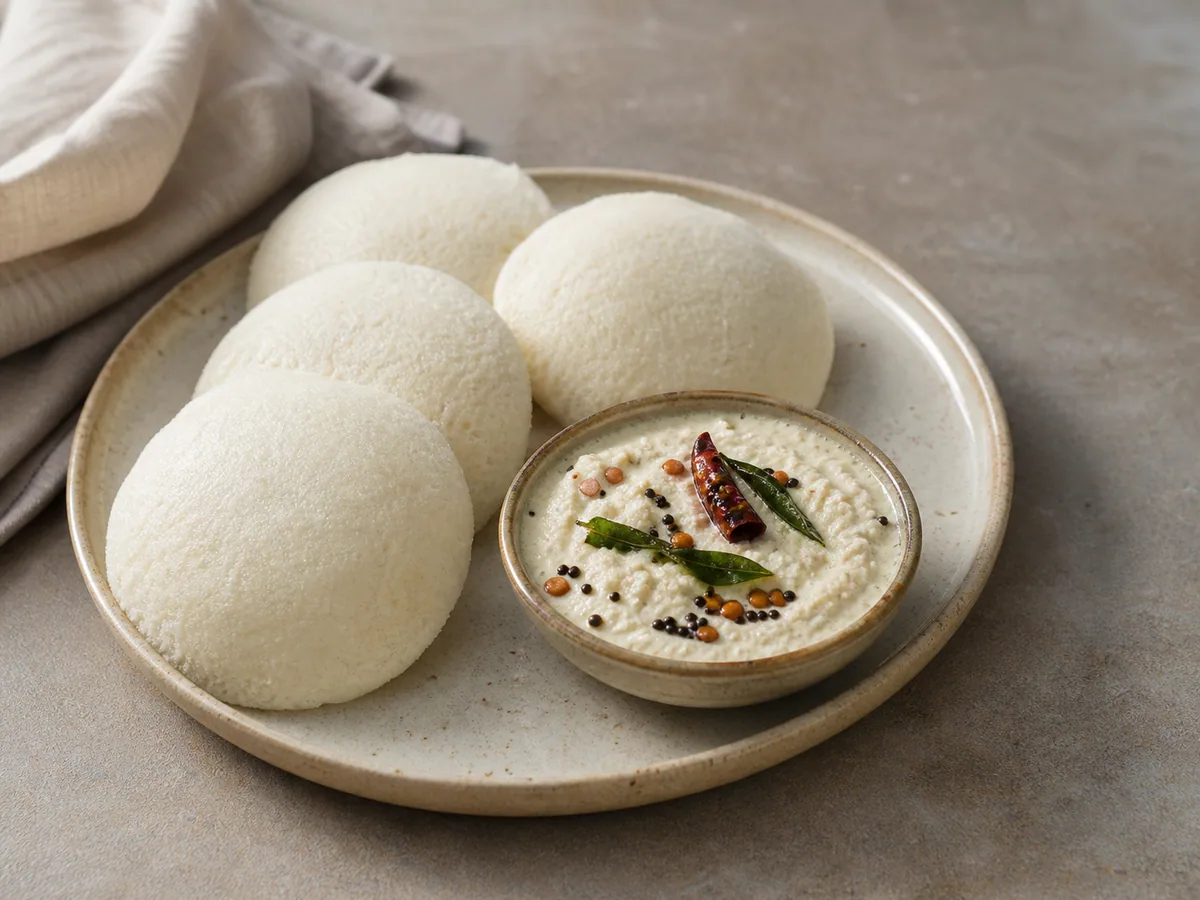
Remove the trays from the steamer and let them stand for 2 minutes so the crumb settles. Dip a spoon in water, run it around each edge, and lift out the idlis without compressing them. Serve immediately with the tempered coconut chutney spooned alongside.
02:00


Smart Substitutions
- No idli rice? Use another short-grain white rice. The idlis may be a little less springy, so keep the rice batter slightly coarse.
- No roasted chana dal? Use a small handful of unsalted cashews, or omit the roasted chana dal and begin with slightly less water.
- No fresh coconut? Use unsweetened desiccated coconut and soak it in warm water for 10 minutes before blending.
- No coconut oil? Use sesame oil or another neutral cooking oil for the tempering.
Tips and Variations
- Choose fresh hulled urad dal; older dal often grinds less fluffy and gives a weaker rise.
- Leave generous headspace in the fermentation bowl so the batter can expand without pressing against the cover.
- Start steaming only after the water is steadily simmering, and avoid opening the lid during the first 10 minutes.
What Went Wrong?
- Batter did not rise Move it to a warmer spot and allow more time. A cool room, overheated batter during grinding, or older urad dal can slow fermentation.
- Idlis are dense Grind the urad dal until truly airy, keep the rice slightly grainy, and fold the fermented batter gently so the trapped bubbles remain.
- Idlis are wet in the center Return the covered trays to steady steam and check again after 2 minutes. Make sure the molds are not overfilled.
- Chutney is pasty Blend in water a teaspoon at a time until it mounds softly rather than holding a stiff shape.
Nutrition Estimate
- Fiber: 8 g per serving
- Sodium: 650 mg per serving
Nutrition disclaimer:This recipe is provided for general cooking information only. Nutrition values are estimates and may vary by ingredients, brands, preparation methods, and serving sizes. Check ingredient labels and follow appropriate food-safety practices. This content is not medical, dietary, allergy, or professional food-safety advice.
FAQ
Found an error or have a suggestion?
Help us improve this recipe. Send us your feedback and include the recipe name so we can take a look.