Method
Cook the tangzhong
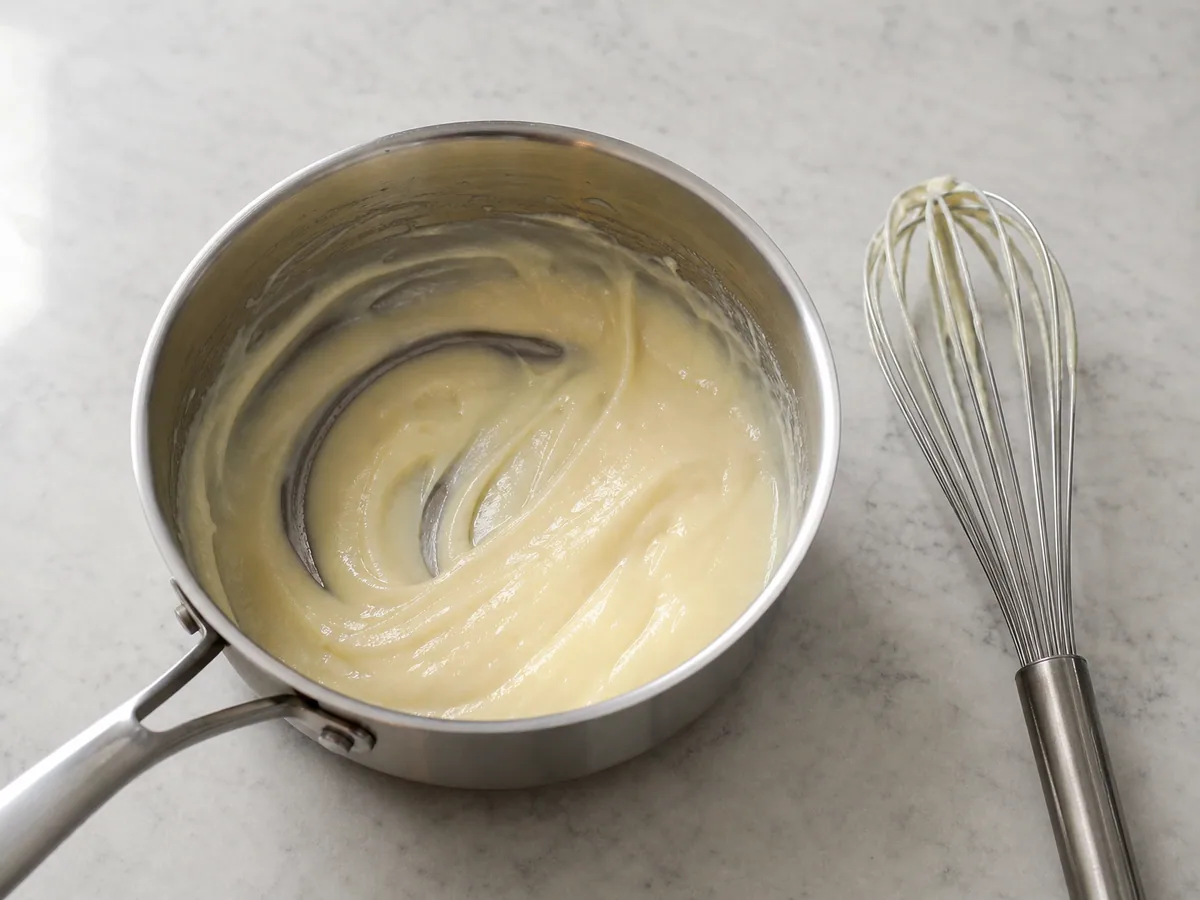
Whisk 20 g of bread flour for tangzhong and 100 ml of whole milk for tangzhong in a small saucepan until smooth. Set the pan over low heat and whisk constantly for 3 to 4 minutes, until the mixture becomes a thick, glossy paste with visible whisk trails and reaches about 65°C (149°F).
03:00Cool the tangzhong
Scrape the tangzhong into a large mixing bowl and spread it slightly so it releases heat. Let it cool for 8 to 10 minutes; it should feel warm rather than hot before the remaining dough ingredients are added.
08:00Mix the enriched dough
Add 340 g of bread flour for dough, 140 ml of whole milk for dough, 50 g of granulated sugar, 7 g of instant yeast, 6 g of fine salt, and 1 large egg to the warm tangzhong. Mix on low speed with a dough hook for about 4 minutes, until no dry flour remains and a rough dough begins to gather around the hook. Do not taste raw dough.
04:00Add the butter and knead
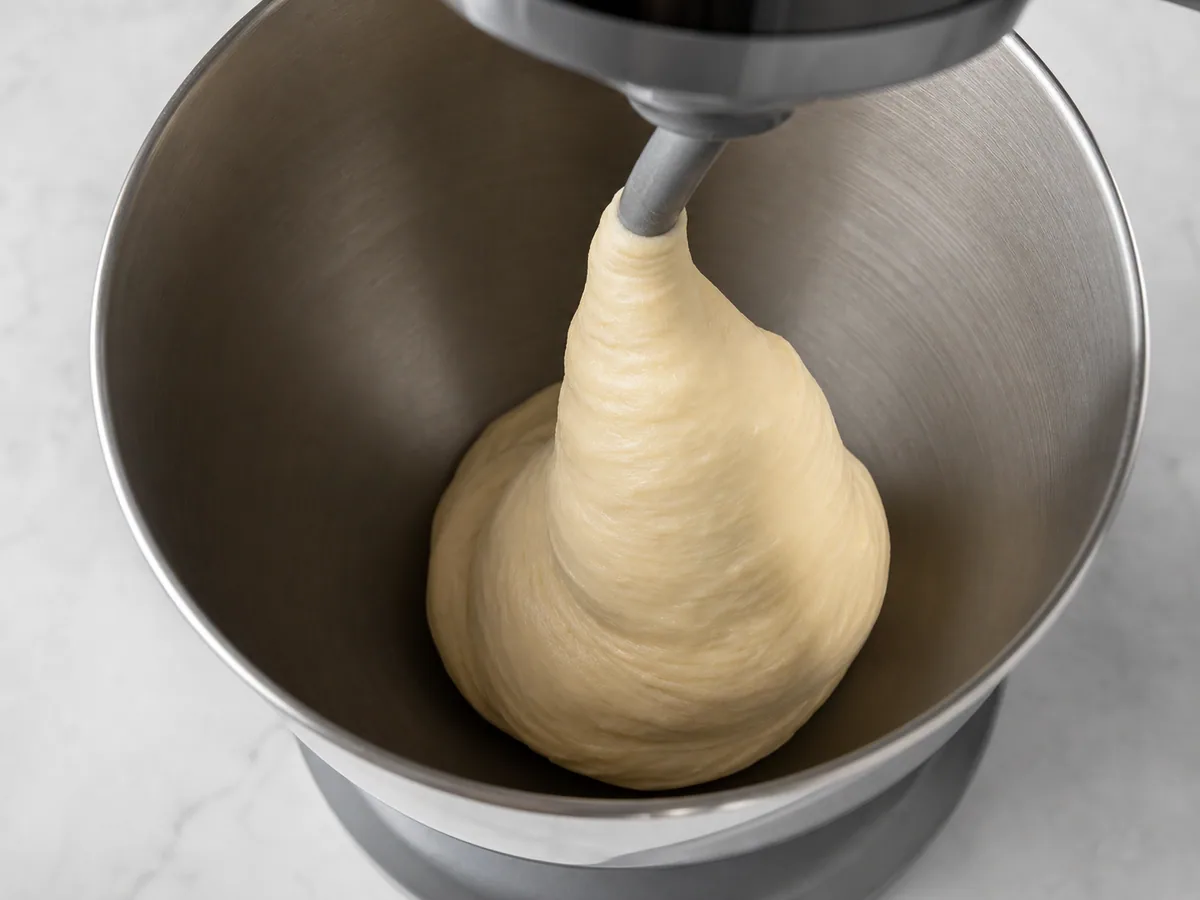
Add 50 g of unsalted butter in several small pieces, waiting until each addition is mostly absorbed. Knead on medium-low speed for 8 to 10 minutes. Stop at the first check when the dough is smooth, elastic, slightly tacky, and can stretch into a thin window without tearing. After handling the raw dough, wash hands, the mixer bowl, dough hook, utensils, and work surface with warm, soapy water before handling the baked loaf.
08:00Let the dough rise
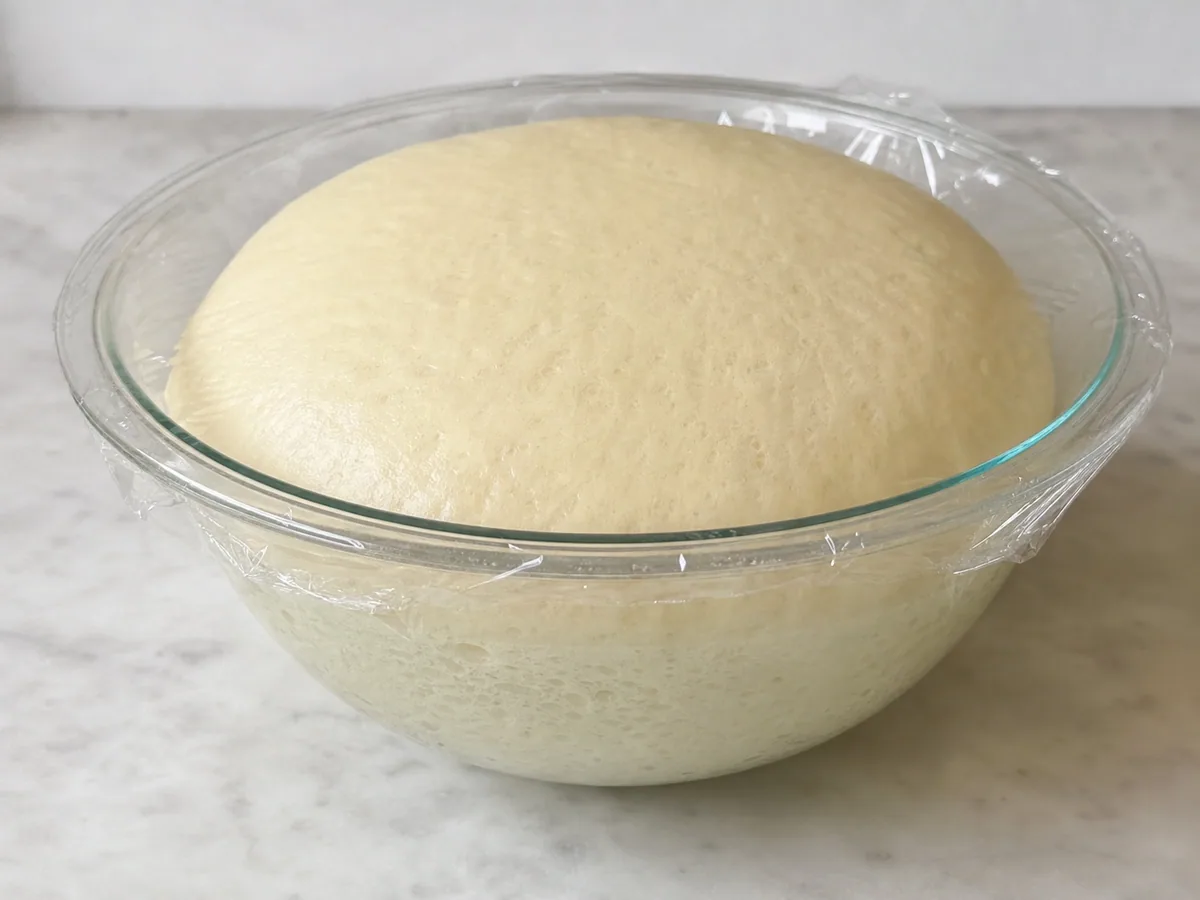
Shape the dough into a smooth ball and place it in a clean bowl. Cover and let it rise in a warm, draft-free place for 60 to 75 minutes. Check at 60 minutes; it is ready when it looks airy and has roughly doubled, even if the clock says otherwise.
60:00Divide and relax the dough
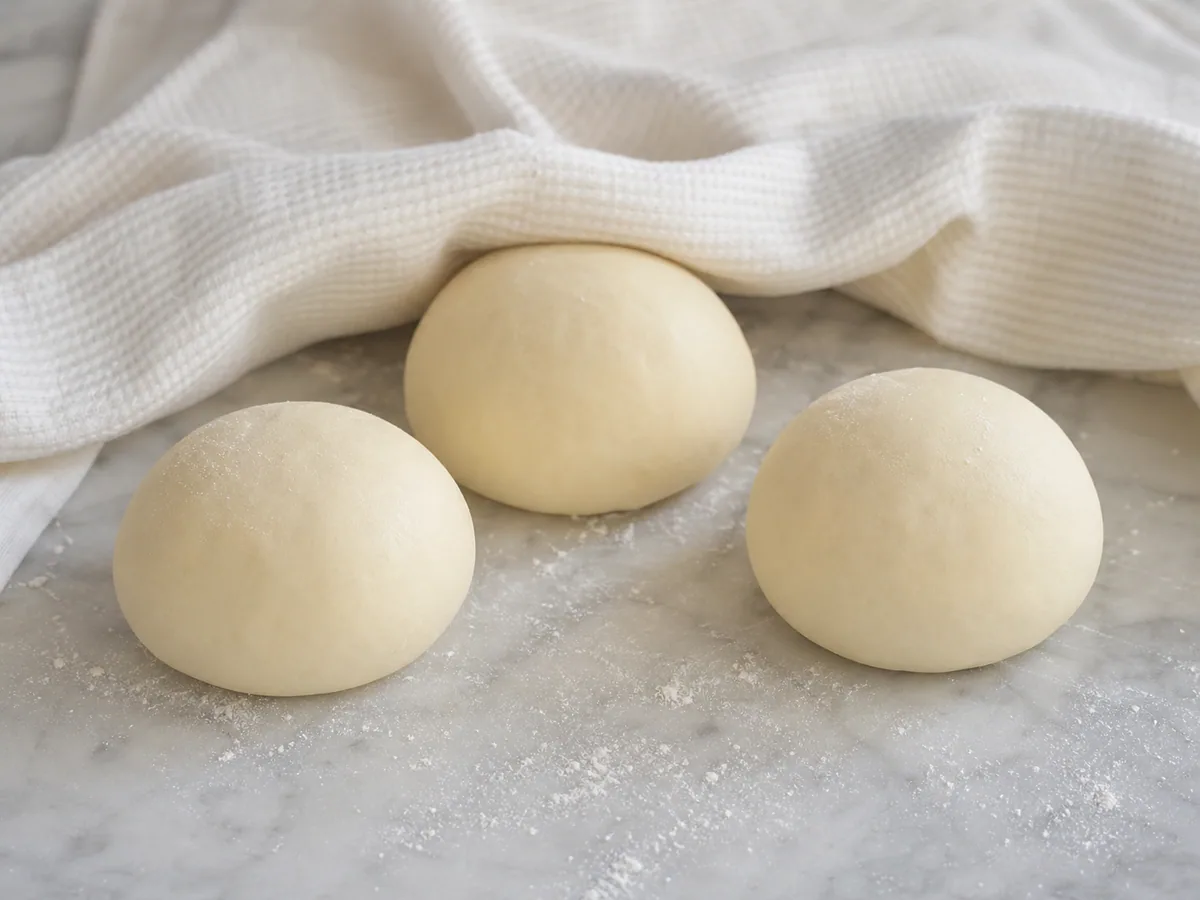
Press the dough gently to release large gas pockets, then divide it into three equal pieces. Shape each piece into a loose ball, cover, and let the dough rest for 15 minutes. This pause relaxes the gluten so the pieces roll out without springing back.
15:00Shape the three-part loaf
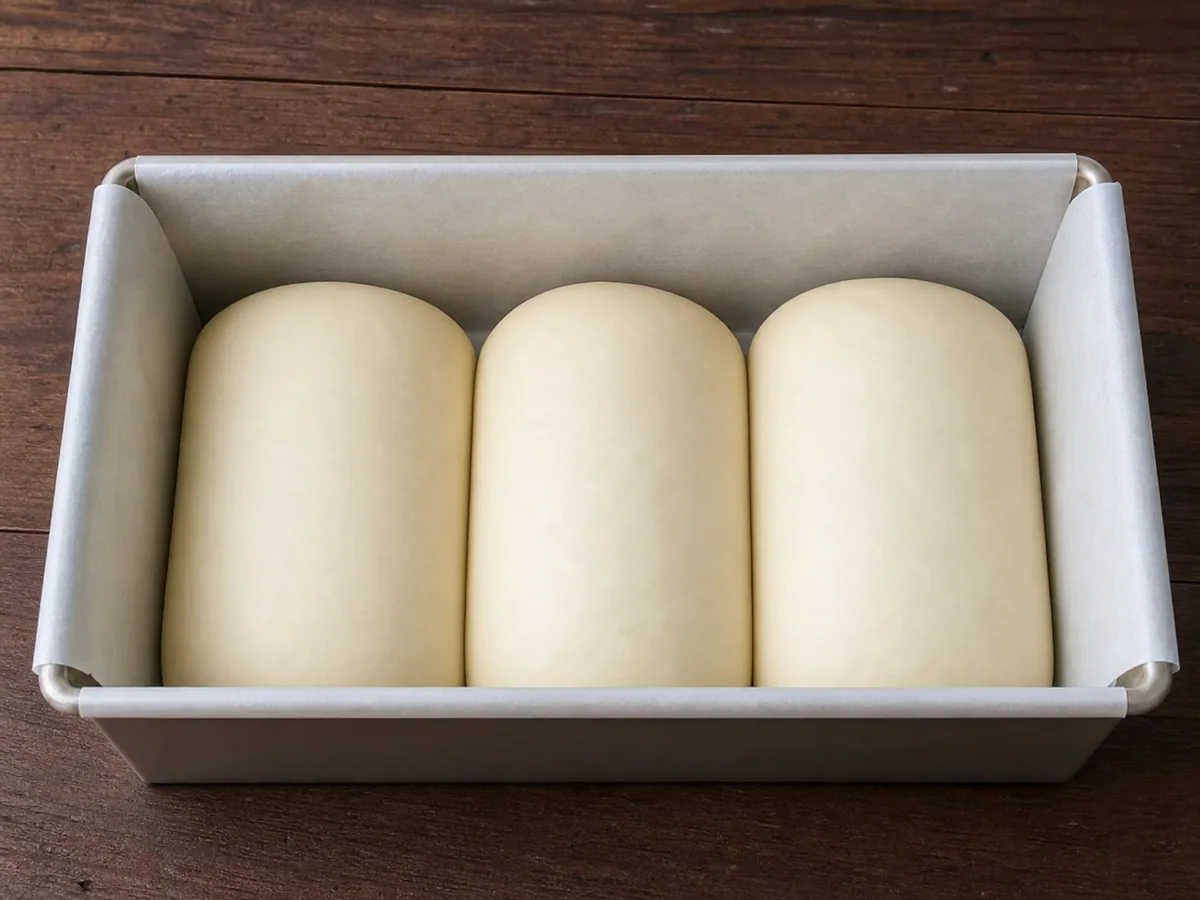
Choose the pan for the selected batch: use a 14.5 x 8 cm (5.75 x 3.25 in) mini loaf pan for 2 servings, an 18 x 9 cm (7 x 3.5 in) small loaf pan for 4 servings, a 21.5 x 11.5 cm (8.5 x 4.5 in) loaf pan for 6 servings, or a 23 x 13 cm (9 x 5 in) loaf pan for 8 servings. The corresponding dough weights are approximately 190 g, 380 g, 570 g, and 760 g. Line the pan with parchment. Roll one dough piece into a narrow oval, fold both long sides toward the center, then roll it from a short end into a snug cylinder. Repeat with the remaining pieces. Arrange all three cylinders seam-side down across the pan with small, even gaps between them.
Proof and preheat the oven
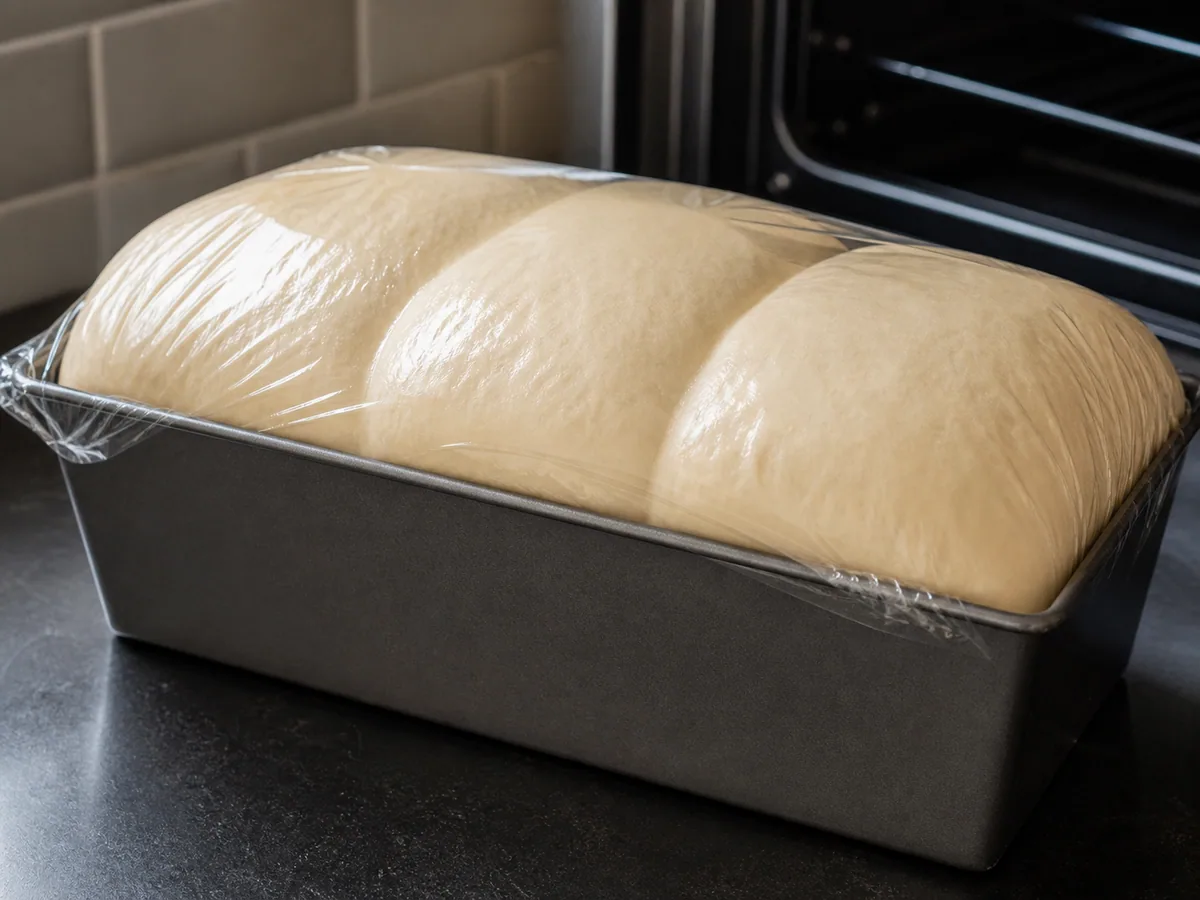
Cover the pan and let the loaf rise for 45 to 60 minutes. Check at 45 minutes; the dough should look pillowy, fill the corners, and crown about 2.5 cm (1 in) above the rim. When about 20 minutes remain in the proof, heat the oven to 175°C (350°F).
45:00Bake until deeply golden and set
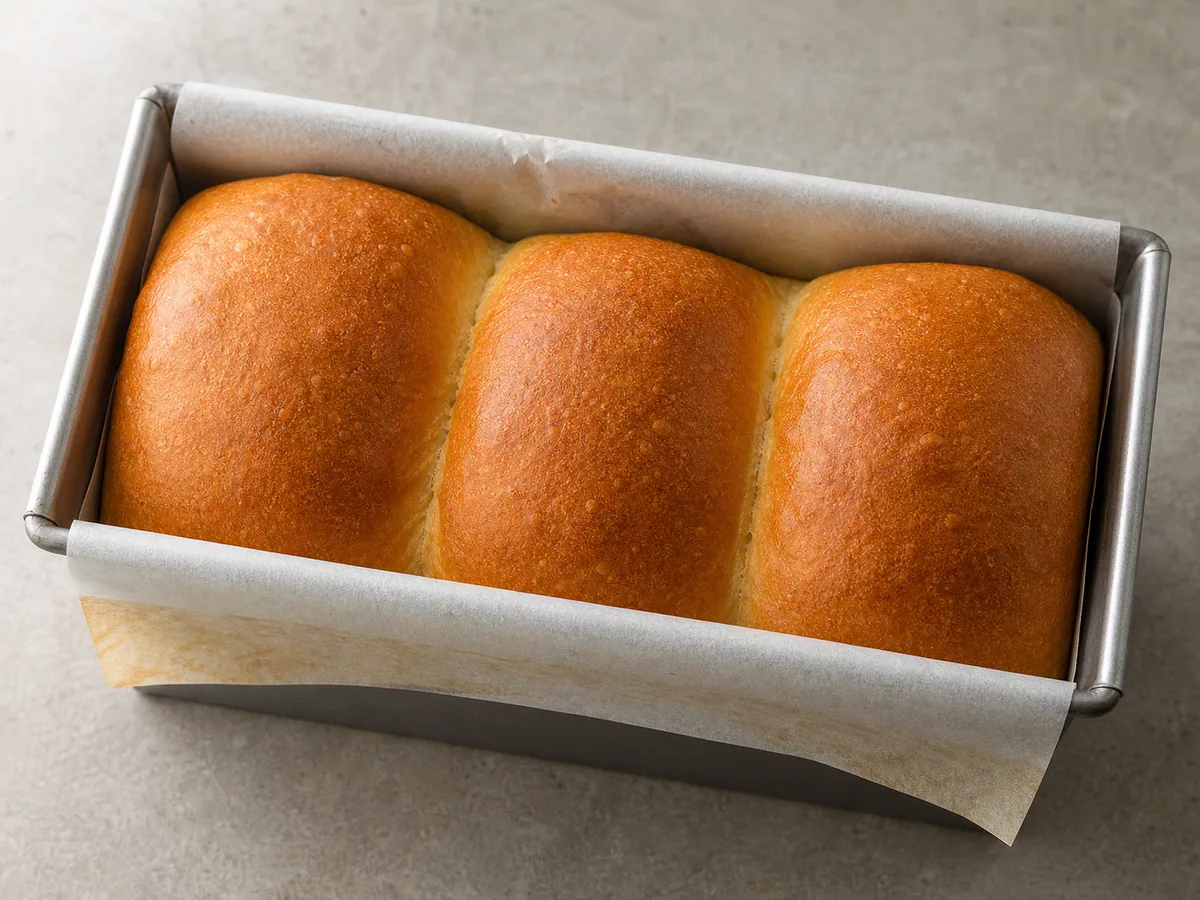
Bake on the center rack at 175°C (350°F) for 30 to 35 minutes, rotating the pan once if the oven browns unevenly. Check at 30 minutes. The top should be deeply golden, the loaf should sound lightly hollow when tapped, and a food thermometer inserted into the center should read 88°C to 93°C (190°F to 200°F), confirming that the crumb is fully set. Loosely shield the top with foil only if it darkens before the center reaches that range.
30:00Cool before slicing
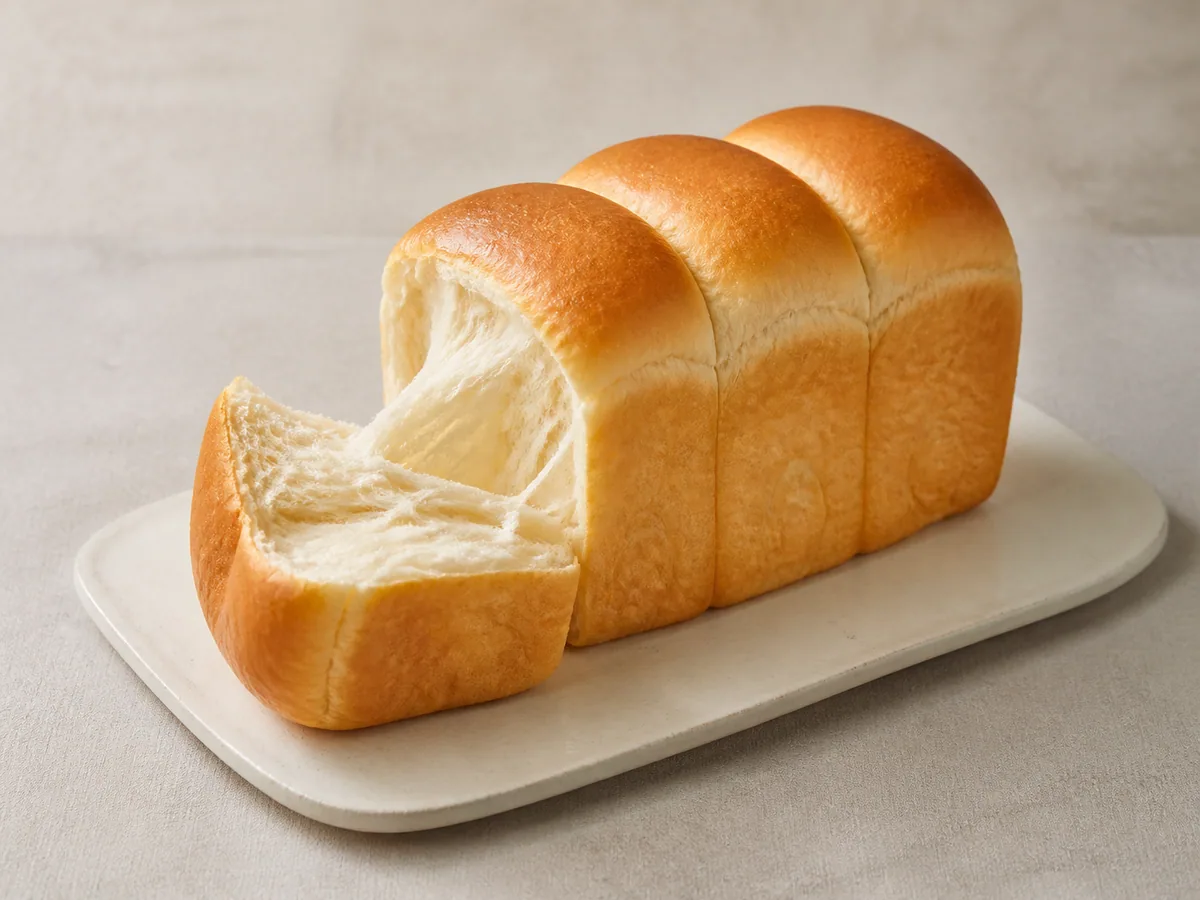
Turn the loaf out of the pan onto a rack as soon as it is safe to handle. Cool for 40 minutes so steam can settle into the crumb instead of compressing it under the knife. Tear along the rounded sections or cut into thick slices and serve.
40:00


Smart Substitutions
- No bread flour? Use all-purpose flour and add the dough milk gradually. The softer flour may need slightly less liquid and will produce a more delicate rise.
- No stand mixer? Knead by hand with a slap-and-fold motion. Expect a longer knead, and use the windowpane test rather than the clock as the final guide.
- Prefer a dairy-free loaf? Use unsweetened soy milk and a firm plant-based butter. The loaf will be less buttery but should retain a similarly soft structure.
- Need an egg-free version? Replace the egg with an equal weight of whole milk. Expect a paler crust and a slightly less rich crumb.
Tips and Variations
- Weigh the flour when possible; a small excess can turn this supple dough stiff and limit the rise.
- Judge both proofs by volume and texture. A cool kitchen may need more time, while a warm kitchen may need less.
- Roll the three cylinders with even tension. Tight shaping gives the loaf height and creates the long, feathery strands inside.
What Went Wrong?
- Tangzhong is lumpy Start with cold milk and whisk before heating. If small lumps remain, press the warm paste through a fine sieve before mixing the dough.
- Dough looks greasy The butter was added faster than the dough could absorb it. Keep mixing on low speed until the dough becomes cohesive before increasing the speed.
- Loaf is dense Check that the yeast is active, knead to a true windowpane, and let each rise finish by appearance rather than cutting it short by the clock.
- Center is gummy Bake until a thermometer in the center reads 88°C to 93°C (190°F to 200°F), then allow the full cooling time before slicing.
Nutrition Estimate
- Fiber: 1 g per serving
- Sodium: 315 mg per serving
Nutrition disclaimer:This recipe is provided for general cooking information only. Nutrition values are estimates and may vary by ingredients, brands, preparation methods, and serving sizes. Check ingredient labels and follow appropriate food-safety practices. This content is not medical, dietary, allergy, or professional food-safety advice.
FAQ
Found an error or have a suggestion?
Help us improve this recipe. Send us your feedback and include the recipe name so we can take a look.