Method
Prepare the aromatics and mushrooms
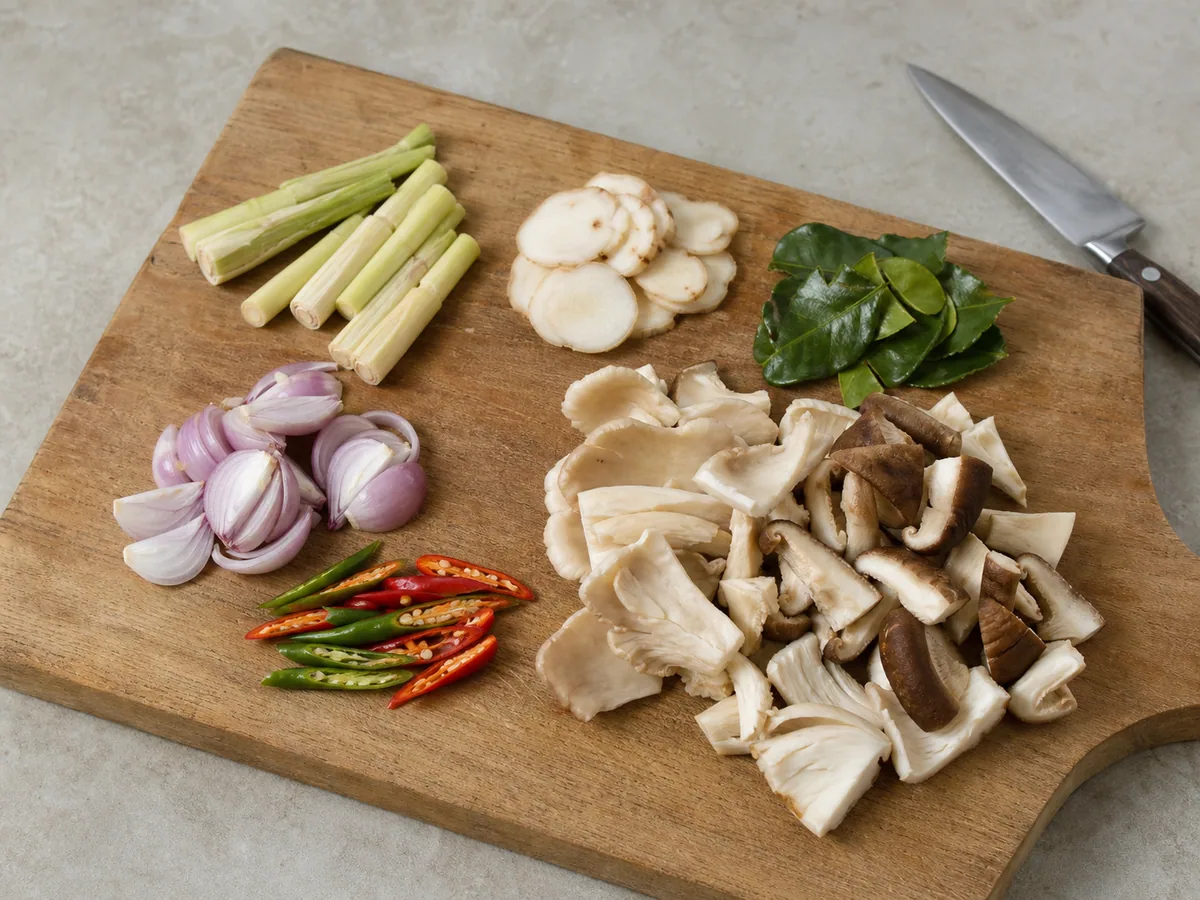
Trim the dry ends from 2 lemongrass stalks, remove any tough outer layers, and cut the stalks into 5 cm (2 in) lengths. Bruise each piece with the flat side of a knife. Cut 30 g of fresh galangal into thin coins, tear 6 makrut lime leaves once through the center, lightly crush 2 shallots, and split 2 Thai bird's eye chiles lengthwise. Brush away any dirt from 450 g of mixed oyster and shiitake mushrooms, trim tough stems, and tear or cut the mushrooms into generous bite-size pieces.
Brown the mushrooms
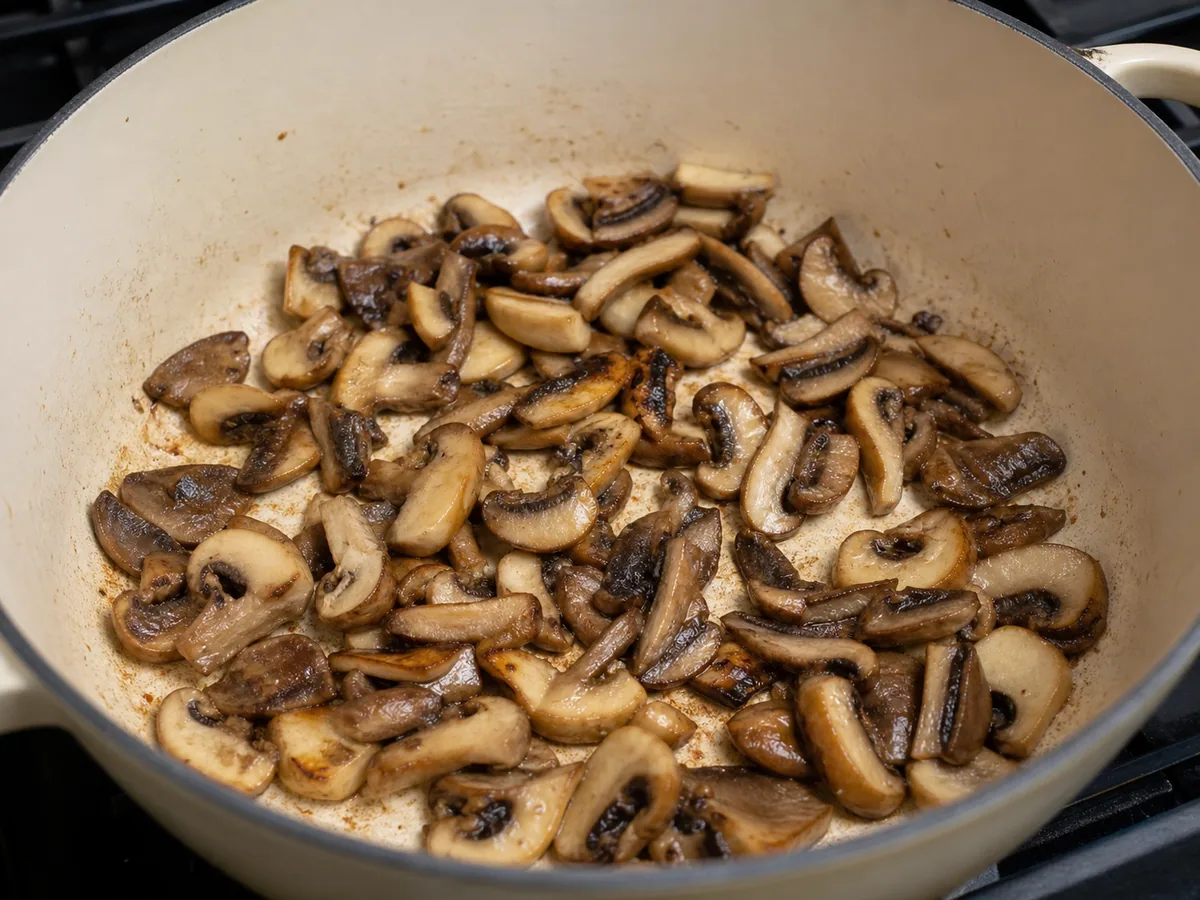
Heat a wide soup pot over medium-high heat. Add 15 ml of neutral oil, then add 450 g of mixed oyster and shiitake mushrooms and spread them into an even layer. Cook for 6 to 8 minutes, stirring only once or twice, until the moisture has mostly evaporated and several edges are golden. Check at 6 minutes and continue as needed. Transfer the mushrooms to a bowl.
06:00Infuse the coconut broth
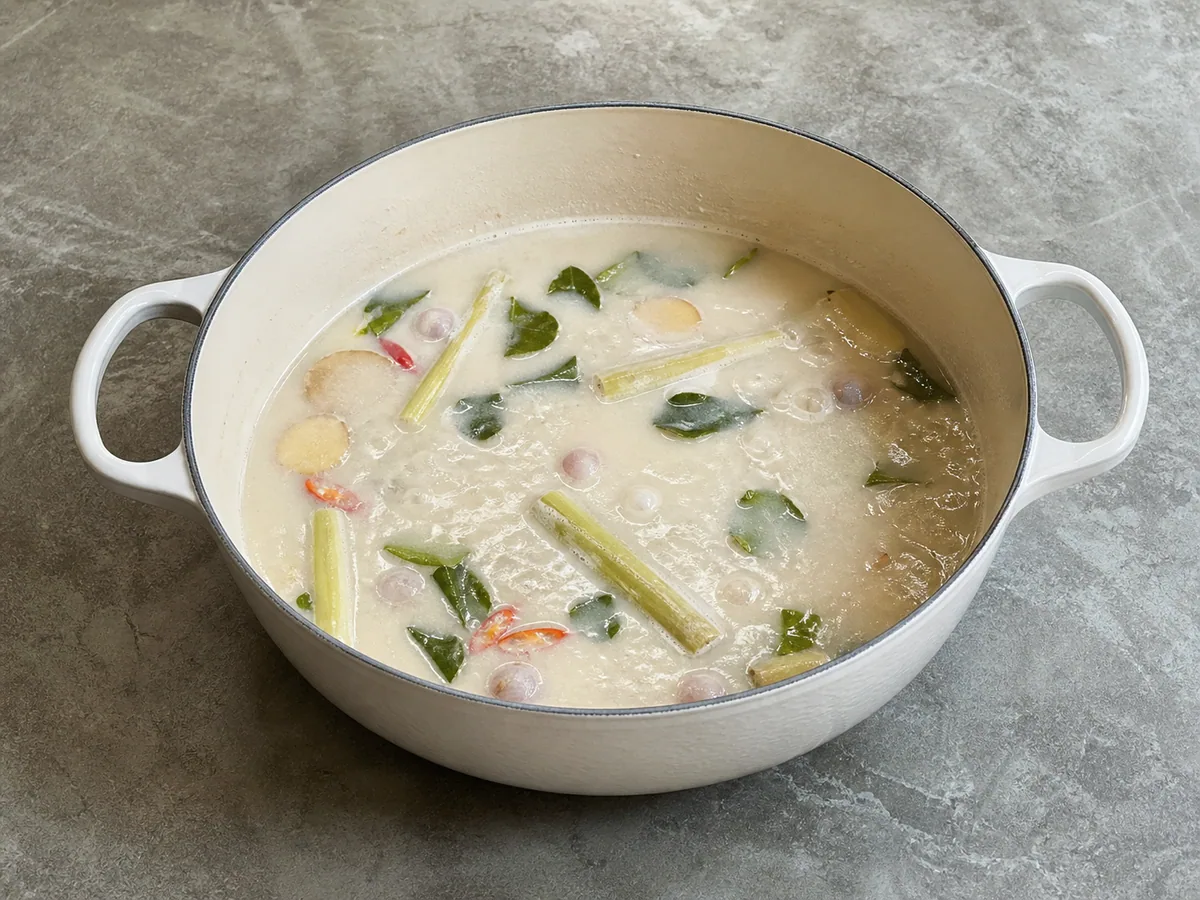
Reduce the heat to medium. Add 600 ml of water, 400 ml of full-fat coconut milk, 2 lemongrass stalks, 30 g of fresh galangal, 6 makrut lime leaves, 2 shallots, 2 Thai bird's eye chiles, and 8 g of light brown sugar. Stir gently and bring the broth just to a simmer; do not let it boil vigorously. Simmer uncovered for 10 minutes, adjusting the heat so small bubbles rise steadily and the aromatics perfume the broth.
10:00Finish and balance the soup
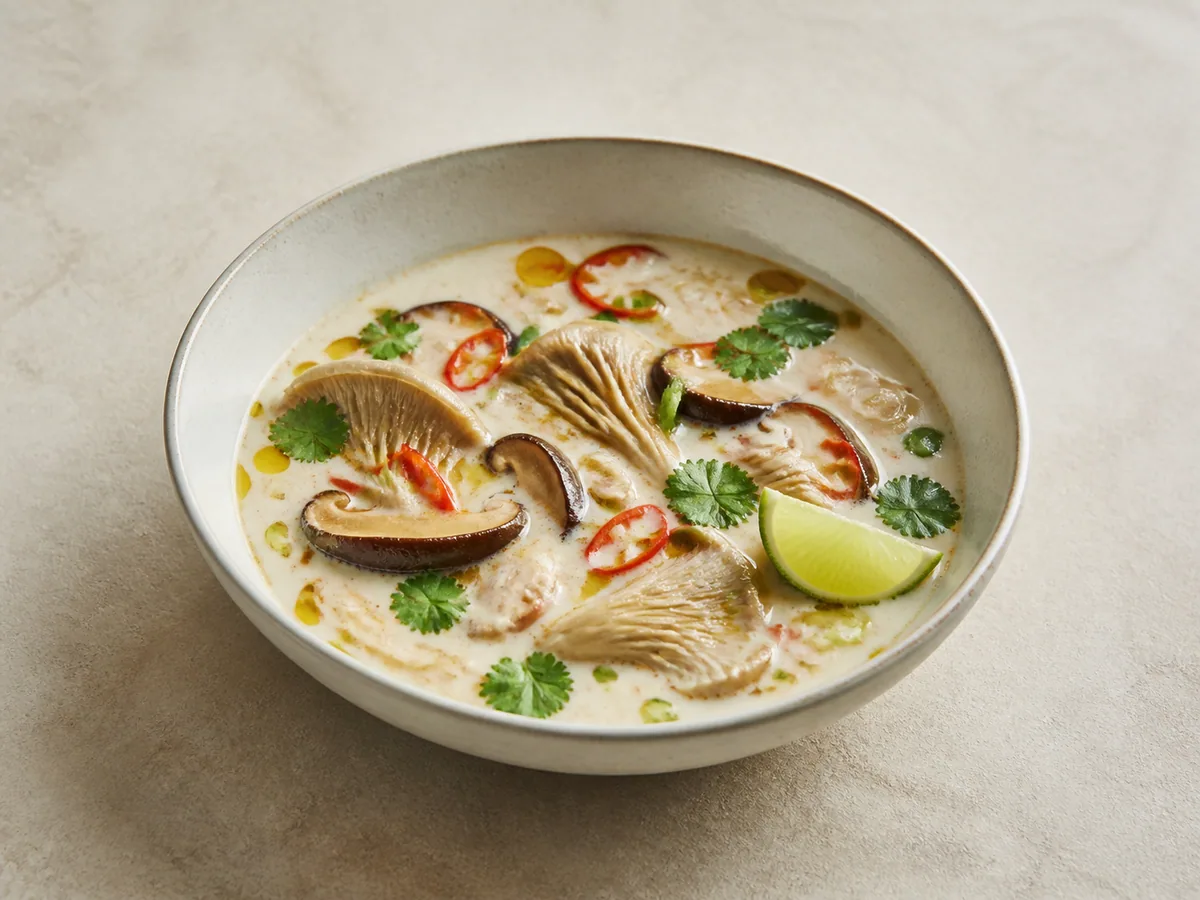
Return 450 g of mixed oyster and shiitake mushrooms to the pot and stir in 30 ml of light soy sauce (contains soy and wheat). Simmer gently for 3 to 4 minutes, checking at 3 minutes, until the mushrooms are tender and the broth tastes rounded. Remove the pot from the heat. Stir in 45 ml of fresh lime juice and most of 15 g of fresh cilantro. Taste and adjust the balance with a little more soy sauce for saltiness or lime juice for brightness. Remove the fibrous aromatics before serving, or warn diners not to eat them. Ladle into bowls, finish with remaining cilantro, and serve with cooked jasmine rice (optional).
03:00


Smart Substitutions
- No fresh galangal? Use fresh ginger for a warmer, less piney broth. The result will still be fragrant, but it will not have the defining flavor of classic tom kha.
- No makrut lime leaves? Add a few wide strips of lime zest and remove them before serving. Avoid the white pith, which can make the broth bitter.
- Different mushrooms? Use oyster, shiitake, straw, king oyster, or cremini mushrooms in any combination, keeping the total quantity the same.
- No light soy sauce? Use tamari or coconut aminos and adjust gradually, since their saltiness and sweetness vary by brand.
Tips and Variations
- Bruise the lemongrass instead of mincing it so the broth gains aroma without becoming fibrous.
- Add the lime juice only after the pot leaves the heat to keep its flavor sharp and fresh.
- Brown the mushrooms in two batches when the pot is narrow; crowding traps steam and prevents golden edges.
What Went Wrong?
- Broth tastes flat Add a small splash of soy sauce first, then lime juice. Saltiness gives the aromatics definition, while acidity lifts the coconut.
- Coconut milk looks oily Lower the heat and whisk gently until the broth looks more even. Keep it below a vigorous boil.
- Soup is too spicy Remove the chile pieces and dilute the broth with a little coconut milk or water, then rebalance with lime.
- Mushrooms released too much water Continue cooking over medium-high heat until the liquid evaporates before moving on, or brown them in batches.
Nutrition Estimate
- Fiber: 4 g per serving
- Sodium: 475 mg per serving
Nutrition disclaimer:This recipe is provided for general cooking information only. Nutrition values are estimates and may vary by ingredients, brands, preparation methods, and serving sizes. Check ingredient labels and follow appropriate food-safety practices. This content is not medical, dietary, allergy, or professional food-safety advice.
FAQ
Found an error or have a suggestion?
Help us improve this recipe. Send us your feedback and include the recipe name so we can take a look.