Method
Soak the fenugreek
Rinse 22 g of fenugreek seeds in a fine sieve, then place the seeds in a small heatproof bowl and cover generously with boiling water. Let them quick-soak for 60 minutes while you prepare and cook the trid flatbreads. Drain, rinse once more, and set aside.
60:00Knead the trid dough
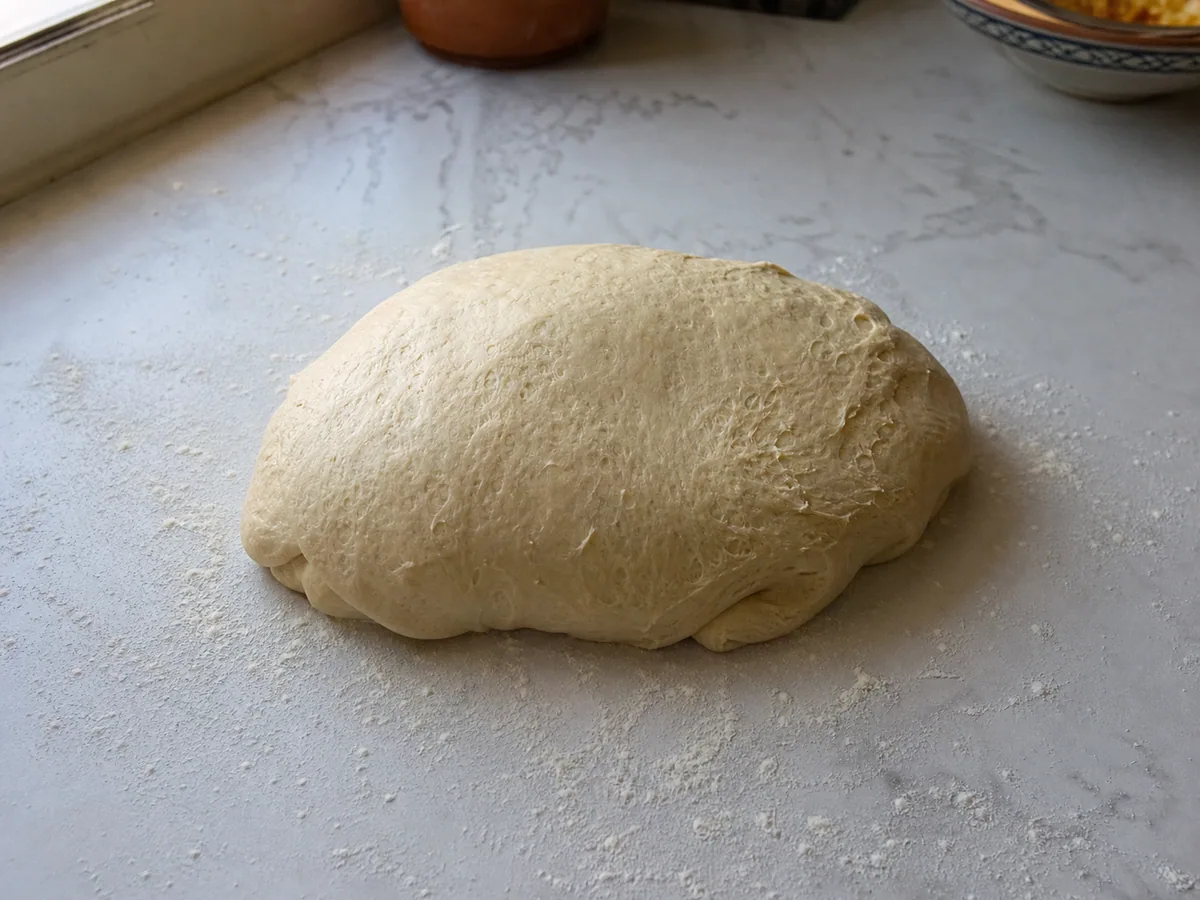
Combine 360 g of all-purpose wheat flour, 120 g of fine durum semolina, and 5 g of fine salt for flatbreads in a wide bowl. Pour in 320 ml of warm water for flatbreads gradually while mixing until a soft, slightly tacky dough forms. Knead on a clean work surface for 8 minutes, pressing and folding until the dough feels smooth and elastic rather than grainy.
08:00Rest and divide the dough
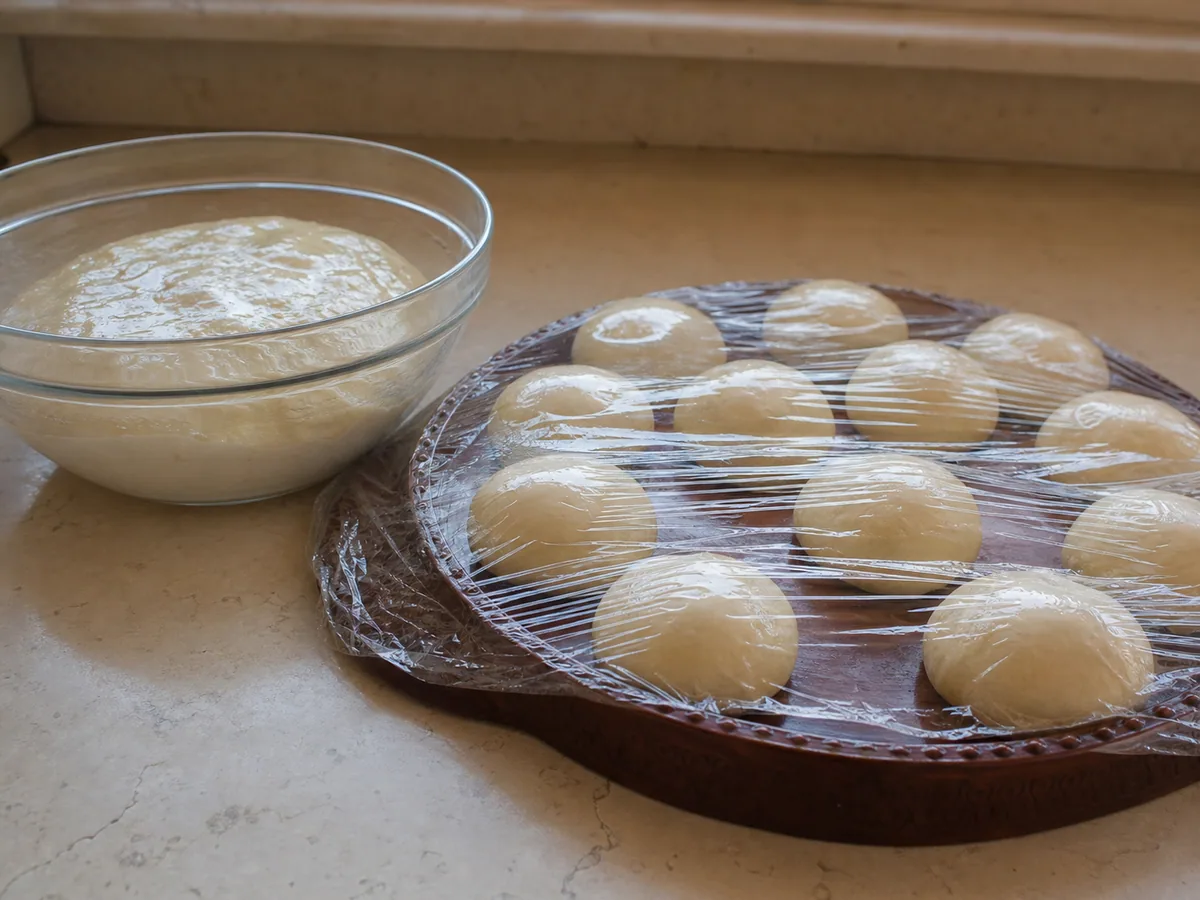
Use 30 ml of olive oil for flatbreads to lightly coat the dough, a tray, and your fingertips. Cover the dough with an upturned bowl and rest it for 20 minutes. For the 6-serving batch, divide the dough into 12 even portions of about 70 g each, or about 2 portions per serving when scaling. Roll each portion into a smooth ball and keep the balls covered so their surfaces stay supple.
20:00Stretch and cook the trid flatbreads
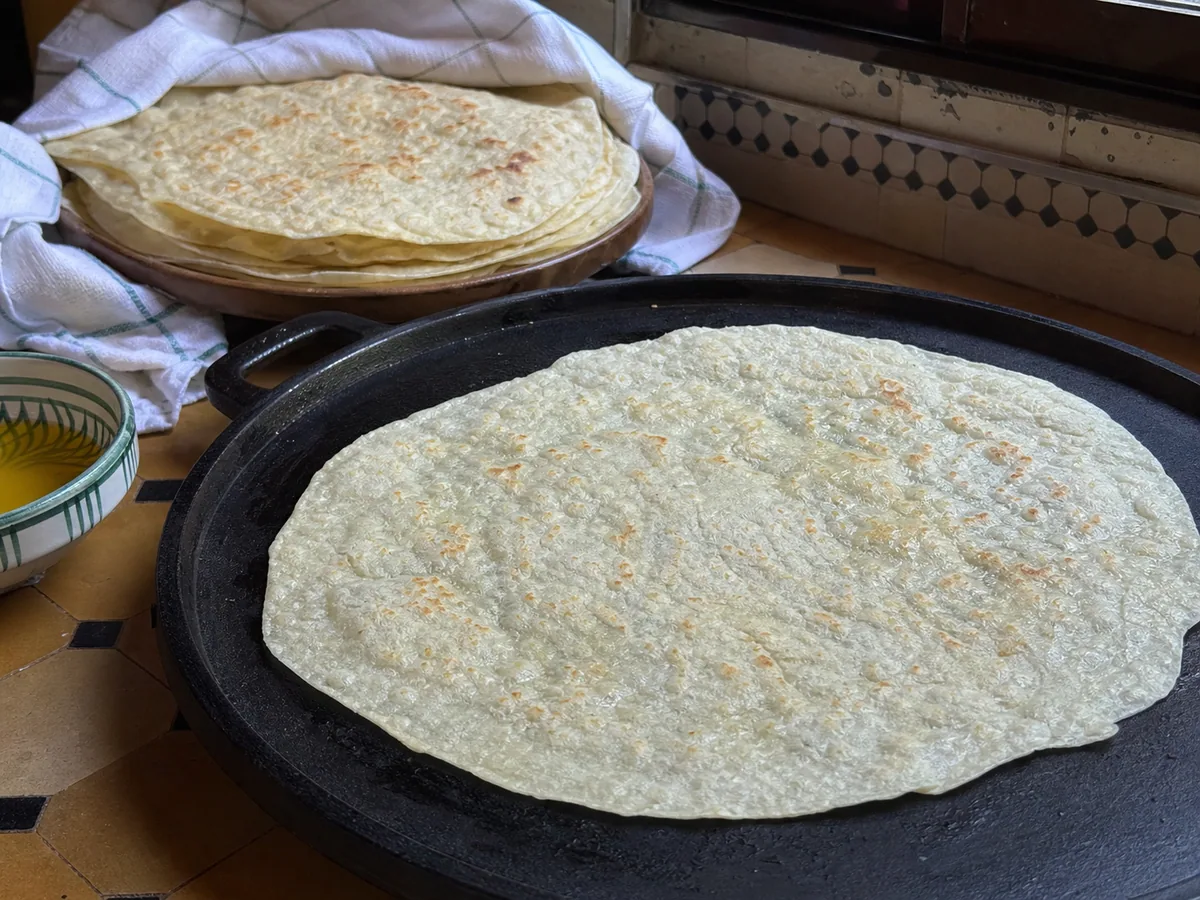
Heat a broad skillet or griddle over medium heat. On the oiled work surface, press one dough ball outward from the center until it becomes a very thin round; small irregular edges are fine. Lay it flat in the skillet and cook for about 1 minute, until the top loses its raw sheen and the underside develops pale golden spots. Flip and cook for 20 to 30 seconds, just until set but still flexible. Stack the cooked sheets under a clean towel and repeat with the remaining 11 balls. For the 6-serving batch, stretching and cooking all 12 sheets takes about 25 to 30 minutes.
Build the onion-spice base
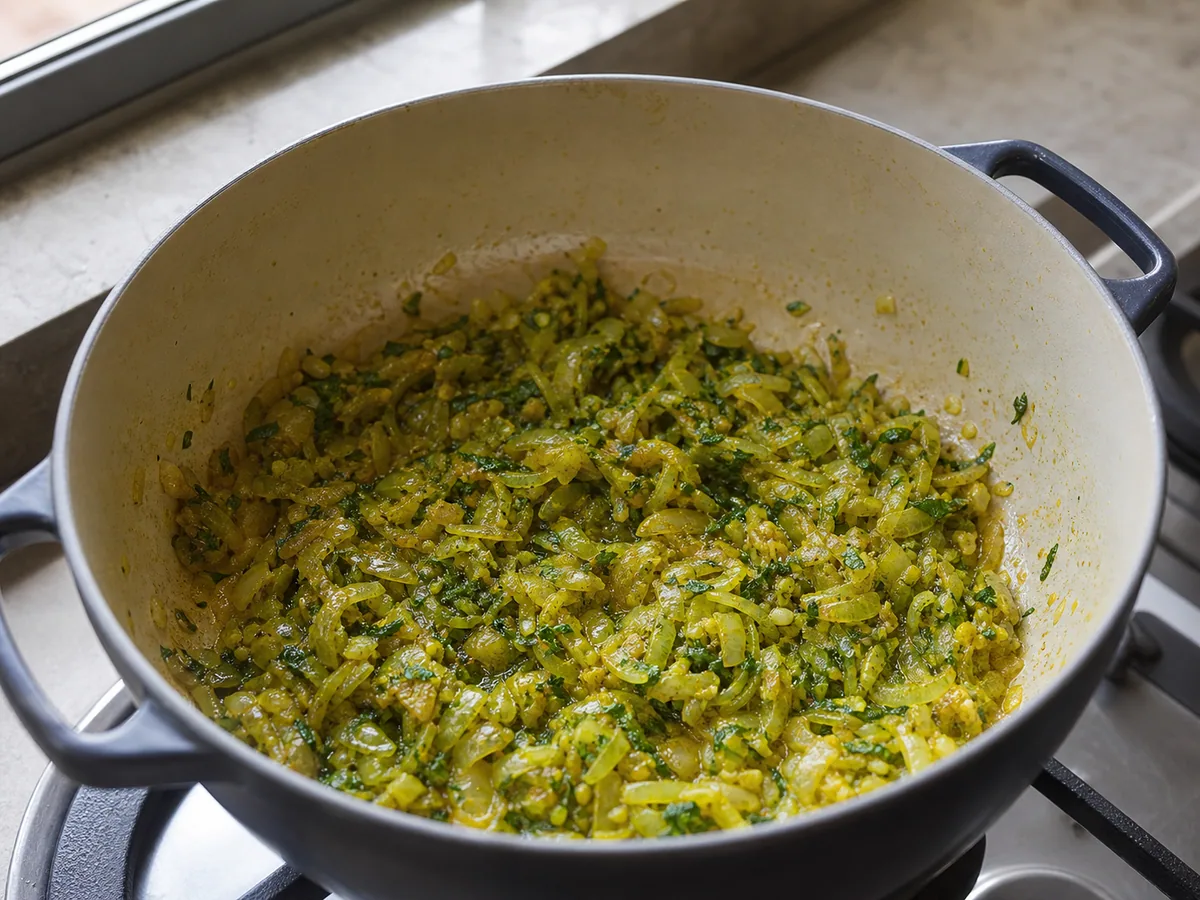
Warm 45 ml of olive oil for stew in a heavy wide pot over medium heat. Slice 600 g of yellow onions into thin half-moons and add them to the pot. Mince 4 garlic cloves, chop 30 g of fresh cilantro and 20 g of fresh parsley, then stir them in with 4 g of ground ginger, 3 g of ground turmeric, 6 g of ras el hanout, 2 g of ground black pepper, 0.2 g of saffron threads, and 9 g of fine salt for stew. Cook for 10 minutes, stirring often, until the onions soften, release their juices, and turn glossy without browning deeply.
10:00Braise the chicken
Add 1000 g of boneless skinless chicken thighs to the pot and turn each piece in the onion mixture until well coated. Pour in 1500 ml of water for stew and bring the liquid to a lively simmer. Lower the heat, cover partially, and cook for 35 minutes, turning the chicken once. After handling raw chicken, wash the plate, tongs, work surface, and your hands with hot soapy water before touching ready-to-eat food.
35:00Cook the lentils and finish the chicken
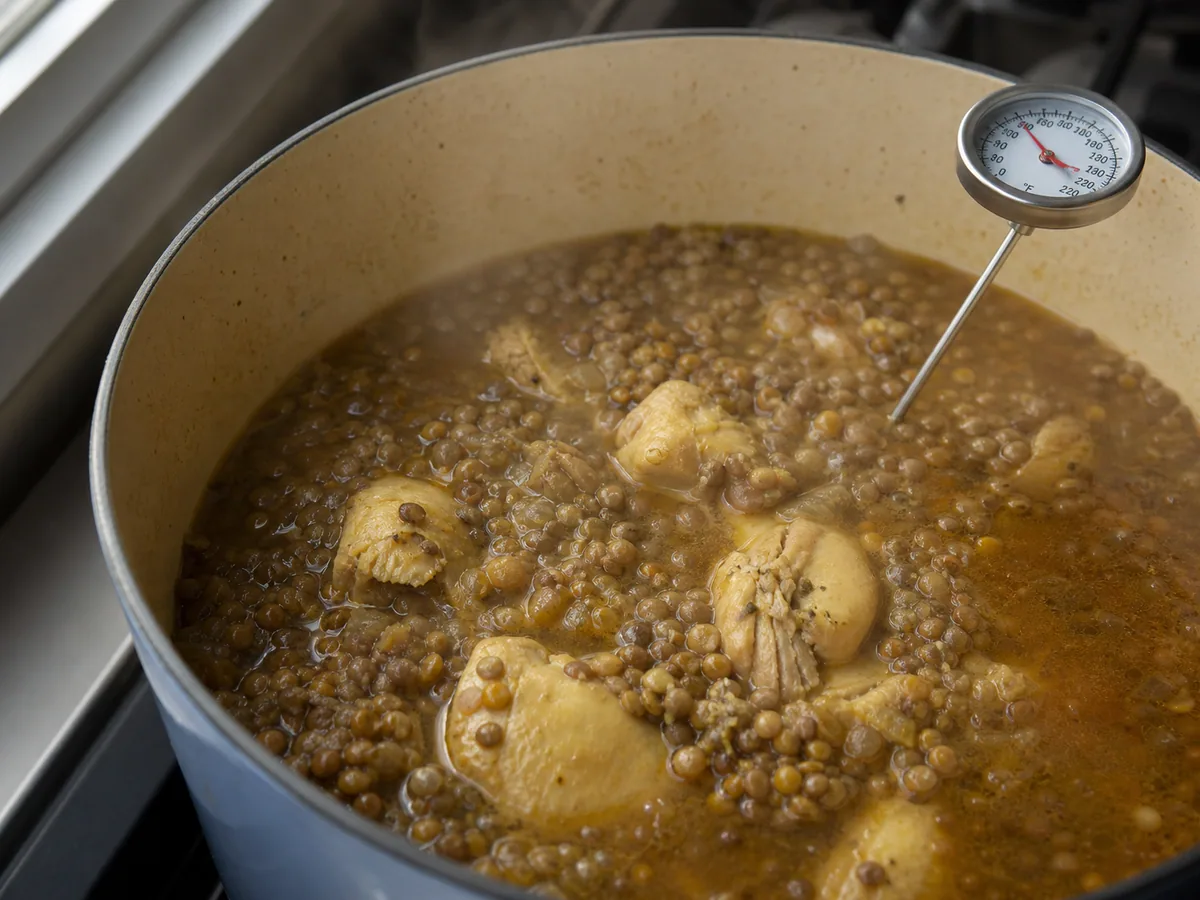
Rinse 150 g of dried brown lentils and add them to the pot with the drained soaked seeds. Simmer partially covered for 30 to 40 minutes, stirring near the bottom every so often, until the lentils are tender and the chicken is very soft. Begin checking at 30 minutes. Use a food thermometer in the thickest part of the largest thigh; every piece must reach at least 74°C/165°F. If the chicken reaches temperature before the lentils soften, transfer it to a clean platter and continue simmering the broth. If using smen preserved butter (optional), stir it in once the lentils are tender.
30:00Concentrate the broth
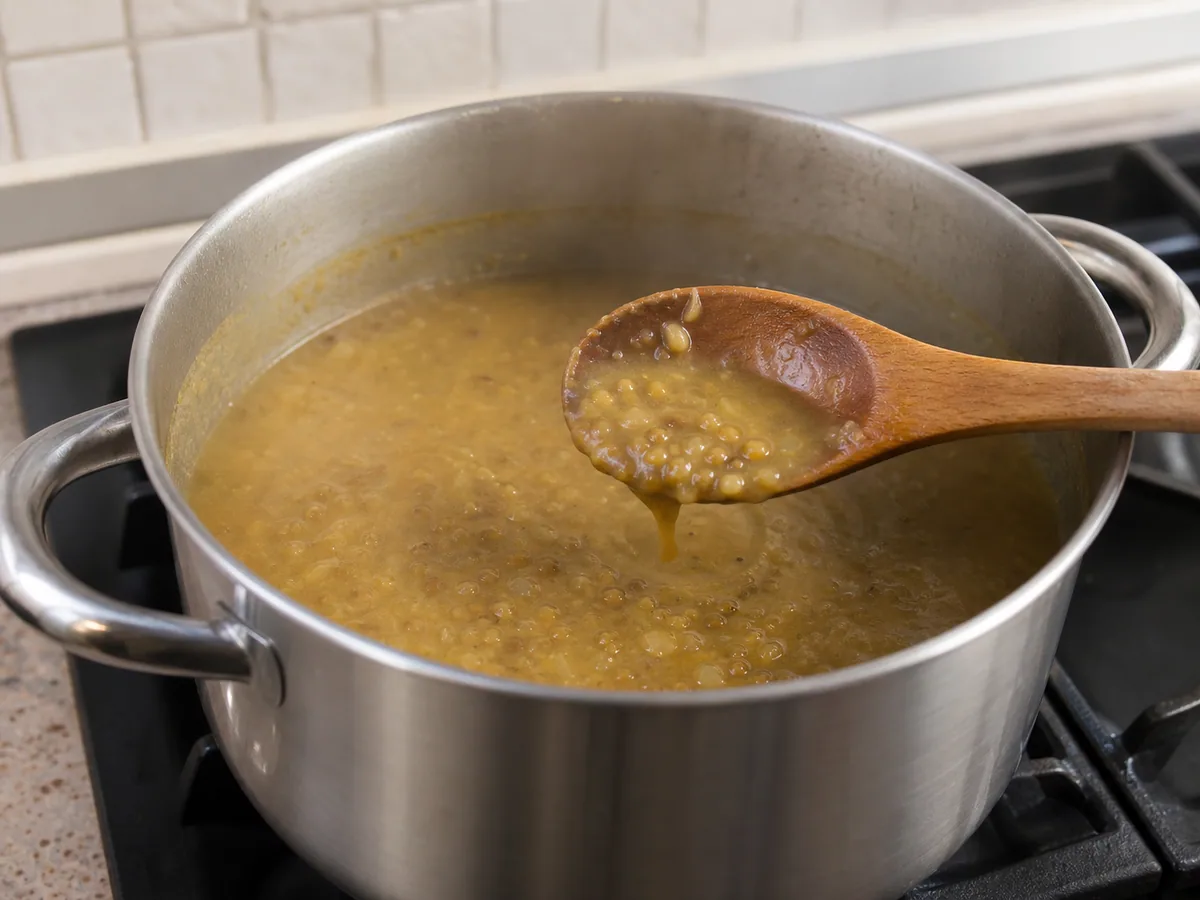
Transfer the fully cooked chicken to a clean platter. Simmer the lentil-onion broth uncovered for 10 to 15 minutes, stirring frequently, until the onions nearly melt into the liquid and the broth lightly coats a spoon but still pours easily. Start checking at 10 minutes; rfissa needs enough liquid to season the bread. Return the chicken to the pot just long enough to heat through.
10:00Shred and warm the trid
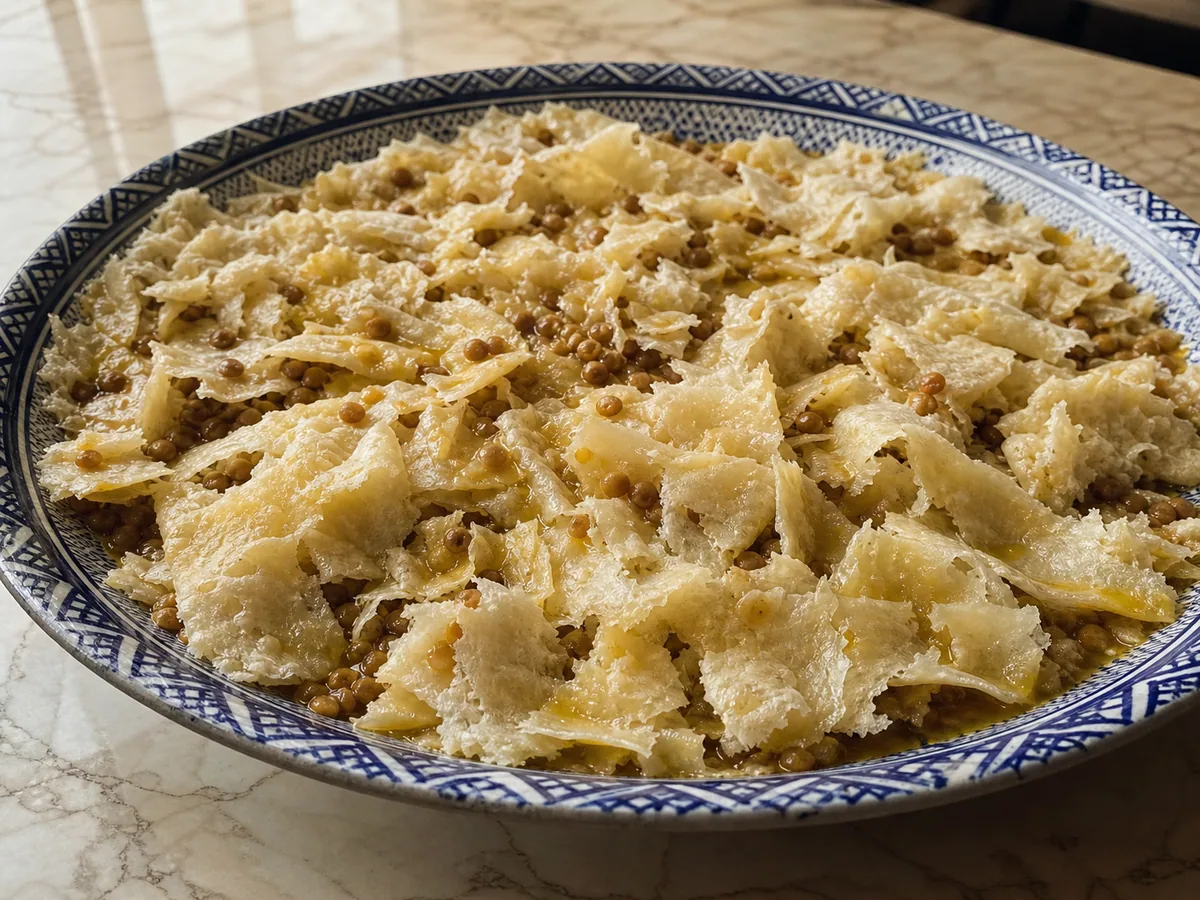
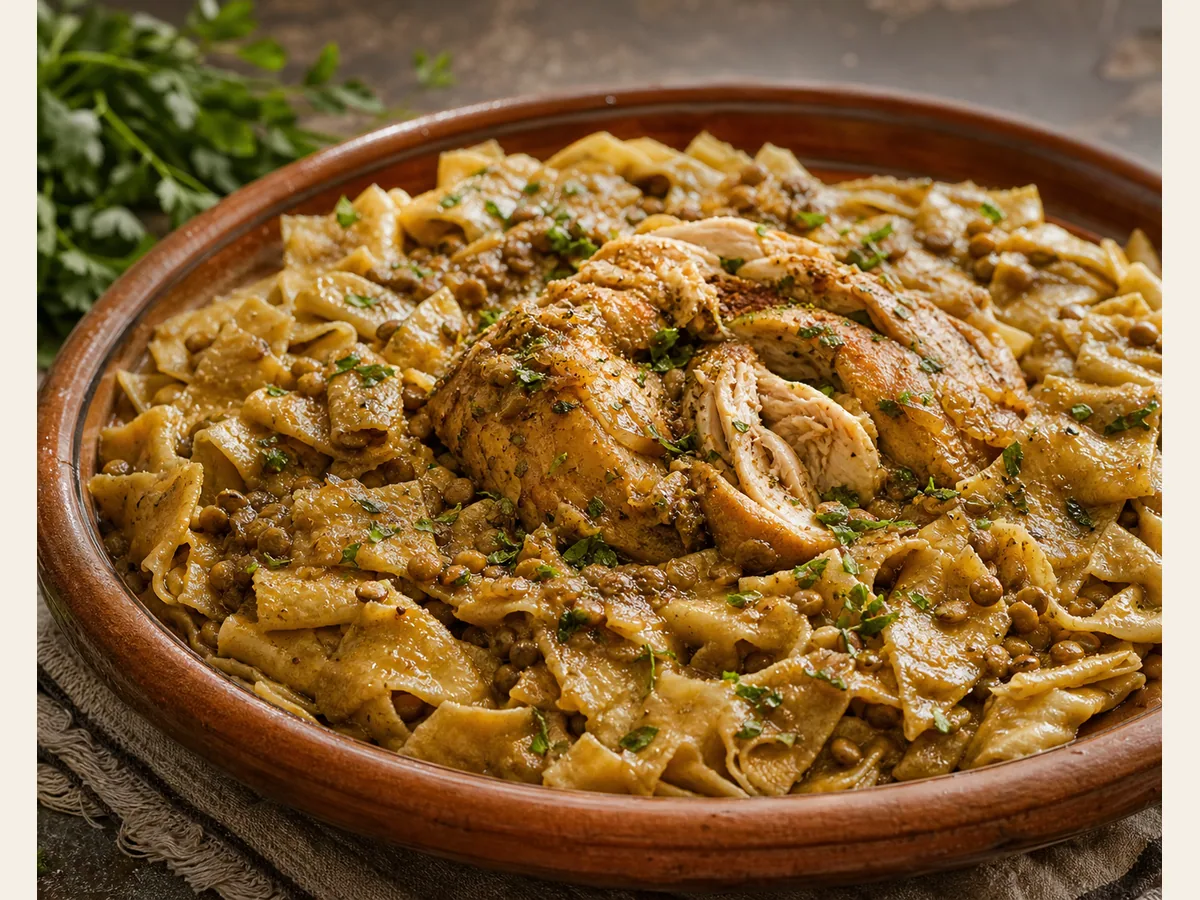
Tear the cooked trid sheets into loose ribbons about 2 to 3 cm (3/4 to 1 1/4 in) wide and spread them across a large shallow serving platter. Ladle over a modest amount of hot lentil-onion broth and toss gently with two forks, adding only enough to warm and season the bread while the ribbons remain distinct.
Assemble and serve
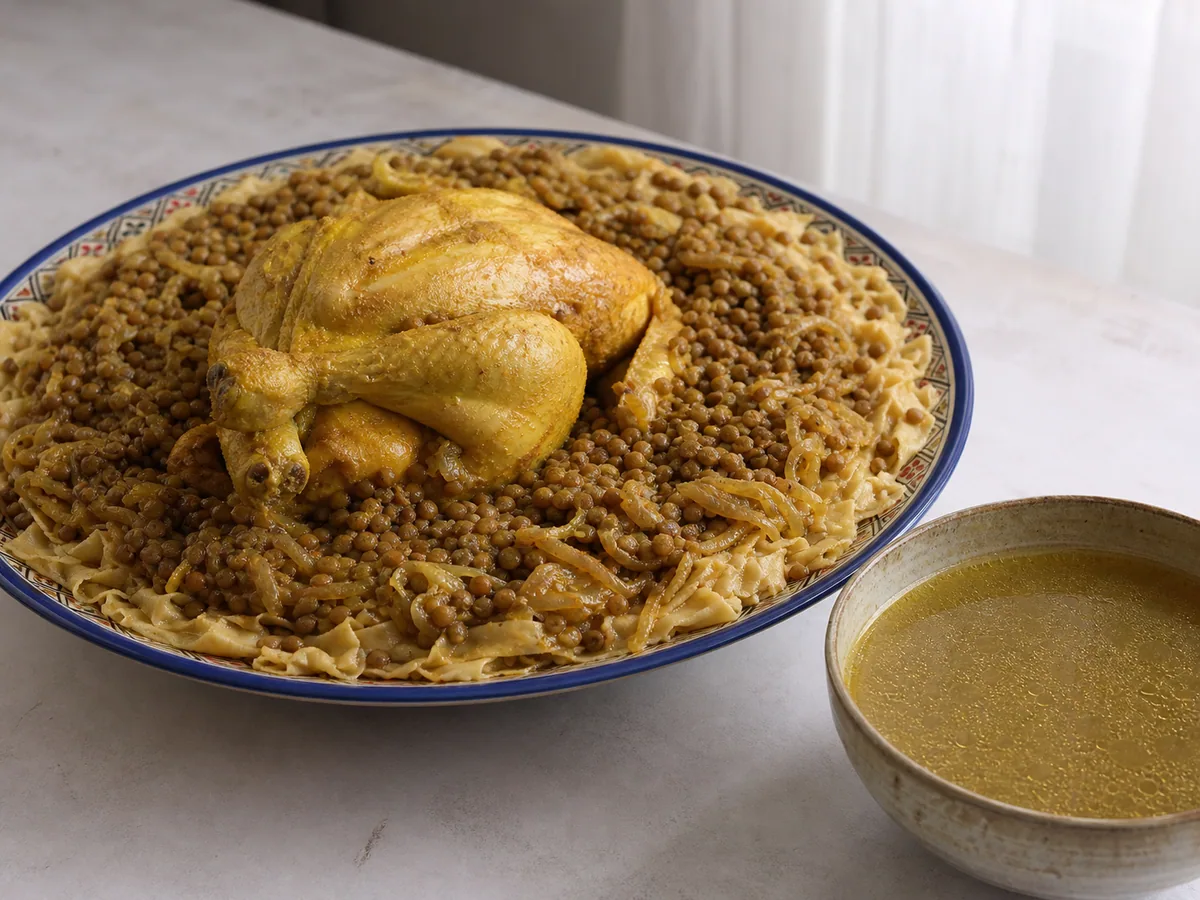
Spoon most of the lentils, onions, and concentrated broth over the warm trid. Arrange the fully cooked chicken in the center, then ladle more broth around and over the meat so the lower bread softens while the top ribbons keep some definition. Bring the platter to the table immediately, with extra hot broth in a bowl for anyone who wants a softer, more saturated portion.


Smart Substitutions
- No time for homemade trid? Use fresh plain msemen or unsweetened wheat paratha, warmed and torn into ribbons before assembly.
- No smen? Use unsalted butter for a mellow dairy finish, or add a small extra drizzle of olive oil.
- No saffron? Increase the turmeric slightly for color; the broth will be less floral but still balanced.
- Fenugreek tastes too assertive? Use half the listed amount and rinse it thoroughly after soaking.
Tips and Variations
- Keep the skillet at medium heat so the trid develops pale spots while staying flexible enough to tear.
- Stir the lentils from the bottom of the pot, where the softened onions can settle and catch.
- Add broth to the bread in stages; it is much easier to soften the platter further than to restore distinct ribbons.
What Went Wrong?
- Dough springs back while stretching Cover the portions and give them another 10 minutes of rest before trying again.
- Chicken is done but lentils are firm Move the chicken to a clean platter and continue simmering the lentils until tender.
- Broth looks oily Simmer uncovered and skim only the excess surface fat, leaving enough richness to season the bread.
- Bread turns pasty Use less broth at first, toss gently, and finish the platter only when everyone is ready to eat.
Nutrition Estimate
- Fiber: 9 g per serving
- Sodium: 1080 mg per serving
Nutrition disclaimer:This recipe is provided for general cooking information only. Nutrition values are estimates and may vary by ingredients, brands, preparation methods, and serving sizes. Check ingredient labels and follow appropriate food-safety practices. This content is not medical, dietary, allergy, or professional food-safety advice.
FAQ
Found an error or have a suggestion?
Help us improve this recipe. Send us your feedback and include the recipe name so we can take a look.