Method
Mix the sauce and prepare the ingredients
Whisk 45 ml of Japanese Worcestershire-style sauce, 15 ml of oyster sauce (contains shellfish), 30 ml of ketchup, 15 ml of reduced-sodium soy sauce (contains soy and wheat), 8 g of light brown sugar, and 1 g of black pepper in a small bowl until smooth. Cut 340 g of boneless pork loin across the grain into thin bite-size strips on a board reserved for raw meat. Cut 280 g of green cabbage into 3 cm (1 1/4 in) pieces, slice 140 g of yellow onion into thin wedges, cut 115 g of carrot into fine matchsticks, and slice 30 g of scallions, keeping the dark-green slices separate. Wash hands, knife, board, and nearby surfaces with hot soapy water after handling raw pork, and keep sauce and vegetables away from the raw-meat area.
Brown the pork safely
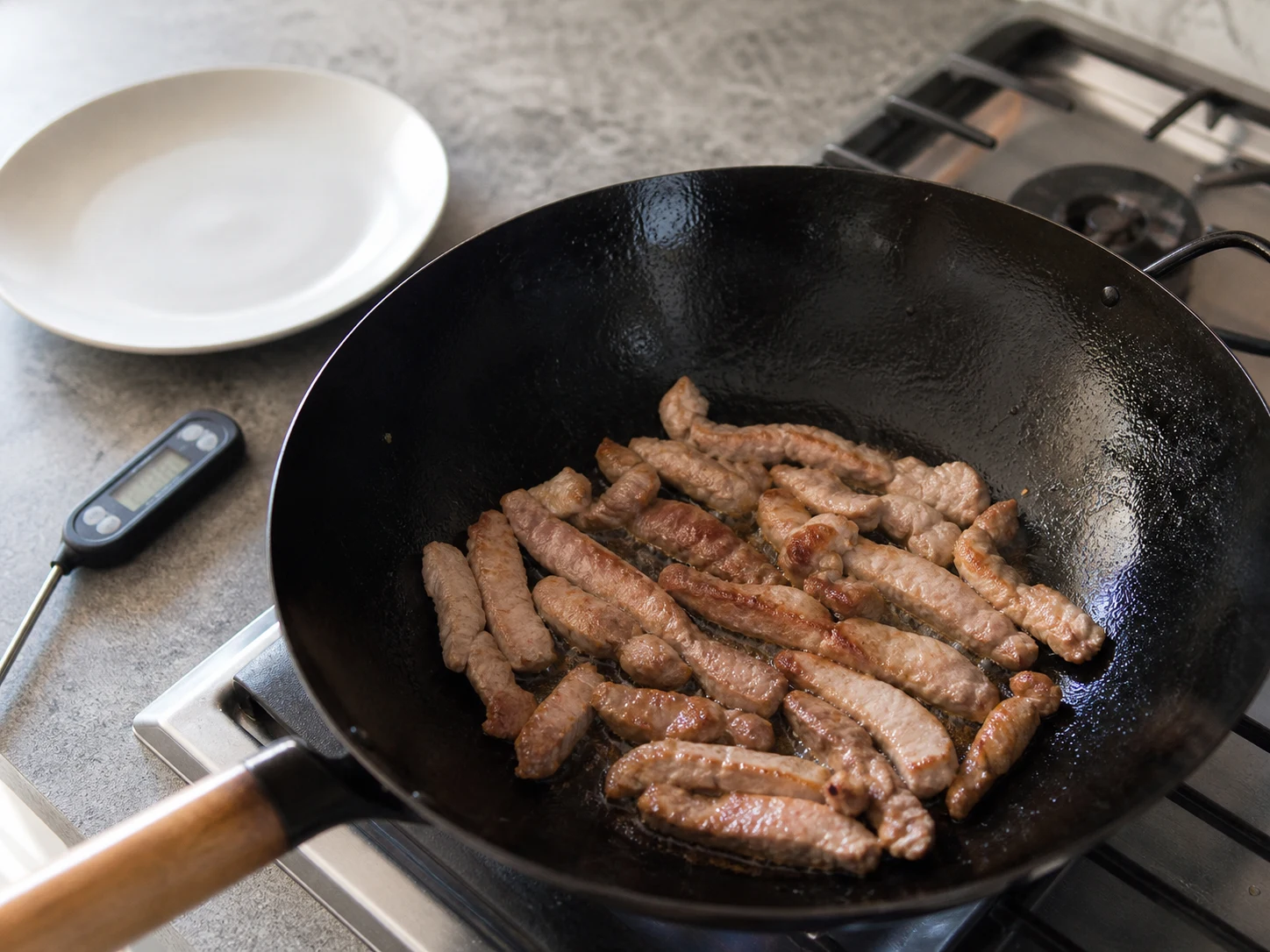
Heat a wide skillet or wok over medium-high heat until hot. Add half of 30 ml of neutral cooking oil and swirl to coat. Add 340 g of boneless pork loin in a single layer and cook, turning often, until browned and the thickest strip reaches at least 63°C/145°F on an instant-read food thermometer. Transfer it to a clean plate and rest for 3 minutes.
03:00Stir-fry the vegetables
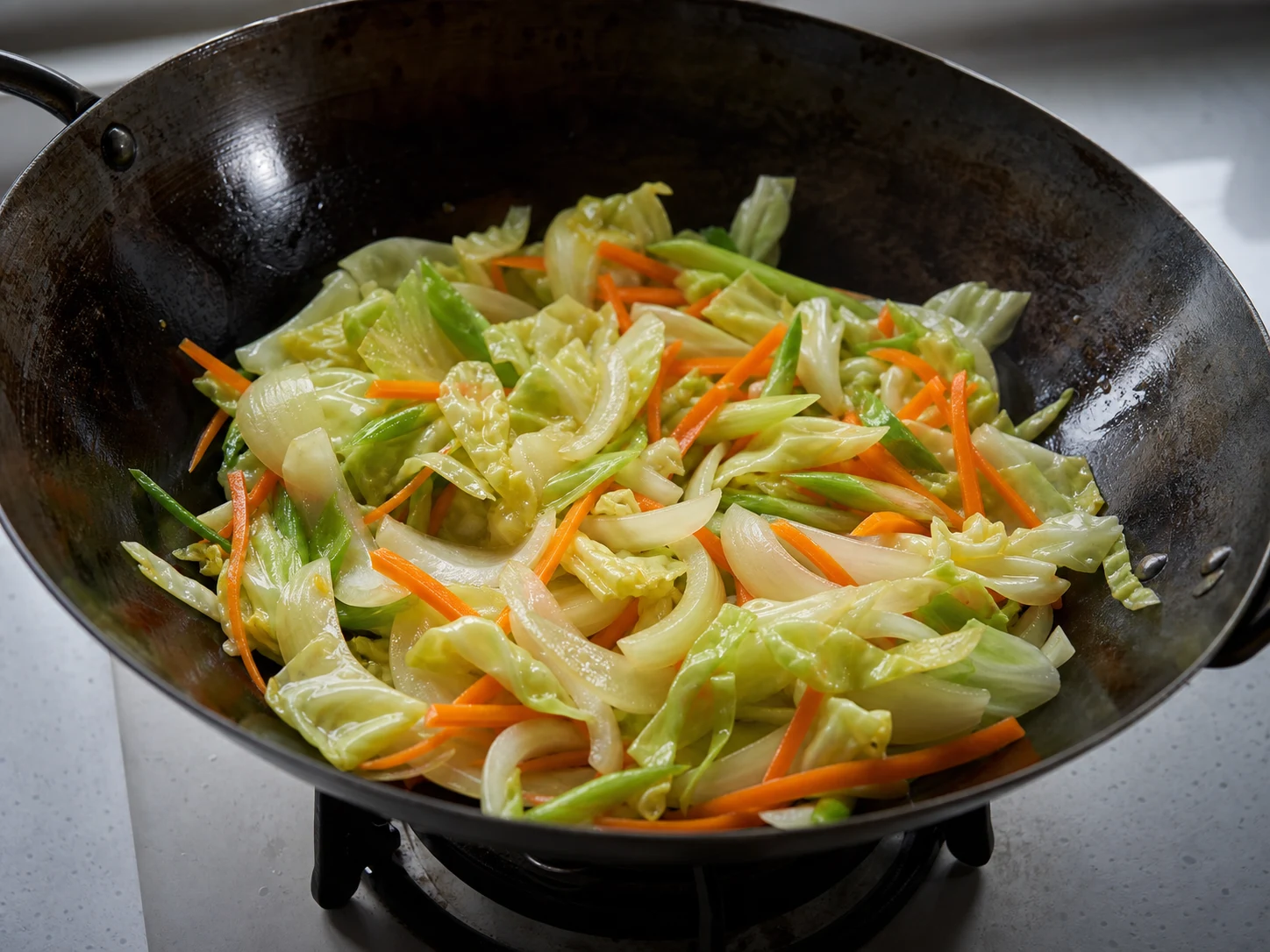
While the pork rests, return the skillet to medium-high heat and add the remaining half of 30 ml of neutral cooking oil. Add 140 g of yellow onion and 115 g of carrot; toss until the onion begins to turn translucent and the carrot bends without breaking. Add 280 g of green cabbage and cook, tossing often, until the edges soften but the centers remain crisp. Add the white and pale-green portions from 30 g of scallions and stir just until fragrant.
Loosen the noodles
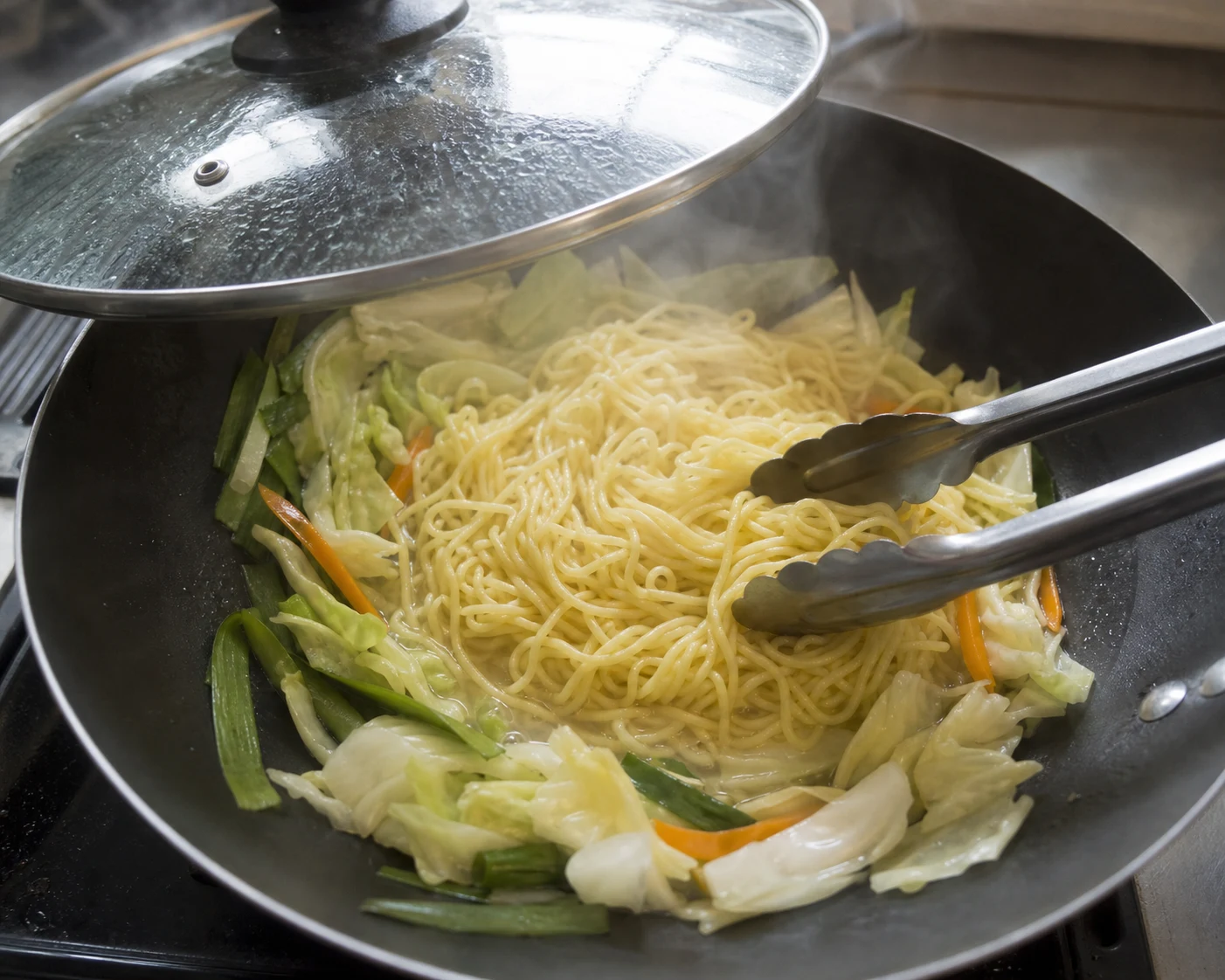
Push the vegetables toward the edges of the pan. Add 600 g of fresh yakisoba noodles (contains wheat) and 60 ml of water to the center, cover, and steam for 2 minutes. Uncover and gently separate the noodle strands with tongs or two spatulas, then toss them with the vegetables until evenly mixed.
02:00Sauce and finish the yakisoba
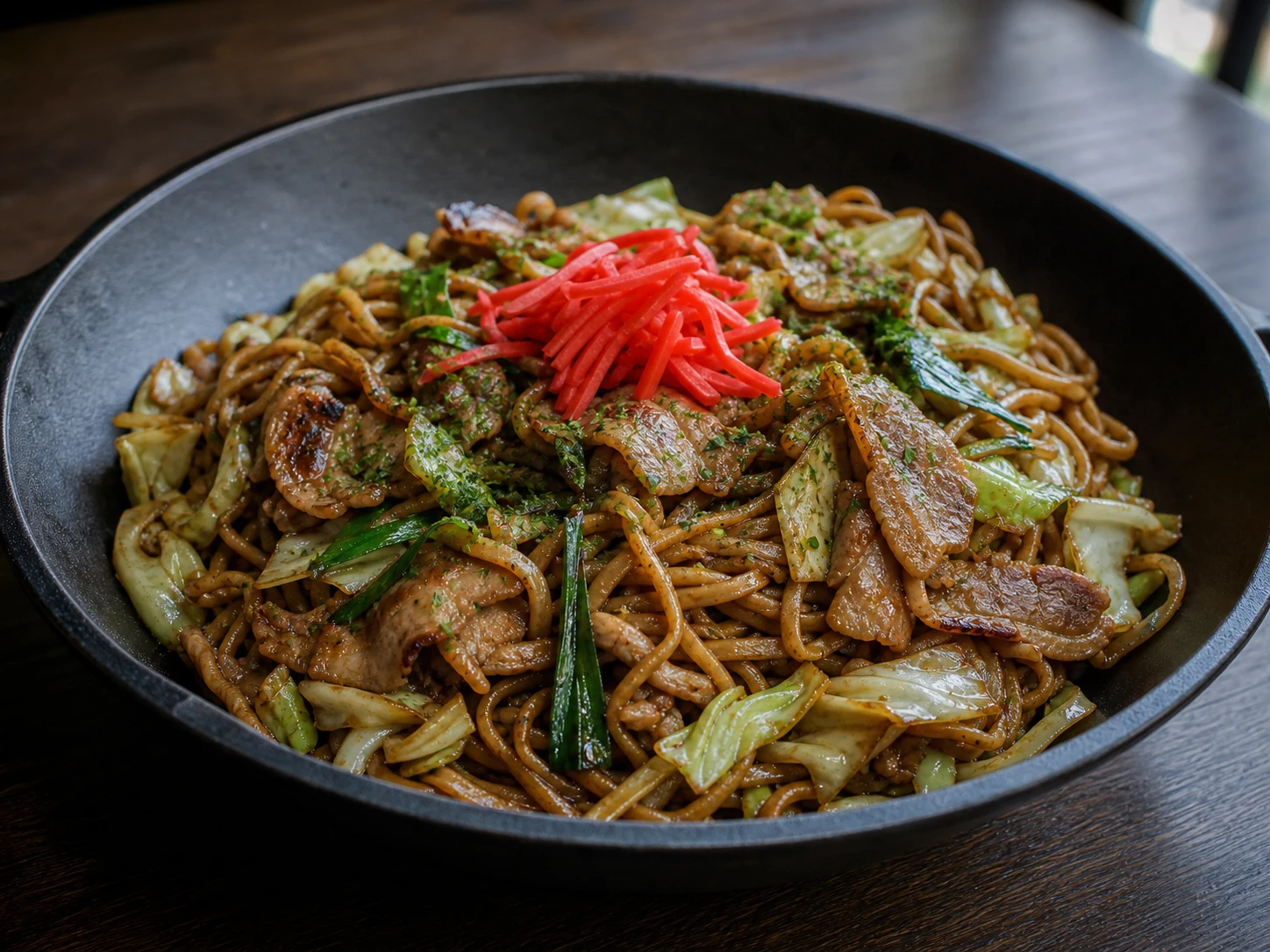
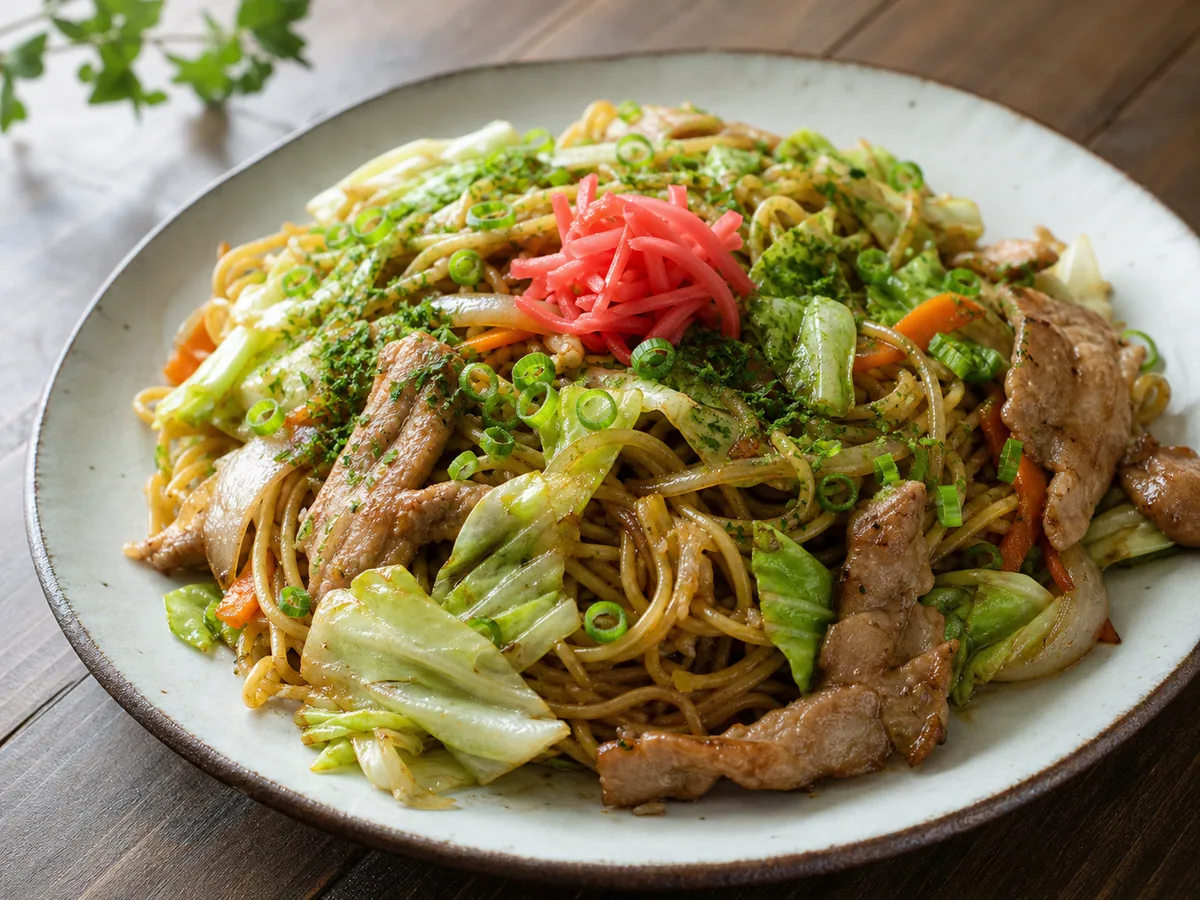
Return 340 g of boneless pork loin and any juices from the clean plate to the pan. Pour in the prepared sauce and toss over high heat until the noodles are evenly coated, glossy, and lightly seared in spots, with no watery sauce collecting underneath. Begin checking after 2 minutes; the pork should be steaming hot and the vegetables crisp-tender. Fold in the reserved dark-green scallion slices. Serve at once with aonori seaweed (optional) and beni shoga pickled ginger (optional).
02:00


Smart Substitutions
- No fresh yakisoba noodles? Use 21 ounces (600 g) fresh ramen noodles, or 14 ounces (400 g) dried ramen or Chinese wheat noodles cooked just shy of tender and drained thoroughly, in place of the fresh yakisoba noodles.
- Prefer a meatless version? Use pressed firm tofu, browned on all sides before the vegetables, in place of the pork.
- No oyster sauce? Use additional Japanese Worcestershire-style sauce with a small spoonful of light brown sugar for body and balance.
- No traditional garnishes? Use finely cut nori for the aonori, or simply serve the noodles without a garnish.
Tips and Variations
- Separate compact noodle blocks gently after steaming; pulling hard can break the strands.
- Use the widest skillet available so the noodles sear instead of steaming in a crowded layer.
- Keep the sauce beside the stove and add it only after the noodles are loose, since its sugar can scorch on an empty hot pan.
What Went Wrong?
- Noodles stay clumped Add a small splash of water, cover briefly, and loosen the strands from the outside of the block toward the center.
- Yakisoba looks watery Increase the heat and toss continuously until the sauce reduces to a thin glaze with no liquid at the bottom of the pan.
- Vegetables turn limp Cook in a wider pan over higher heat and stop while the cabbage still has a firm center.
- Pork turns tough Slice across the grain, keep the strips thin, and remove them as soon as they reach the verified safe temperature.
Nutrition Estimate
- Fiber: 5 g per serving
- Sodium: 1020 mg per serving
Nutrition disclaimer:This recipe is provided for general cooking information only. Nutrition values are estimates and may vary by ingredients, brands, preparation methods, and serving sizes. Check ingredient labels and follow appropriate food-safety practices. This content is not medical, dietary, allergy, or professional food-safety advice.
FAQ
Found an error or have a suggestion?
Help us improve this recipe. Send us your feedback and include the recipe name so we can take a look.