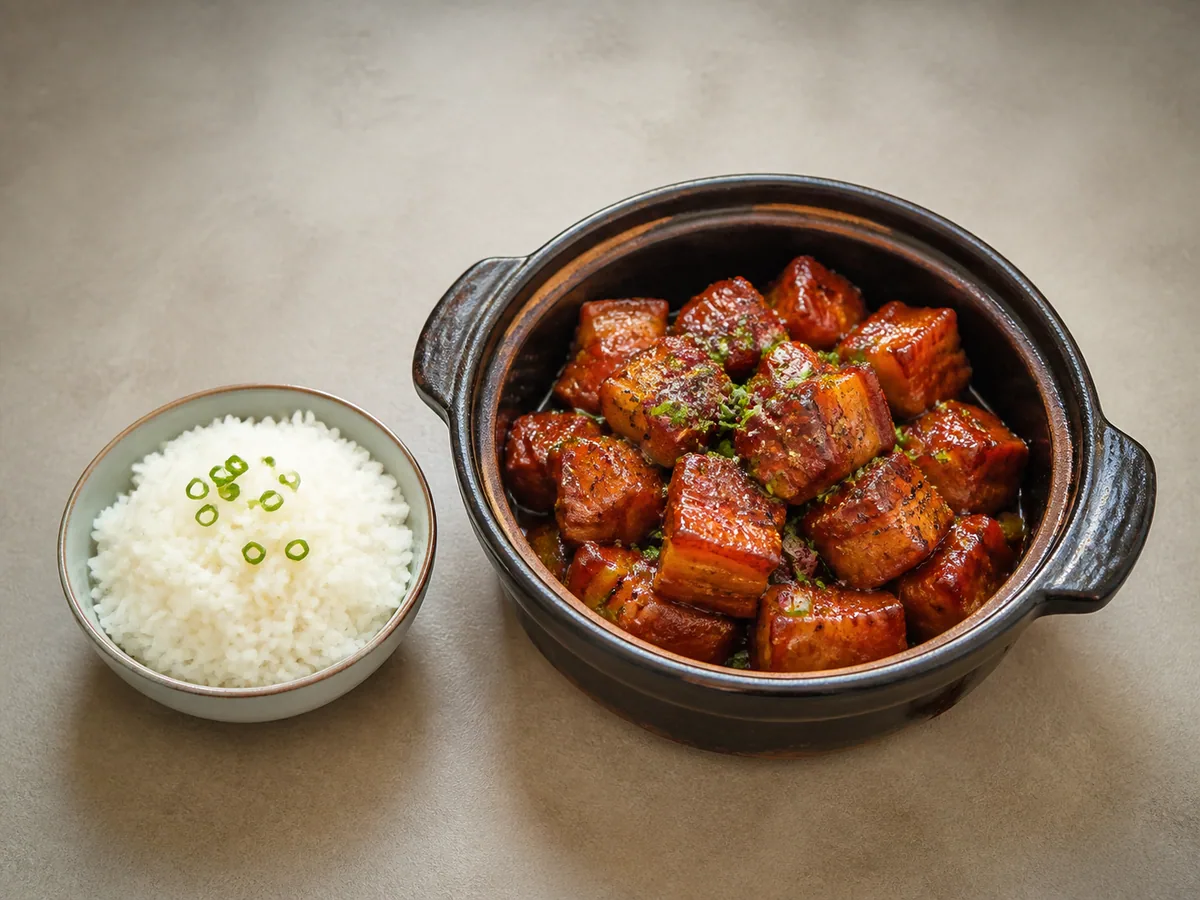
Method
Prepare the pork and aromatics
Set a flameproof clay pot or heavy-bottomed saucepan near the stove. Trim any thick exterior fat from 700 g of boneless pork shoulder, then cut it into 3 cm (1 1/4 in) pieces on a board reserved for raw meat. Slice 3 shallots, mince 4 garlic cloves, grate 20 g of fresh ginger, and cut 4 scallions into short lengths, keeping the dark-green pieces separate. Wash your hands, knife, board, and nearby surfaces with hot soapy water before handling the rice or other ready-to-eat ingredients.
Cook the caramel
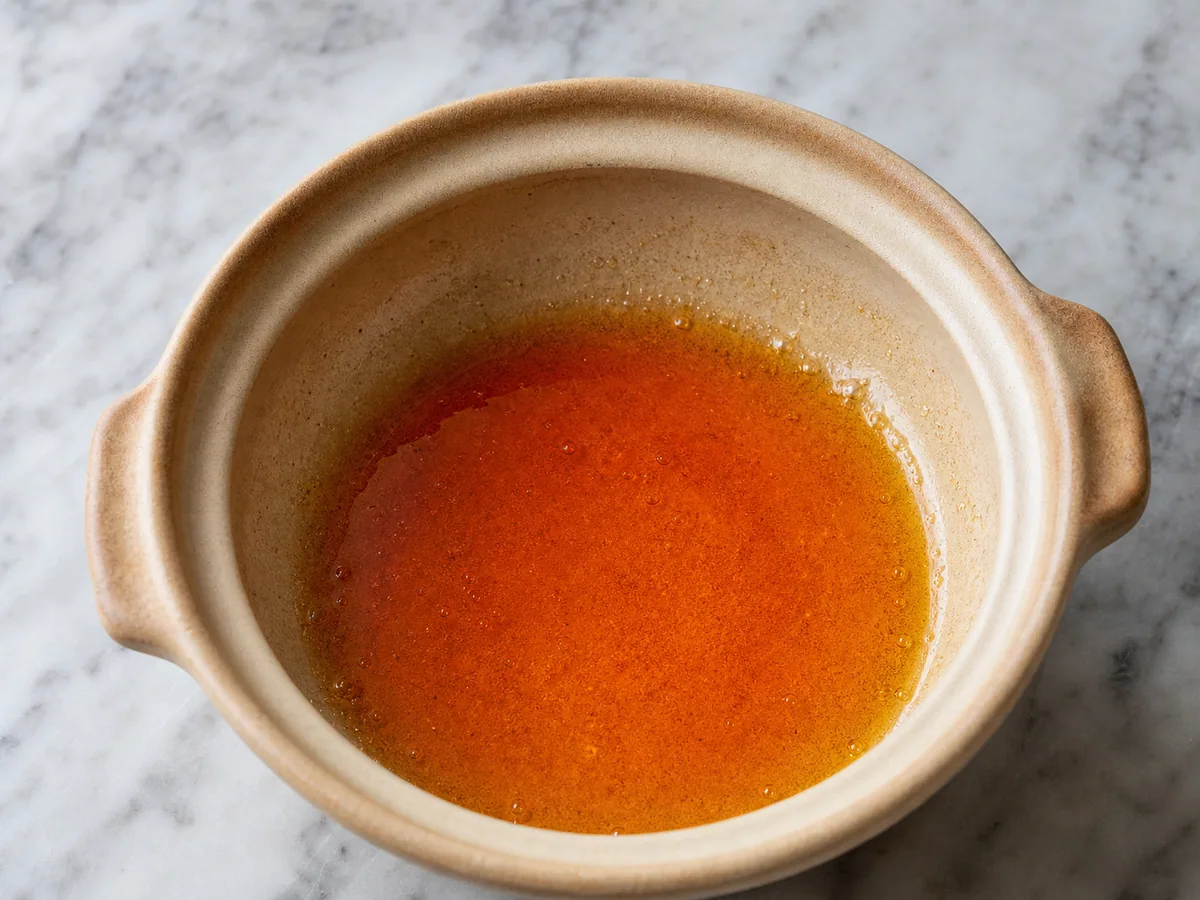
Add 50 g of granulated sugar and 45 ml of water to the cold pot. Set it over medium heat and stir only until the sugar is evenly wet. Let the syrup bubble without stirring; gently swirl the pot as it changes from clear to deep amber, 6 to 8 minutes. Start checking at 6 minutes and pull the pot from the heat before the caramel smokes.
06:00Coat and brown the pork
Carefully add 700 g of boneless pork shoulder to the caramel a few pieces at a time, standing back from the steam. Return the pot to medium-high heat and turn the pieces until coated. Cook for 5 minutes, stirring often, until every surface has lost its raw color and begun to brown.
05:00Soften the aromatics
Add 3 shallots, 4 garlic cloves, and 20 g of fresh ginger to the pork. Cook for 2 minutes, stirring constantly, until the shallots begin to soften and the aromatics smell fragrant without scorching.
02:00Braise until tender
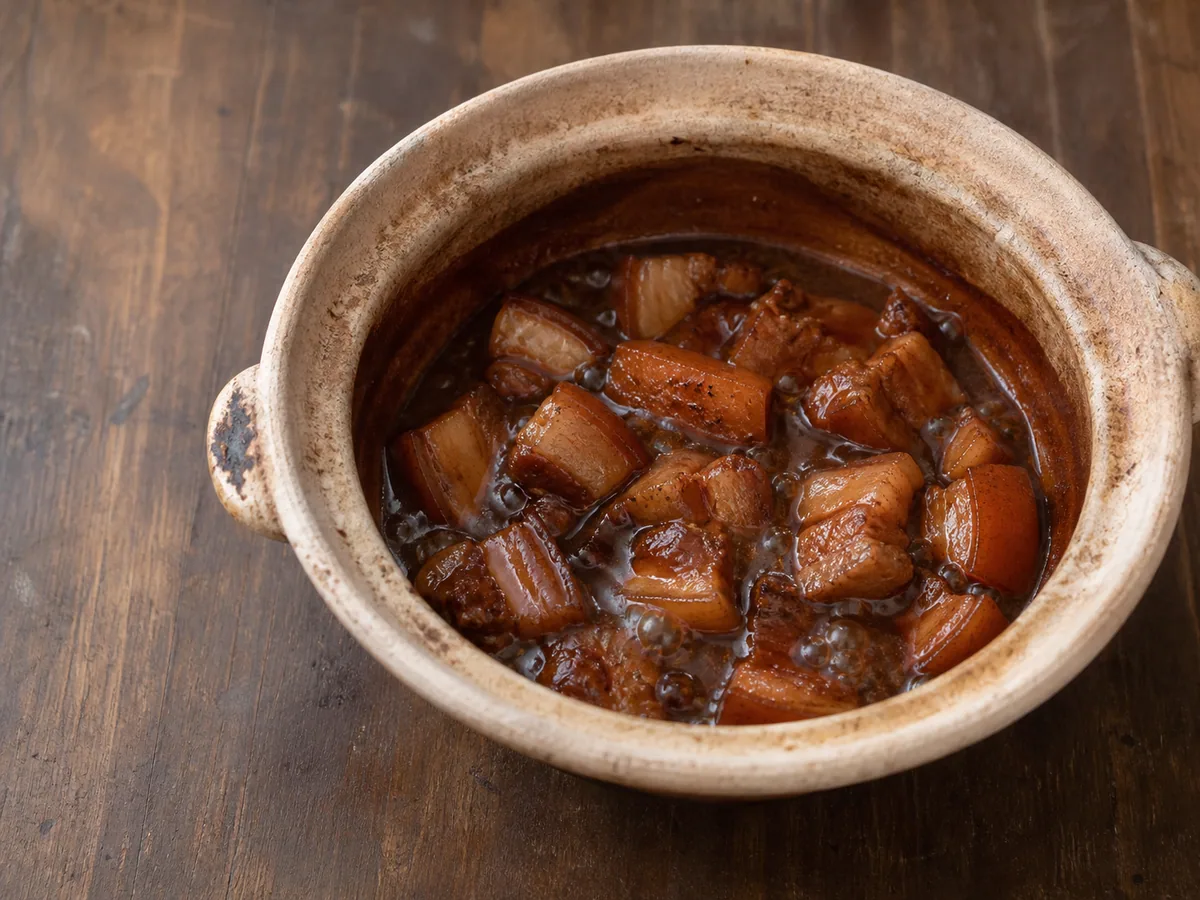
Pour in 45 ml of fish sauce (contains fish) and 480 ml of unsweetened coconut water, then add 2 g of coarsely ground black pepper and the pale scallion pieces. Scrape the bottom to dissolve the caramel and bring the liquid to a gentle simmer. Partially cover, lower the heat, and braise for 35 to 45 minutes, turning the pork every 10 minutes. Start checking at 35 minutes: the pork should yield easily to a fork. Use a clean food thermometer in the center of a large piece; it must reach at least 63°C (145°F), and shoulder is usually most tender around 88–93°C (190–200°F).
35:00Reduce the sauce and finish
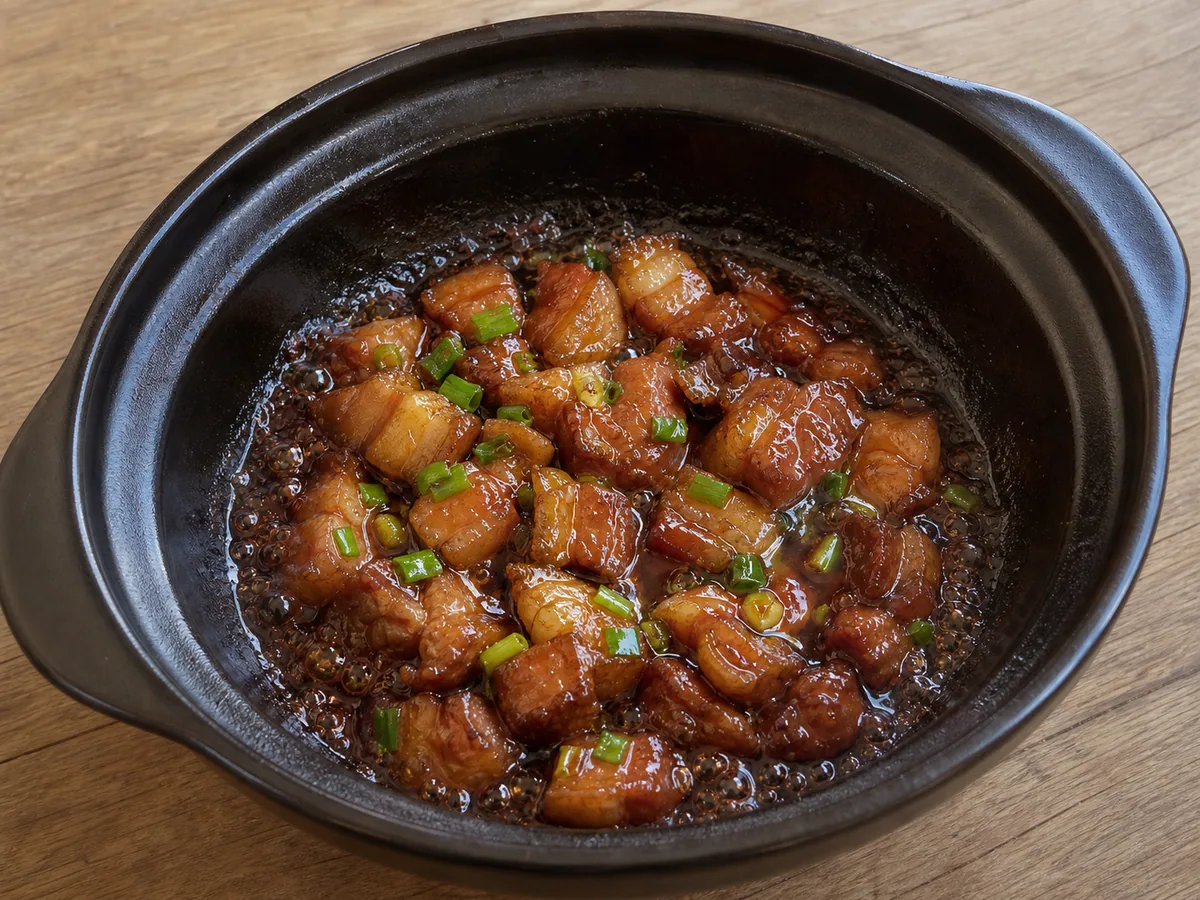
Uncover the pot and raise the heat to medium. Simmer for 10 to 15 minutes, stirring gently and turning the pork, until the sauce is glossy and coats a spoon but still pools around the meat. Start checking at 10 minutes. Add the dark-green scallion pieces and Thai chile (optional) during the final minute, then remove the pot from the heat.
10:00Rest the pork
Let the pork stand in the pot, off the heat, for 3 minutes so the sauce settles and the meat completes its safety rest.
03:00Serve with jasmine rice
Divide 600 g of cooked jasmine rice among warm bowls. Spoon the pork and sauce over the rice, making sure each serving gets both lean and richly marbled pieces, and serve immediately.


Smart Substitutions
- No clay pot? Use a heavy-bottomed saucepan or small Dutch oven. A clay pot should be flameproof and used within the manufacturer's heat limits.
- Prefer pork belly? Use the same weight of boneless pork belly for a richer braise, and spoon off excess rendered fat before the final reduction.
- No coconut water? Use an equal amount of unsalted chicken stock. The sauce will be more savory and slightly less rounded.
- No Thai chile? Leave it out for a mild finish or add a pinch of crushed red pepper during the final minute.
Tips and Variations
- Pat the pork dry before it meets the caramel; less surface moisture means less splatter and better browning.
- Choose a light-colored granulated sugar so the change from amber to burnt is easy to see.
- Keep the braise at a lazy simmer. Hard boiling tightens the meat and can reduce the sauce before the shoulder softens.
What Went Wrong?
- Caramel hardened around the pork Keep the heat moderate and continue adding the braising liquid gradually. The hardened sugar will dissolve as the liquid warms.
- Pork is still tough Partially cover the pot again and continue at a gentle simmer, checking every 10 minutes until a fork slides in easily.
- Sauce is too thin Remove the lid and simmer a little longer, turning the pork so the sauce reduces evenly without scorching.
- Sauce tastes too salty Add a splash of coconut water, simmer briefly, and balance the sauce with a small pinch of sugar if needed.
Nutrition Estimate
- Fiber: 3 g per serving
- Sodium: 1190 mg per serving
Nutrition disclaimer:This recipe is provided for general cooking information only. Nutrition values are estimates and may vary by ingredients, brands, preparation methods, and serving sizes. Check ingredient labels and follow appropriate food-safety practices. This content is not medical, dietary, allergy, or professional food-safety advice.
FAQ
Found an error or have a suggestion?
Help us improve this recipe. Send us your feedback and include the recipe name so we can take a look.