Method
Prepare the kohlrabi
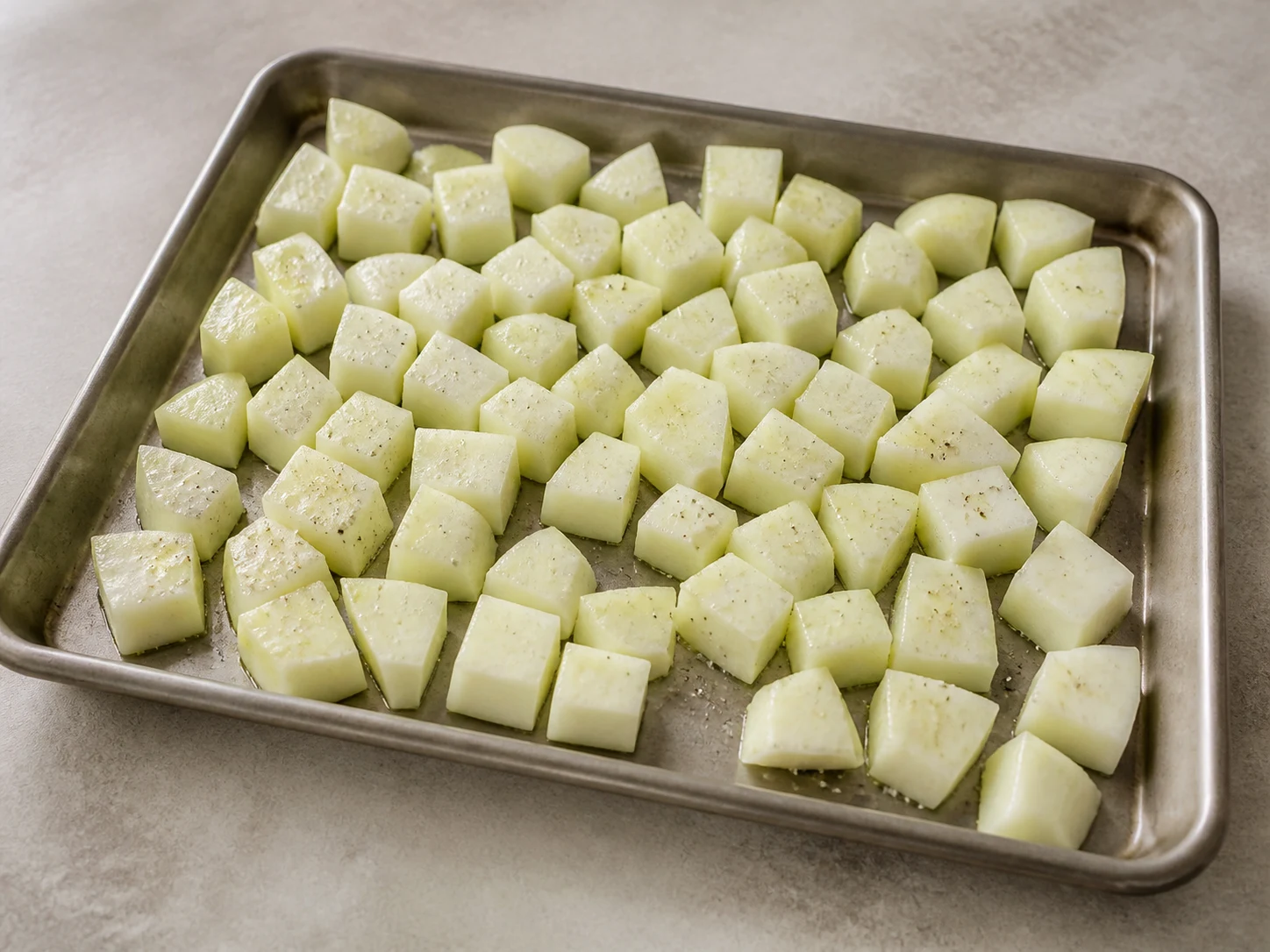
Heat the oven to 220°C (425°F). Trim the stems and root ends from 800 g of kohlrabi. Peel away the thick outer layer until the flesh is pale and crisp, then cut it into 2.5 cm (1 in) cubes. Put the cubes on a large rimmed baking sheet, add 30 ml of olive oil for roasting, 3 g of kosher salt, and 1 g of black pepper, and toss until evenly coated. Spread them in one uncrowded layer; use a second sheet for a scaled batch if needed so the pieces roast instead of steam.
Roast until browned and tender
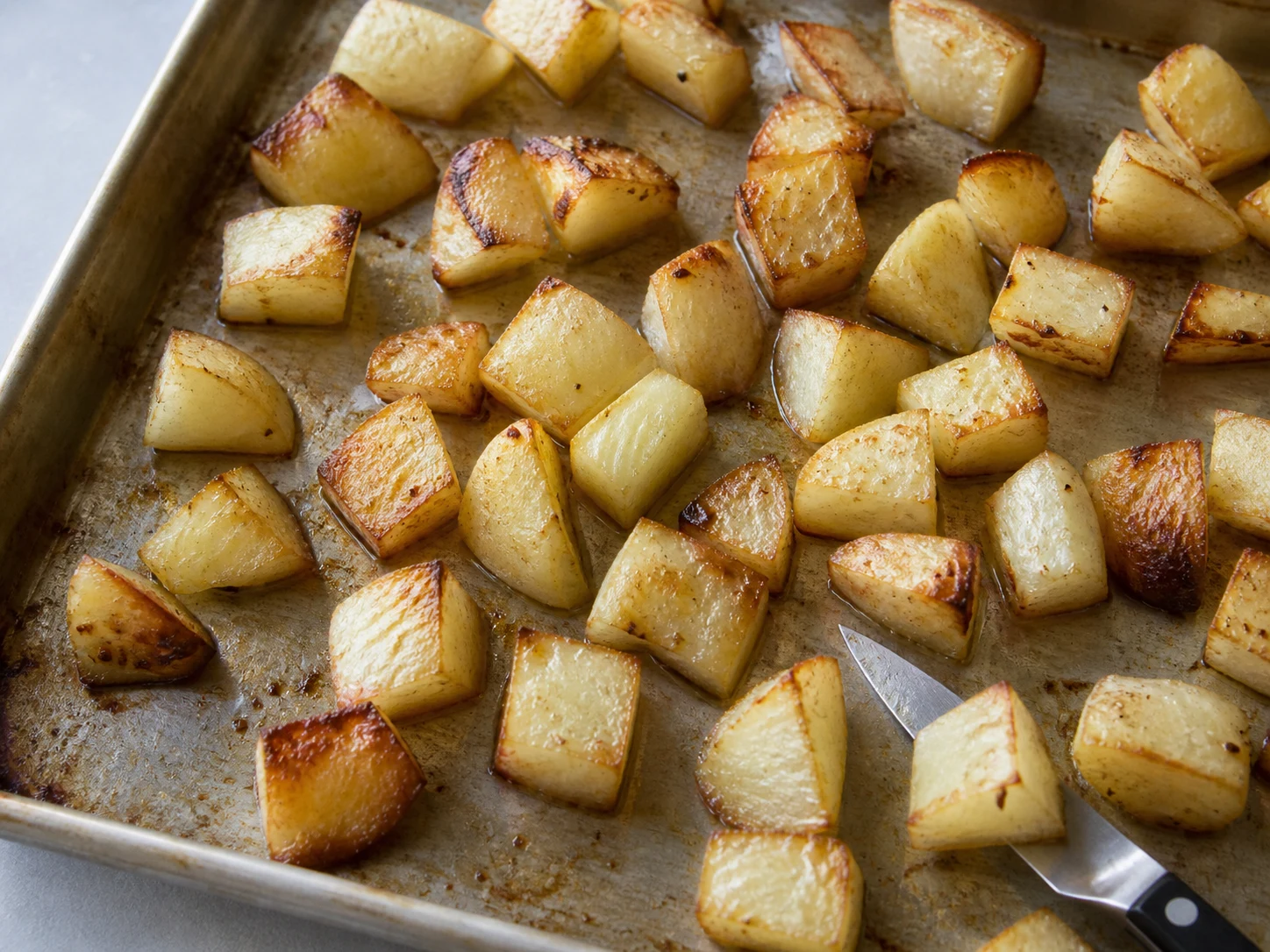
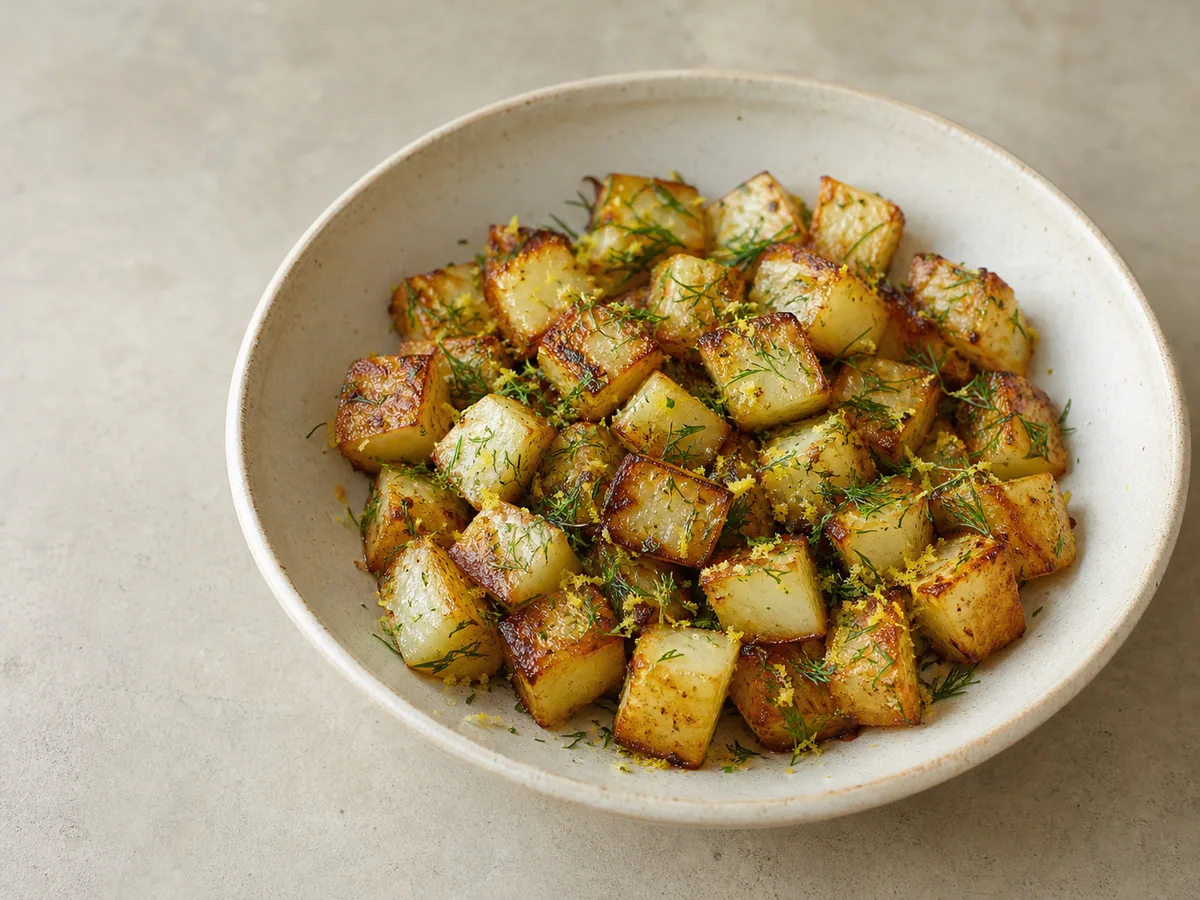
Roast the kohlrabi for 20 to 25 minutes, turning the pieces once after their undersides have browned. Begin checking at 20 minutes. It is ready when several edges are deep golden and a paring knife slides through the centers with only slight resistance.
20:00Mix the lemon-dill dressing
While the kohlrabi roasts, finely grate the yellow zest from 1 lemon into a large bowl, avoiding the white pith. Cut the lemon and squeeze its juice into the bowl, removing any seeds. Add 15 ml of olive oil for dressing. Chop 10 g of fresh dill, add it to the bowl, and whisk until the dressing looks lightly emulsified. Taste; it should be bright and herbaceous, with enough acidity to sharpen the sweet roasted vegetable.
Dress and serve
Transfer the hot roasted kohlrabi to the bowl with the lemon-dill dressing. Toss thoroughly so the dressing reaches the browned surfaces, then taste and adjust the seasoning if needed. Serve warm while the edges are still crisp.


Smart Substitutions
- No fresh dill? Use fresh parsley with a small amount of fennel frond for a similarly clean herbal finish.
- No lemon? Use lime for a sharper citrus note, or a mild white vinegar for straightforward acidity.
- No olive oil? Use avocado oil or another neutral high-heat cooking oil.
- No kohlrabi? Use peeled turnips or rutabaga, cut into slightly smaller cubes and roast until tender.
Tips and Variations
- Choose firm small or medium bulbs; very large kohlrabi can have a thicker, woodier outer layer.
- Dry the peeled cubes before adding oil so their surfaces brown instead of steaming.
- Leave visible space between pieces on the sheet pan; crowding is the main cause of pale, soft kohlrabi.
What Went Wrong?
- Kohlrabi is pale and soft The pan was likely crowded. Spread the pieces farther apart and continue roasting until the edges brown.
- Centers are still firm Return the pan to the oven and check again after 5 minutes; larger cubes need more time.
- The finished dish tastes bitter The outer layer may not have been peeled deeply enough. Trim away any visibly fibrous pieces and balance the rest with a little more olive oil.
- The lemon flavor is too sharp Toss again while the kohlrabi is hot and add a small drizzle of olive oil to soften the acidity.
Nutrition Estimate
- Fiber: 7 g per serving
- Sodium: 340 mg per serving
Nutrition disclaimer:This recipe is provided for general cooking information only. Nutrition values are estimates and may vary by ingredients, brands, preparation methods, and serving sizes. Check ingredient labels and follow appropriate food-safety practices. This content is not medical, dietary, allergy, or professional food-safety advice.
FAQ
Found an error or have a suggestion?
Help us improve this recipe. Send us your feedback and include the recipe name so we can take a look.