Method
Prepare the chicken and vegetables
Do not rinse 900 g of boneless skinless chicken thighs. Pat it dry with paper towels on a board reserved for raw poultry. Mince 3 garlic cloves for chicken, then rub it over 900 g of boneless skinless chicken thighs with 30 ml of fresh lemon juice, 5 g of kosher salt, and 1 g of black pepper. Transfer the seasoned chicken to a bowl or plate reserved for raw poultry. Wash hands, knife, board, and nearby surfaces with hot soapy water before handling the vegetables on a clean board. Slice 300 g of yellow onions, mince 3 garlic cloves for sauce, chop 400 g of fresh tomatoes, peel and cut 450 g of butternut squash into 3 cm (1 1/4 in) pieces, trim 300 g of fresh okra and cut it crosswise into 2 cm (3/4 in) pieces, and slit 1 gindungo chile once without cutting it apart.
Brown the chicken in palm oil
Heat 45 ml of red palm oil in a wide heavy pot over medium-high heat until shimmering but not smoking. Add 900 g of boneless skinless chicken thighs in one layer and brown for 8 to 10 minutes, turning once, until deep golden in spots; it will not be cooked through. Start checking at 8 minutes. Transfer it to a clean plate that never held raw poultry.
08:00Soften the aromatics
Reduce the heat to medium. Add 300 g of yellow onions to the pot and cook for 5 to 7 minutes, stirring and scraping up the browned bits, until softened and lightly golden. Start checking at 5 minutes. Add 3 garlic cloves for sauce and 1 gindungo chile, then stir just until fragrant.
05:00Cook the tomato-palm base
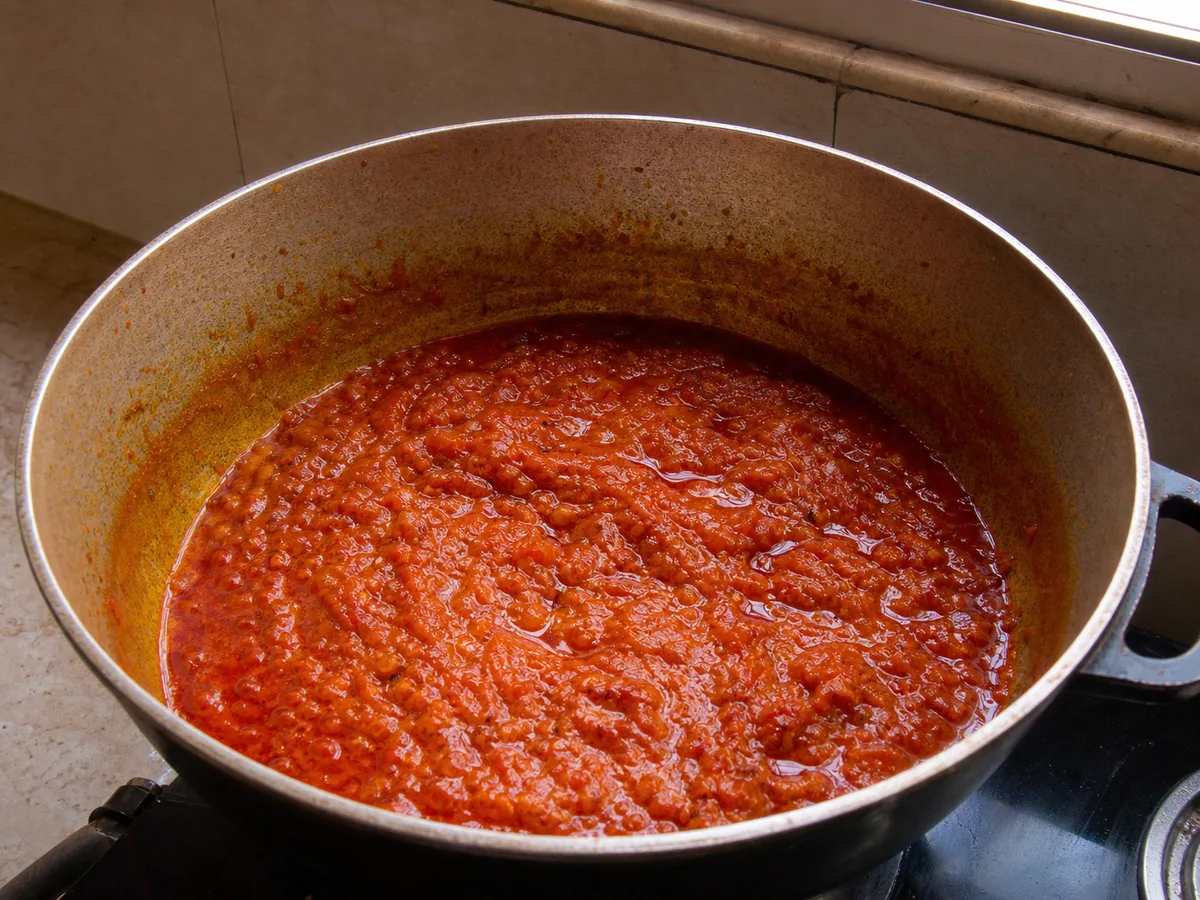
Add 400 g of fresh tomatoes and press them against the side of the pot as they soften. Cook for 6 to 8 minutes, stirring often, until the tomatoes collapse into a thick red-orange base and small beads of palm oil appear around the edges. Start checking at 6 minutes.
06:00Braise the chicken and squash
Return 900 g of boneless skinless chicken thighs and any juices from the clean plate to the pot. Add 450 g of butternut squash and 480 ml of low-sodium chicken broth, bring the liquid to a gentle simmer, then partially cover and reduce the heat to medium-low. Cook for 30 to 35 minutes, turning the chicken once, until the squash is tender and a food thermometer inserted into the thickest piece of chicken reads at least 74°C/165°F. Start checking at 30 minutes and continue cooking until every piece reaches the safe temperature.
30:00Finish the stew with okra
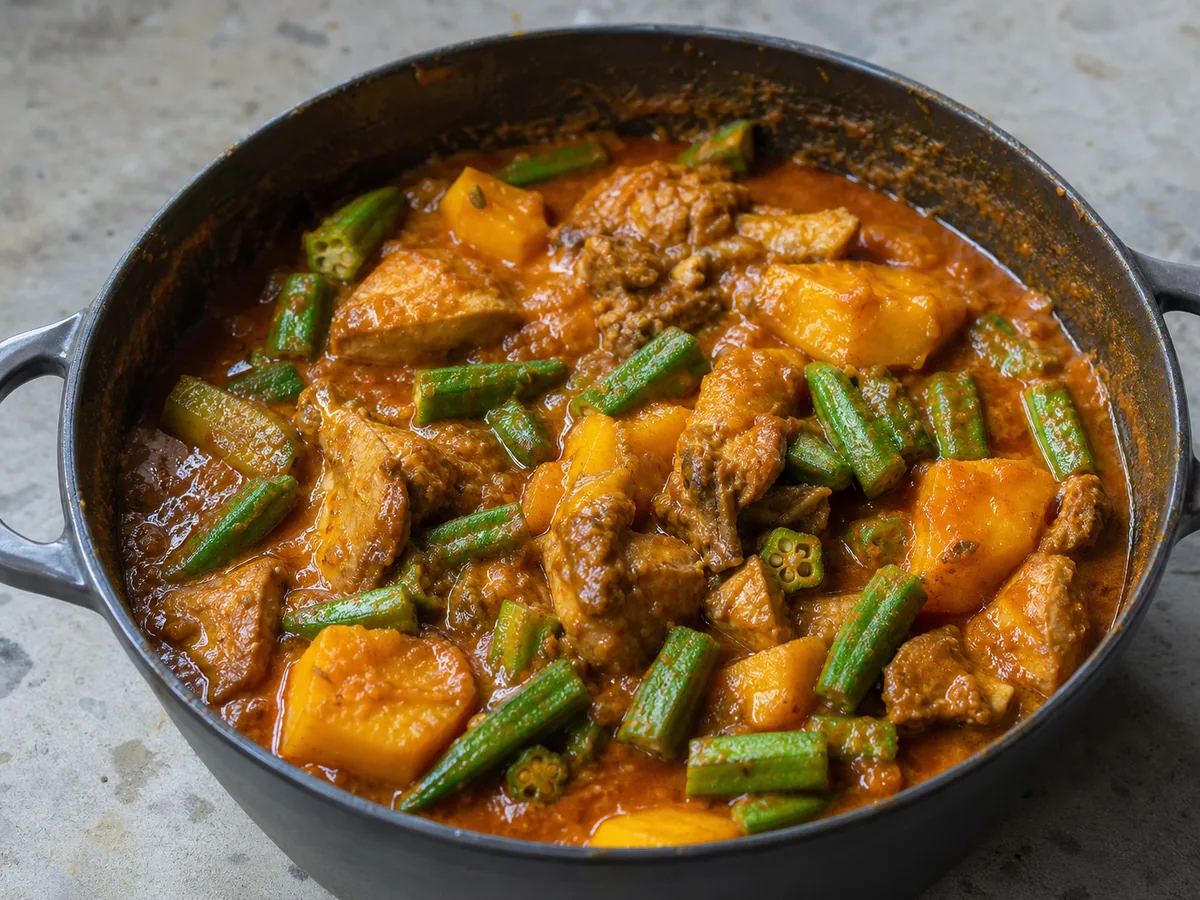
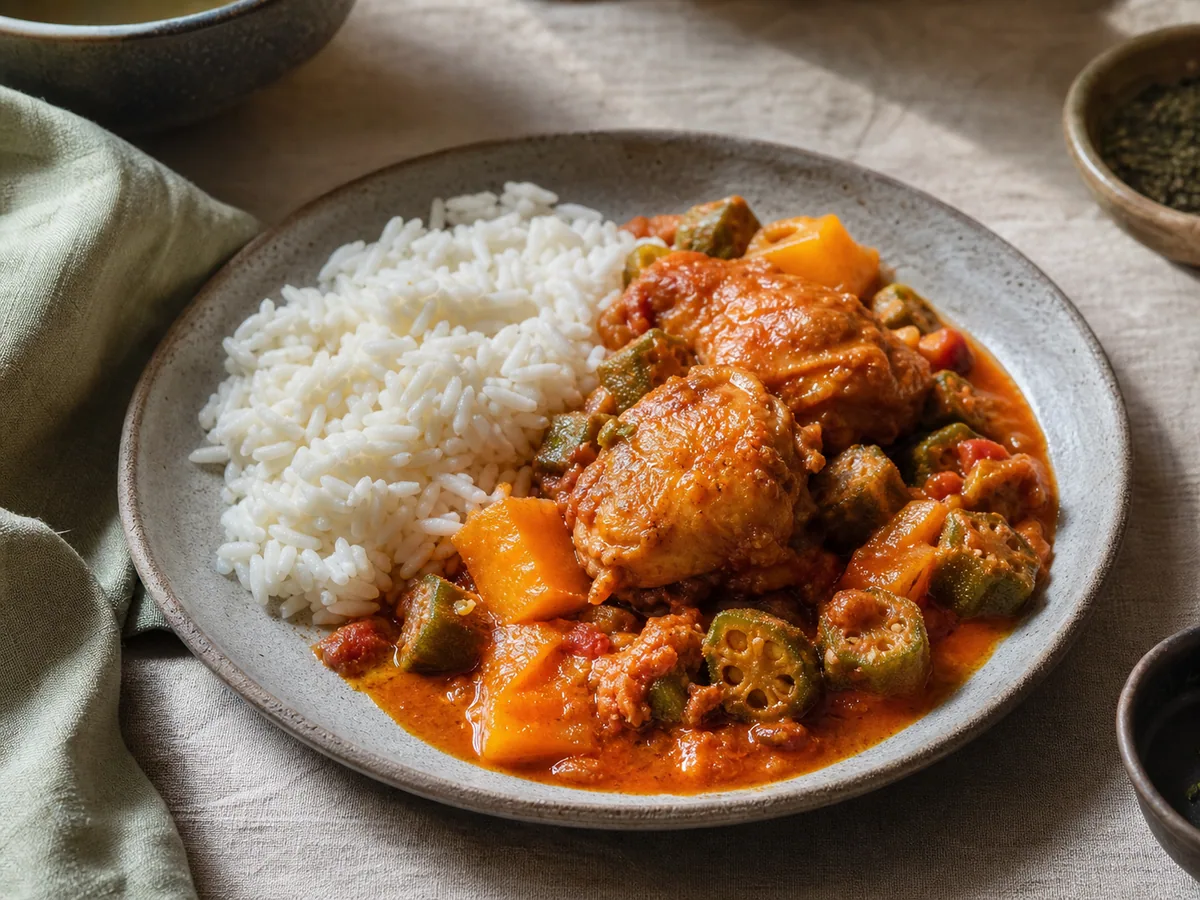
Stir in 300 g of fresh okra and simmer uncovered for 10 to 12 minutes, stirring gently once or twice, until the okra is tender, the squash edges have softened into the sauce, and the sauce lightly coats a spoon. Start checking at 10 minutes. Remove 1 gindungo chile for gentler heat, or leave it in the pot for a hotter serving.
10:00Taste and serve
Taste the sauce and check that the chicken is piping hot throughout. Spoon the muamba into wide bowls, making sure each serving gets chicken, okra, squash, and plenty of palm sauce. Serve with prepared funge (optional) or cooked white rice (optional).


Smart Substitutions
- No gindungo chile? Use a small bird’s eye chile or Scotch bonnet. Keep it whole for measured heat, or omit it for a mild pot.
- No butternut squash? Use firm pumpkin or orange sweet potato cut into similarly sized pieces.
- Using bone-in chicken? Bone-in thighs or drumsticks work well; allow extra braising time and verify that every piece reaches at least 74°C/165°F.
- No fresh tomatoes? Use plain canned diced tomatoes and cook them until thick before adding the chicken.
Tips and Variations
- Use a wide pot so the chicken browns instead of steaming; work in batches when the pieces cannot sit in one layer.
- Red palm oil can scorch, so lower the heat if it begins to smoke or darken beyond a clear red-orange.
- Add okra only after the chicken is fully cooked so it thickens the sauce while keeping a recognizable shape.
What Went Wrong?
- Chicken will not brown Dry it thoroughly, let the palm oil heat properly, and leave space between pieces. Brown in batches when necessary.
- Sauce looks oily Simmer uncovered and stir gently until the tomato, squash, and okra bind the palm oil into the sauce.
- Okra is still firm Continue simmering for a few minutes, keeping the pot uncovered so the sauce does not become watery.
- Stew is too spicy Remove the whole chile immediately and serve the stew with plain funge or rice to soften the heat.
Nutrition Estimate
- Fiber: 7 g per serving
- Sodium: 860 mg per serving
Nutrition disclaimer:This recipe is provided for general cooking information only. Nutrition values are estimates and may vary by ingredients, brands, preparation methods, and serving sizes. Check ingredient labels and follow appropriate food-safety practices. This content is not medical, dietary, allergy, or professional food-safety advice.
FAQ
Found an error or have a suggestion?
Help us improve this recipe. Send us your feedback and include the recipe name so we can take a look.