Method
Soak the rice cakes
Rinse 500 g of sliced Korean rice cakes under cold running water, then place them in a bowl and cover generously with cold water. Soak for 20 minutes while the broth begins cooking, then drain. If the rice cakes are already soft and pliable, a thorough rinse is enough.
20:00Build the beef broth
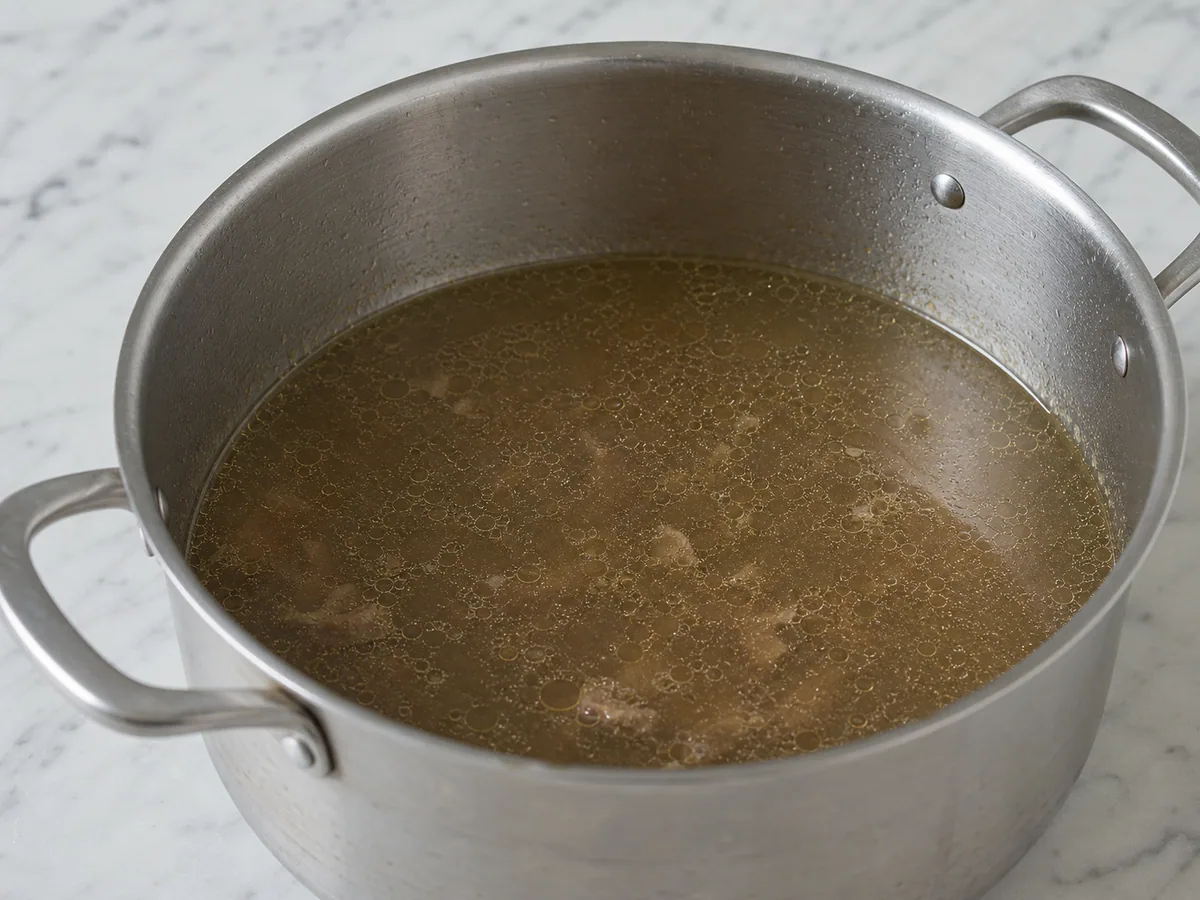
Add 1500 ml of water and 250 g of beef flank steak to a large pot. Peel 150 g of yellow onion and cut it into quarters. Mince 3 garlic cloves, then add 150 g of yellow onion, 3 garlic cloves, and 0.6 g of ground black pepper to the pot. Bring to a boil over high heat, skim away the gray foam, and reduce the heat to maintain a gentle simmer. Partially cover and simmer for 30 to 35 minutes, starting the timer for the first check at 30 minutes. Use a food thermometer to confirm the thickest part of the beef has reached at least 63°C/145°F. Wash hands and clean any board or knife that touched raw beef before preparing ready-to-eat garnishes.
30:00Hold the beef at temperature
Once the beef reaches 63°C/145°F, keep it submerged in the gently simmering broth for 3 minutes, then transfer it to a clean plate.
03:00Cook the egg sheet
Beat 2 large eggs until no streaks remain. Heat a nonstick skillet over medium-low heat, add 5 ml of neutral cooking oil, and swirl to coat. Pour in the eggs and tilt the skillet into a thin, even layer. Cook for 2 to 3 minutes, starting the timer for the first check at 2 minutes, until the surface is fully set with no liquid egg remaining.
02:00Finish the egg and garnishes
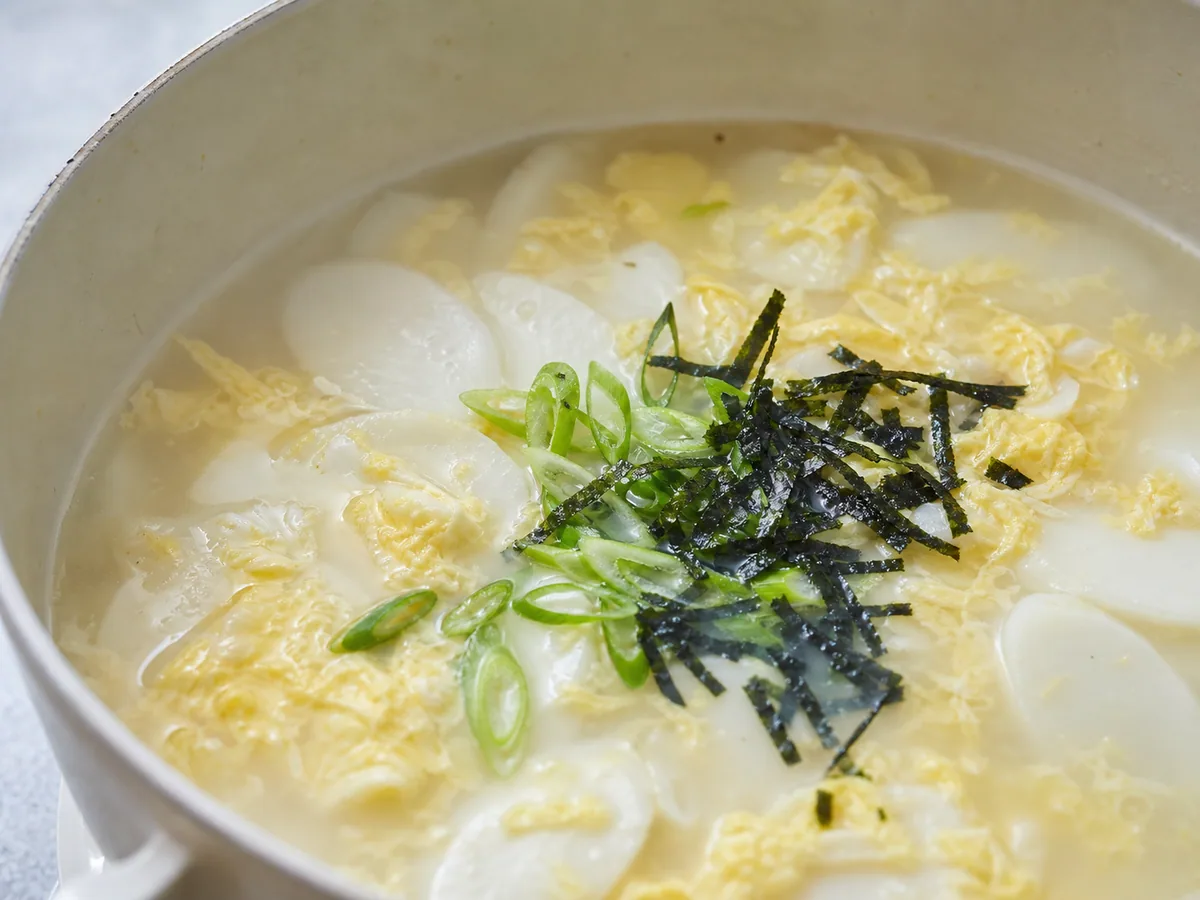
Flip the fully set egg sheet and cook for 30 seconds more. Transfer it to a clean board and cut it into narrow ribbons. Slice 45 g of green onions and crumble 3 g of roasted gim, keeping the garnishes separate for serving.
00:30Strain and season the broth
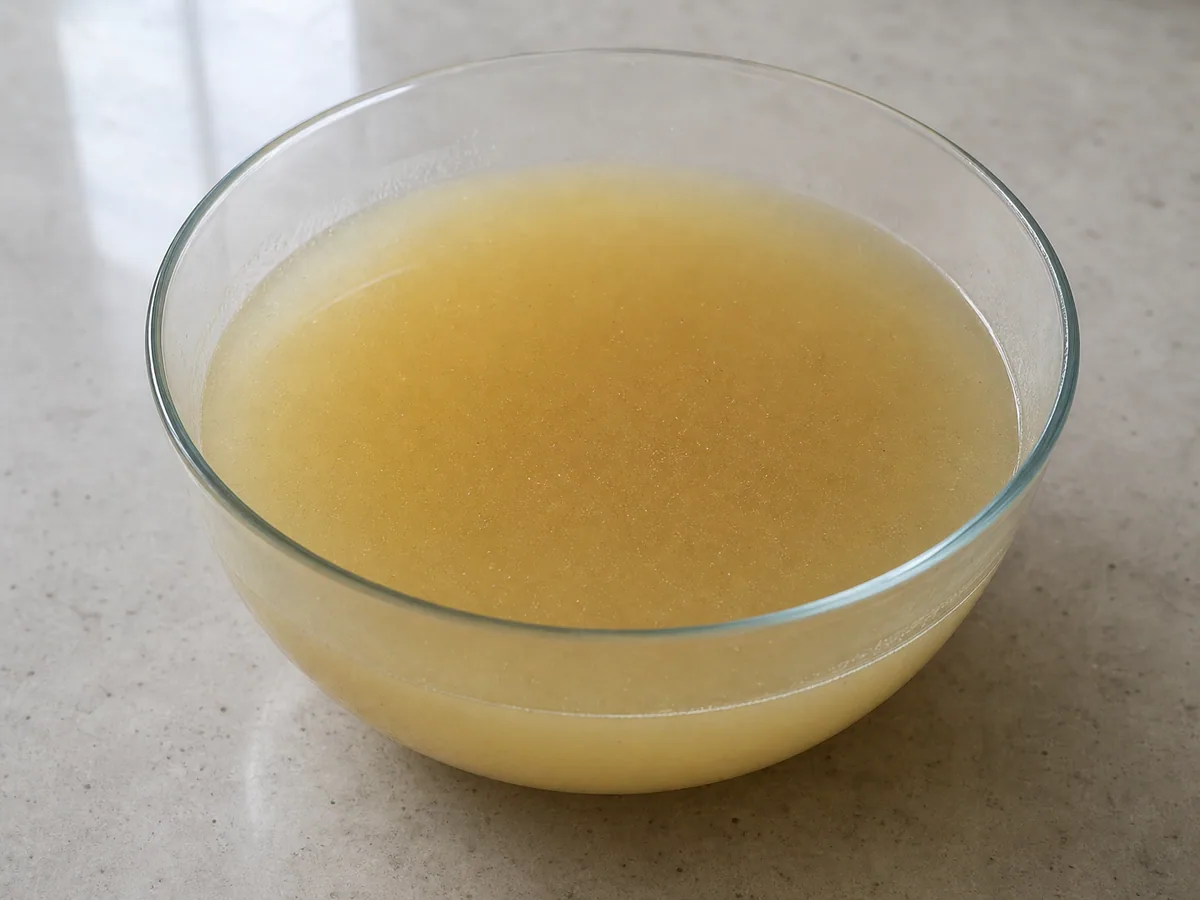
Pour the broth through a fine-mesh sieve into a clean pot, pressing lightly on the aromatics before discarding them. When the cooked beef is cool enough to handle, shred it against the grain. Bring the strained broth back to a lively simmer, then stir in 20 ml of Korean soup soy sauce and 1 1/2 g of fine sea salt. Taste carefully; soup soy sauce varies in saltiness, so the broth should taste savory but not harsh.
Cook the rice cakes
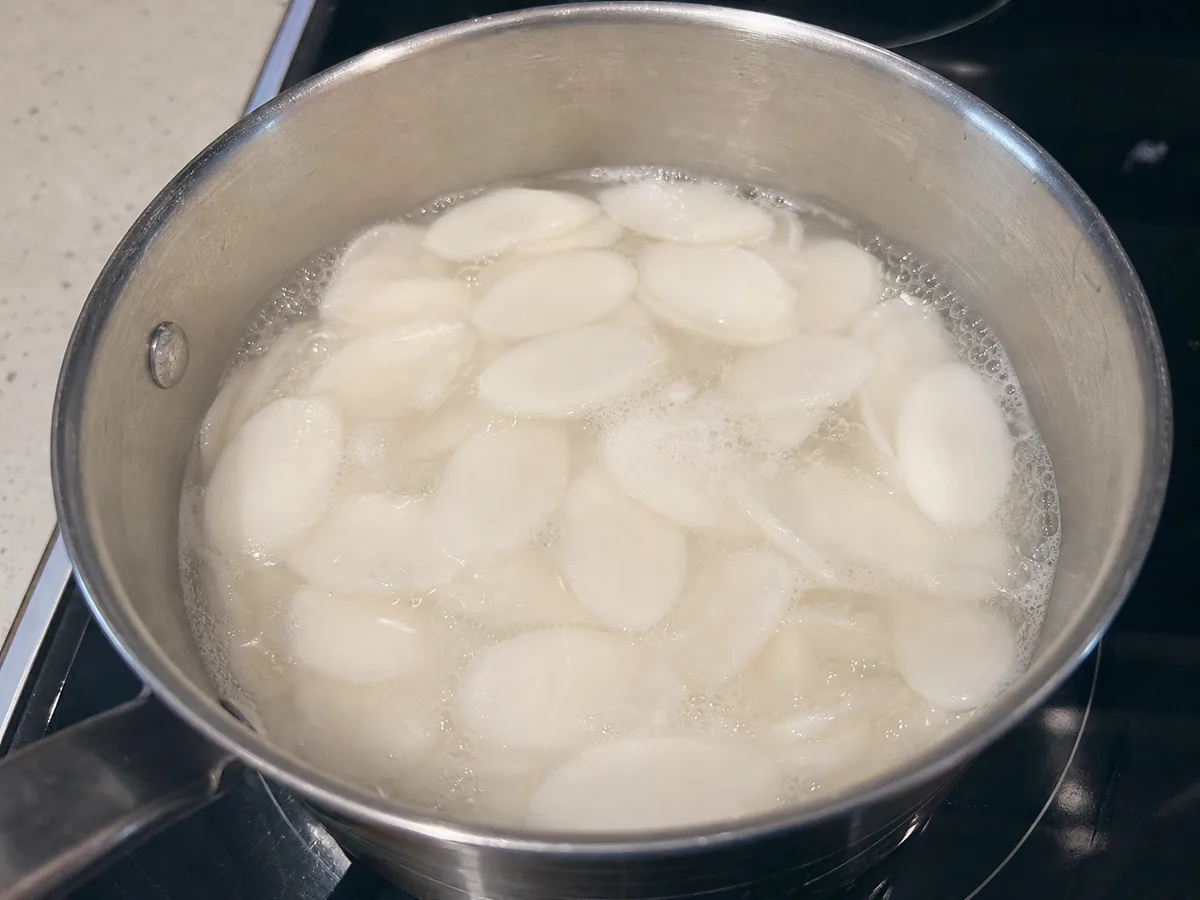
Add 500 g of sliced Korean rice cakes to the simmering broth and stir once to keep them from settling on the bottom. Cook for 3 to 5 minutes, starting the timer for the first check at 3 minutes, until the slices float and feel tender at the edges with a resilient chew in the center.
03:00Return the shredded beef
Return the shredded cooked beef to the pot and simmer for 1 minute, until it is hot throughout.
01:00Finish the bowls
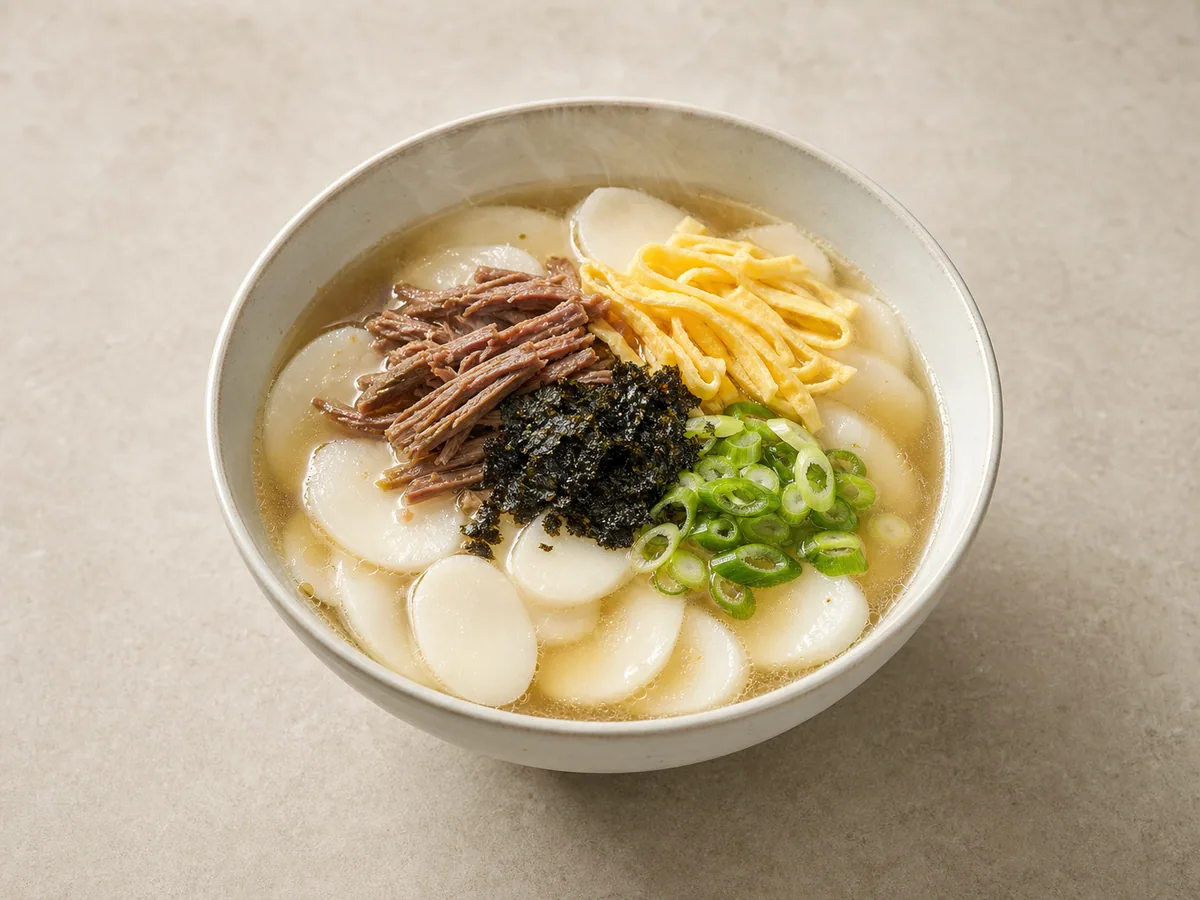
Divide the soup among warm bowls. Arrange the egg ribbons and shredded beef over the rice cakes, then top with 45 g of green onions and 3 g of roasted gim. Drizzle with 5 ml of toasted sesame oil and serve immediately while the broth is clear and the rice cakes are at their best texture.


Smart Substitutions
- No flank steak? Use well-trimmed brisket or chuck and simmer until tender; a thicker cut may need a little longer.
- No soup soy sauce? Use regular soy sauce sparingly, then adjust with fine sea salt so the broth stays pale and balanced.
- Prefer a lighter broth? Replace the beef and water with a well-seasoned anchovy-kelp broth, then omit the shredded meat garnish.
- No roasted gim? Finish with toasted sesame seeds for a nutty accent, or leave the seaweed garnish off.
Tips and Variations
- Look for oval tteokguk rice cakes rather than the long cylinders sold for tteokbokki.
- Keep the broth at a gentle simmer after skimming; a hard boil can make it cloudy and emulsify beef fat into the liquid.
- Season only after straining because the broth becomes saltier as it reduces.
What Went Wrong?
- Broth is cloudy Lower the heat to a gentle simmer and skim more carefully. Straining through a fine-mesh sieve will improve clarity.
- Rice cakes are turning mushy Take the pot off the heat as soon as the slices are tender. Thin rice cakes can finish in only a few minutes.
- Broth tastes bland Add a little more soup soy sauce first, then fine sea salt. Adjust gradually so the broth stays clean-tasting.
- Egg sheet tears Use medium-low heat, wait until the surface is fully set before flipping, and let it rest briefly before slicing.
Nutrition Estimate
- Fiber: 3 g per serving
- Sodium: 730 mg per serving
Nutrition disclaimer:This recipe is provided for general cooking information only. Nutrition values are estimates and may vary by ingredients, brands, preparation methods, and serving sizes. Check ingredient labels and follow appropriate food-safety practices. This content is not medical, dietary, allergy, or professional food-safety advice.
FAQ
Found an error or have a suggestion?
Help us improve this recipe. Send us your feedback and include the recipe name so we can take a look.