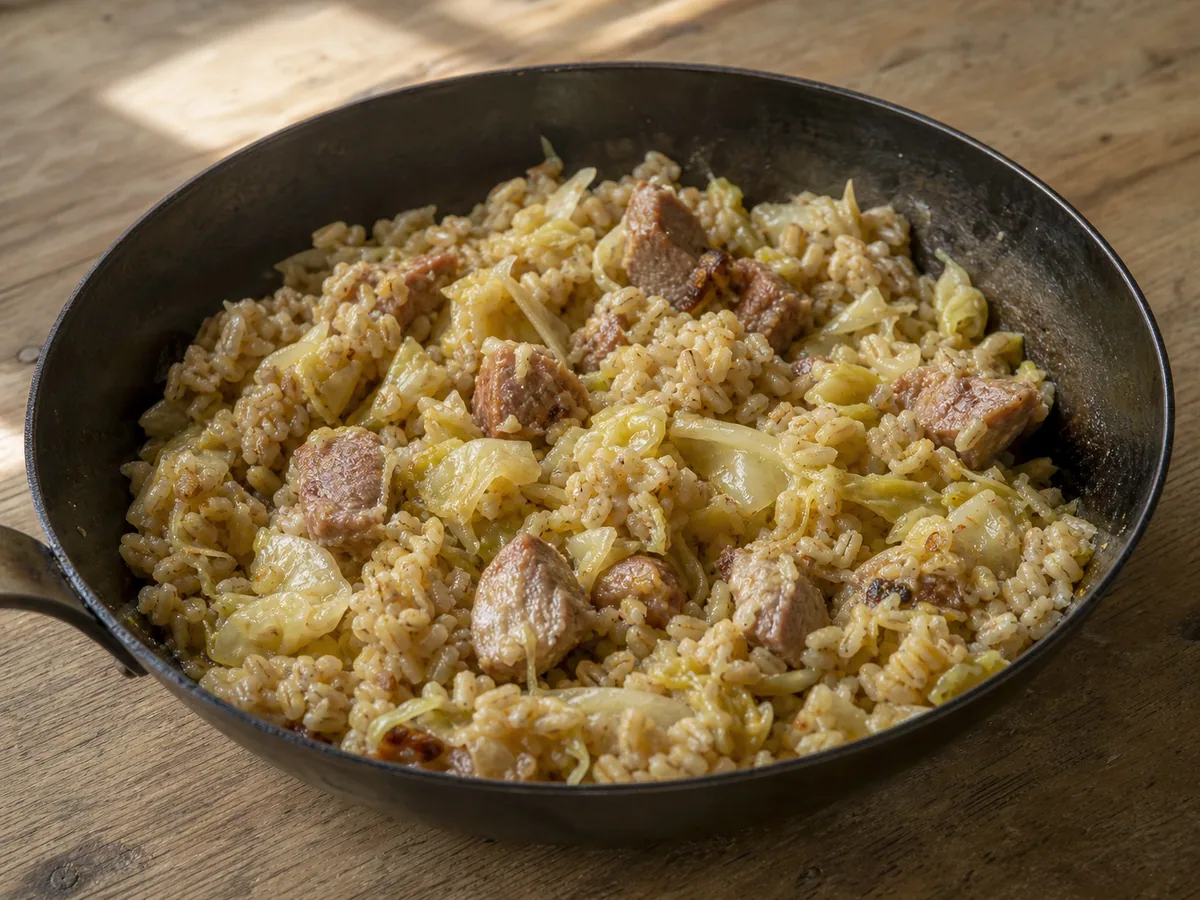
Method
Prepare the ingredients
Rinse 150 g of pearl barley under cool running water until the water is mostly clear, then drain well. Slice 200 g of yellow onion. Core the cabbage and cut 300 g of green cabbage into narrow ribbons. Drain 300 g of sauerkraut and squeeze it lightly; do not rinse unless it is aggressively salty. On a separate board, cut 450 g of boneless pork shoulder into 2 cm (3/4 in) pieces and pat dry. Wash your hands with soap and running water for at least 20 seconds. Wash the knife, pork cutting board, and any affected work surface with hot, soapy water before continuing.
Brown the pork
Melt 14 g of unsalted butter in a deep 6-quart (5.7-liter) lidded sauté pan or Dutch oven for 4 servings. Use at least an 8-quart (7.6-liter) vessel for 6 servings and a 10-quart (9.5-liter) vessel for 8 servings. Set over medium-high heat. Add 450 g of boneless pork shoulder in a single layer; work in batches if the pieces would crowd. Cook for 6 to 8 minutes, turning once or twice, until deeply browned on several sides. Transfer to a clean plate reserved for ingredients that will return to the pan; the pork will not be cooked through yet.
06:00Soften the onion
Reduce heat to medium. Add 200 g of yellow onion to the skillet and cook for about 4 minutes, stirring and scraping up the browned bits, until translucent with a few golden edges. Transfer the onion to the plate with the pork.
04:00Wilt the fresh cabbage
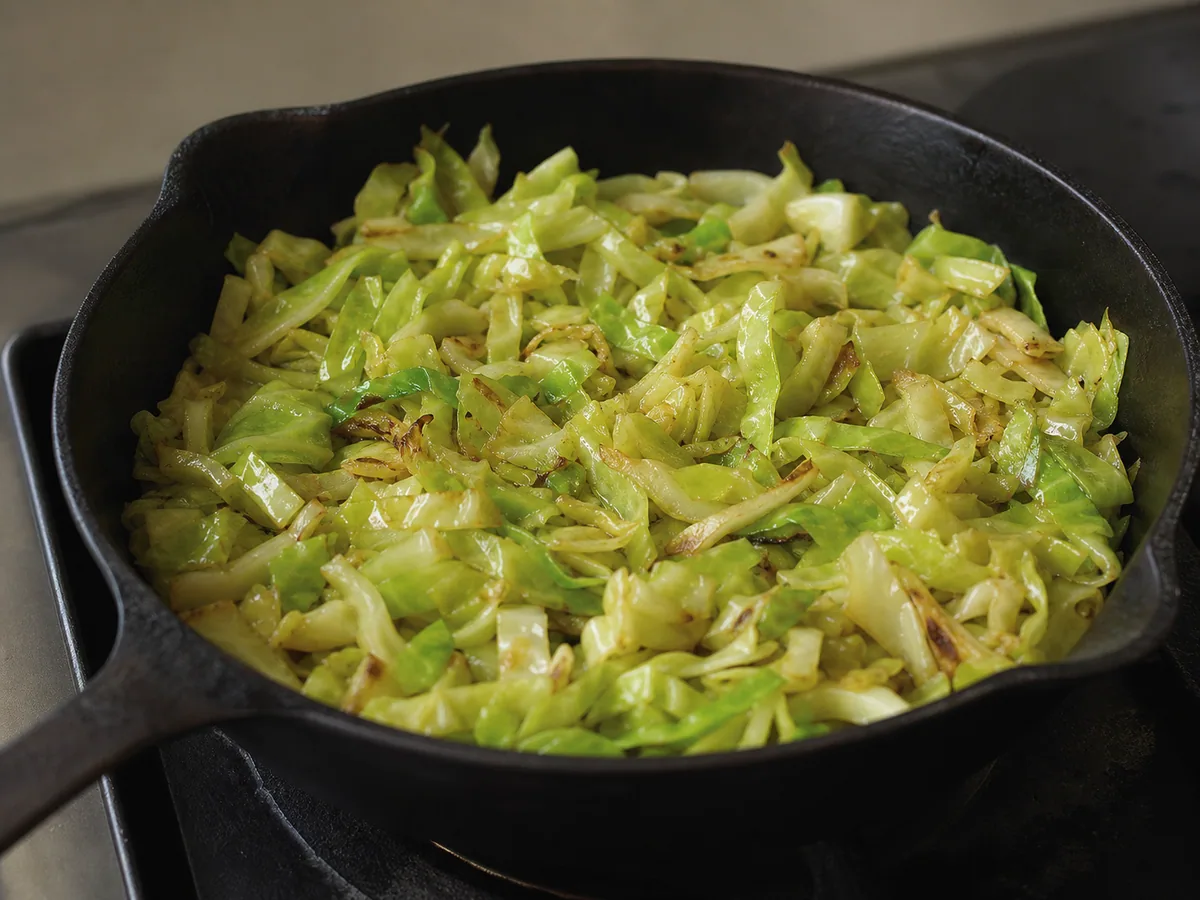
Add 300 g of green cabbage and cook for 8 to 10 minutes, stirring often, until it has collapsed by about half and a few ribbons are lightly browned. Keep the heat at medium so the cabbage softens without scorching.
08:00Tenderize the pork
Return the browned 450 g of boneless pork shoulder, softened 200 g of yellow onion, and any collected juices to the skillet. Stir in 600 ml of unsalted chicken broth, 8 g of light brown sugar, and 1 g of black pepper. Bring to a steady simmer, then reduce the heat to low and cover. Cook for 30 minutes, stirring once halfway through, until the pork has begun to tenderize and the cabbage is very soft; keep the liquid at a gentle bubble.
30:00Start the barley simmer
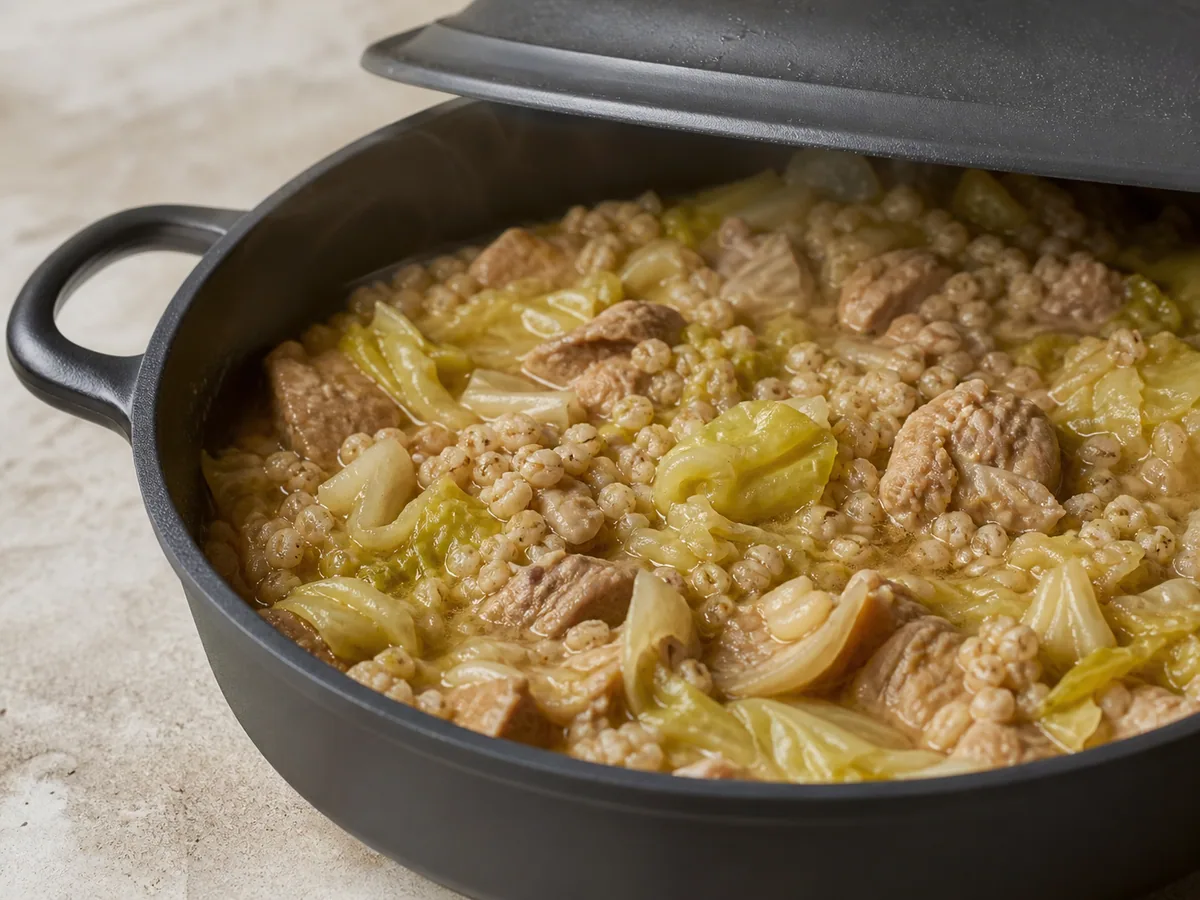
Stir 150 g of pearl barley into the simmering pork and cabbage mixture. Cover and cook over low heat for 35 minutes, stirring once halfway through, until the barley has swollen and is nearly tender but still has a firm center. Keep the liquid at a gentle bubble.
35:00Add the sauerkraut and finish
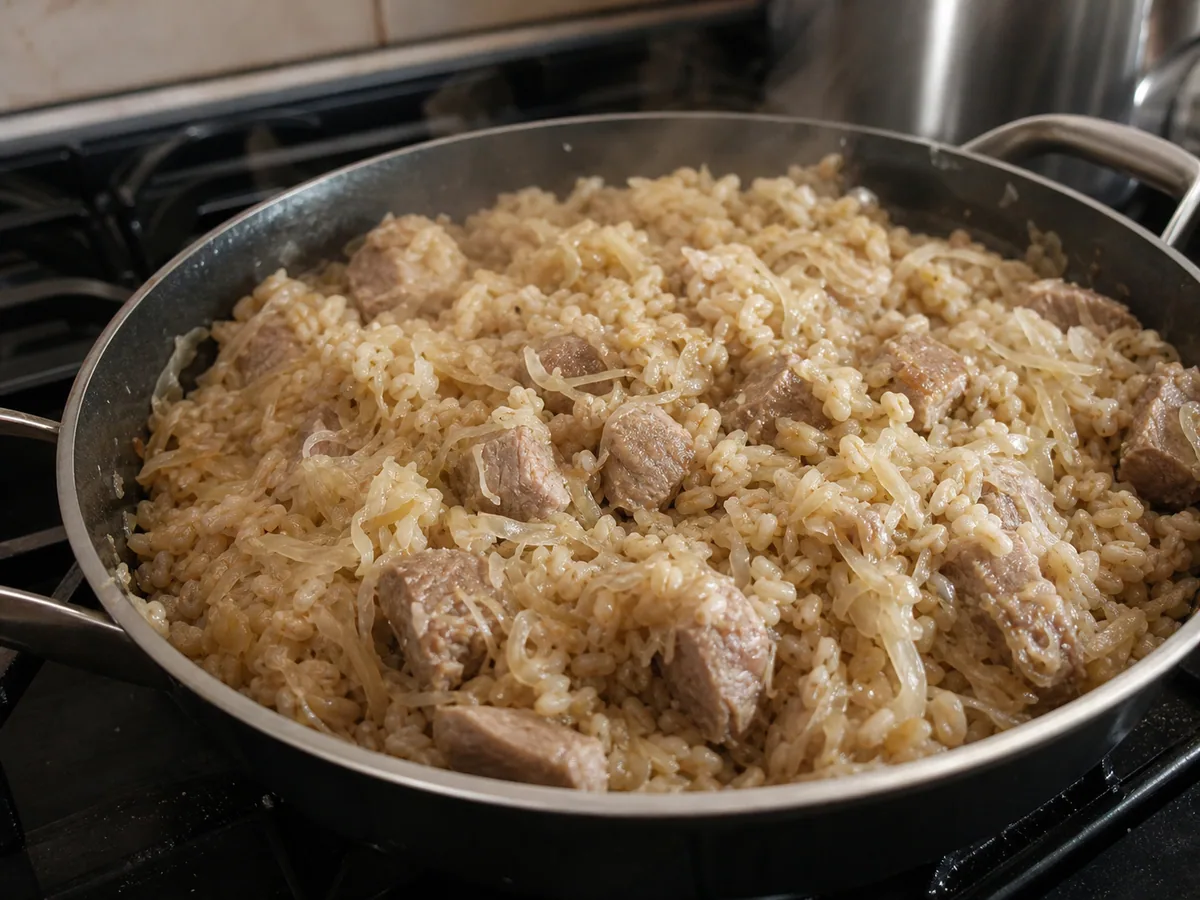
Fold in 300 g of sauerkraut. Cover and simmer gently for 20 to 25 minutes, stirring twice, until the barley is tender with a slight chew, the pork is fork-tender, and the mixture is moist but not soupy. Use a clean food thermometer to check a thick pork piece; it must reach at least 63°C/145°F. Add a small splash of hot water only if the skillet becomes dry before the barley is tender.
20:00Rest and serve
Remove the skillet from the heat, cover, and let stand for 3 minutes to complete the pork's safety rest. Taste after the sauerkraut has seasoned the pan, then add up to 1 1/2 g of kosher salt only if needed. Finish with fresh dill (optional) and serve hot.
03:00


Smart Substitutions
- No pork shoulder? Use boneless pork loin and add it with the sauerkraut after the barley has simmered for 35 minutes. Cook it to 63°C/145°F and give it the same 3-minute rest.
- Prefer a sharper cabbage flavor? Replace the fresh cabbage with the same weight of drained sauerkraut and hold back the salt until the final taste.
- No pearl barley? Use hulled barley with an extra 120 ml (1/2 cup) broth and allow 20 to 30 minutes more simmering, checking for a tender but chewy center.
- No chicken broth? Use water. Brown the pork thoroughly and wait until the end to decide whether the skillet needs more salt.
Tips and Variations
- Cut the pork into evenly sized pieces so every piece becomes tender at the same pace.
- Keep the barley at a gentle simmer; hard boiling can dry the pan before the grains soften.
- Taste the sauerkraut before cooking. Briefly rinse an aggressively salty batch, and wait until the final tasting before adding any kosher salt.
What Went Wrong?
- Barley is still firm Add a small splash of hot water, cover, and simmer for another 5 to 10 minutes before checking again.
- Skillet is too wet Uncover and simmer gently for a few minutes, stirring often, until the juices coat the barley instead of pooling.
- Pork is chewy Keep the skillet covered over low heat and continue simmering until a piece yields easily to a fork, adding a splash of water if needed.
- Cabbage tastes too sharp Stir in a little more light brown sugar and a small knob of unsalted butter, then simmer for 2 minutes and taste again.
Nutrition Estimate
- Fiber: 11 g per serving
- Sodium: 750 mg per serving
Nutrition disclaimer:This recipe is provided for general cooking information only. Nutrition values are estimates and may vary by ingredients, brands, preparation methods, and serving sizes. Check ingredient labels and follow appropriate food-safety practices. This content is not medical, dietary, allergy, or professional food-safety advice.
FAQ
Found an error or have a suggestion?
Help us improve this recipe. Send us your feedback and include the recipe name so we can take a look.