Method
Prepare the plantains and aromatics
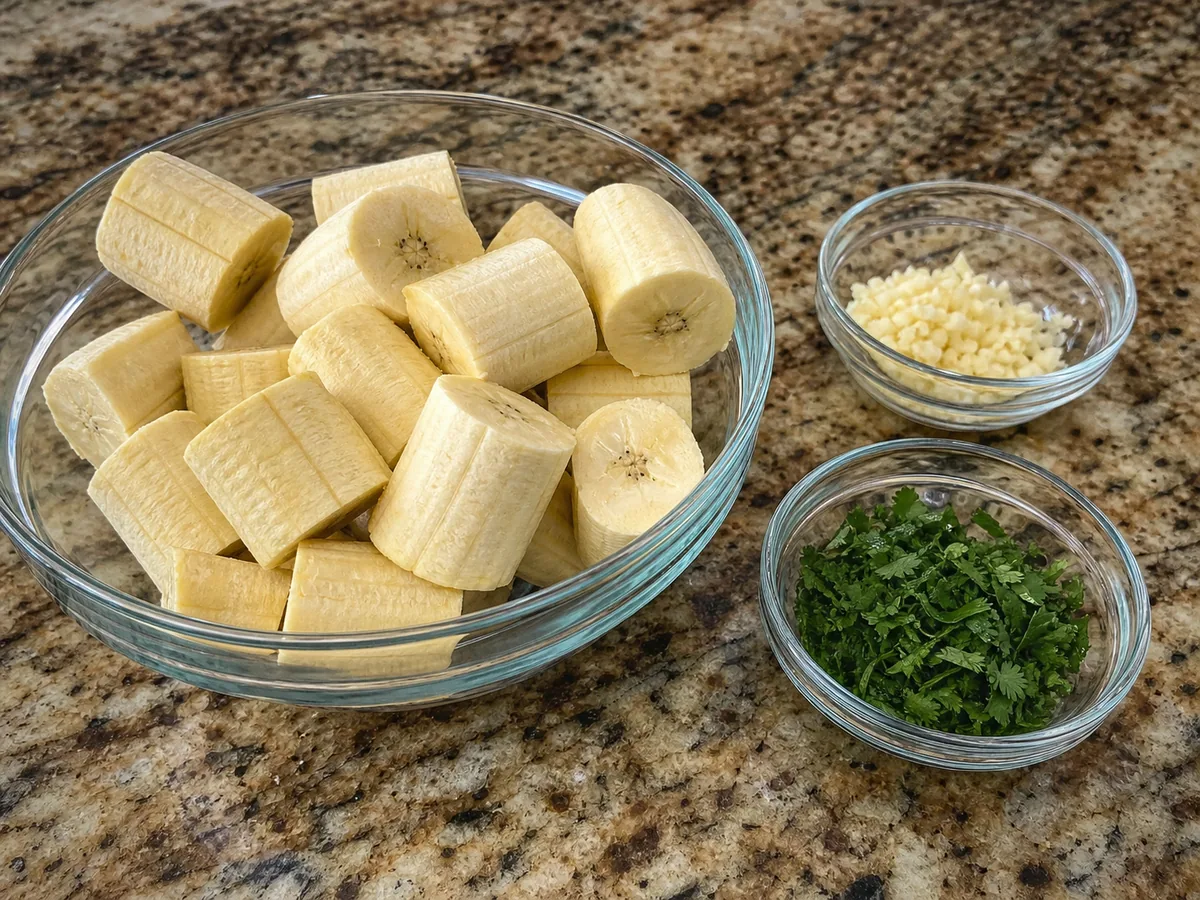
Trim the ends from 720 g of green plantains. Score each peel lengthwise without cutting deeply into the flesh, pry off the peel, and cut the plantains into 2.5 cm (1 in) pieces. Mince 4 garlic cloves for mofongo and 8 garlic cloves for shrimp separately, then chop 8 g of fresh cilantro. Keep each prepared ingredient in its own small bowl.
Season the shrimp safely
Pat 680 g of raw large shrimp (shellfish) dry with paper towels and place it on a plate used only for raw seafood. Season with 3 g of kosher salt for shrimp, 1 g of black pepper, and 1 g of dried oregano. Wash your hands, the counter, and any utensils that touched raw shrimp before handling the cooked plantains or finished dish.
Fry the plantains until tender
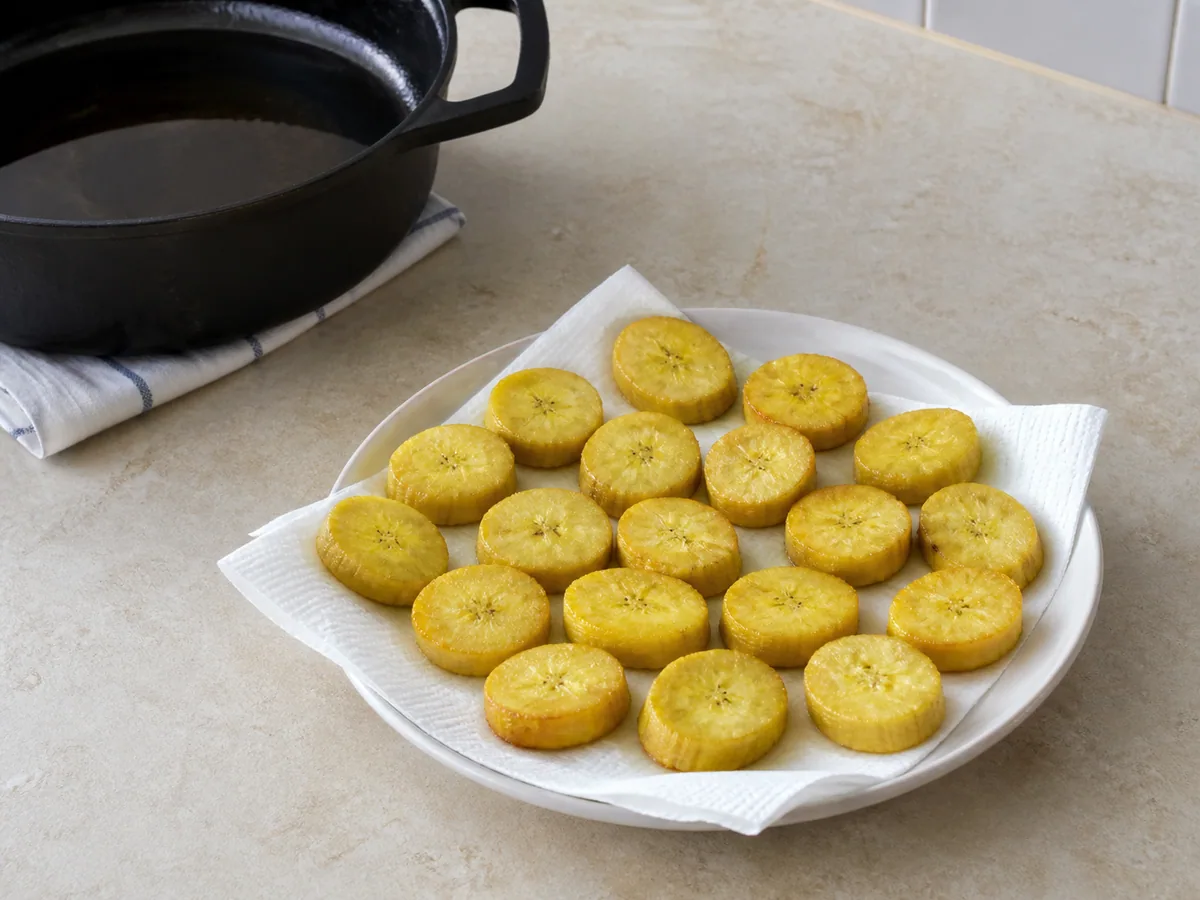
Pour 480 ml of neutral oil, for frying into a 10-inch (25 cm) deep, heavy skillet. For the default 4 servings, the oil should be about 8 mm (1/3 in) deep. Heat it over medium heat to 175°C/350°F. Add the plantain pieces in two uncrowded batches; use fewer or more batches when scaling the recipe. Fry each batch for 8 to 10 minutes, turning every 2 minutes, until golden at the edges and tender enough to pierce easily. Begin checking when the 8-minute timer ends and continue for up to 2 minutes if needed. Transfer the cooked pieces to a paper-towel-lined plate and keep them warm. Let the oil return to 175°C/350°F before frying the next batch.
08:00Mash and shape the mofongo
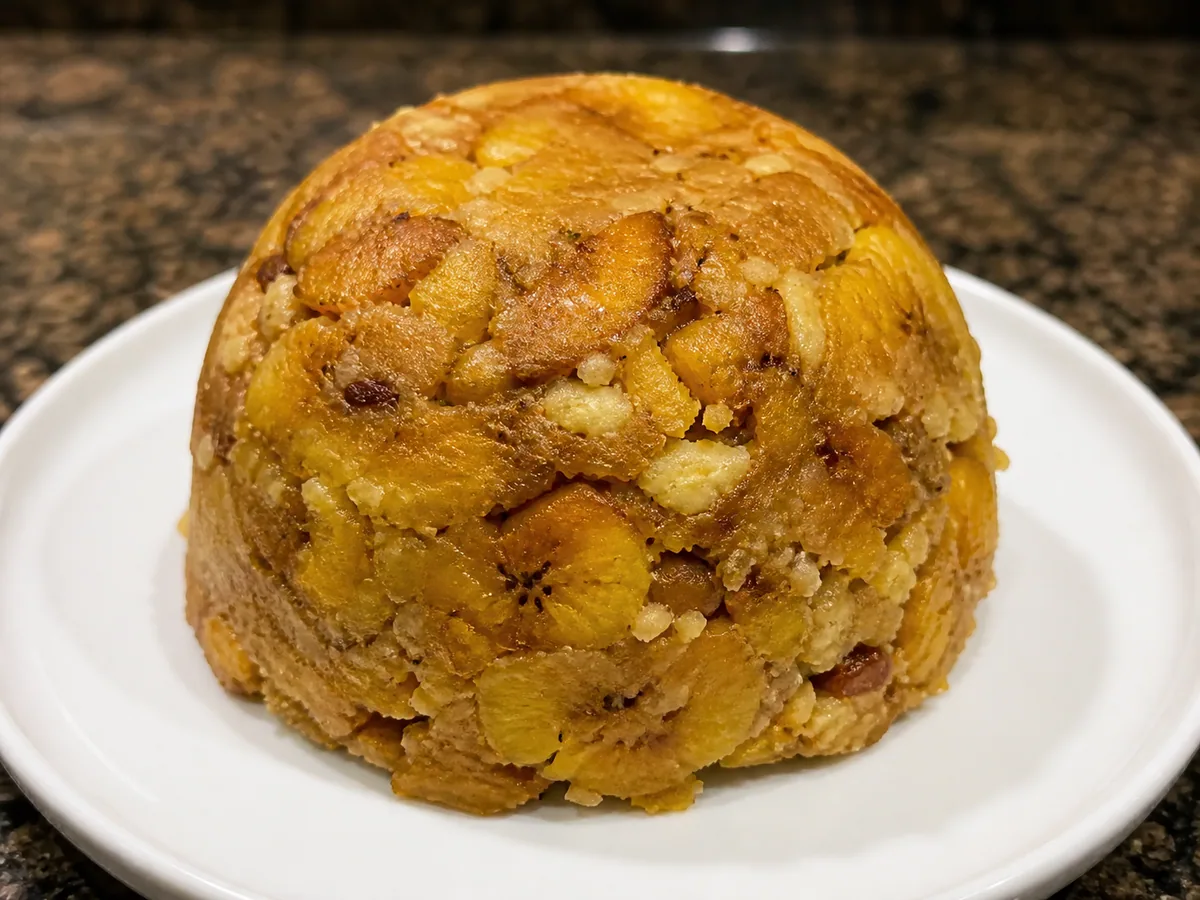
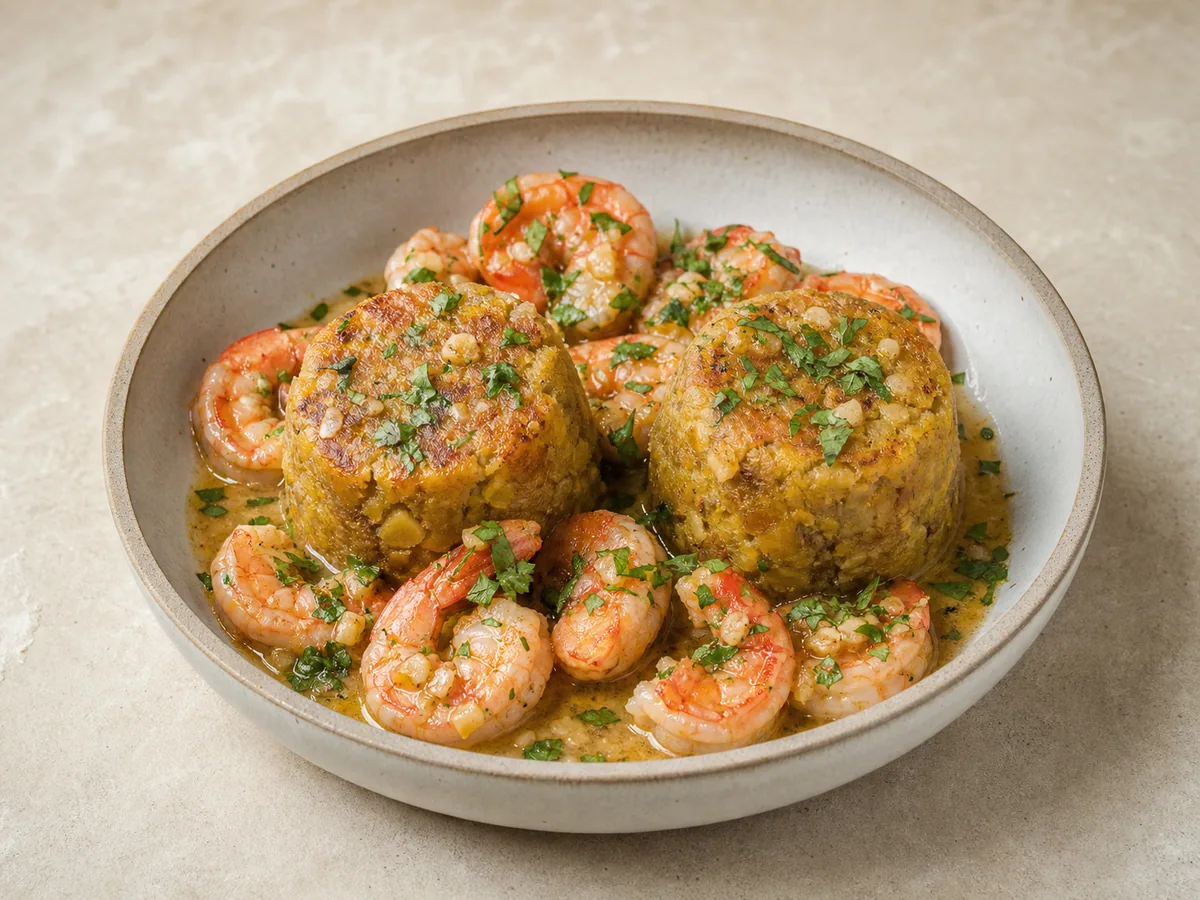
While the plantains are hot, crush 4 garlic cloves for mofongo, 55 g of plain pork rinds, and 3 g of kosher salt for mofongo in a pilón, large mortar, or sturdy bowl until coarse. Add the warm plantains in batches and pound or mash until the mixture resembles chunky mashed potatoes. Work in 120 ml of unsalted chicken broth for mofongo gradually until the mash holds together but is not wet. Divide the mixture into one equal portion per serving. Pack each portion firmly into a small bowl, then invert it onto a shallow serving bowl to form a dome.
Sear the shrimp in two batches
Wipe out the skillet and set a 12-inch (30 cm) skillet over medium-high heat. Melt 42 g of unsalted butter (milk) with 15 ml of olive oil. Add half of 680 g of raw large shrimp (shellfish) in one uncrowded layer. Cook for 2 1/2 to 3 minutes total, turning after about 90 seconds, until lightly browned and mostly opaque but still flexible. Transfer the shrimp to a clean plate, restart the timer, and repeat with the remaining shrimp. Do not return cooked or partially cooked shrimp to the plate that held raw seafood; all of the shrimp will finish cooking in the sauce.
02:30Cook the garlic
Reduce the heat to medium. Add 8 garlic cloves for shrimp to the skillet and stir constantly for about 30 seconds, just until fragrant and pale gold; do not let it brown.
00:30Simmer the garlic sauce
Pour in 120 ml of unsalted chicken broth for shrimp and 30 ml of lime juice, scrape up the browned bits from the skillet, and simmer for 2 minutes so the liquid reduces slightly and becomes glossy.
02:00Finish the shrimp safely
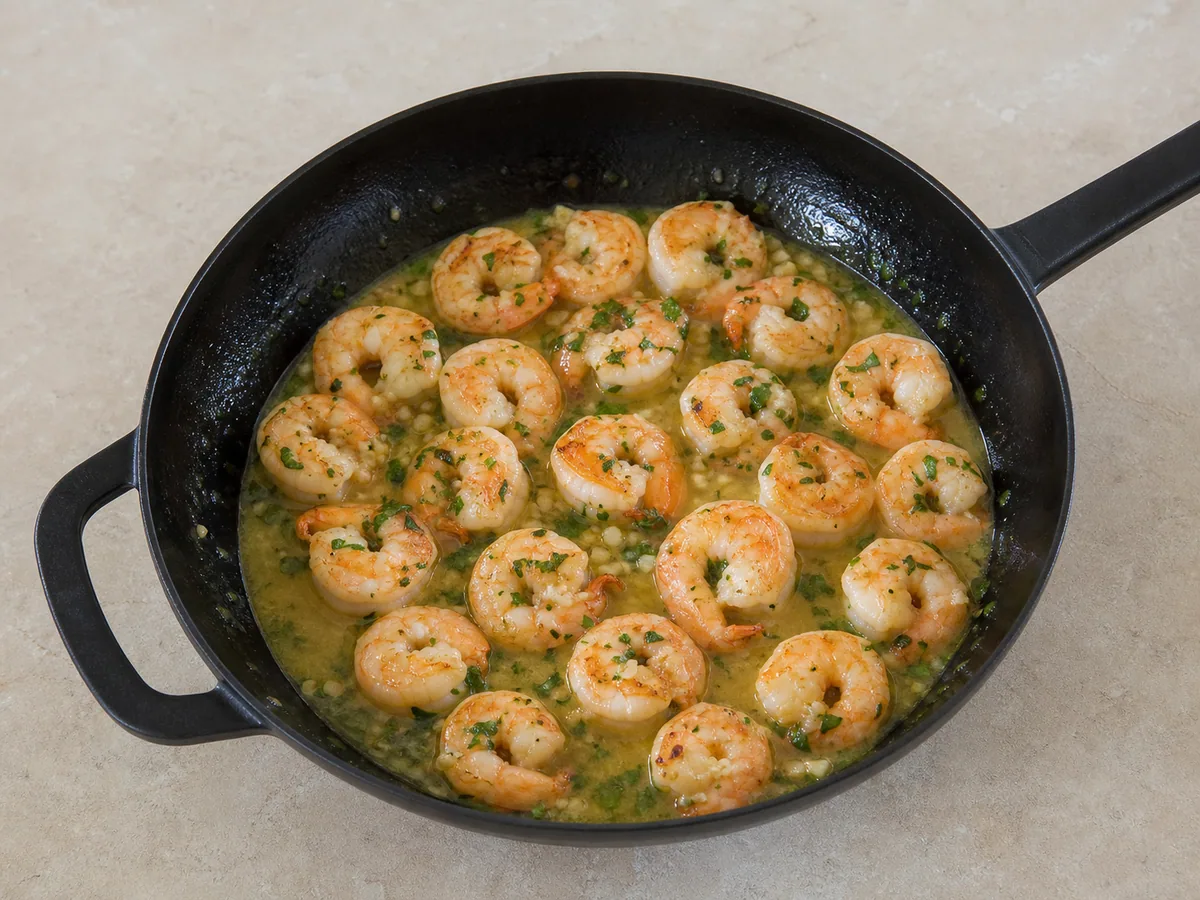
Return the shrimp and any collected juices to the skillet. Cook for 1 to 2 minutes, stirring gently, until the shrimp are fully cooked. Begin checking when the 1-minute timer ends. Insert an instant-read food thermometer into the thickest part of several shrimp and continue cooking until they reach 63°C/145°F; the flesh should also be firm, pearly, and opaque. Remove the skillet from the heat and stir in 8 g of fresh cilantro.
01:00Sauce and serve
Spoon the hot garlic shrimp and pan sauce around and over each mofongo dome. Let some sauce collect at the base so the plantain can absorb it, while keeping the top textured and crisp-edged. Serve immediately.


Smart Substitutions
- No pork rinds? Use crisp fried onions for crunch, or omit them and add a little more neutral oil while mashing.
- No chicken broth? Use unsalted seafood broth or water in both parts of the recipe.
- No cilantro? Use flat-leaf parsley for a clean herbal finish.
- Avoiding butter? Replace it with an equal amount of olive oil; the sauce will be lighter and less creamy.
Tips and Variations
- Choose fully green, firm plantains; yellowing fruit is sweeter and produces a softer, less savory mofongo.
- Mash the plantains while they are still hot, because cooled pieces resist binding and can crumble.
- Sear the shrimp in one layer so they brown quickly instead of releasing enough liquid to steam.
What Went Wrong?
- Mofongo will not hold its shape Mash it a little more while adding warm broth gradually, stopping as soon as the mixture becomes cohesive.
- Plantains are greasy Let the oil heat until shimmering and avoid crowding the skillet, which lowers the temperature.
- Mofongo turned gummy The plantains were overworked. Pound only until the mixture is chunky and holds together.
- Shrimp are rubbery Use the thermometer and remove the skillet from the heat as soon as the shrimp reach 63°C/145°F and turn firm, pearly, and opaque.
Nutrition Estimate
- Fiber: 4 g per serving
- Sodium: 1080 mg per serving
Nutrition disclaimer:This recipe is provided for general cooking information only. Nutrition values are estimates and may vary by ingredients, brands, preparation methods, and serving sizes. Check ingredient labels and follow appropriate food-safety practices. This content is not medical, dietary, allergy, or professional food-safety advice.
FAQ
Found an error or have a suggestion?
Help us improve this recipe. Send us your feedback and include the recipe name so we can take a look.