
Method
Soak the mushrooms and prepare the cabbage
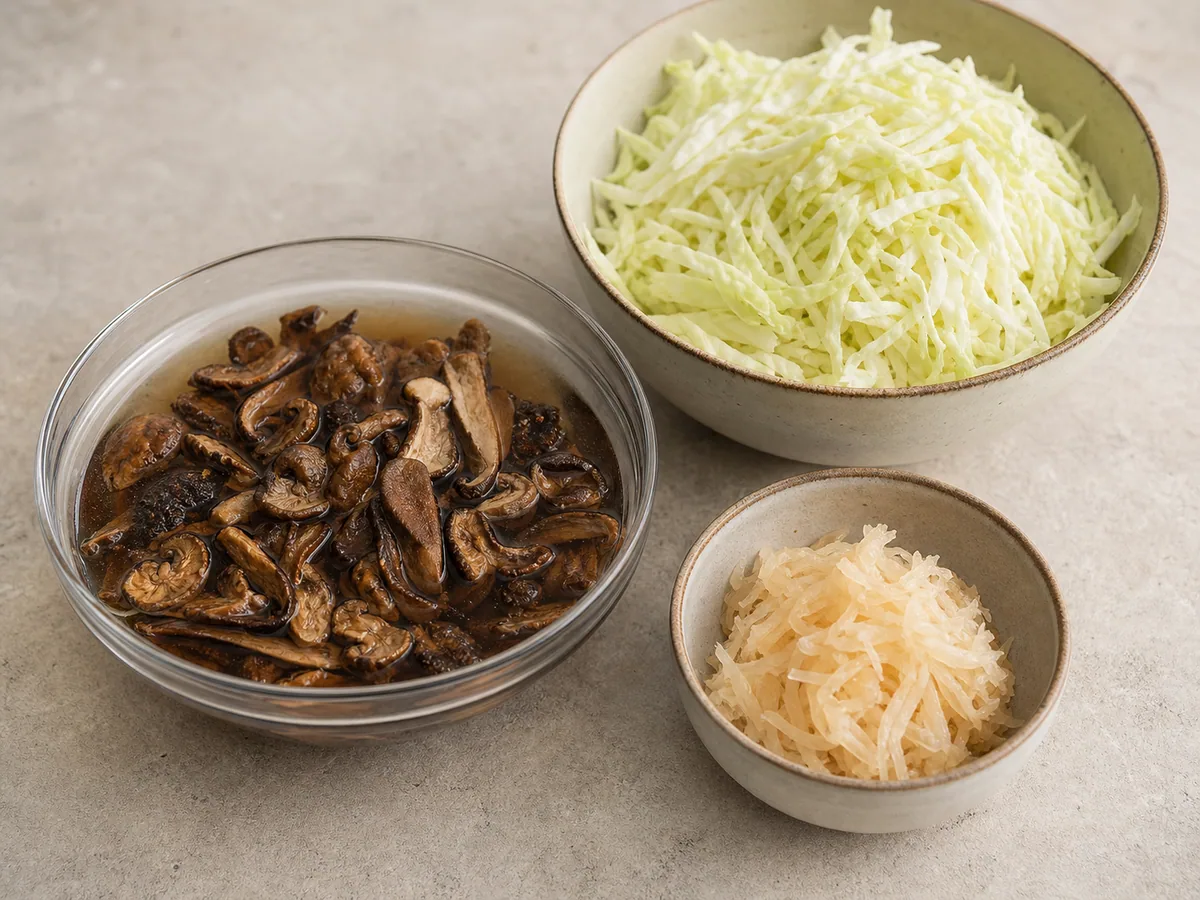
Place 25 g of dried porcini mushrooms in a heatproof bowl and pour 300 ml of hot water over them. Let them soften for 20 minutes. Meanwhile, drain 500 g of sauerkraut and squeeze it gently; rinse only if it tastes sharply salty or acidic. Cut 700 g of green cabbage into thin ribbons, chop 250 g of yellow onions, and check 100 g of prunes for pits. Lift the mushrooms from the bowl, chop any large pieces, and strain the soaking liquid through a fine sieve or coffee filter to remove grit.
20:00Brown the bacon and pork
Cut 80 g of thick-cut bacon into short strips. Cut 450 g of boneless pork shoulder into 4 cm (1 1/2 in) chunks, then wash hands and clean the knife and board before handling cooked or ready-to-eat food. Heat a large heavy pot over medium-high heat and add 15 ml of canola oil. Cook 80 g of thick-cut bacon for about 4 minutes, stirring, until it begins to crisp and release fat. Transfer the bacon to a plate. Brown 450 g of boneless pork shoulder in as many batches as needed to avoid crowding, restarting the 4-minute timer for each batch and turning the pieces so several sides take on color. Transfer each browned batch to the plate with the bacon.
04:00Build the cabbage base
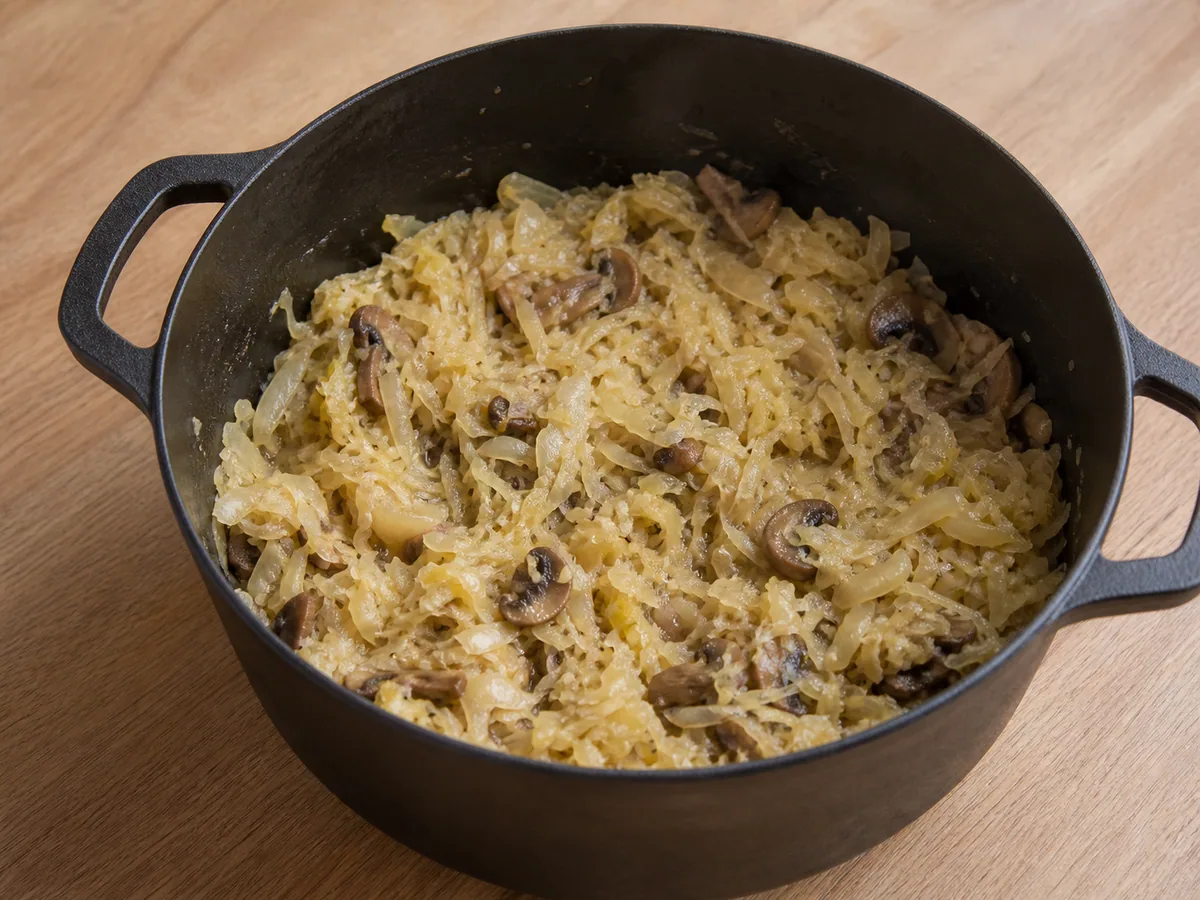
Reduce the heat to medium. Add 250 g of yellow onions to the pot and cook for 5 minutes, stirring and scraping up the browned bits. Add 700 g of green cabbage in several handfuls and cook for about 8 minutes, using the timer and stirring often, until the ribbons have visibly collapsed and fit comfortably in the pot. Stir in 45 g of tomato paste and cook for 2 minutes, until it darkens slightly and coats the vegetables.
08:00Assemble and slowly simmer the stew
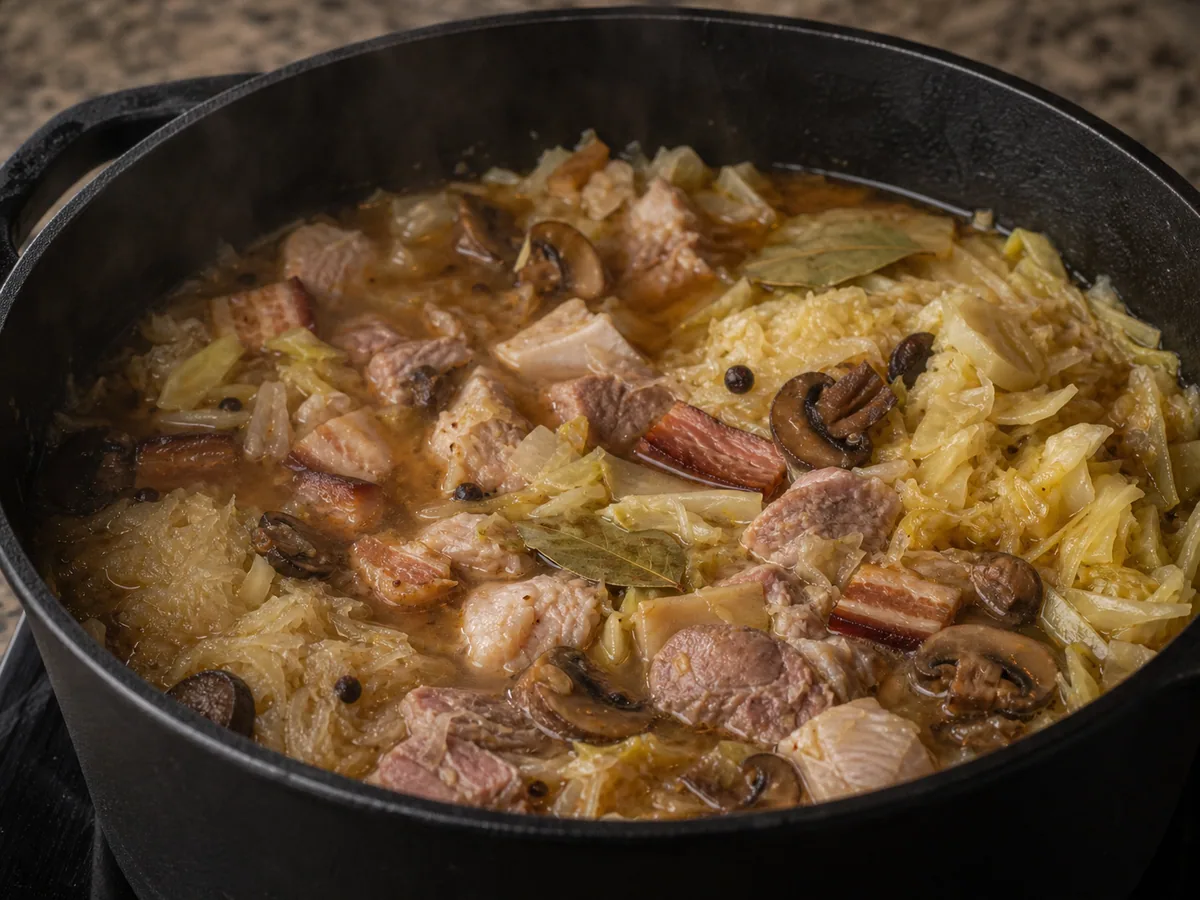
Return the browned pork and bacon to the pot. Add 500 g of sauerkraut, the soaked mushrooms, the strained mushroom liquid, 500 ml of unsalted beef stock, 2 bay leaves, 6 juniper berries, 6 whole allspice berries, 2 g of caraway seeds, 2 g of dried marjoram, and 2 g of black pepper. Crush the juniper and allspice lightly with the side of a knife before adding them. Bring the mixture to a steady simmer, then lower the heat, cover with the lid slightly ajar, and cook for 90 minutes, stirring from the bottom about every 20 minutes. When the timer ends, the cabbage should be deeply softened, the liquid should cling to it, and the pork should be nearly fork-tender; continue simmering in 10-minute increments if needed.
01:30:00Add the sausage and finish the stew

Cut 250 g of fully cooked smoked kielbasa into thick rounds. Add 250 g of fully cooked smoked kielbasa and 100 g of prunes to the pot, leave the lid ajar, and simmer for 25 to 30 minutes, stirring twice, until the sausage is piping hot, the pork is fork-tender, and the stew is thick enough to mound on a spoon; start checking when the timer ends. Before removing the pot from the heat, insert a clean food thermometer into one of the largest pork pieces and confirm it has reached at least 63°C/145°F. Remove 2 bay leaves, take the pot off the heat, and let it stand for 10 minutes before tasting or serving. The cured meats and sauerkraut usually provide enough salt. Serve with rye bread (optional).
25:00


Smart Substitutions
- No pork shoulder? Use an equal weight of beef chuck and simmer until fully cooked and fork-tender.
- No porcini? Use dried shiitake mushrooms for a similarly concentrated earthy note.
- No kielbasa? Use another fully cooked smoked sausage with a firm texture and a restrained spice level.
- Prefer a milder tang? Rinse half of the sauerkraut briefly, squeeze it well, and leave the rest unrinsed for balance.
Tips and Variations
- Brown the pork in batches; crowded pieces steam and leave less savory fond in the pot.
- Filter the mushroom soaking liquid carefully because even clean-looking dried mushrooms can release fine grit.
- Stir from the bottom during the long simmer, especially once the stew thickens and the prunes begin to soften.
What Went Wrong?
- Stew is watery Simmer with the lid off, stirring often, until the liquid clings to the cabbage and meat.
- Pork is still tough Keep the pot at a gentle simmer and check every 15 minutes; shoulder softens only after its connective tissue has had enough time.
- Flavor is too sharp Mash a few softened prunes into the cabbage and simmer for 5 minutes to round out the acidity.
- Bottom begins to catch Lower the heat immediately, add a small splash of hot water, and move the stew to a clean pot without scraping up scorched bits.
Nutrition Estimate
- Fiber: 8 g per serving
- Sodium: 1090 mg per serving
Nutrition disclaimer:This recipe is provided for general cooking information only. Nutrition values are estimates and may vary by ingredients, brands, preparation methods, and serving sizes. Check ingredient labels and follow appropriate food-safety practices. This content is not medical, dietary, allergy, or professional food-safety advice.
FAQ
Found an error or have a suggestion?
Help us improve this recipe. Send us your feedback and include the recipe name so we can take a look.