Method
Soften the rice cakes if needed
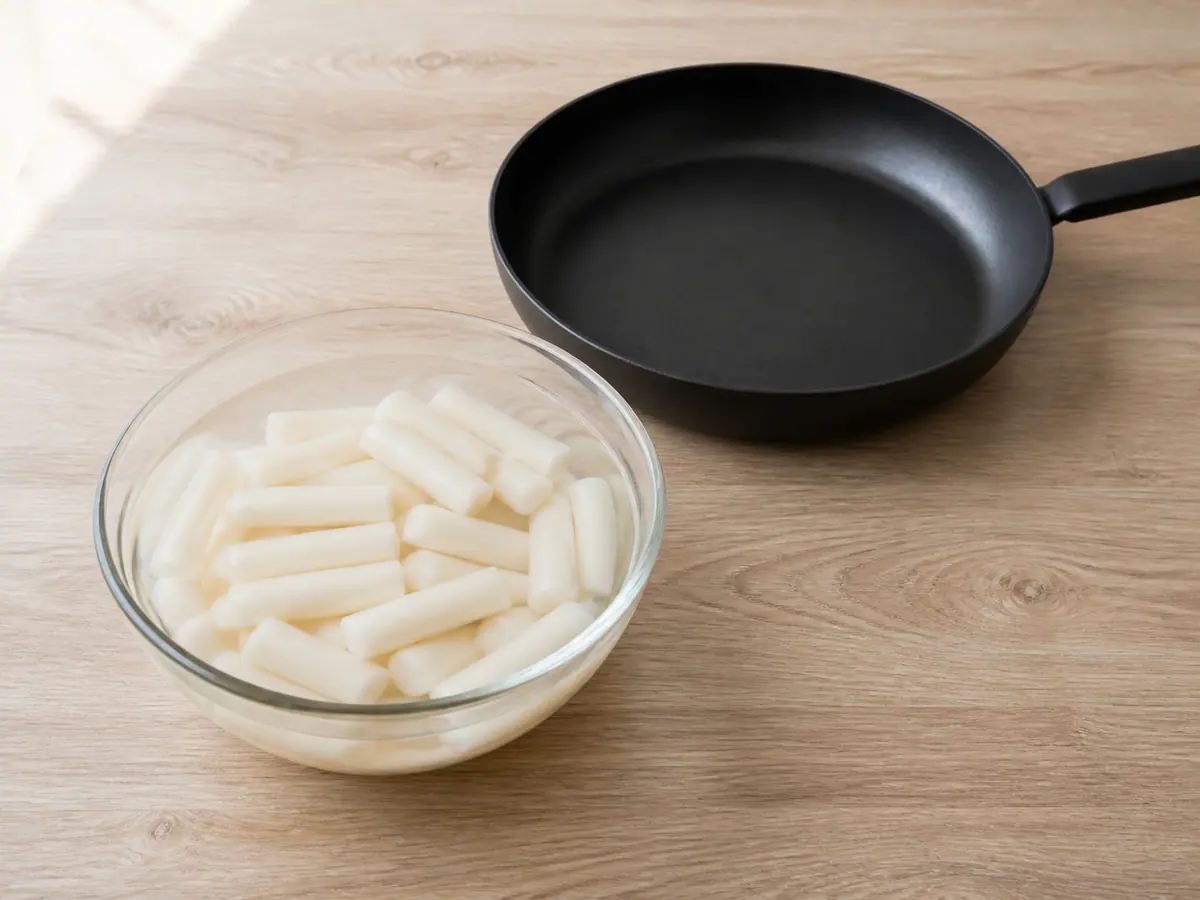
Separate 450 g of cylinder-shaped Korean rice cakes. If the pieces feel firm or stick together, cover them with warm water and set a 10-minute timer; begin making the stock while they soak. Drain well when the timer ends. If the rice cakes are already pliable, separate them and set them aside without soaking.
10:00Start the anchovy-kelp stock
Add 840 ml of water, 20 g of dried soup anchovies, and 6 g of dried kelp to a wide saucepan or deep skillet. Bring to a gentle boil over medium-high heat, then reduce to medium and simmer uncovered for 5 minutes.
05:00Finish and strain the stock
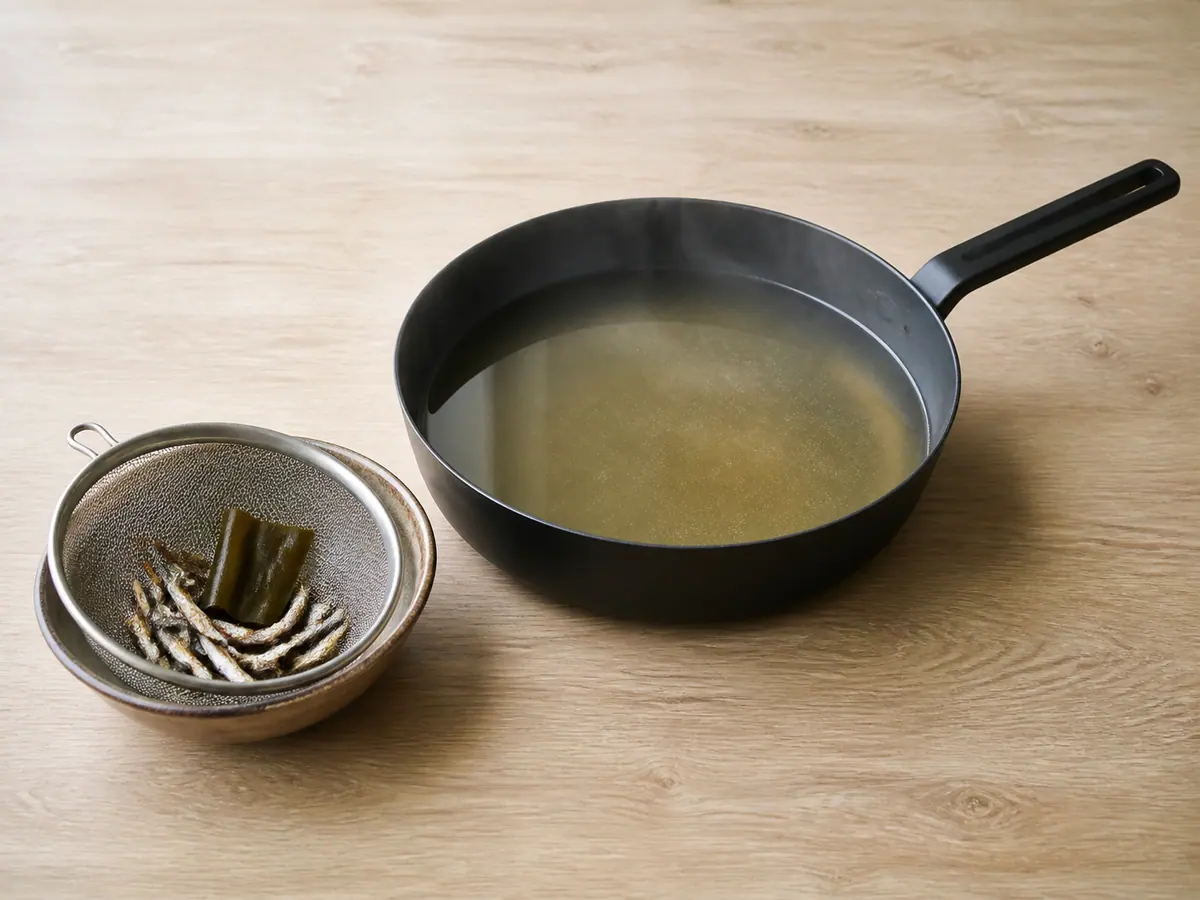
Lift out and discard the kelp so the stock stays clean-tasting. Continue simmering the anchovies uncovered for 5 minutes, then remove and discard them. Keep the strained stock hot over low heat.
05:00Mix the sweet-spicy sauce
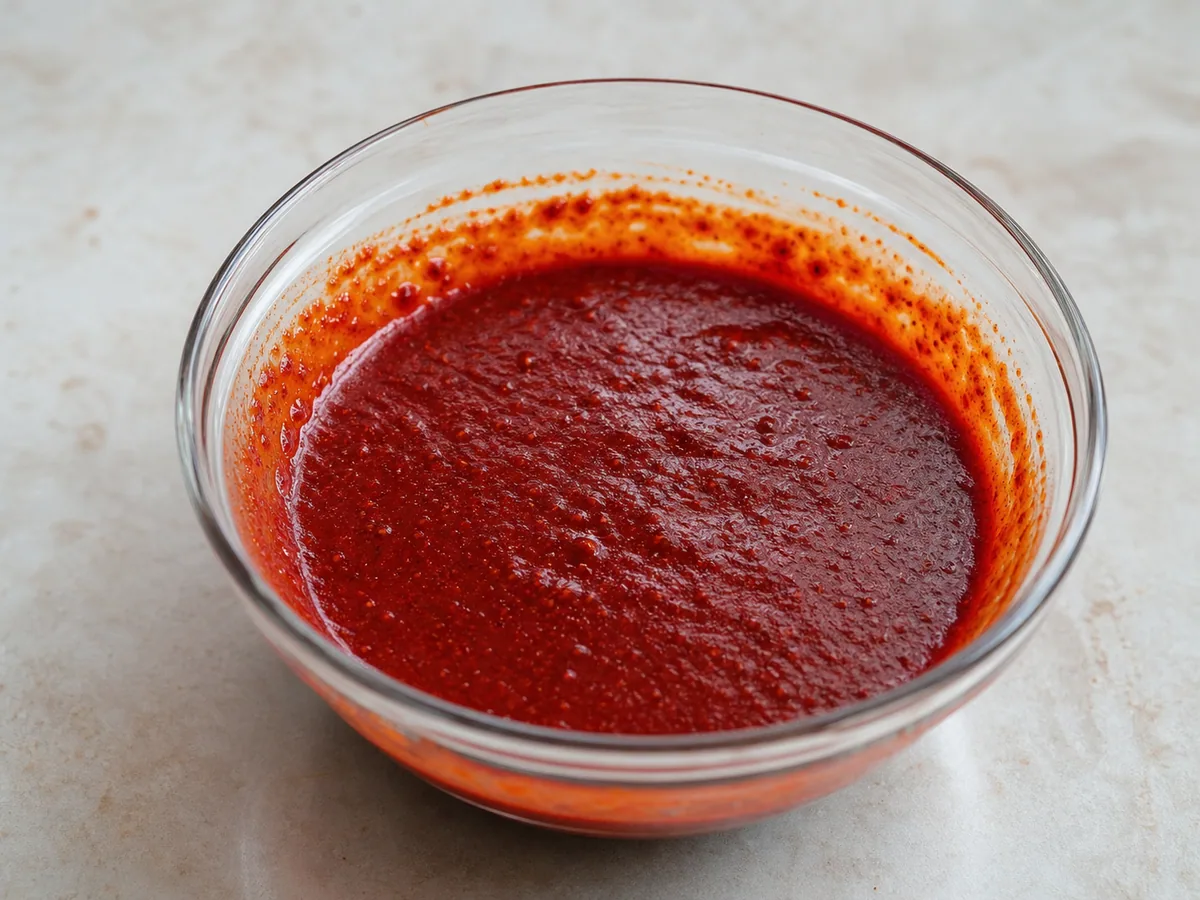
Mince 10 g of garlic. In a bowl, whisk 50 g of gochujang, 8 g of gochugaru, 24 g of granulated sugar, the minced garlic, and a ladleful of hot stock until completely smooth with no streaks of paste or pockets of dry spice.
Prepare the fish cake and vegetables
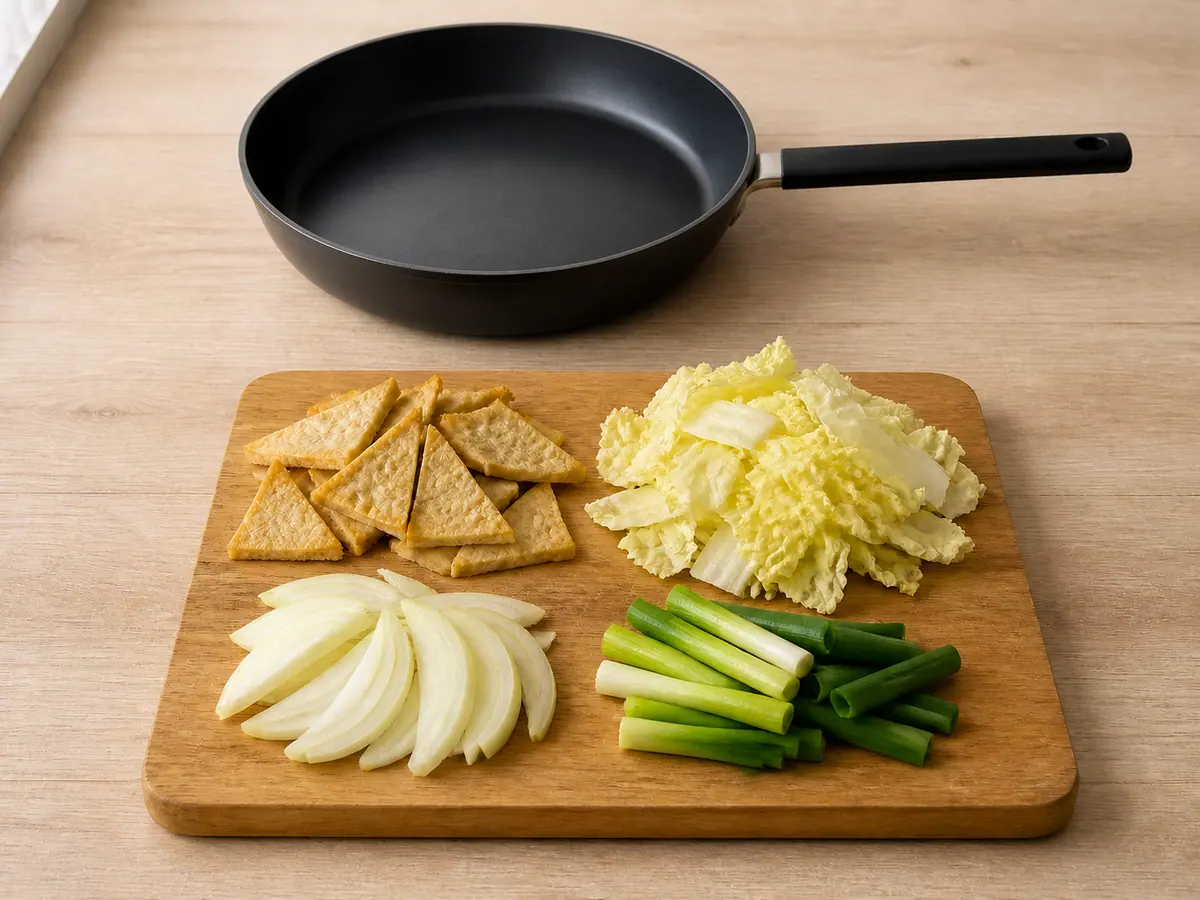
Cut 150 g of Korean fish cake into bite-size triangles or strips. Slice 120 g of napa cabbage into broad ribbons, slice 80 g of yellow onion into thin wedges, and cut 60 g of green onions into 5 cm (2 in) lengths. Check the fish cake package for allergens; many Korean fish cakes contain fish, wheat, and soy.
Build the sweet-spicy sauce
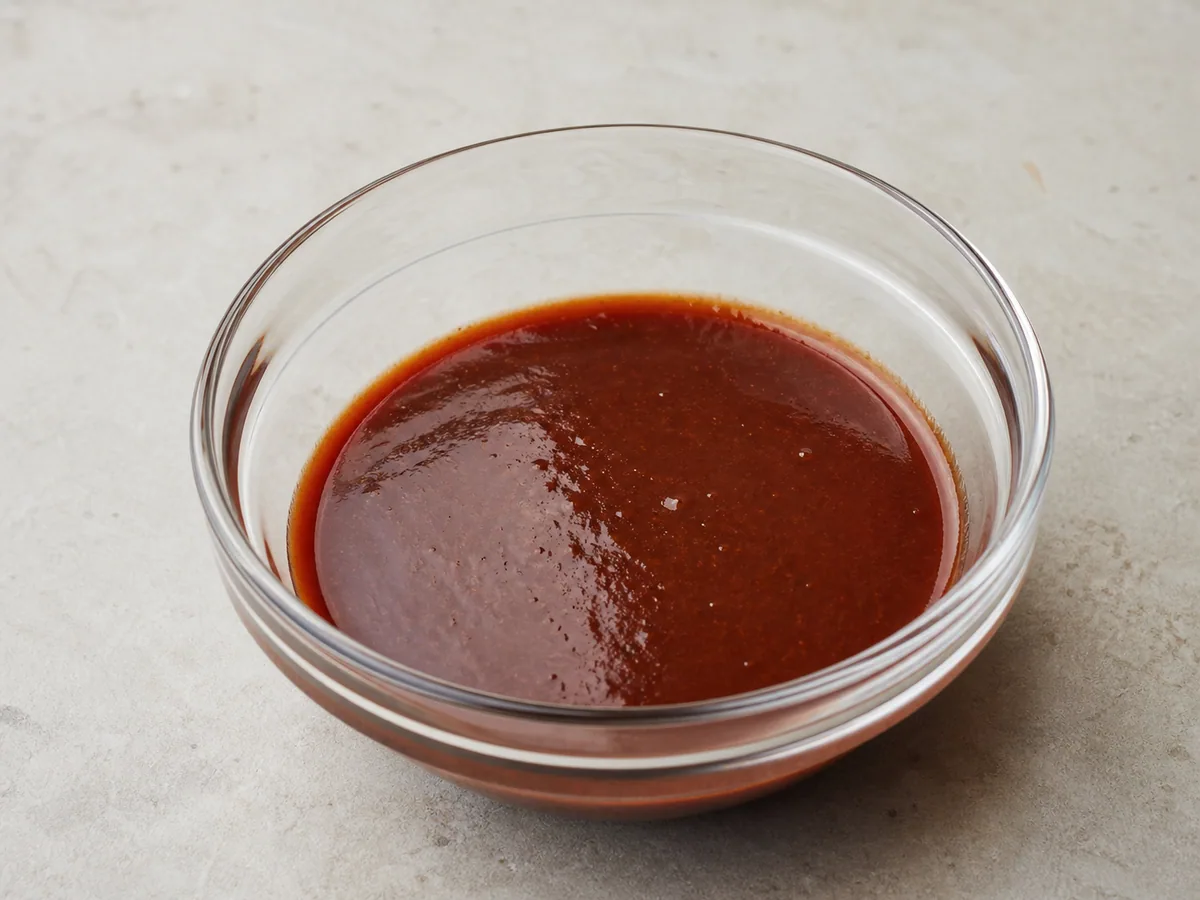
Return the strained stock to a steady simmer over medium-high heat. Stir in the gochujang mixture, then add 120 g of napa cabbage and 80 g of yellow onion. Cook for 3 to 4 minutes, stirring occasionally, until the cabbage begins to relax but still has some bite; start checking at 3 minutes.
03:00Cook until chewy and glossy
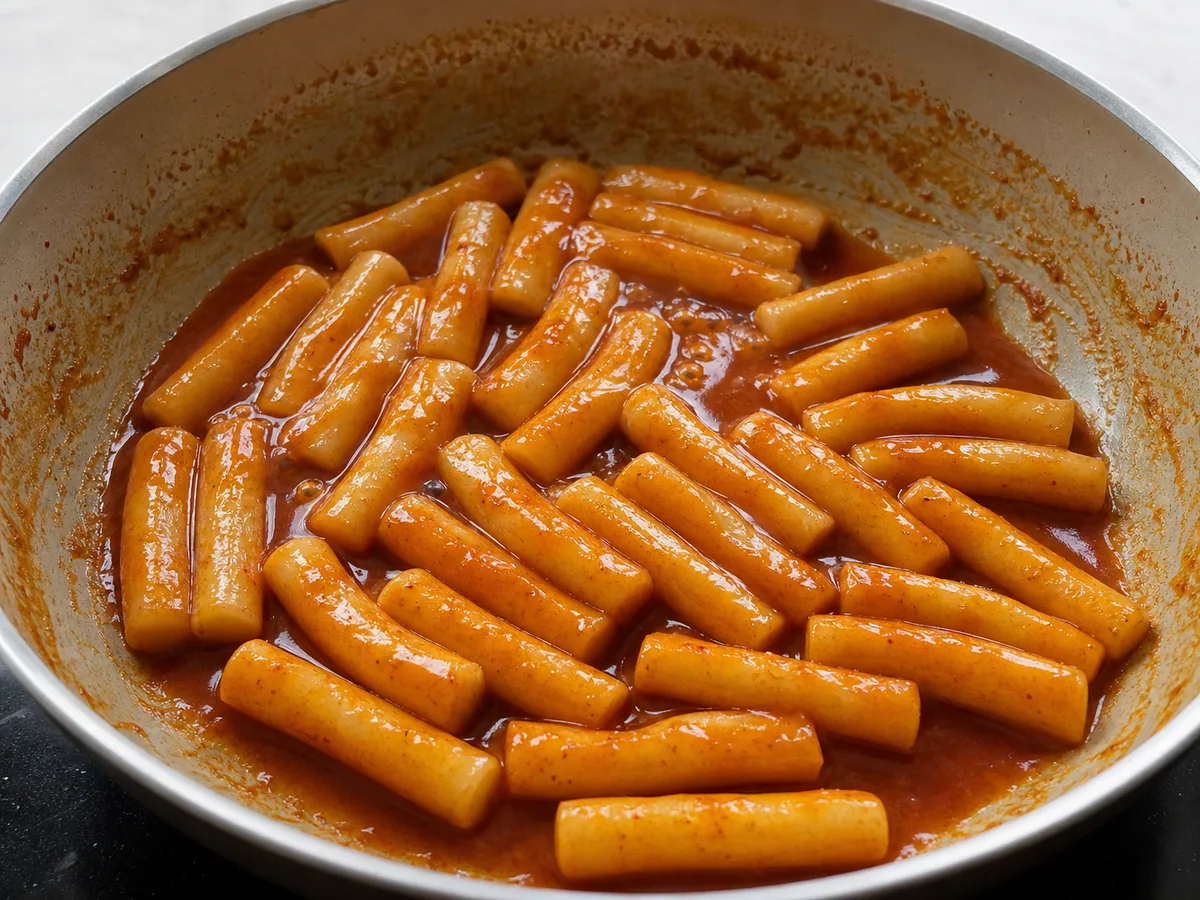
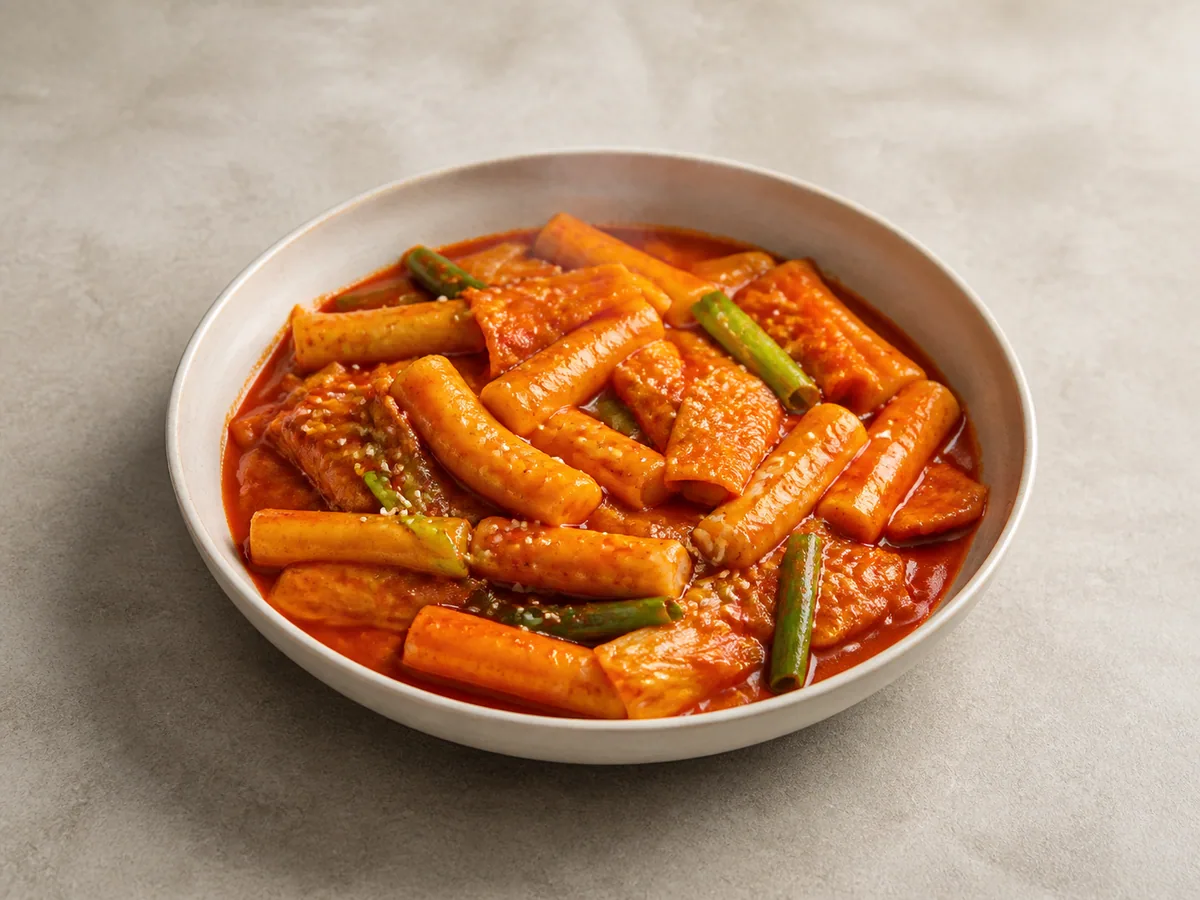
Add 450 g of cylinder-shaped Korean rice cakes, 150 g of Korean fish cake, and 60 g of green onions, reserving a small handful of green onion for serving. Bring the mixture back to a lively simmer, then lower the heat to medium. Cook uncovered for 10 to 12 minutes, stirring from the bottom every minute, until the rice cakes are chewy-tender, the fish cake is steaming hot throughout, and the sauce is thick enough to leave a brief trail across the pan; start checking at 10 minutes. If the sauce tightens before the rice cakes soften, add a splash of water and continue simmering.
10:00Finish and serve
Remove the pan from the heat. Stir in 5 ml of toasted sesame oil, then scatter 6 g of toasted sesame seeds and the reserved green onion over the top. Rest for 2 minutes so the sauce settles into a glossy coating, then serve immediately while the rice cakes are supple.
02:00


Smart Substitutions
- No fish cake? Use firm tofu or king oyster mushrooms; add them with the rice cakes so they absorb the sauce.
- Prefer a meat-free stock? Omit the anchovies and simmer the kelp with two dried shiitake mushrooms for a savory base.
- Need less heat? Use mild gochujang and reduce the gochugaru by half; keep the sugar unchanged so the sauce stays balanced.
- No cylinder rice cakes? Use sliced Korean rice cakes and begin checking several minutes earlier because thinner pieces soften faster.
Tips and Variations
- Use a wide pan so the stock reduces evenly and the rice cakes stay in a shallow layer.
- Stir with a broad spatula from the bottom; the starch settles quickly and can catch on the pan.
- Taste the sauce before finishing. Fish cake and gochujang vary in saltiness, so extra salt is rarely needed.
What Went Wrong?
- Rice cakes are still firm Add a splash of hot water and simmer for 2 to 3 minutes longer, stirring frequently.
- Sauce is watery Keep the pan uncovered and simmer for 2 to 4 minutes, stirring from the bottom, until the sauce clings.
- Sauce is too thick Stir in hot water a tablespoon at a time until the sauce loosens without becoming soupy.
- Flavor is too spicy Stir in a little more sugar with a splash of water, then simmer briefly to rebalance the sauce.
Nutrition Estimate
- Fiber: 4 g per serving
- Sodium: 900 mg per serving
Nutrition disclaimer:This recipe is provided for general cooking information only. Nutrition values are estimates and may vary by ingredients, brands, preparation methods, and serving sizes. Check ingredient labels and follow appropriate food-safety practices. This content is not medical, dietary, allergy, or professional food-safety advice.
FAQ
Found an error or have a suggestion?
Help us improve this recipe. Send us your feedback and include the recipe name so we can take a look.