Method
Prepare the onions and aromatics
Peel 330 g of yellow onions, cut them in half through the root, and slice into thin half-moons. Mince 2 garlic cloves. Chop 15 g of fresh parsley and keep it ready for the finish so the skillet can be stirred continuously once the flour goes in.
Soften and brown the onions
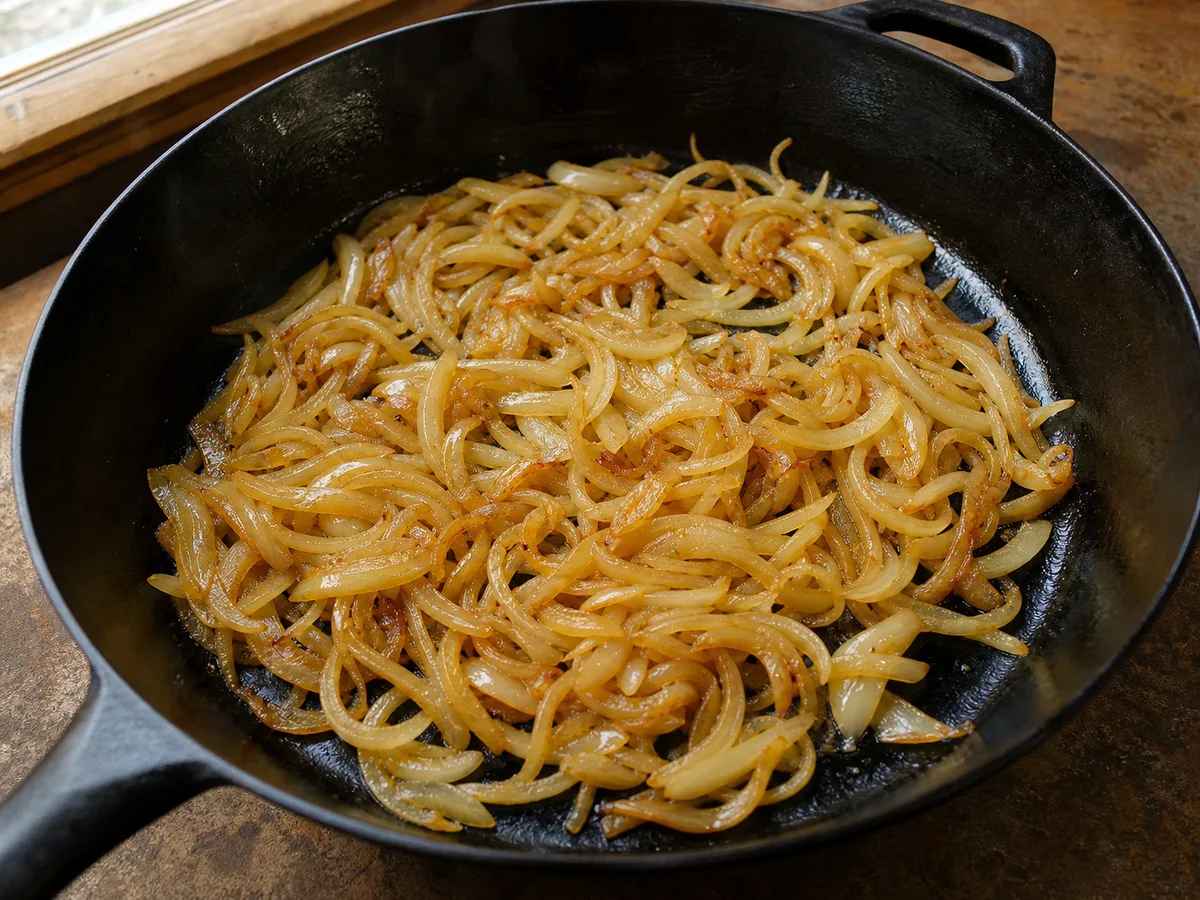
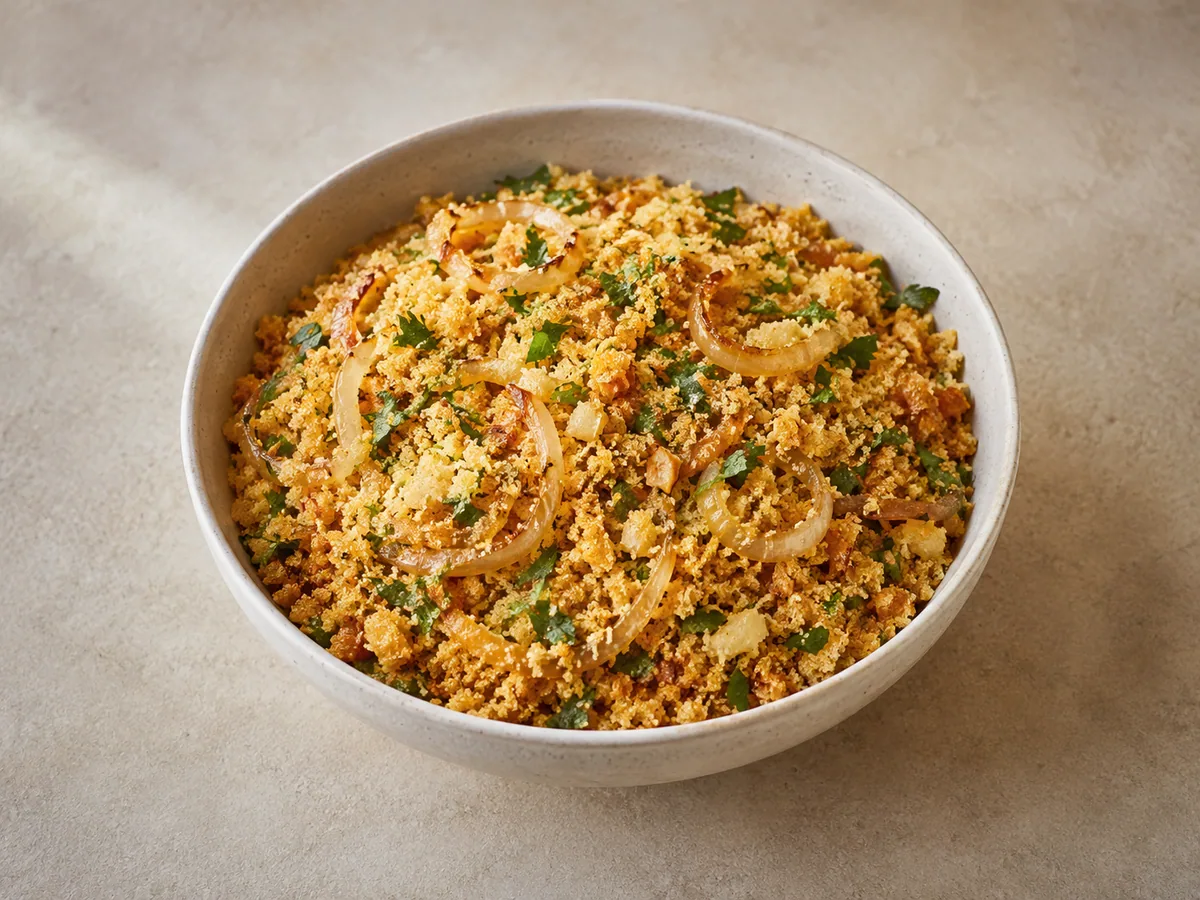
Melt 60 g of unsalted butter in a wide, heavy skillet over medium-low heat. Add 330 g of yellow onions and 3 g of kosher salt. Cook for 12 to 15 minutes, stirring every minute or two, until the onions are soft, amber at the edges, and no longer releasing visible moisture. Begin checking at 12 minutes, and lower the heat if the butter starts to brown faster than the onions.
12:00Bloom the garlic and pepper
Stir in 2 garlic cloves and 1 g of black pepper. Cook for 45 seconds, stirring constantly, until the garlic smells fragrant but has not taken on dark color.
00:45Toast the cassava flour
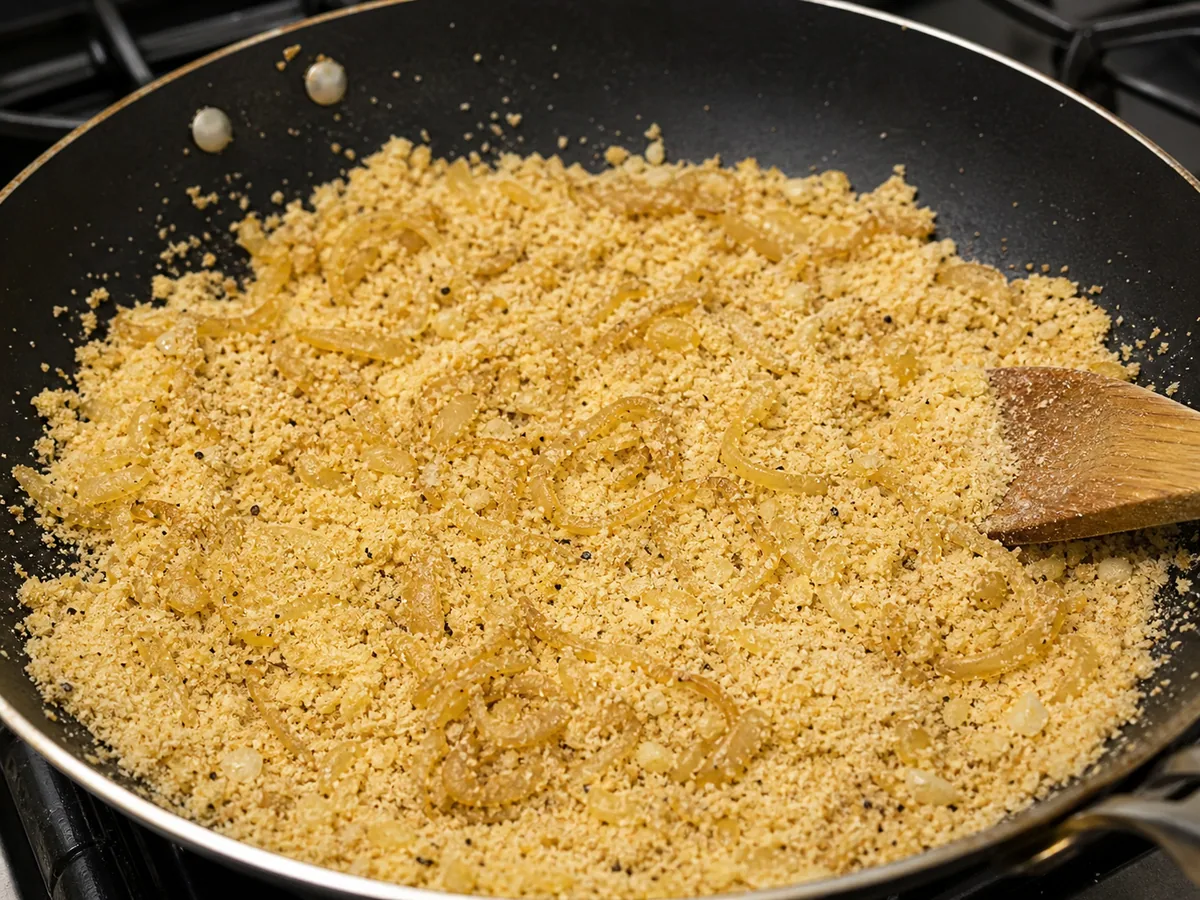
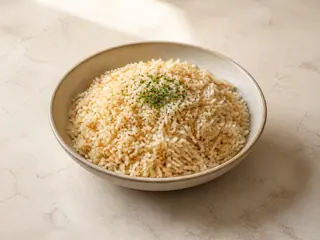
Reduce the heat to low. Add 250 g of toasted cassava flour (farinha de mandioca) in three additions, stirring thoroughly after each one so the seasoned butter and onions are distributed through the grains. Toast for 5 to 7 minutes, stirring and scraping across the base of the skillet, until the mixture is loose, dry-looking, lightly golden, and smells nutty. Begin checking at 5 minutes and remove the skillet from the heat sooner if the crumbs darken quickly.
05:00Finish and serve
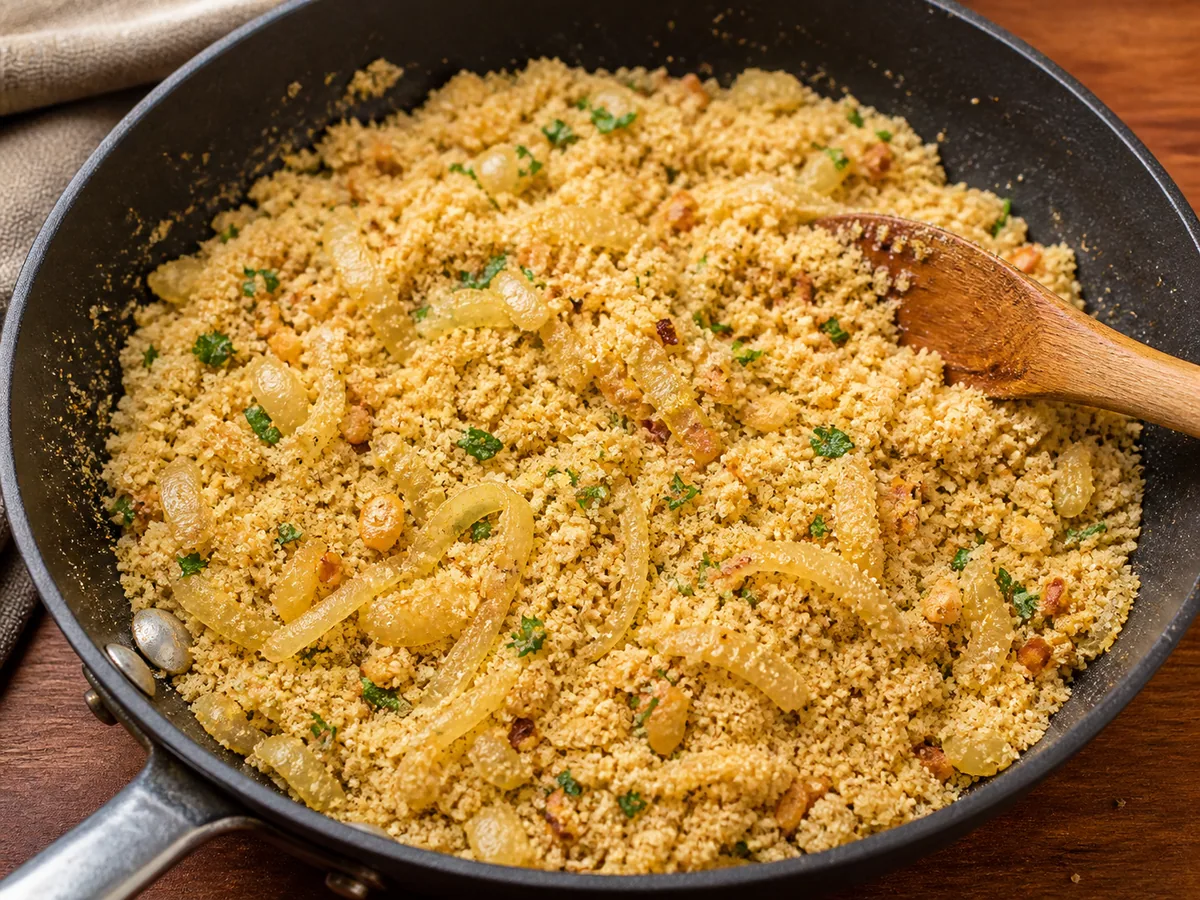
Remove the skillet from the heat and fold in 15 g of fresh parsley. Break up any remaining soft clumps with the edge of a wooden spoon, then taste and adjust the seasoning only if needed. Spoon the farofa into a serving bowl and serve immediately while the crumbs are warm and crisp.


Smart Substitutions
- No unsalted butter? Use olive oil or a neutral vegetable oil for a lighter, dairy-free version; the farofa will taste less rich but will still toast well.
- No yellow onions? White onions give a similarly mellow result. Red onions work too, though their flavor stays a little sharper.
- No fresh parsley? Use fresh chives or cilantro, or leave the herb out and let the browned onions lead.
- Only untoasted cassava flour? Use a coarse, food-grade cassava flour and allow a few extra minutes over low heat, stirring constantly, until it smells toasted and the grains feel dry.
Tips and Variations
- Use a wide skillet so onion moisture can evaporate instead of steaming the cassava flour.
- Keep the heat low after the flour is added; the fine crumbs can move from golden to scorched quickly.
- Stir from the outer edge toward the center and scrape the full base of the pan to toast the farofa evenly.
What Went Wrong?
- Farofa is clumpy Keep it over low heat and press the clumps apart with the spoon while stirring. They loosen as excess onion moisture evaporates.
- Crumbs are browning too fast Take the skillet off the heat for a moment, stir thoroughly, then return it to the lowest setting.
- Onions are pale and watery Cook them a few minutes longer before adding the flour. The pan should look glossy rather than wet.
- Flavor tastes flat Check the salt while the farofa is still warm, then toast for another minute to deepen the cassava aroma.
Nutrition Estimate
- Fiber: 4 g per serving
- Sodium: 200 mg per serving
Nutrition disclaimer:This recipe is provided for general cooking information only. Nutrition values are estimates and may vary by ingredients, brands, preparation methods, and serving sizes. Check ingredient labels and follow appropriate food-safety practices. This content is not medical, dietary, allergy, or professional food-safety advice.
FAQ
Found an error or have a suggestion?
Help us improve this recipe. Send us your feedback and include the recipe name so we can take a look.