Method
Prepare the cucumber-basil base
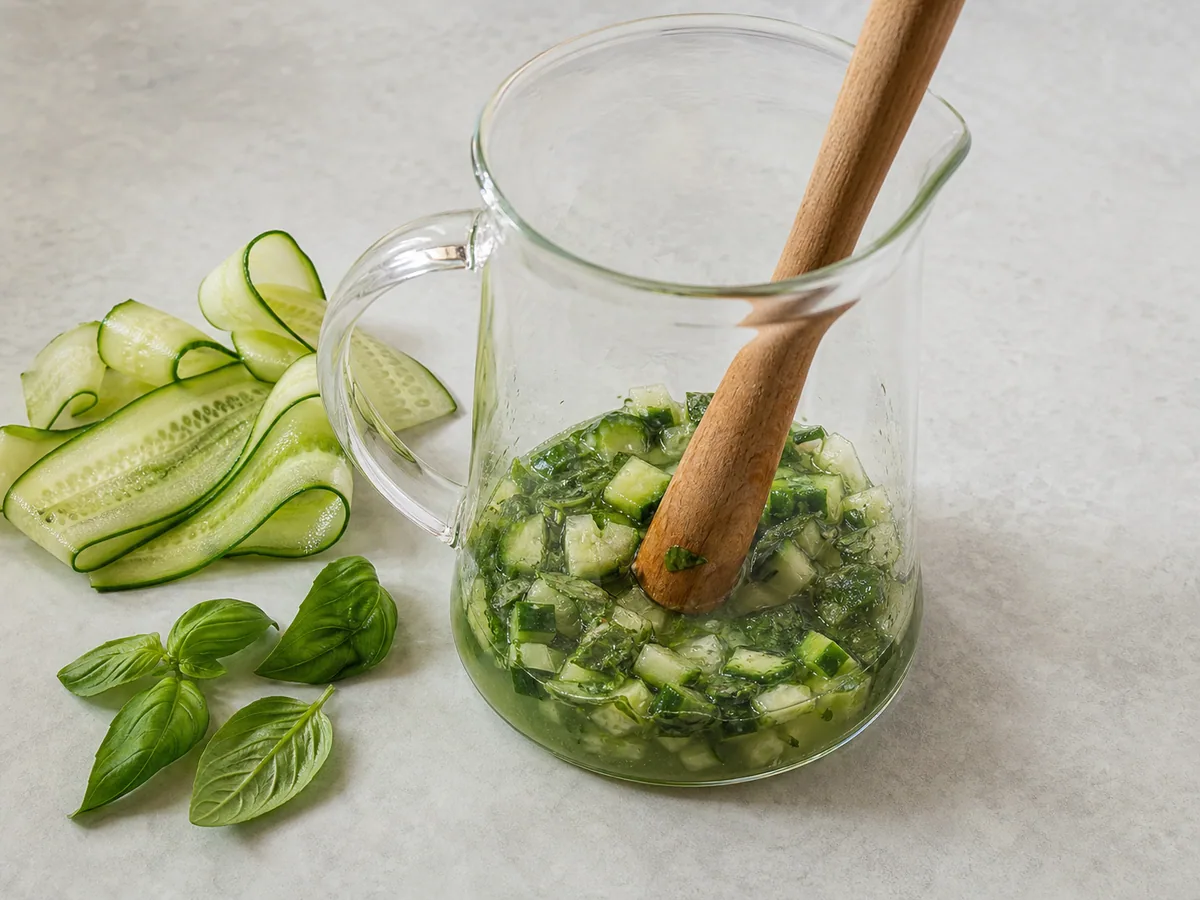
Rinse 200 g of English cucumber and 20 leaves of fresh basil thoroughly under cool running water, then dry them. Cut enough long ribbons from 200 g of English cucumber for one per serving, then chop the rest into small pieces. Reserve one attractive leaf per serving from 20 leaves of fresh basil. Put the chopped cucumber and remaining basil in a sturdy pitcher, add 60 ml of fresh lime juice, and muddle for 45 to 60 seconds until the cucumber looks juicy, the basil is bruised, and a shallow pool of pale green liquid collects at the bottom. Stop before the basil becomes a paste.
01:00Fill the glasses
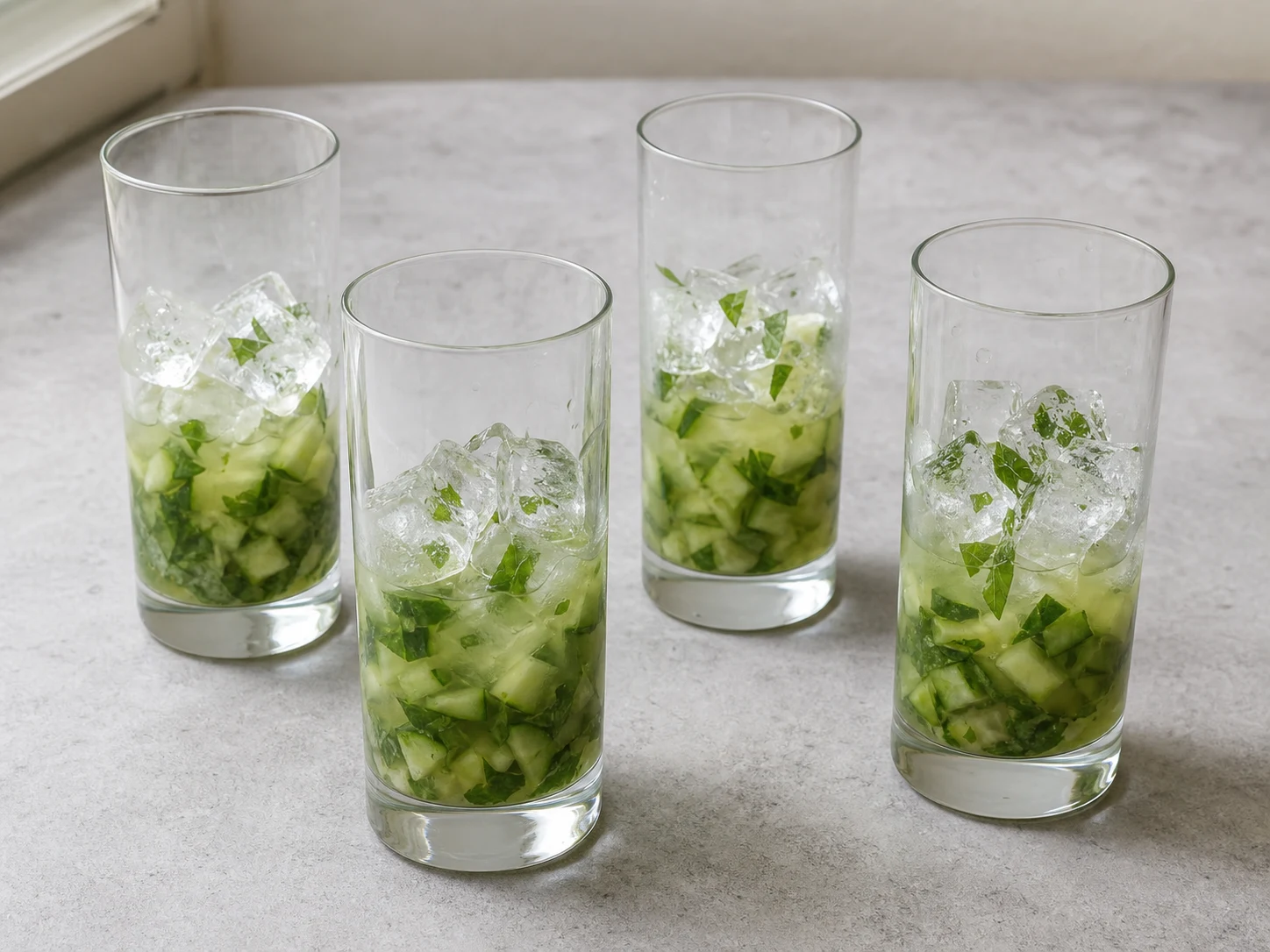
Divide 600 g of ice cubes among tall highball glasses. Spoon the cucumber-basil mixture over the ice, distributing the chopped cucumber and released juice evenly so every glass has a similar balance of fresh solids and liquid.
Add the tonic
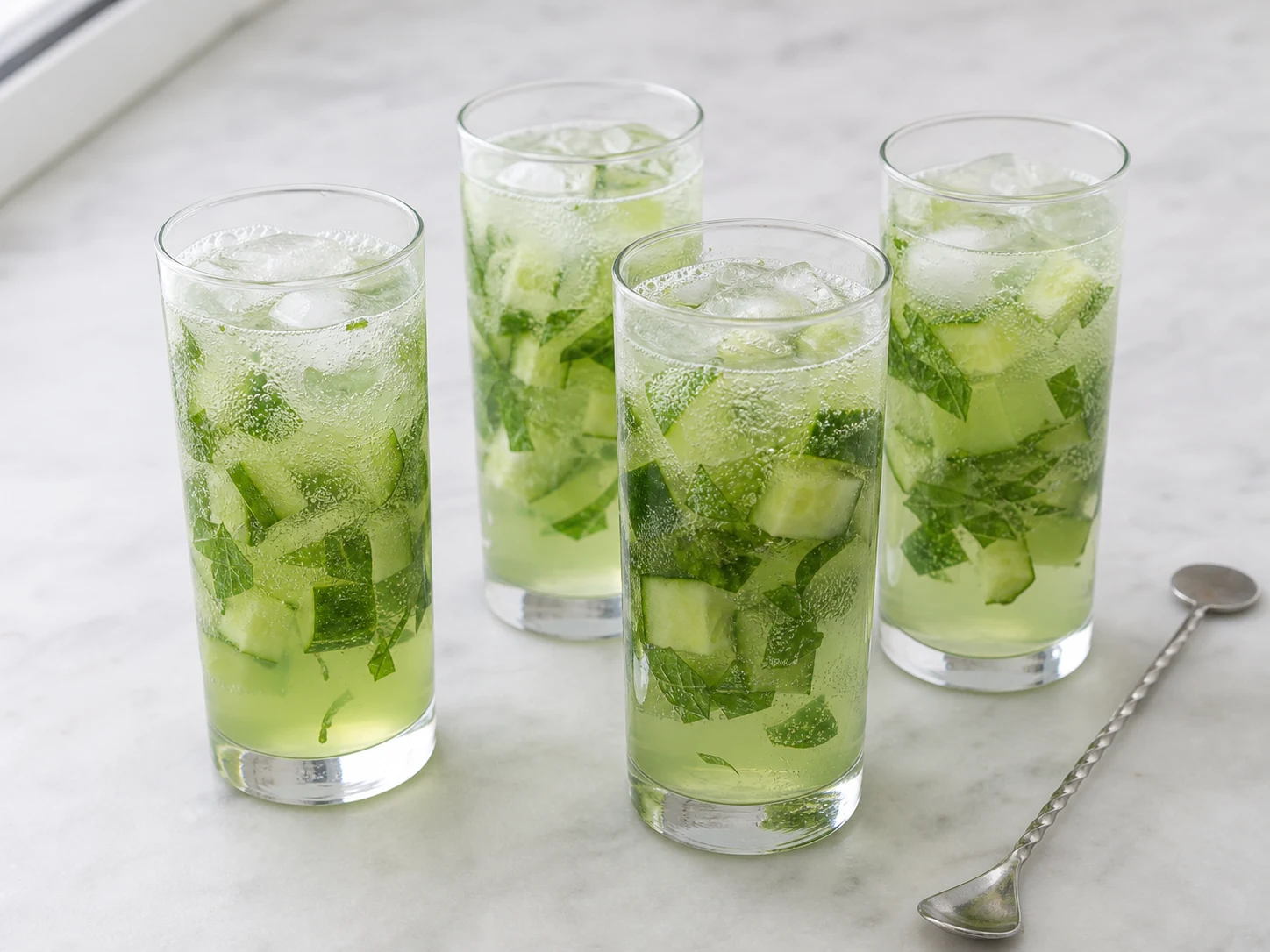
Slowly pour 720 ml of tonic water down the inside of each glass. Leave a little headspace and pause if the foam rises, then give each drink one gentle lift from the bottom with a bar spoon. Vigorous stirring will flatten the carbonation.
Finish and serve
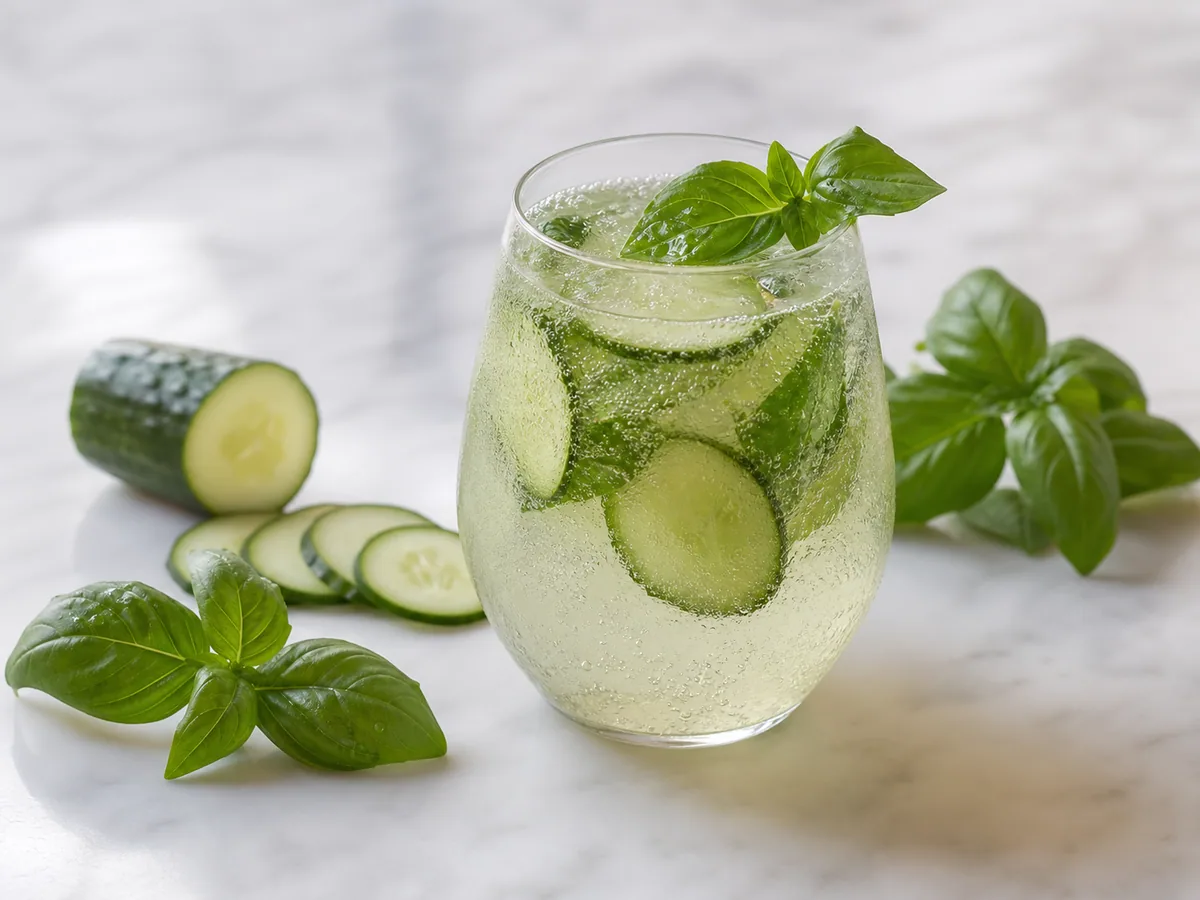
Tuck one cucumber ribbon against the inside of each glass and add one reserved basil leaf. Serve immediately while the tonic is cold and effervescent.


Smart Substitutions
- No English cucumber? Use Persian cucumbers at the same weight; their thin skins and small seeds work well without peeling.
- Prefer a drier drink? Replace half of the tonic water with plain sparkling water for less sweetness and a softer quinine finish.
- No fresh basil? Use fresh mint for a cooler profile or Thai basil for a gentle anise note.
- Want a rounder citrus note? Replace up to half of the lime juice with fresh lemon juice.
Tips and Variations
- Chill the tonic water before opening it; colder liquid holds carbonation more effectively and keeps the finished drink crisp.
- Muddle until the cucumber releases juice but still has visible pieces. A smooth puree makes the drink heavy and can push basil toward a grassy flavor.
- Pour the tonic slowly down the glass and stir only once so the cucumber-lime base mixes without losing its lively bubbles.
What Went Wrong?
- Drink tastes too bitter Replace part of the tonic water with plain sparkling water, or choose a tonic labeled mild or lightly sweetened.
- Basil tastes grassy The leaves were muddled too aggressively. Add a little more tonic water now, and stop as soon as the leaves are bruised next time.
- Cucumber flavor is faint Chop the cucumber into smaller pieces and press firmly enough to release a visible pool of juice before filling the glasses.
- Tonic goes flat Use well-chilled tonic water, pour it slowly, and avoid repeated stirring after the glasses are filled.
Nutrition Estimate
- Fiber: 0 g per serving
- Sodium: 25 mg per serving
Nutrition disclaimer:This recipe is provided for general cooking information only. Nutrition values are estimates and may vary by ingredients, brands, preparation methods, and serving sizes. Check ingredient labels and follow appropriate food-safety practices. This content is not medical, dietary, allergy, or professional food-safety advice.
FAQ
Found an error or have a suggestion?
Help us improve this recipe. Send us your feedback and include the recipe name so we can take a look.