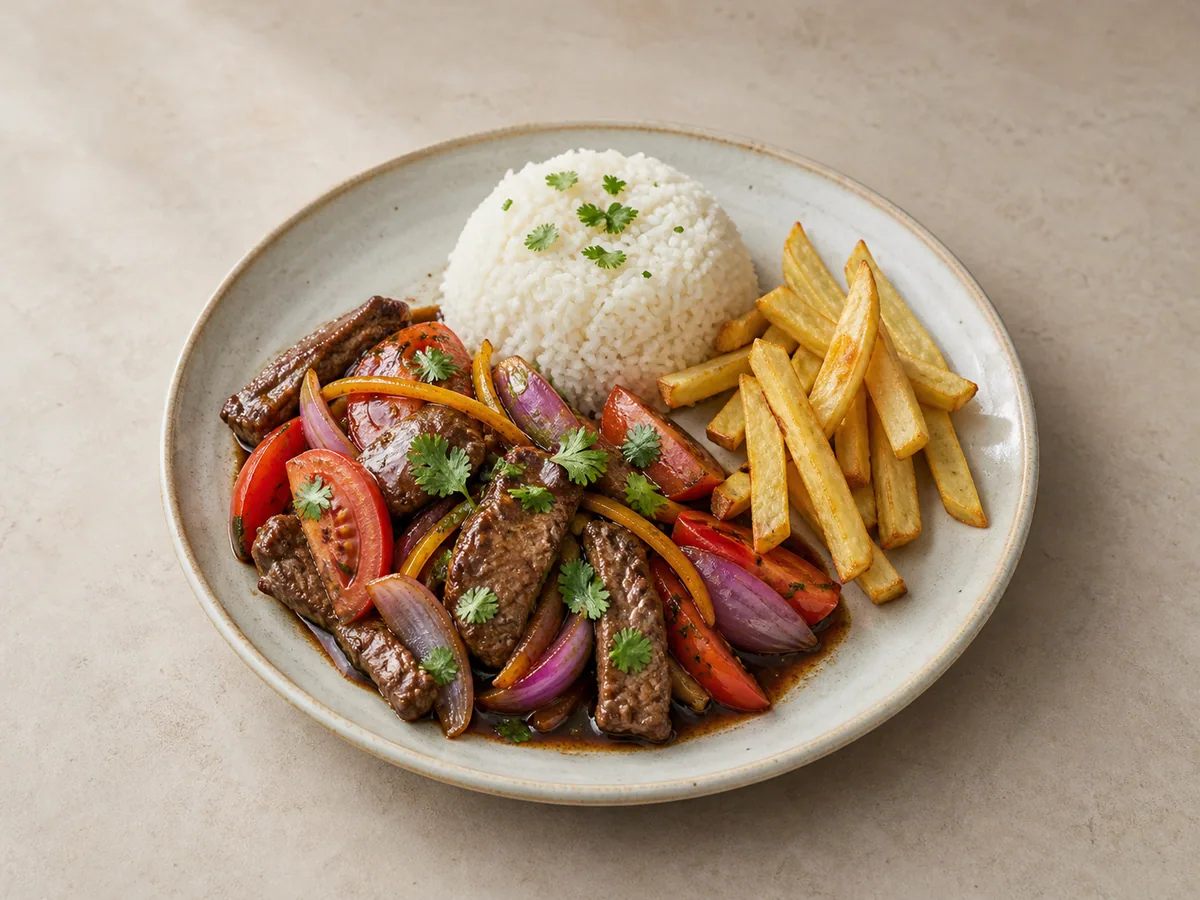
Method
Roast the potatoes
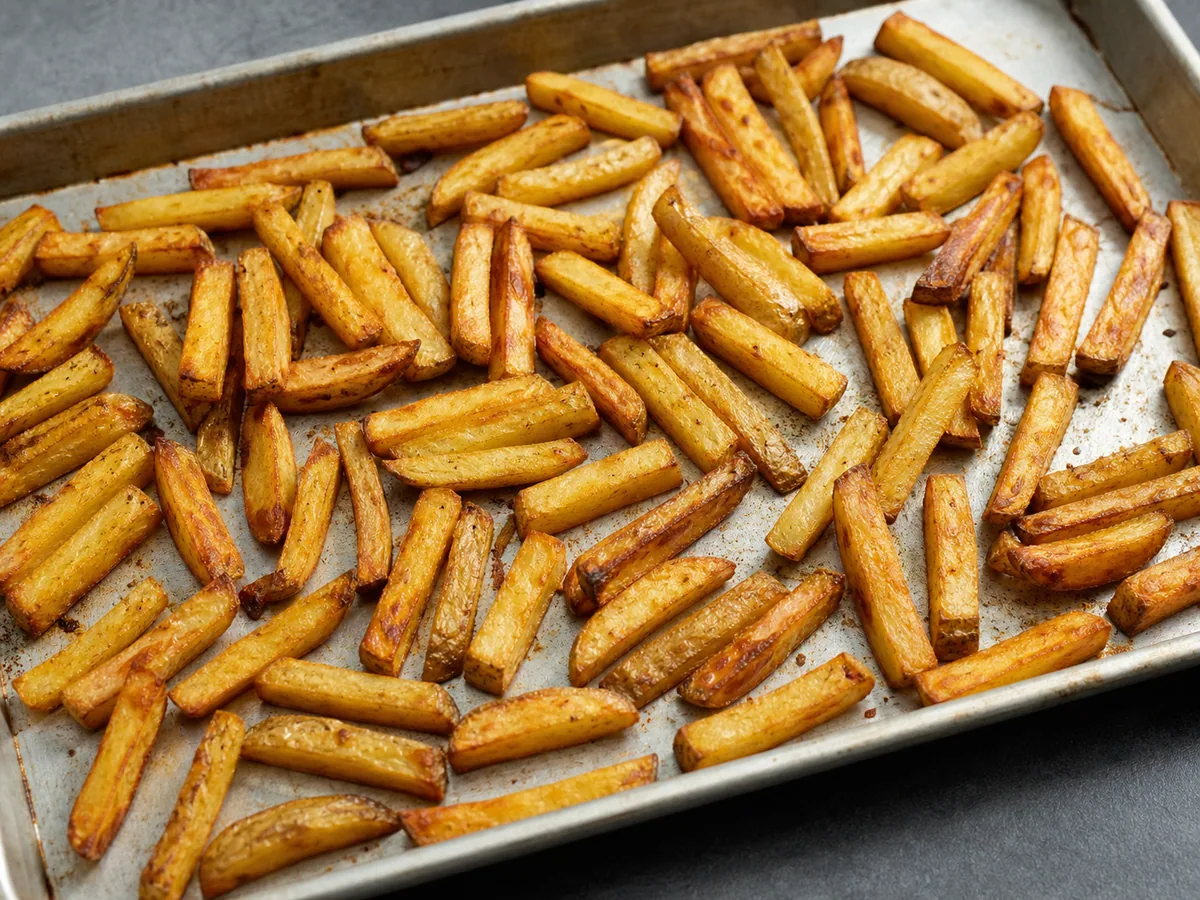
Heat the oven to 230°C (450°F). Scrub 700 g of russet potatoes, then cut them into batons about 1 cm (3/8 in) thick. Measure 45 ml of neutral oil and toss the potatoes with about two-thirds of it on a large rimmed baking sheet. Combine 3 g of kosher salt, 1 g of ground cumin, and 1 g of black pepper in a small bowl; season the potatoes with half of this mixture. Spread them in one layer and roast for 25 to 30 minutes, turning after 15 minutes, until deeply golden with crisp edges. Begin checking at 25 minutes.
25:00Cook the rice
Rinse 230 g of long-grain white rice in a fine-mesh sieve until the water runs mostly clear. Put 230 g of long-grain white rice and 420 ml of water for rice in a saucepan and bring to a boil over medium-high heat. Stir once, cover, reduce the heat to low, and cook for 15 minutes. Remove the pan from the heat without lifting the lid and let the rice stand for 10 minutes, then fluff it with a fork.
15:00Prepare the beef and vegetables
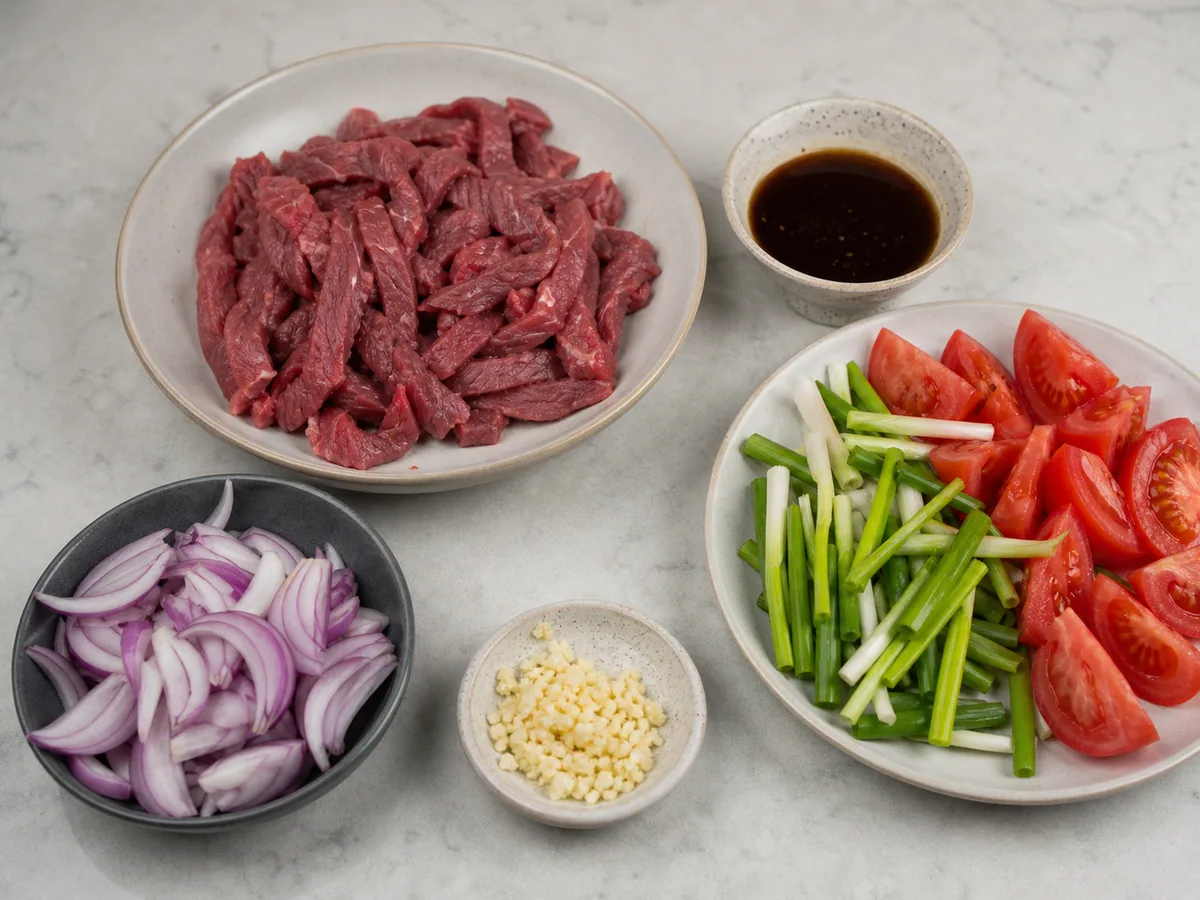
Pat 600 g of beef top sirloin dry and cut it across the grain into strips about 1 cm (3/8 in) thick. Season it with the remaining half of the spice mixture. Cut 1 large red onion into thick wedges. Cut 3 medium Roma tomatoes into firm wedges. Split 1 ají amarillo chile lengthwise, remove the seeds for milder heat, and cut it into narrow strips. Mince 3 garlic cloves and chop 10 g of fresh cilantro. Stir 45 ml of low-sodium soy sauce (contains soy and wheat) and 30 ml of red wine vinegar together in a small bowl. Keep the vegetables on a separate board from the raw beef, or wash and sanitize the board, knife, and work surface before preparing the vegetables; wash your hands after handling the beef.
Sear the beef in batches
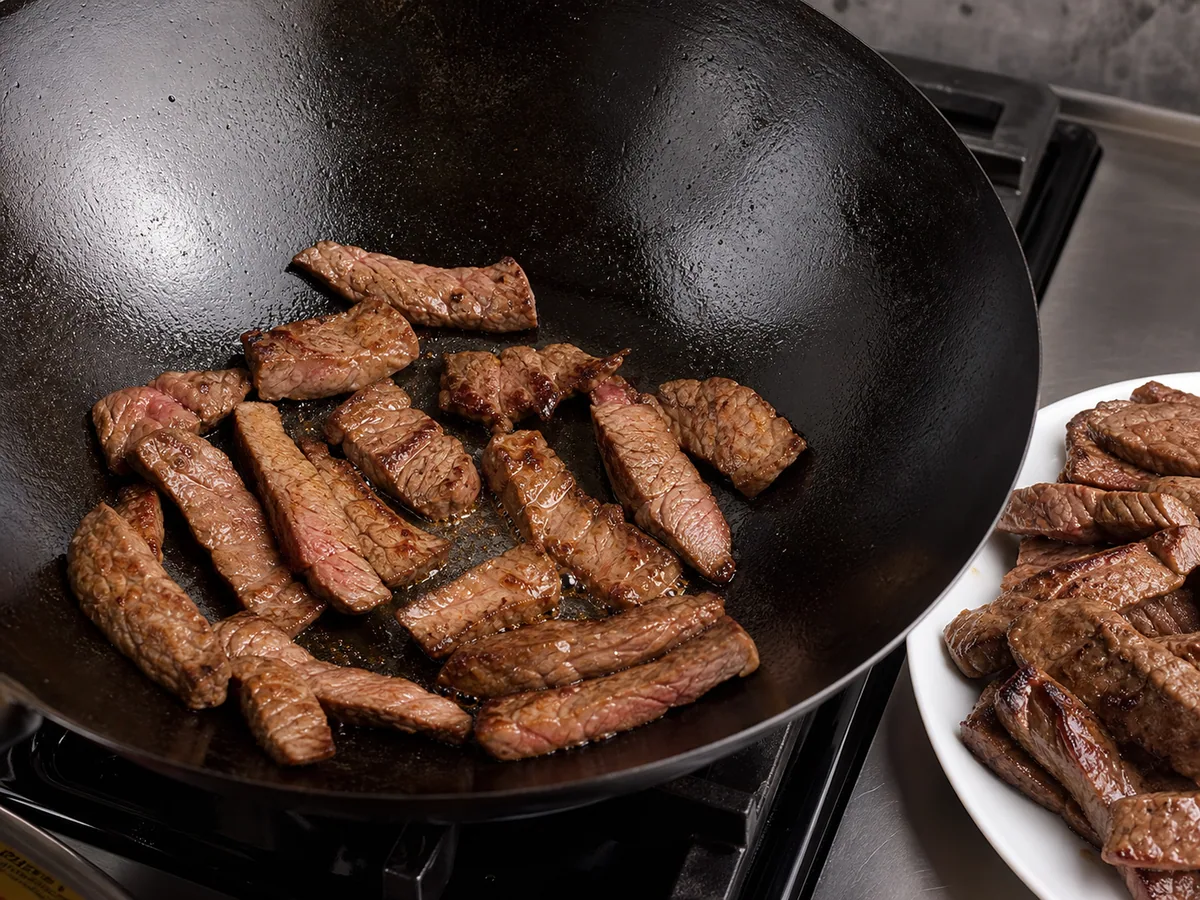
Heat a large wok or heavy skillet over high heat until a drop of water evaporates almost immediately. Add the remaining 45 ml of neutral oil. Arrange half of 600 g of beef top sirloin in one layer and leave it undisturbed for about 60 seconds, then toss and cook for about 2 minutes more, until browned and the thickest strips register at least 63°C/145°F on a food thermometer. Transfer the beef to a clean plate and repeat with the remaining beef. Let the cooked beef rest for at least 3 minutes while you stir-fry the vegetables.
03:00Finish the saltado and serve
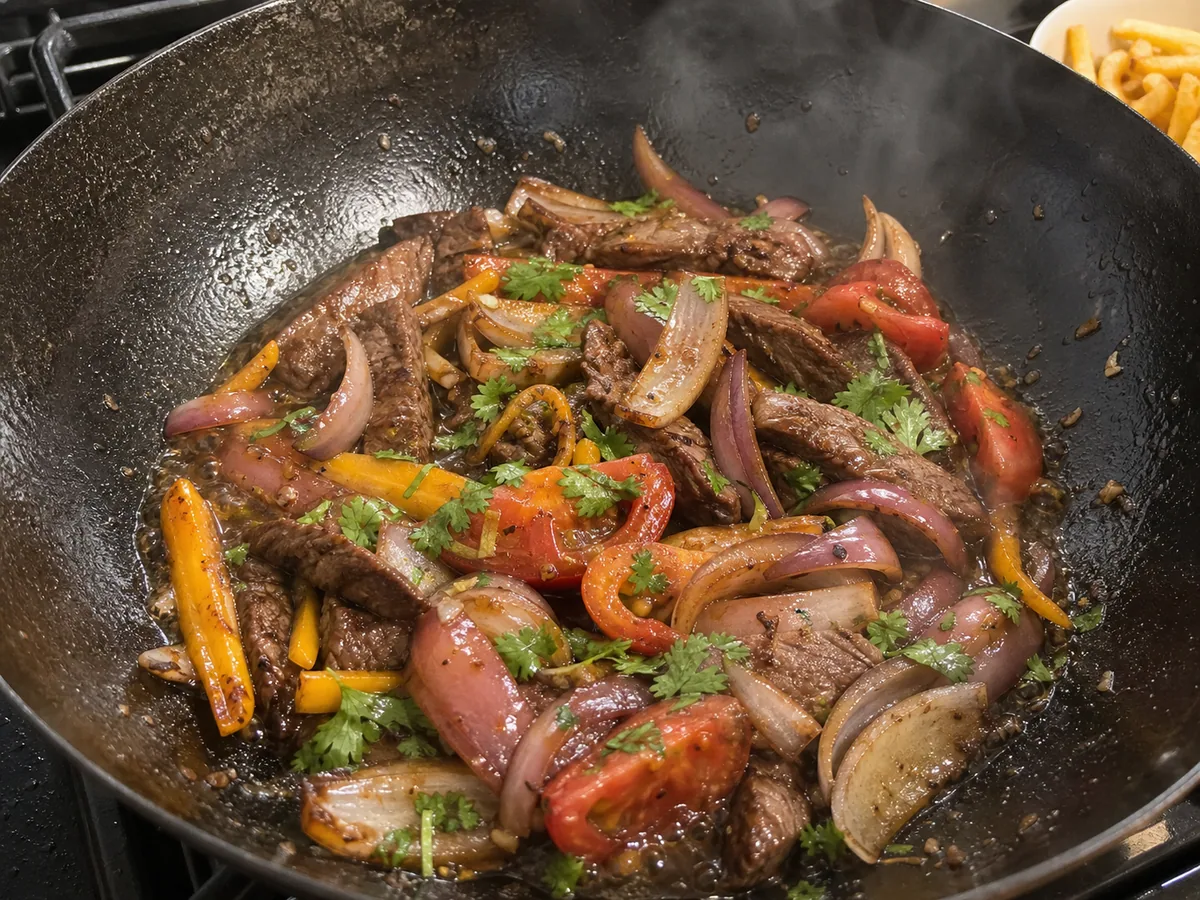
Keep the pan over high heat. Add 1 large red onion and 1 ají amarillo chile and stir-fry for about 2 minutes, until the edges are lightly charred but the onion still has bite. Add 3 garlic cloves and stir for 20 seconds. Add 3 medium Roma tomatoes and cook for about 1 minute, tossing gently so the wedges stay intact. Pour in the mixture of 45 ml of low-sodium soy sauce (contains soy and wheat) and 30 ml of red wine vinegar and let it bubble for 30 seconds. Return the rested beef and any juices to the pan, toss for 30 seconds, and remove from the heat. Fold in 10 g of fresh cilantro. Spoon the saltado beside the rice and serve with the crisp potatoes, keeping the fries mostly out of the sauce so they retain their crunch.
02:00


Smart Substitutions
- No ají amarillo? Use 1 teaspoon ají amarillo paste in the soy-vinegar mixture; increase to 2 teaspoons for a stronger chile flavor.
- No top sirloin? Use flank steak, strip steak, or beef tenderloin, cutting across the grain so the strips stay tender.
- Only regular soy sauce? Use 2 tablespoons regular soy sauce in place of the 3 tablespoons low-sodium soy sauce, and reduce the kosher salt to 1/4 teaspoon (1.5 g).
- Need a faster potato option? Use 1.5 pounds (700 g) thick-cut frozen fries and cook them according to the package directions while the rice cooks.
Tips and Variations
- Dry beef browns more readily, so blot the surface well before seasoning it.
- Cook the beef in batches; crowding cools the pan and turns the sear into a simmer.
- Choose firm tomatoes and add them near the end so the wedges stay distinct while releasing a little juice into the sauce.
What Went Wrong?
- Beef steamed instead of browning Let the pan heat longer and cook smaller batches with space between the strips.
- Potatoes are pale or soft Spread them in one layer, turn them once, and give them a few extra minutes at 230°C (450°F) until the edges are crisp.
- Sauce is watery Move the solids to the side and boil the liquid over high heat for 30 to 60 seconds before tossing everything together.
- Onion and tomato turned soft Shorten the final stir-fry and keep the heat high so the vegetables char at the edges without slowly cooking through.
Nutrition Estimate
- Fiber: 5 g per serving
- Sodium: 785 mg per serving
Nutrition disclaimer:This recipe is provided for general cooking information only. Nutrition values are estimates and may vary by ingredients, brands, preparation methods, and serving sizes. Check ingredient labels and follow appropriate food-safety practices. This content is not medical, dietary, allergy, or professional food-safety advice.
FAQ
Found an error or have a suggestion?
Help us improve this recipe. Send us your feedback and include the recipe name so we can take a look.