Method
Make the pastry
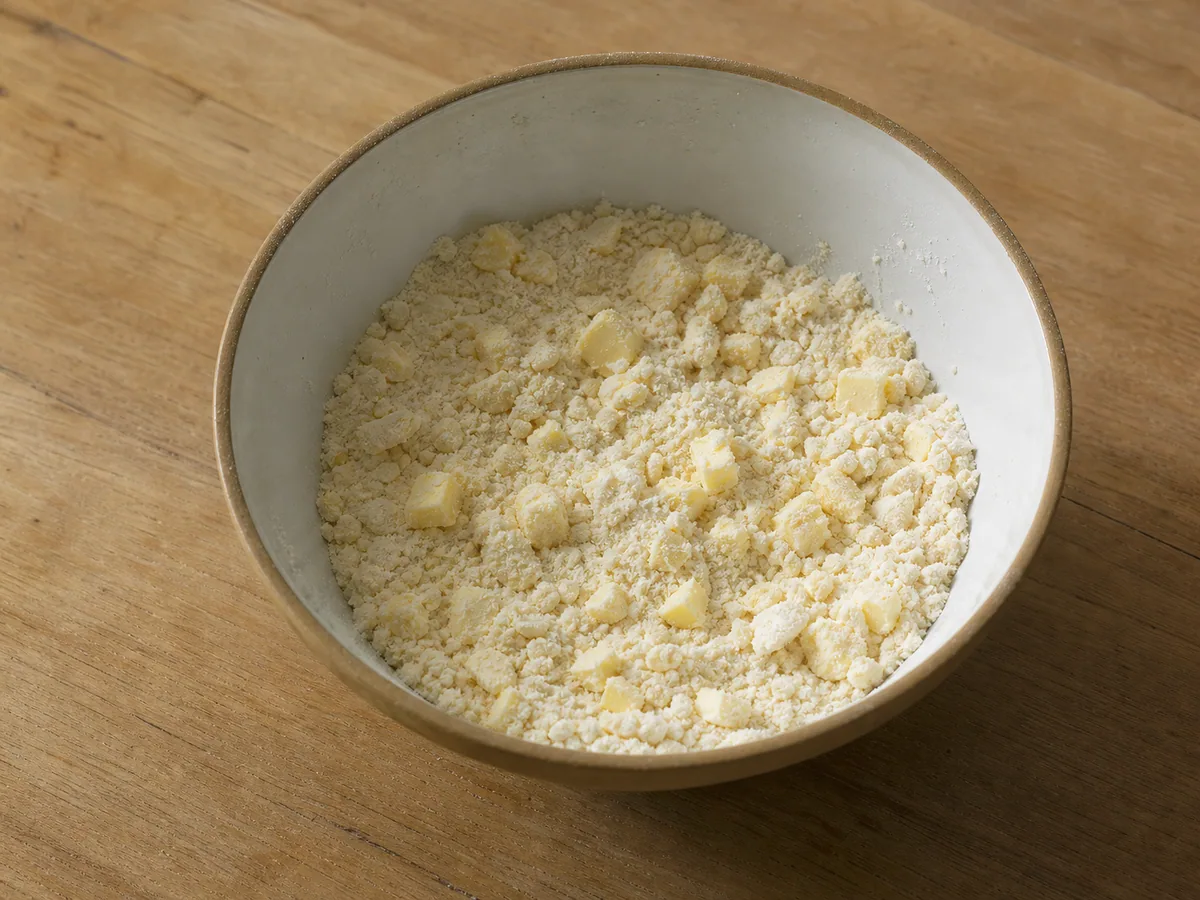
Whisk 375 g of all-purpose wheat flour with 3 g of kosher salt for pastry in a wide bowl. Cut 225 g of unsalted butter into 1 cm cubes, add it to the bowl, and work it into the flour with a pastry cutter or fingertips until most pieces are pea-sized and a few are slightly larger. Drizzle in 120 ml of cold water for pastry while tossing with a fork, stopping as soon as the dough holds together when pressed. Divide it into two discs, making one slightly larger for the base. Cover the discs with an upturned bowl and let them rest in a cool spot for 20 minutes.
20:00Prepare the vegetables and brown the meat
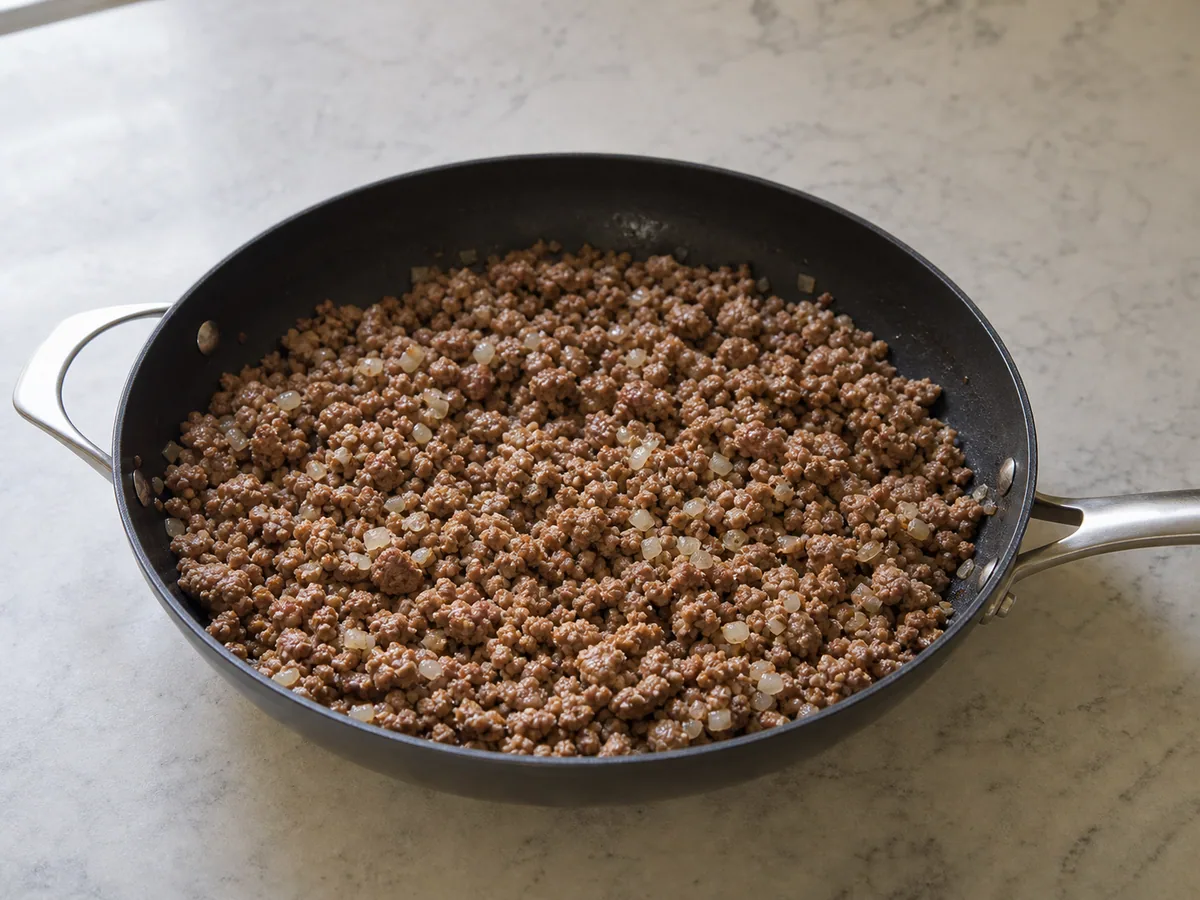
Chop 200 g of yellow onion into small pieces. Peel 250 g of russet potato and grate it coarsely into a separate bowl. Set a wide, heavy pot over medium heat, add 450 g of lean ground pork, 225 g of lean ground beef, and 200 g of yellow onion, and cook for 10 to 12 minutes, breaking the meat into fine crumbles and stirring often. Begin checking at 10 minutes and continue until no pink remains and a food thermometer inserted into several spots reads at least 71°C/160°F. Wash your hands with soap and clean any utensil or work surface that touched the raw meat with hot, soapy water before handling pastry or serving ingredients.
10:00Season and thicken the filling
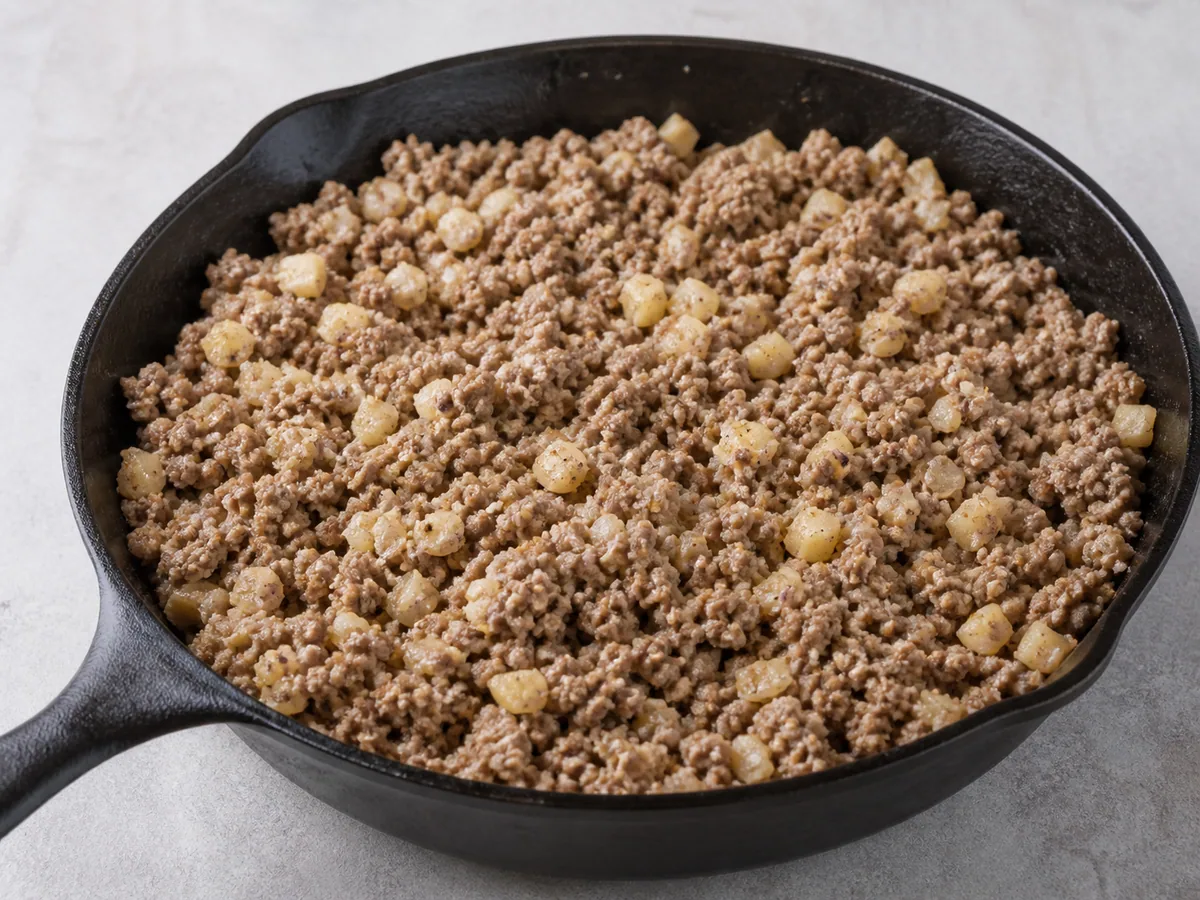
Stir 240 ml of low-sodium beef stock, 250 g of russet potato, 6 g of kosher salt for filling, 1 g of dried summer savory, 1/2 g of dried thyme, 1/2 g of ground cinnamon, 0.3 g of ground cloves, 1/2 g of ground nutmeg, and 1 1/2 g of black pepper into the cooked meat. Bring the mixture to a gentle simmer, then reduce the heat to medium-low and cook uncovered for 15 to 18 minutes, stirring often. Begin checking at 15 minutes and continue until the potato is tender and the filling is moist but no liquid pools when a spoon is drawn across the bottom. Taste and adjust only after the stock has reduced.
15:00Cool the filling and heat the oven
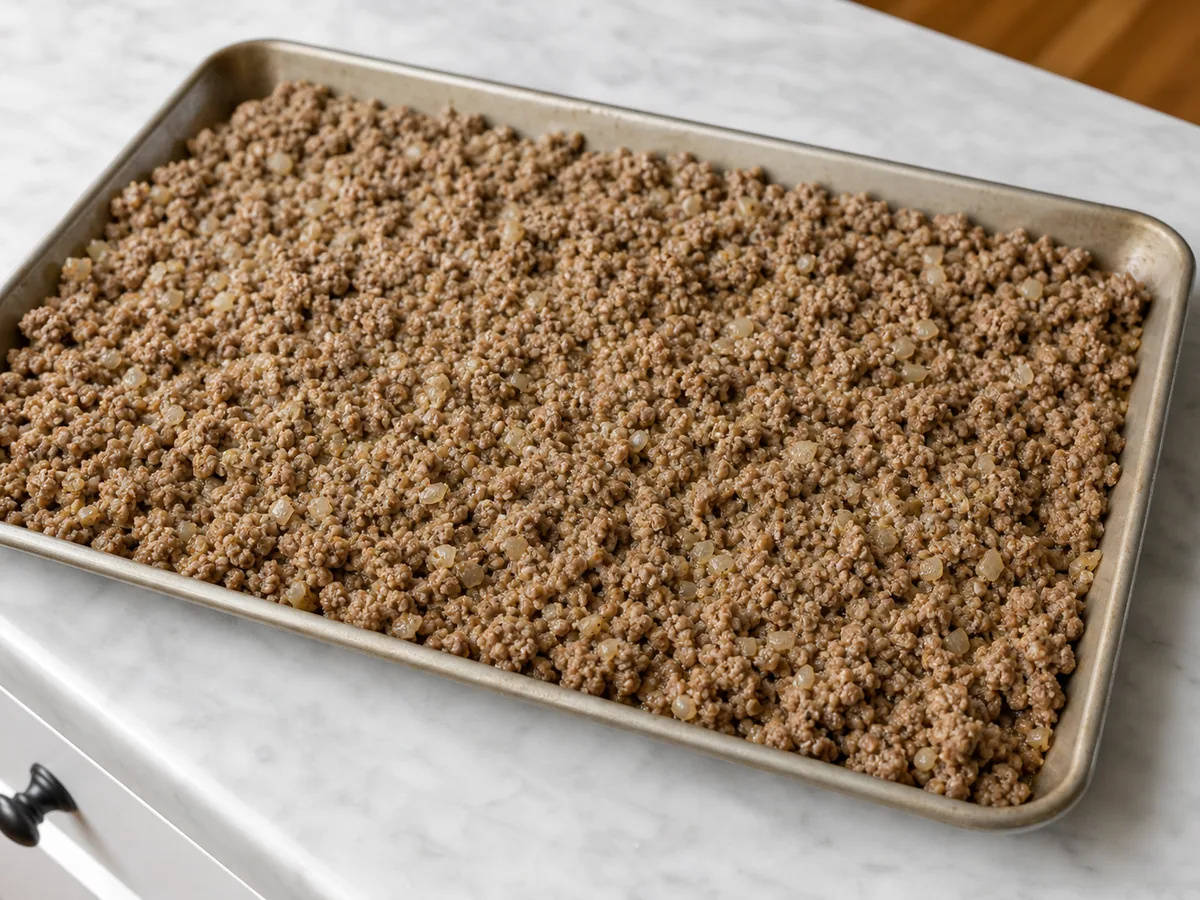
Spread the filling on a rimmed tray so steam can escape and let it stand for about 20 minutes, until warm rather than hot. Position a rack in the lower third of the oven and heat the oven to 200°C (400°F). Set a sturdy baking sheet on the rack to heat; it will help the bottom crust brown and catch any drips.
20:00Roll, fill, and seal the pie
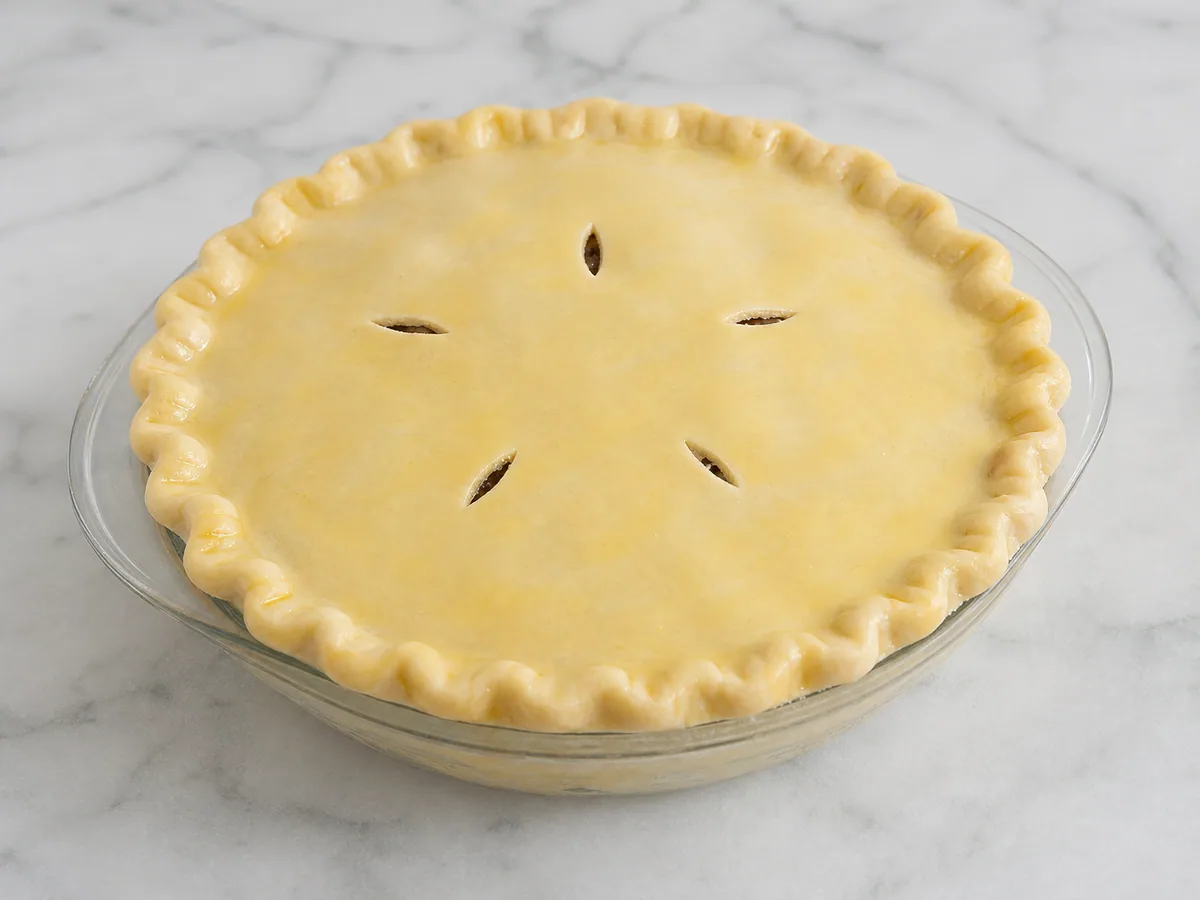
Use a 23 cm (9 in) pie plate (for 8 servings). For a scaled batch, choose one or more vessels that keep the filling at a similar depth. On a lightly floured surface, roll the larger pastry disc into a circle wide enough to line the plate with a 2 cm overhang. Ease it into the plate without stretching, spoon in the warm filling, and level the top. Roll the second disc, place it over the filling, trim the edges, and crimp them firmly. Cut several steam vents in the centre. Whisk 1 large egg with 15 ml of water for egg wash and brush a thin, even coat over the top crust.
Start the bake at high heat
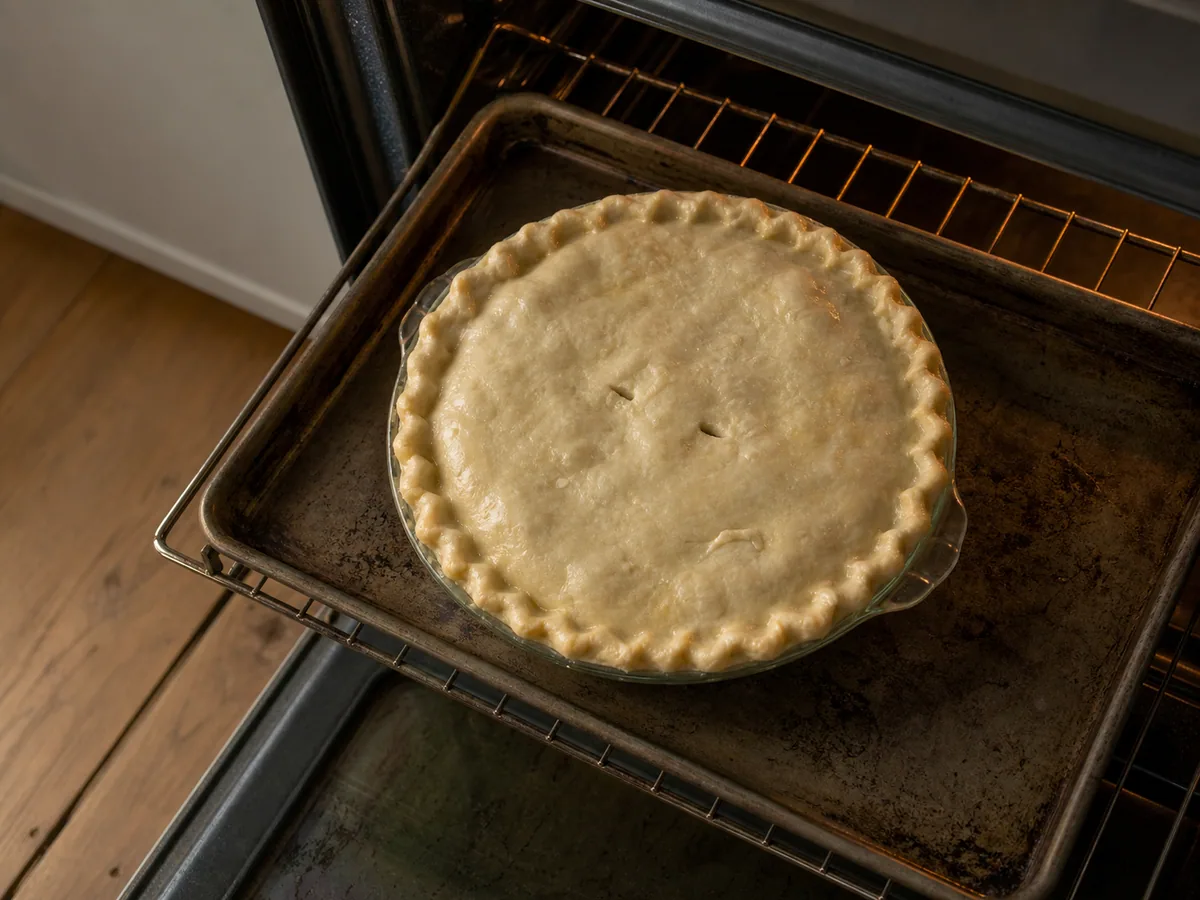
Place the pie on the hot baking sheet and bake at 200°C (400°F) for 15 minutes.
15:00Finish baking until deeply golden
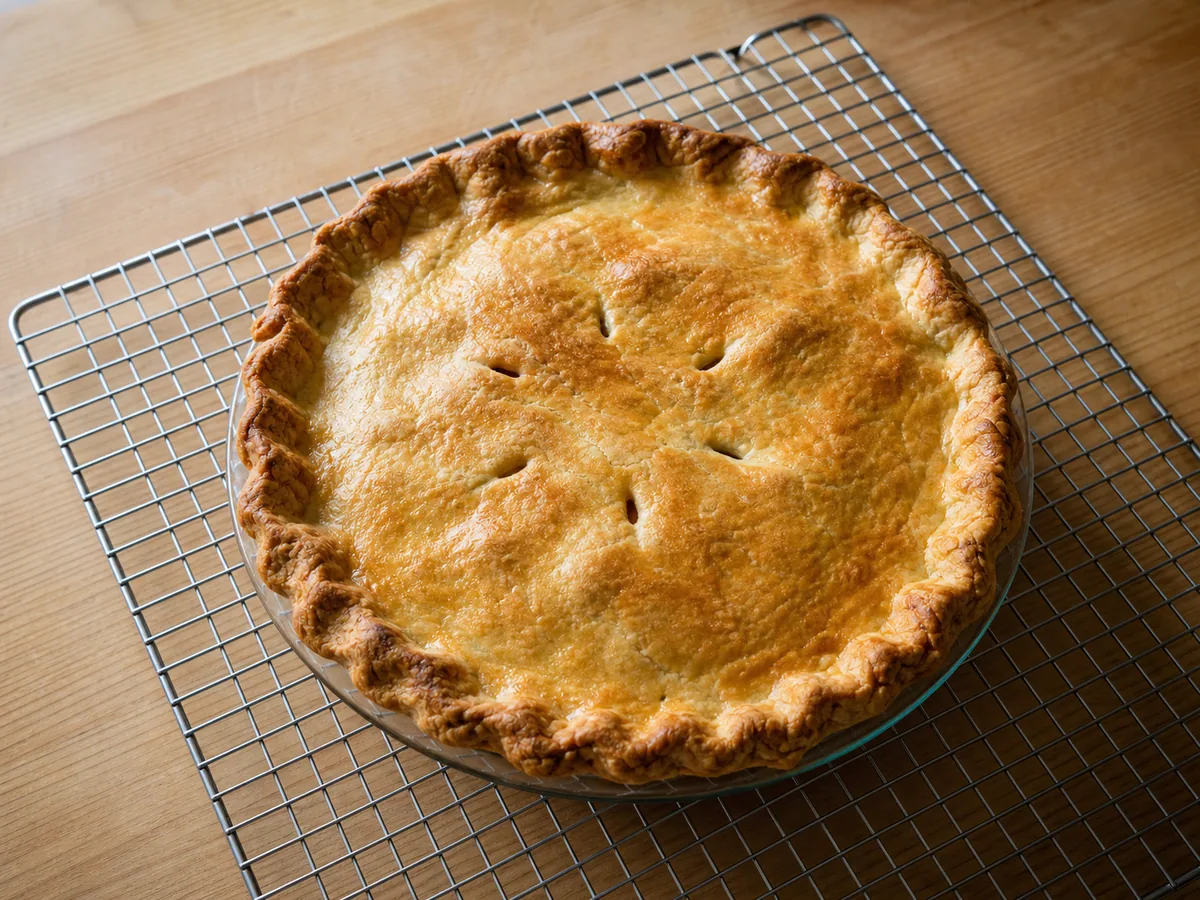
Reduce the oven to 190°C (375°F) without opening the door, then bake for 35 to 40 minutes more. Start checking after 35 minutes; the crust should be deeply golden, the vents should release steady steam, and the filling should bubble at the edges. Shield the rim loosely with foil if it darkens before the centre is ready.
35:00Let the pie settle and serve
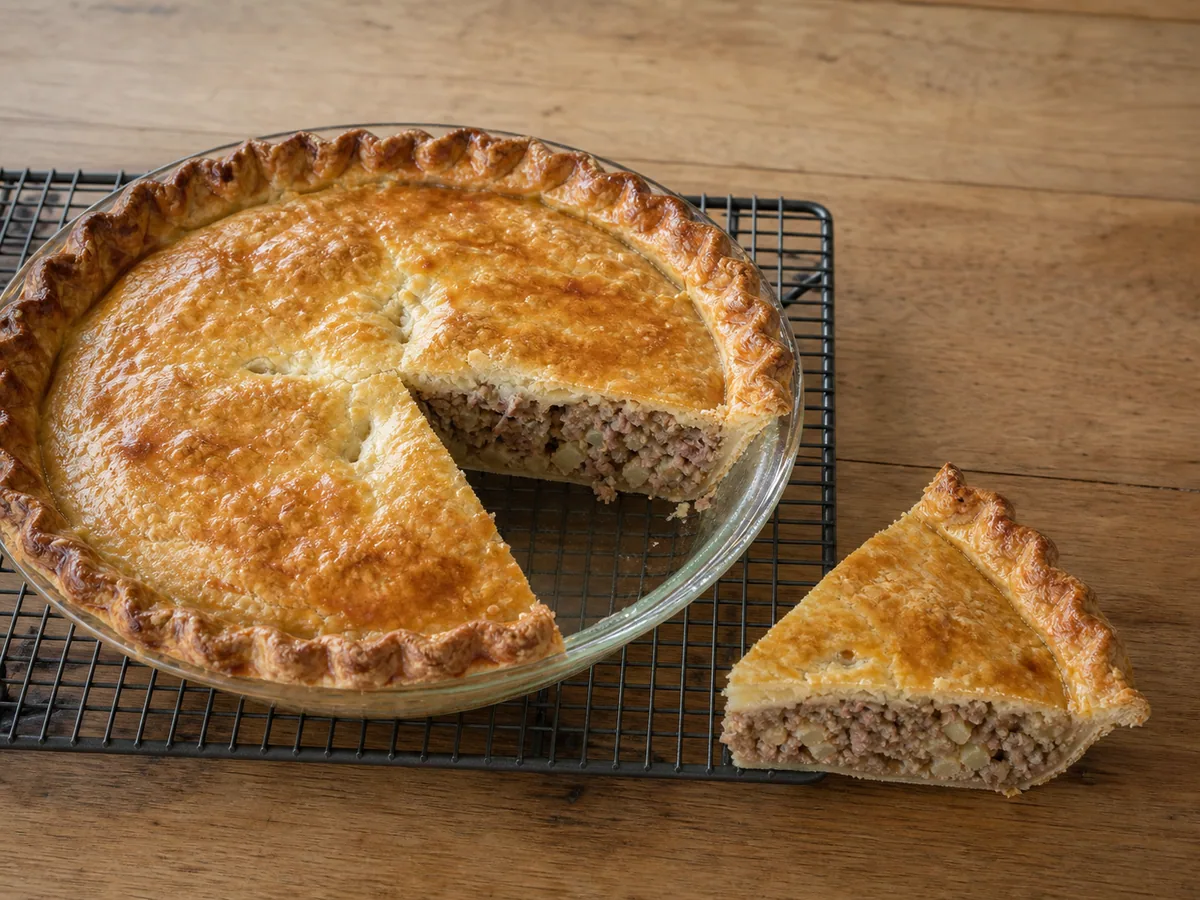
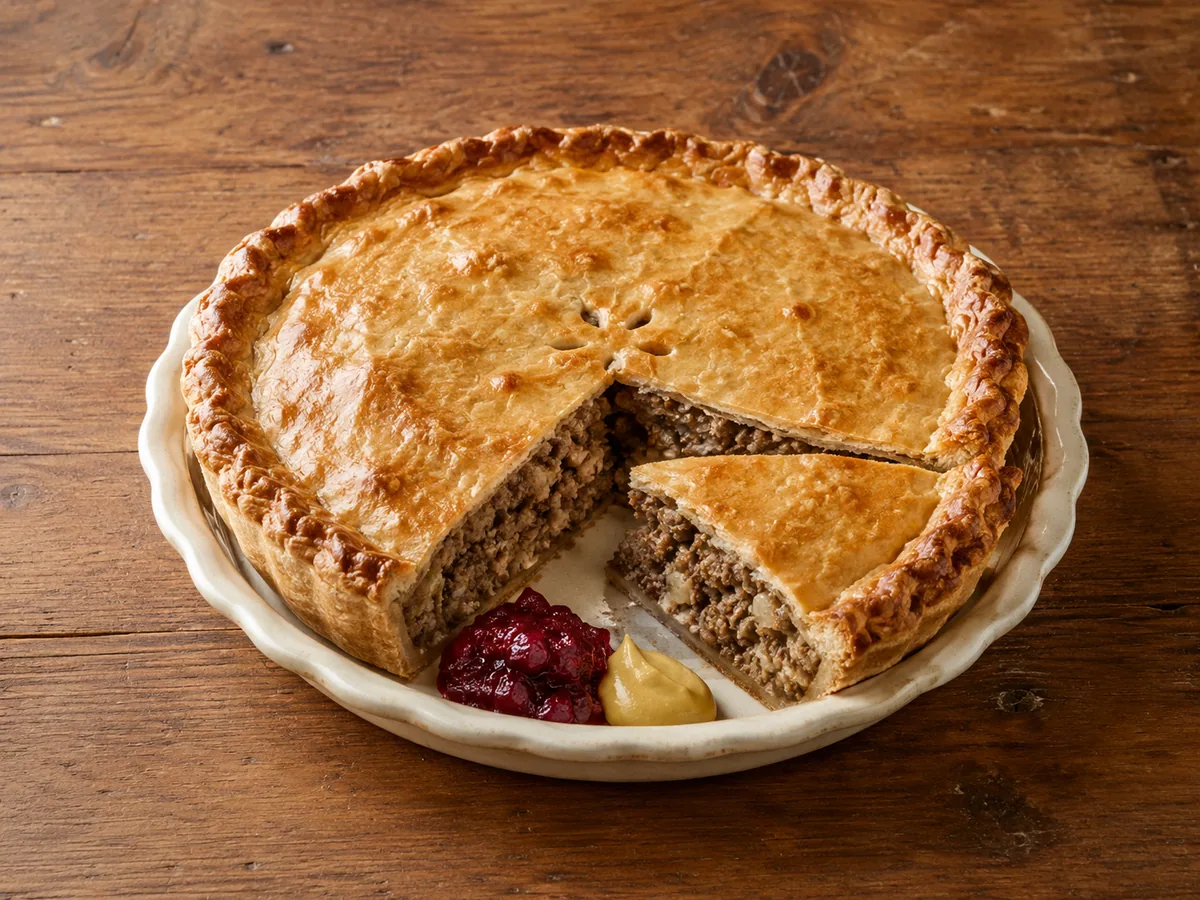
Set the pie on a rack and let it stand for 15 minutes so the filling firms enough for clean slices. Cut with a serrated knife and serve warm with cranberry relish (optional) and Dijon mustard (optional).
15:00


Smart Substitutions
- No summer savory? Use an equal amount of dried sage, or add another half measure of dried thyme for a simpler herbal note.
- Prefer an all-pork filling? Replace the ground beef with the same weight of lean ground pork and keep the seasoning unchanged.
- No beef stock? Use low-sodium chicken stock; it keeps the filling savoury without masking the spices.
- Using prepared pastry? Choose enough pastry for a double-crust pie and follow the same filling depth, venting, egg wash, and baking cues.
Tips and Variations
- Break the meat into small, even crumbles so the filling slices cleanly instead of falling into large chunks.
- Let visible steam subside before filling the crust; very hot filling softens the butter and makes the base harder to brown.
- Bake on the lower rack over a hot sheet so the bottom crust receives strong heat from the start.
What Went Wrong?
- Filling is loose Continue simmering uncovered, stirring often, until a spoon drawn across the pot leaves a clear trail for a moment.
- Pastry cracks while rolling Let it rest for 5 minutes, then press the crack together and roll with light strokes from the centre outward.
- Bottom crust is pale Keep the pie in the lower third of the oven on the preheated sheet and allow the crust to reach a deep golden colour before removing it.
- Crust edge browns too quickly Cover only the rim loosely with foil so the centre can continue colouring and venting.
Nutrition Estimate
- Fiber: 3 g per serving
- Sodium: 580 mg per serving
Nutrition disclaimer:This recipe is provided for general cooking information only. Nutrition values are estimates and may vary by ingredients, brands, preparation methods, and serving sizes. Check ingredient labels and follow appropriate food-safety practices. This content is not medical, dietary, allergy, or professional food-safety advice.
FAQ
Found an error or have a suggestion?
Help us improve this recipe. Send us your feedback and include the recipe name so we can take a look.