Method
Prepare the greens and aromatics
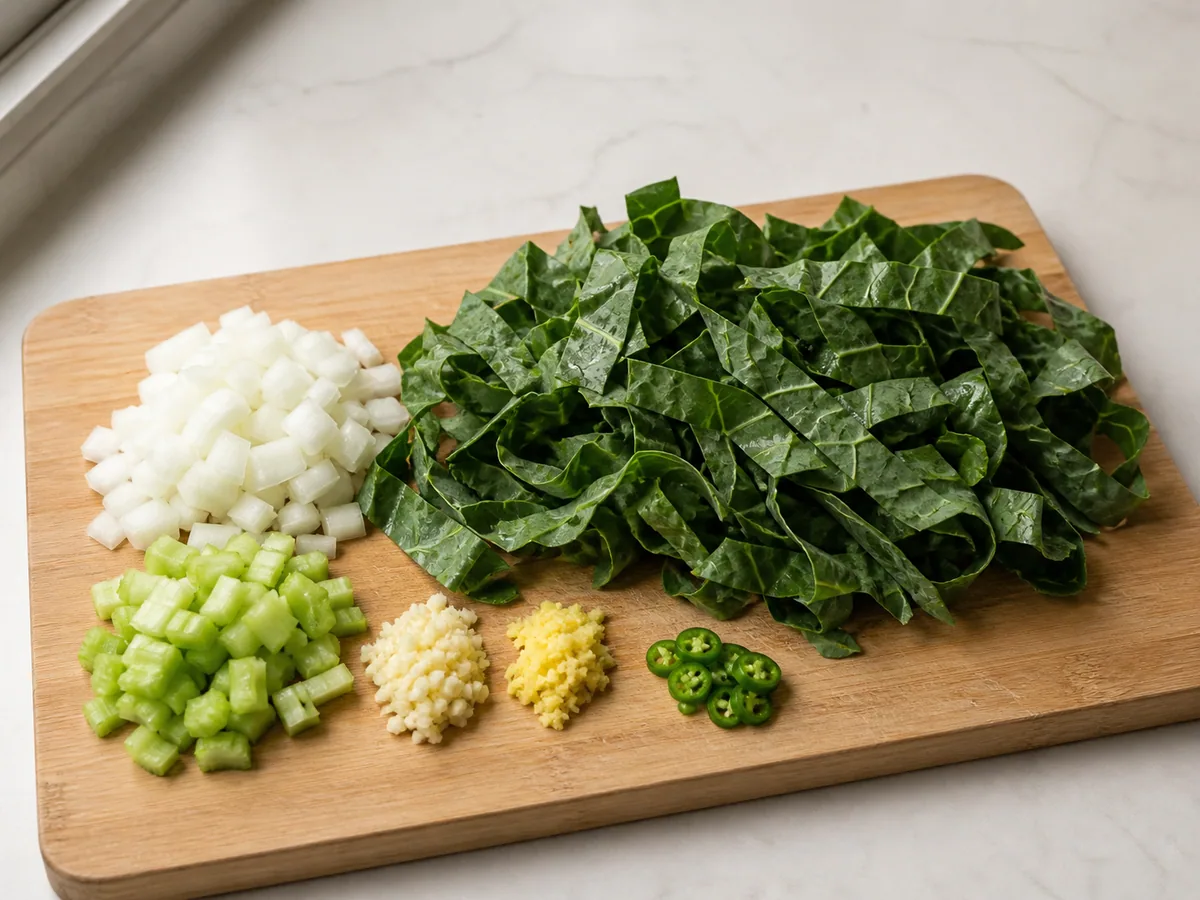
Separate the thick stems from 680 g of collard greens. Slice the stems into thin pieces and cut the leaves into 1 cm (1/2 in) ribbons. Submerge the cut greens in a large bowl of cool water, swish well, and lift them out so grit stays behind. Repeat with fresh water until the bowl is clean, then drain thoroughly. Thinly slice 200 g of yellow onion, mince 4 garlic cloves, grate 20 g of fresh ginger, and stem 1 jalapeno pepper. For gentler heat, remove the jalapeno seeds and white ribs, then finely chop it.
Soften the onion and stems
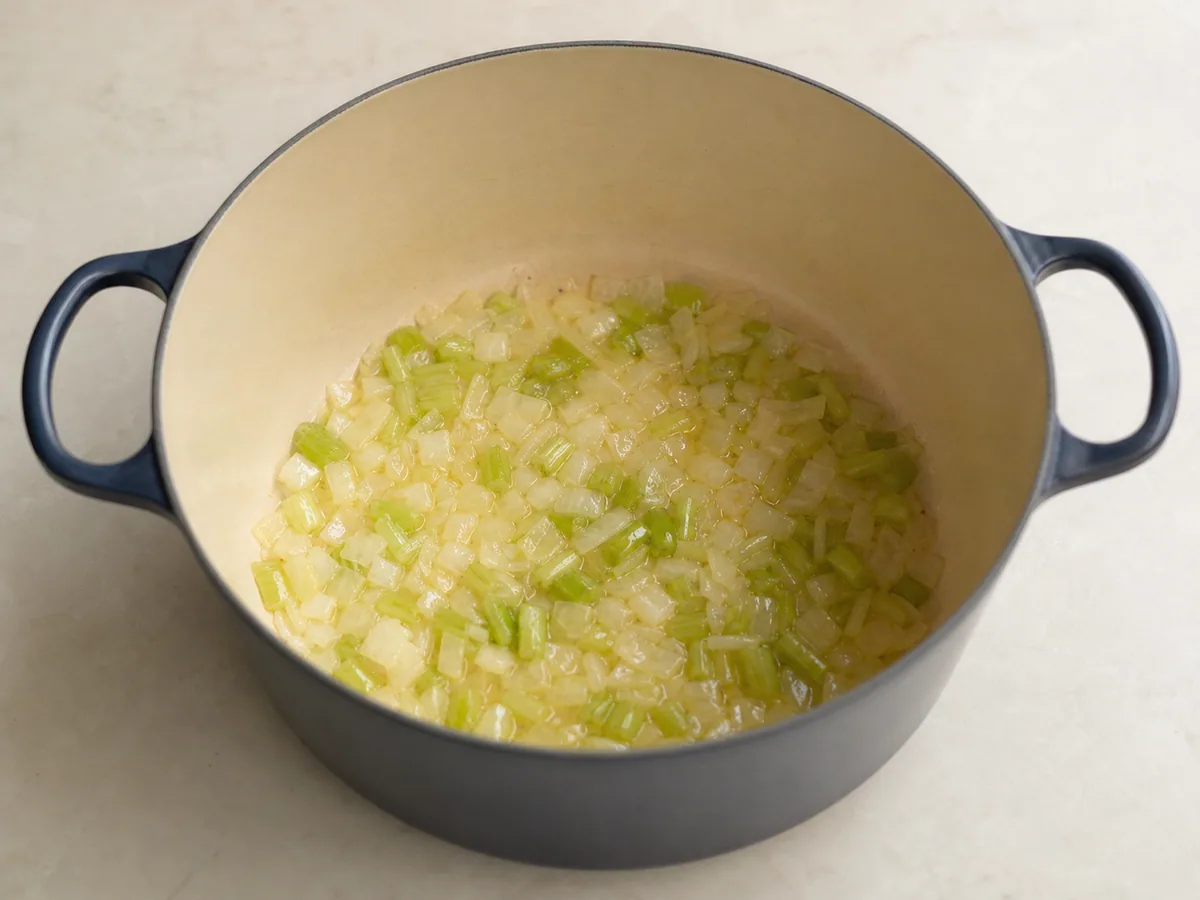
Set a wide, heavy pot over medium heat. Add 30 ml of olive oil, then add 200 g of yellow onion and the sliced collard stems. Cook for 8 to 10 minutes, stirring often, until the onion is soft and beginning to turn golden. Reduce the heat if the edges darken quickly.
08:00Build the aromatic base
Add 4 garlic cloves, 20 g of fresh ginger, and 1 jalapeno pepper to the pot with 2 g of ground cumin, 1 g of ground cardamom, and 1/2 g of black pepper. Cook for 1 minute, stirring constantly, until fragrant but not browned.
01:00Braise the greens until tender
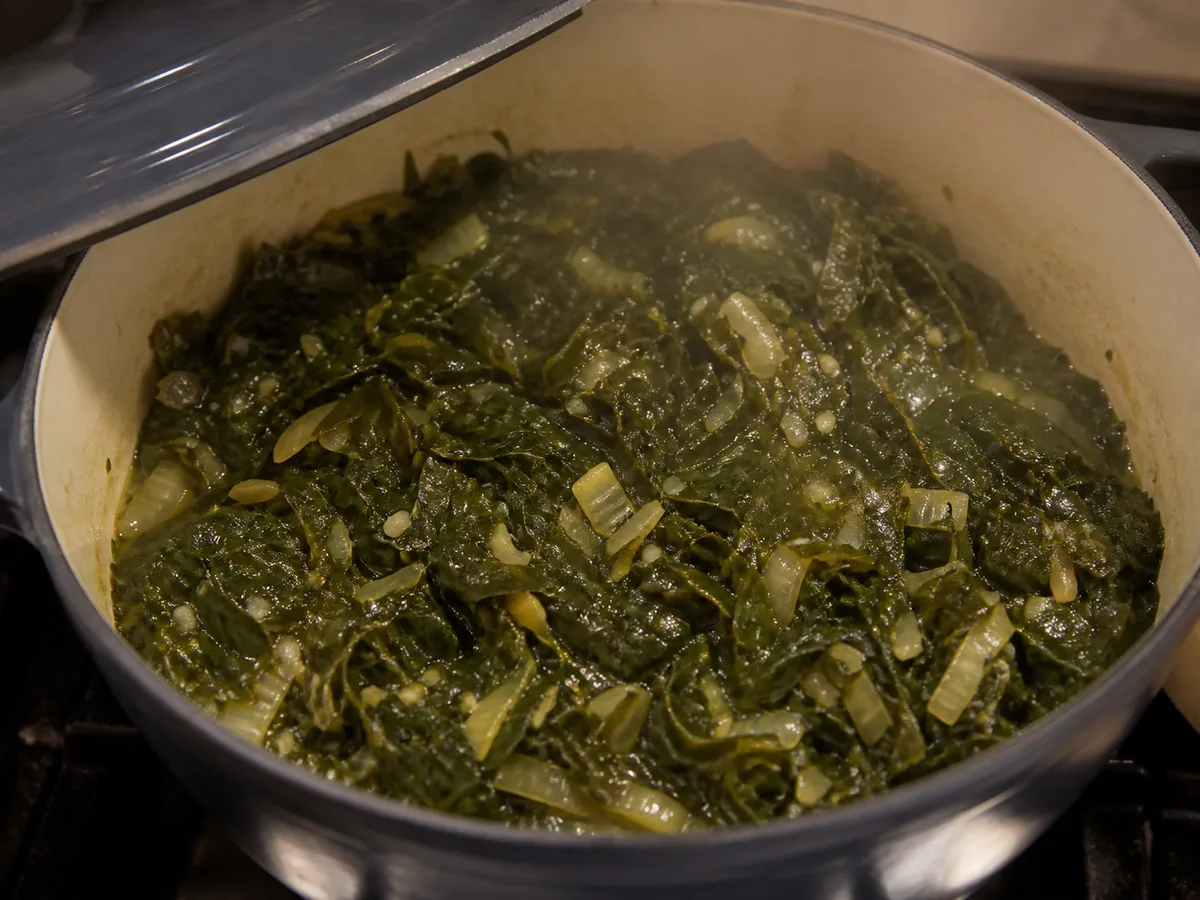
Add 680 g of collard greens in two or three batches, stirring until each batch wilts enough to make room for the next. Stir in 6 g of fine sea salt and 120 ml of water, scraping the bottom of the pot to loosen the aromatic mixture. Cover, reduce the heat to medium-low, and simmer gently for 20 to 25 minutes, stirring twice, until the stems and leaves are tender but still hold their shape. Begin checking at 20 minutes, and add a small splash of water only if the pot dries before the greens soften.
20:00Finish and serve
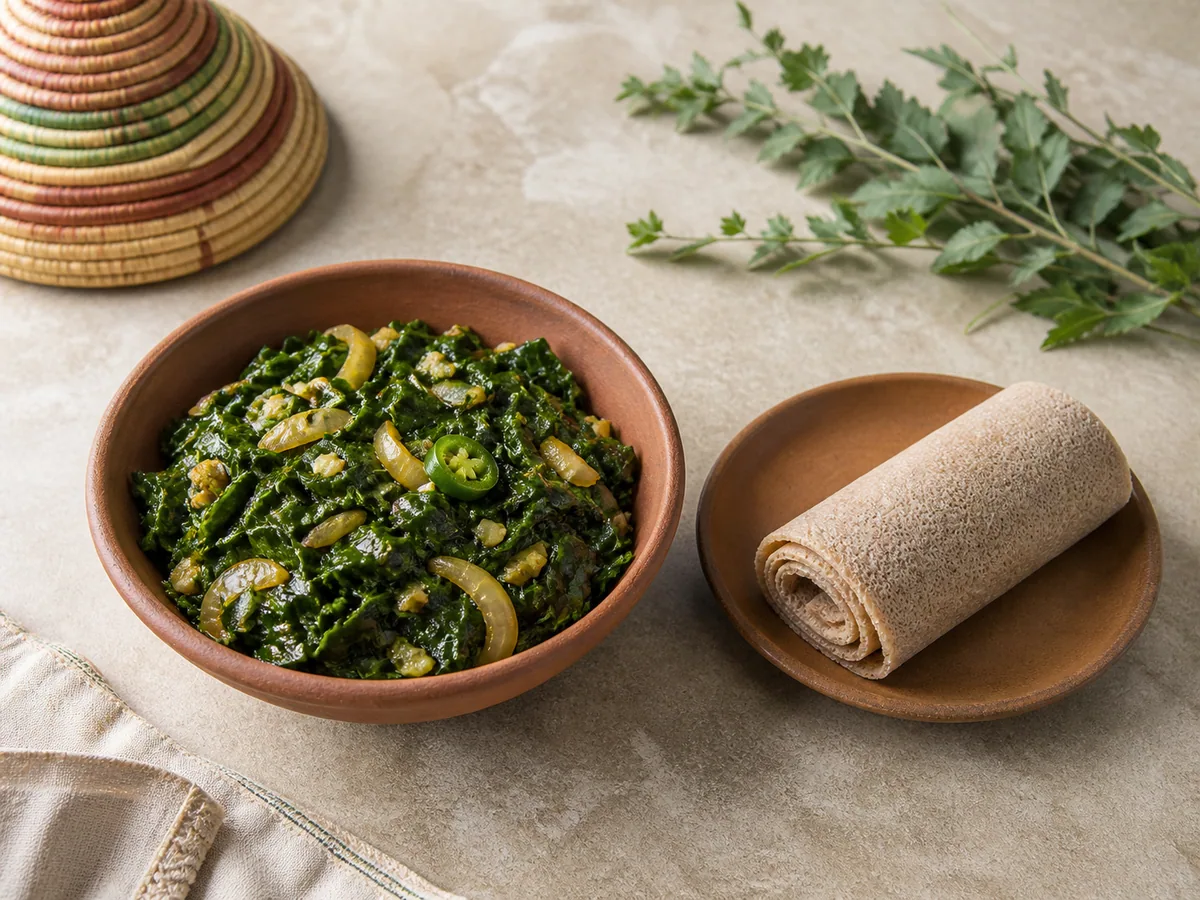
Uncover and cook for 3 to 5 minutes, stirring, until excess liquid evaporates and the greens look glossy. Begin checking at 3 minutes. Stir in 15 ml of fresh lemon juice, taste, and adjust the seasoning only if needed. Serve warm with injera (optional).
03:00


Smart Substitutions
- No collard greens? Use mature kale and begin checking about 5 minutes earlier because its leaves usually soften faster.
- No ground cardamom? Use ground korarima for a more distinctly Ethiopian aroma, or use a small pinch of allspice for a pantry-friendly alternative.
- No fresh ginger? Use 1/2 teaspoon ground ginger and add it with the cumin.
- Want niter kibbeh? Replace the olive oil with the same amount of niter kibbeh for a richer spiced-butter version; this substitution introduces a milk allergen.
Tips and Variations
- Lift the greens out of the wash water instead of pouring the water through them, which can carry settled grit back onto the leaves.
- Keep the braise at a gentle simmer so the stems soften before the leaf edges become ragged.
- Use a wide pot with a snug lid; the extra surface area helps the onion soften evenly and lets excess liquid evaporate quickly at the end.
What Went Wrong?
- Greens are still tough Add a small splash of water, cover again, and continue at a gentle simmer until the thickest stem pieces are tender.
- The pot is watery Cook uncovered over medium heat, stirring often, until the liquid reduces and lightly coats the greens.
- The aromatics taste bitter They likely browned too quickly. Lower the heat and start the aromatic base again before adding the greens.
- The flavor tastes muted Add a little more salt first, then a small squeeze of lemon to sharpen the ginger and cardamom.
Nutrition Estimate
- Fiber: 8 g per serving
- Sodium: 620 mg per serving
Nutrition disclaimer:This recipe is provided for general cooking information only. Nutrition values are estimates and may vary by ingredients, brands, preparation methods, and serving sizes. Check ingredient labels and follow appropriate food-safety practices. This content is not medical, dietary, allergy, or professional food-safety advice.
FAQ
Found an error or have a suggestion?
Help us improve this recipe. Send us your feedback and include the recipe name so we can take a look.