Method
Prepare the vegetables, aromatics, and beef
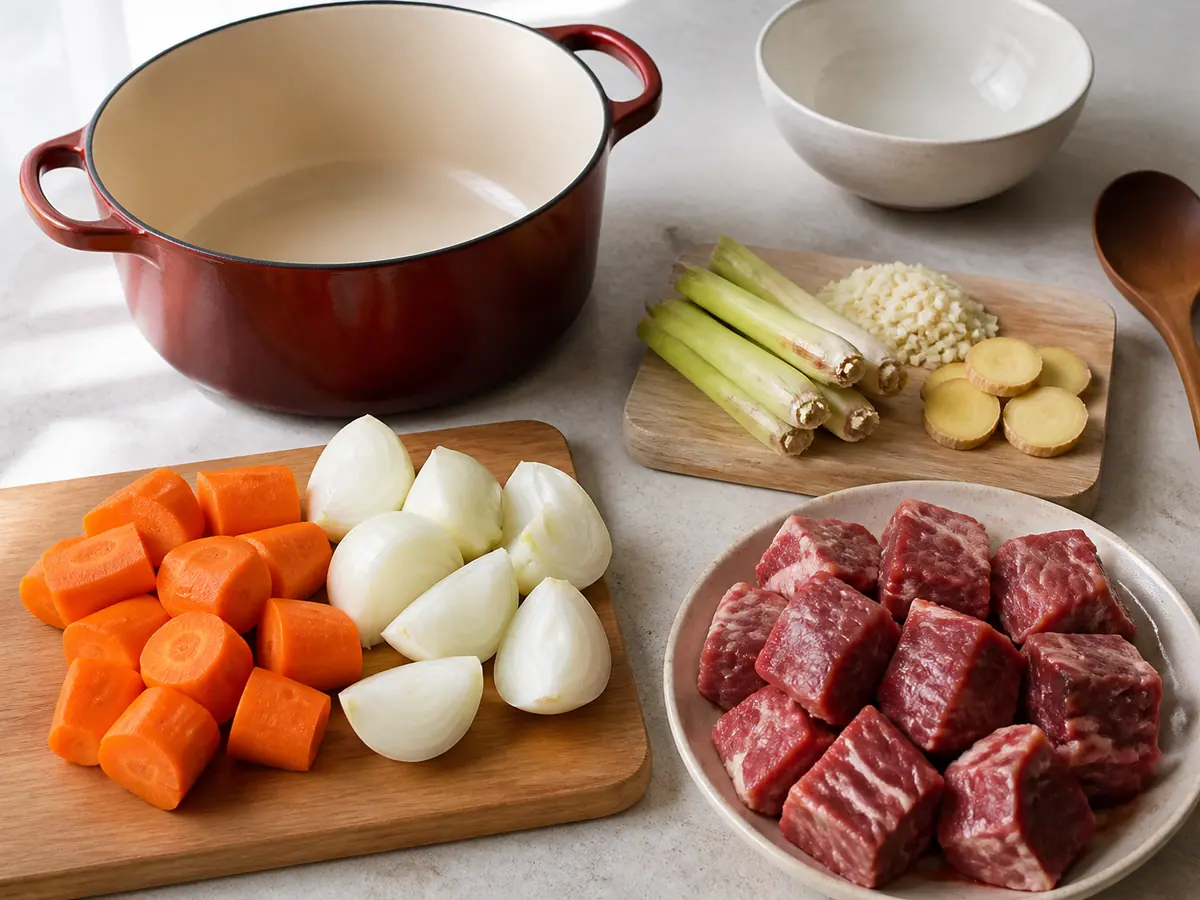
Peel 400 g of carrots and cut them into sturdy 4 cm (1½ in) pieces. Peel 200 g of yellow onion and cut it into thick wedges. Trim 3 stalks of fresh lemongrass, remove the dry outer layers, and bruise the stalks with the side of a knife. Peel 25 g of fresh ginger and slice it into coins. Peel and mince 5 garlic cloves. On a separate board, trim large exterior seams of fat from 800 g of beef chuck roast and cut it into 4 cm (1½ in) chunks. Wash your hands, knife, board, and work surface with hot soapy water after handling the raw beef and before touching ready-to-eat garnishes.
Season the beef
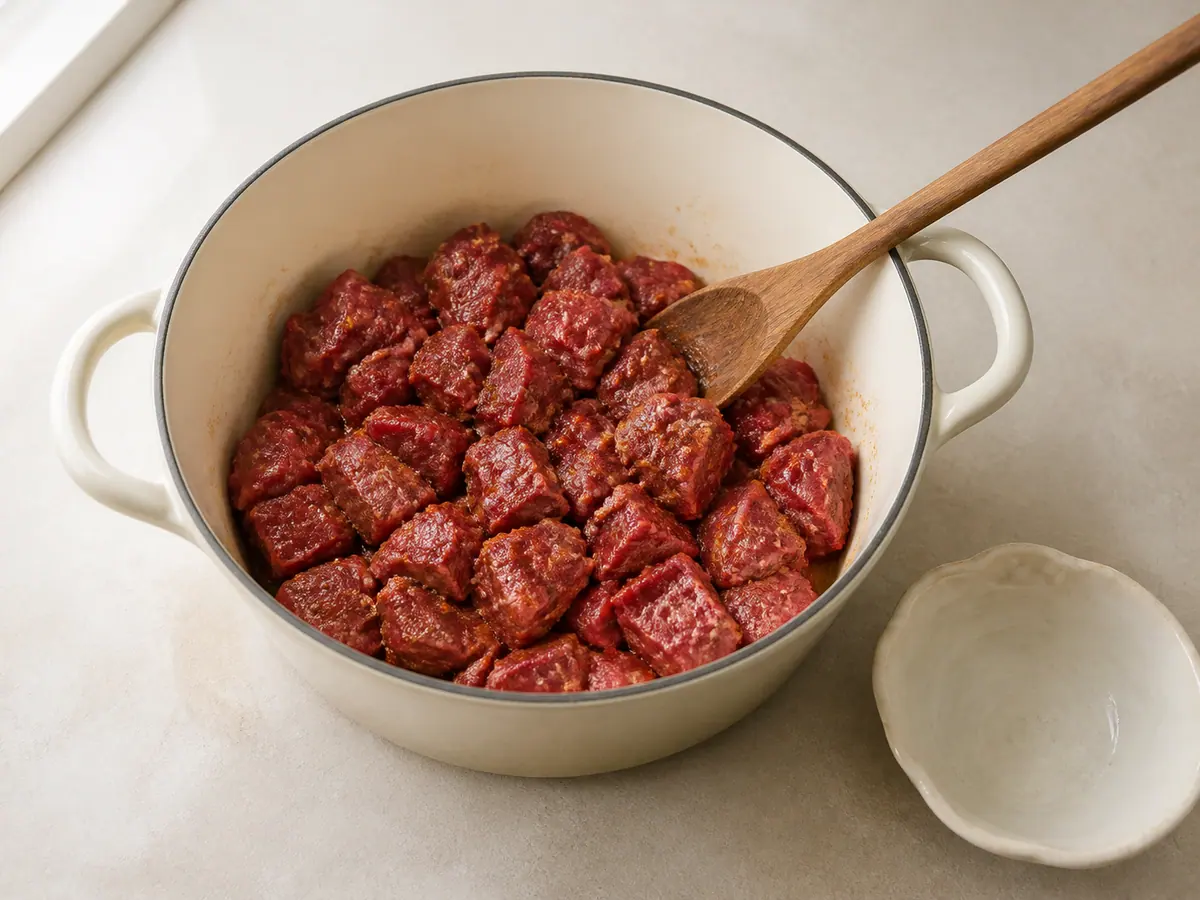
Put 800 g of beef chuck roast in a large bowl. Add 30 ml of fish sauce, 12 g of light brown sugar, 6 g of five-spice powder, 4 g of sweet paprika, 3 g of kosher salt, and 1 g of black pepper. Toss until every piece is evenly coated, then proceed directly to browning so the seasoning stays on the meat rather than collecting at the bottom of the bowl.
Brown the beef in batches
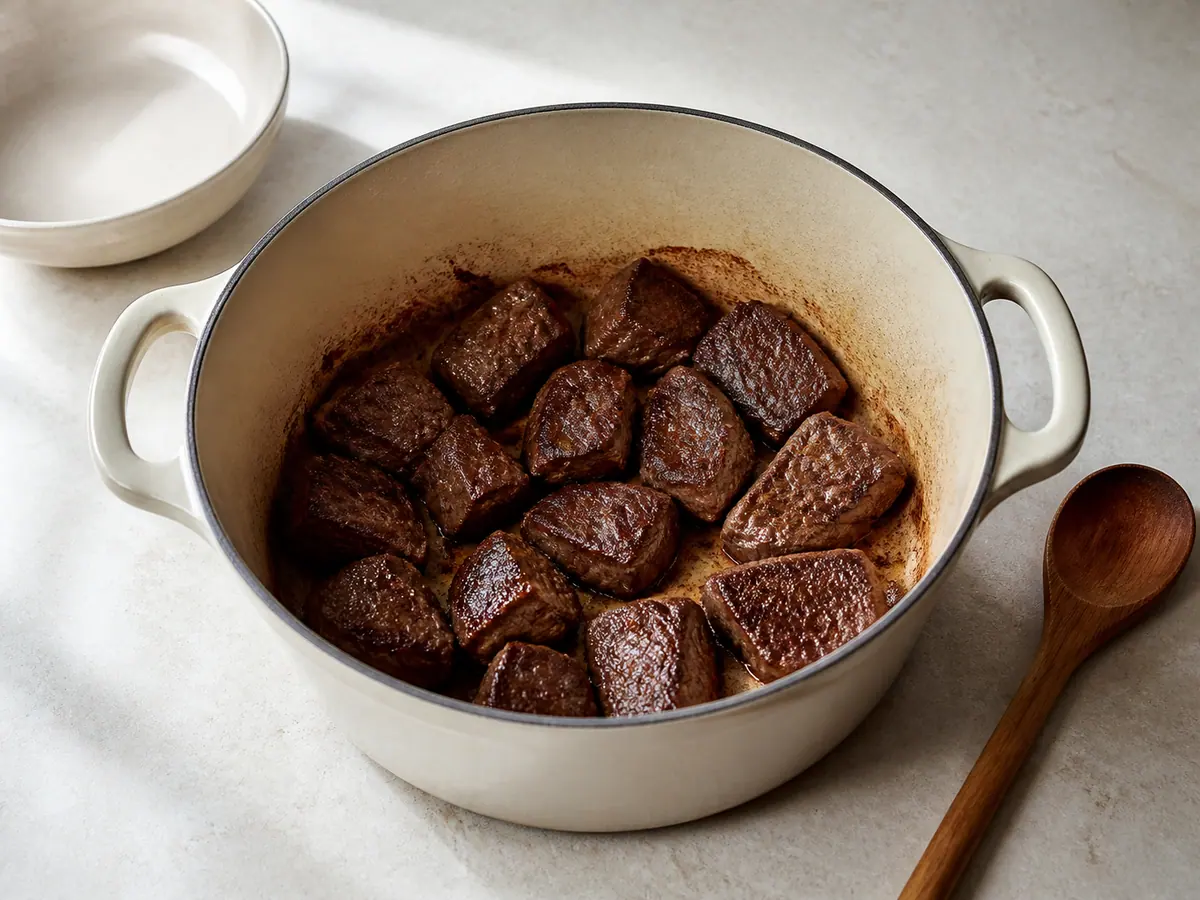
Heat a heavy lidded pot or Dutch oven over medium-high heat. Add 30 ml of neutral oil. When the oil shimmers, add the seasoned beef in a single uncrowded layer, working in batches. Brown two or three broad sides of each piece until a dark crust forms, about 8 to 12 minutes per batch. Transfer browned pieces to a clean plate; do not return cooked meat to the raw-beef bowl.
08:00Soften the onion and lemongrass
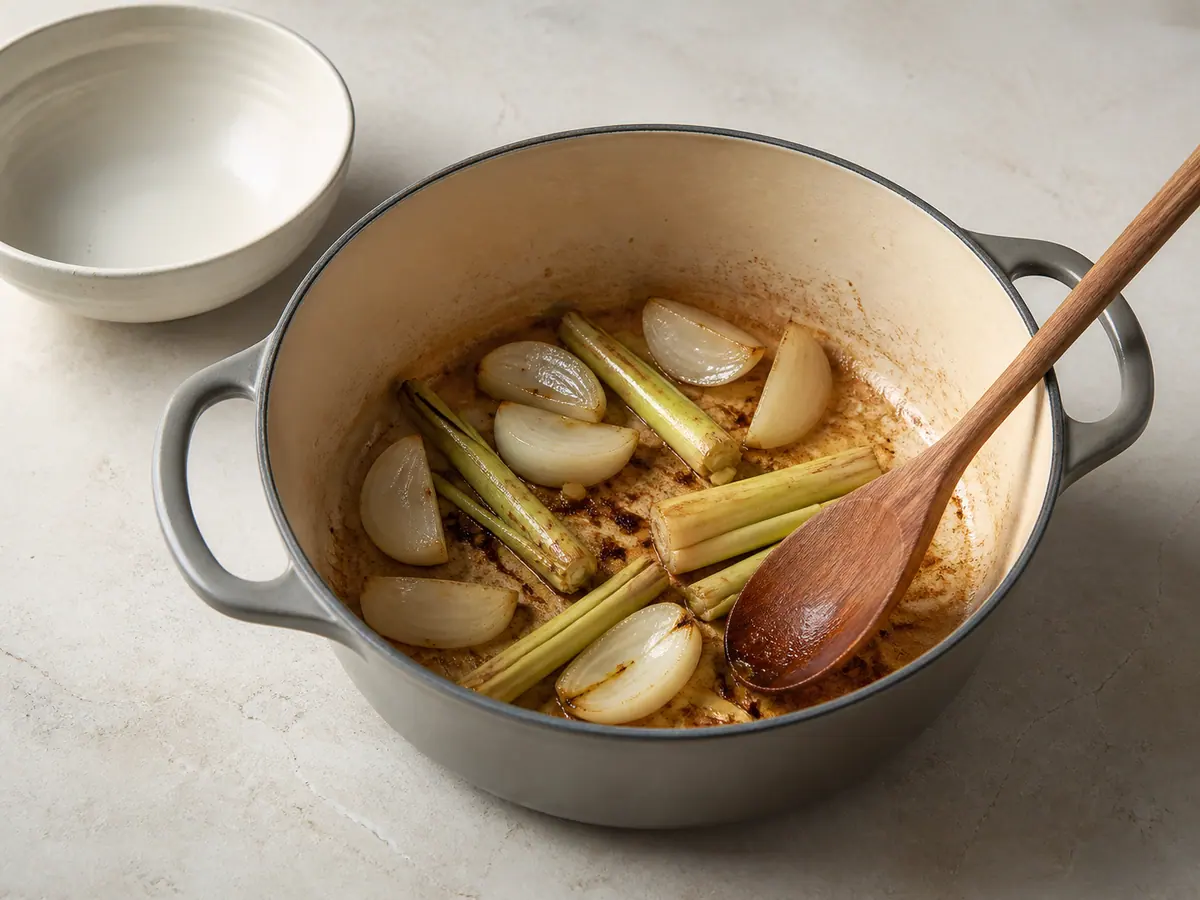
Lower the heat to medium. Add 200 g of yellow onion and 3 stalks of fresh lemongrass to the pot. Cook for 5 to 7 minutes, stirring and scraping the browned bits, until the onion edges soften and pick up color. Add a small splash of hot water only if the fond threatens to scorch.
05:00Build the aromatic braising liquid
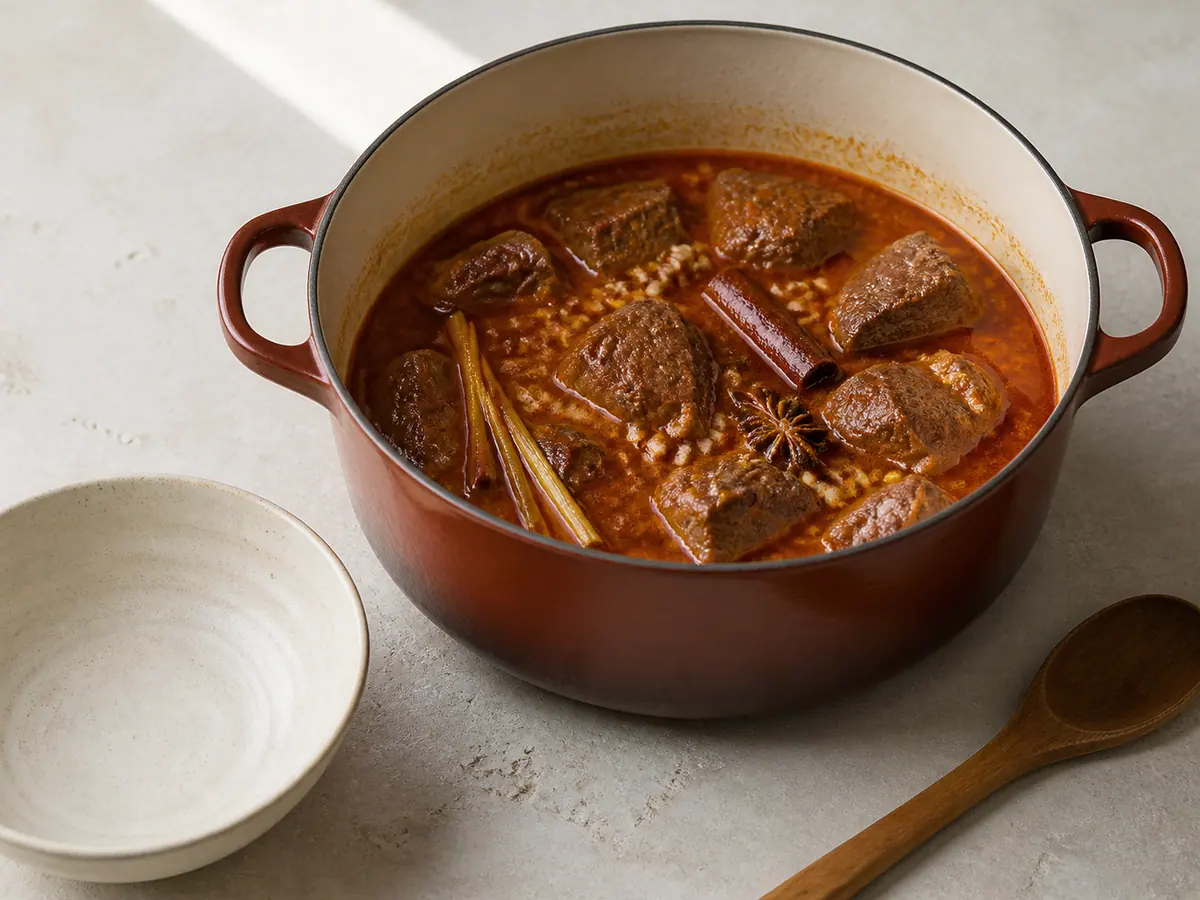
Add 5 garlic cloves, 25 g of fresh ginger, 3 whole of star anise, and 1 cinnamon stick. Stir for 1 minute, just until fragrant. Add 30 g of tomato paste and cook for another minute, stirring until it darkens slightly. Pour in 1200 ml of unsalted beef stock while scraping the bottom of the pot. Return the browned beef and any juices to the pot, bring the liquid to a steady simmer, then lower the heat so only small bubbles break the surface.
01:00Braise until the beef is tender
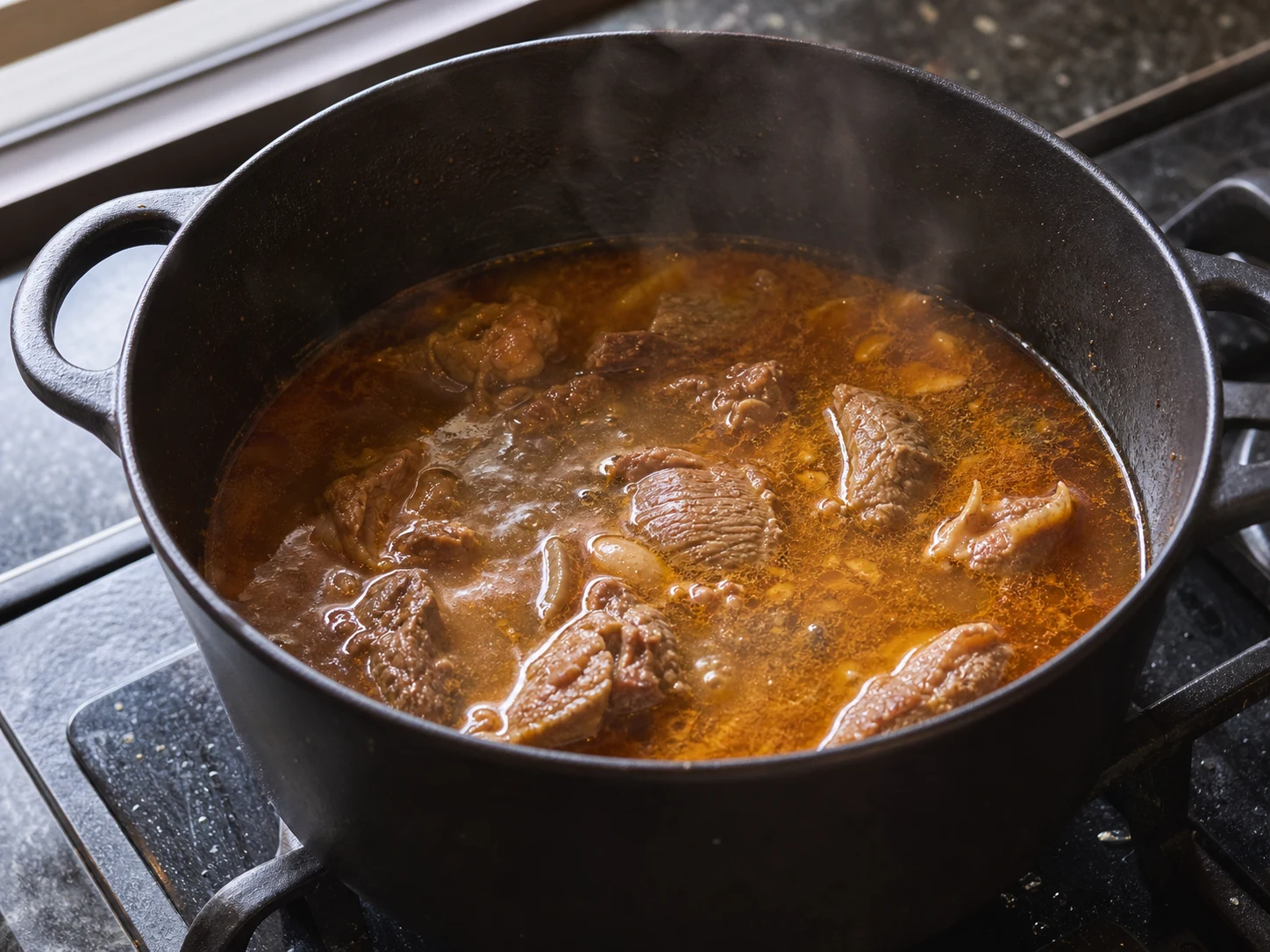
Cover the pot with the lid slightly ajar and maintain a gentle simmer for 90 to 120 minutes. Stir every 25 to 30 minutes and add a little hot water only if the beef is no longer mostly submerged. Begin checking at 90 minutes: a fork should enter the beef with little resistance. Use a clean food thermometer on a large piece to verify at least 63°C/145°F; the continued braise will normally carry it well beyond that safety threshold. Clean the thermometer before and after use.
90:00Add the carrots and finish the stew
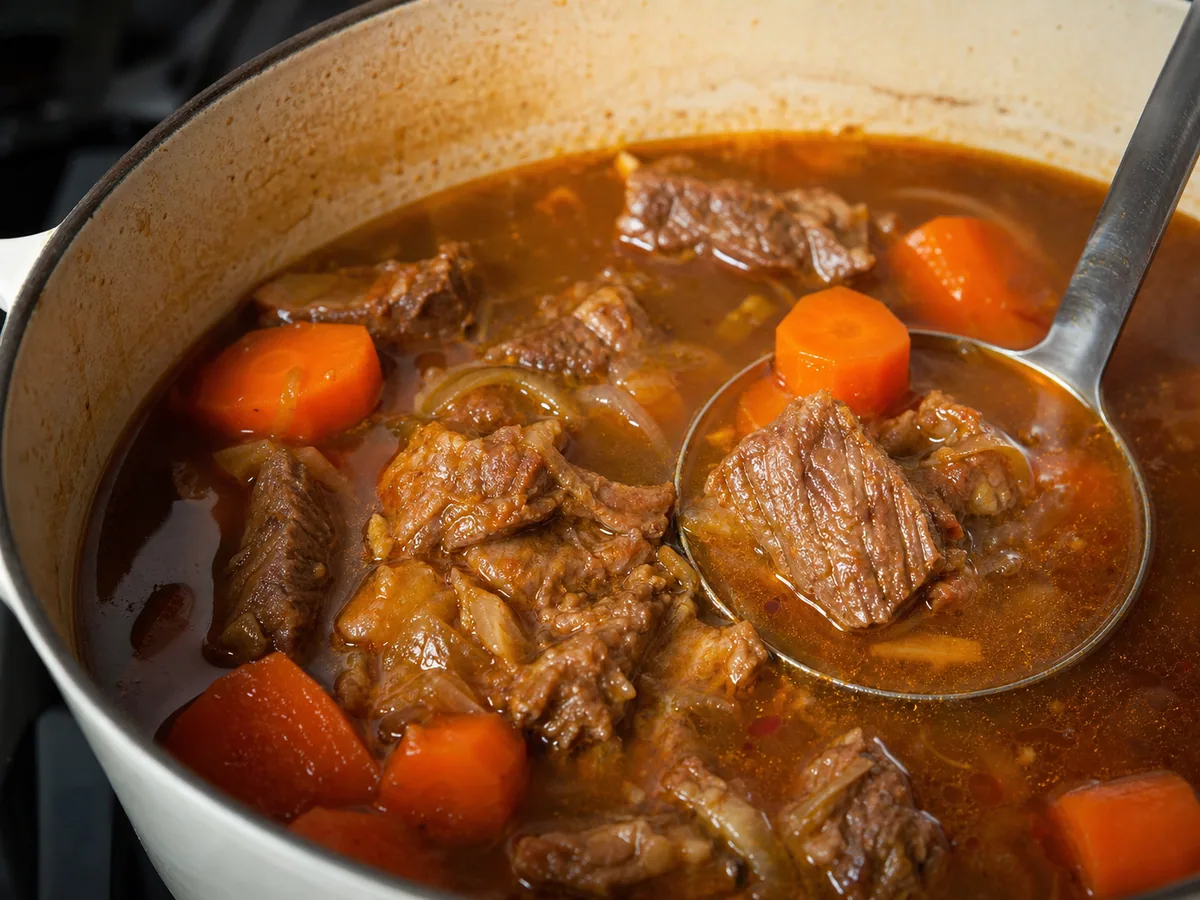
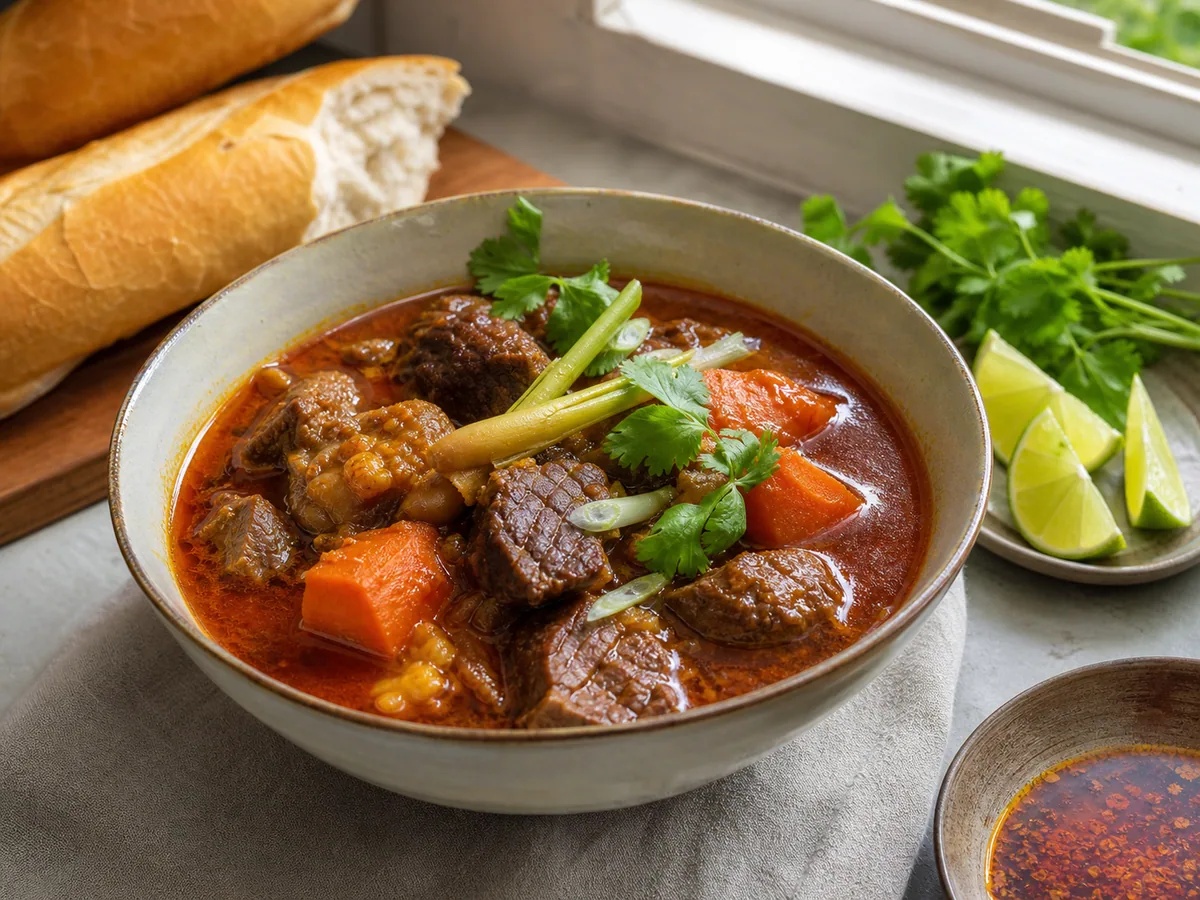
Add 400 g of carrots and press them into the broth. Simmer uncovered for 25 to 35 minutes, checking first at 25 minutes, until the carrots are tender at the center but still hold their shape and the broth lightly coats a spoon. Keep the heat gentle so the beef stays intact and the liquid remains clear rather than boiling cloudy.
25:00Finish the broth and serve with bread
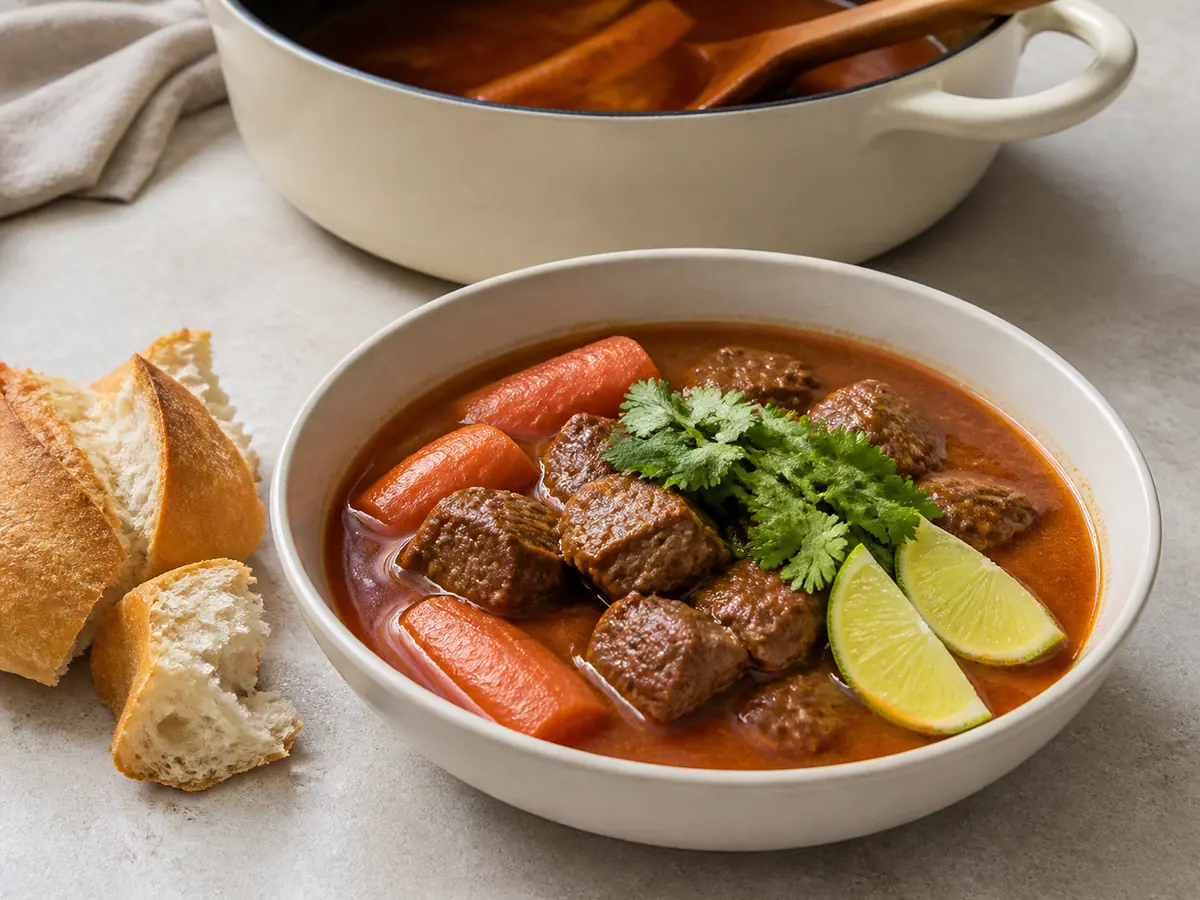
Remove and discard the lemongrass stalks, star anise, and cinnamon stick. Let the bubbling settle for a minute, then taste the broth; it should be savory, warmly spiced, and lightly sweet. Tear 225 g of crusty baguette into dipping-size pieces. Ladle the stew into deep bowls, scatter with fresh cilantro (optional), add lime wedges (optional) at the table, and serve immediately with the bread alongside.


Smart Substitutions
- No beef chuck? Use boneless beef shin or brisket, keeping the pieces large and allowing extra time if they are still firm at the first tenderness check.
- No five-spice powder? Use 1 teaspoon ground coriander with a small pinch each of ground cloves and fennel seed; the flavor will be less rounded but still warm and aromatic.
- No baguette? Serve with a crusty white loaf or flat rice noodles; include enough broth for dipping or spooning over the noodles.
- Need a fish-sauce alternative? Use light soy sauce in the same volume, then expect a less distinctly Vietnamese aroma and a slightly darker broth.
Tips and Variations
- Cut the beef and carrots into similarly substantial pieces so both remain recognizable after the long simmer.
- Bruise lemongrass instead of finely slicing it; the stalks perfume the broth and are easy to remove before serving.
- A low, steady simmer keeps the broth clearer and gives collagen-rich beef time to soften without shredding.
What Went Wrong?
- Beef is still tough Keep the pot at a gentle simmer and check again in 15-minute intervals. Toughness at this stage usually means the connective tissue needs more time.
- Broth tastes thin Simmer uncovered for 10 to 15 minutes after the carrots are tender, keeping the heat moderate so the broth concentrates without breaking the beef apart.
- Broth is too salty Add a small amount of hot water and simmer for 5 minutes, then taste again before serving with the unsalted interior of the bread.
- Carrots are breaking apart Stop stirring and lower the heat. Lift portions with a ladle rather than sweeping a spoon across the bottom of the pot.
Nutrition Estimate
- Fiber: 6 g per serving
- Sodium: 1520 mg per serving
Nutrition disclaimer:This recipe is provided for general cooking information only. Nutrition values are estimates and may vary by ingredients, brands, preparation methods, and serving sizes. Check ingredient labels and follow appropriate food-safety practices. This content is not medical, dietary, allergy, or professional food-safety advice.
FAQ
Found an error or have a suggestion?
Help us improve this recipe. Send us your feedback and include the recipe name so we can take a look.