Method
Hydrate the tapioca starch
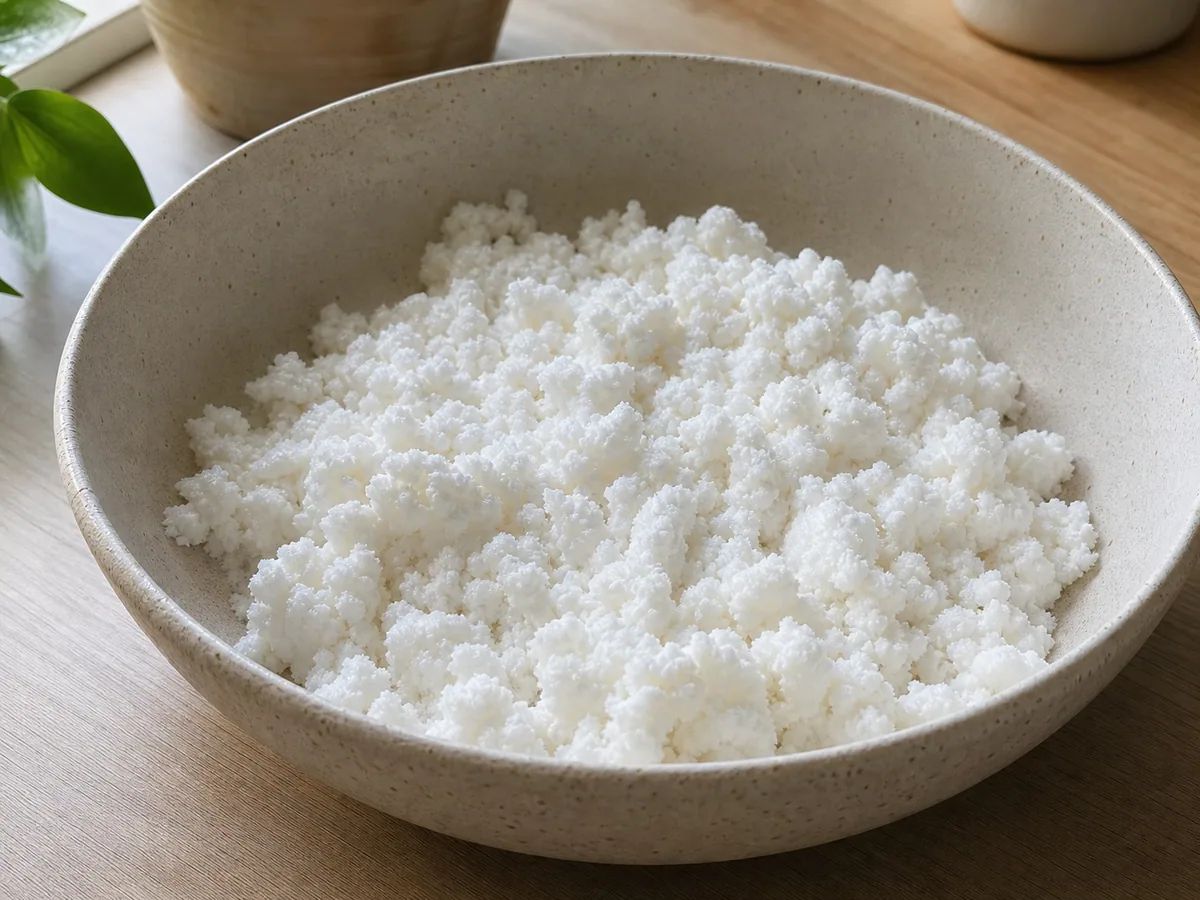
Place 120 g of tapioca starch and 1 g of fine sea salt in a wide bowl. Add 75 ml of water gradually while rubbing the starch between your fingertips. Continue until the mixture feels evenly damp, holds together when squeezed, and crumbles apart with light pressure. Let it stand for 5 minutes so the moisture distributes through the starch.
05:00Sift and portion the starch and cheese
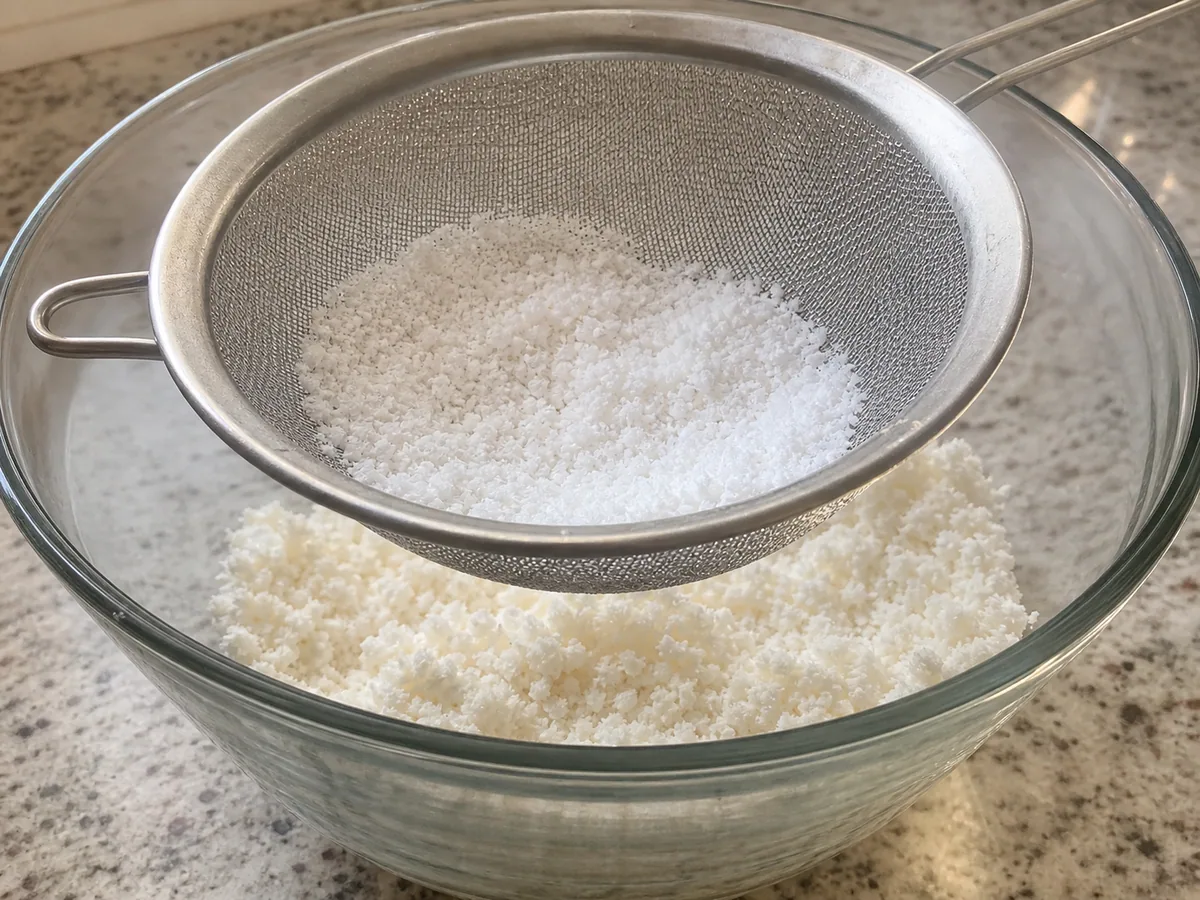
Rub the damp starch through a fine-mesh sieve into a clean bowl, breaking up every firm lump. Divide the sifted starch into one equal portion per serving. Shred 120 g of low-moisture mozzarella cheese and divide it into the same number of portions so each crepe cooks quickly and evenly.
Preheat the dry skillet
Heat an 8-inch (20 cm) nonstick skillet over medium heat for about 2 minutes. Keep the skillet completely dry; this diameter is sized for one thin crepe per serving.
02:00Form each crepe
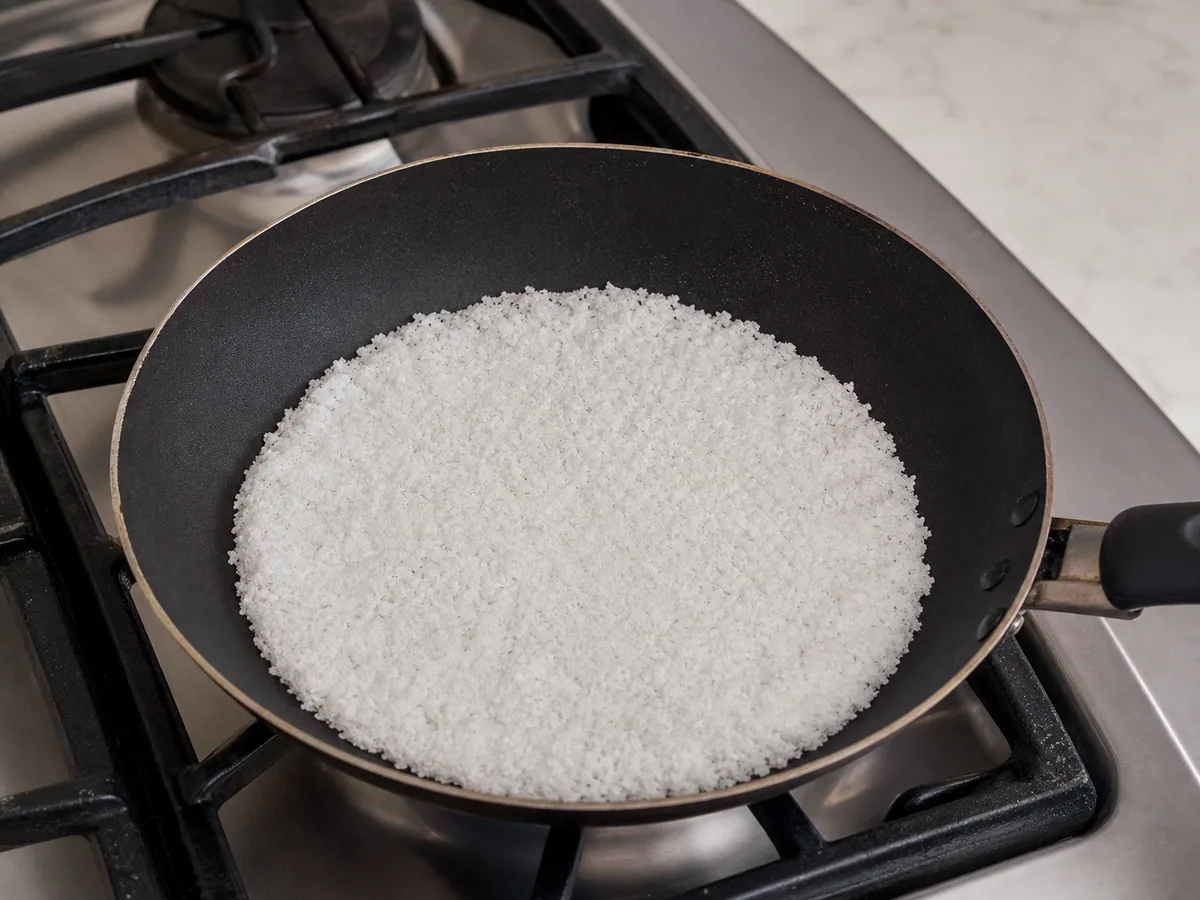
Scatter one starch portion evenly across the dry skillet, forming a thin disk without pressing the granules down. Cook for 60 to 90 seconds, checking at 60 seconds, until the surface looks dry and matte, the granules have fused into one disk, and the crepe slides freely when the pan is shaken.
01:00Cook the second side briefly
Flip the crepe carefully with a thin spatula and cook the second side for 15 seconds. It should remain pale, tender, and flexible rather than crisp or deeply browned.
00:15Fill and fold
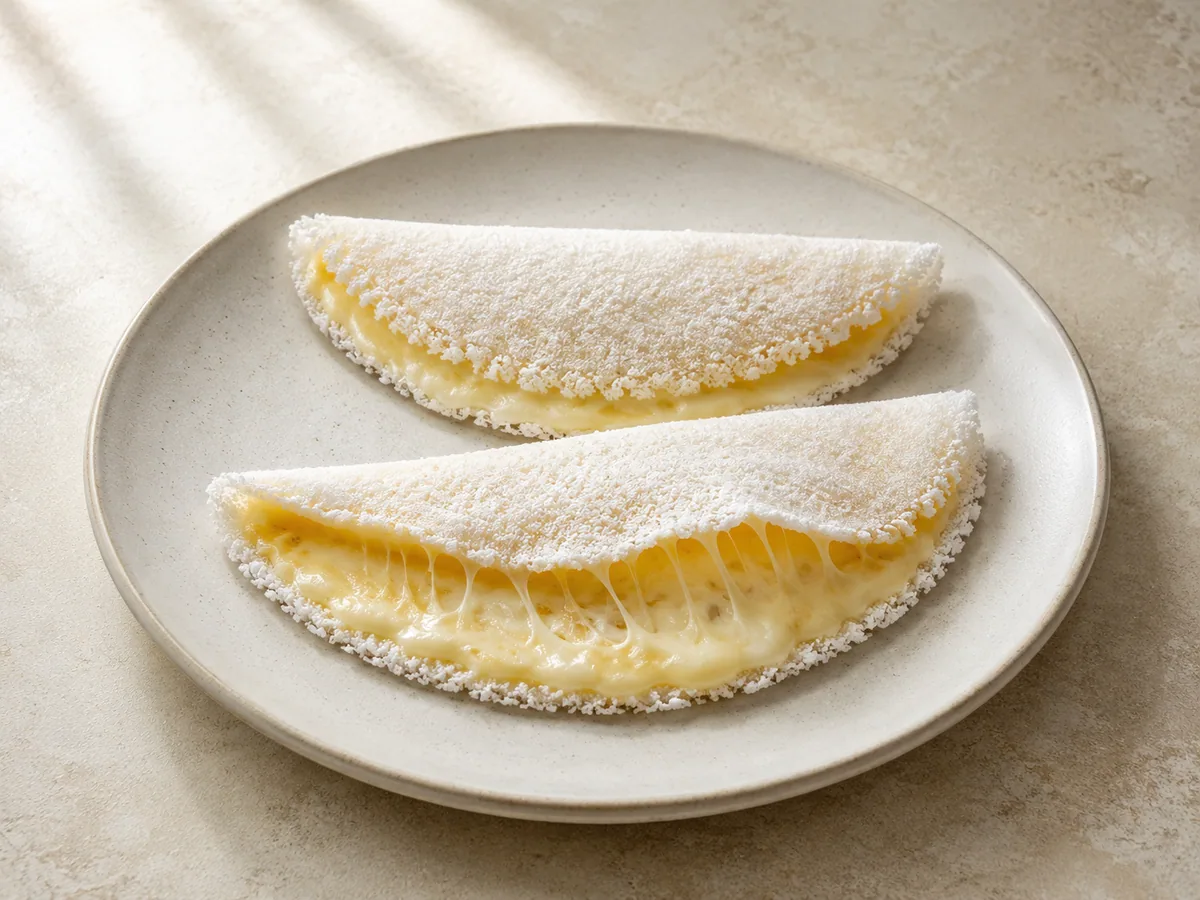
Place one cheese portion over half of the crepe, leaving a narrow border. Fold the uncovered half over the filling and press lightly with a spatula. Cook the first folded side for 30 to 60 seconds, checking at 45 seconds, until the cheese begins to melt and the underside remains pale with a few light-golden spots.
00:45Turn and finish each crepe
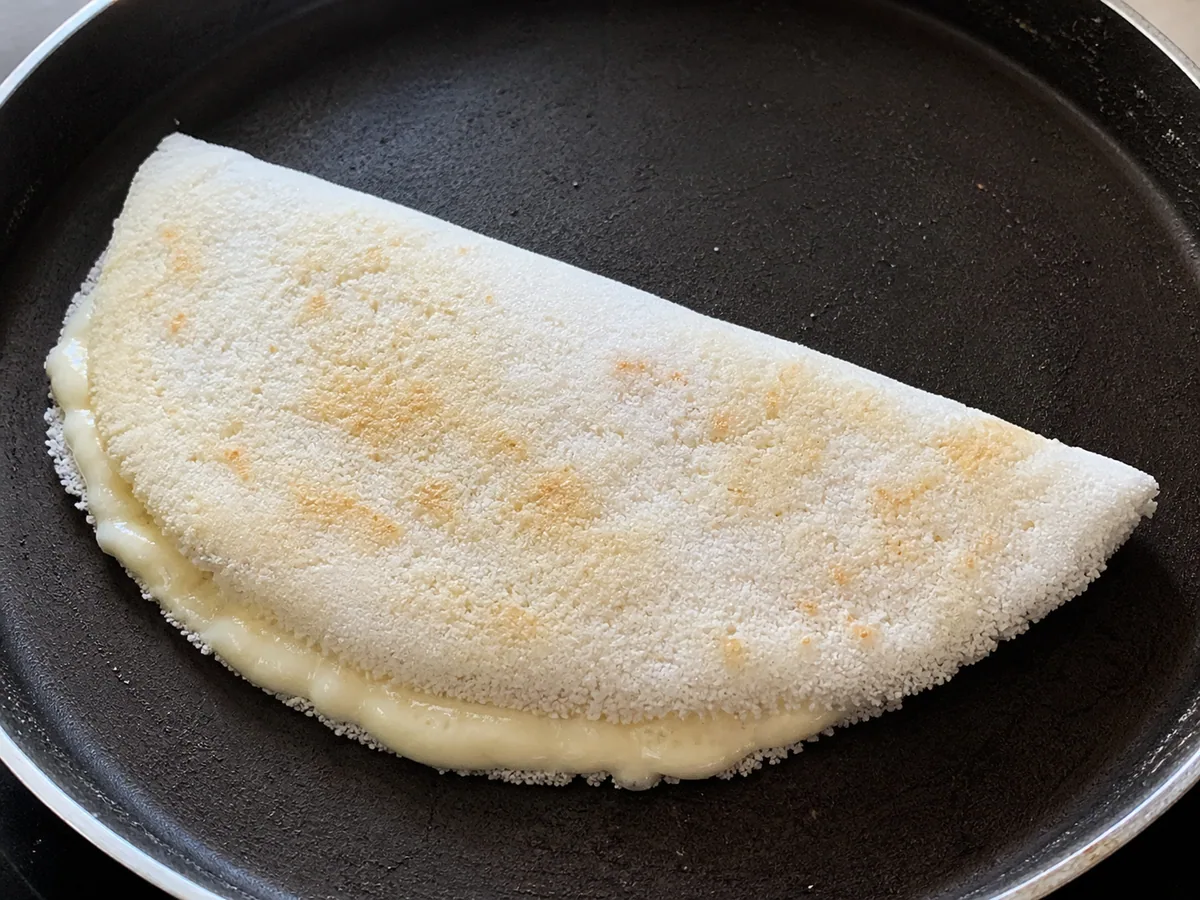
Turn the folded crepe once and cook the second side for 30 to 60 seconds, checking at 45 seconds, until the cheese is fully melted and the outside is supple with a few pale golden spots. Transfer it to a plate. Repeat the forming, flipping, filling, folding, and finishing steps with the remaining starch and cheese portions, adjusting the heat downward if the crepes brown before they become flexible.
00:45


Smart Substitutions
- No mozzarella? Use Monterey Jack for a similar melt, or queijo coalho for a firmer, saltier filling with a more traditional Northeastern Brazilian character.
- Using hydrated tapioca gum? Use about 7 ounces (200 g) ready-hydrated goma de tapioca in place of both the dry starch and water. Sift it, divide it into one portion per serving, and continue with the skillet steps; choose a product made for skillet tapioca rather than tapioca pearls or granules.
- Cheese tastes very salty? Omit the added salt and season the next batch only after tasting the first crepe.
- Want a sharper filling? Replace part of the mozzarella with Parmesan, keeping mozzarella as the larger share so the center still melts smoothly.
Tips and Variations
- Hydration can vary with starch brand and room humidity; the correct texture resembles damp sand that clumps when squeezed but is never pourable.
- Keep the skillet dry. Oil separates the starch granules and can prevent them from fusing into a neat, flexible disk.
- Sift immediately before cooking so the granules stay loose and spread in a thin, even layer.
What Went Wrong?
- Starch will not clump Work in a few extra drops of water, mix thoroughly, and test again. Stop as soon as a squeezed handful holds together.
- Crepe breaks when folded Shorten the cooking time or lower the heat. A crepe that is deeply browned has lost too much moisture to bend cleanly.
- Crepe sticks to the pan Let the skillet preheat fully and use a clean nonstick surface. Wait until the disk has fused before trying to move it.
- Cheese stays firm Shred it more finely, reduce the heat slightly, and cover the folded crepe briefly so trapped steam helps the center melt.
Nutrition Estimate
- Fiber: 0 g per serving
- Sodium: 280 mg per serving
Nutrition disclaimer:This recipe is provided for general cooking information only. Nutrition values are estimates and may vary by ingredients, brands, preparation methods, and serving sizes. Check ingredient labels and follow appropriate food-safety practices. This content is not medical, dietary, allergy, or professional food-safety advice.
FAQ
Found an error or have a suggestion?
Help us improve this recipe. Send us your feedback and include the recipe name so we can take a look.