Method
Simmer the beef and build the broth
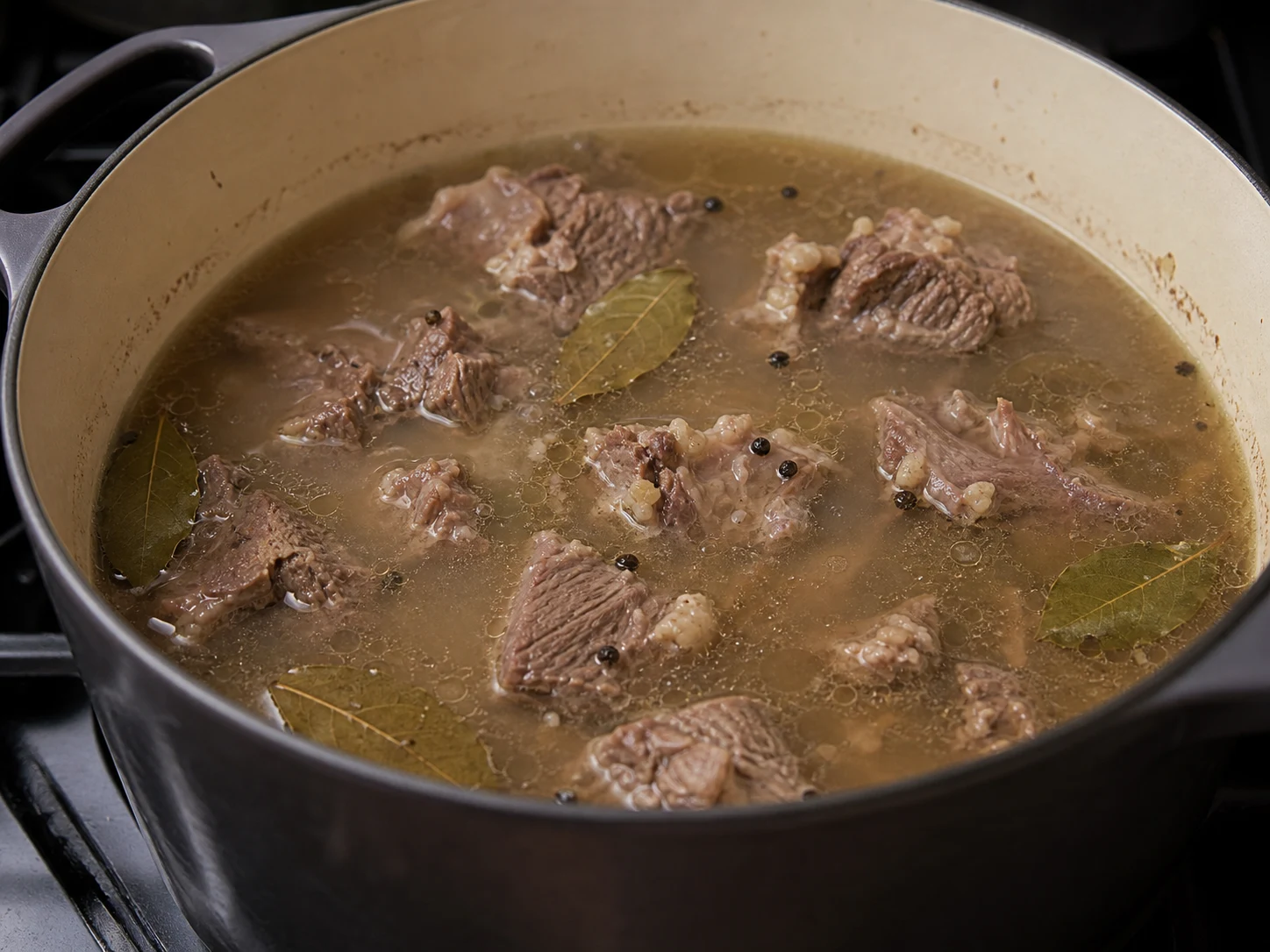
Place 1.2 kg of boneless beef chuck roast and 3 liters of cold water in a large heavy pot. Bring to a gentle boil over medium-high heat, then lower the heat and skim away foam as it rises. After handling raw beef, wash hands, the knife, the cutting board, and nearby surfaces before touching dough ingredients or ready-to-eat food. Add 2 bay leaves, 2 g of black peppercorns, and 14 g of fine sea salt. Partially cover and maintain a quiet simmer for 1 hour 45 minutes to 2 hours 15 minutes, beginning the tenderness check at 1 hour 45 minutes. The beef should yield easily to a fork. Verify the thickest part reaches at least 63°C/145°F with a food thermometer, then continue simmering as needed for tenderness. Transfer the beef to a clean board and let it stand for at least 3 minutes.
1:45:00Mix and knead the noodle dough
While the beef simmers, place 420 g of all-purpose flour in a large bowl and make a well in the center. Add 3 large eggs and 100 ml of warm water. Stir from the center outward until a rough dough forms, then turn it onto an unfloured work surface. Knead for 8 to 10 minutes, beginning the texture check at 8 minutes, until smooth, firm, and springy. The dough should feel firmer than bread dough but should not crack at the edges.
08:00Rest the dough
Cover the dough with an overturned bowl or a clean damp towel and let it rest for 30 minutes. This relaxes the gluten so the dough rolls thinly without pulling back.
30:00Roll and cut the noodle sheets
Divide the rested dough into four pieces and keep unused pieces covered. Roll one piece at a time into a thin sheet about 1.5 mm thick, dusting the work surface lightly with 30 g of all-purpose flour, for dusting only when the dough begins to stick. Cut each sheet into broad rectangles roughly 5 x 8 cm (2 x 3 in). Lay the pieces in a single layer on a surface lightly dusted with 30 g of all-purpose flour, for dusting while you finish the remaining dough. Do not taste the raw dough. After handling the dough, wash your hands with soap and hot water and wash the bowl, rolling pin, knife, and work surface with hot, soapy water before touching the cooked beef, onions, serving platter, or other ready-to-eat food.
Strain the broth and soften the onions
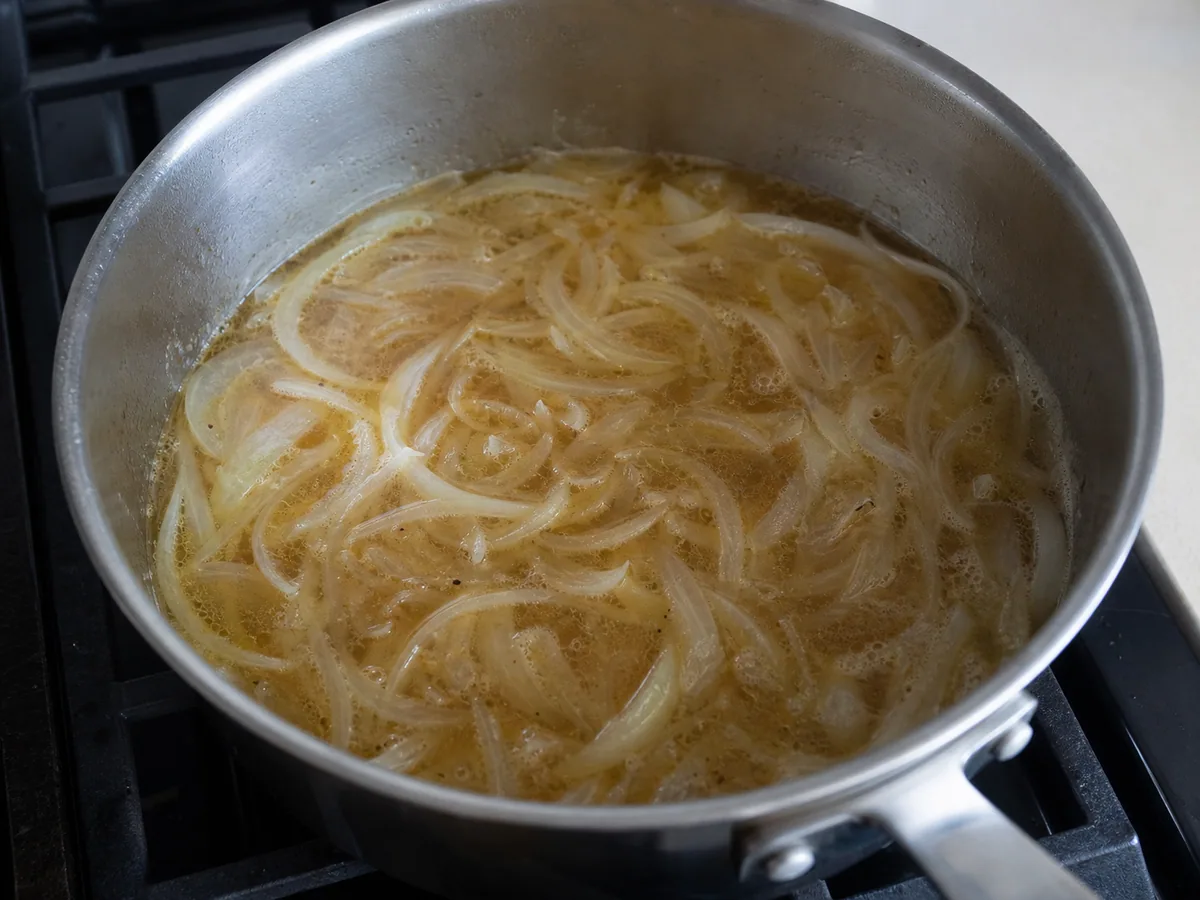
Strain the broth into a clean pot, discarding the bay leaves and peppercorns, and skim off excess surface fat. Reserve about 1/2 cup (120 ml) per serving of clear broth in a separate clean saucepan and keep it hot for serving. Ladle enough of the remaining hot broth into a wide saucepan to cover the bottom generously. Halve 600 g of yellow onions from root to tip, peel them, and cut them into thin half-moons. Add 600 g of yellow onions to the saucepan and simmer gently for 8 to 10 minutes, beginning the check at 8 minutes, until translucent, supple, and sweet but not browned. Keep the onions in their broth over very low heat.
08:00Slice the cooked beef
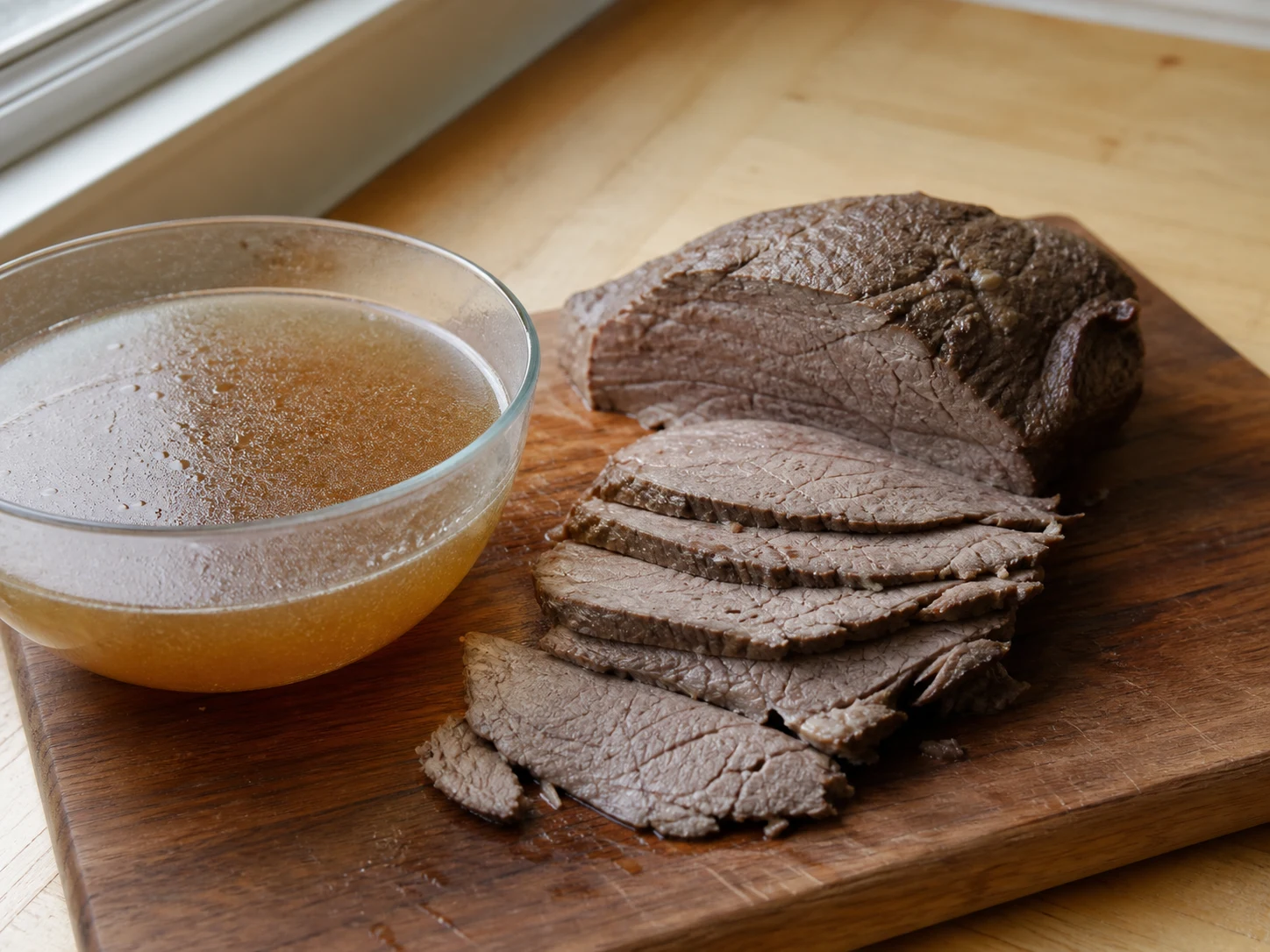
Remove any large seams of fat from the cooked beef, then slice the meat across the grain into thick, bite-size pieces. Spoon a little hot broth over the slices and cover loosely so they remain moist while the noodles cook.
Cook the noodles in the broth
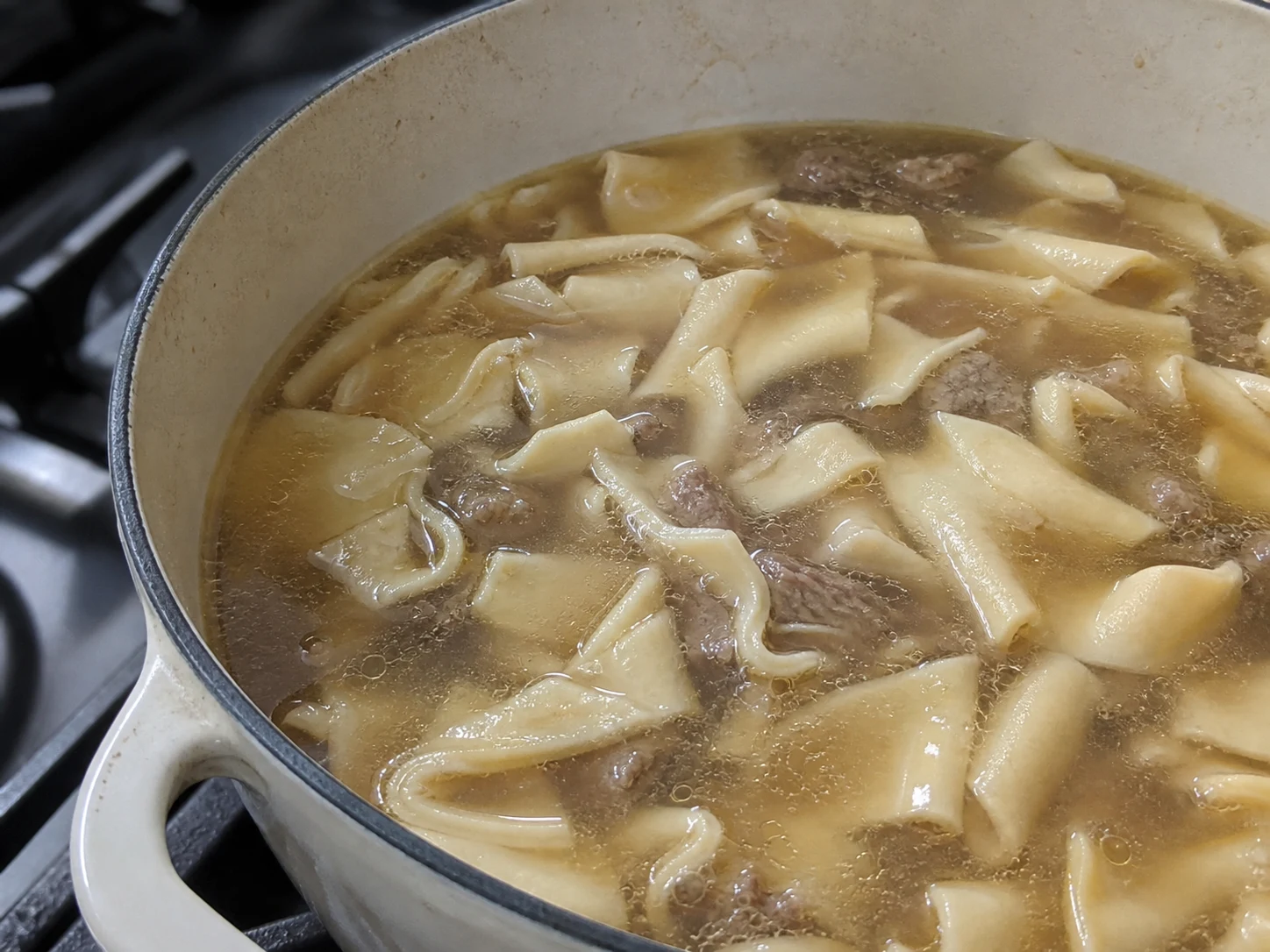
Bring the strained broth to a lively simmer. Shake loose excess flour from the noodle rectangles and cook them in batches so they can move freely. Stir once as each batch goes in, then simmer for 4 to 6 minutes, beginning the texture check at 4 minutes, until tender with a slight chew and no raw floury center. Lift each batch out with a wide slotted spoon and spread it directly on a warm serving platter.
04:00Assemble the platter and serve
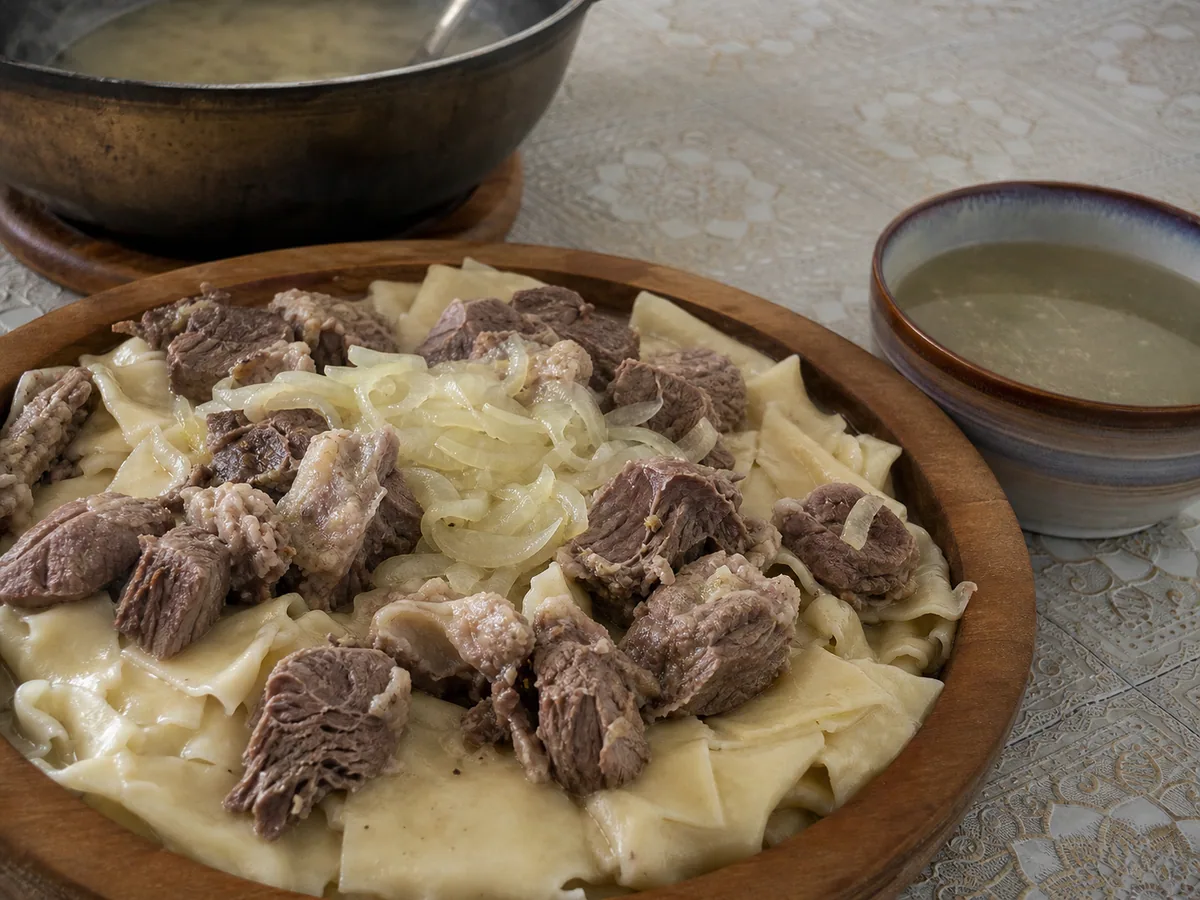
Arrange the sliced beef over the hot noodles. Spoon the softened onions and enough onion broth over the top to gloss the noodles without flooding the platter. Scatter fresh dill (optional) over the dish, if using. Bring the platter to the table immediately and serve the reserved hot clear broth in cups or small bowls alongside.


Smart Substitutions
- No beef chuck? Use beef brisket or shank and simmer until fork-tender, verifying at least 63°C/145°F with a food thermometer before serving.
- Need a quicker noodle option? Use broad dried egg noodles and cook them in the strained broth according to their package timing.
- No fresh dill? Use flat-leaf parsley or leave the platter ungarnished.
- Want a leaner broth? Trim visible exterior fat from the beef before cooking and skim the broth carefully before softening the onions.
Tips and Variations
- Roll the dough in small sections; the thinner sheets are easier to control and cook more evenly.
- Keep the onions below a simmer so they soften and sweeten without taking on browned flavors.
- Cook the noodle rectangles in uncrowded batches and transfer them straight to the platter so they do not clump in the pot.
What Went Wrong?
- Beef is still tough Keep it at a quiet simmer and check every 15 minutes. Tough chuck needs time for its connective tissue to soften.
- Broth is cloudy Lower the heat, skim the surface, and avoid vigorous boiling. The flavor will still be sound even if the broth is not perfectly clear.
- Dough keeps springing back Cover it and give it another 10 minutes to relax before rolling again.
- Noodles are sticking together Use a light flour dusting, keep the cut pieces in one layer, and cook smaller batches with room to move.
Nutrition Estimate
- Fiber: 4 g per serving
- Sodium: 670 mg per serving
Nutrition disclaimer:This recipe is provided for general cooking information only. Nutrition values are estimates and may vary by ingredients, brands, preparation methods, and serving sizes. Check ingredient labels and follow appropriate food-safety practices. This content is not medical, dietary, allergy, or professional food-safety advice.
FAQ
Found an error or have a suggestion?
Help us improve this recipe. Send us your feedback and include the recipe name so we can take a look.