Method
Mix and rest the dough
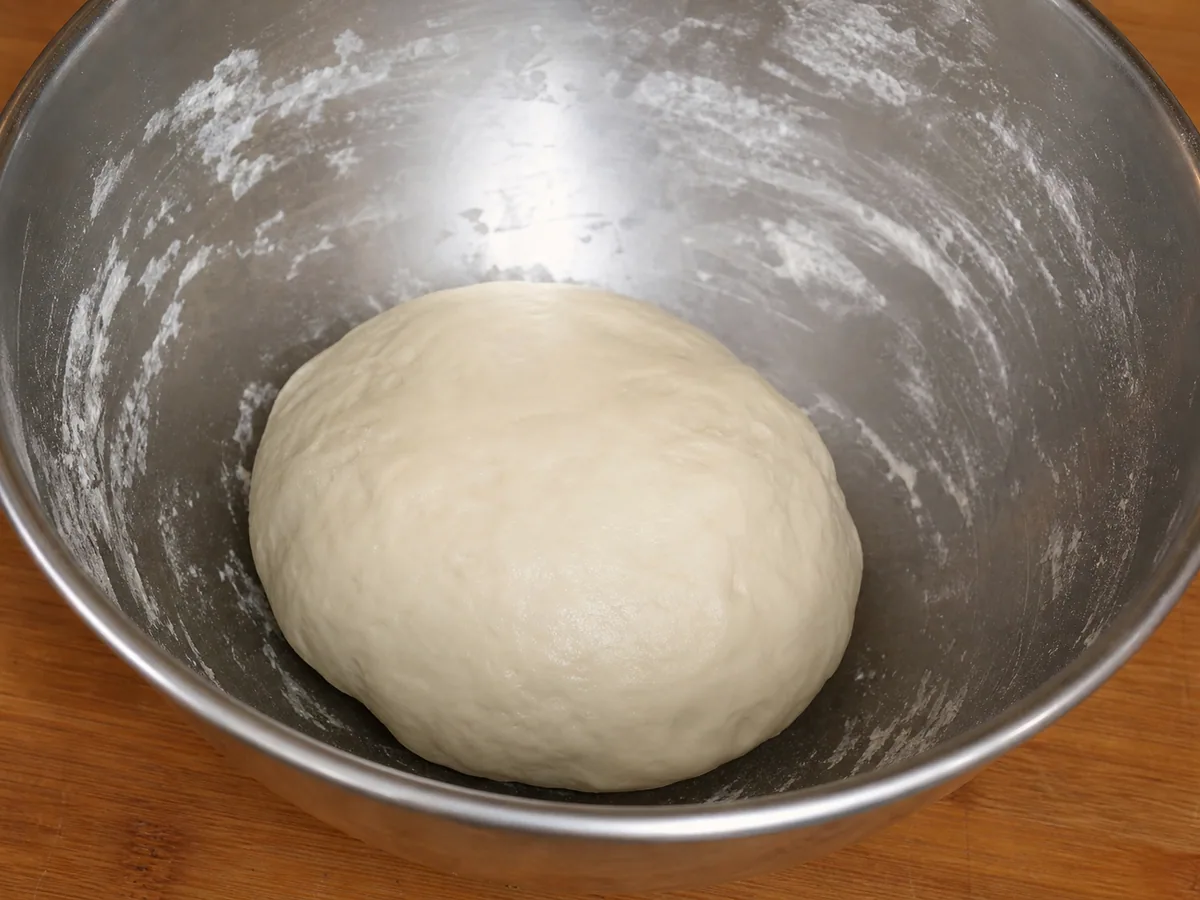
Place 300 g of all-purpose flour in a heatproof bowl and stir in 2 g of kosher salt for dough. Pour in 180 ml of boiling water in a thin stream while stirring with chopsticks or a sturdy spoon. Add 15 ml of cool water, as needed gradually only as needed and mix until shaggy. When the dough is cool enough to handle, knead for 4 to 5 minutes until cohesive; it should feel soft and slightly tacky but should hold its shape. Cover the bowl and let the dough rest for 20 minutes.
20:00Prepare the scallions, oil, and dipping sauce
While the dough rests, trim 100 g of scallions, then halve any thick stalks lengthwise and slice them into small pieces. Stir 30 ml of neutral oil for layers and 10 ml of toasted sesame oil together in one bowl. In a second bowl, whisk 30 ml of light soy sauce, 30 ml of unseasoned rice vinegar, and 4 g of granulated sugar until the sugar dissolves. Stir in chili oil (optional) for extra heat.
Roll, fill, and coil the dough
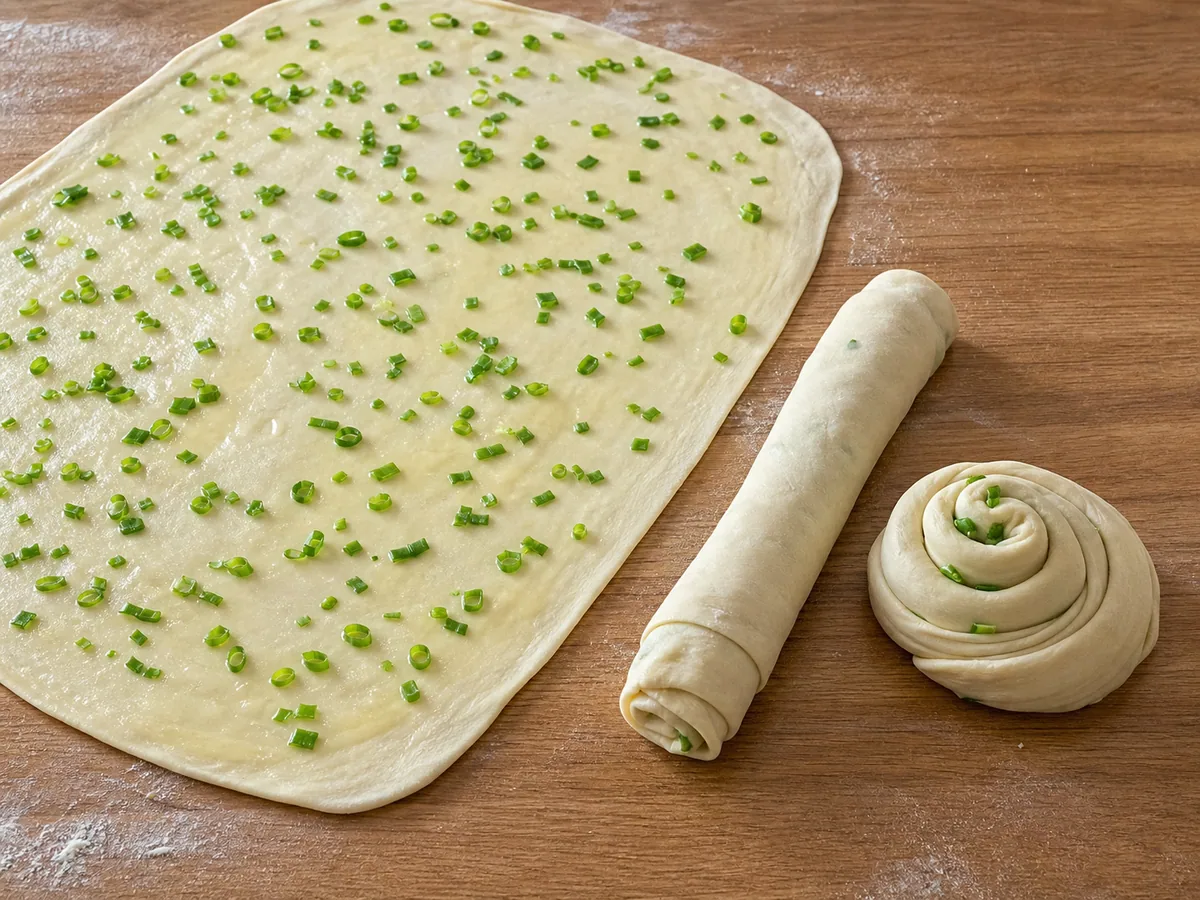
Knead the rested dough for about 1 minute until smooth, then divide it into equal pieces, one per serving. Keep all but one piece covered. Roll one piece into a thin rectangle about 20 x 30 cm (8 x 12 in). Brush it with an equal share of a mixture made from 30 ml of neutral oil for layers and 10 ml of toasted sesame oil, leaving a narrow border. Scatter an equal share of 100 g of scallions over the surface and season with an equal share of 2 g of kosher salt for filling and 1/2 g of ground white pepper. Roll the rectangle from a long side into a loose rope, then wind the rope into a spiral and tuck the end underneath. Repeat with the remaining dough and filling. Cover the coils and rest for 10 minutes.
10:00Flatten the coils
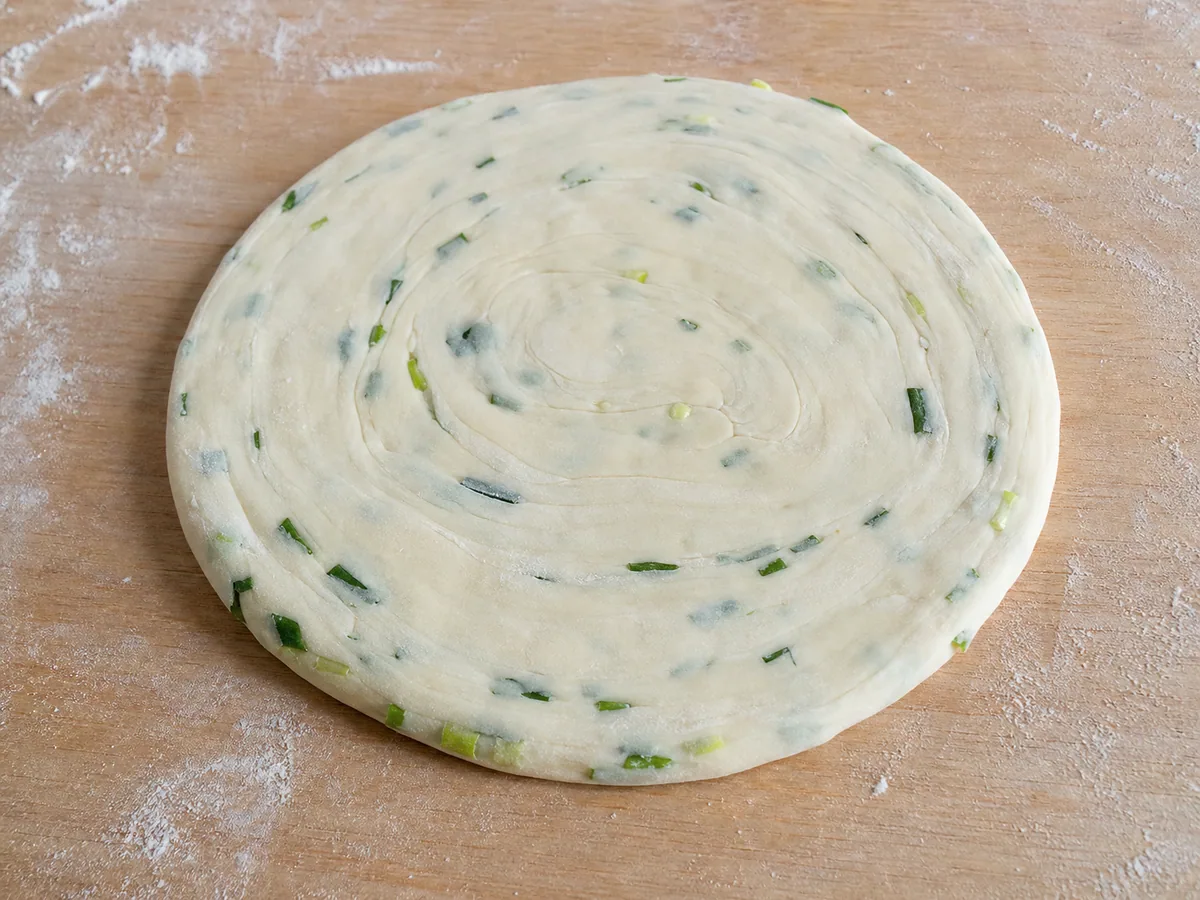
Working with one coil at a time, press it gently with your palm, then roll it into a round about 18 cm (7 in) wide. Turn the dough as you roll and use light pressure so the scallions stay enclosed. Keep the shaped rounds covered while you finish the others.
Pan-fry until crisp and golden
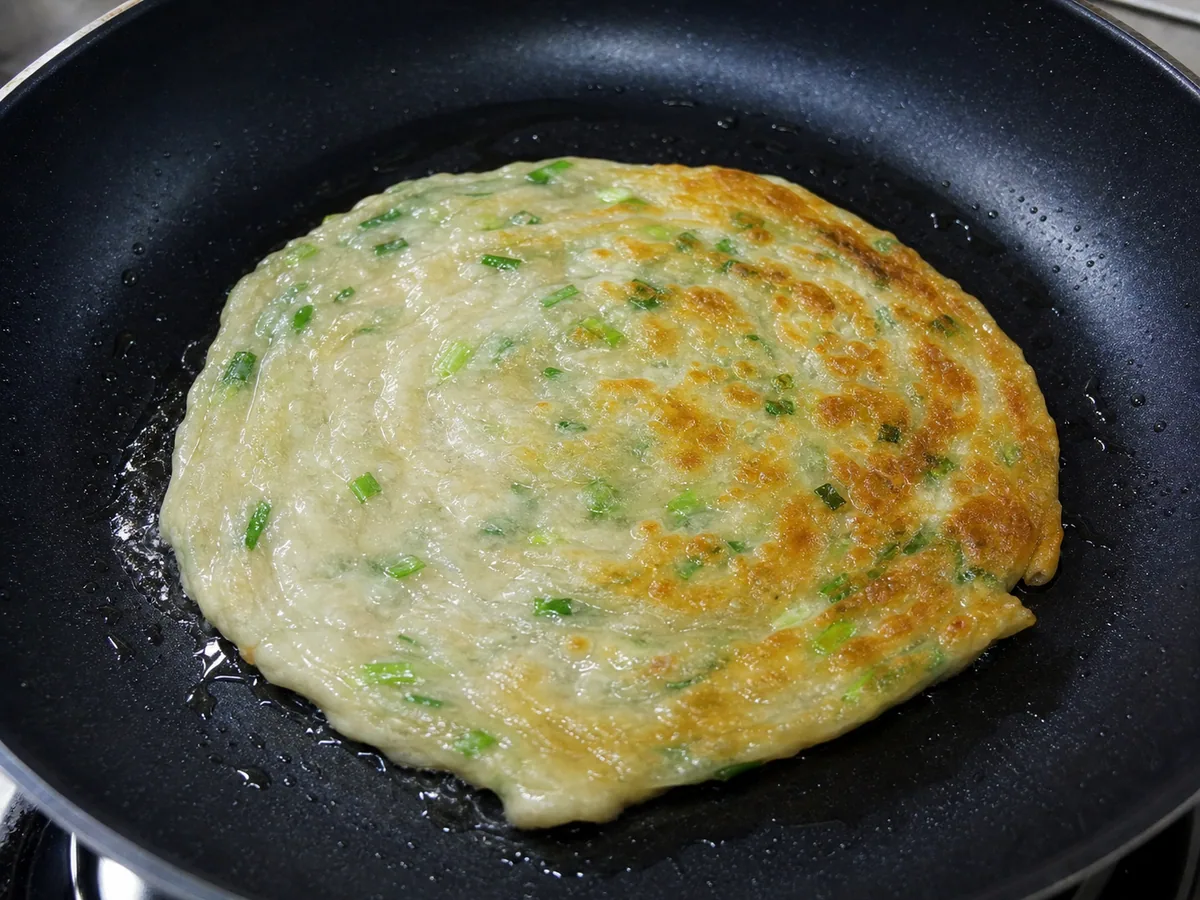
Heat a heavy skillet over medium heat until a drop of water sizzles and evaporates quickly. Add enough 45 ml of neutral oil for frying to lightly coat the skillet, using an equal share for each pancake, and lay in one pancake. Cook until the underside is deeply golden and crisp, starting to check at 2 minutes. Flip, lower the heat slightly if the surface is browning too fast, and cook for 2 to 3 minutes more until both sides are crisp and the center is cooked through with no gummy dough. Repeat with the remaining pancakes and oil, wiping out any dark flour or scallion bits between batches.
02:00Cut and serve
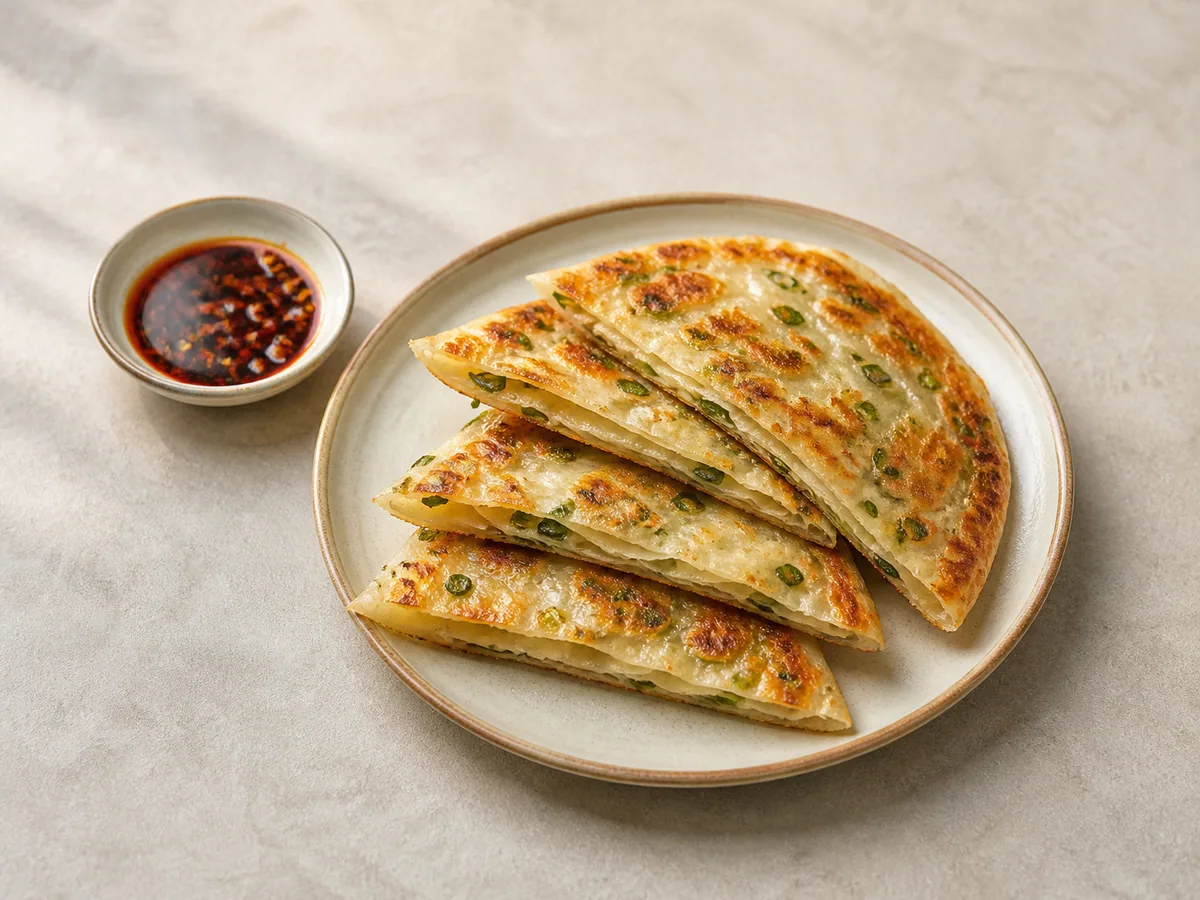
Let each pancake stand for 1 minute so the layers settle, then cut into wedges. Serve immediately with the soy-vinegar dipping sauce.
01:00


Smart Substitutions
- No toasted sesame oil? Use the same amount of neutral oil; the pancakes will be milder but will still laminate well.
- No rice vinegar? Use Chinese black vinegar for a deeper, maltier dip or white wine vinegar for a sharper one.
- No white pepper? Use freshly ground black pepper, reducing it slightly if its flavor is especially bold.
- Want a lower-sodium dip? Choose reduced-sodium soy sauce and add a little extra rice vinegar to keep the dip lively.
Tips and Variations
- Cut the scallions into small pieces so they roll into the dough instead of puncturing it.
- Roll the filled dough into a loose rope; a little space between turns helps the layers separate.
- Keep the heat at medium or medium-low after the first pancake so the centers cook before the surfaces darken.
What Went Wrong?
- Dough keeps springing back Cover it and let it relax for 5 minutes, then continue rolling with light pressure.
- Scallions tear through the dough Use smaller scallion pieces and roll from the center outward instead of pressing hard at the edges.
- Outside browns before the center cooks Lower the heat and roll the remaining pancakes slightly thinner.
- Pancakes are dense instead of flaky Brush the oil mixture to the edges, roll the rope loosely, and avoid crushing the coil during the final roll.
Nutrition Estimate
- Fiber: 3 g per serving
- Sodium: 940 mg per serving
Nutrition disclaimer:This recipe is provided for general cooking information only. Nutrition values are estimates and may vary by ingredients, brands, preparation methods, and serving sizes. Check ingredient labels and follow appropriate food-safety practices. This content is not medical, dietary, allergy, or professional food-safety advice.
FAQ
Found an error or have a suggestion?
Help us improve this recipe. Send us your feedback and include the recipe name so we can take a look.