Method
Prepare the aromatics and fish
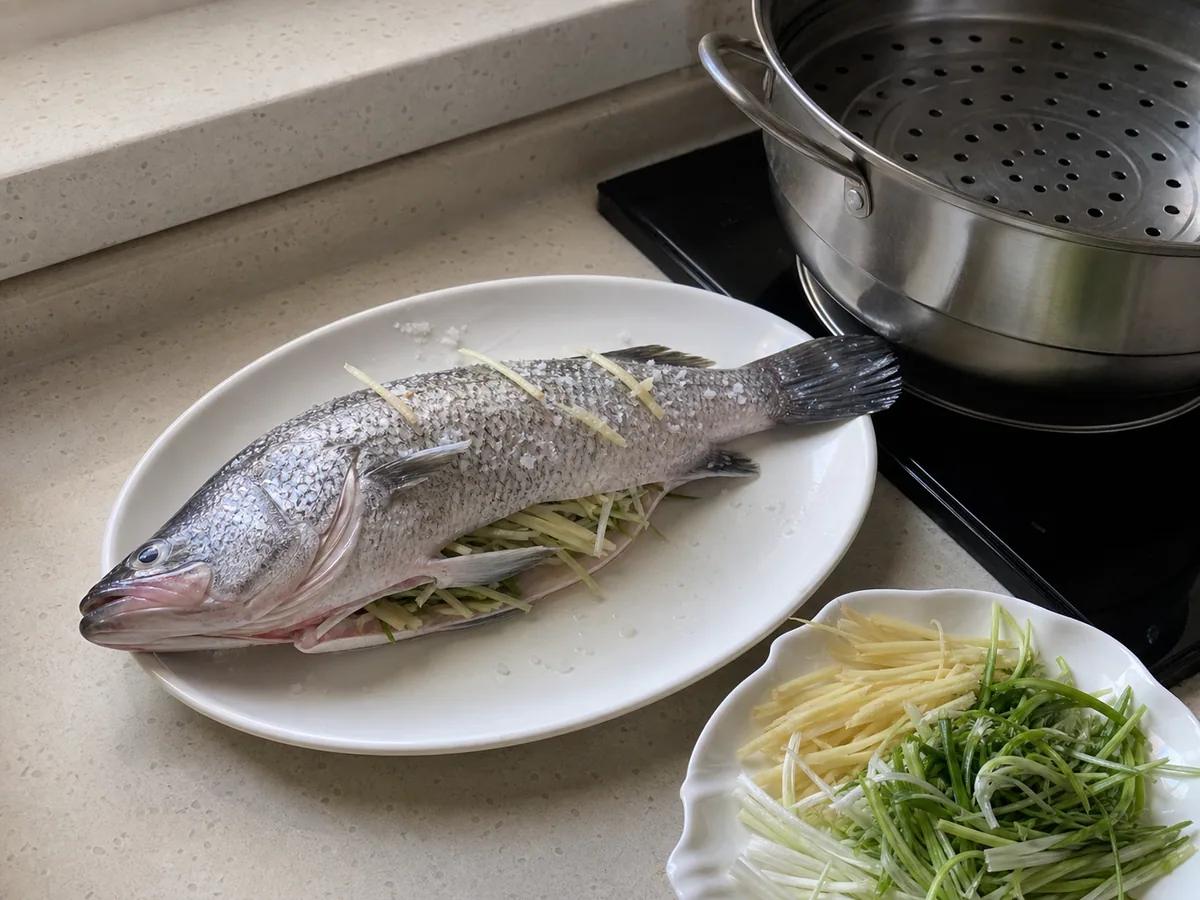
Cut 40 g of fresh ginger into fine matchsticks. Trim 6 scallions, cut them into 5 cm (2 in) lengths, and slice them lengthwise into fine shreds. Divide both aromatics into two equal piles, keeping one pile on a clean plate for finishing. Stir 30 ml of light soy sauce (soy, wheat), 5 ml of toasted sesame oil (sesame), 4 g of granulated sugar, and 0.3 g of ground white pepper together in a heatproof cup. Set a steaming rack in a wok or wide pot, add enough water to sit below the rack, cover, and bring the water to a rolling boil while you finish preparing the fish. Ask the fishmonger to scale, gut, and remove the gills from 900 g of whole sea bass. For 6 or 8 servings, have the scaled total prepared as two whole fish of similar thickness rather than one oversized fish; use separate platters and steam in batches unless both fit with clear space for steam to circulate. Pat the fish dry, set it on a heatproof oval platter that fits inside the steamer, and season the cavity and both sides with 1 1/2 g of kosher salt. Tuck the steaming portions of ginger and scallions under and inside the fish. After handling the raw fish, wash your hands and clean the knife, board, and work surface before touching the reserved garnish.
Steam until opaque and tender
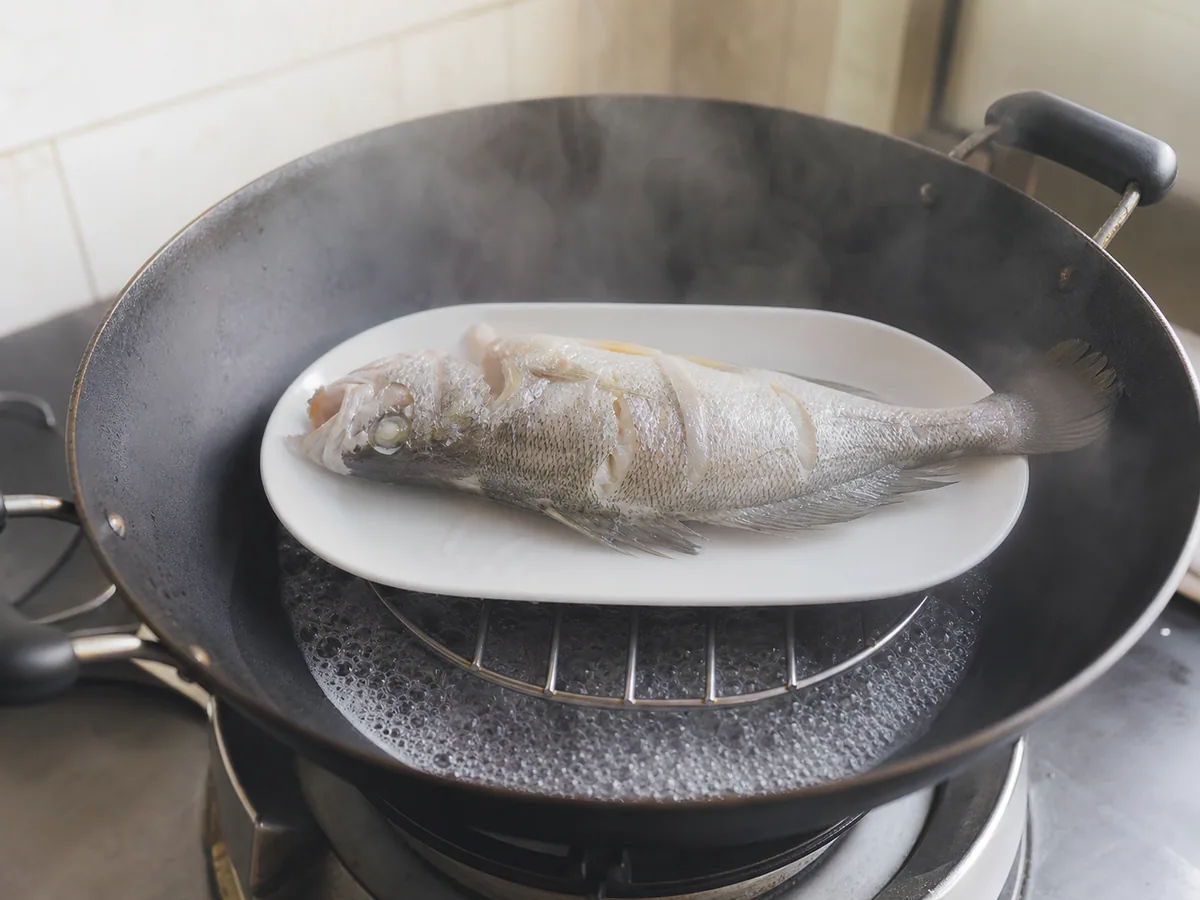
Make sure the water below the rack is at a rolling boil. Lower the platter holding 900 g of whole sea bass onto the rack, cover tightly, and steam over steady high heat. Begin checking according to the weight of each individual fish, not the total batch: after about 6 minutes for a 450 g (1 lb) fish, 8 minutes for a 680 g (1 1/2 lb) fish, or 10 minutes for a 900 g (2 lb) fish. Actual time varies with thickness, so recheck at 1-minute intervals and do not rely on time alone. Insert a food thermometer into the thickest flesh just behind the head without touching bone. Continue steaming until it reaches 63°C/145°F; the flesh should be fully opaque and separate easily when nudged with a fork. If cooking two fish, check each one independently and remove each only when it reaches the safe endpoint.
Drain and dress the fish
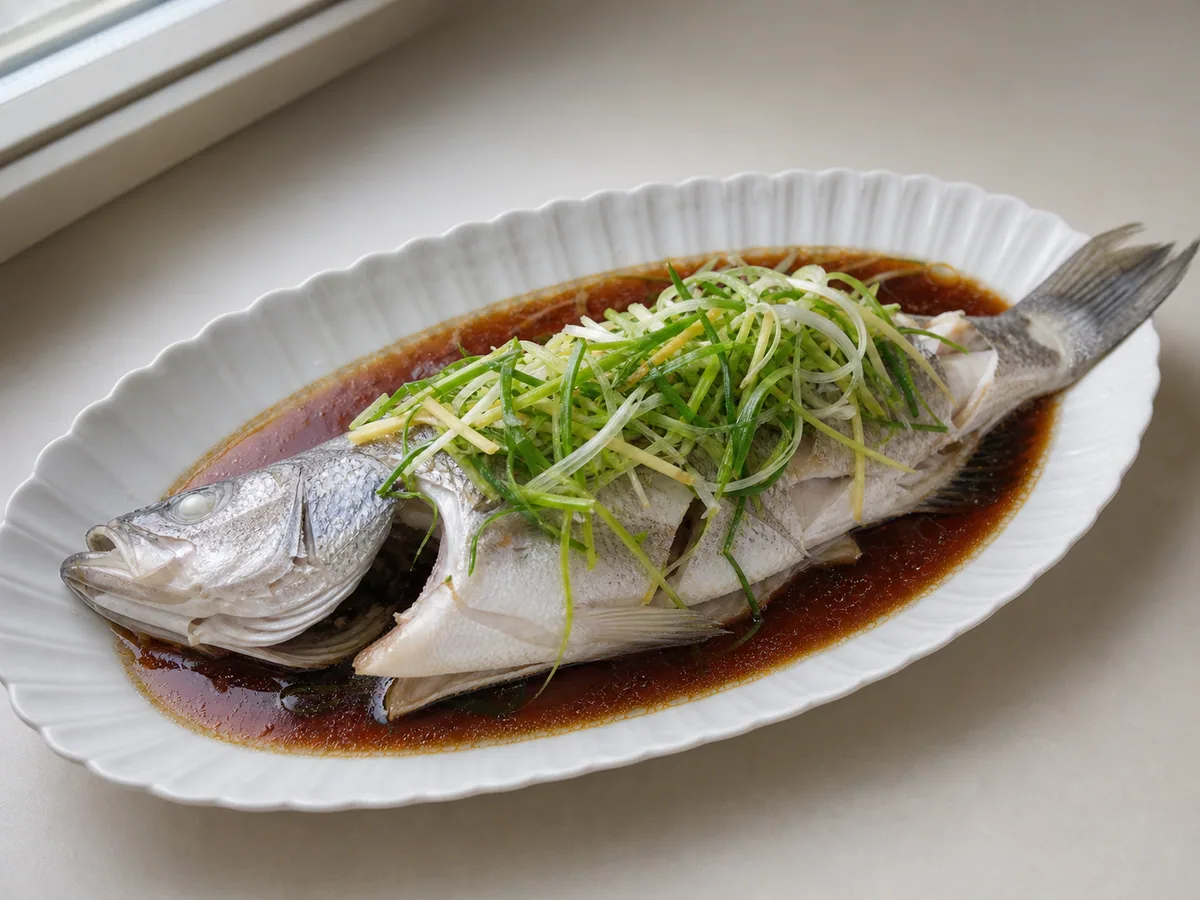
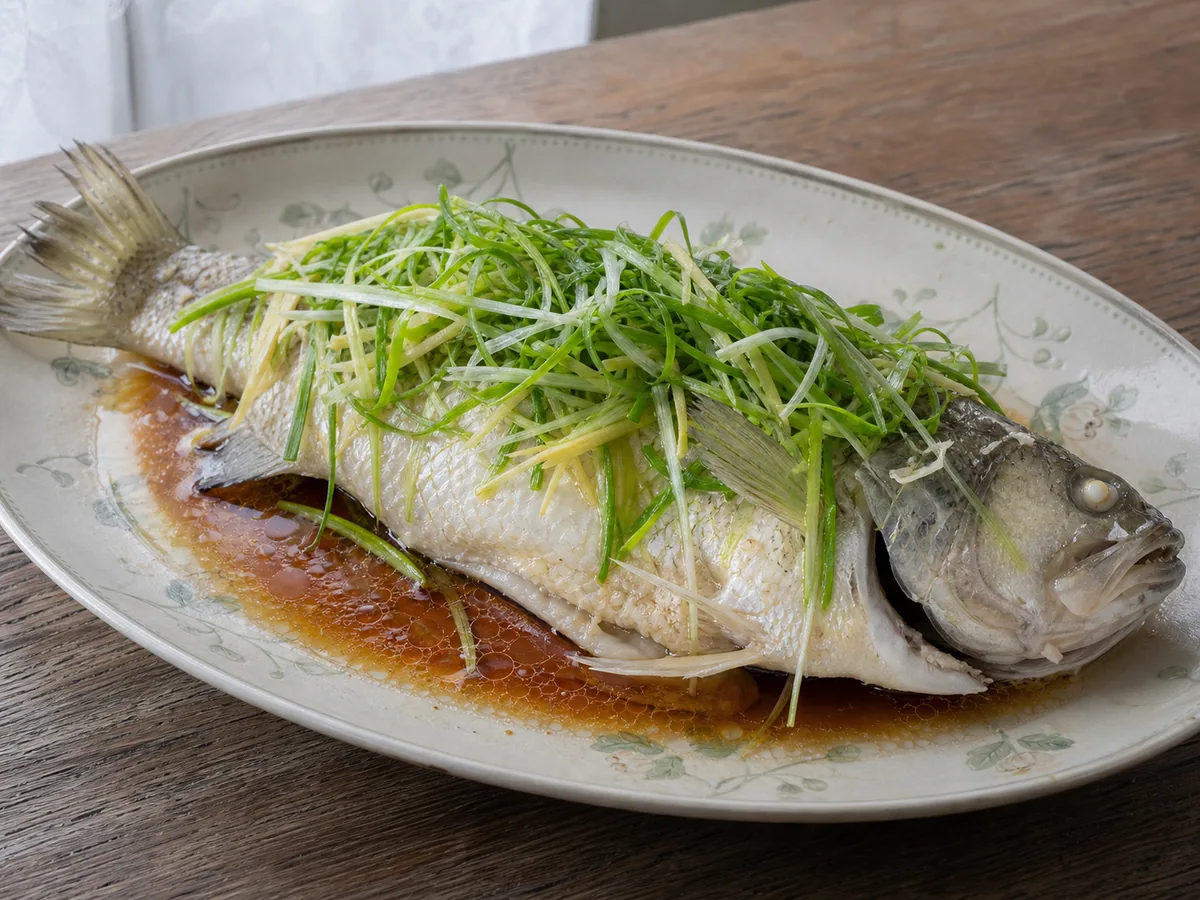
Lift the platter out with heatproof grips. Tilt it carefully and spoon off the cloudy steaming liquid without disturbing the fish. Remove the spent ginger and scallions from beneath and inside the fish. Spoon the soy mixture evenly around the fish, then mound the reserved ginger and scallions along the top so the fresh shreds remain exposed to the hot oil.
Sizzle the aromatics and serve
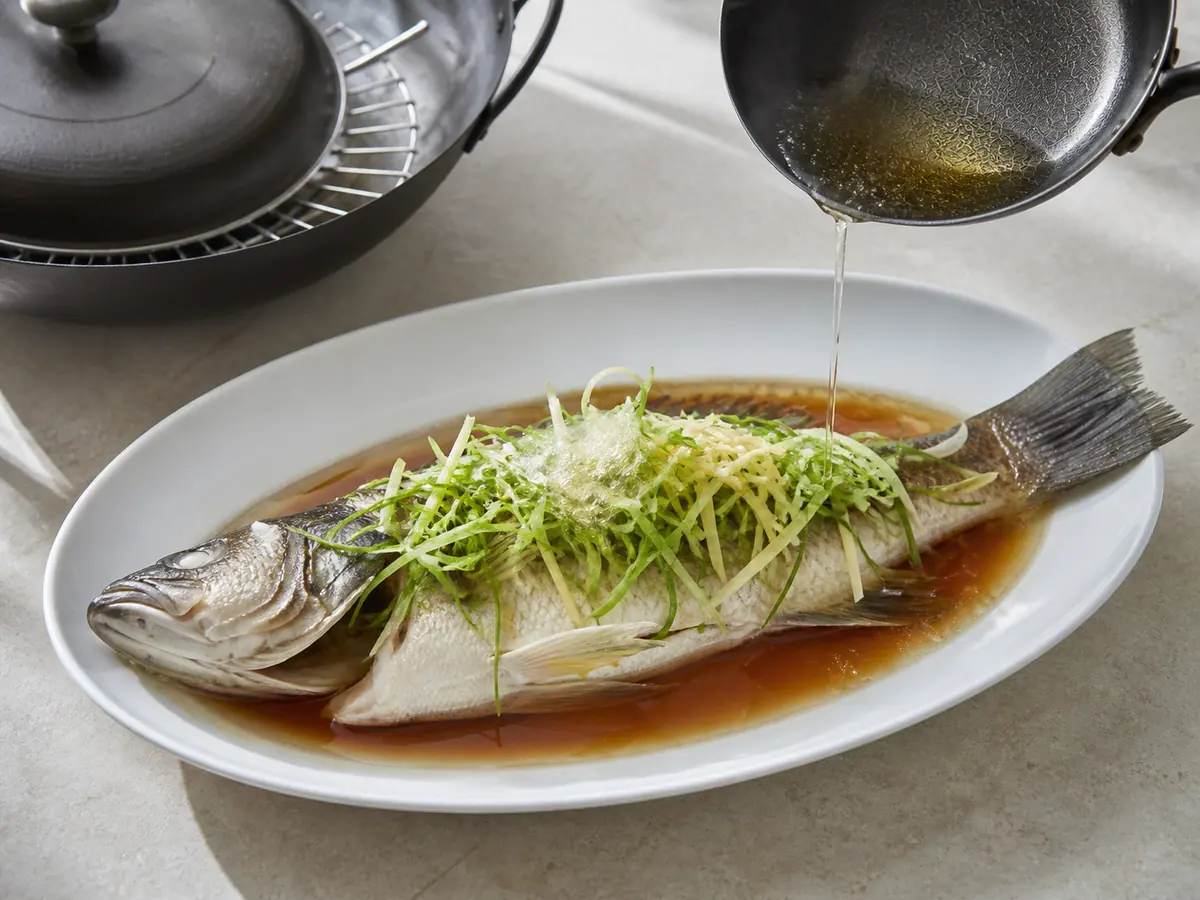
Heat 30 ml of neutral cooking oil in a small saucepan over medium-high heat for about 2 minutes, until shimmering but not smoking. Carefully pour it in a thin stream over the ginger and scallions; they should crackle and soften at the edges. Spoon the seasoned juices from the platter over the fish and serve immediately while the flesh is moist and the aromatics are fragrant.
02:00


Smart Substitutions
- No sea bass? Use whole snapper, branzino, black bass, or another mild round fish of similar size; thickness matters more than species.
- No whole fish? Use skin-on white fish fillets arranged in one layer. For fillets about 2.5 cm (1 in) thick, begin checking after 5 minutes, then continue in 1-minute intervals as needed; thickness controls the timing, and the thickest piece must still reach 63°C/145°F with fully opaque flesh.
- No light soy sauce? Use regular naturally brewed soy sauce and reduce or omit the kosher salt to keep the seasoning balanced.
- No toasted sesame oil? Use the same amount of neutral cooking oil; the finish will taste cleaner and less nutty.
Tips and Variations
- Choose a fish with clear eyes, bright gills, firm flesh, and a clean ocean scent; delicate steaming leaves nowhere for stale flavors to hide.
- Wait for a vigorous boil before the platter enters the steamer so the cooking time starts with a full flow of steam.
- Pour the soy mixture around the fish rather than over the garnish so the hot oil hits relatively dry ginger and scallions and releases more aroma.
What Went Wrong?
- Fish cooks unevenly Center the thickest part over the strongest steam and make sure the fish does not touch the lid or side of the pot.
- Flesh is dry Begin checking at the timer and stop cooking as soon as the thickest part reaches 63°C/145°F.
- Sauce tastes watery Spoon off the cloudy steaming liquid before adding the soy mixture; otherwise the seasoning becomes diluted.
- Scallions do not sizzle The oil was not hot enough. Heat it until clearly shimmering, then pour it carefully over the aromatics.
Nutrition Estimate
- Fiber: 1 g per serving
- Sodium: 680 mg per serving
Nutrition disclaimer:This recipe is provided for general cooking information only. Nutrition values are estimates and may vary by ingredients, brands, preparation methods, and serving sizes. Check ingredient labels and follow appropriate food-safety practices. This content is not medical, dietary, allergy, or professional food-safety advice.
FAQ
Found an error or have a suggestion?
Help us improve this recipe. Send us your feedback and include the recipe name so we can take a look.