Method
Prepare the fish safely
Pat 680 g of skin-on mackerel fillets dry with paper towels without rinsing, then check the flesh for pin bones and remove any with clean tweezers. Keep the fish on a dedicated plate while preparing the vegetables. After handling the raw fish, wash your hands with soap and clean the tweezers, knife, cutting board, and nearby work surface before they touch other food. After transferring the mackerel from the plate into the braising pot, wash the plate before using it again.
Prepare the radish and braising sauce
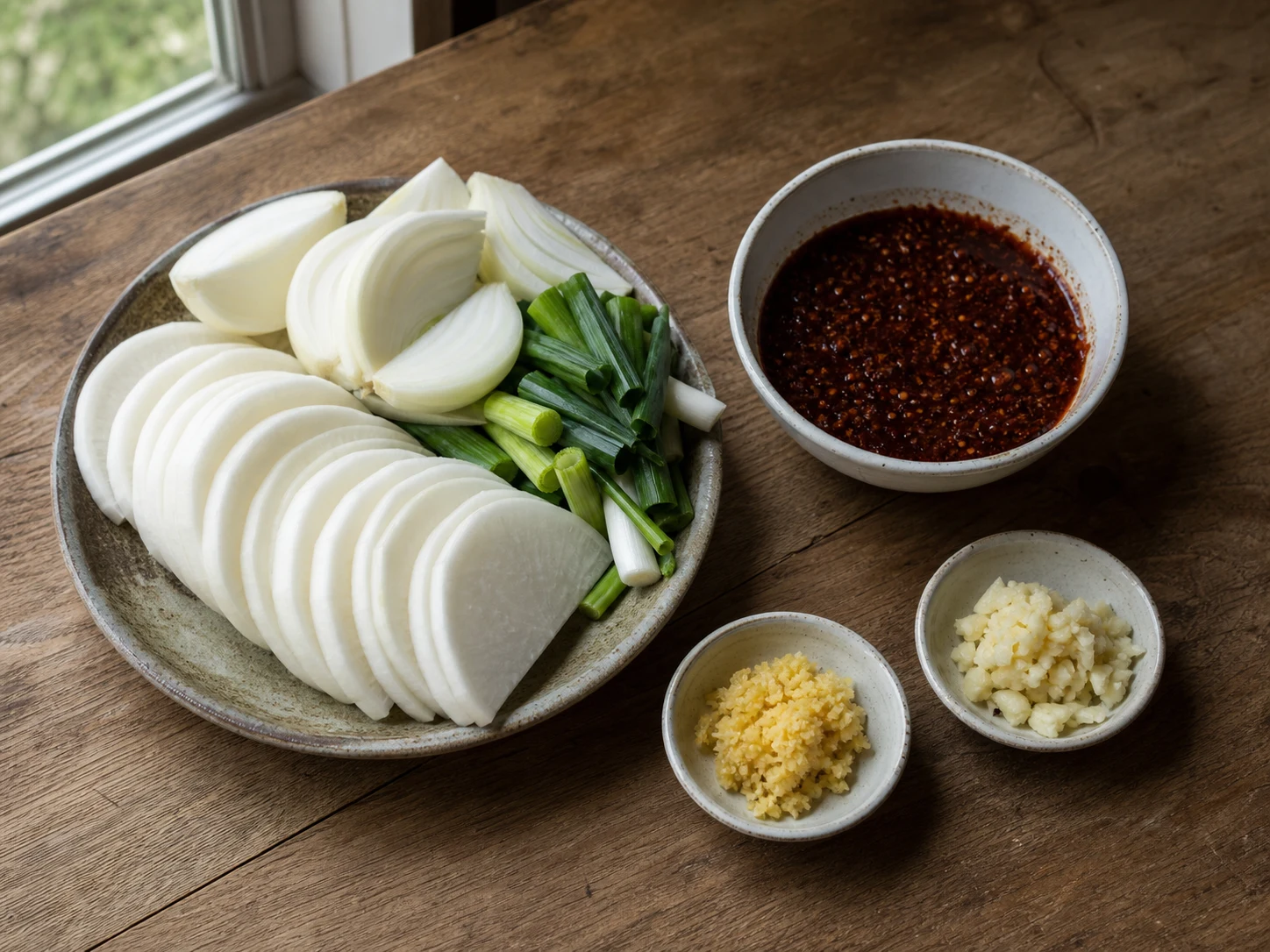
Peel and cut 600 g of Korean radish into 1.5 cm (1/2 in) thick half-moons. Slice 150 g of yellow onion into thick wedges, then trim 60 g of green onions and cut them into 5 cm (2 in) lengths. Mince 20 g of garlic cloves and grate 15 g of fresh ginger directly into a bowl. Add 480 ml of water, 45 ml of soy sauce, 18 g of gochugaru, 12 g of light brown sugar, and 1 g of black pepper, then stir until the sugar dissolves and the chile flakes are evenly suspended.
Give the radish a head start
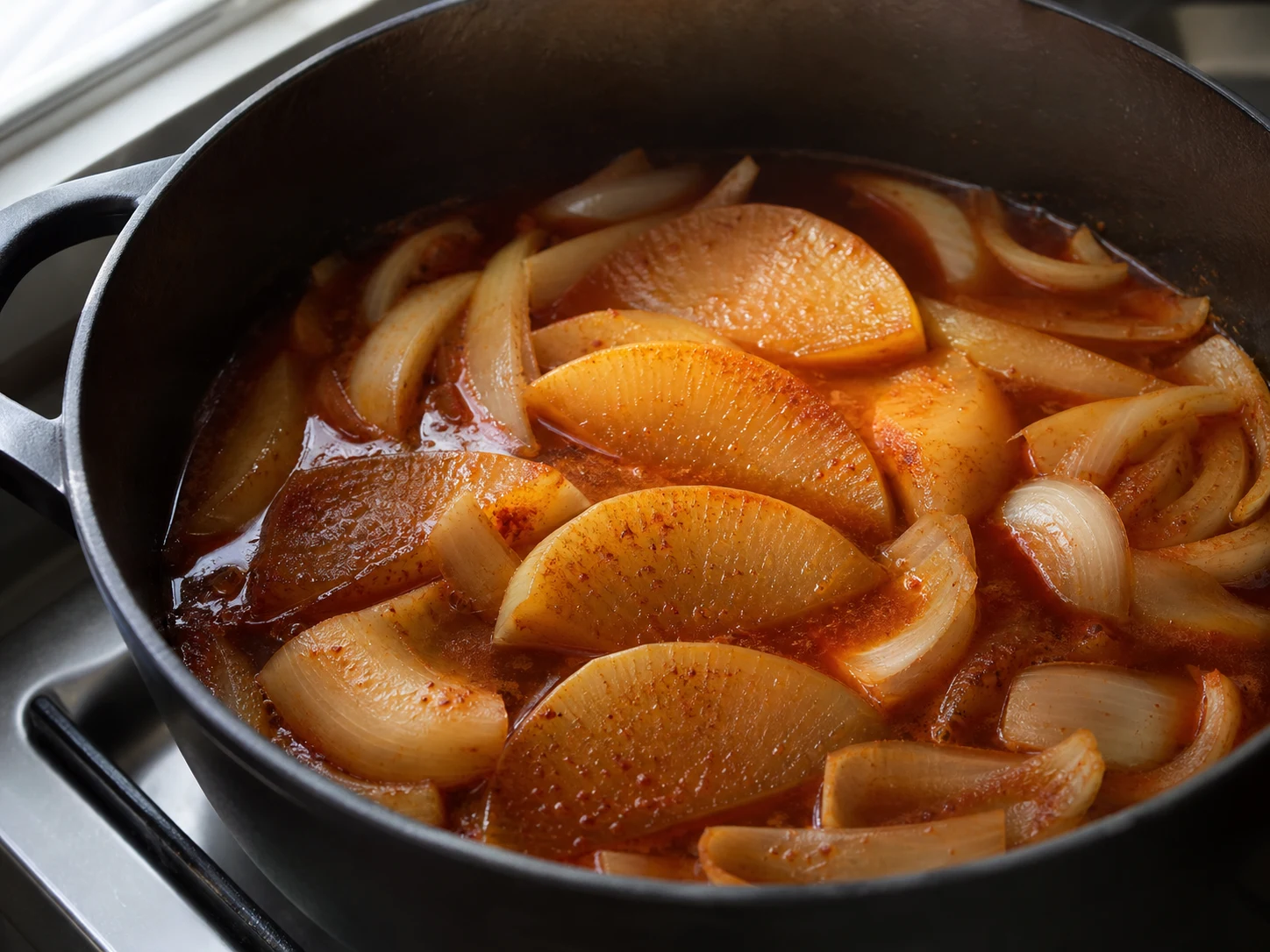
Arrange the radish in an even layer in a wide, heavy pot, tuck the onion around it, and pour in the braising sauce. Bring the liquid to a lively simmer over medium-high heat. Cover, lower the heat to medium-low, and simmer for 15 minutes, or until the outside edges of the radish look slightly translucent but the centers still resist a knife.
15:00Braise the mackerel gently
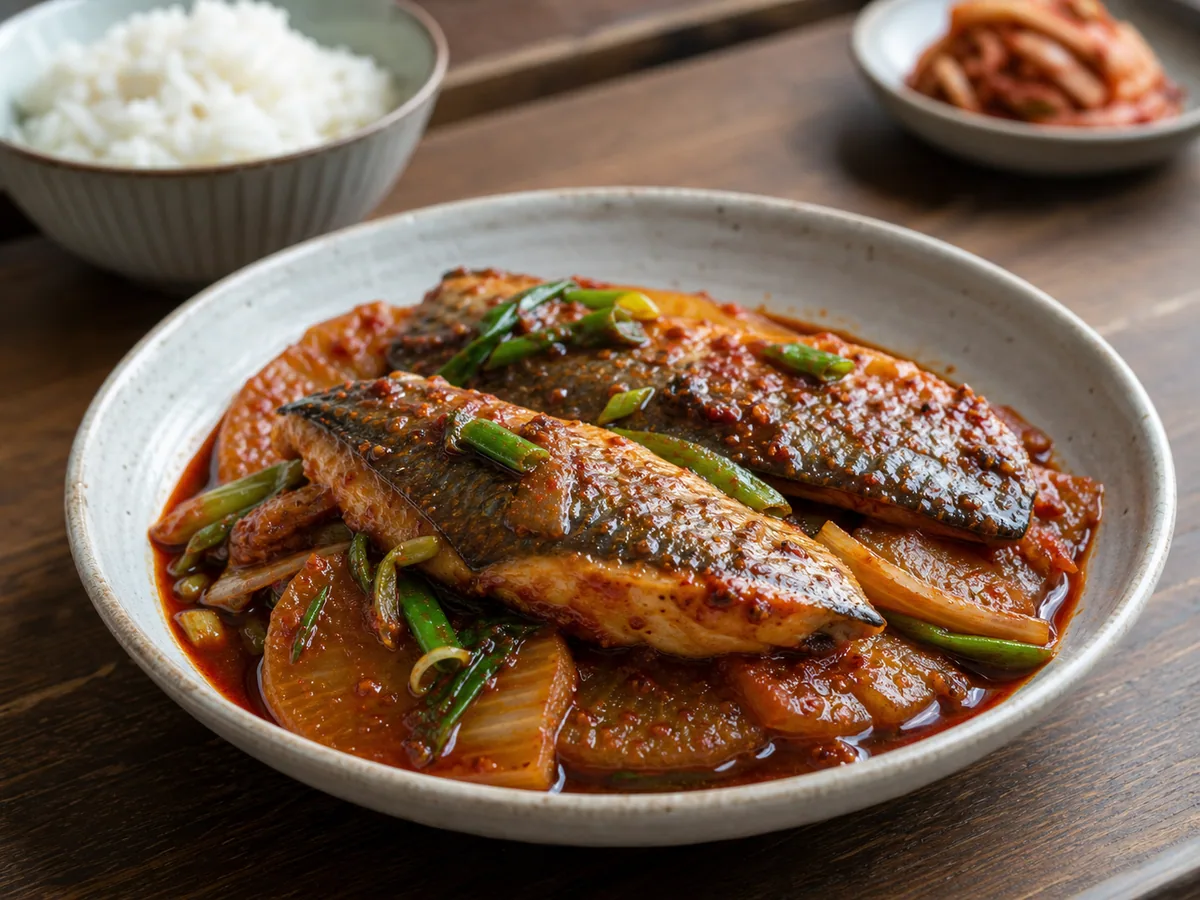
Arrange 680 g of skin-on mackerel fillets skin-side up over the radish in a single layer. Spoon some of the hot broth over the fish, cover the pot, and keep the liquid at a gentle simmer over medium-low heat for 15 minutes. Do not flip the fillets; spooning broth over the top seasons them without breaking the flesh.
15:00Reduce the sauce and check doneness
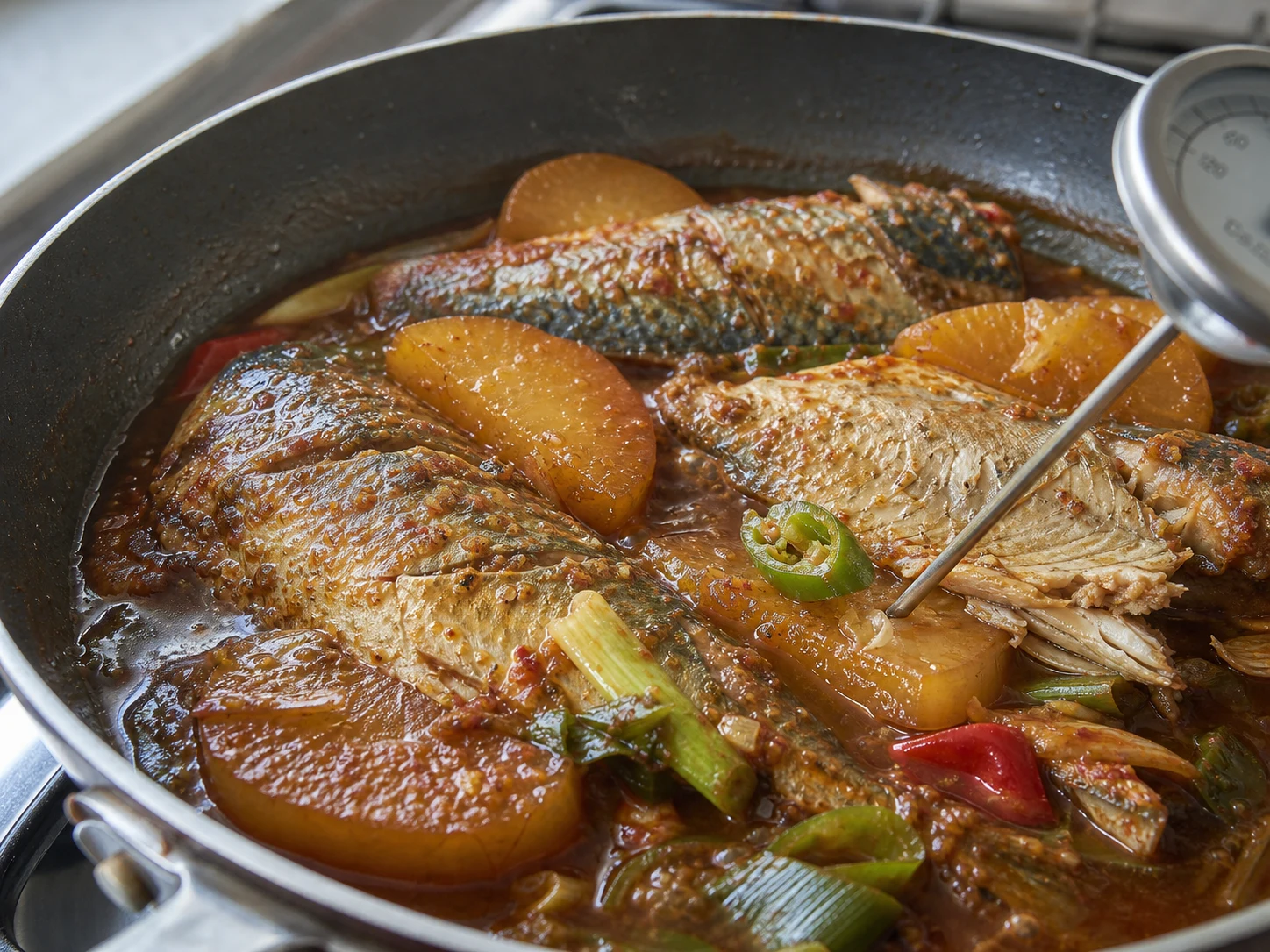
Uncover the pot and scatter 60 g of green onions and fresh green chile (optional) around the fish. Simmer gently for 8 to 10 minutes, spooning broth over the mackerel two or three times, until the sauce lightly coats a spoon and the radish is tender throughout. Start checking at 8 minutes. Insert a food thermometer into the thickest part of the fish; it must reach 63°C/145°F. The flesh should also be opaque and separate easily with a fork.
08:00Spoon over the sauce and serve
Turn off the heat and let the bubbling settle for 2 minutes. Taste the broth and dilute it with a small splash of hot water only if it is stronger than you like. Spoon plenty of radish and sauce around each portion of mackerel, and serve immediately with steamed short-grain rice (optional).
02:00


Smart Substitutions
- No Korean radish? Use daikon of similar diameter. It is a little milder and may soften a few minutes sooner.
- Prefer less heat? Use half the gochugaru and omit the fresh green chile; the soy, ginger, and garlic will still give the broth depth.
- No mackerel? Use skin-on salmon portions or firm cod steaks of similar thickness, and cook the thickest part to 63°C/145°F.
- No light brown sugar? Use white sugar in the same quantity, or start with 2 teaspoons honey and adjust the finished broth to taste.
Tips and Variations
- Choose thick, evenly sized mackerel fillets so the portions finish cooking at about the same time.
- Keep the skin facing up throughout the braise; it protects the flesh and helps the fillets hold together.
- Use a wide pot that holds the fish in one layer, so every portion cooks in the same depth of broth.
What Went Wrong?
- Radish is still firm Transfer cooked fish carefully to a warm serving platter, cover loosely, and simmer the radish a few minutes longer before returning the fish to the sauce for serving.
- Fish is breaking apart Lower the heat, stop flipping or stirring the fillets, and spoon broth over them instead.
- Sauce is too salty Add a small splash of hot water, simmer for 1 minute, and taste again before serving.
- Sauce is too thin Remove the lid and simmer gently for a few extra minutes, spooning the liquid over the fish as it reduces.
Nutrition Estimate
- Fiber: 5 g per serving
- Sodium: 850 mg per serving
Nutrition disclaimer:This recipe is provided for general cooking information only. Nutrition values are estimates and may vary by ingredients, brands, preparation methods, and serving sizes. Check ingredient labels and follow appropriate food-safety practices. This content is not medical, dietary, allergy, or professional food-safety advice.
FAQ
Found an error or have a suggestion?
Help us improve this recipe. Send us your feedback and include the recipe name so we can take a look.