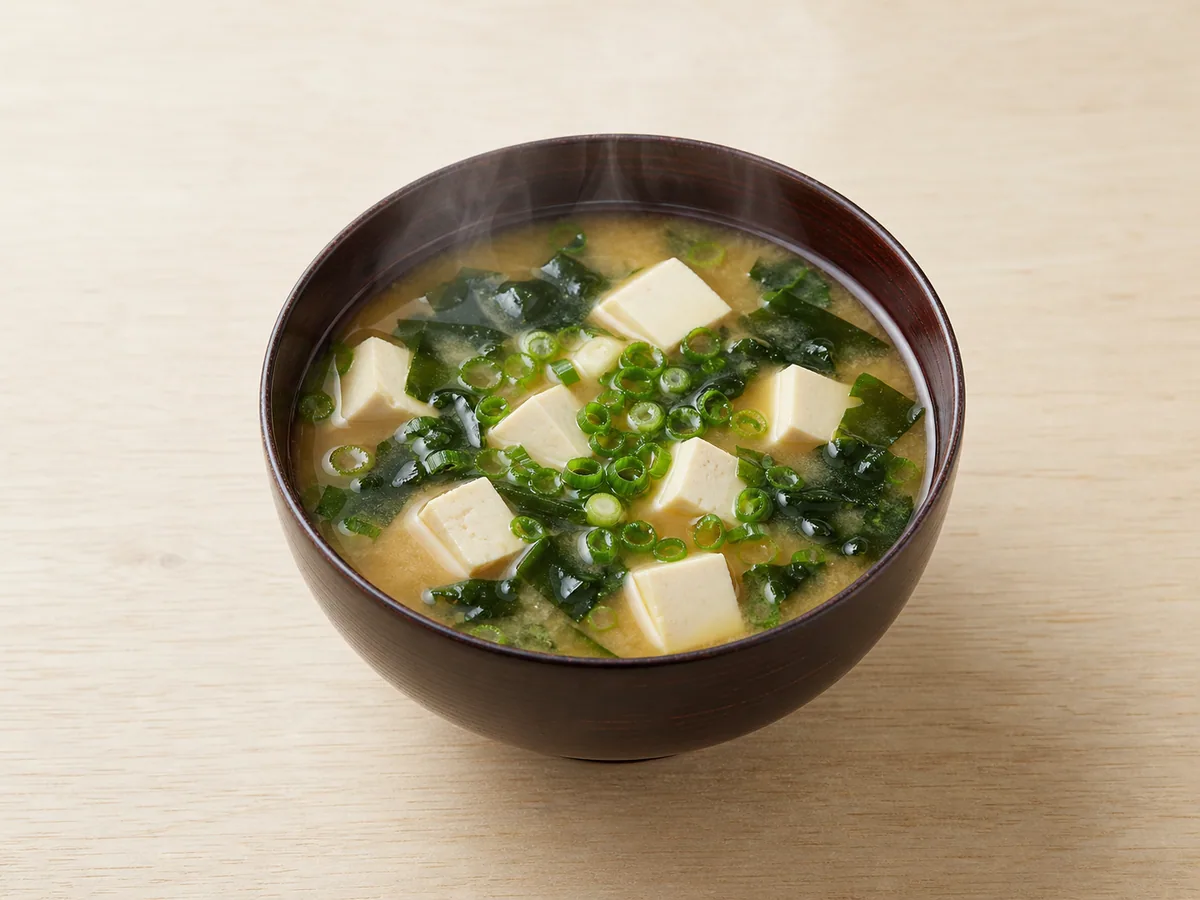
Method
Prepare the tofu, wakame, and green onions
Place 4 g of dried cut wakame in a small bowl and cover with cool water. Let it soften for 5 minutes, then drain well and gently squeeze out excess water. Cut 200 g of soft tofu (soy) into 1.5 cm (1/2 in) cubes. Thinly slice 30 g of green onions.
05:00Make the dashi broth
Pour 840 ml of water into a medium saucepan and bring it to a gentle simmer over medium heat. Whisk in 6 g of bonito dashi granules (fish) until fully dissolved, then simmer for 2 minutes so the broth tastes rounded rather than powdery. Keep the surface at small, steady bubbles instead of a hard boil.
02:00Warm the tofu and wakame
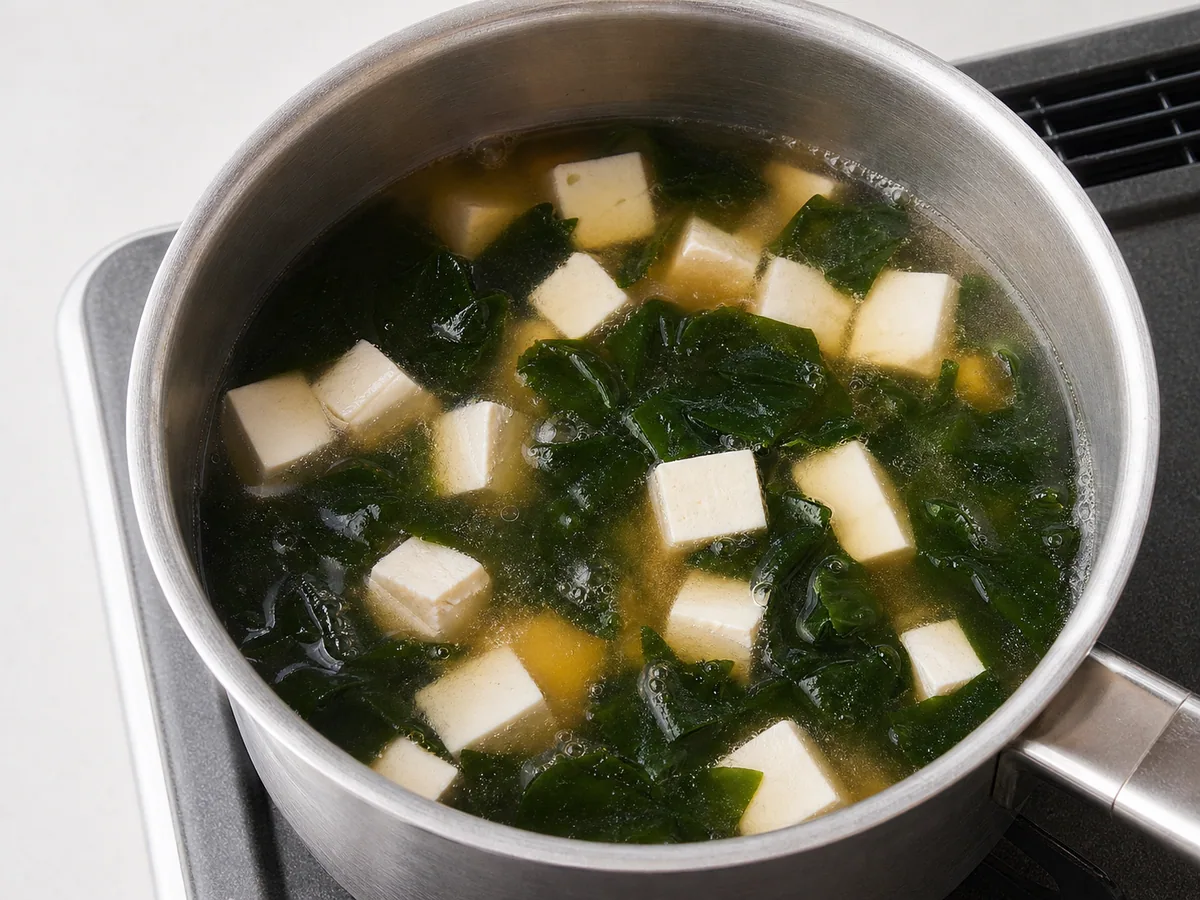
Lower the heat to medium-low. Add 200 g of soft tofu (soy) and 4 g of dried cut wakame to the broth and warm gently for 2 to 3 minutes. Start checking at 2 minutes: the tofu should be hot through and the wakame should be tender and deep green, while the broth remains below a vigorous boil.
02:00Dissolve the miso and serve
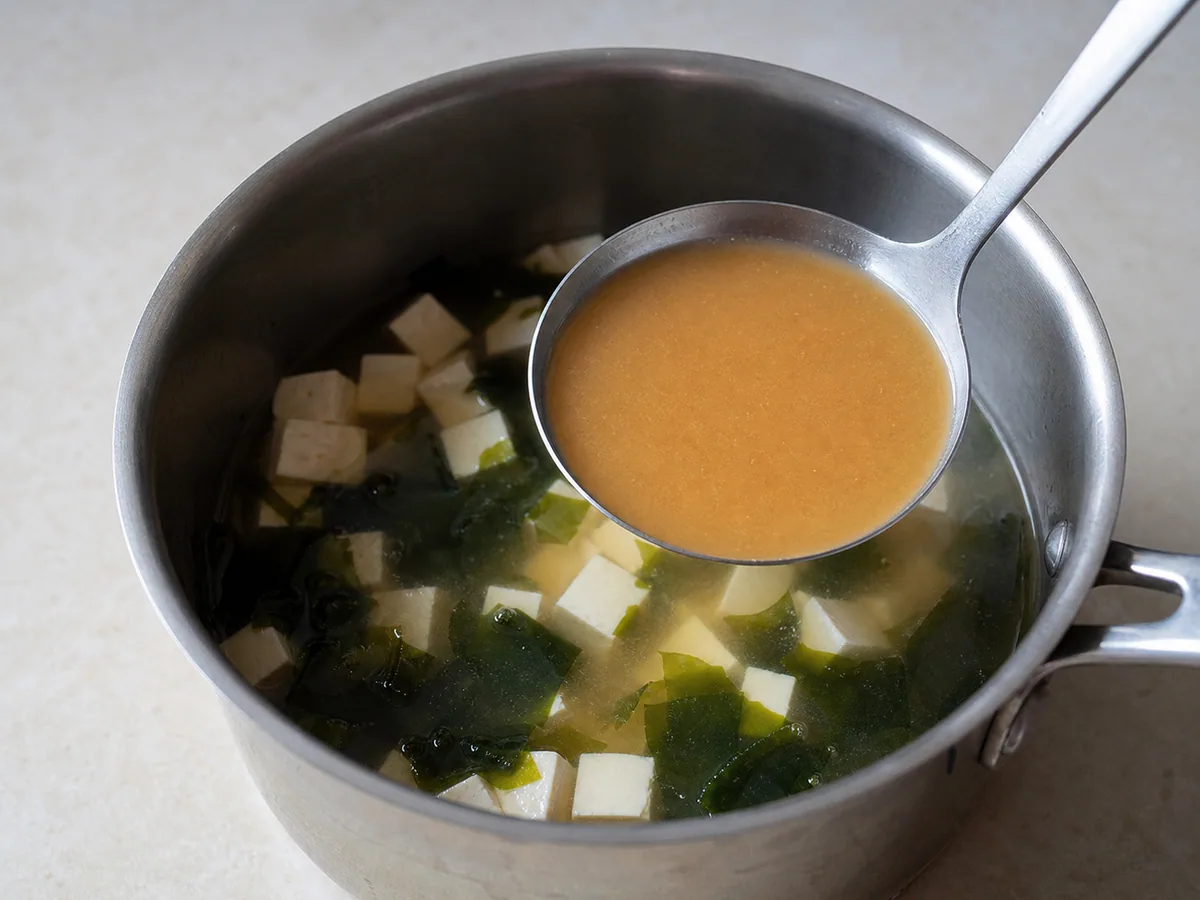
Turn off the heat. Put 51 g of awase miso paste (soy) in a ladle, mix in a little hot broth until smooth, then stir it back into the saucepan. Add 30 g of green onions and taste. Warm over low heat only if needed, stopping before the soup boils, then divide among bowls and serve immediately.


Smart Substitutions
- No bonito dashi? Use kombu dashi granules for a gentler seaweed-based broth, checking the package for its recommended concentration.
- Prefer a milder miso? Use white miso for a sweeter, softer flavor, or blend white and red miso for more depth.
- No soft tofu? Use medium-firm tofu and cut it into small cubes so it warms quickly without breaking apart.
- No wakame? Add thinly sliced fresh shiitake and simmer until tender before dissolving the miso.
Tips and Variations
- Dissolve miso in a ladle with hot broth before adding it to the pan; this prevents stubborn lumps.
- Drain rehydrated wakame thoroughly so it does not dilute the broth.
- Keep the soup below a boil after adding miso to preserve its rounded aroma and smooth texture.
What Went Wrong?
- Soup is too salty Add a small splash of hot water, stir, and taste again before serving.
- Broth tastes weak Dissolve a little more miso in a ladle of hot broth rather than adding dry granules directly to the finished soup.
- Miso formed lumps Press the lumps through a fine-mesh strainer with a spoon, then stir the strained broth back into the saucepan.
- Wakame is overly soft Add it later next time and warm only until expanded and tender; dried wakame softens quickly.
Nutrition Estimate
- Fiber: 1 g per serving
- Sodium: 840 mg per serving
Nutrition disclaimer:This recipe is provided for general cooking information only. Nutrition values are estimates and may vary by ingredients, brands, preparation methods, and serving sizes. Check ingredient labels and follow appropriate food-safety practices. This content is not medical, dietary, allergy, or professional food-safety advice.
FAQ
Found an error or have a suggestion?
Help us improve this recipe. Send us your feedback and include the recipe name so we can take a look.