Method
Soften the corn husks
Place 24 dried corn husks in a large bowl or clean sink and cover generously with very hot tap water. Weigh them down with a plate so they stay submerged. Soak for about 30 minutes, until flexible and easy to fold without splitting, then rinse both sides and keep them damp under a clean towel.
30:00Cook the pork until shreddable
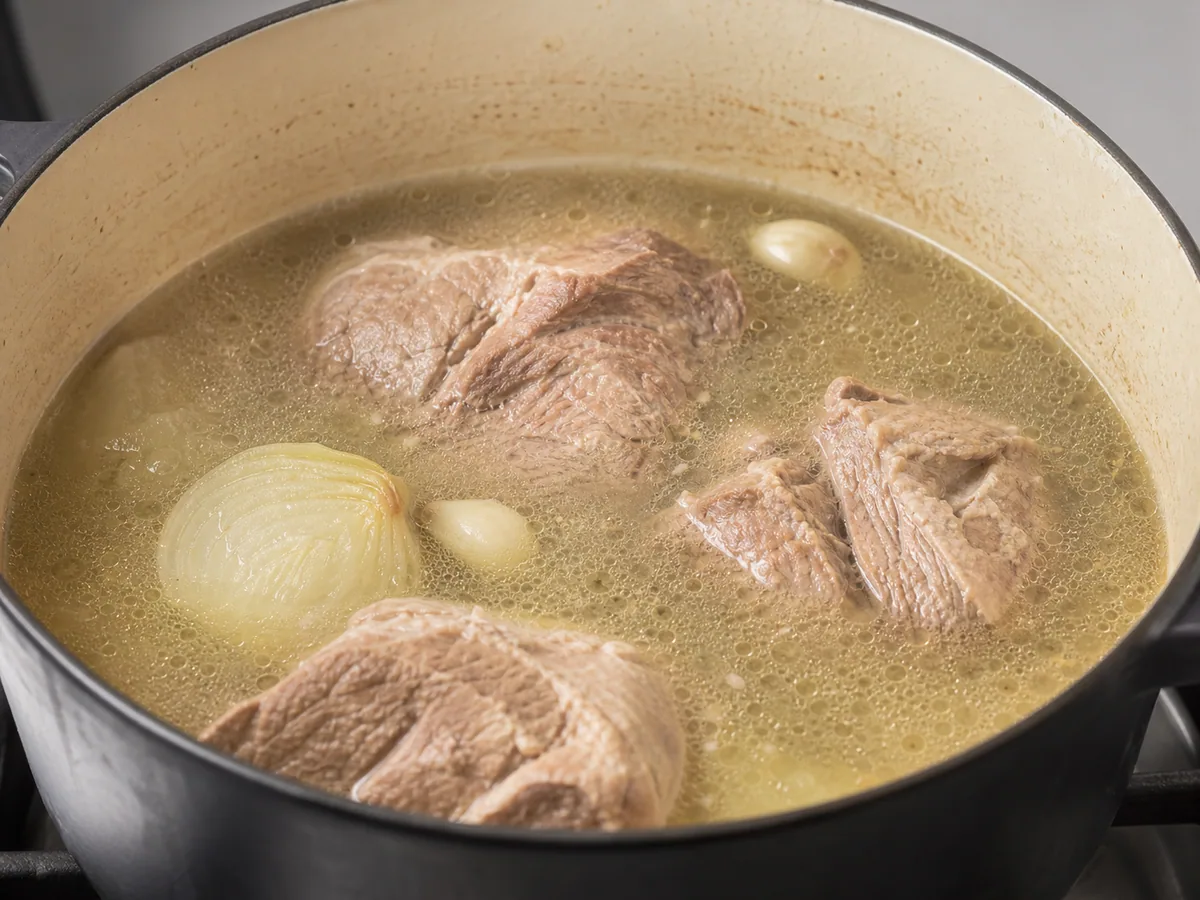
Cut 900 g of boneless pork shoulder into 5 cm (2 in) chunks on a cutting board reserved for raw meat. Put the pork in a heavy pot with 720 ml of low-sodium chicken broth for pork, 140 g of yellow onion for pork, 3 garlic cloves for pork, and 5 g of kosher salt for pork. Bring to a gentle simmer over medium-high heat, then cover and reduce the heat to low. Cook, turning the pieces once or twice, until a food thermometer inserted into the thickest pieces reads at least 63°C/145°F and the meat continues cooking to about 93°C/200°F for easy shredding, 1 hour 45 minutes to 2 hours. Wash hands and clean the knife, board, and nearby surfaces after handling raw pork. Start checking tenderness at 1 hour 45 minutes.
1:45:00Toast and soften the chiles
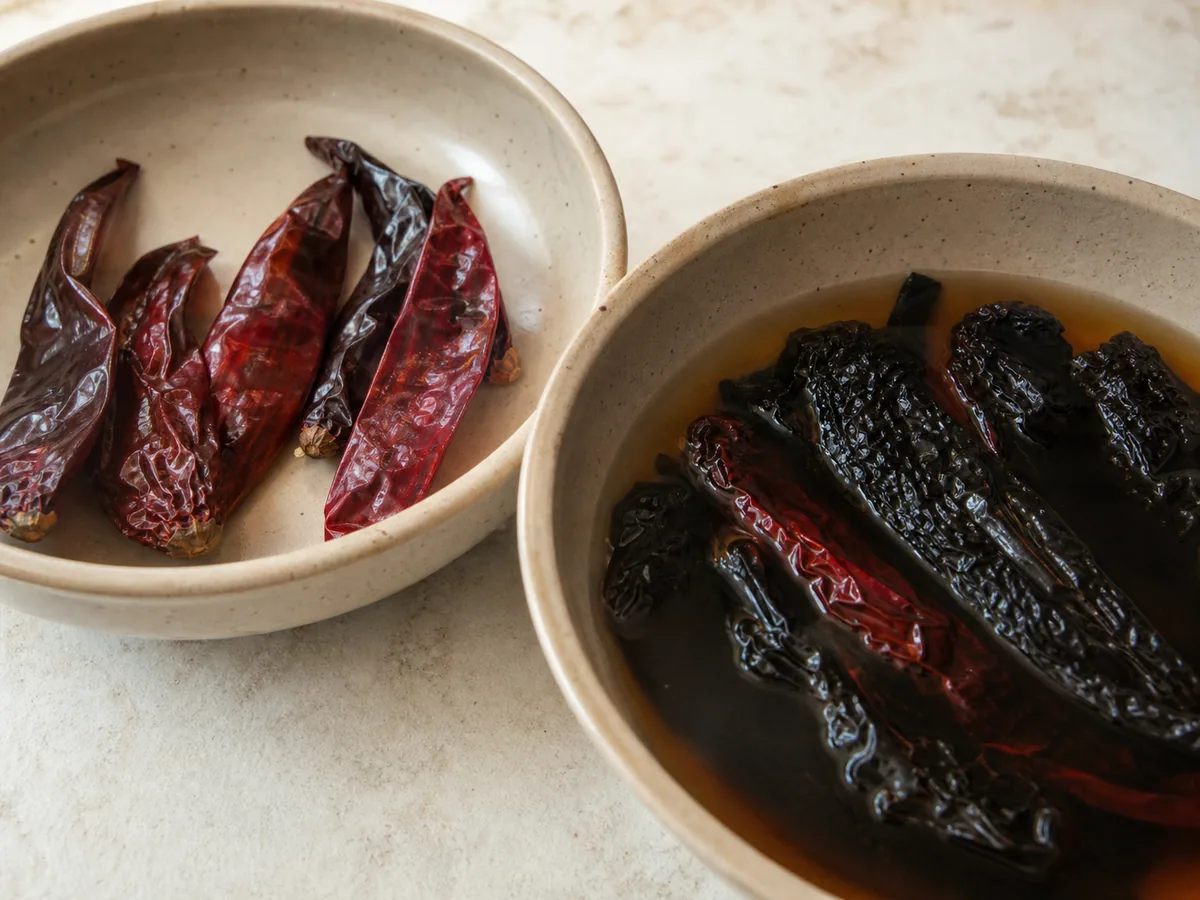
Remove stems and most seeds from 50 g of dried guajillo chiles and 35 g of dried ancho chiles. Heat a dry skillet over medium and press each chile flat against the pan for 10 to 15 seconds per side, just until fragrant and pliable; dark scorching will make the sauce bitter. Transfer the chiles to a heatproof bowl, pour 720 ml of hot water for chiles over them, and weigh them down with a small plate. Soak for about 20 minutes, until softened.
20:00Blend and cook the red chile sauce
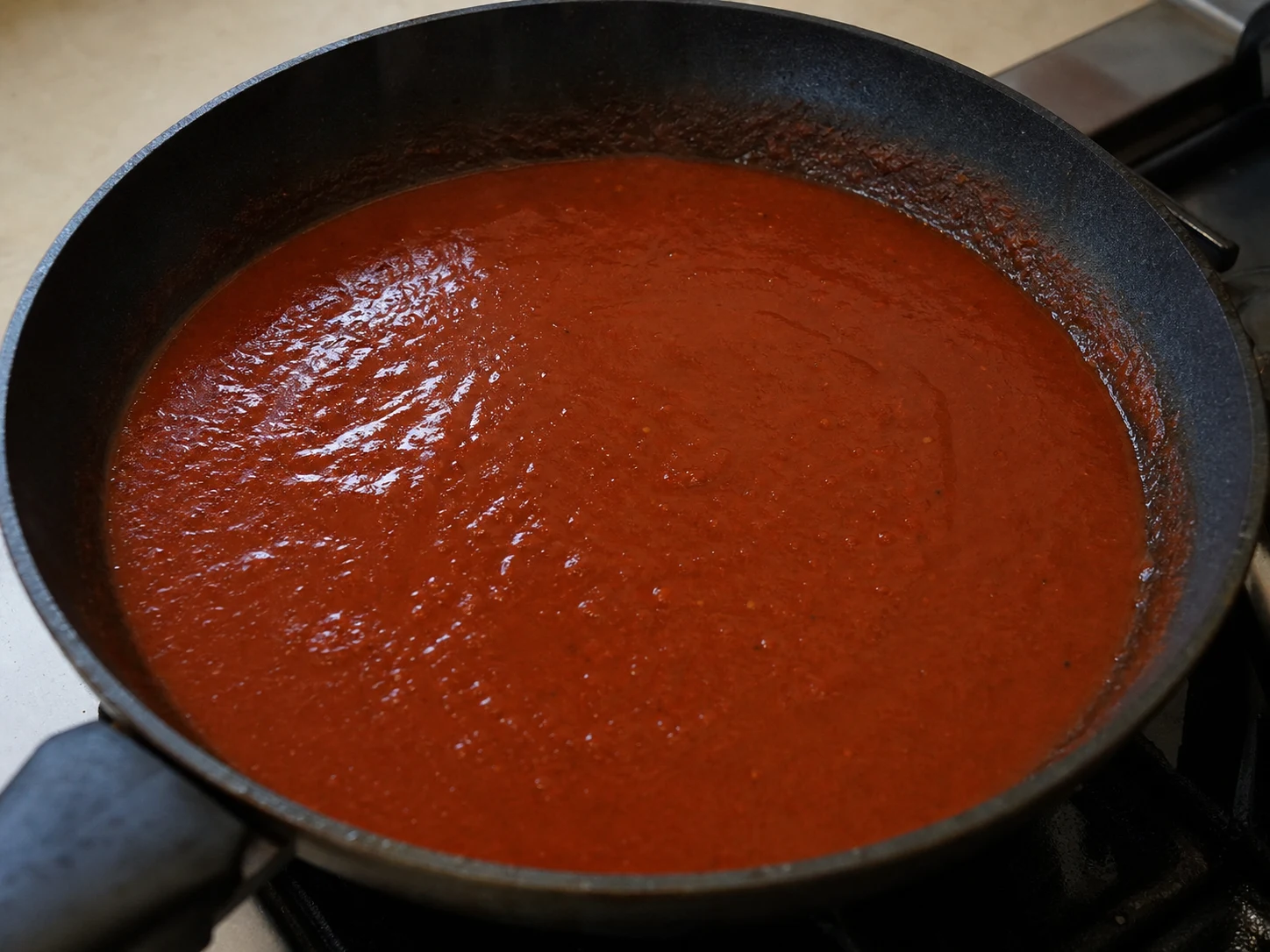
Drain the softened chiles. Blend them with 120 g of yellow onion for chile sauce, 3 garlic cloves for chile sauce, 240 ml of low-sodium chicken broth for chile sauce, 30 ml of apple cider vinegar, 2 g of ground cumin, 2 g of Mexican oregano, and 3 g of kosher salt for chile sauce until very smooth, pausing to scrape the blender jar. Press the puree through a medium-mesh sieve into a bowl. Heat 15 ml of vegetable oil in a wide skillet over medium heat, carefully add the puree, and cook at a steady simmer, stirring often, until the color deepens to brick red and a spoon drawn across the pan leaves a brief clear trail, 10 to 12 minutes. Start checking the texture at 10 minutes.
10:00Shred and season the pork filling
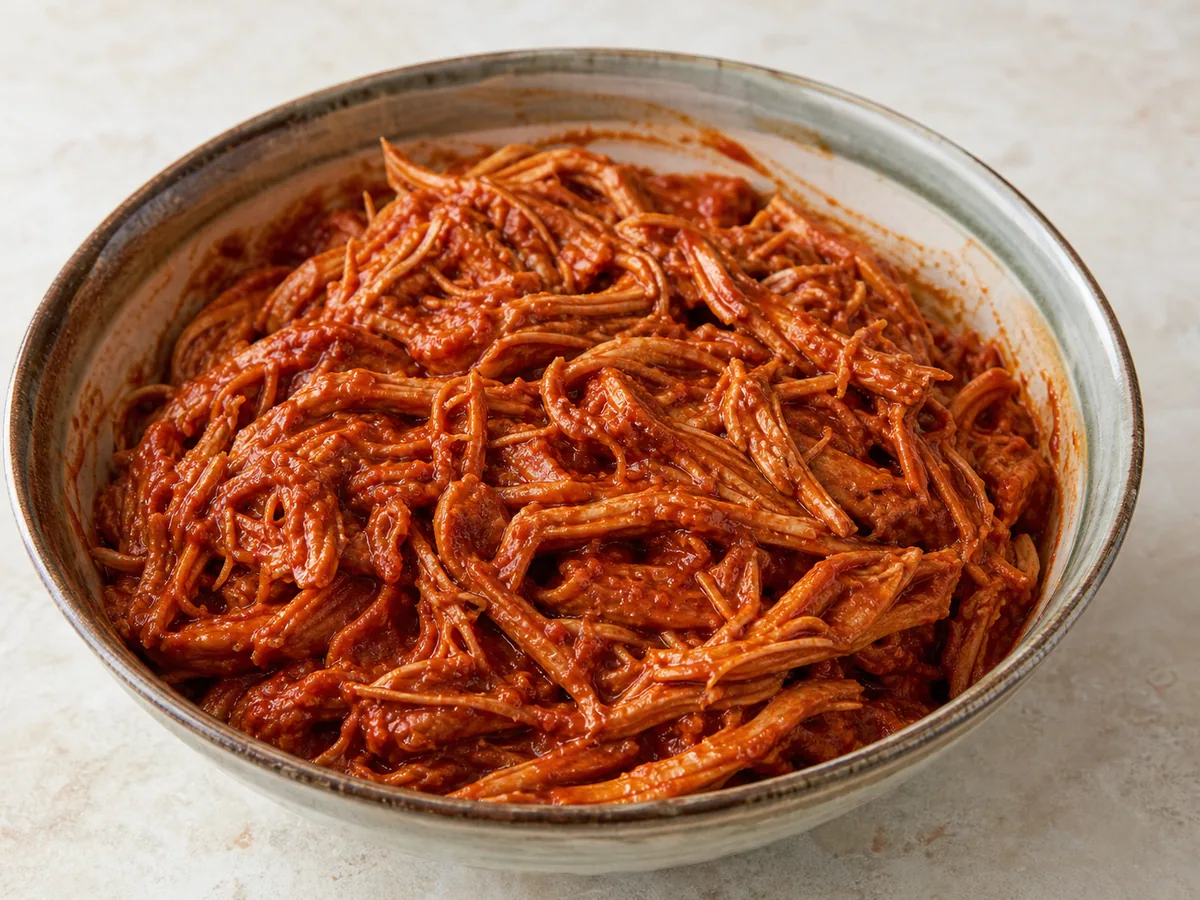
Lift the fully cooked pork from the pot and let it cool just enough to handle. Discard large pieces of surface fat, then pull the meat into short, fine shreds with two forks. Stir the pork into the chile sauce and simmer over medium-low heat for about 8 minutes, stirring occasionally, until every shred is coated and the filling is moist but no liquid pools around it. Taste and adjust the seasoning before taking the skillet off the heat.
08:00Mix a soft, airy masa
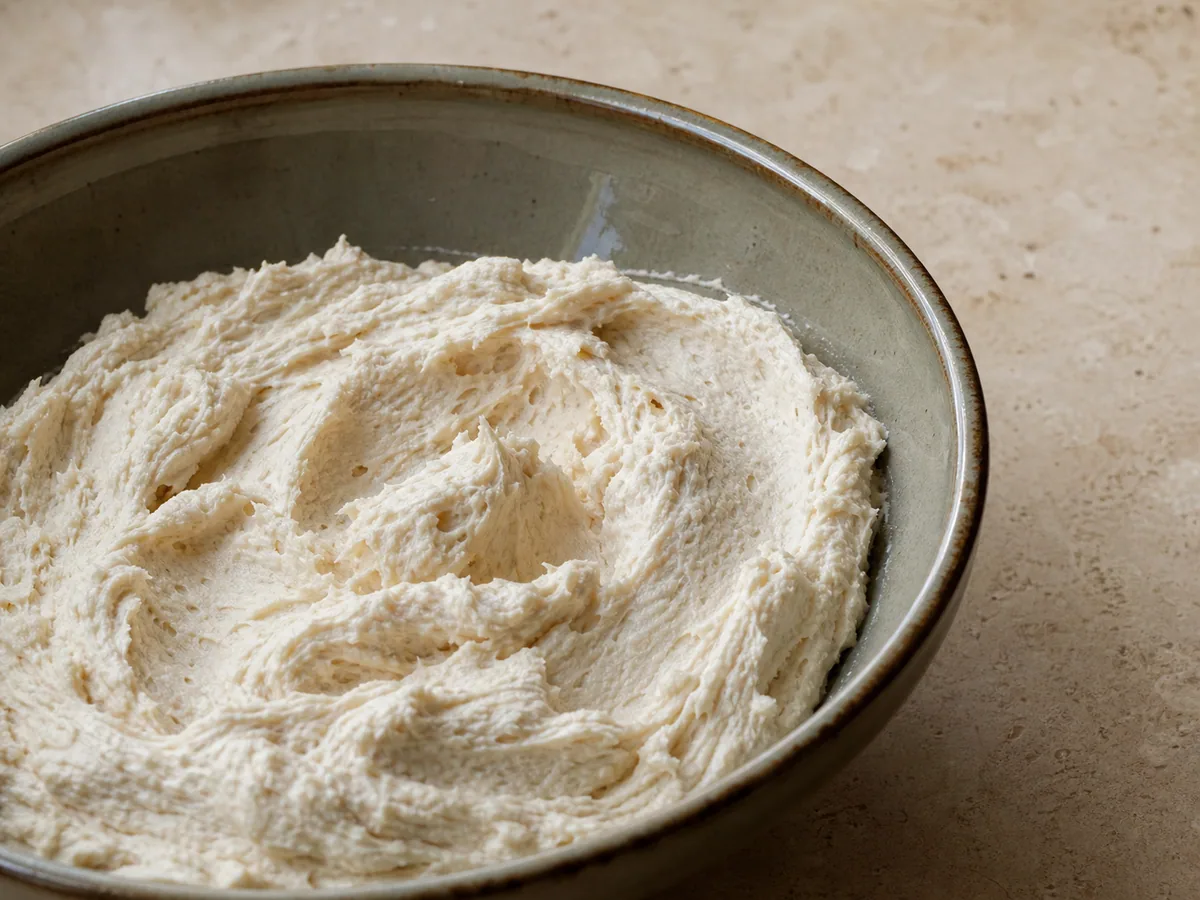
Whisk 450 g of masa harina, 12 g of baking powder, and 5 g of kosher salt for masa in a bowl. In a large mixing bowl, beat 150 g of lard with an electric mixer on medium-high until lighter in color and fluffy, 3 to 4 minutes. Reduce the speed and alternate adding the dry masa mixture with 600 ml of low-sodium chicken broth for masa, mixing well after each addition. Beat until the dough is uniform, soft enough to spread with the back of a spoon, and firm enough to hold shallow ridges. Add warm water (optional) a spoonful at a time only if the dough feels stiff or cracks when spread.
04:00Fill and fold the tamales
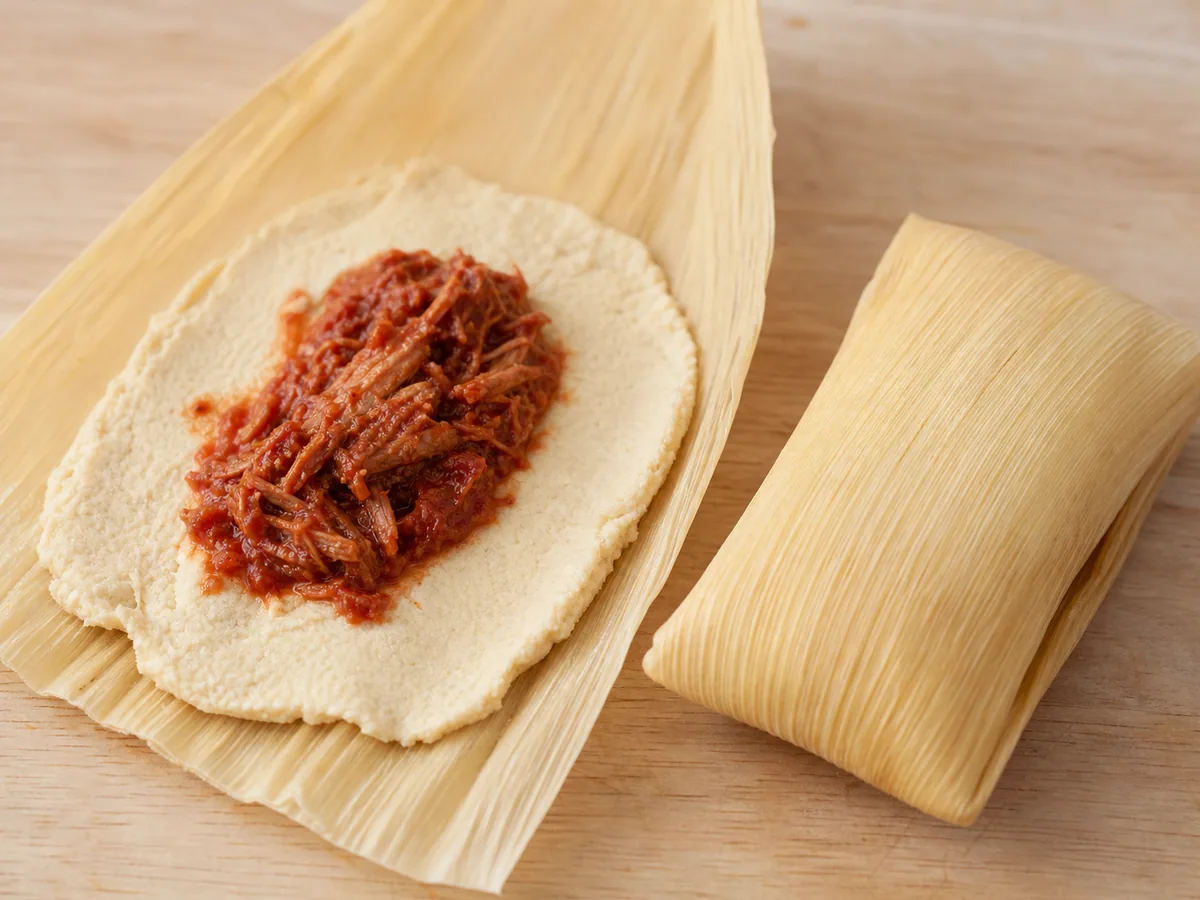
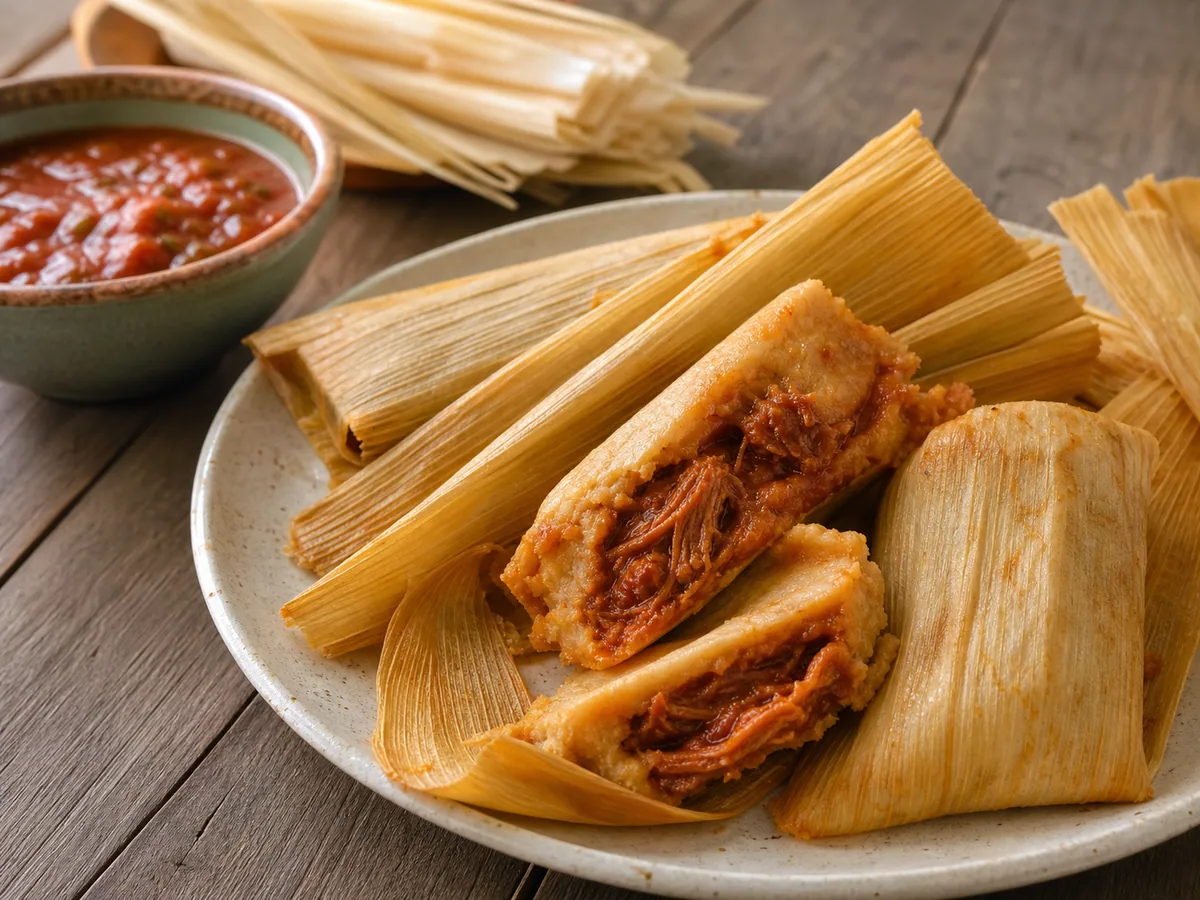
Set a softened husk smooth-side up with the wide end nearest you. Spread masa into an even layer about 5 mm (1/4 in) thick over a rectangle roughly 12 x 10 cm (4 3/4 x 4 in), leaving the narrow top and side edges bare. Spoon a narrow line of pork filling down the center. Bring the long sides of the husk together so the masa edges meet around the filling, fold one side over the other, then fold the narrow end upward. Stand each packet open-end up while you finish the batch. Tear a small husk into strips and tie any packets that will not stay folded.
Steam until the husks release cleanly
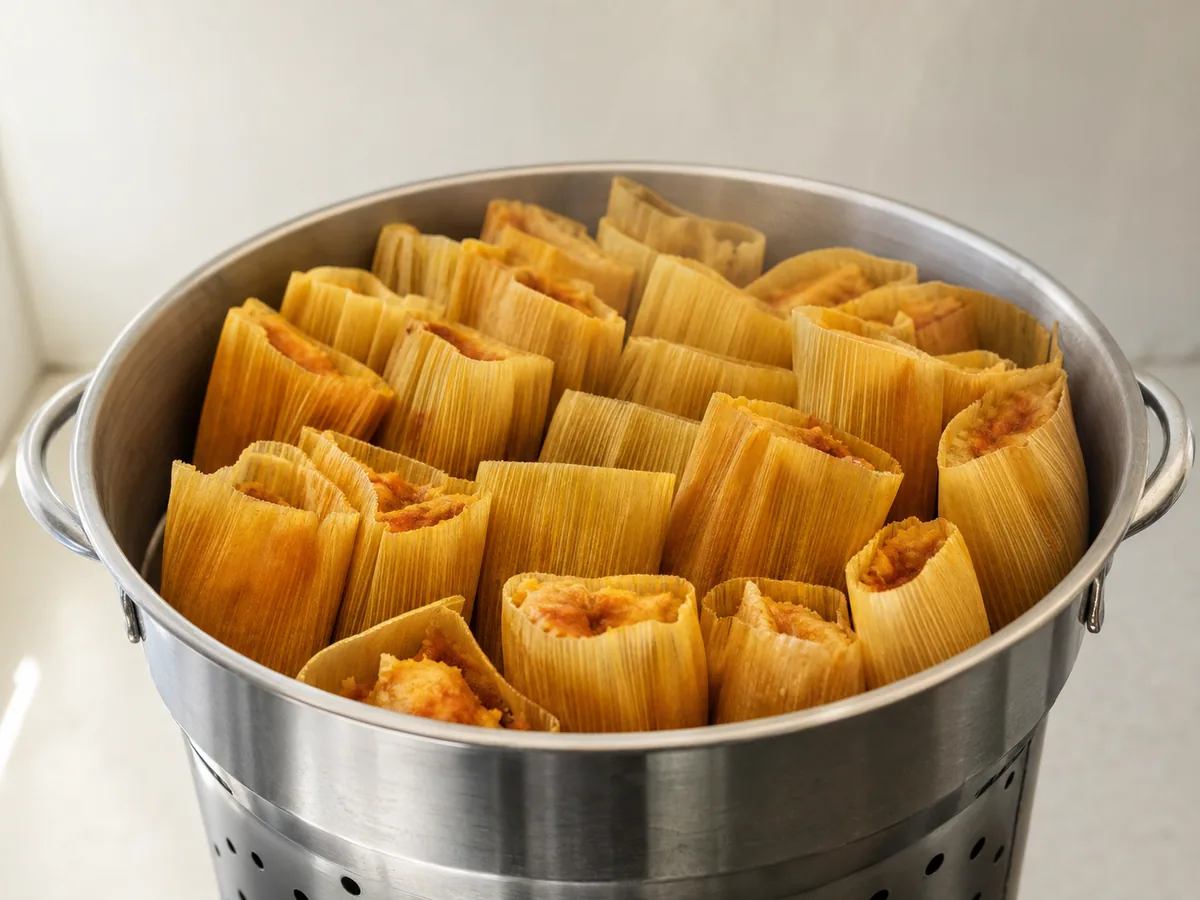
Pour water into a large steamer pot so it stays below the basket. Arrange the tamales upright with open ends facing up, leaving small gaps for steam to circulate. Cover the top with spare damp husks, fit the lid, and bring the water to a strong simmer. Reduce the heat to maintain steady steam and cook for 60 to 75 minutes, checking the water level every 20 minutes and adding boiling water around the basket when needed. Start checking at 60 minutes: a test tamal is ready when the husk peels away cleanly and the masa feels set rather than pasty.
1:00:00Let the masa firm before serving
Turn off the heat, uncover the pot, and let the tamales stand in the steamer basket for 15 minutes. This pause lets the hot masa finish firming so it holds together when unwrapped. Serve while warm, reminding diners to remove and discard the corn husks before eating.
15:00


Smart Substitutions
- No lard? Use vegetable shortening for a similarly tender texture, though the masa will have less pork flavor.
- No ancho chiles? Use additional guajillo chiles for a brighter, slightly sharper red sauce.
- No Mexican oregano? Use regular dried oregano mixed with a small pinch of dried marjoram.
- No chicken broth? Use unsalted pork broth or water and adjust the kosher salt after tasting.
Tips and Variations
- Toast each dried chile only until fragrant; even a few blackened spots can make the entire sauce taste bitter.
- Keep a small bowl of warm water nearby while spreading masa so the spoon glides without dragging or tearing the dough.
- Maintain visible steam throughout cooking, but keep the water below the basket so the bottom tamales do not become waterlogged.
What Went Wrong?
- Masa sticks to the husk Return the tamales to steady steam and check again after 10 minutes; sticky masa usually needs more cooking.
- Masa cracks while spreading Beat in warm water a spoonful at a time until the dough spreads smoothly without breaking at the edges.
- Filling leaks from the packets Simmer the pork mixture until no liquid pools in the skillet, and use a narrower line of filling.
- Tamales are dense Beat the lard until visibly fluffy and avoid pressing the masa hard against the husk during assembly.
Nutrition Estimate
- Fiber: 7 g per serving
- Sodium: 750 mg per serving
Nutrition disclaimer:This recipe is provided for general cooking information only. Nutrition values are estimates and may vary by ingredients, brands, preparation methods, and serving sizes. Check ingredient labels and follow appropriate food-safety practices. This content is not medical, dietary, allergy, or professional food-safety advice.
FAQ
Found an error or have a suggestion?
Help us improve this recipe. Send us your feedback and include the recipe name so we can take a look.