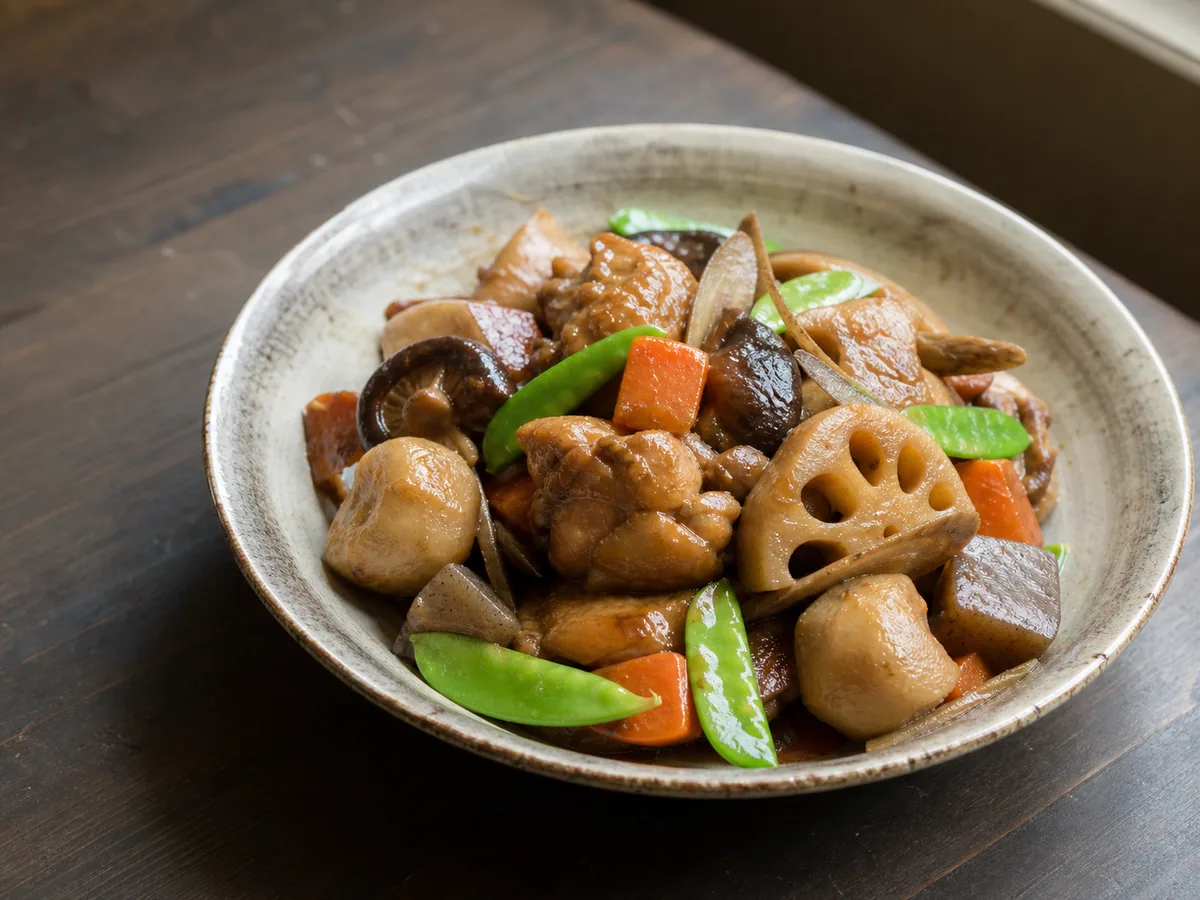
Method
Make the shiitake dashi
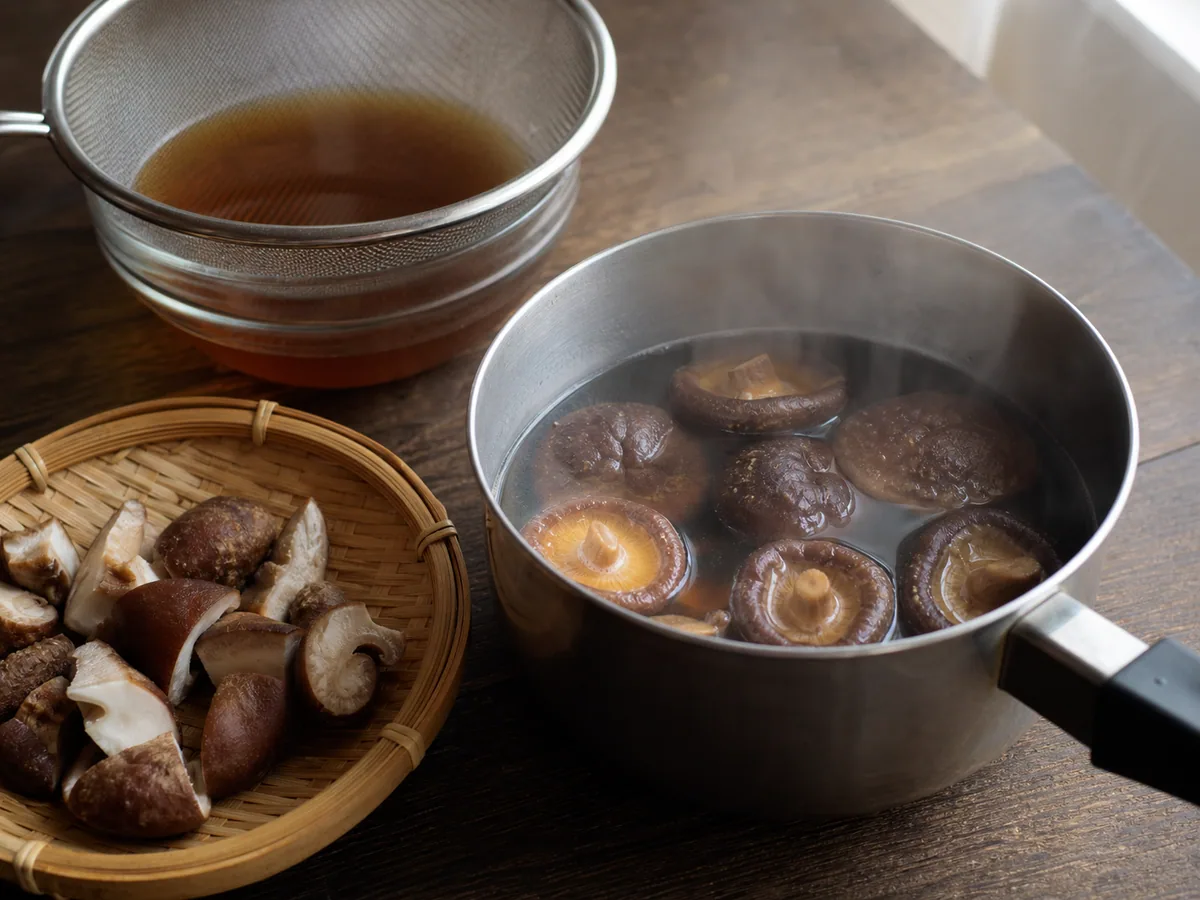
Combine 480 ml of water and 20 g of small dried shiitake mushroom caps in a medium saucepan. Leave them to soak for 20 minutes, until the caps are completely pliable; during the soak, set out the vegetables and equipment for the next step. Warm the saucepan over medium heat until the liquid is steaming and small bubbles gather at the edge, but do not let it boil hard. Lift out the mushrooms, pour the dashi through a fine sieve if it looks gritty, and reserve the liquid. Trim off the firm mushroom stems and quarter the caps.
20:00Shape the root vegetables
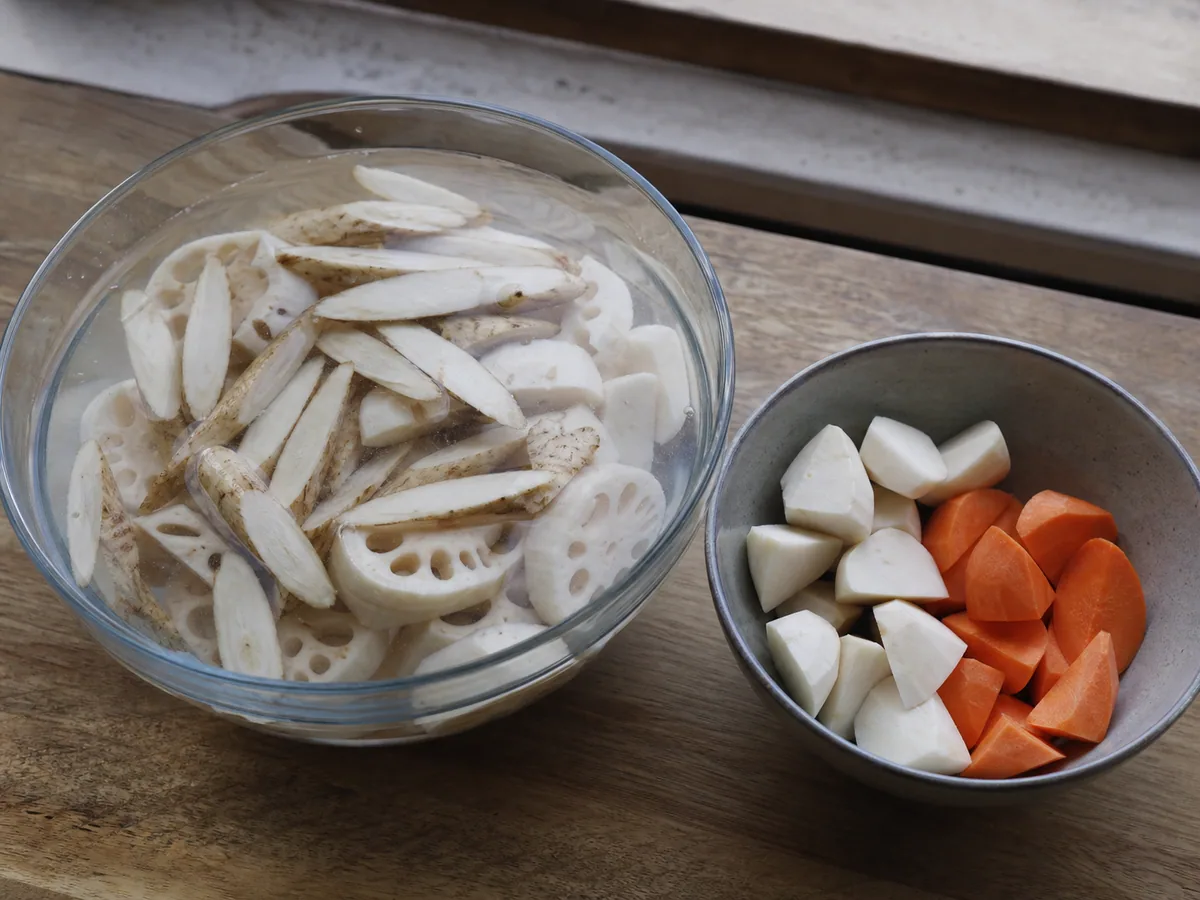
Peel and trim 200 g of lotus root, 120 g of burdock root, 240 g of Japanese taro, and 150 g of carrot. Cut them into rangiri pieces about 3 to 4 cm (1 1/4 to 1 1/2 in): hold each vegetable at an angle, make one cut, then rotate it about a quarter turn before the next cut. Keep the pieces similar in volume so they finish together. Place cut lotus root and burdock root in cold water while you work, then drain well.
Parboil the konnyaku
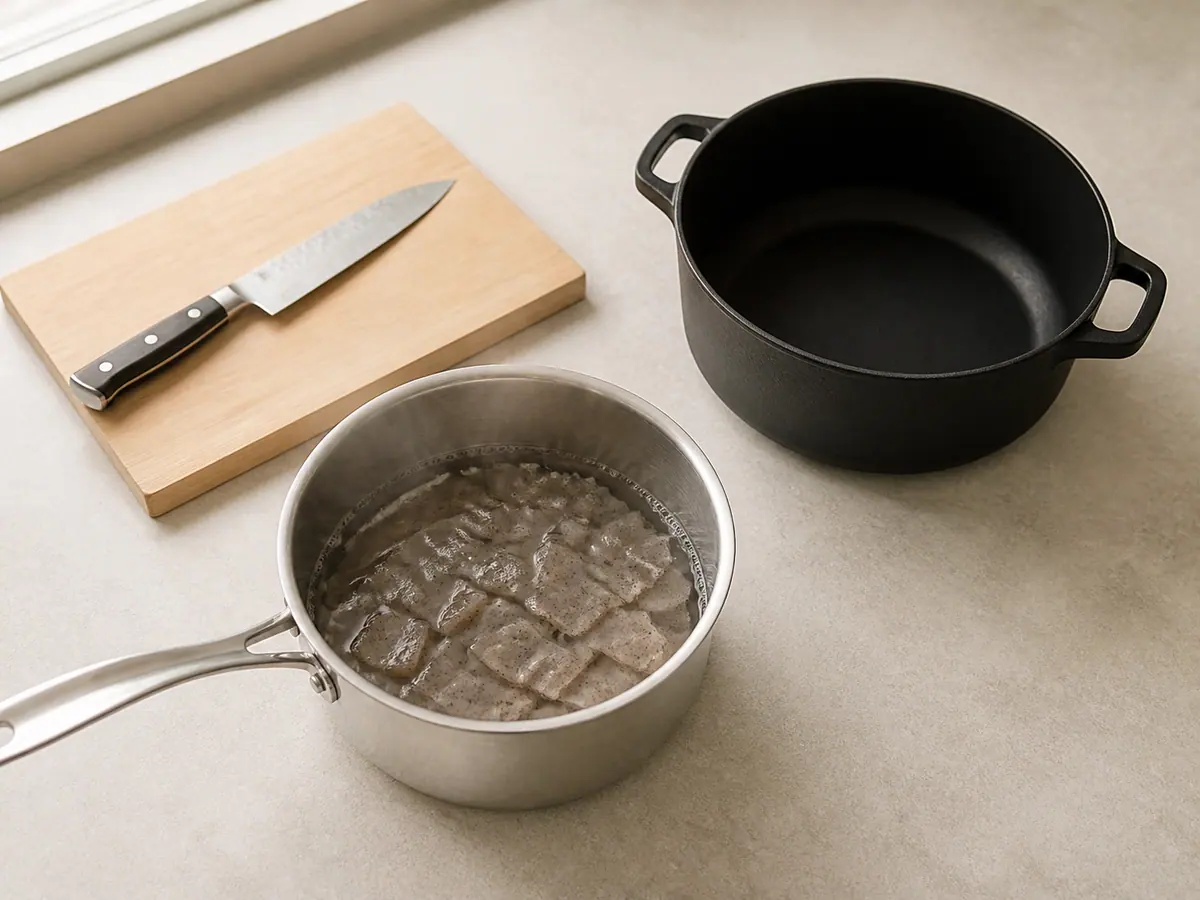
Bring a small saucepan of water to a boil. Tear 200 g of konnyaku into bite-size pieces so the rough edges can catch the broth. Boil for 2 minutes to freshen its flavor, then drain and let the pieces steam dry.
02:00Prepare the chicken safely
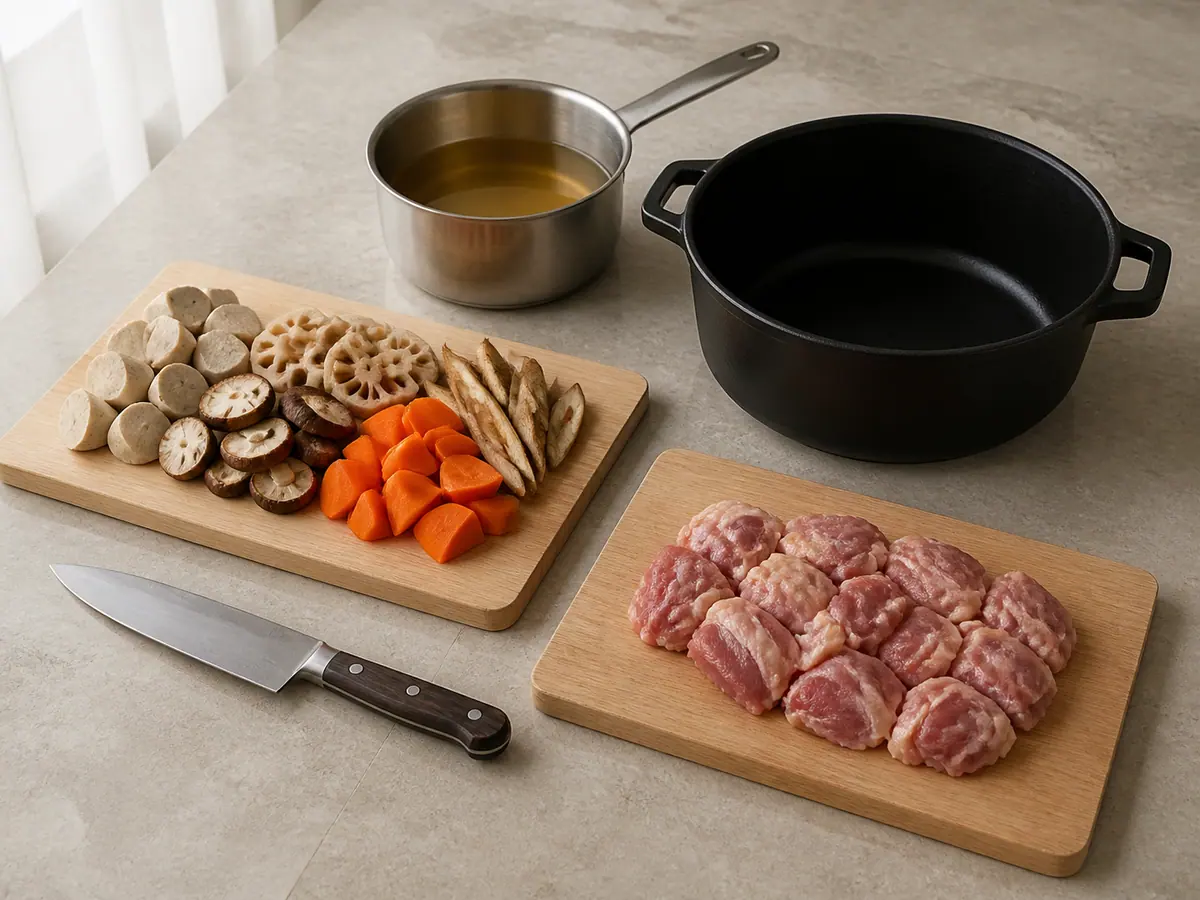
After the vegetables are cleared from the work area, pat 450 g of boneless skinless chicken thighs dry and cut them into pieces about 3 cm (1 1/4 in) across on a separate cutting board. Wash your hands, knife, board, and any contacted surfaces with hot soapy water before handling cooked or ready-to-eat food.
Brown the chicken
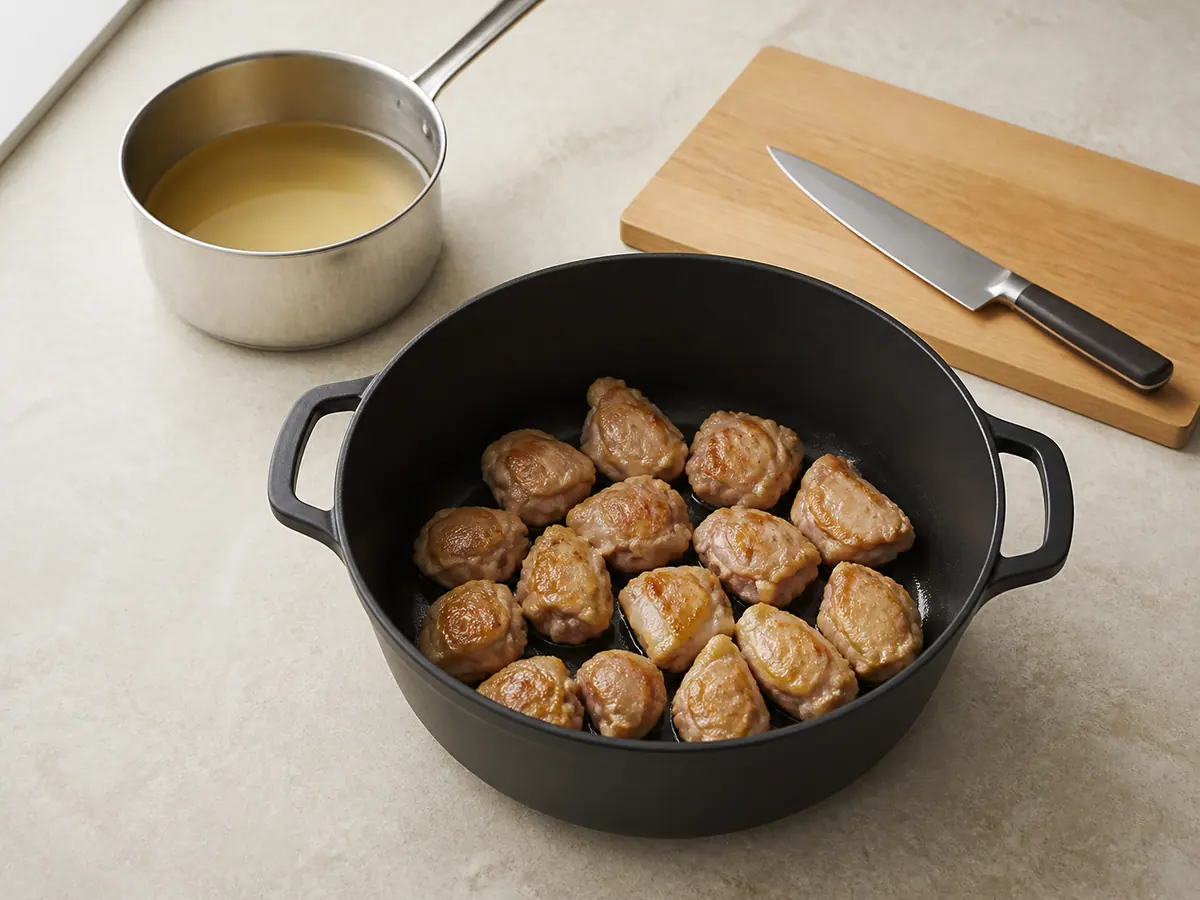
Heat a 5- to 6-quart (4.7- to 5.7-liter) wide, heavy pot, about 28 to 30 cm (11 to 12 in) across for 4 servings, over medium-high heat. Add 15 ml of toasted sesame oil, then arrange 450 g of boneless skinless chicken thighs in one layer. Cook for about 4 minutes, turning once, until several sides are lightly browned. The center will not yet be fully cooked; keep it in the pot for the simmer that follows.
04:00Coat the vegetables
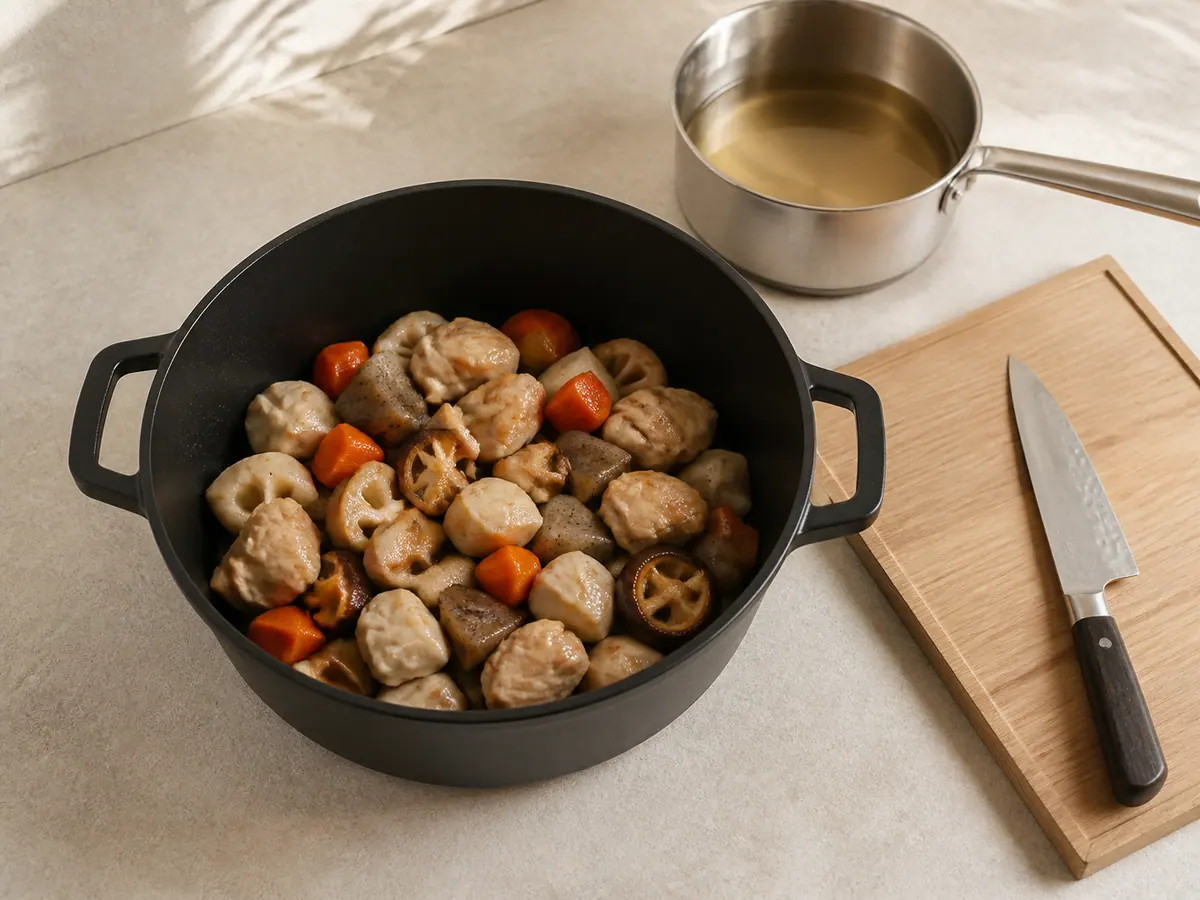
Add 200 g of lotus root, 120 g of burdock root, 240 g of Japanese taro, 150 g of carrot, and 200 g of konnyaku to the pot. Return the quartered rehydrated shiitake caps to the pot as well. Cook for 3 minutes, turning the pieces gently so they become glossy and pick up the browned flavor from the bottom without breaking the taro.
03:00Simmer in seasoned dashi
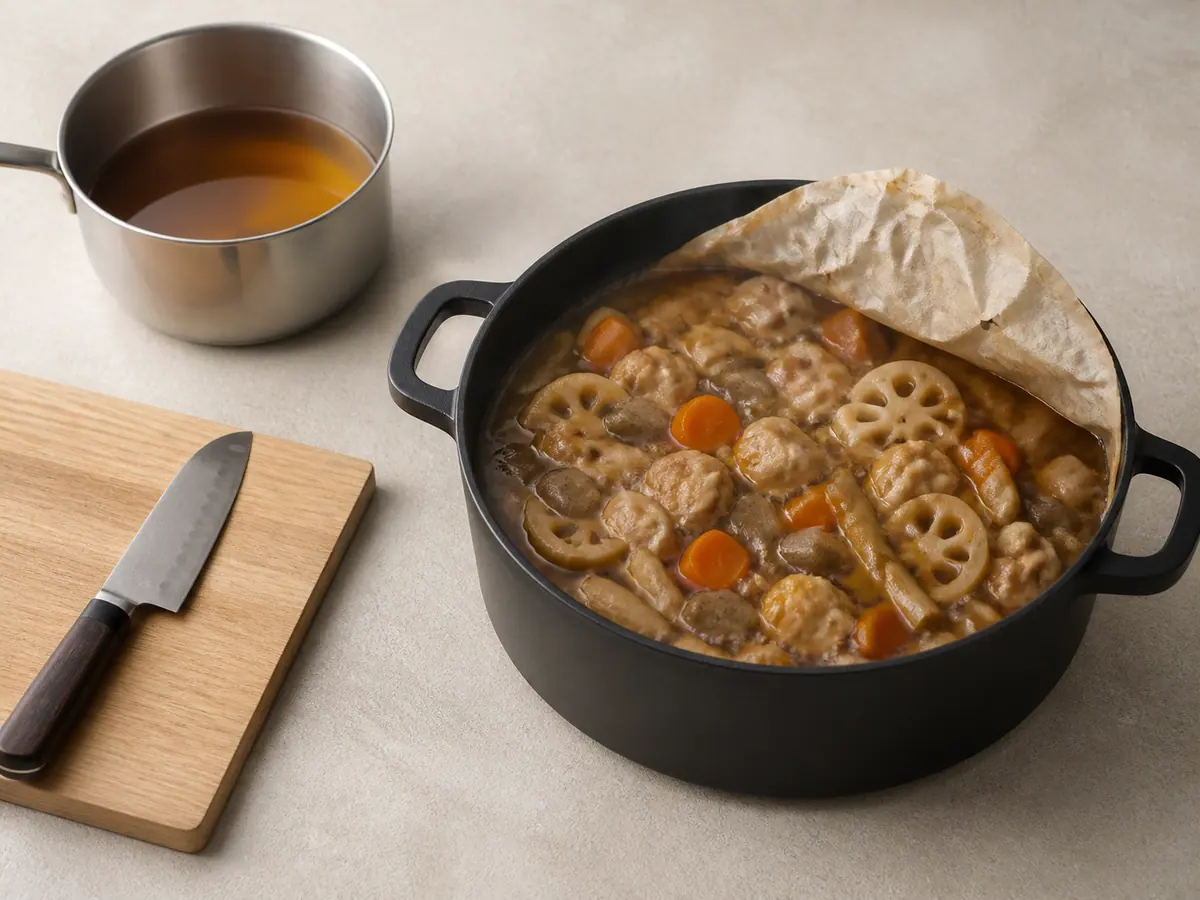
Pour reserved shiitake dashi into the pot, then stir in 25 g of granulated sugar and 60 ml of reduced-sodium soy sauce. Bring the liquid to a gentle simmer and skim off any foam. Set a parchment drop lid directly over the ingredients, or partially cover the pot with its lid. Simmer gently for 20 minutes, turning the pieces once or twice, until the root vegetables are nearly tender. Do not rely on the chicken’s color to judge doneness; verify its internal temperature in the next step.
20:00Reduce and finish
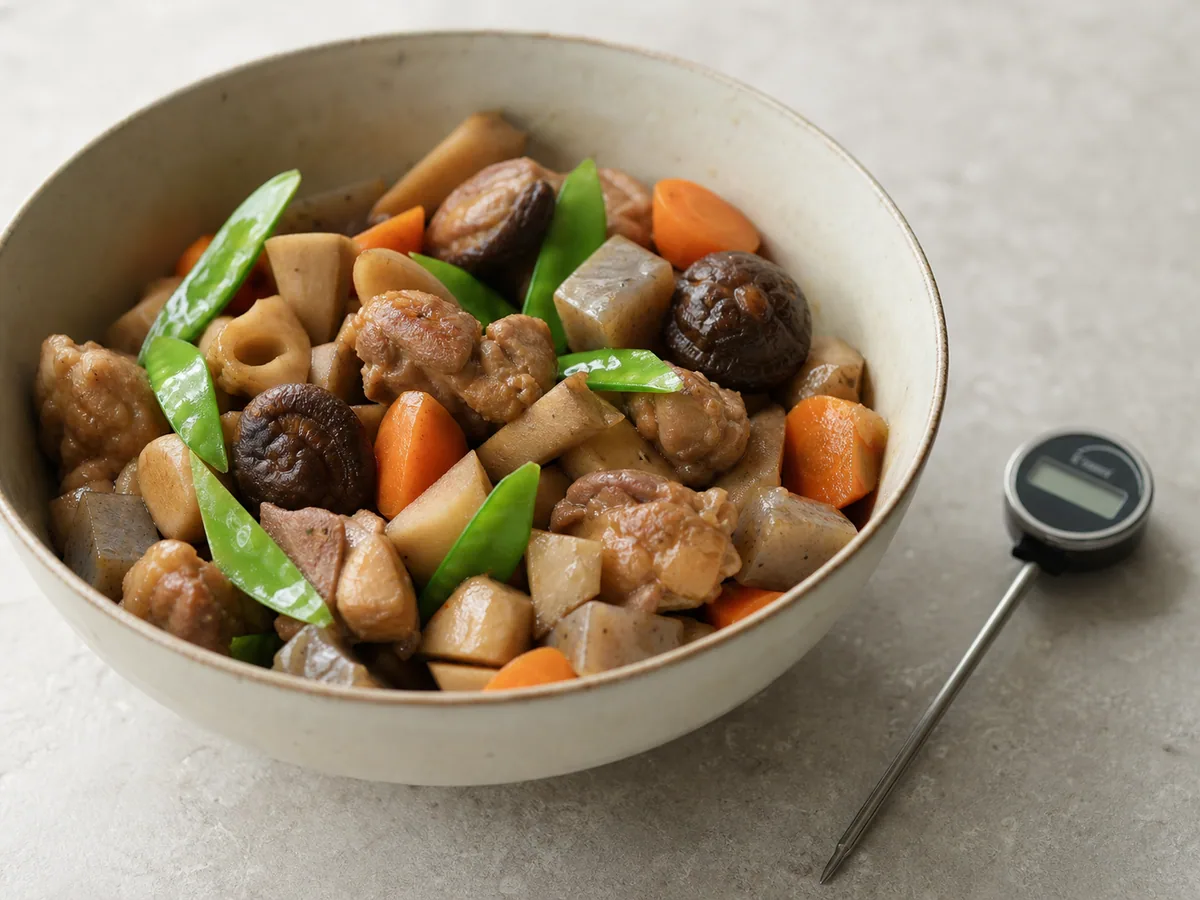
Remove the lid and simmer uncovered for 5 minutes, gently turning the ingredients, until the broth begins to reduce and lightly cling to the pieces. Add 60 g of snow peas and simmer for 1 minute more, until they are bright and just tender and the broth forms a shallow glossy coating. The roots should be tender but still distinct. Use a food thermometer on the thickest chicken pieces; they must reach 74°C/165°F before serving.
05:00Rest and serve
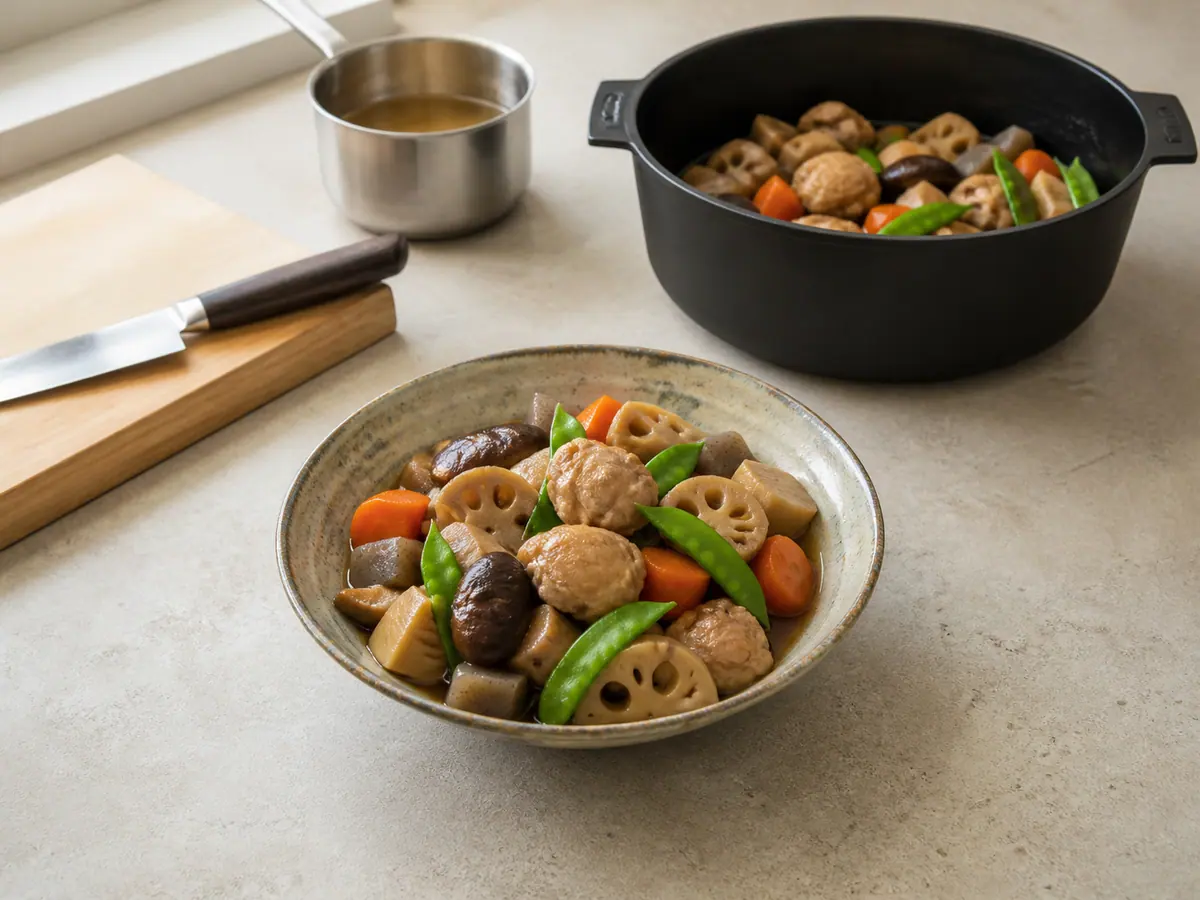
Remove the pot from the heat and let the chikuzenni stand for 5 minutes so the glaze settles around the vegetables. Spoon it into shallow bowls, distributing the chicken, roots, mushrooms, konnyaku, and snow peas evenly. Serve immediately while the vegetables are warm and their textures remain distinct.
05:00


Smart Substitutions
- No burdock root? Use 4.25 ounces (120 g) parsnip, or add the same weight of extra lotus root.
- No Japanese taro? Use 8.5 ounces (240 g) waxy potato cut into pieces of similar volume.
- No konnyaku? Use 7 ounces (200 g) drained bamboo shoots, or add 3.5 ounces (100 g) fresh shiitake mushrooms for another springy texture.
- No dried shiitake? Use 4 ounces (120 g) fresh shiitake mushrooms and replace the mushroom soaking liquid with 2 cups (480 ml) unsalted prepared dashi.
Tips and Variations
- Aim for rangiri pieces of similar volume rather than identical shape so the roots become tender at about the same time.
- A parchment drop lid keeps the top pieces in contact with the seasoned dashi without requiring vigorous stirring.
- Add the snow peas only for the final reduction so they stay green and retain a slight snap.
What Went Wrong?
- Broth is still watery Keep the pot uncovered at a gentle simmer and turn the ingredients occasionally until the liquid lightly coats them.
- Vegetables cook unevenly Move tender pieces to the side of the pot and continue simmering firmer pieces in the liquid.
- Japanese taro is breaking apart Stop stirring with a spoon and turn the pot gently or use a broad spatula to lift the pieces.
- Chicken feels tough Keep the simmer gentle and stop cooking once the thickest pieces reach 74°C/165°F.
Nutrition Estimate
- Fiber: 9 g per serving
- Sodium: 620 mg per serving
Nutrition disclaimer:This recipe is provided for general cooking information only. Nutrition values are estimates and may vary by ingredients, brands, preparation methods, and serving sizes. Check ingredient labels and follow appropriate food-safety practices. This content is not medical, dietary, allergy, or professional food-safety advice.
FAQ
Found an error or have a suggestion?
Help us improve this recipe. Send us your feedback and include the recipe name so we can take a look.