Method
Prepare and roast the vegetables
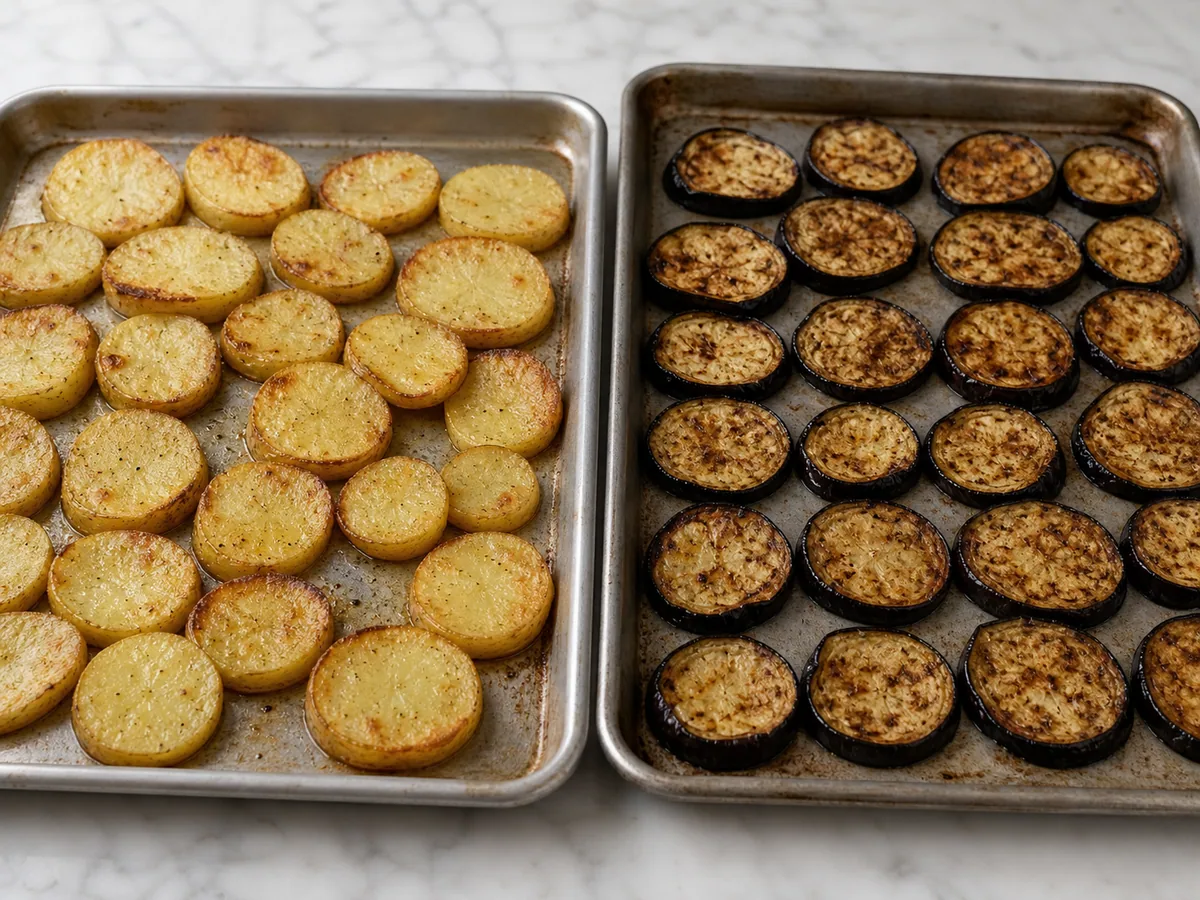
Heat the oven to 220°C (425°F). Peel 450 g of waxy potatoes and cut them into 5 mm rounds. Trim 900 g of eggplant and cut it into 1 cm rounds. For 8 servings, arrange the vegetables in single layers on two rimmed baking sheets; for a scaled batch, use enough sheets to keep every piece in an uncrowded single layer. Drizzle with 60 ml of olive oil for vegetables, season with 6 g of fine sea salt for vegetables and 1 g of black pepper for vegetables, and turn the pieces to coat. Roast for 25 to 30 minutes, rotating the sheets and turning the eggplant halfway through, until the potatoes are nearly tender and the eggplant is browned and pliable. Begin checking at 25 minutes. While the vegetables roast, begin browning the lamb.
25:00Brown the lamb safely
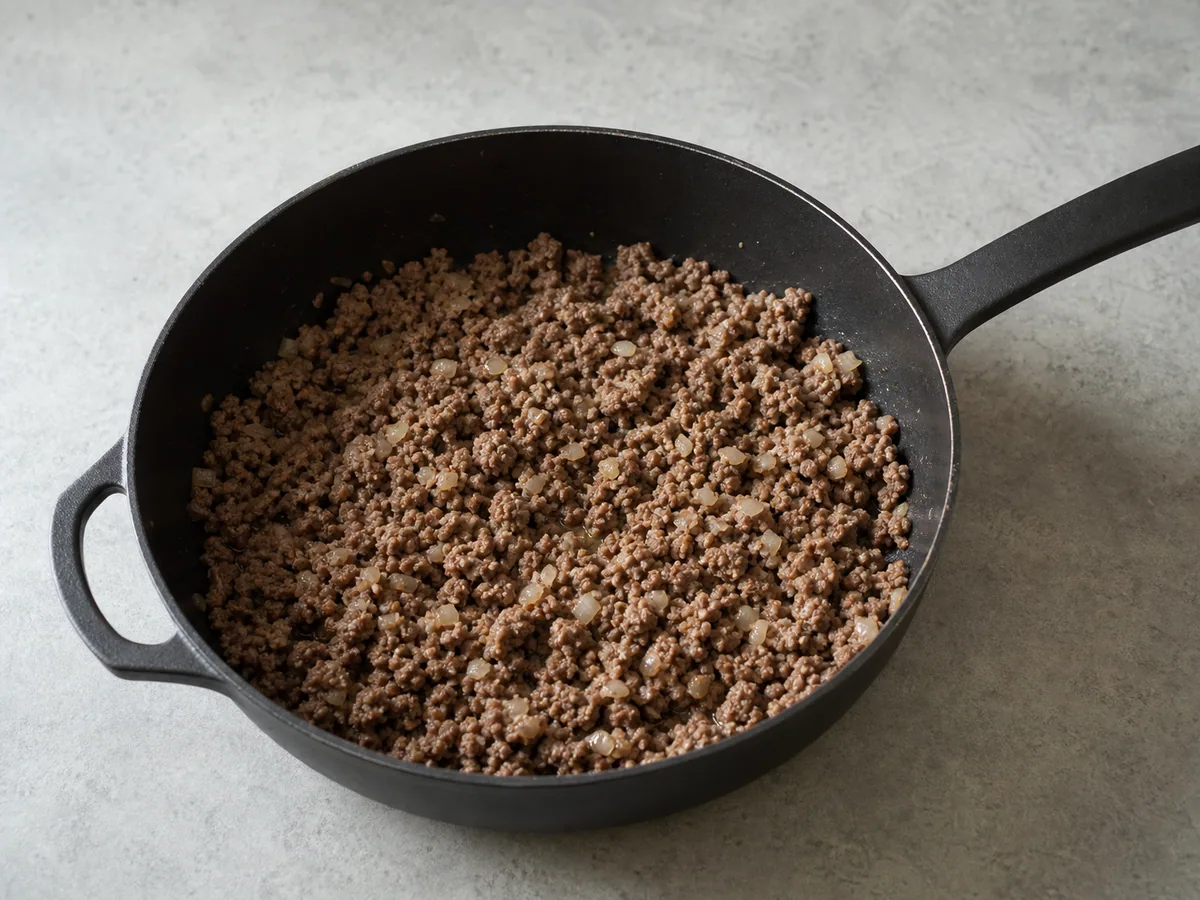
Set a wide heavy skillet over medium-high heat. Add 750 g of ground lamb and break it into small crumbles with a wooden spoon. Cook for 8 to 10 minutes, stirring occasionally, until well browned with no visible pink; begin checking at 8 minutes. Use a food thermometer to confirm that several of the largest crumbles reach 71°C/160°F. Transfer the cooked lamb to a clean bowl. Wash your hands and clean any utensil or surface that touched the raw lamb before handling the remaining ingredients.
08:00Build and reduce the lamb sauce
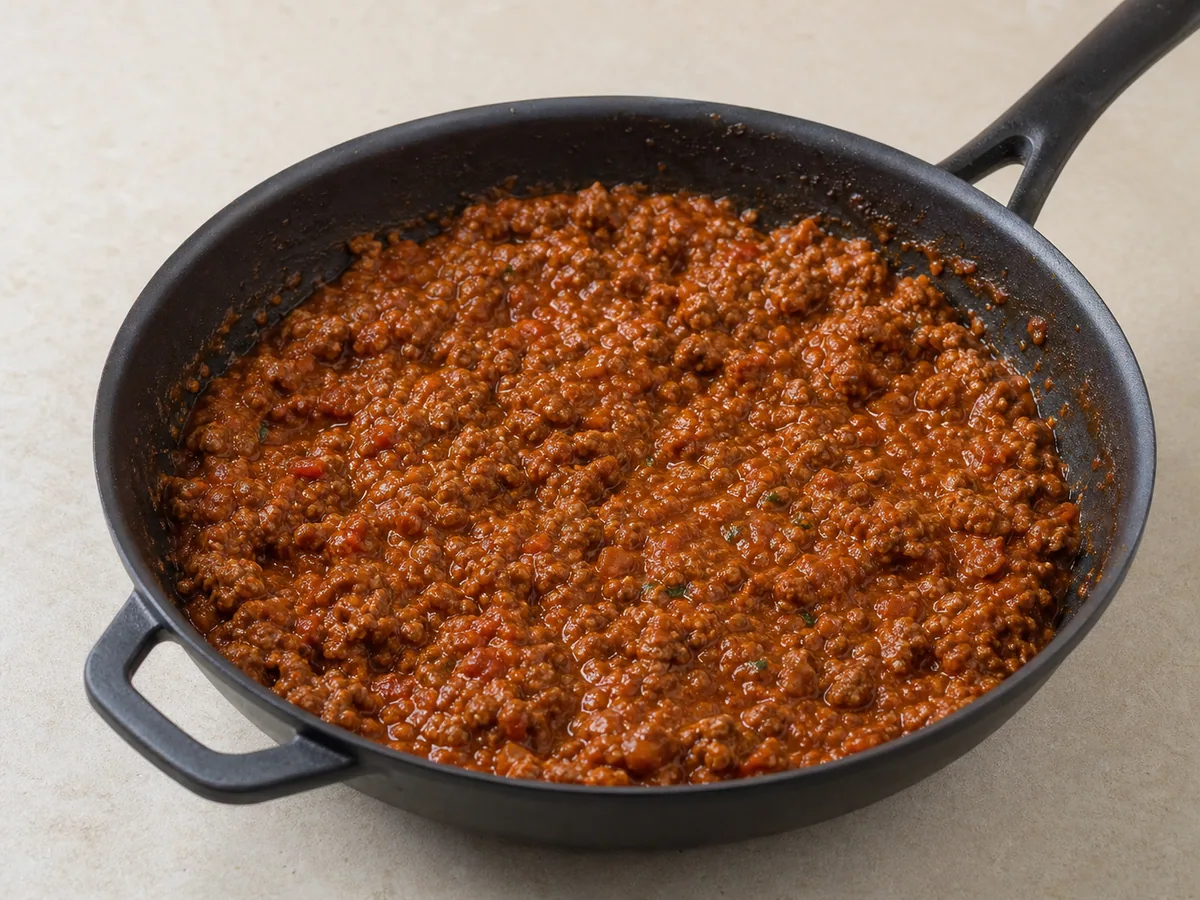
Peel and finely chop 250 g of yellow onions. Mince 4 garlic cloves. Lower the skillet to medium, add 15 ml of olive oil for filling, and cook the onions for 6 to 8 minutes until soft and lightly golden. Add the garlic and cook for 30 seconds. Stir in 45 g of tomato paste, 2 g of dried oregano, 2.6 g of ground cinnamon, 2.3 g of sweet paprika, and 1 bay leaf; cook for 1 minute, scraping the pan. Return the browned lamb, then add 800 g of no-salt-added crushed tomatoes, 180 ml of water, 5 g of granulated sugar, 4 g of fine sea salt for filling, and 1 g of black pepper for filling. Simmer uncovered for 25 to 30 minutes, beginning the consistency check at 25 minutes and stirring often near the end, until thick enough that a spoon drawn across the skillet leaves a trail. While the sauce simmers, begin the béchamel. Chop 20 g of flat-leaf parsley and stir it into the reduced sauce. Remove the bay leaf.
00:06:0000:00:3000:01:0000:25:00Cook the béchamel
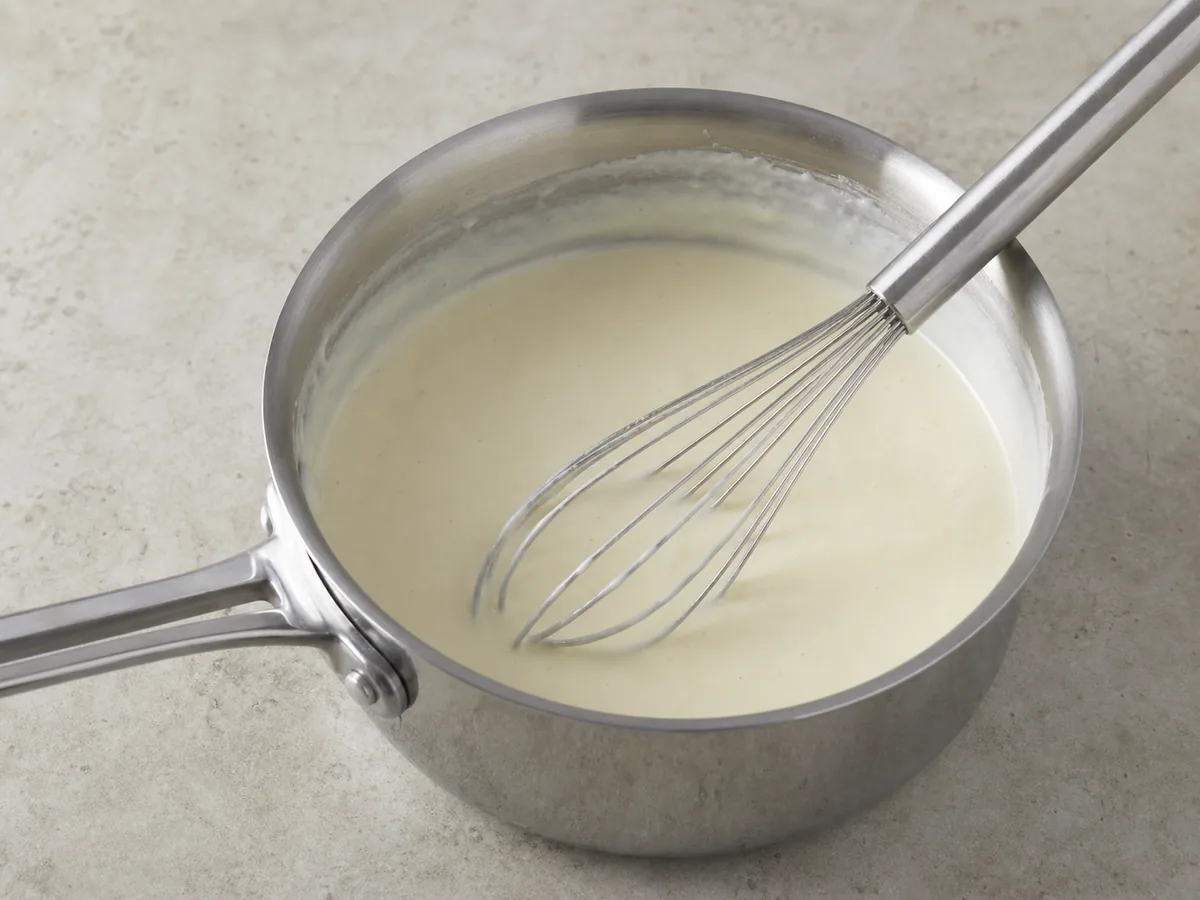
Melt 57 g of unsalted butter in a medium saucepan over medium heat. Whisk in 60 g of all-purpose flour and cook for 2 minutes; the paste should foam but remain pale. Add 720 ml of whole milk gradually, whisking smooth after each addition. Bring to a gentle simmer and cook for 5 to 7 minutes, beginning the thickness check at 5 minutes and whisking across the bottom and corners, until the sauce is thick enough to leave clear lines from the whisk. Season with 2 g of fine sea salt for béchamel, 1 g of black pepper for béchamel, and 1/2 g of ground nutmeg, then remove from the heat and let stand for 5 minutes.
00:02:0000:05:0000:05:00Enrich the sauce with eggs and cheese
Crack 2 large eggs into a heatproof bowl and whisk until smooth. Slowly whisk in several spoonfuls of the hot béchamel to warm the eggs, then whisk that mixture back into the saucepan. Grate 80 g of kefalotyri cheese. Stir three-quarters of the cheese into the sauce and reserve one-quarter for the top. The finished béchamel should be glossy, thick, and pourable.
Layer the moussaka
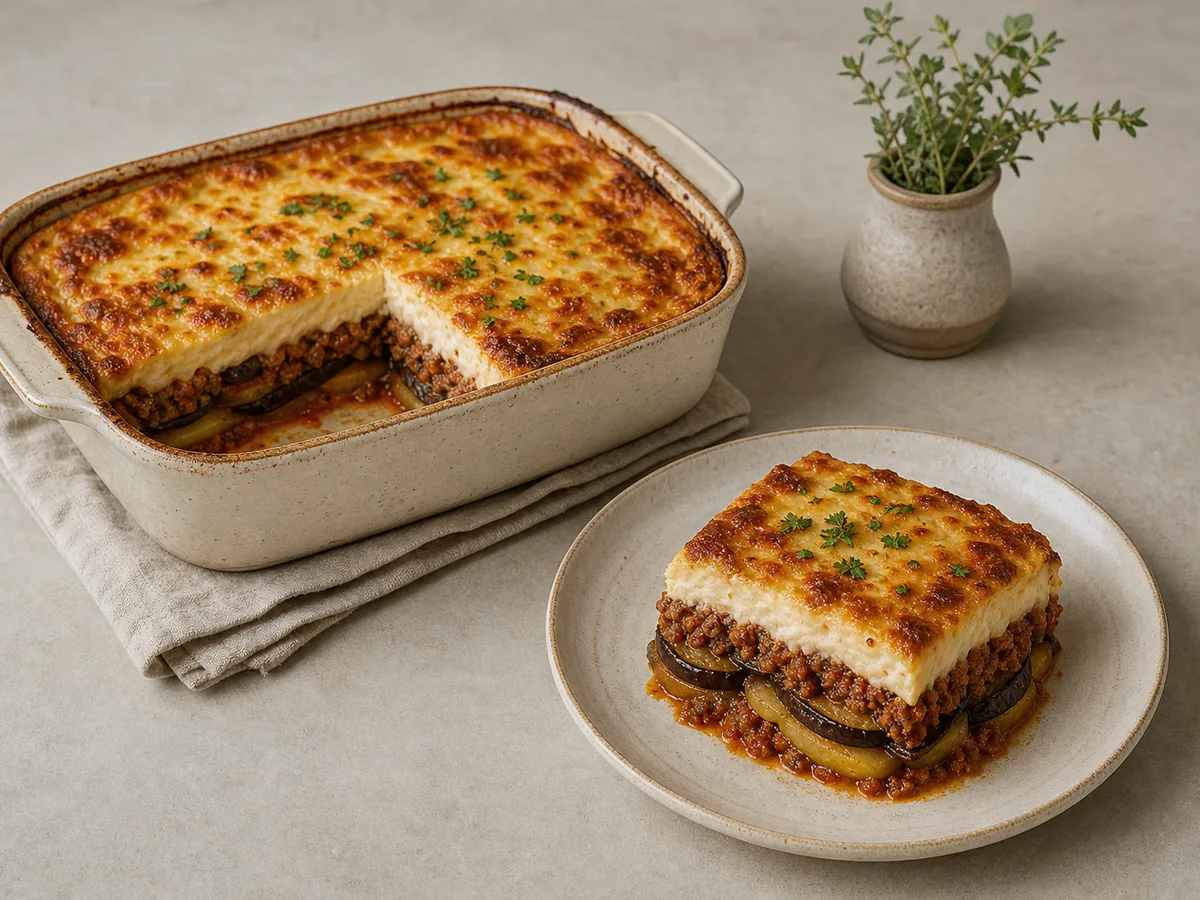
Reduce the oven to 190°C (375°F). Use a 33 x 23 cm (13 x 9 in) deep baking dish (for 8 servings). For a scaled batch, choose a dish that keeps the layers at a similar depth rather than scaling the dimensions directly. Arrange the potatoes across the base, overlap half of the eggplant above them, and spread the lamb sauce into an even layer. Cover with the remaining eggplant. Pour over the béchamel and smooth it to the edges. Scatter the reserved cheese and 30 g of fine dry breadcrumbs evenly over the top. Set the dish on a rimmed baking sheet.
Bake until deeply golden
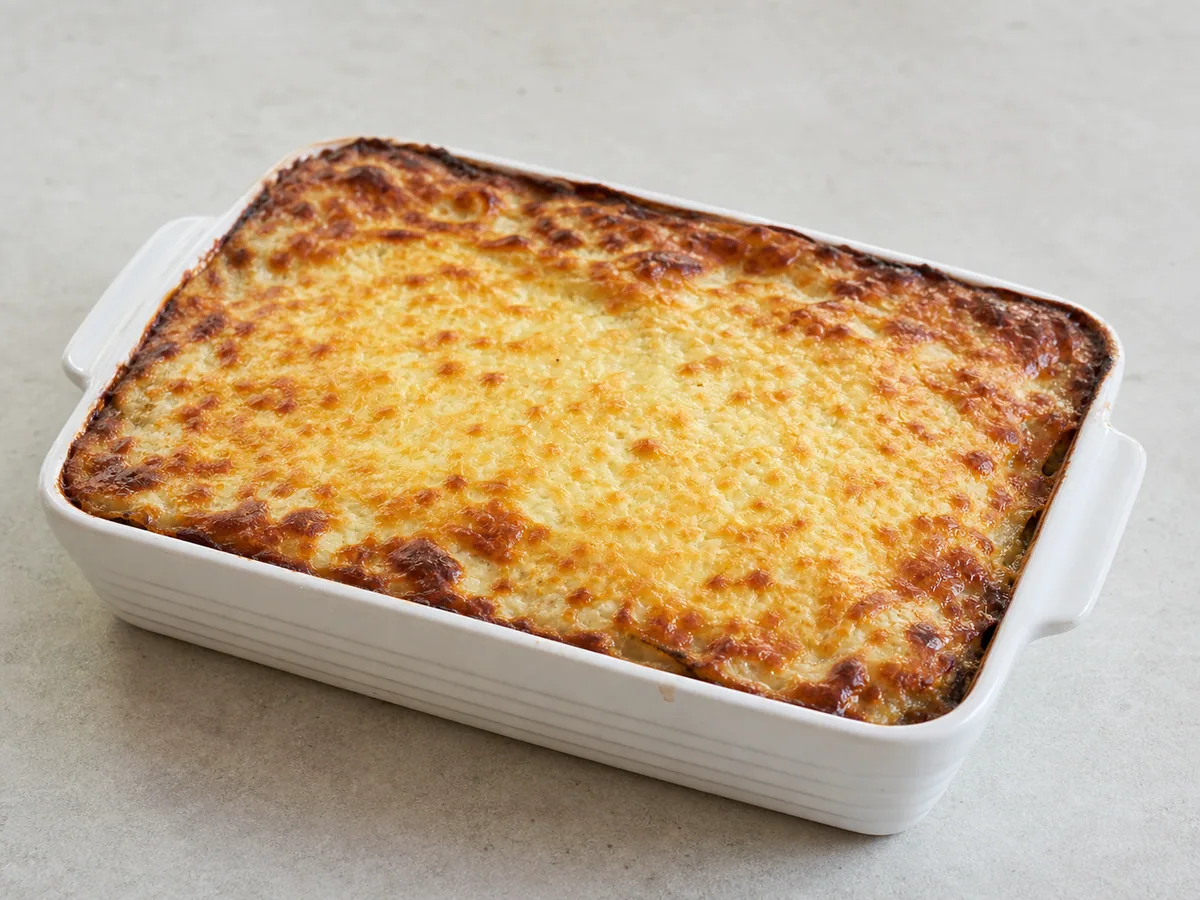
Bake for 40 to 50 minutes, until the top is deeply golden, the edges are bubbling, and a food thermometer inserted into the center registers 74°C/165°F. Begin checking at 40 minutes. If the top colors too quickly before the center is hot, cover it loosely with foil for the remaining baking time.
40:00Let the layers settle
Let the moussaka stand for 20 minutes before cutting. This pause firms the béchamel and keeps the vegetable and lamb layers together. Cut into portions and serve warm.
20:00


Smart Substitutions
- No kefalotyri? Use pecorino romano or a firm, savory parmesan-style cheese.
- Prefer beef? Replace the lamb with the same weight of ground beef and keep the seasoning unchanged.
- No potatoes? Add another 300 g (10 ounces) of eggplant and build the base with overlapping roasted slices.
- Need a lighter topping? Use 2% milk in the béchamel; cook it until distinctly thick before adding the eggs.
Tips and Variations
- Roast the eggplant in one layer. Crowded slices steam and stay spongy instead of becoming silky at the edges.
- Reduce the lamb sauce until it holds a mound on a spoon; a loose filling makes the finished slices slump.
- Temper the eggs gradually so the béchamel stays smooth rather than forming small cooked curds.
What Went Wrong?
- The moussaka releases liquid when cut The lamb sauce or vegetables were too wet. Reduce the sauce further, roast the vegetables until pliable, and keep the full standing time.
- The béchamel is lumpy Whisk in the milk gradually. For stubborn lumps, press the sauce through a fine sieve before adding the eggs and cheese.
- The top is pale Move the dish to the upper third of the oven for the final few minutes and watch closely until the surface turns evenly golden.
- The eggplant is tough Cut even 1 cm slices and roast until they bend easily before layering; undercooked slices will not soften enough during the final bake.
Nutrition Estimate
- Fiber: 7 g per serving
- Sodium: 890 mg per serving
Nutrition disclaimer:This recipe is provided for general cooking information only. Nutrition values are estimates and may vary by ingredients, brands, preparation methods, and serving sizes. Check ingredient labels and follow appropriate food-safety practices. This content is not medical, dietary, allergy, or professional food-safety advice.
FAQ
Found an error or have a suggestion?
Help us improve this recipe. Send us your feedback and include the recipe name so we can take a look.