Method
Hard-cook the eggs
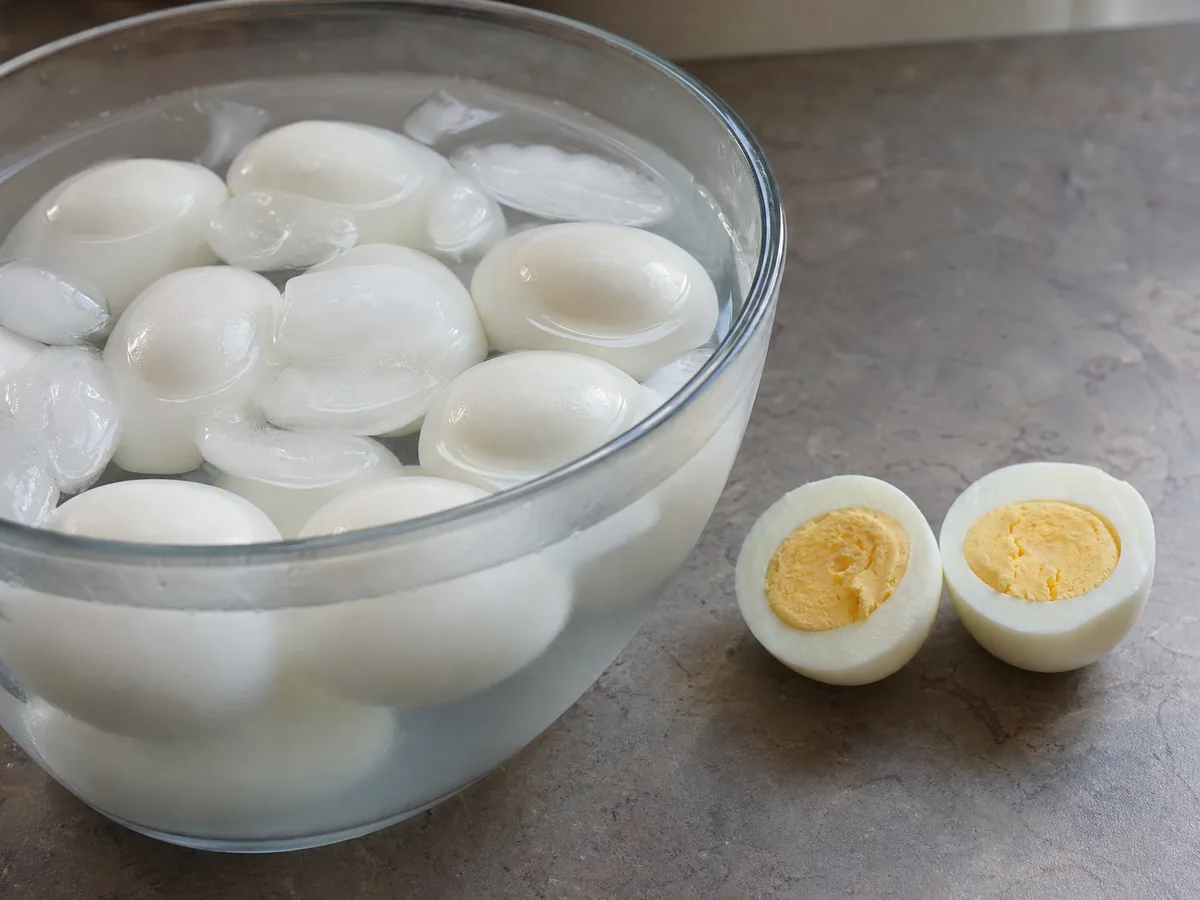
Place 4 large eggs in a saucepan and cover with cold water by 2.5 cm (1 in). Bring to a full boil over medium-high heat, cover, remove from the heat, and let stand for 12 minutes. Transfer 4 large eggs to ice water, then peel once cool enough to handle. Halve one egg to confirm that the white is fully set and the yolk is firm, with no soft or runny center; keep the remaining eggs whole for scoring.
12:00Season the chicken safely
Do not rinse raw chicken. On a dedicated cutting board, pat 1135 g of skinless bone-in chicken thighs dry with paper towels and rub with 30 ml of lemon juice and 3 g of kosher salt for chicken. Wash hands, the board, the knife, and nearby surfaces with hot soapy water before handling cooked eggs or ready-to-eat food.
Reduce the onion base
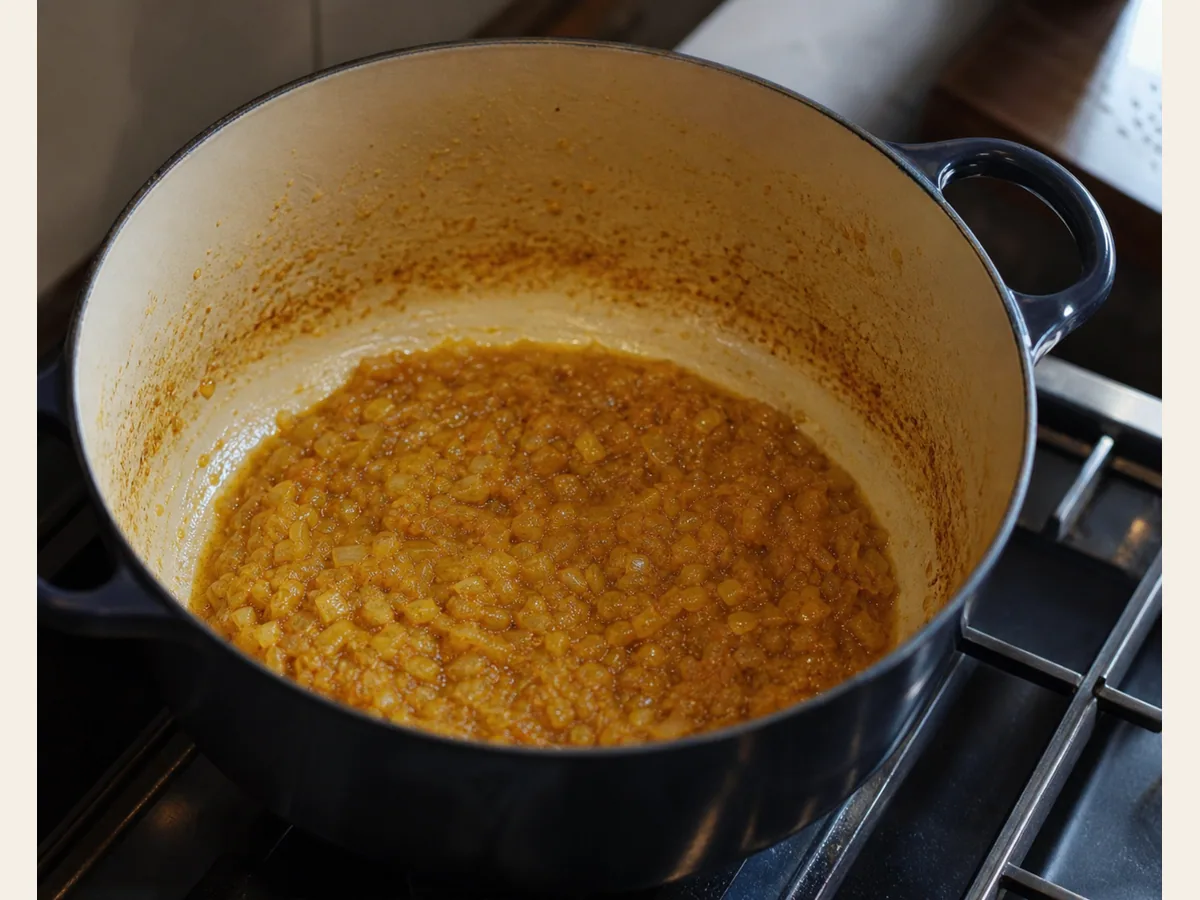
Finely chop 900 g of yellow onions until the pieces are no larger than grains of rice. Add 900 g of yellow onions to a wide, heavy pot over medium heat. Cook for 35 to 45 minutes, stirring and scraping more often as moisture evaporates, until the onions collapse into a thick, deep golden paste with no raw bite. Start checking at 35 minutes and lower the heat if the bottom darkens faster than the rest.
35:00Enrich the onion base
Stir 60 g of niter kibbeh into the onion paste. Cook over medium-low heat for 5 minutes, stirring steadily, until the fat is evenly absorbed and the mixture looks glossy rather than greasy.
05:00Bloom the aromatics and berbere
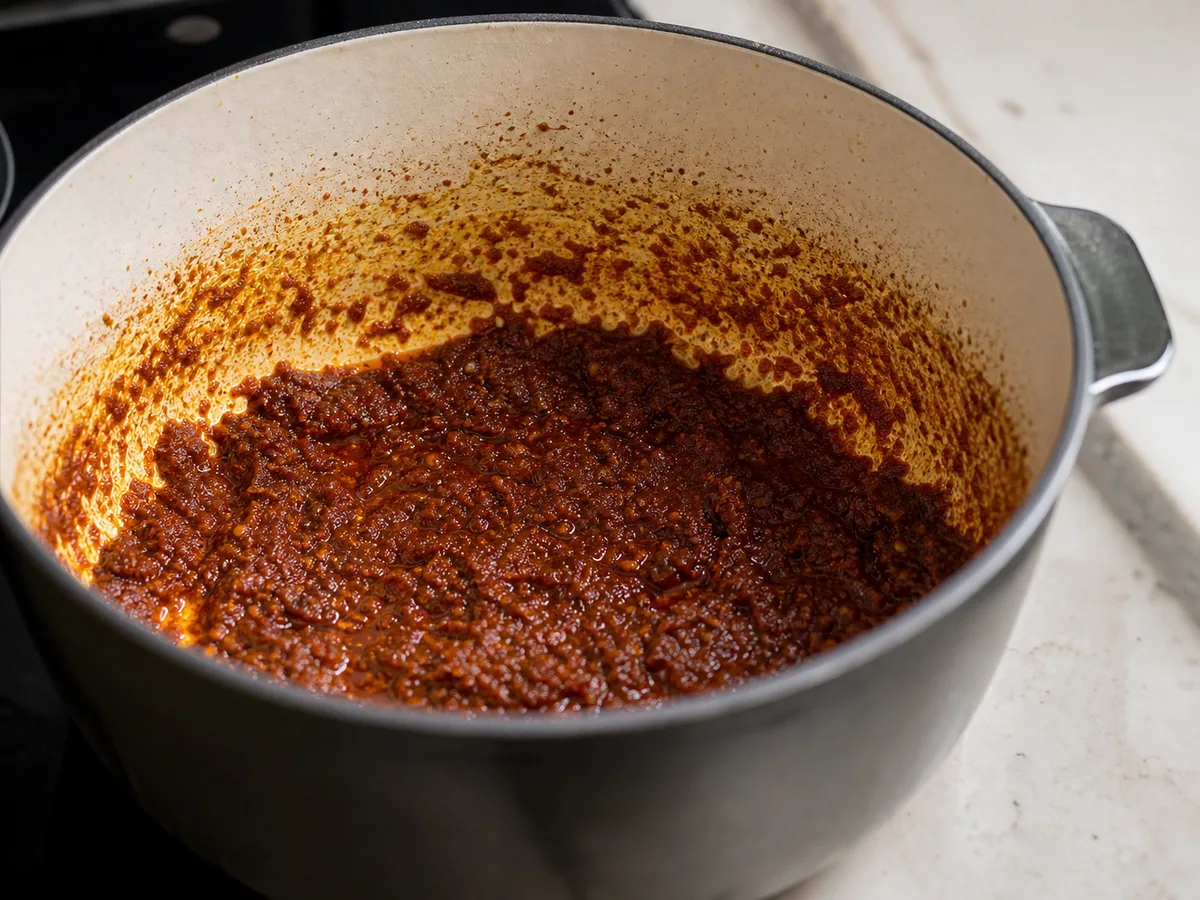
Mince 5 garlic cloves and grate 20 g of fresh ginger. Add 5 garlic cloves, 20 g of fresh ginger, 24 g of berbere spice, 2 g of ground korarima, and 30 g of tomato paste to the pot. Cook over low heat for 3 minutes, stirring constantly, until the mixture turns brick red and smells rounded and toasty. Do not let the spices blacken or stick.
03:00Braise the chicken
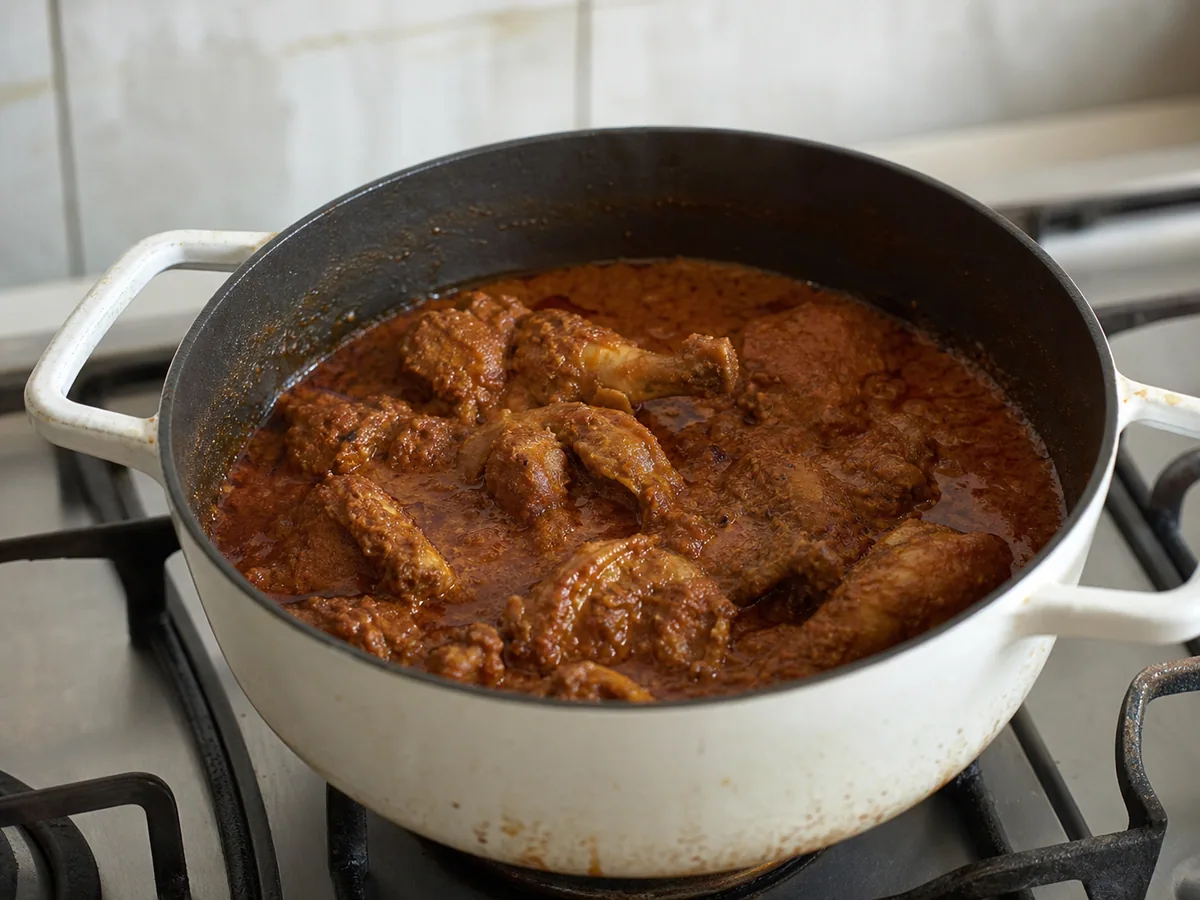
Add 1135 g of skinless bone-in chicken thighs to the pot and turn each piece until coated in the spice paste. Pour in 480 ml of low-sodium chicken stock and add 3 g of kosher salt for sauce. Bring to a gentle simmer, partially cover, and cook over low heat for 45 to 55 minutes, turning the chicken halfway through, until the meat is tender. Start checking at 45 minutes. Use a food thermometer in the thickest part without touching bone; every piece must reach at least 74°C/165°F.
45:00Finish the sauce with the eggs
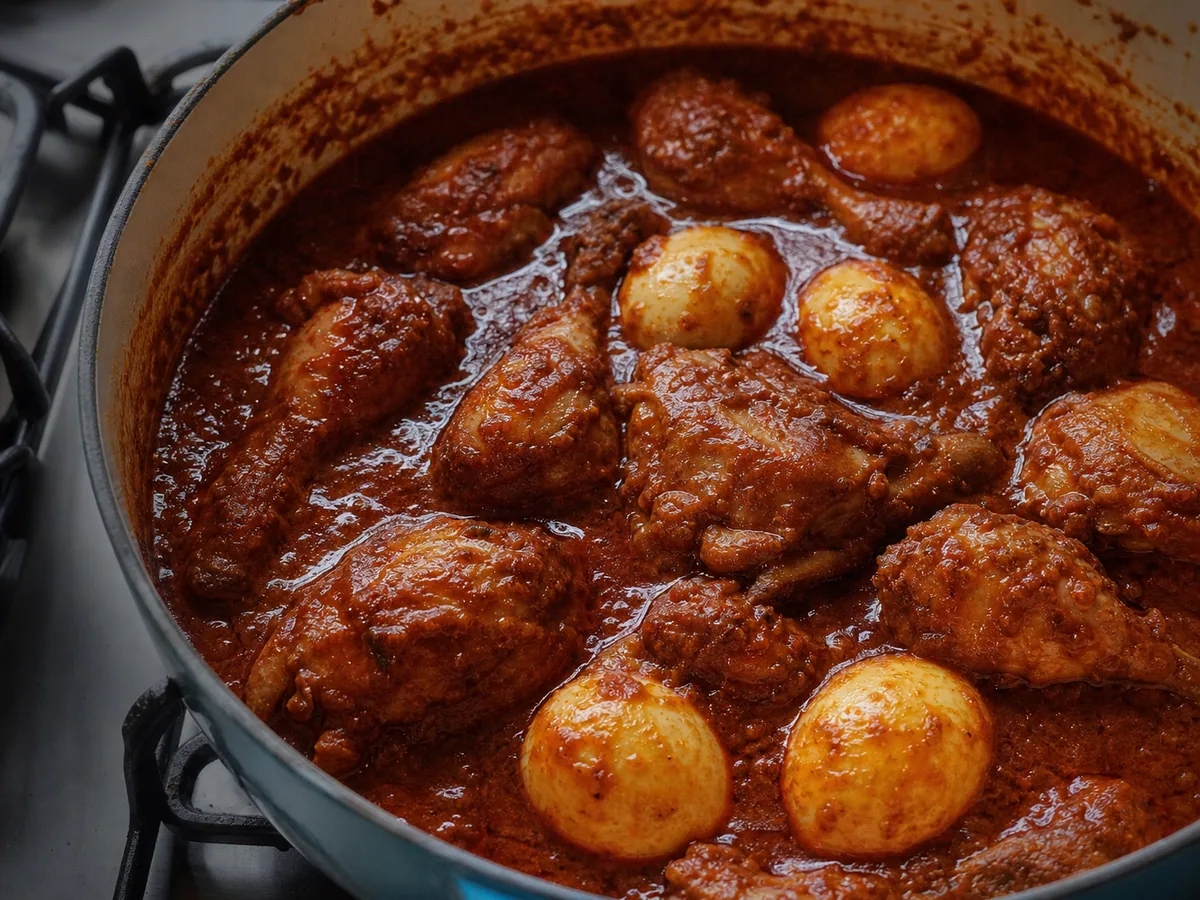
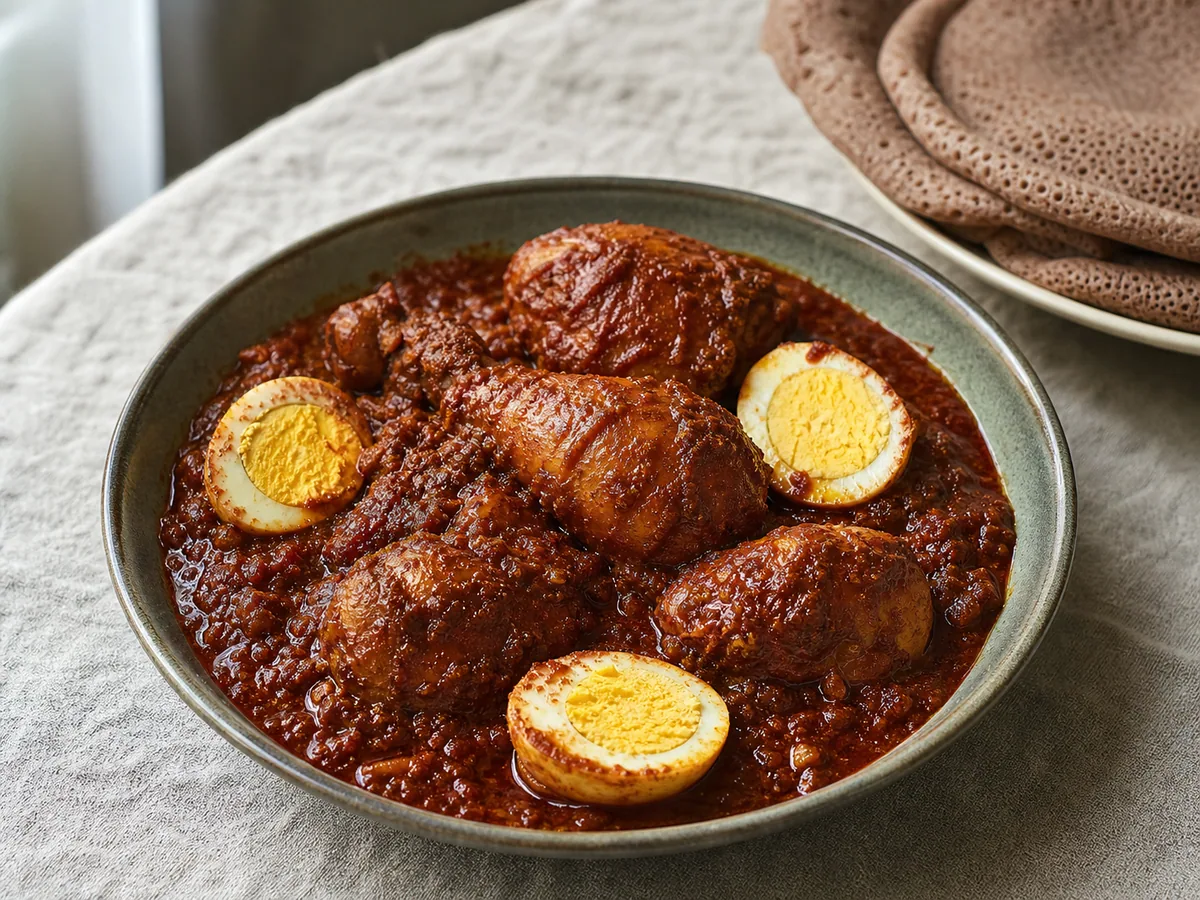
Cut four shallow slits around each remaining whole peeled egg so the sauce can season the surface without splitting it apart. Nestle the whole eggs and the two confirmed firm-yolk egg halves into the pot. Simmer uncovered for 10 minutes, turning the whole eggs once and spooning sauce over the cut halves, until the sauce coats the chicken and eggs in a thick, glossy layer. Halve the remaining eggs just before serving and confirm that every yolk is completely firm; if any center is soft, return those halves to a gentle simmer until fully set.
10:00Serve the doro wat
Arrange chicken and egg halves in a wide serving bowl and spoon the onion-rich sauce over everything. Serve immediately with injera (optional) for scooping up the sauce.


Smart Substitutions
- No niter kibbeh? Use ghee and add a small pinch each of ground cardamom, fenugreek, and cinnamon while it melts.
- No korarima? Use ground green cardamom; the flavor is brighter but still complements berbere.
- Prefer drumsticks? Use the same weight of skinless bone-in drumsticks and verify 74°C/165°F at the thickest part.
- Sensitive to heat? Choose a mild berbere blend rather than reducing the amount, so the sauce keeps its spice depth and color.
Tips and Variations
- Pulse the onions briefly in a food processor if needed, but stop before they become watery puree.
- Keep the heat low once berbere enters the pot; scorched chile and spices turn bitter quickly.
- Use a wide pot so the onions lose moisture efficiently and the sauce reduces around the chicken instead of steaming.
What Went Wrong?
- Onions are pale and chunky Continue cooking over medium-low heat and stir more often until they collapse into a cohesive golden paste.
- Spice paste smells bitter Move the pot off the heat immediately and stir in a small splash of stock; if the spices are blackened, begin the spice stage again with fresh aromatics.
- Chicken is done but sauce is thin Transfer the chicken to a clean serving dish and simmer the sauce uncovered until it coats a spoon, then return the chicken briefly.
- Egg whites feel rubbery Add fully cooked eggs only for the final 10-minute simmer and keep the sauce at a gentle bubble.
Nutrition Estimate
- Fiber: 6 g per serving
- Sodium: 930 mg per serving
Nutrition disclaimer:This recipe is provided for general cooking information only. Nutrition values are estimates and may vary by ingredients, brands, preparation methods, and serving sizes. Check ingredient labels and follow appropriate food-safety practices. This content is not medical, dietary, allergy, or professional food-safety advice.
FAQ
Found an error or have a suggestion?
Help us improve this recipe. Send us your feedback and include the recipe name so we can take a look.