Method
Make the aromatic paste
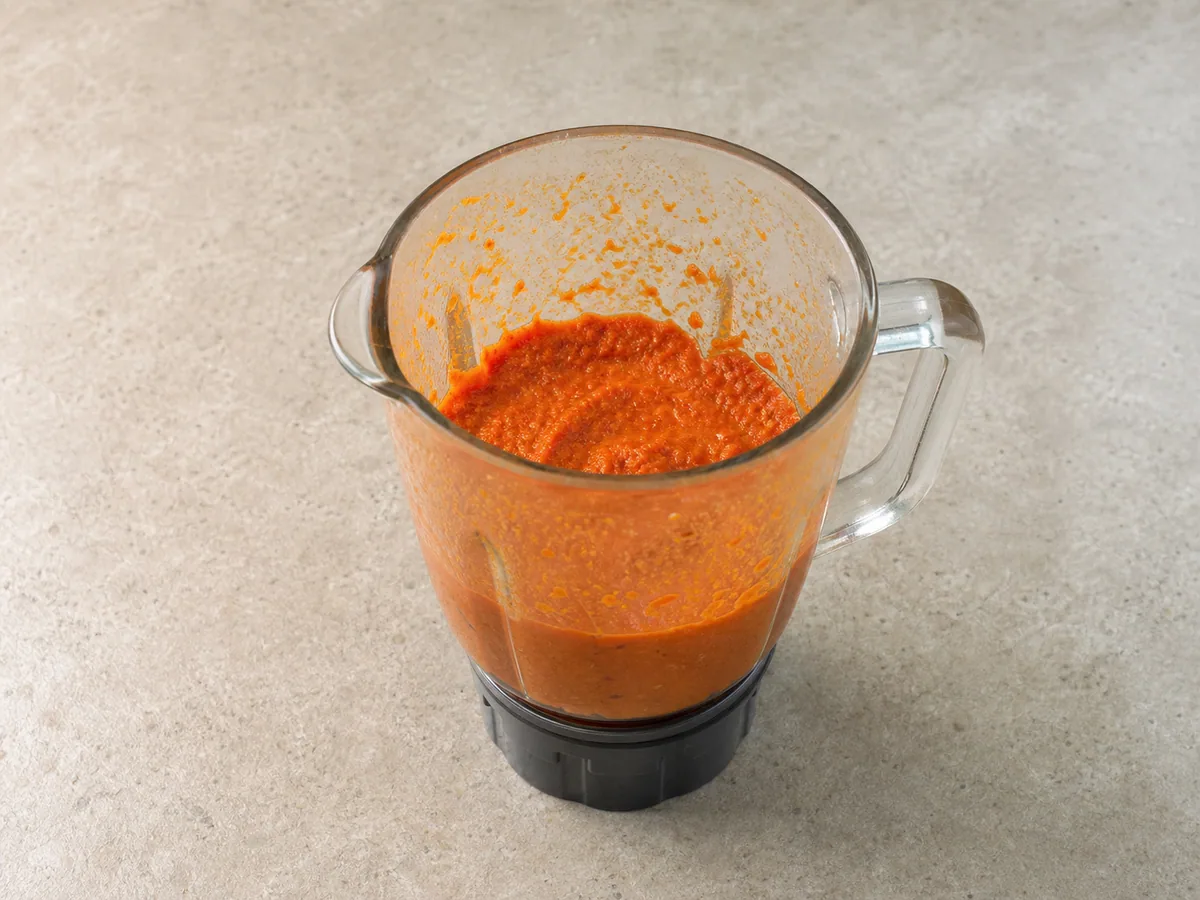
Peel and roughly chop 150 g of shallots, 20 g of garlic cloves, 25 g of fresh ginger, and 30 g of fresh galangal. Trim 2 lemongrass stalks, remove any dry outer layers, and slice the tender lower sections; lightly crush the tougher upper sections and set them aside. Remove stems from 45 g of long red chilies. Blend the sliced lemongrass, chilies, chopped aromatics, 4 g of ground coriander, 2 g of ground cumin, 1 1/2 g of ground turmeric, and 60 ml of water for spice paste into a thick, mostly smooth paste, scraping down the jar as needed.
Brown the tempeh
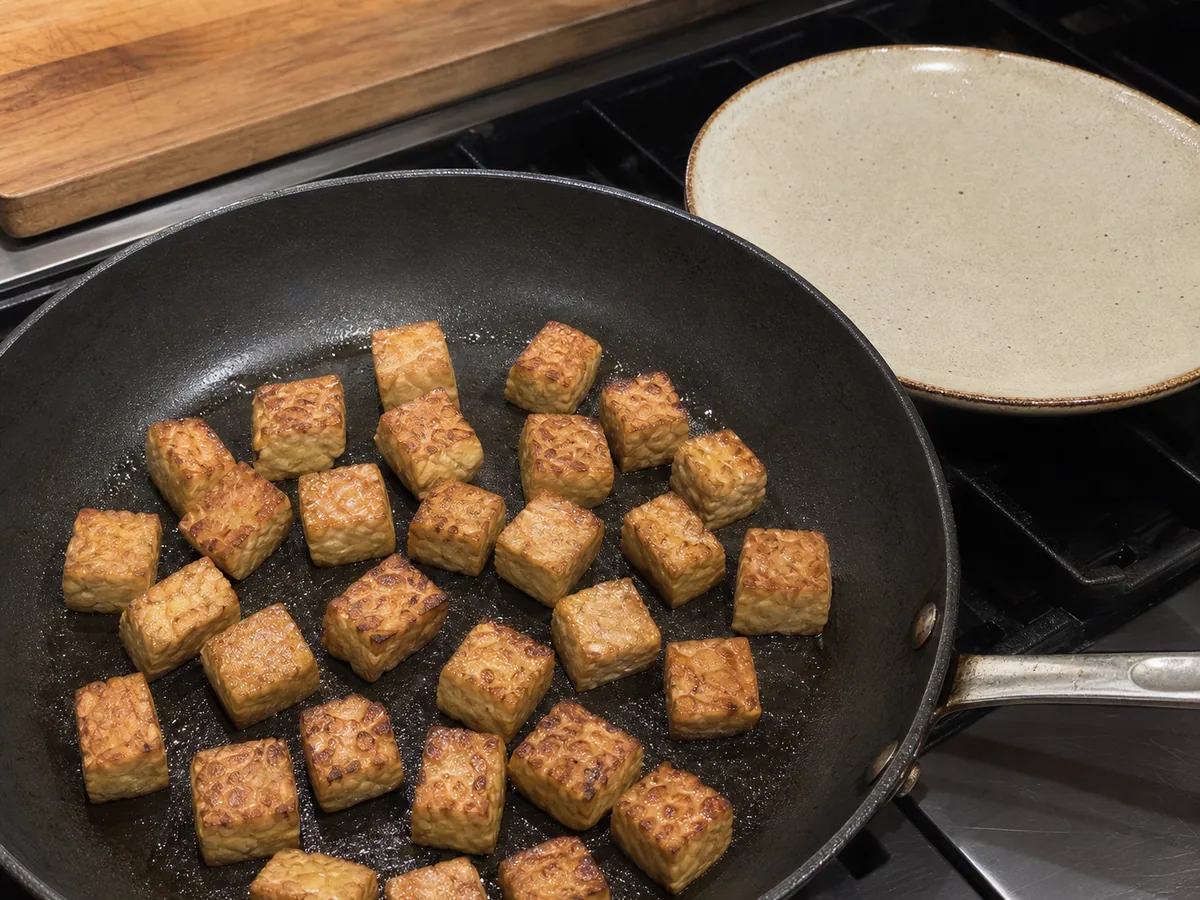
Cut 450 g of plain tempeh (soy) into 2.5 cm (1 in) cubes. Heat 15 ml of neutral oil for tempeh in a wide, heavy skillet or shallow Dutch oven over medium-high heat. Add the cubes in one layer and cook for 6 to 8 minutes, turning every 2 minutes, until several sides are golden and firm. Transfer them to a plate; they do not need to be deeply browned on every surface.
06:00Fry the paste until fragrant
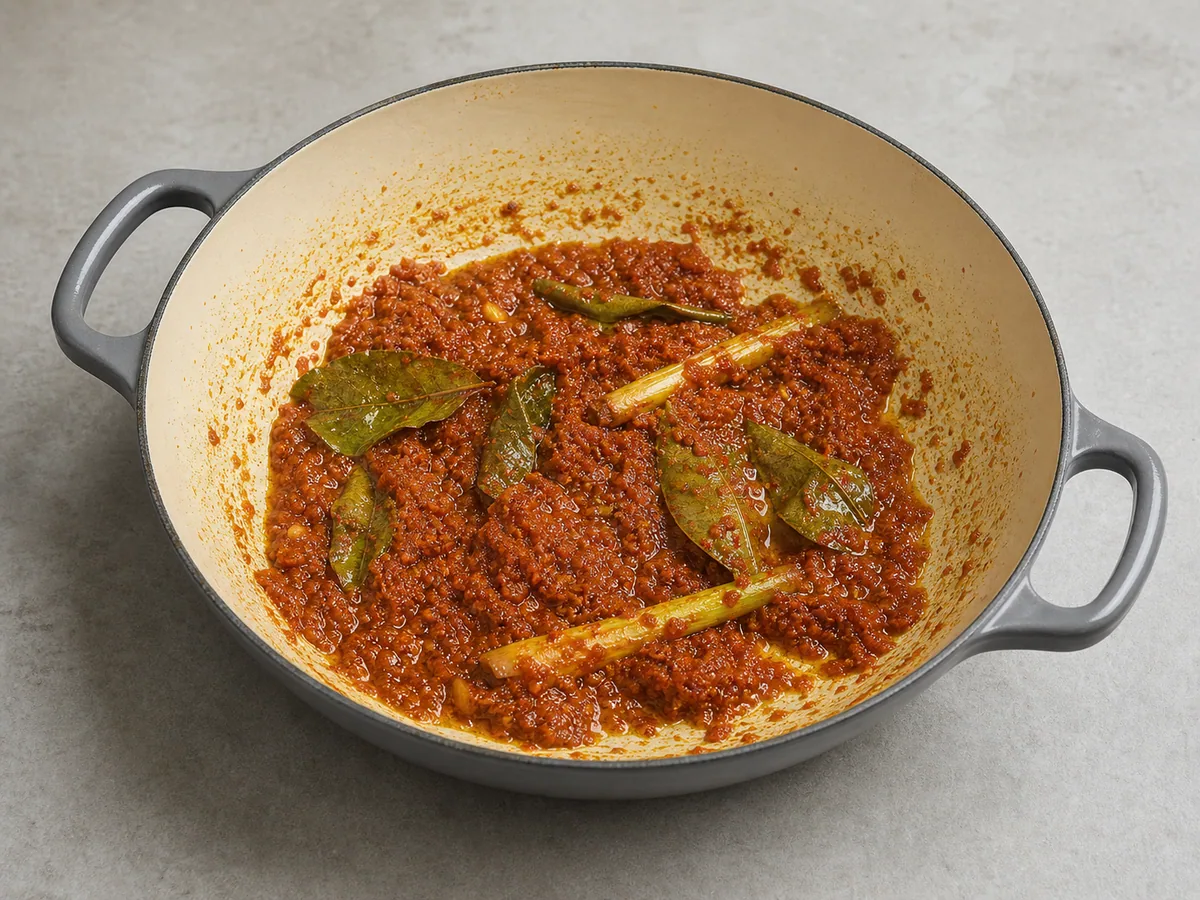
Reduce the heat to medium and add 15 ml of neutral oil for spice paste to the same pan. Scrape in the spice paste, then add the crushed lemongrass sections, 4 makrut lime leaves, and 2 Indonesian bay leaves (daun salam). Cook for 8 to 10 minutes, stirring and scraping frequently, until the paste darkens slightly, smells rounded rather than raw, and begins to leave a thin film on the pan. Lower the heat if it browns faster than it softens.
08:00Simmer the tempeh in coconut milk
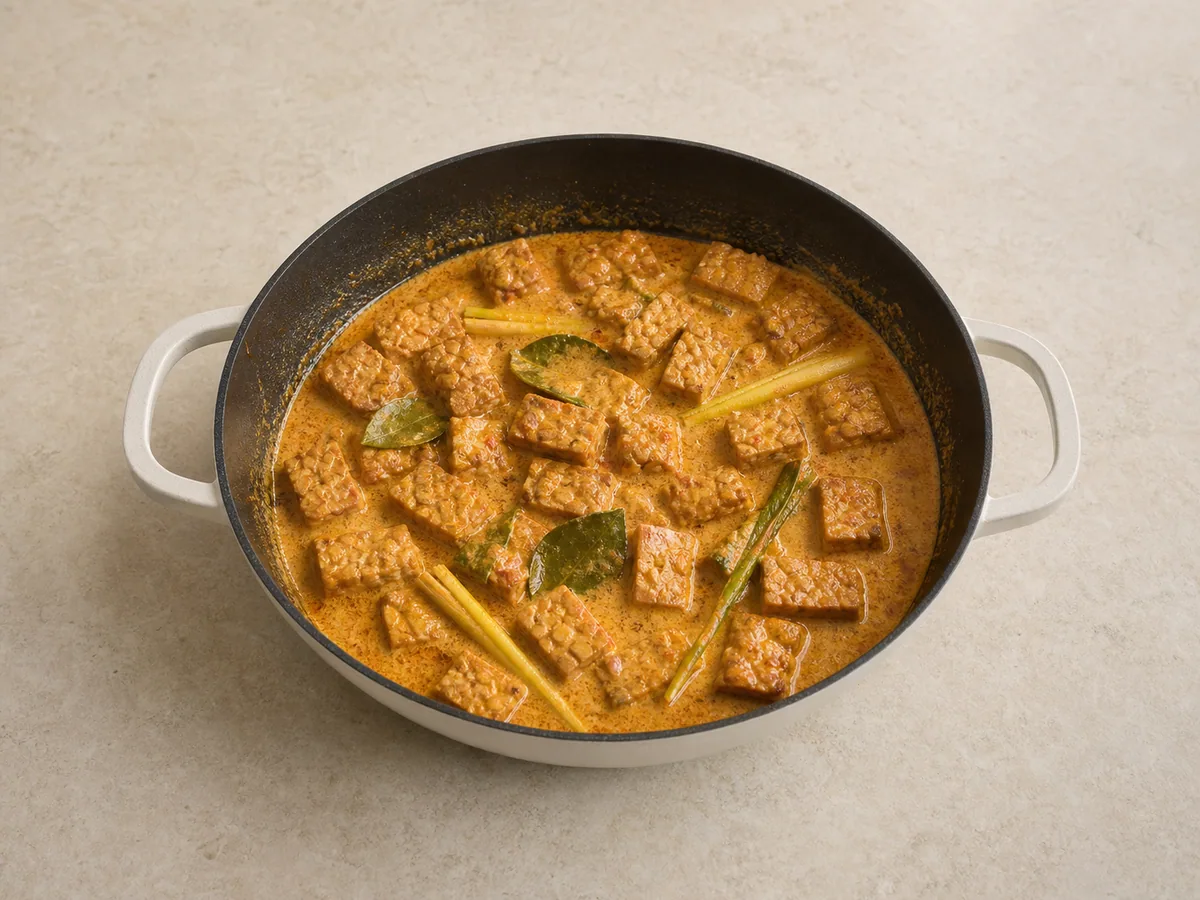
Pour in 400 ml of full-fat coconut milk and 240 ml of water for simmering, then stir in 20 g of tamarind concentrate, 15 g of coconut sugar, and 6 g of fine sea salt until the pan is evenly combined. Return the browned tempeh and bring the mixture just to a simmer. Cook uncovered over medium-low heat for 30 to 35 minutes, turning the cubes gently every 6 to 8 minutes. Begin checking at 30 minutes; the liquid should be noticeably reduced and the sauce should look thicker around the edges.
30:00Reduce to a glossy coating
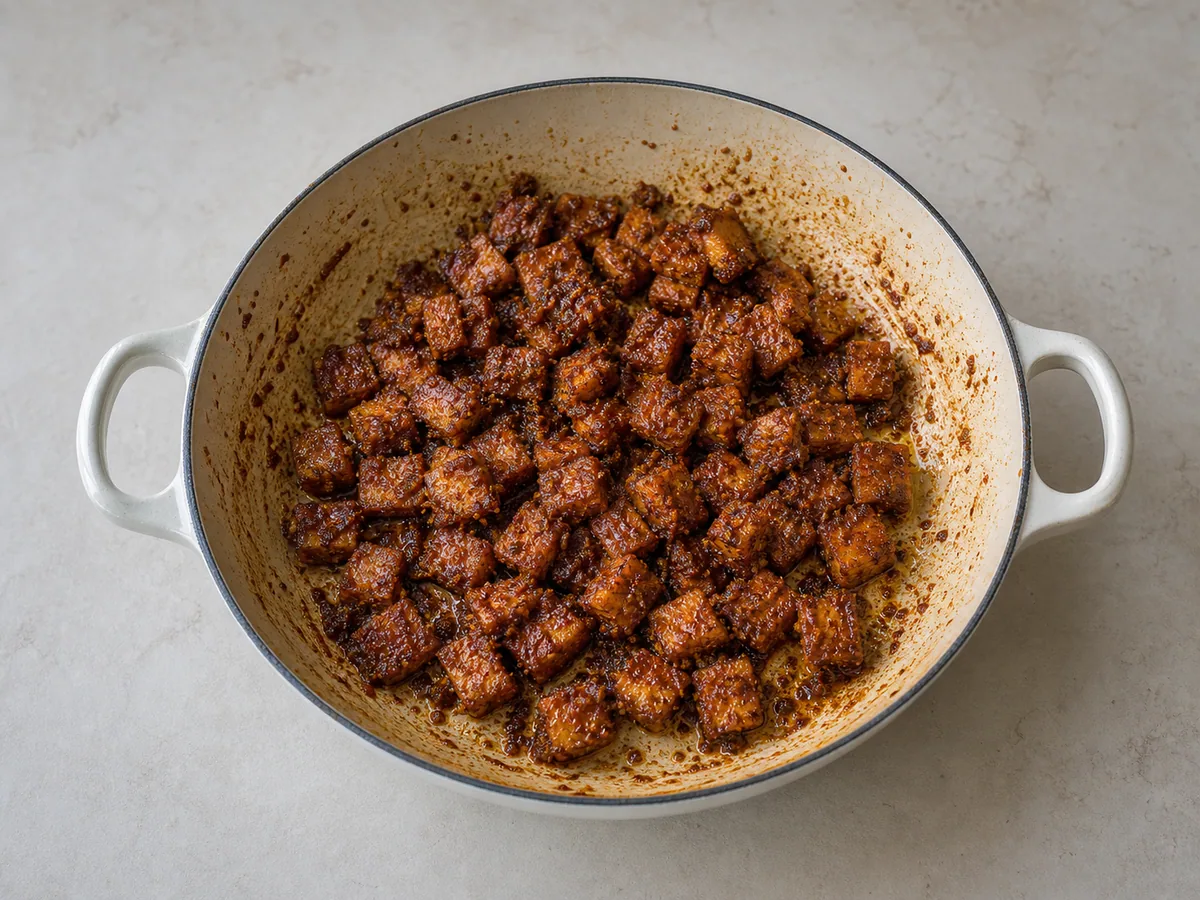
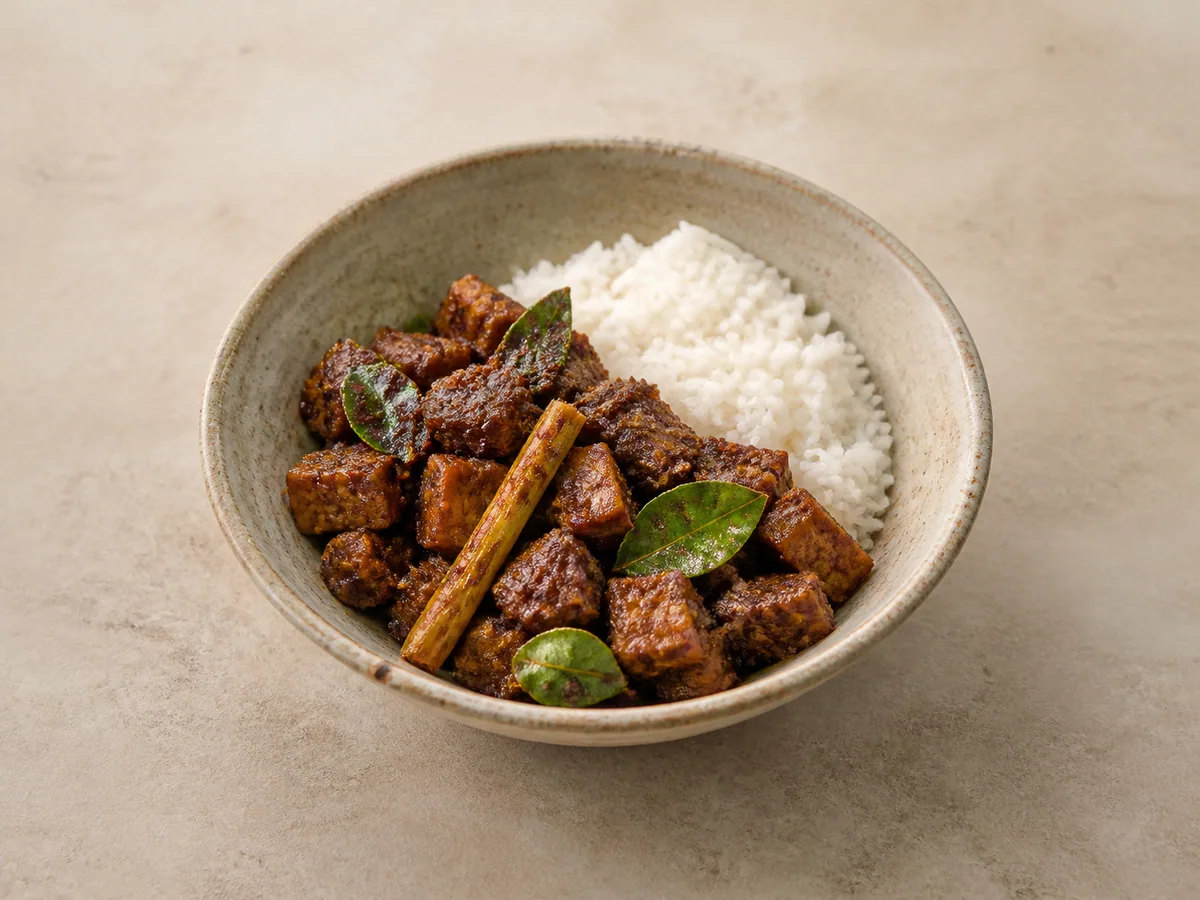
Lower the heat and continue cooking for 10 to 15 minutes, stirring more often as the pan dries. Begin checking at 10 minutes. The rendang is ready when the sauce is dark, glossy, and thick enough to cling to the tempeh with almost no free liquid in the pan; small beads of coconut oil may appear at the edges. Remove the whole leaves and crushed lemongrass sections. Serve immediately with steamed jasmine rice (optional).
10:00


Smart Substitutions
- No fresh galangal? Use the same weight of extra ginger and add two broad strips of lime zest to the simmer.
- No Indonesian bay leaves? Leave them out rather than using standard bay leaves, which have a noticeably different flavor.
- Prefer gentler heat? Use one mild long red chile and remove its seeds before blending.
- No coconut sugar? Use palm sugar or light brown sugar in the same amount.
Tips and Variations
- Keep the tempeh cubes close to 2.5 cm (1 in) so they brown without drying out and remain sturdy during the long simmer.
- Stir occasionally at first, then almost continuously near the end when the concentrated coconut solids can catch quickly.
- Do not mistake small beads of coconut oil for a broken sauce; they signal that the reduction is entering its final stage.
What Went Wrong?
- Sauce stays pale and loose Keep the pan uncovered and maintain a steady, gentle simmer; a wider pan will reduce the liquid more efficiently.
- Spice paste sticks before the coconut milk is added Lower the heat and loosen the pan with a small splash of plain water while scraping firmly.
- Tempeh begins to crumble Turn the cubes less often and use a broad spatula instead of stirring in circles.
- Rendang tastes sharply spicy Serve it with the optional steamed rice, which softens the chile heat without diluting the sauce.
Nutrition Estimate
- Fiber: 9 g per serving
- Sodium: 625 mg per serving
Nutrition disclaimer:This recipe is provided for general cooking information only. Nutrition values are estimates and may vary by ingredients, brands, preparation methods, and serving sizes. Check ingredient labels and follow appropriate food-safety practices. This content is not medical, dietary, allergy, or professional food-safety advice.
FAQ
Found an error or have a suggestion?
Help us improve this recipe. Send us your feedback and include the recipe name so we can take a look.