Method
Prepare the pepper base
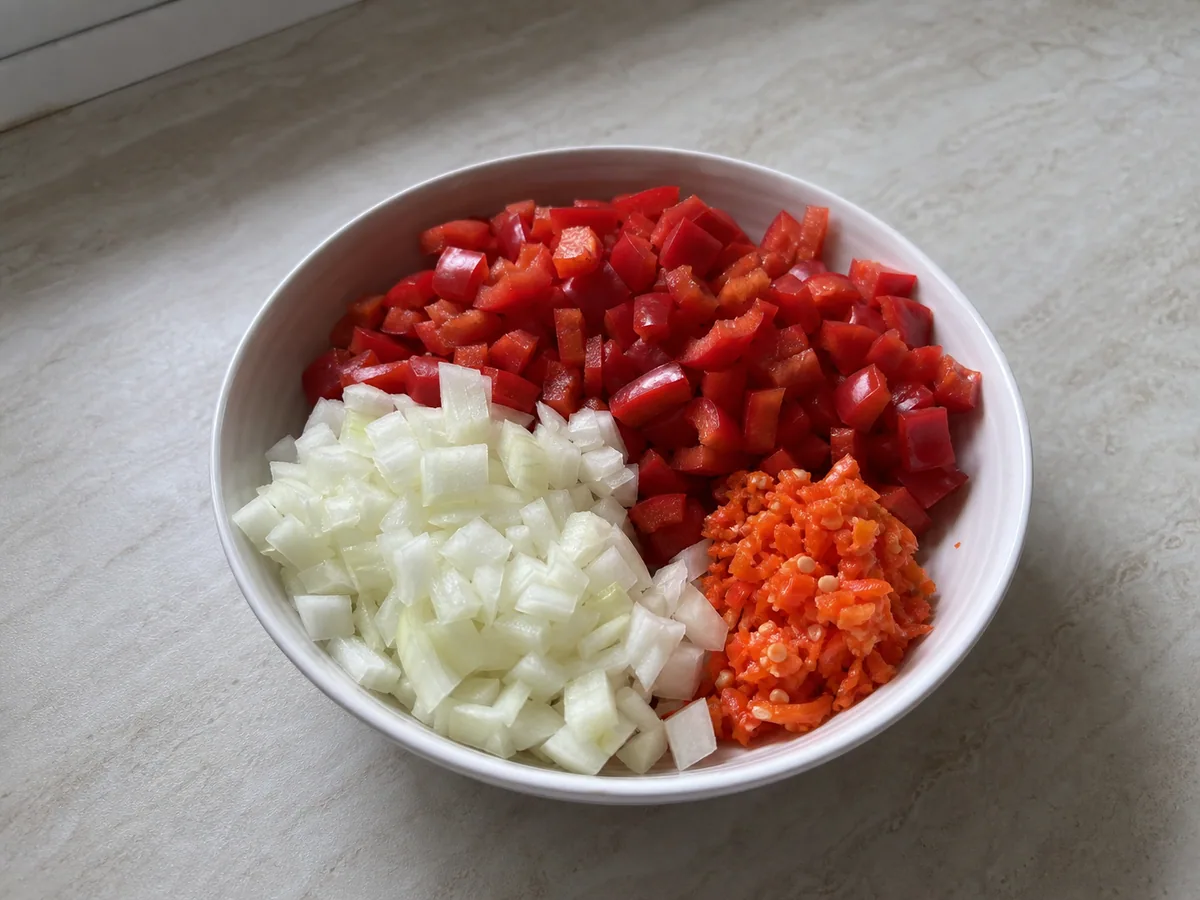
Cut 180 g of yellow onion into chunks. Stem and seed 240 g of red bell peppers; stem 15 g of Scotch bonnet pepper for full heat or remove its seeds for a milder soup. Blend the vegetables with 120 ml of water until mostly smooth, stopping to scrape down the jar.
Simmer the beef and build the stock
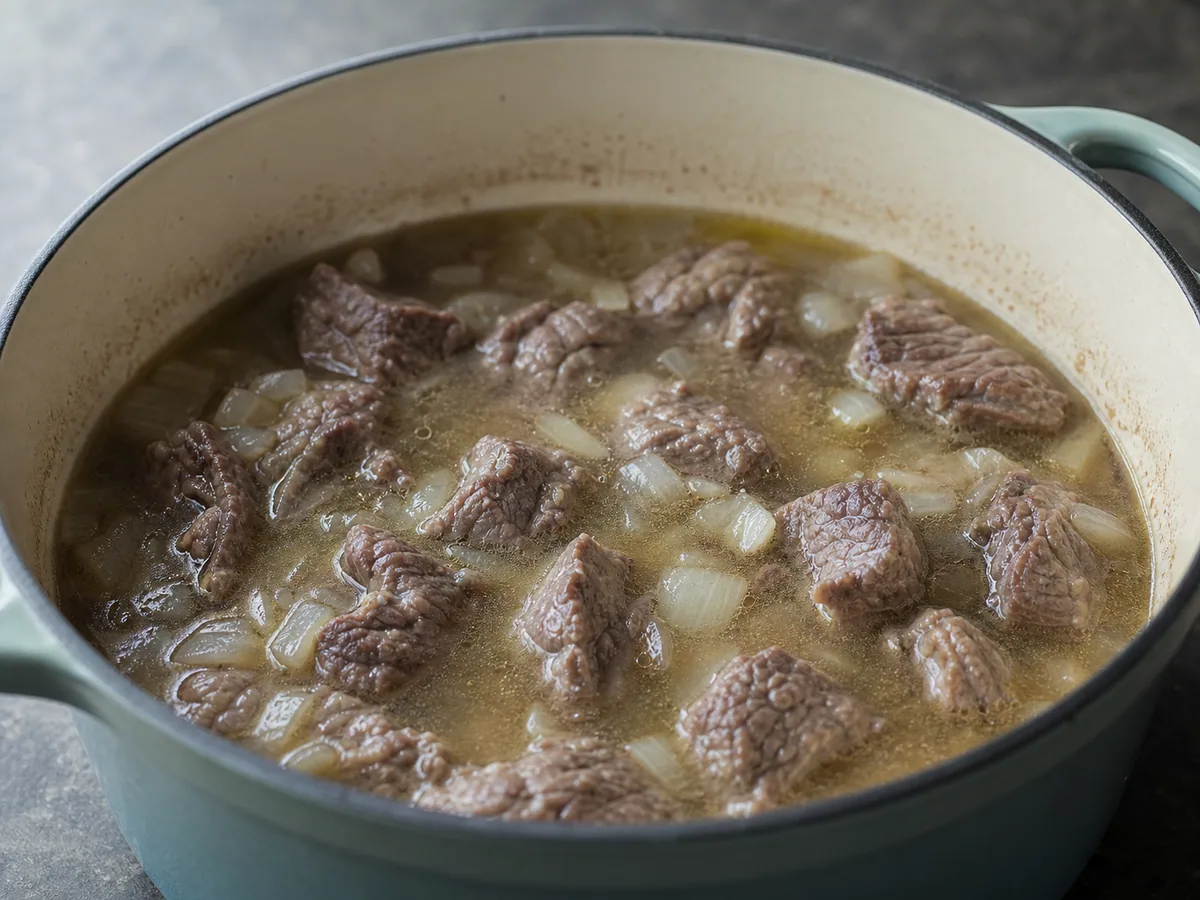
Pat 500 g of boneless beef chuck dry and cut it into 3 cm (1 1/4 in) pieces. Place it in a heavy pot with 4 g of kosher salt and 600 ml of low-sodium beef stock. Bring to a boil over medium-high heat, skim any foam, then reduce to a steady simmer. Cover partially and cook for 40 to 50 minutes, stirring occasionally, until the beef is fork-tender. Use a food thermometer on the largest pieces to confirm at least 63°C/145°F; keep the pot at a simmer for at least 3 minutes after that reading. Transfer the beef to a clean bowl and pour the cooking liquid into a heatproof jug. Wash hands, knife, board, and any surface that touched raw beef with hot, soapy water.
40:00Reduce the pepper base
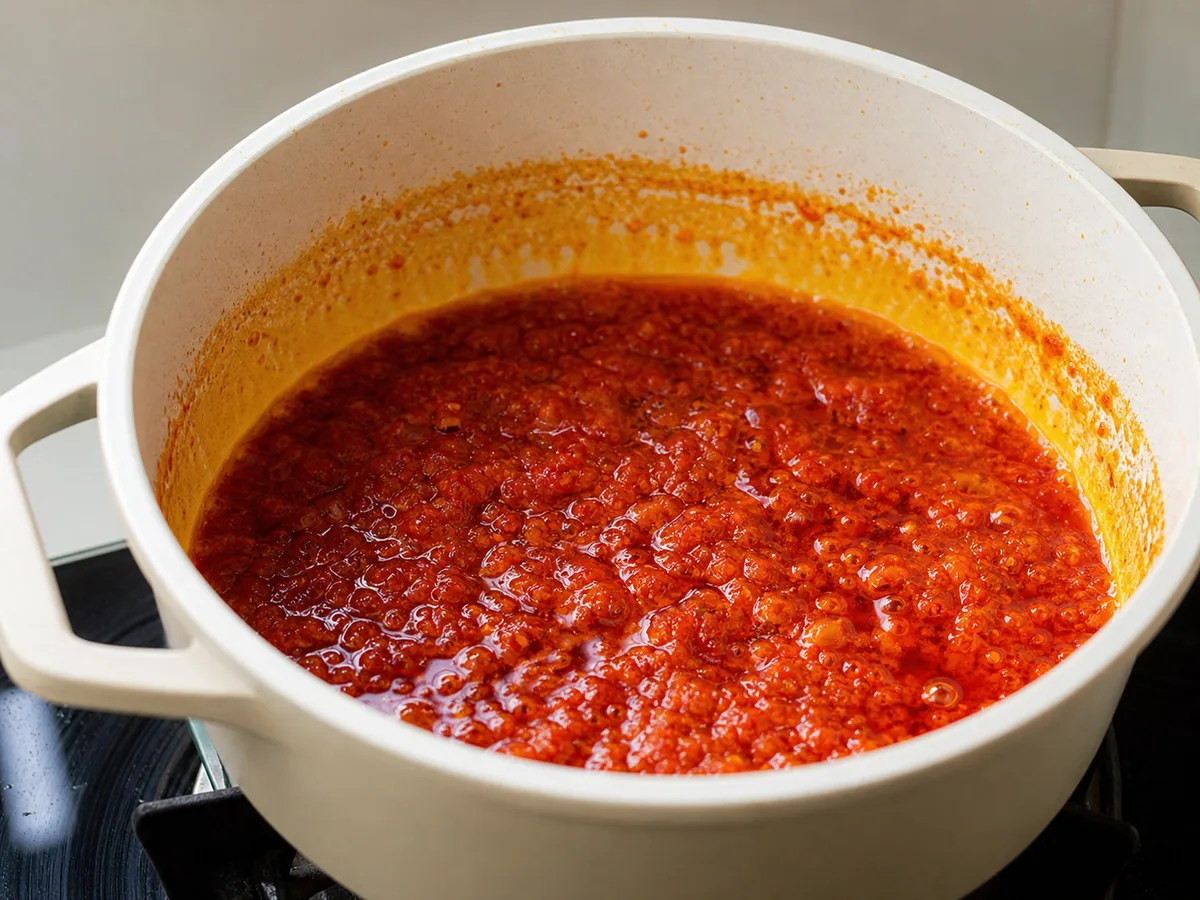
Return the pot to medium heat and add 45 ml of red palm oil. When the oil is fluid and shimmering, carefully add the blended pepper base. Cook uncovered for 10 to 12 minutes, stirring often, until the mixture darkens slightly, loses its raw aroma, and small beads of oil appear around the edges.
10:00Set the egusi curds
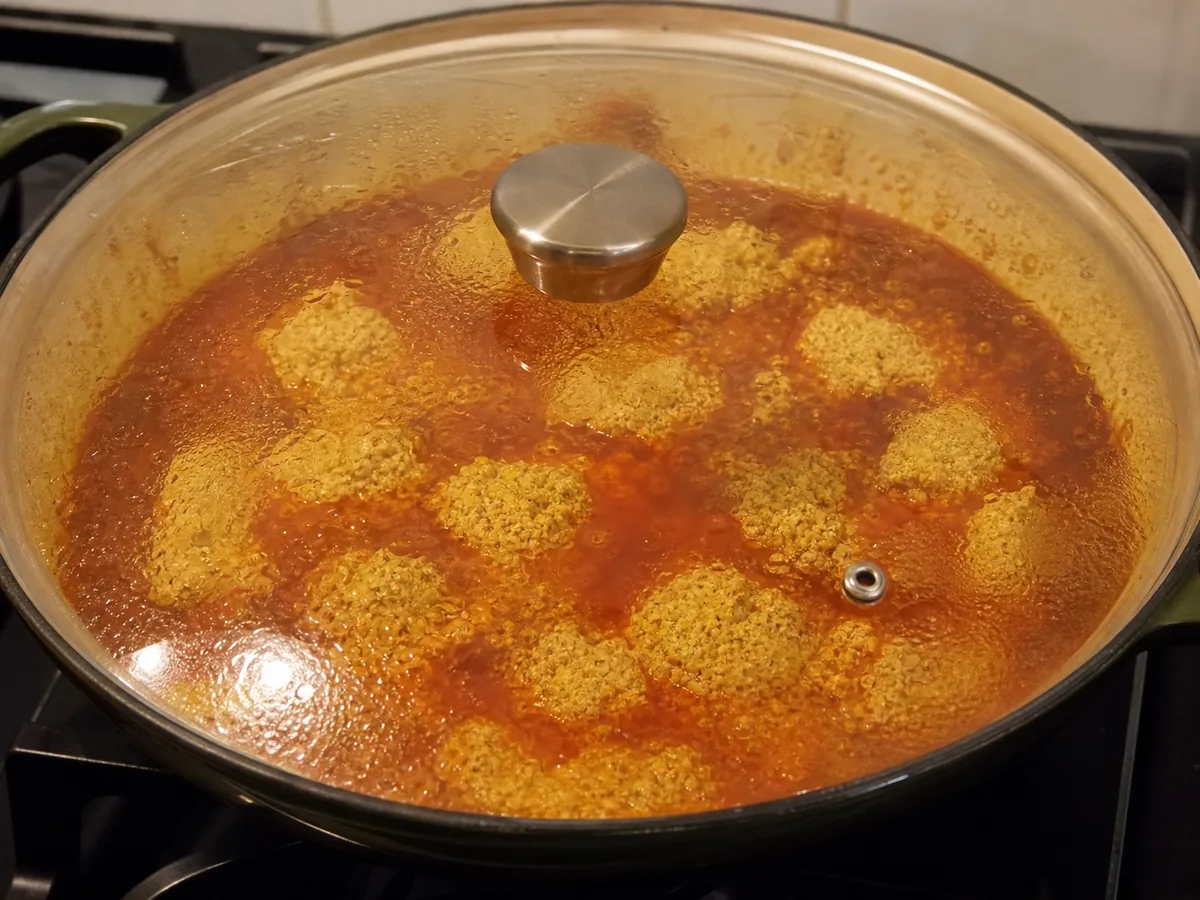
Put 180 g of ground egusi seeds in a bowl. Stir in enough hot beef cooking liquid to form a thick, spoonable paste. Drop the paste into the pepper base in walnut-size mounds without stirring. Cover, lower the heat to medium-low, and cook for 8 minutes so the egusi sets into tender curds. Uncover and gently break the curds into large pieces.
08:00Finish the soup
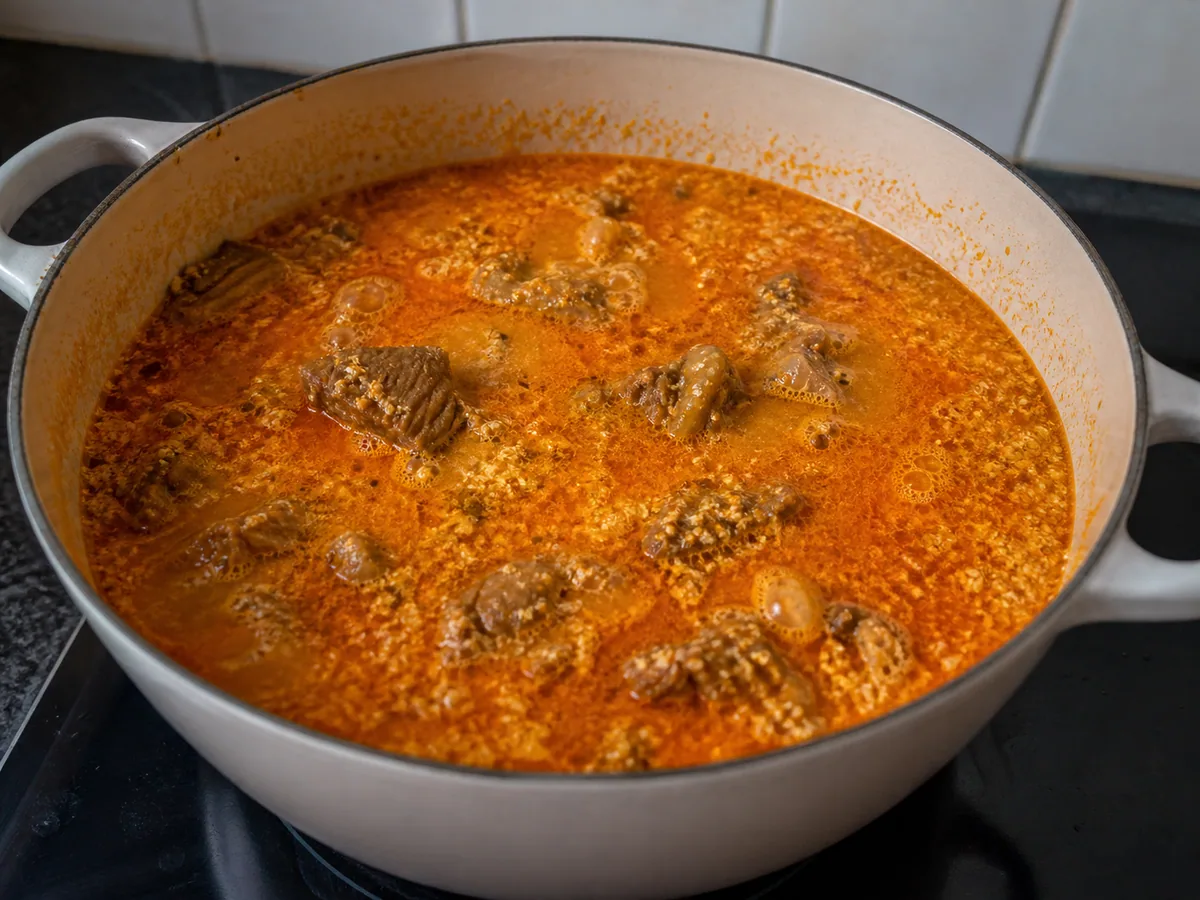
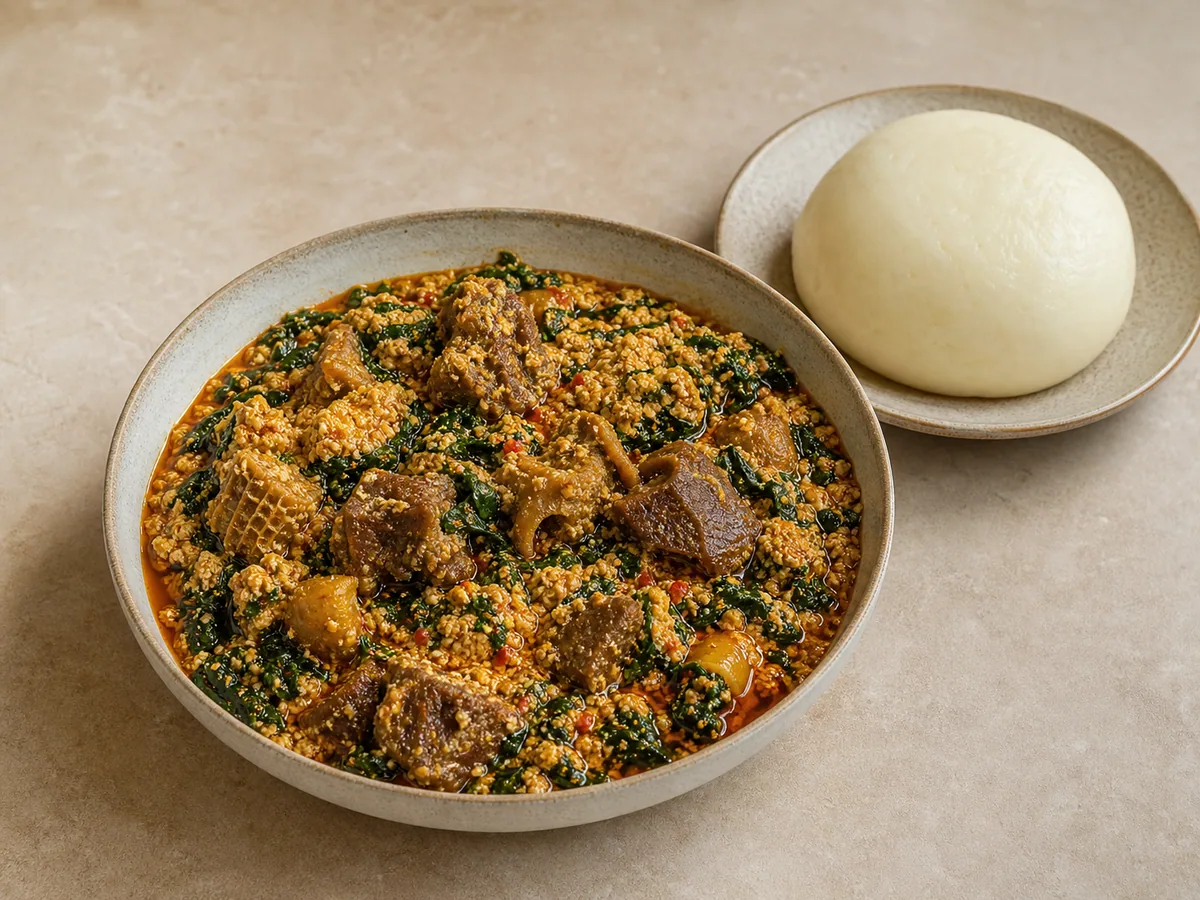
Return the cooked beef and remaining cooking liquid to the pot. Stir in 25 g of ground dried crayfish (shellfish) and 15 g of fermented locust beans (iru). Bring to a gentle simmer and cook uncovered for 12 to 15 minutes, stirring around the egusi curds rather than crushing them, until the broth thickens and the oil rises in small orange pools. Taste and adjust the seasoning.
12:00Add spinach and serve
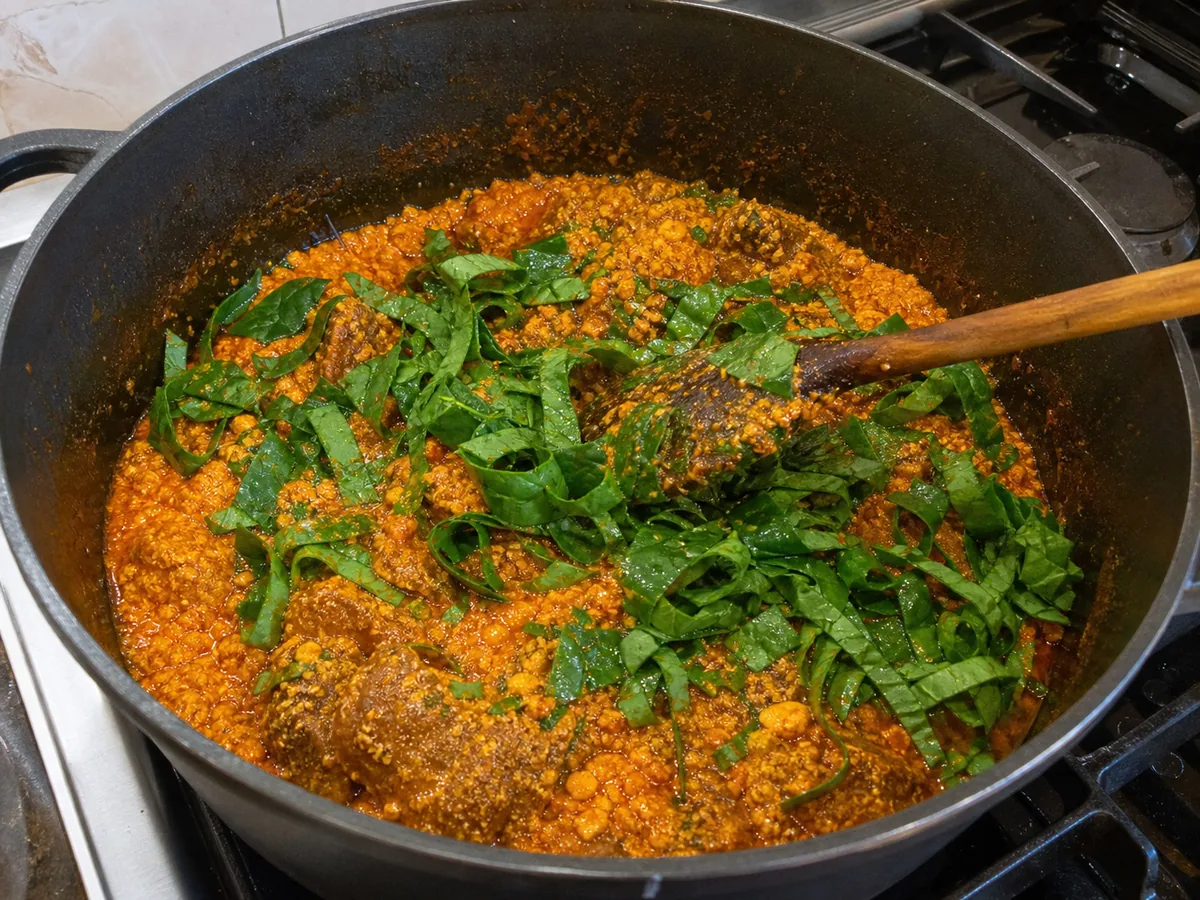
Rinse 300 g of fresh spinach well, drain it, and slice the leaves into broad ribbons. Fold them into the soup and simmer for 3 to 5 minutes, just until wilted and tender but still green. Let the soup stand off the heat for 5 minutes so the texture settles, then serve with fufu (optional).
03:00


Smart Substitutions
- No fresh spinach? Use pumpkin leaves (ugu), kale, or Swiss chard and adjust the final simmer to the tenderness of the greens.
- No dried crayfish? Use a small amount of finely ground smoked fish, checking carefully for bones, or omit it and increase the iru slightly.
- No iru? Omit it and season the finished soup more assertively with crayfish and salt.
- Need less heat? Remove the Scotch bonnet seeds or replace it with a milder red chile.
Tips and Variations
- Buy shelled, ground egusi from an African or Caribbean market for the smoothest texture.
- Leave the egusi mounds undisturbed during the first covered cook so they form soft curds.
- Add spinach near the end; prolonged simmering dulls its color and makes the soup taste more vegetal.
What Went Wrong?
- Egusi tastes raw or chalky Add a splash of hot cooking liquid and simmer gently for 5 more minutes.
- Soup is too thick Stir in hot stock or water a little at a time until it is thick but spoonable.
- Beef is still tough Keep it at a gentle simmer until a fork slides in easily; chuck becomes tender with time, not higher heat.
- Too much oil sits on top Stir gently and simmer uncovered for a few minutes so the egusi can absorb more of the liquid and fat.
Nutrition Estimate
- Fiber: 4 g per serving
- Sodium: 740 mg per serving
Nutrition disclaimer:This recipe is provided for general cooking information only. Nutrition values are estimates and may vary by ingredients, brands, preparation methods, and serving sizes. Check ingredient labels and follow appropriate food-safety practices. This content is not medical, dietary, allergy, or professional food-safety advice.
FAQ
Found an error or have a suggestion?
Help us improve this recipe. Send us your feedback and include the recipe name so we can take a look.