Method
Prepare the vegetables and chicken
Heat the oven to 200°C (400°F). Chop 1 yellow onion. Cut 200 g of carrots, 170 g of parsnips, 225 g of Yukon Gold potatoes, and 170 g of celery root into even 1 cm (1/2 in) pieces, then mince 2 garlic cloves. Transfer the vegetables to a bowl. On a separate board reserved for raw poultry, cut 680 g of boneless skinless chicken thighs into 2 cm (3/4 in) pieces. Wash your hands, then clean and sanitize the knife, board, and work surface before handling the pastry or any ready-to-eat food.
Cook the chicken safely
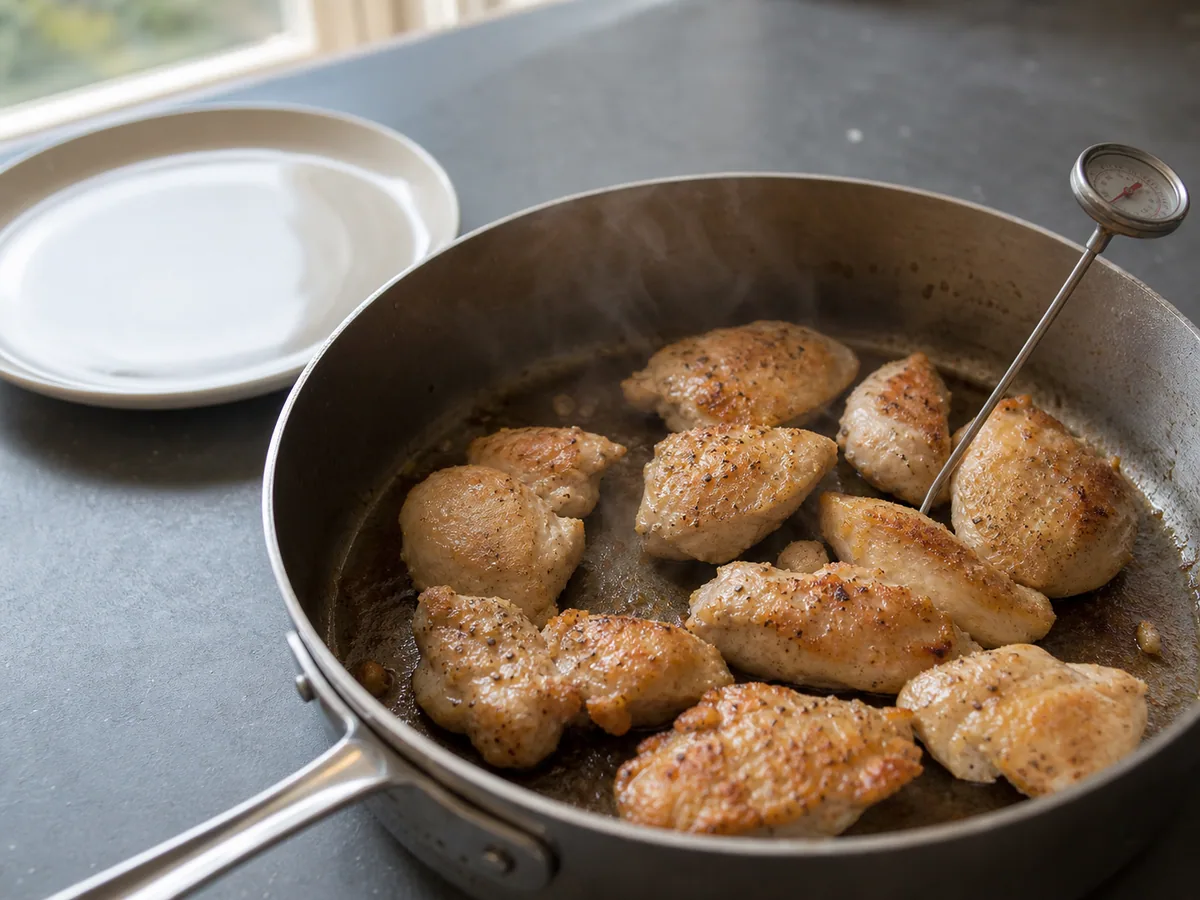
Heat 15 ml of olive oil in a 30 cm (12 in) wide, deep skillet or 4.5 L (4.5 qt) braiser over medium-high heat for the 6-serving batch; use a larger vessel for scaled batches so 680 g of boneless skinless chicken thighs can remain in a single layer. Season 680 g of boneless skinless chicken thighs with about half of 5 g of kosher salt and half of 1 g of black pepper, reserving the rest for the filling, then spread the pieces in a single layer. Cook, turning the pieces as they color, until lightly browned and the thickest pieces reach 74°C/165°F on a food thermometer; begin checking at 5 minutes. Transfer the chicken to a clean plate with clean utensils.
05:00Soften the root vegetables
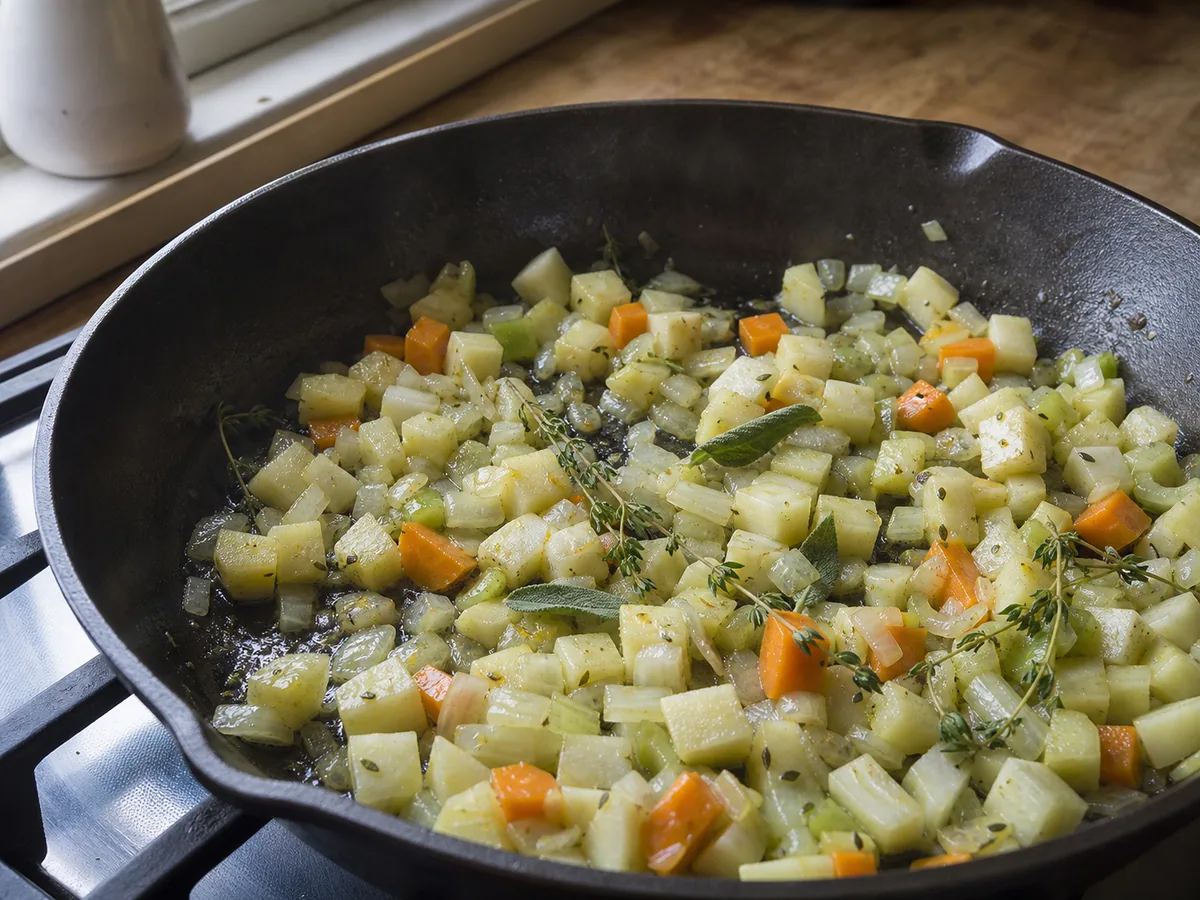
Reduce the heat to medium and melt 56 g of unsalted butter in the same skillet. Add 1 yellow onion, 200 g of carrots, 170 g of parsnips, 225 g of Yukon Gold potatoes, and 170 g of celery root. Cook, stirring often and scraping up the browned bits, until the onion is translucent and the root vegetables are beginning to yield at the edges; begin checking at 8 minutes. Add 2 garlic cloves, 2 g of fresh thyme leaves, and 1/2 g of dried sage, then stir just until fragrant.
08:00Build the cream sauce
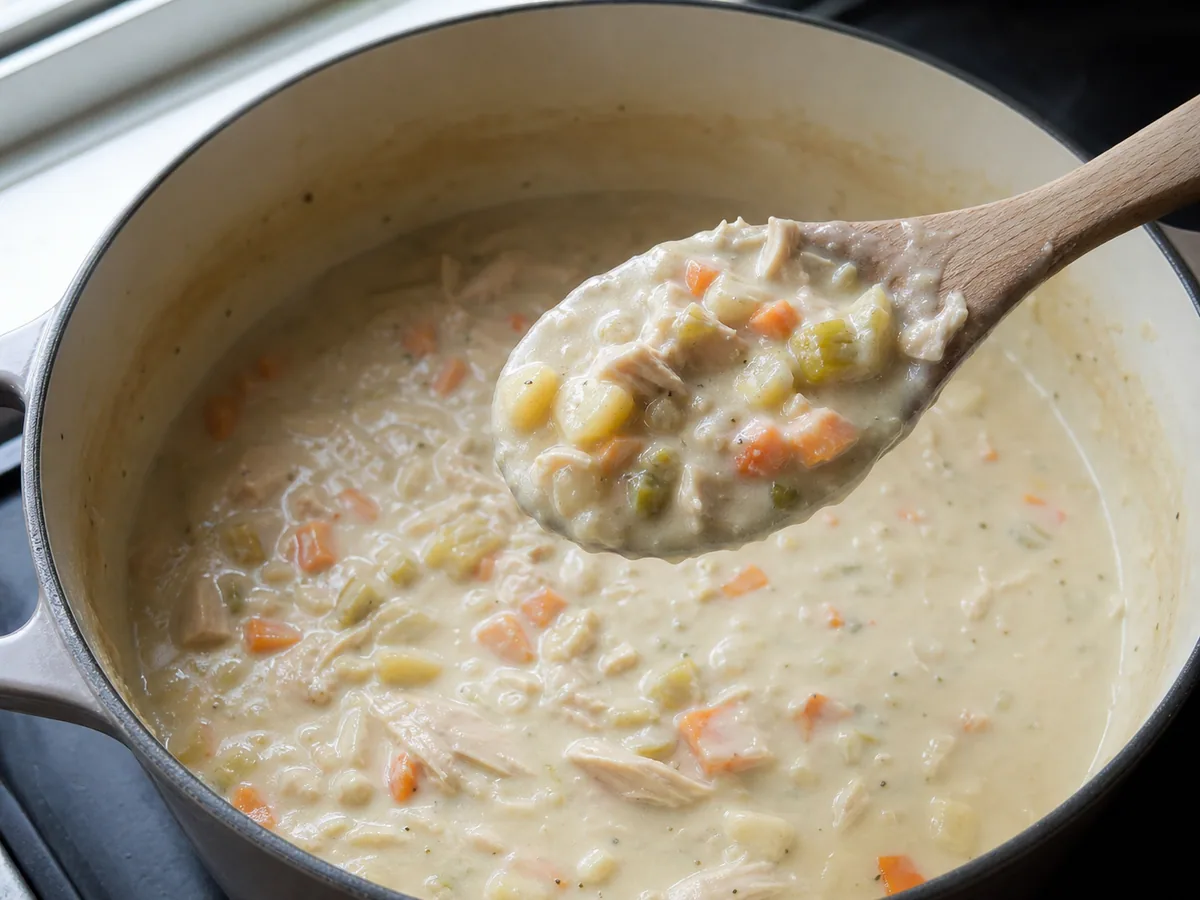
Sprinkle 45 g of all-purpose flour over the vegetables and stir until no dry flour remains and the mixture smells lightly toasted. Pour in 600 ml of low-sodium chicken broth gradually while stirring, then add 240 ml of whole milk. Bring the mixture to a gentle simmer and cook, stirring along the bottom and corners of the skillet, until the sauce coats the back of a spoon and the root vegetables are almost tender; begin checking at 6 minutes.
06:00Finish the filling
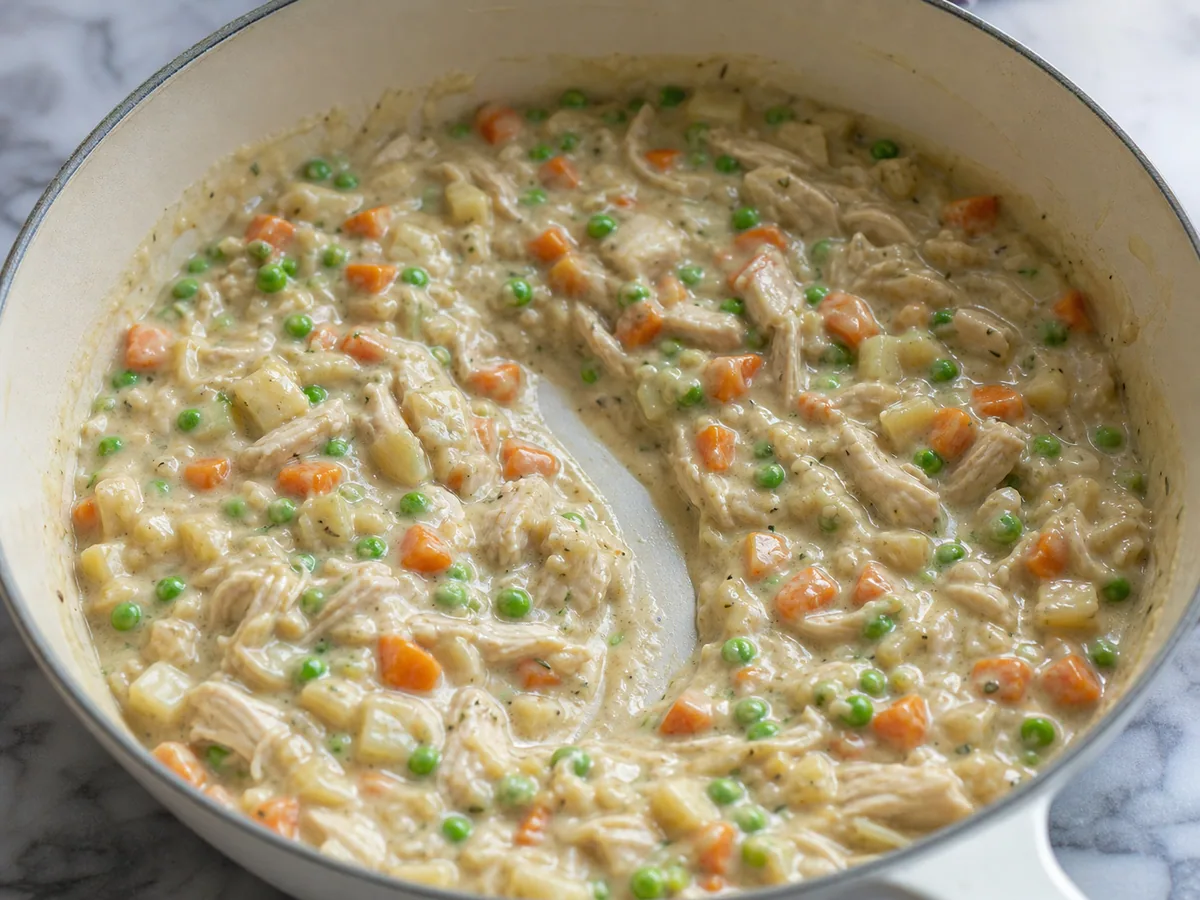
Return the cooked chicken and any juices on the plate to the skillet, then fold in 140 g of green peas and add the seasoning you reserved. Simmer gently until the peas are hot, every chicken piece remains fully cooked, and the sauce is thick enough that a spoon drawn through the skillet leaves a trail for a moment before closing. Remove the skillet from the heat and taste the sauce; it should be well seasoned and slightly thicker than a stew before it goes under the pastry.
Top the pie with pastry
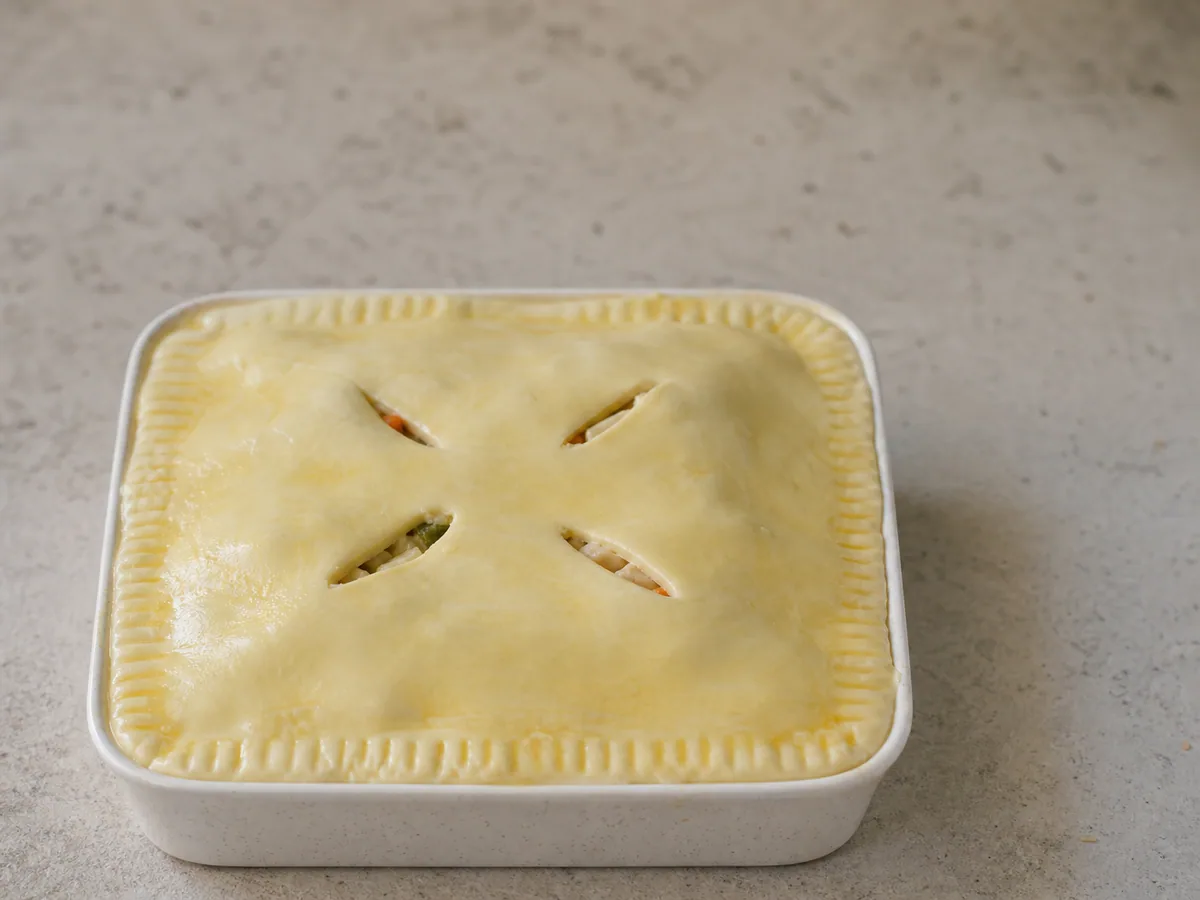
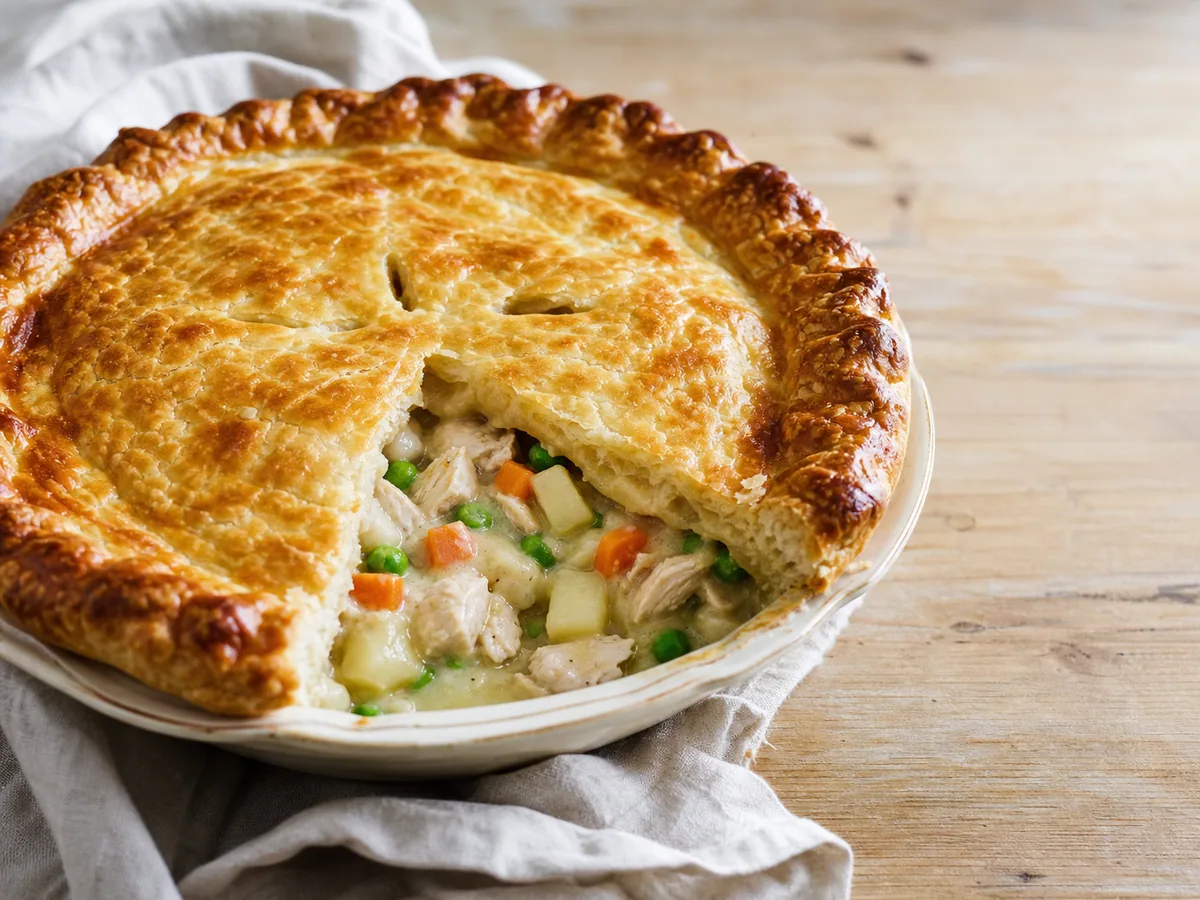
Spoon the filling into a baking dish large enough to hold it in a layer about 4 cm (1 1/2 in) deep; scaled batches should use a vessel that preserves a similar filling depth. Let the strongest steam subside. Unroll 250 g of ready-to-use all-butter puff pastry sheet and trim it so it overlaps the dish slightly, then drape it over the filling and press it firmly to the rim. Cut four vents near the center. Beat 1 large egg until smooth and brush a thin, even layer over the pastry.
Bake until deeply golden
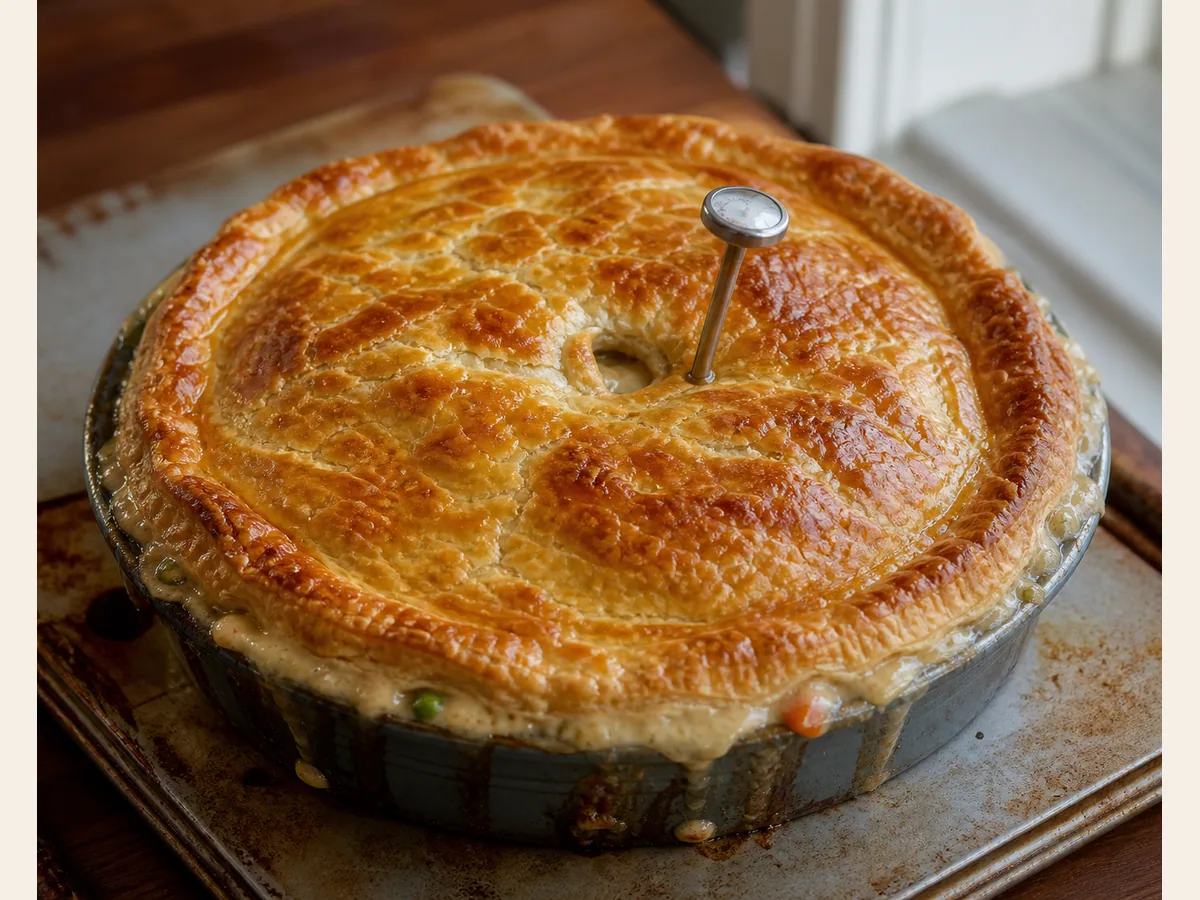
Set the baking dish on a rimmed sheet pan to catch any bubbles. Bake on the center rack until the pastry is deeply golden, visibly puffed around the vents, and the filling bubbles at the edges; begin checking at 30 minutes. Insert a food thermometer through a vent into the center of the filling and confirm it reaches at least 74°C/165°F before removing the pie from the oven.
30:00Rest before serving
Let the pot pie stand for 10 minutes. The bubbling sauce will settle and thicken enough to spoon cleanly while the pastry stays crisp. Serve directly from the baking dish, breaking through the crust so each portion gets both flaky pastry and plenty of chicken and root vegetables.
10:00


Smart Substitutions
- No celery root? Use the same weight of rutabaga or add more Yukon Gold potato.
- No parsnips? Replace them with additional carrots for a sweeter, more familiar filling.
- No whole milk? Use 2% milk for a slightly lighter sauce or evaporated milk for a richer one.
- No puff pastry? Use a rolled pie crust and bake until it is fully cooked, golden, and the filling is bubbling.
Tips and Variations
- Cut every root vegetable to the same size so the parsnip, potato, carrot, and celery root become tender together.
- Reduce the sauce before topping the pie; a loose filling releases steam that can weigh down the pastry.
- Bake the dish on a rimmed sheet pan so any bubbling sauce is caught without blocking heat around the pastry.
What Went Wrong?
- Filling is too thin Simmer it uncovered for a few more minutes before adding the pastry, stirring along the bottom so it does not scorch.
- Root vegetables are still firm Return the filling to a gentle simmer and cook until the pieces yield at the edges before assembling the pie.
- Pastry browns before the filling bubbles Loosely shield the darkest areas with foil and continue baking until the center reaches 74°C/165°F.
- Pastry looks heavy instead of flaky Make sure the filling is thick and the strongest steam has subsided before placing the pastry over the dish.
Nutrition Estimate
- Fiber: 5 g per serving
- Sodium: 740 mg per serving
Nutrition disclaimer:This recipe is provided for general cooking information only. Nutrition values are estimates and may vary by ingredients, brands, preparation methods, and serving sizes. Check ingredient labels and follow appropriate food-safety practices. This content is not medical, dietary, allergy, or professional food-safety advice.
FAQ
Found an error or have a suggestion?
Help us improve this recipe. Send us your feedback and include the recipe name so we can take a look.