Method
Make the palm sugar syrup
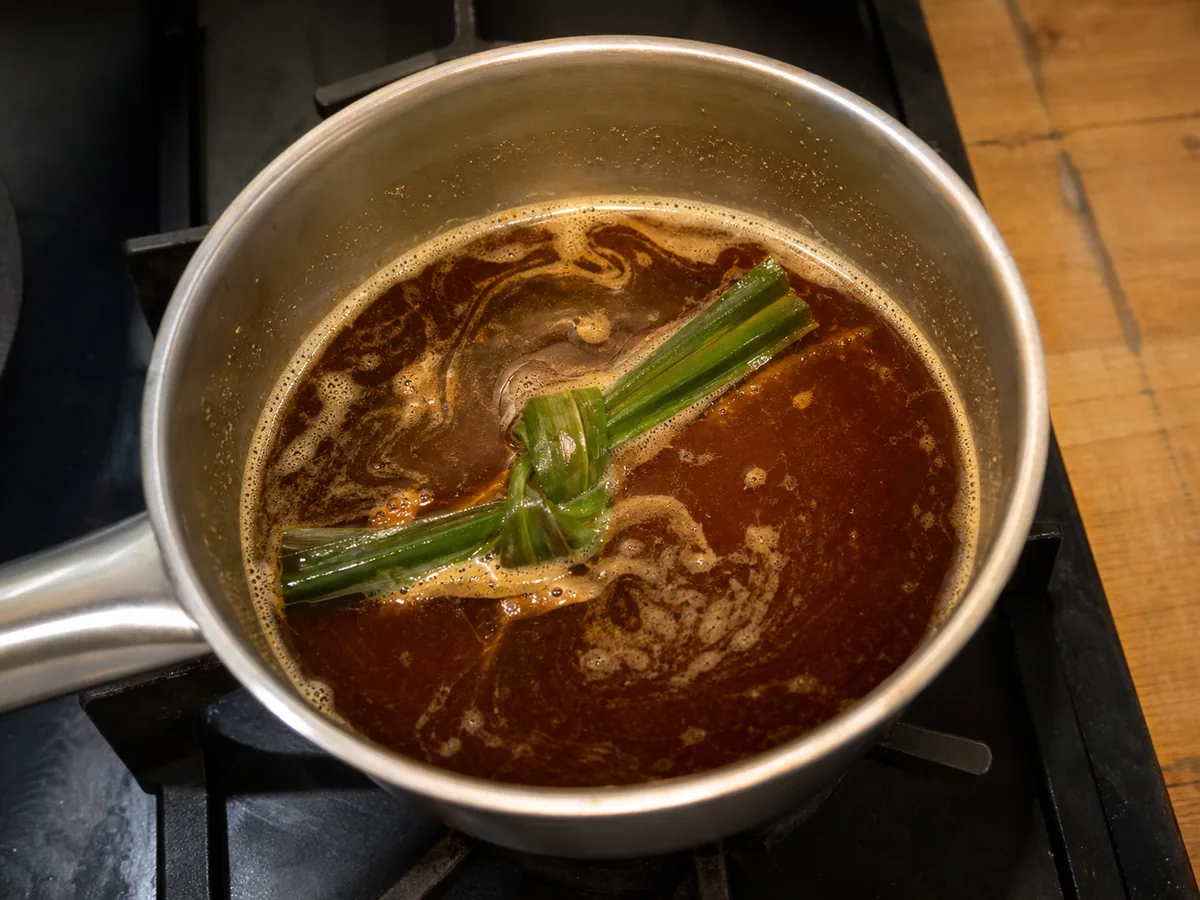
Tie 1 pandan leaf for syrup into a loose knot. Combine 160 g of Indonesian palm sugar, 180 ml of water for palm sugar syrup, and 1 pandan leaf for syrup in a small saucepan over medium heat. Stir until the sugar dissolves, then maintain a gentle simmer for 6 to 8 minutes, until the syrup lightly coats a spoon but still pours easily. Start checking at 6 minutes because it thickens further as it cools. Remove the pandan leaf and pour the syrup into a heatproof jug to cool while you prepare the rest of the dessert.
06:00Season the coconut milk
Combine 300 ml of unsweetened full-fat coconut milk, 180 ml of water for coconut milk, and 1 g of fine salt for coconut milk in a saucepan over medium-low heat. Stir for 3 to 4 minutes, until the mixture is steaming and tiny bubbles appear around the edge; do not let it boil. Start checking at 3 minutes. Transfer to a clean jug and leave it to cool while you make the jelly.
03:00Blend the pandan extract
Rinse 8 pandan leaves for jelly, cut them crosswise into short pieces, and place them in a blender with 480 ml of water for pandan extract. Blend for 1 minute, until the leaves are finely shredded and the water is vivid green. Strain through a fine sieve lined with clean cheesecloth or a thin kitchen towel, then squeeze firmly to extract as much liquid as possible. Discard the fibrous leaves.
01:00Cook the cendol batter
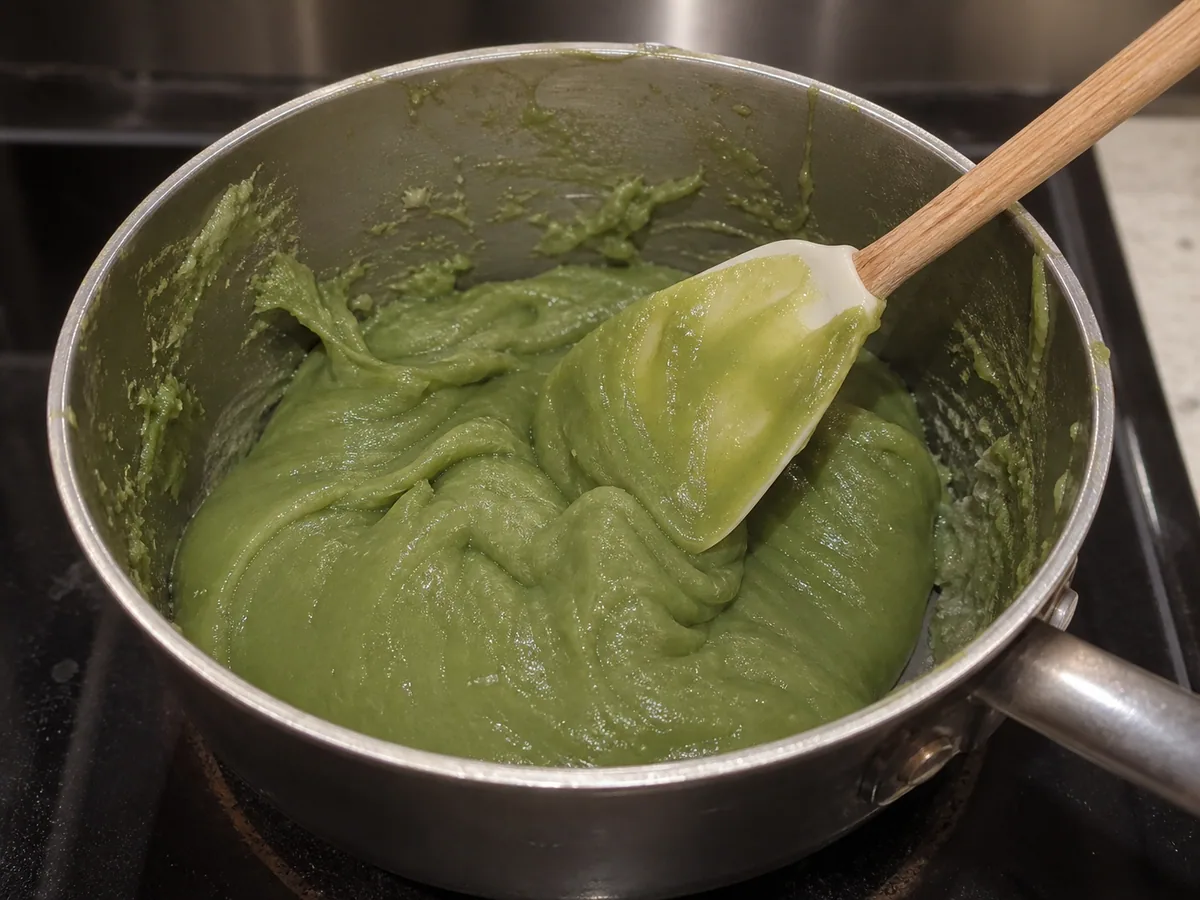
Whisk 60 g of white rice flour, 30 g of tapioca starch, and 1 g of fine salt for jelly together in a heavy saucepan. Gradually whisk in the pandan liquid until smooth. Set the pan over medium-low heat and stir continuously with a sturdy spatula, scraping the base and corners, for 8 to 12 minutes. Start checking at 8 minutes. The mixture will move from milky and loose to very thick, glossy, and partly translucent; it is ready when it gathers in heavy folds and briefly exposes the bottom of the pan after each stroke.
08:00Press and set the jelly strands
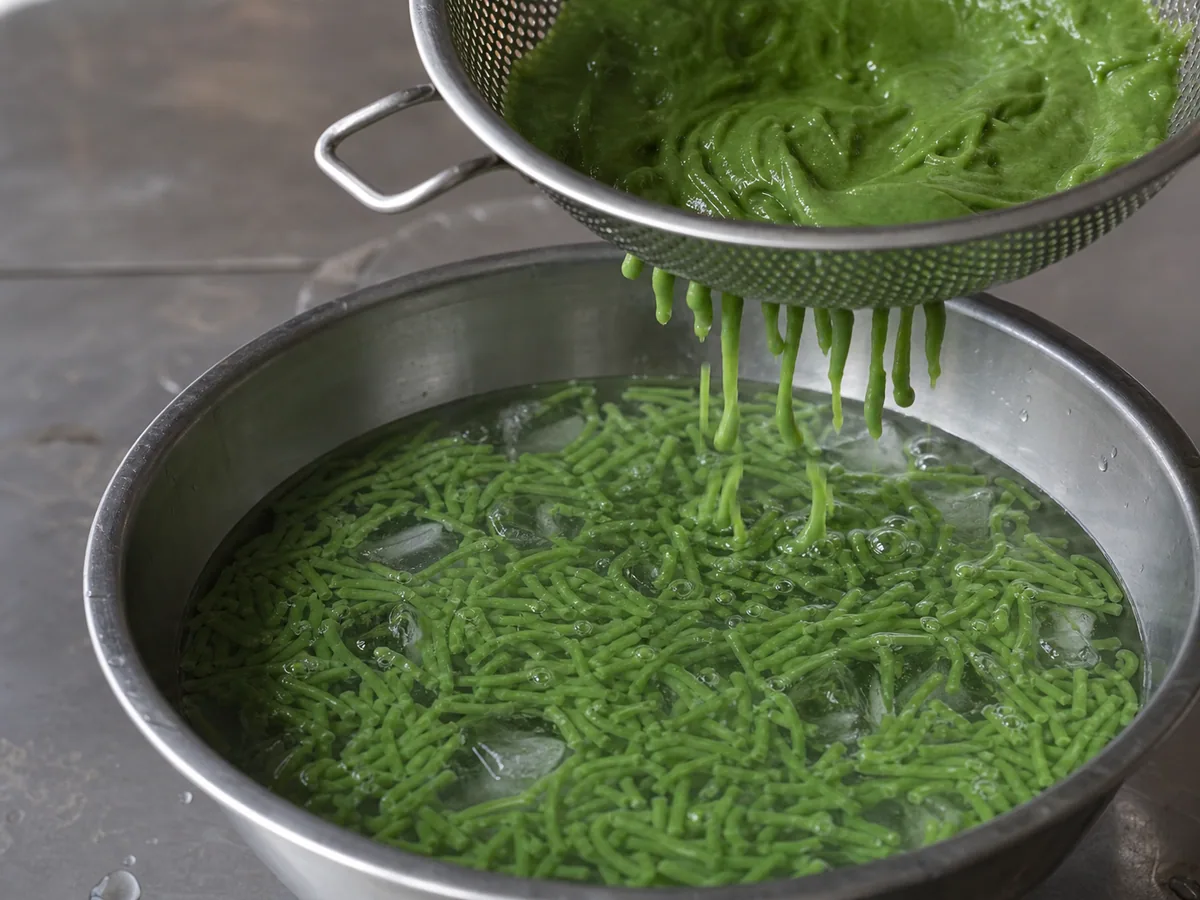
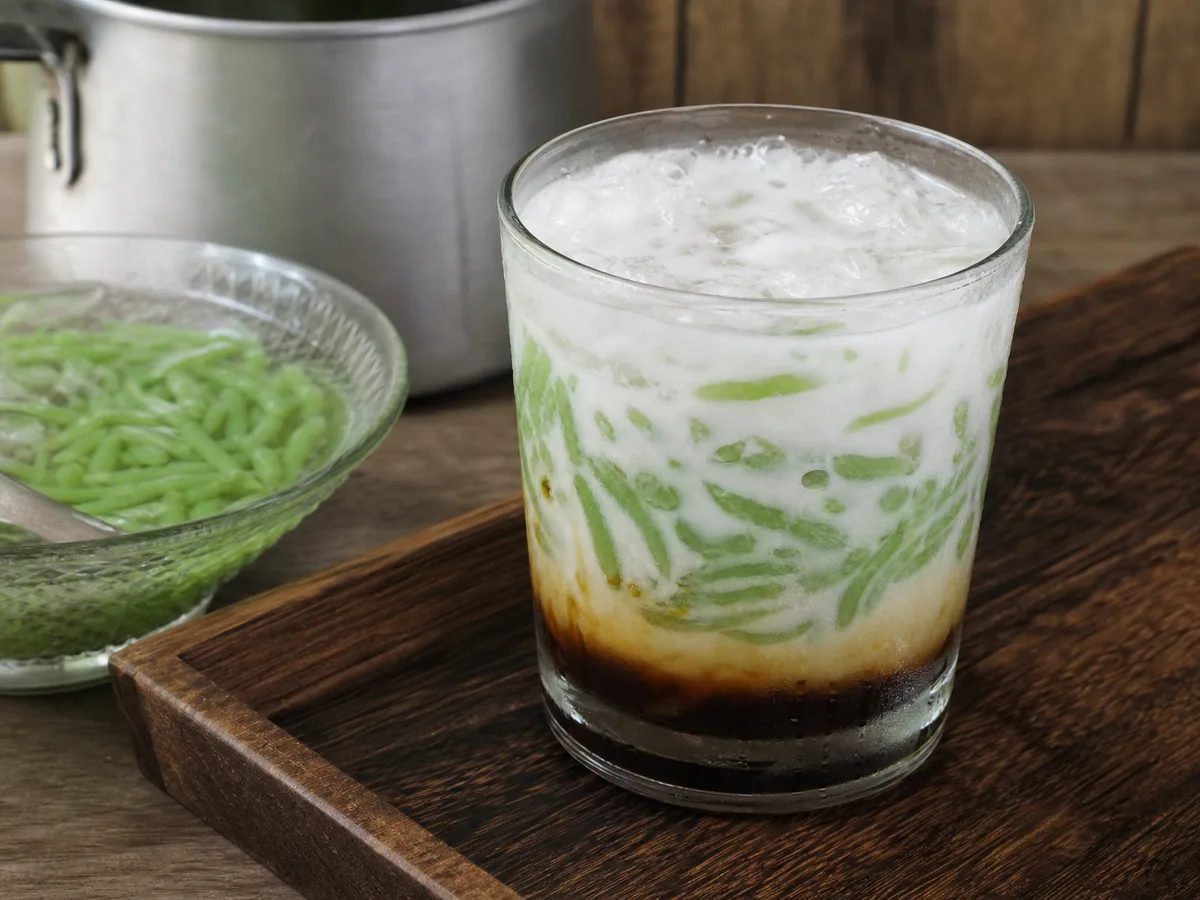
Fill a wide bowl with 1500 ml of ice water for shaping and set a cendol press, potato ricer, or sturdy colander with 3 to 5 mm holes about 5 cm above the water. Working immediately while the paste is hot and pliable, press it through the holes in small batches. Tap or scrape the underside so the strands fall in short, irregular lengths. Stir the water gently between batches to keep the strands separate. Let the jelly firm in the ice water for 5 minutes, then drain it thoroughly.
05:00Assemble and serve
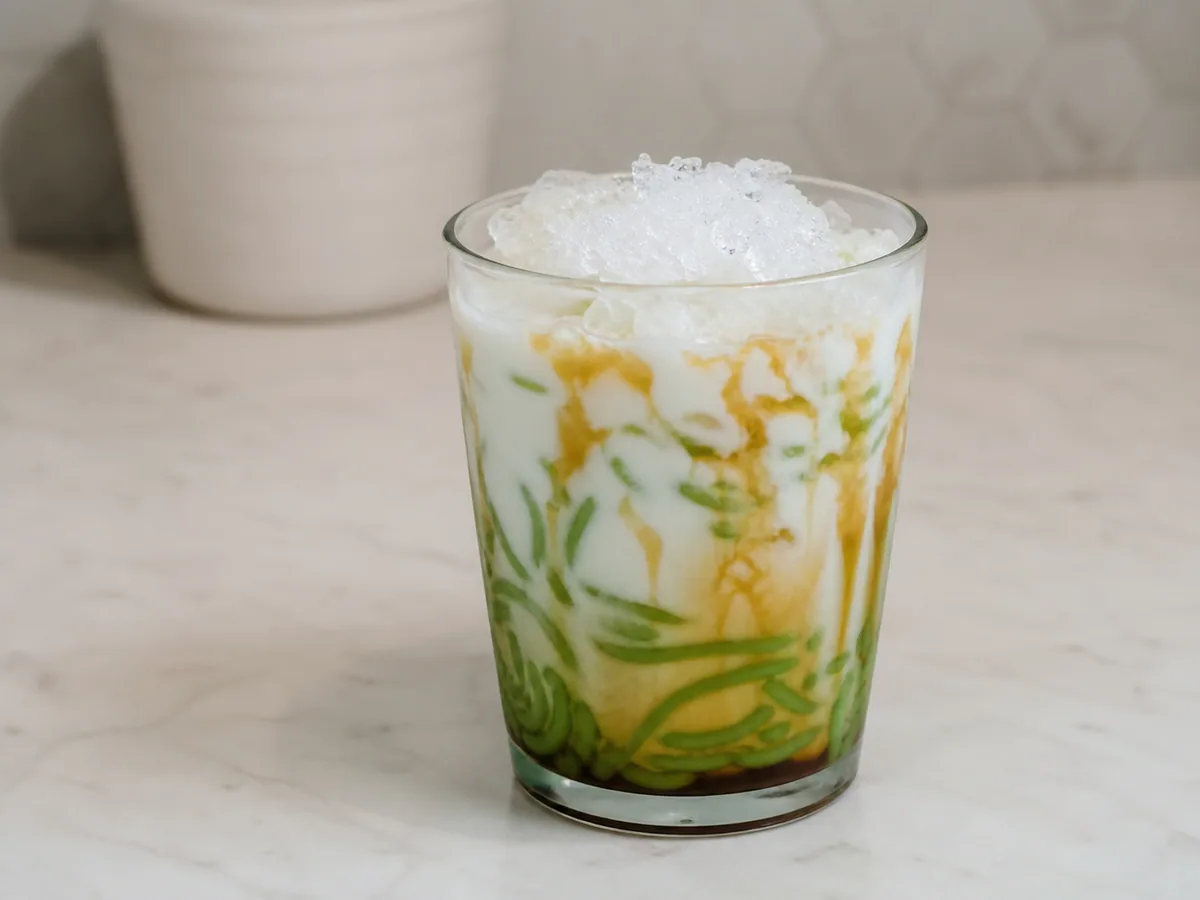
Divide the drained cendol jelly among serving glasses or bowls. Add 500 g of ice cubes for serving, pour in the cooled coconut mixture, and spoon the palm sugar syrup over the top so it falls in dark amber ribbons. Serve immediately, stirring each portion before eating so the syrup, coconut milk, melting ice, and jelly mingle.


Smart Substitutions
- No cendol press? Use a potato ricer or a sturdy metal colander with round 3 to 5 mm holes.
- No Indonesian palm sugar? Use dark brown sugar for a clean caramel flavor, though the syrup will be less smoky and complex.
- No tapioca starch? Use mung bean starch for a slightly firmer jelly with a clean bite.
- Prefer a softer jelly? Replace 10 g of the tapioca starch with 10 g of white rice flour for a more tender, less bouncy jelly.
Tips and Variations
- Set up the ice-water bowl and press before the batter goes on the heat; the shaping step moves quickly.
- Keep the coconut mixture below a boil so it stays smooth rather than oily or grainy.
- Natural pandan produces a soft leafy green, not an electric color; the aroma matters more than intensity.
What Went Wrong?
- Jelly dissolves in the ice water The paste is undercooked. Return the remaining paste to medium-low heat and stir until it is glossy, partly translucent, and heavy enough to hold folds.
- Paste will not pass through the press It has cooled too much. Return it to low heat and stir just until pliable, then press it immediately in smaller batches.
- Strands clump together Use a wider bowl with colder ice water and stir gently after each batch so new strands do not land in one pile.
- Coconut mixture looks split It became too hot. Remove it from the heat and whisk until smooth; next time stop as soon as steam rises and edge bubbles appear.
Nutrition Estimate
- Fiber: 2 g per serving
- Sodium: 220 mg per serving
Nutrition disclaimer:This recipe is provided for general cooking information only. Nutrition values are estimates and may vary by ingredients, brands, preparation methods, and serving sizes. Check ingredient labels and follow appropriate food-safety practices. This content is not medical, dietary, allergy, or professional food-safety advice.
FAQ
Found an error or have a suggestion?
Help us improve this recipe. Send us your feedback and include the recipe name so we can take a look.