Method
Make and rest the noodle dough
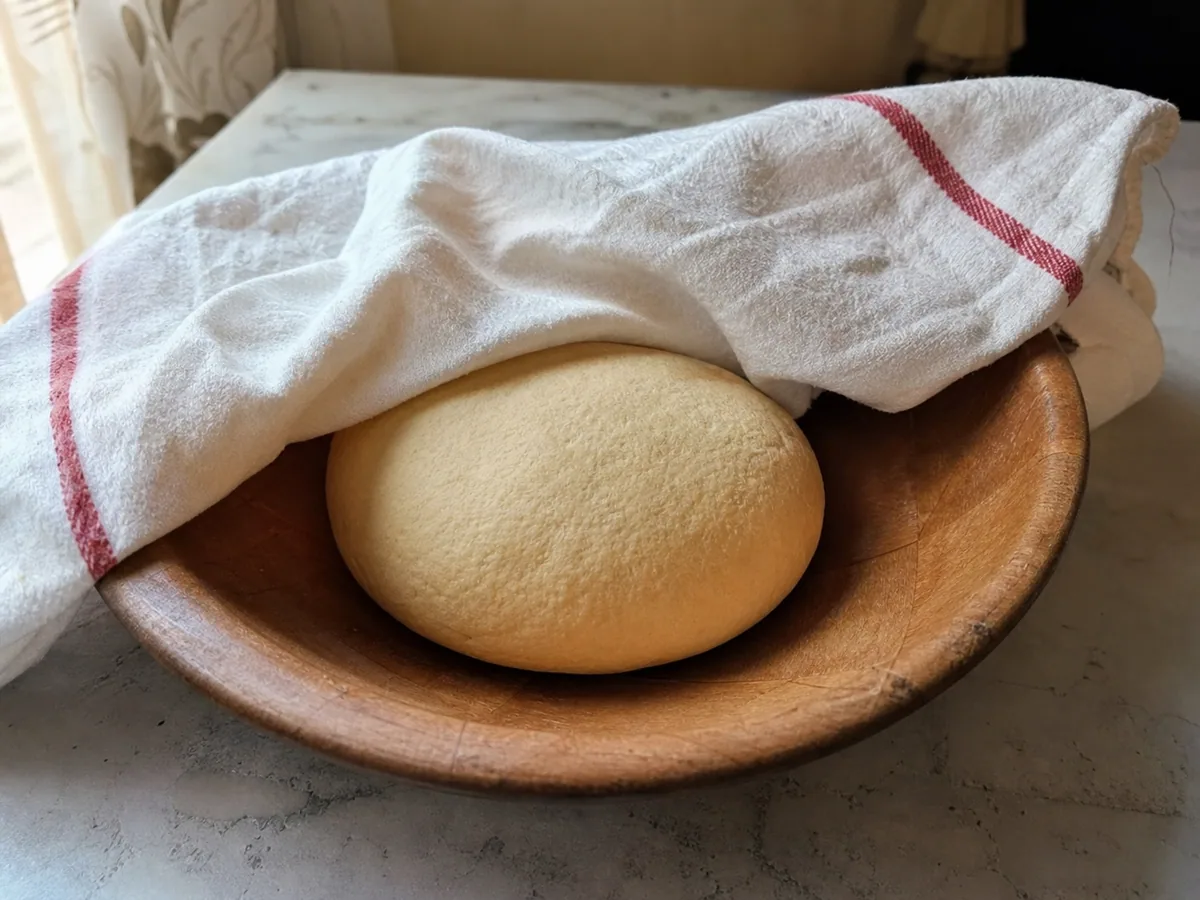
Combine 300 g of fine durum wheat semolina, 90 g of all-purpose wheat flour, and 3 g of fine sea salt for noodles in a wide bowl. Make a well, pour in 180 ml of warm water for noodles gradually, and mix until no dry patches remain. Knead on an unfloured surface for 8 to 10 minutes, pressing firmly, until the dough is smooth, dense, and springy rather than sticky. Cover the dough with the upturned bowl and let it rest for 30 minutes so it rolls without snapping back.
30:00Start the chicken broth
Heat 30 ml of olive oil in the lower pot of a couscoussier or in a large pot that fits a steamer basket over medium heat. Chop 200 g of large yellow onion, add it to the pot, and cook for 5 minutes until translucent without browning. Mince 2 garlic cloves and stir it in for 30 seconds. Add 680 g of boneless skinless chicken thighs, 2 g of ground cinnamon for broth, 1 1/2 g of ground white pepper, and 7 g of fine sea salt for broth; turn the chicken for 2 minutes so the spices coat every piece. Pour in 1440 ml of water for broth and bring to a boil. Skim any foam, lower the heat to a steady simmer, and cook uncovered for 25 minutes. Wash the knife, board, and hands immediately after handling the raw chicken, then roll and cut the noodles in the next step while the broth simmers, using clean equipment. After 25 minutes, insert a food thermometer into the thickest piece of chicken. Transfer each piece that has reached at least 74°C/165°F to a clean plate and cover it loosely; if any piece is below that temperature, continue simmering and recheck every 5 minutes until all pieces are safely cooked.
25:00Roll and hand-cut the noodles
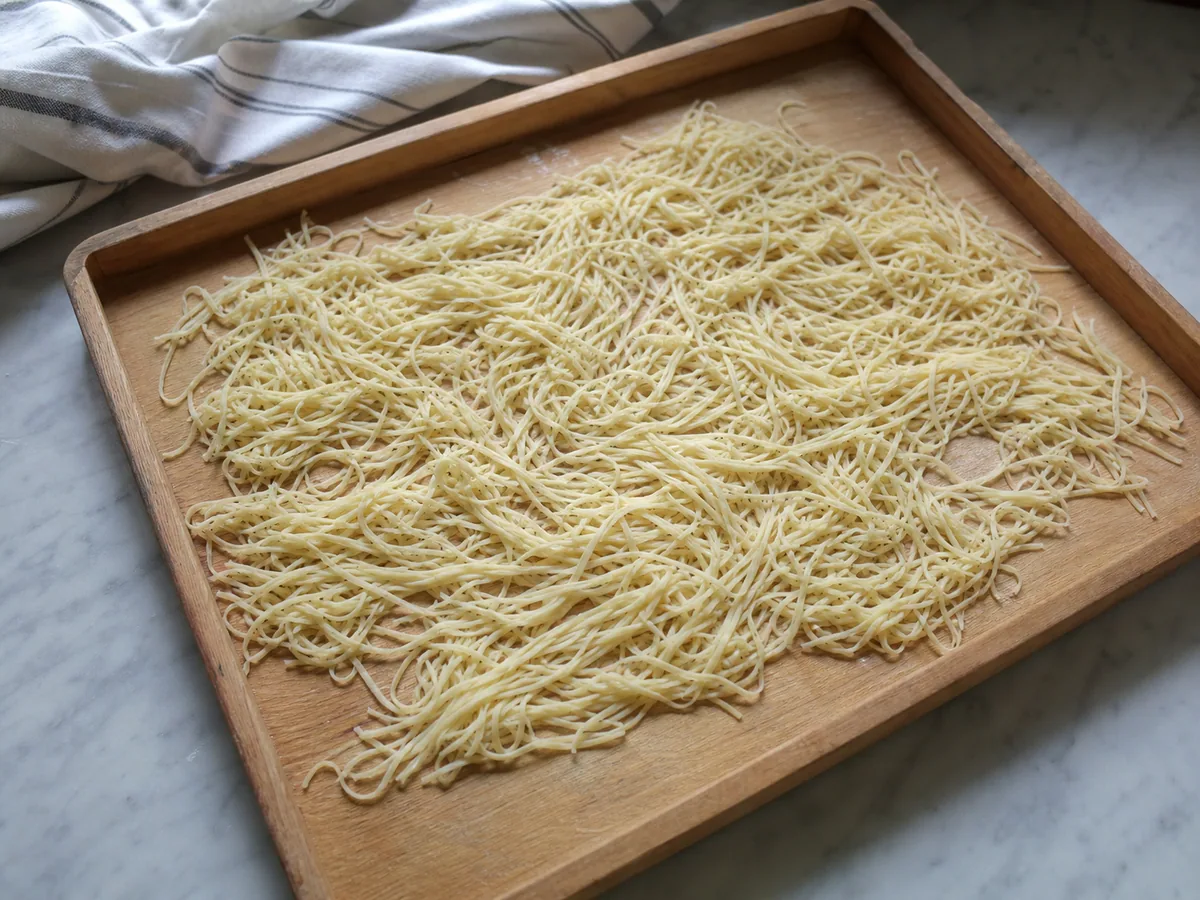
Divide the rested dough into four pieces and keep three covered. Flatten one piece, then roll it into a long sheet about 1 mm thick, turning it often and dusting the work surface very lightly with semolina only when needed. Let the sheet stand for 2 minutes, fold it loosely into a wide ribbon without pressing the layers together, and cut crosswise into strands 2 to 3 mm wide. Shake the strands open and spread them on a tray. Repeat with the remaining dough, then let all the strands surface-dry for 10 minutes before steaming. Do not oil them yet; the measured noodle oil is added after the first steaming.
10:00Add the turnips and steam the noodles
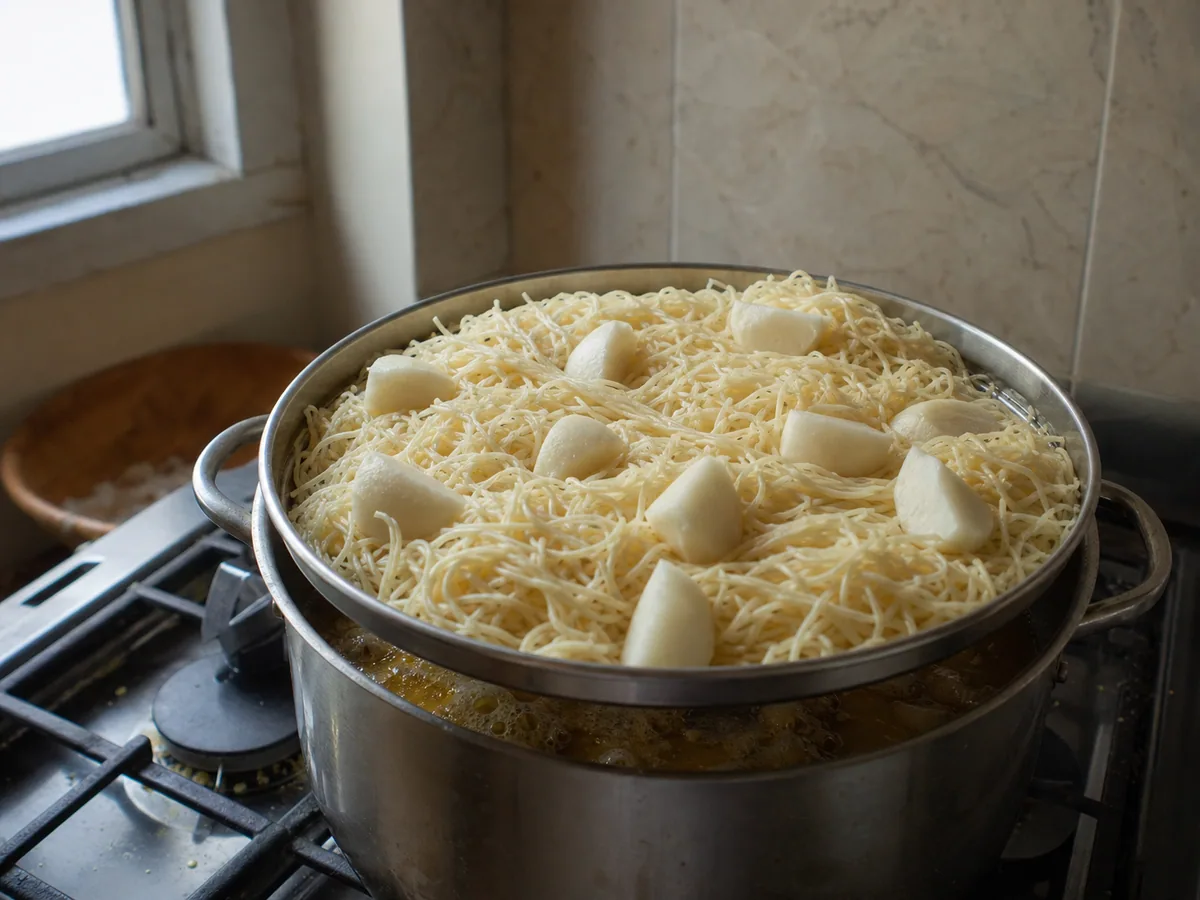
Peel 360 g of medium turnips and cut each one into four wedges. Add the wedges to the simmering broth. Set the steamer over the pot, checking that its base stays above the liquid, then scatter the surface-dried noodles inside without packing them down; leave several open channels so steam can rise freely. Cover and steam for 15 minutes from the moment a steady plume of steam passes through the noodles.
15:00Loosen the noodles and steam again
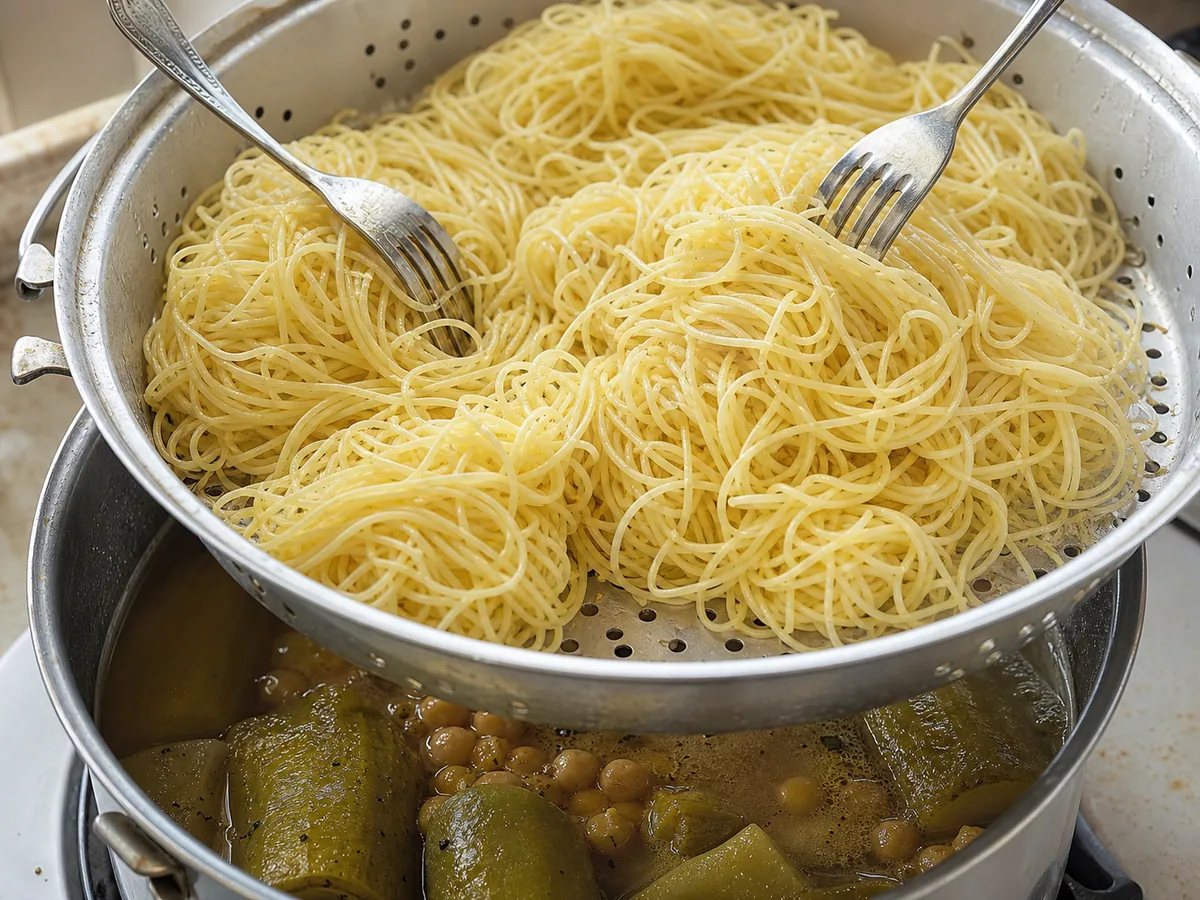
Tip the hot noodles onto a wide tray and separate them gently with two forks, breaking up every compact patch while the strands are still pliable. Drizzle 15 ml of neutral oil for noodles over the noodles and toss until lightly coated. Trim 300 g of small zucchini and cut each one lengthwise into thick batons, then add the zucchini and 240 g of cooked chickpeas to the broth. Return the loosened noodles to the steamer, cover, and steam for 12 minutes, using the timer as the first doneness check; the strands should feel tender and flexible with a faint chew.
12:00Finish the broth and season the noodles
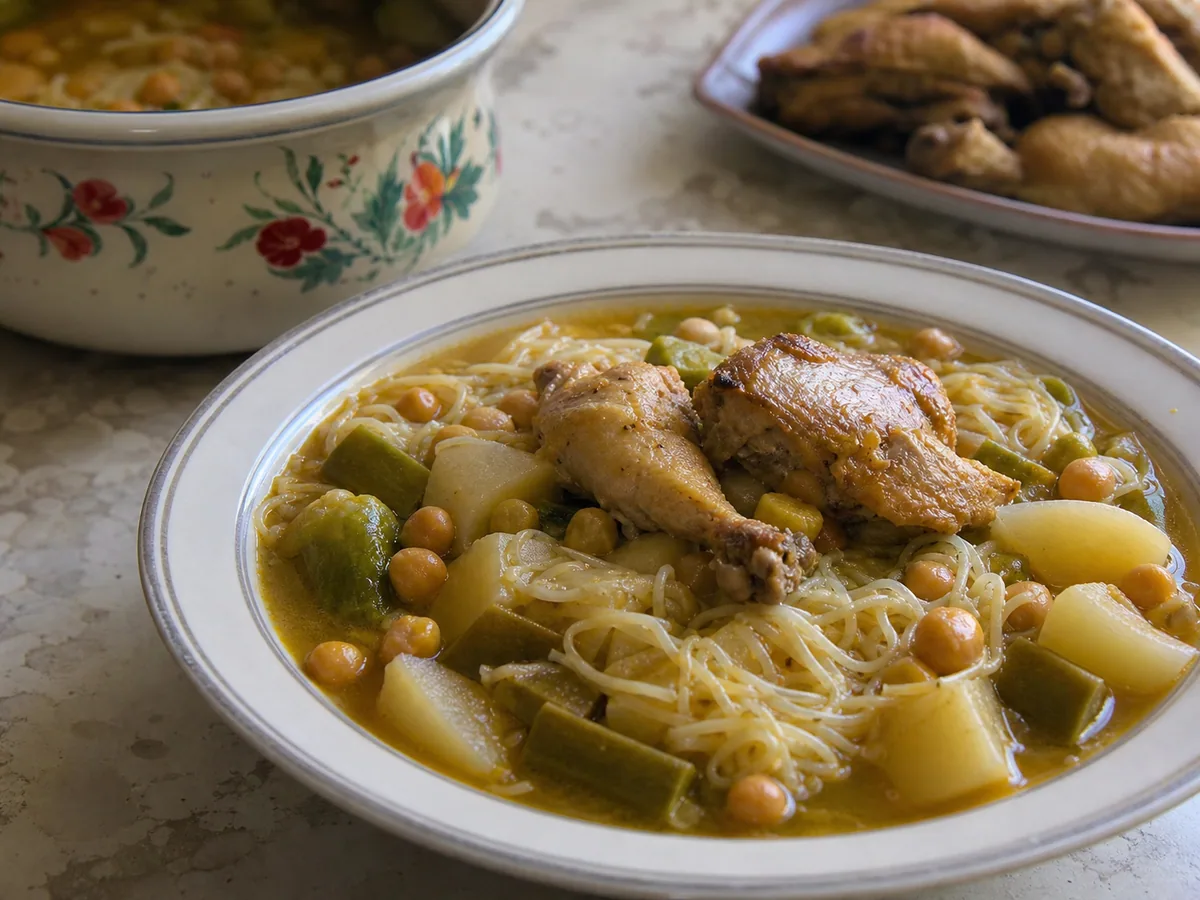
Continue simmering until the turnips and zucchini are tender but still hold their shape and the chickpeas are hot. Taste the broth and adjust only if needed. Return the fully cooked chicken to the broth for 2 minutes, just until steaming hot, then move it back to the clean plate. Tip the noodles into a large warm bowl, add 30 g of unsalted butter, and toss while ladling in hot broth a little at a time until the strands are supple, lightly glossy, and seasoned through without sitting in liquid.
Arrange the rechta and serve
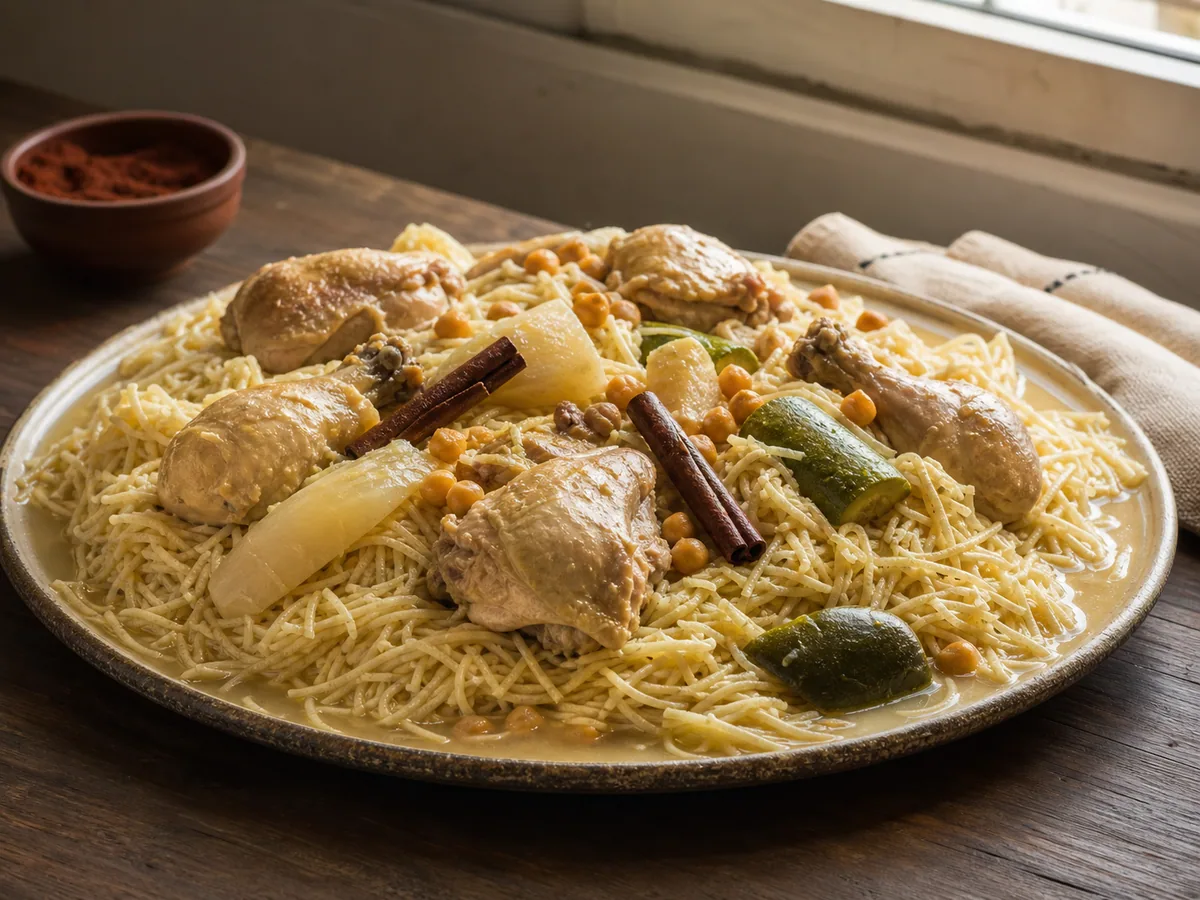
Mound the seasoned noodles on a broad warm platter. Arrange the cooked chicken over the center, tuck the turnips and zucchini around it, and spoon the chickpeas over the top. Ladle on enough broth to moisten the noodles while keeping their fine texture visible. Finish with 1/2 g of ground cinnamon for serving and serve immediately with extra hot broth alongside.


Smart Substitutions
- No fine semolina? Use the same weight of all-purpose wheat flour; the dough will roll more easily but the steamed noodles will be softer and less springy.
- No turnips? Use waxy potatoes cut into large chunks and add them when the turnips would enter the broth.
- No zucchini? Use thick carrot batons and add them with the turnips so they have enough time to soften.
- Prefer bone-in chicken? Use about 150 g (5 oz) of small skinless bone-in thighs per serving, allow extra simmering time, and verify 74°C/165°F at the thickest part without touching bone.
Tips and Variations
- Roll each dough sheet thin enough that the shadow of your fingers is faintly visible through it.
- Leave open channels in the steamer instead of compressing the noodles; free-moving steam is what cooks the strands evenly.
- Moisten the finished noodles gradually. Rechta should be supple and seasoned, not submerged like soup.
What Went Wrong?
- Dough cracks while rolling Dampen your hands, knead the dough for another minute, cover it, and let it relax for 10 minutes before rolling again.
- Noodles form dense clumps Separate the strands more thoroughly on the tray, coat them lightly with oil, and return them to the steamer in a loose layer.
- Broth looks cloudy or greasy Keep it at a gentle simmer, skim foam and excess surface fat, and avoid adding heavy dustings of flour to the noodle sheets.
- Chicken is done before the vegetables Move the chicken to a clean plate as soon as it reaches 74°C/165°F, then continue simmering the vegetables until tender.
Nutrition Estimate
- Fiber: 8 g per serving
- Sodium: 800 mg per serving
Nutrition disclaimer:This recipe is provided for general cooking information only. Nutrition values are estimates and may vary by ingredients, brands, preparation methods, and serving sizes. Check ingredient labels and follow appropriate food-safety practices. This content is not medical, dietary, allergy, or professional food-safety advice.
FAQ
Found an error or have a suggestion?
Help us improve this recipe. Send us your feedback and include the recipe name so we can take a look.