Method
Brown the butter
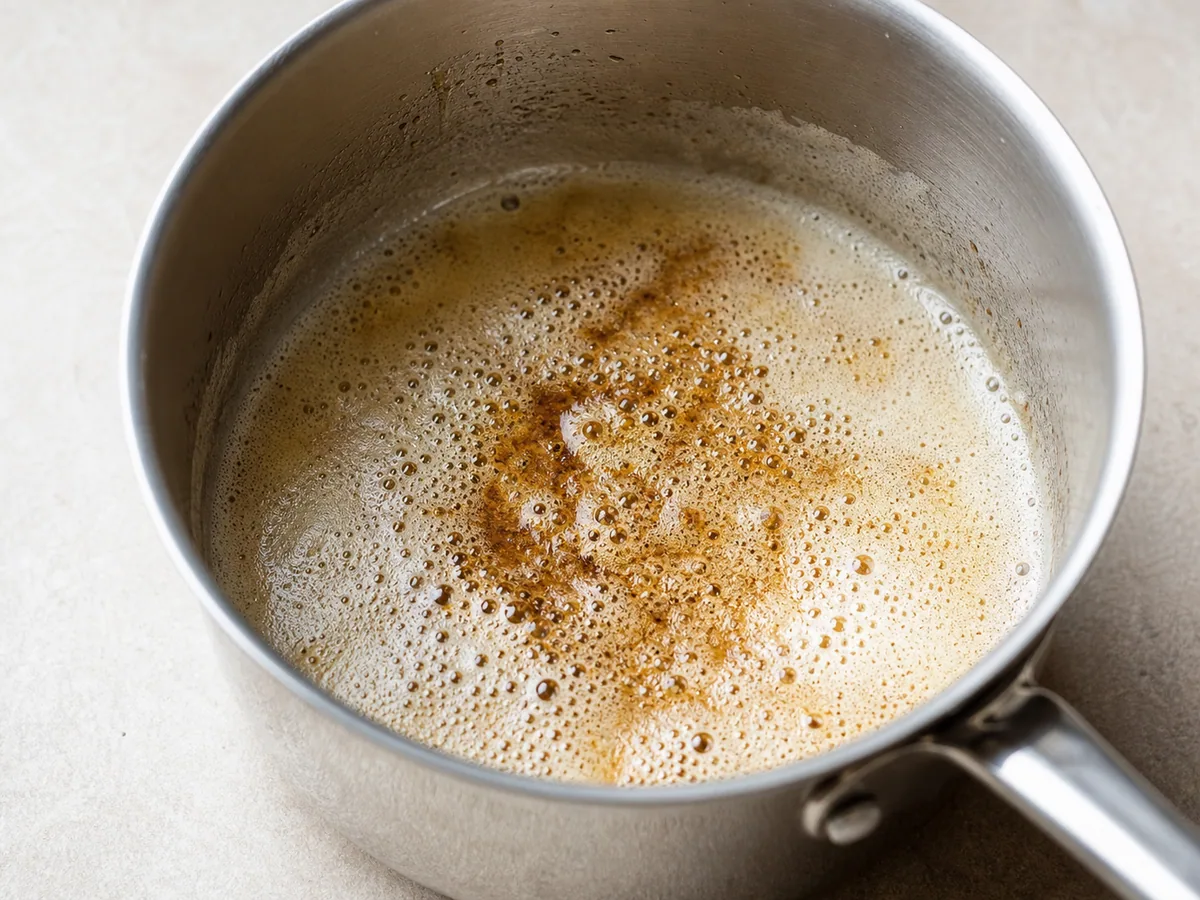
Melt 100 g of unsalted butter in a small light-colored saucepan over medium heat. Cook for 6 to 8 minutes, swirling often, until the foam subsides, the milk solids turn hazelnut brown, and the aroma is nutty rather than merely melted. Start checking closely at 6 minutes so the browned bits do not blacken. Pour everything, including the browned solids, into a heatproof bowl.
06:00Cool the butter and prepare the pan
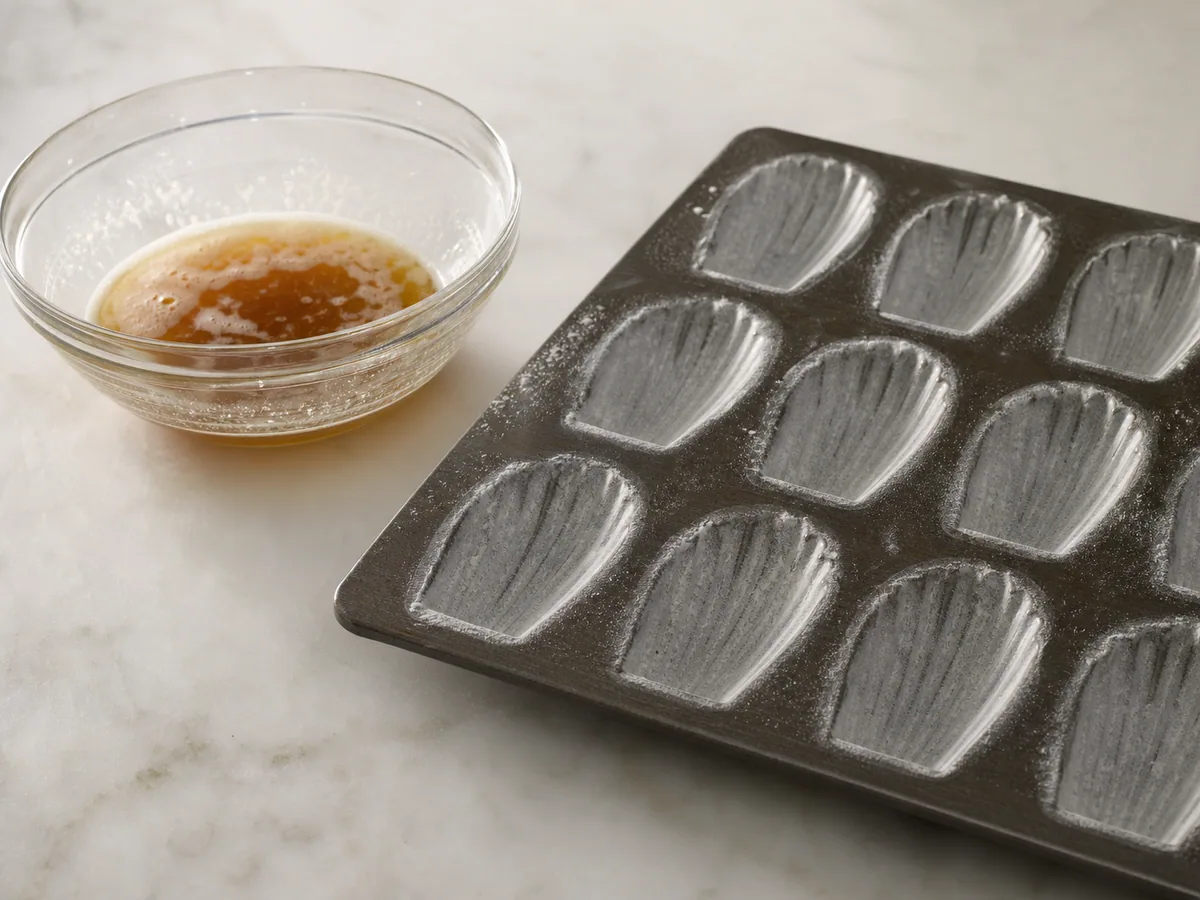
Let the browned butter stand for 10 minutes, until warm but no longer hot. Meanwhile, melt 14 g of unsalted butter for pan and brush a thin, complete coat into enough shell-shaped cavities for the scaled batch; the default 6-serving batch fills 12 standard madeleine cavities. For a larger batch, use additional pans or bake in batches so every cavity is filled to the same depth.
10:00Whisk the vanilla egg base
Combine 100 g of large eggs, 18 g of large egg yolk, 100 g of granulated sugar, and 14 g of honey in a large bowl. Whisk vigorously for 2 minutes, until paler, slightly thickened, and able to fall from the whisk in a ribbon that sits briefly on the surface. Whisk in 30 ml of whole milk and 10 ml of vanilla bean paste until evenly blended.
02:00Fold and rest the batter
Sift 120 g of all-purpose flour, 4 g of baking powder, and 1 1/2 g of fine sea salt over the egg mixture. Fold gently with a flexible spatula just until only a few dry streaks remain. Pour the warm browned butter down the side of the bowl and fold until the batter is glossy and uniform, scraping the bottom to catch any heavy butter. Let the batter rest undisturbed for 30 minutes at cool room temperature. As soon as the rest begins, heat the oven to 220°C (425°F) with a rack in the center so it is fully preheated before baking.
30:00Portion and start the bake
Give the rested batter two gentle folds, then spoon it into the prepared cavities until each is about three-quarters full. Keep the batter centered rather than spreading it into the shell tips. Place the pan on the center rack and bake at 220°C (425°F) for 4 minutes without opening the oven door; the centers should begin to rise into rounded humps.
04:00Finish the bake
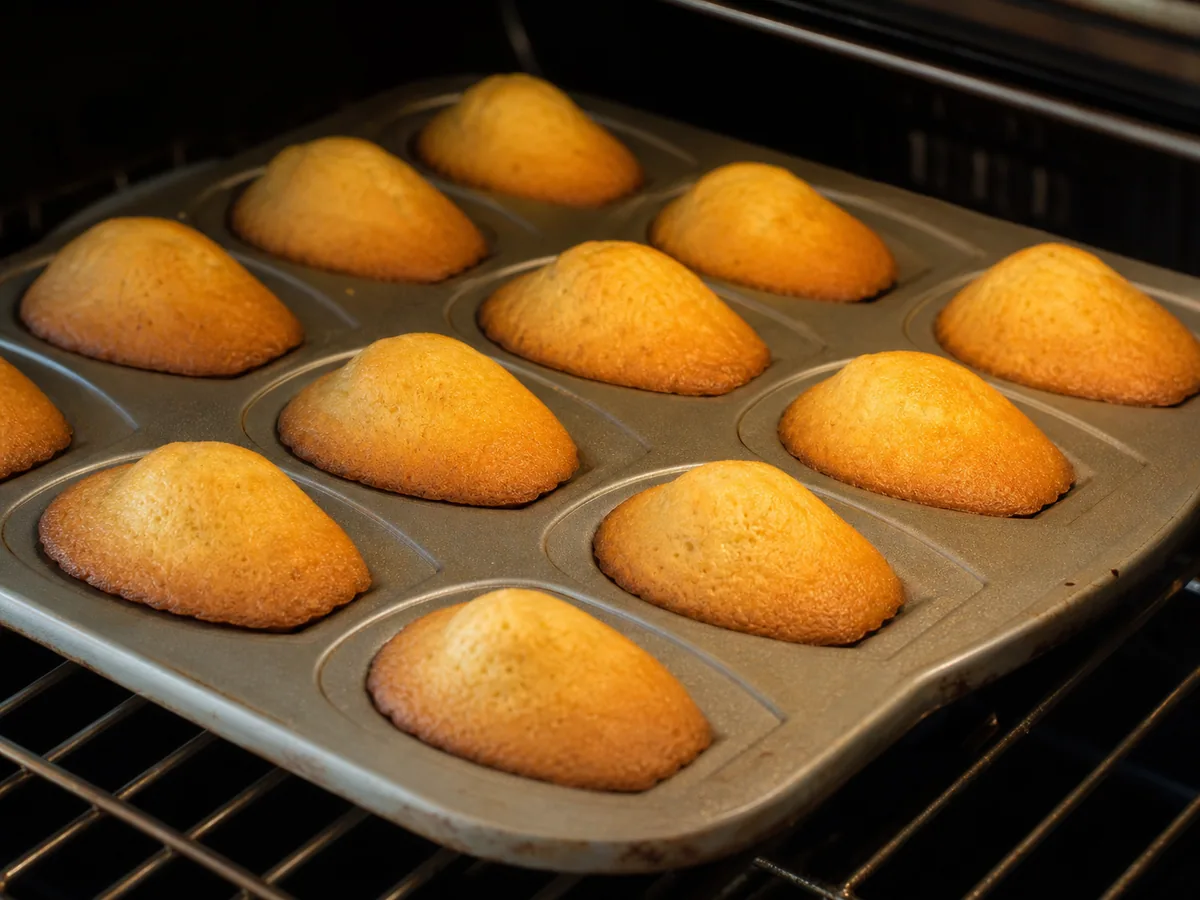
Without opening the oven, reduce the temperature to 190°C (375°F). Bake for 5 to 7 minutes more, starting the first check at 5 minutes, until the ridges and edges are deep golden, the humps spring back lightly, and a tester comes out clean. For an egg-safety check, use an instant-read thermometer on one cake; the center should reach at least 71°C/160°F.
05:00Unmold and serve warm
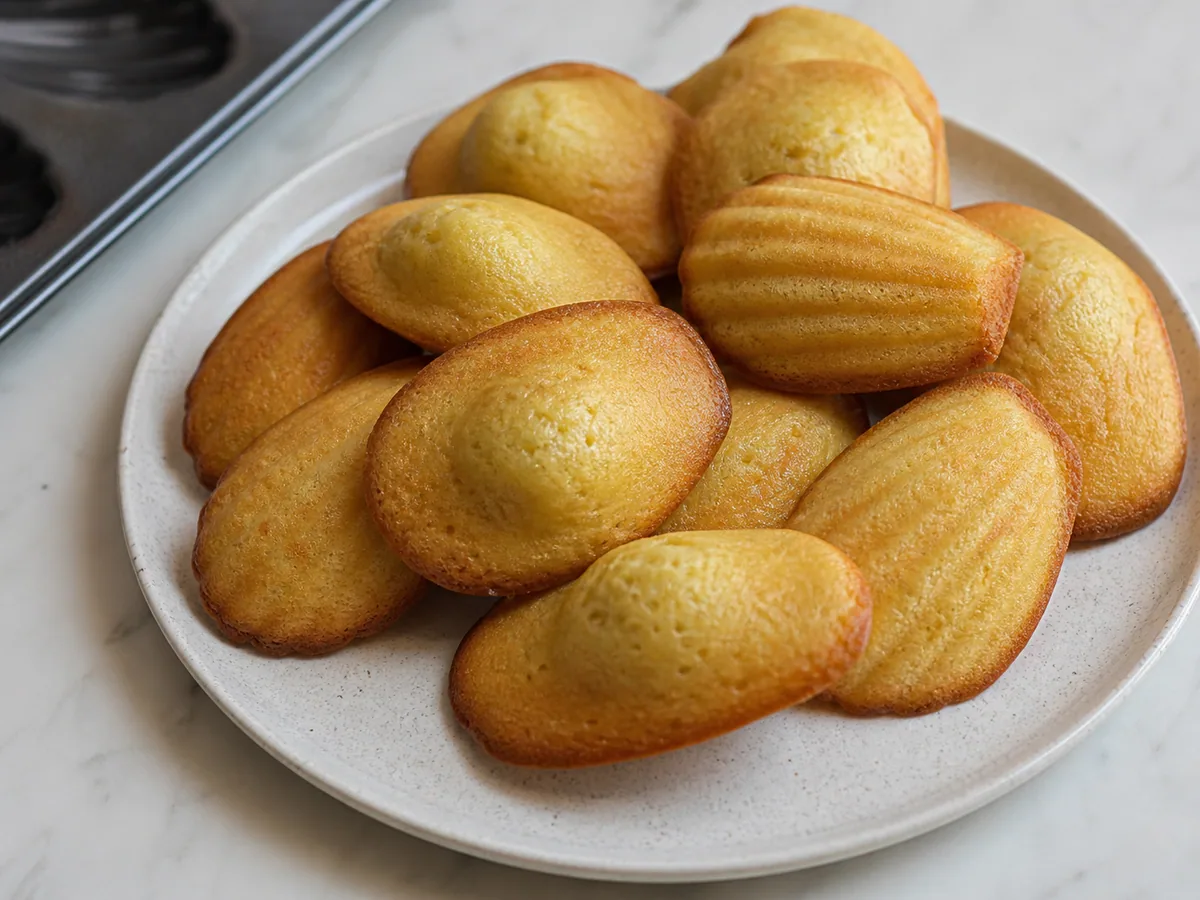
Set the pan on a heatproof surface for 2 minutes so the cakes firm slightly without steaming against the metal. Run a thin offset spatula around any stubborn edge, tip the madeleines out, and arrange them ridge-side up. Serve while the edges are still crisp and the centers are warm.
02:00


Smart Substitutions
- No vanilla bean paste? Use the same volume of pure vanilla extract. The flavor will be clean and fragrant, without visible vanilla flecks.
- No whole milk? Use half-and-half or an unsweetened plain dairy-free milk with a neutral flavor.
- No honey? Use light corn syrup or golden syrup in the same amount to preserve tenderness and gentle browning.
- No madeleine pan? Use a well-buttered mini muffin pan and fill each cup shallowly. The cakes will lose the shell pattern, so begin checking for doneness 1 minute earlier.
Tips and Variations
- Bring the eggs and egg yolk to room temperature before mixing so the browned butter emulsifies instead of forming greasy specks.
- Use a light-colored saucepan for browning the butter; the pale interior makes the milk solids easier to judge.
- Do not open the oven during the first 4 minutes, when the strong initial heat is building the central hump.
What Went Wrong?
- Madeleines have no hump Check that the oven was fully heated to 220°C (425°F), the batter rested for the full 30 minutes, and the door stayed closed during the first bake.
- Butter leaks around the cakes The browned butter was probably too hot or not fully folded in. Cool it until warm and scrape the bottom of the bowl while folding.
- Cakes stick in the shells Brush every ridge with a complete film of pan butter and let the baked cakes stand only 2 minutes before loosening them.
- Centers are dry Begin checking at the first stated time and remove the pan as soon as the humps spring back and the centers reach 71°C/160°F.
Nutrition Estimate
- Fiber: 1 g per serving
- Sodium: 200 mg per serving
Nutrition disclaimer:This recipe is provided for general cooking information only. Nutrition values are estimates and may vary by ingredients, brands, preparation methods, and serving sizes. Check ingredient labels and follow appropriate food-safety practices. This content is not medical, dietary, allergy, or professional food-safety advice.
FAQ
Found an error or have a suggestion?
Help us improve this recipe. Send us your feedback and include the recipe name so we can take a look.