
Method
Prepare the vegetables and tamarind
Soak 20 g of seedless tamarind pulp in 120 ml of hot water for tamarind for 10 minutes. Squeeze the softened pulp through the water, then strain it and discard the fibers and seeds. Peel and chop 120 g of yellow onion. Chop 180 g of ripe tomatoes. Cut 100 g of carrots and 100 g of green beans into 2.5 cm (1 in) pieces, and cut 150 g of small eggplant into 2 cm (3/4 in) chunks.
10:00Cook the dal until completely soft
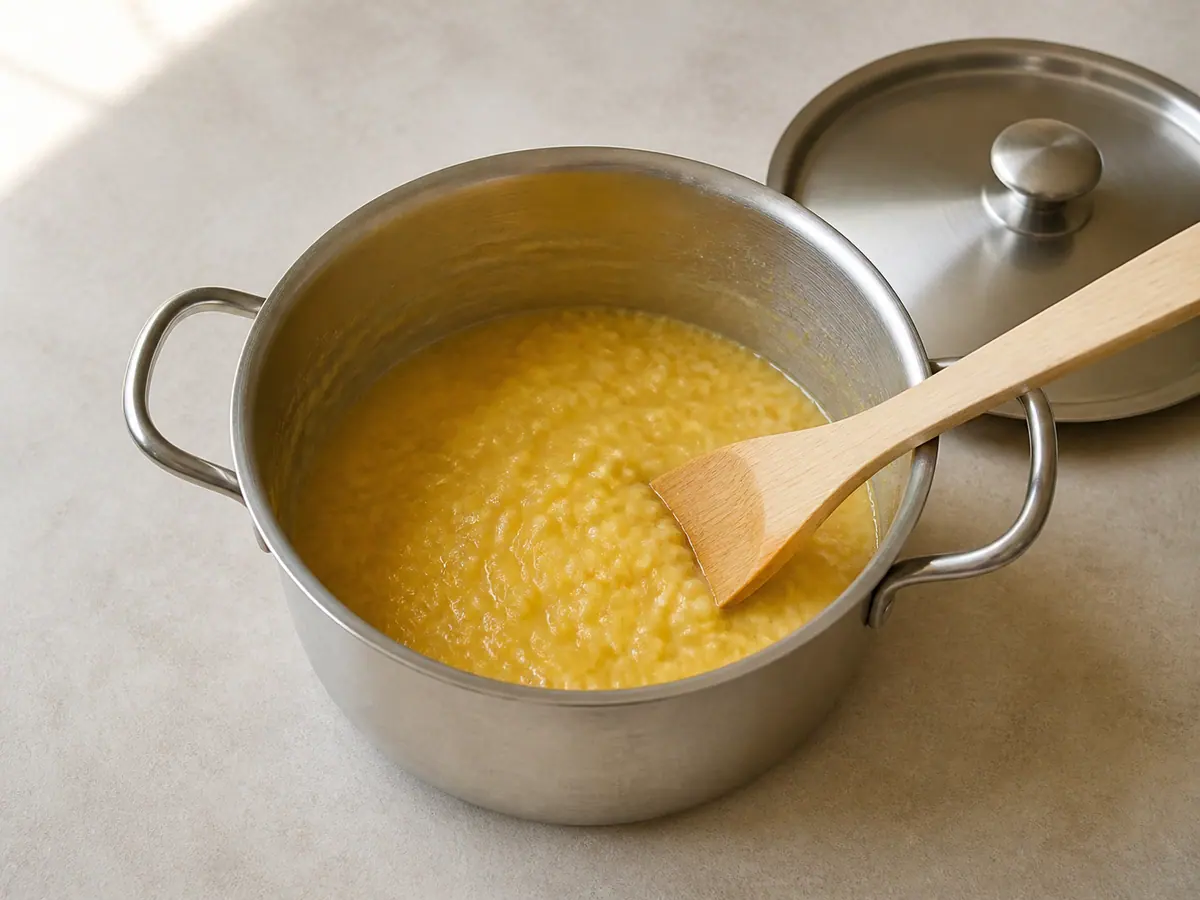
Rinse 140 g of toor dal until the water runs mostly clear. Combine it with 600 ml of water for cooking dal and 1 g of ground turmeric in a pressure cooker. Cook at high pressure for 10 minutes, then let the pressure release naturally before opening. The dal should collapse easily when pressed; mash it until creamy with a few small lentil pieces remaining.
10:00Simmer the vegetable base
Add 120 g of yellow onion, 180 g of ripe tomatoes, 100 g of carrots, 100 g of green beans, 150 g of small eggplant, 480 ml of water for sambar, the strained tamarind liquid, 20 g of sambar powder, 8 g of jaggery, and 3 g of fine salt for sambar to a wide saucepan. Bring to a boil over medium-high heat, then lower the heat and simmer uncovered for 12 minutes, stirring twice, until the carrot is nearly tender and the eggplant still holds its shape.
12:00Finish the sambar
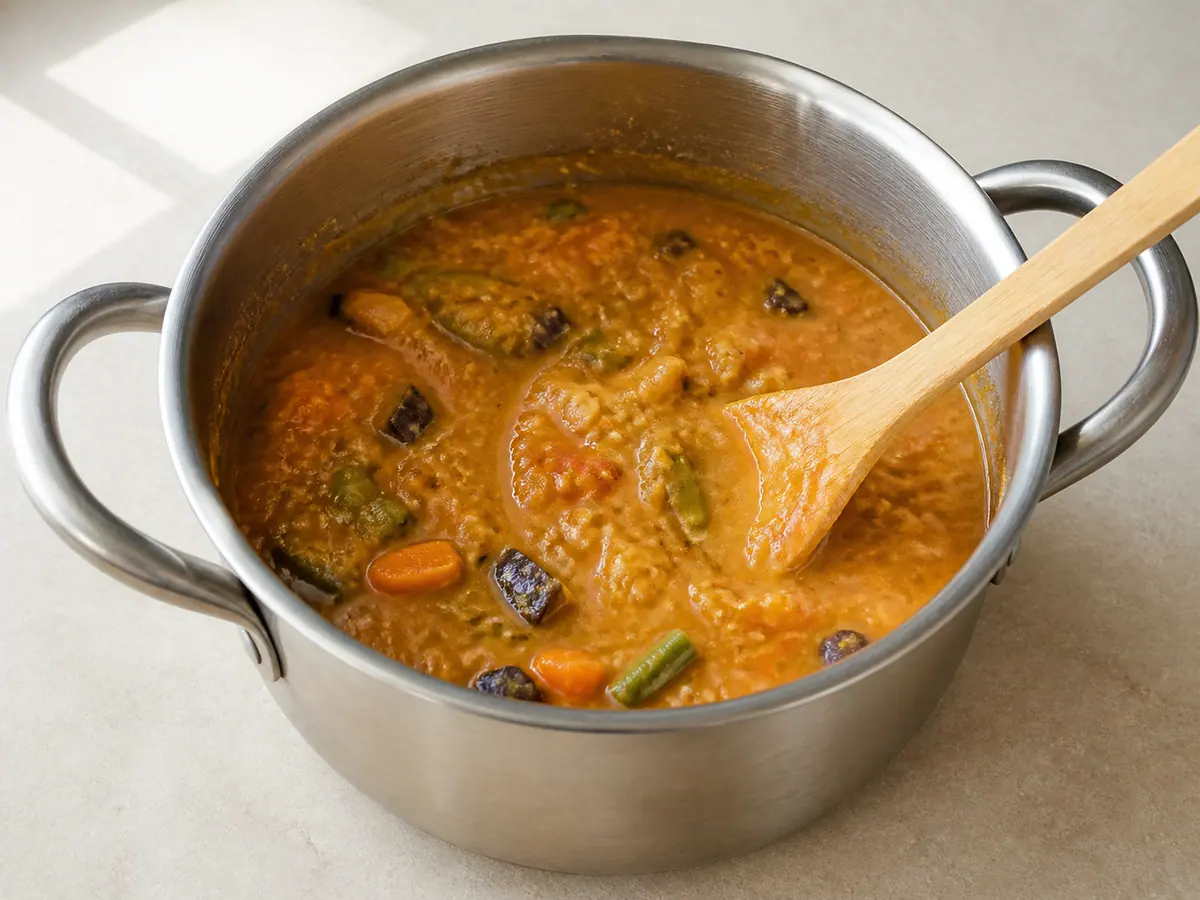
Stir the mashed dal into the vegetables. Return the sambar to a gentle simmer and cook for 8 minutes, stirring occasionally, until the flavors blend and the gravy lightly coats a spoon but remains loose enough for dipping. Add a splash of hot water if it becomes thicker than a pourable stew.
08:00Add the aromatic tempering
Warm 22 ml of neutral cooking oil in a small skillet over medium heat. Add 4 g of black mustard seeds. When they begin to pop, add 2 g of cumin seeds, 1 g of fenugreek seeds, and 2 dried red chiles. Stir until fragrant and lightly toasted, then add 12 fresh curry leaves carefully because they may sputter. Add 1/2 g of asafoetida, immediately pour the tempering over the sambar, and stir in 15 g of fresh cilantro. Keep the sambar hot over very low heat while you make the mudde.
Mix the ragi flour into boiling water
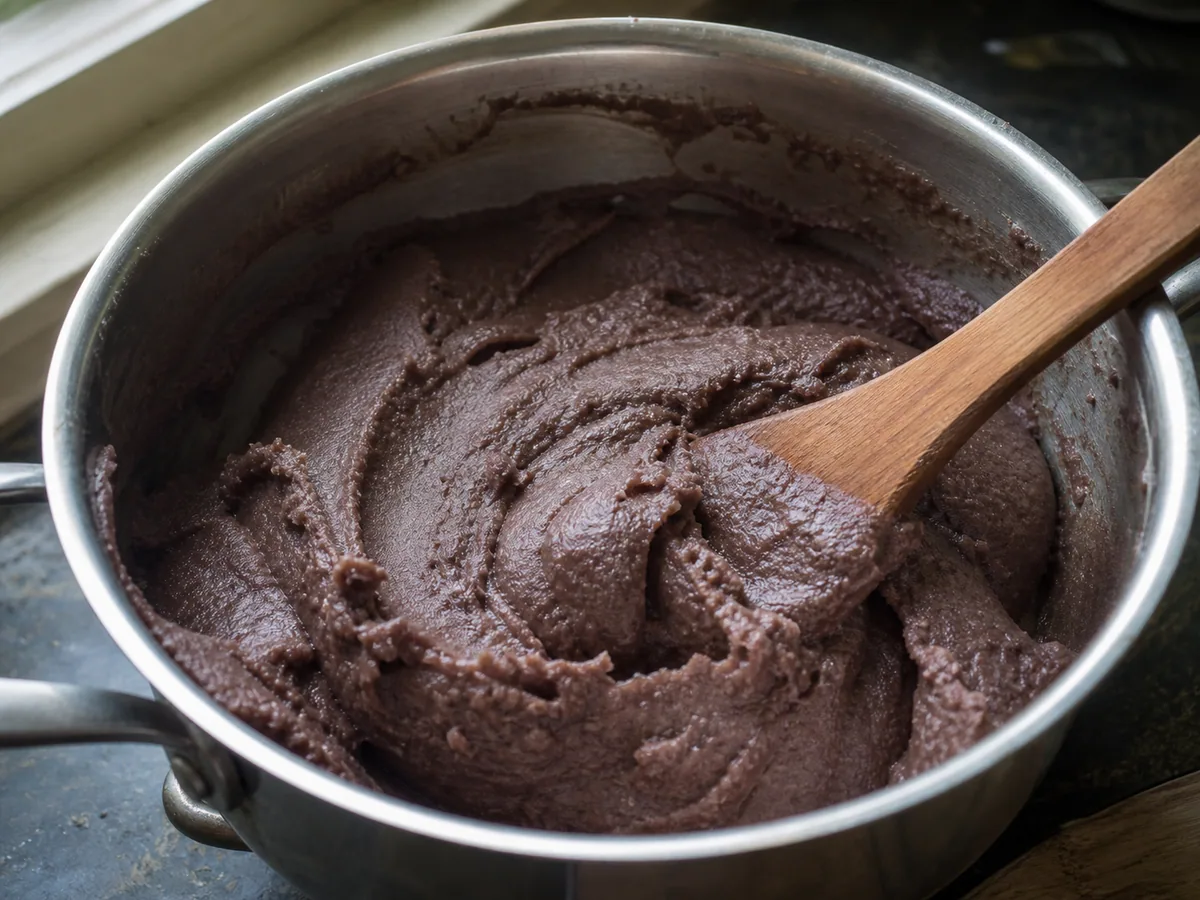
Bring 800 ml of water for ragi mudde and 1 1/2 g of fine salt for ragi mudde to a rolling boil in a wide, heavy saucepan. Reduce the heat to low. Add 200 g of finger millet flour gradually in a thin stream while whisking constantly so it hydrates without forming dry pockets. Once the mixture becomes too thick for the whisk, switch to a sturdy wooden spatula and scrape the base and corners of the pan.
Steam the ragi dough
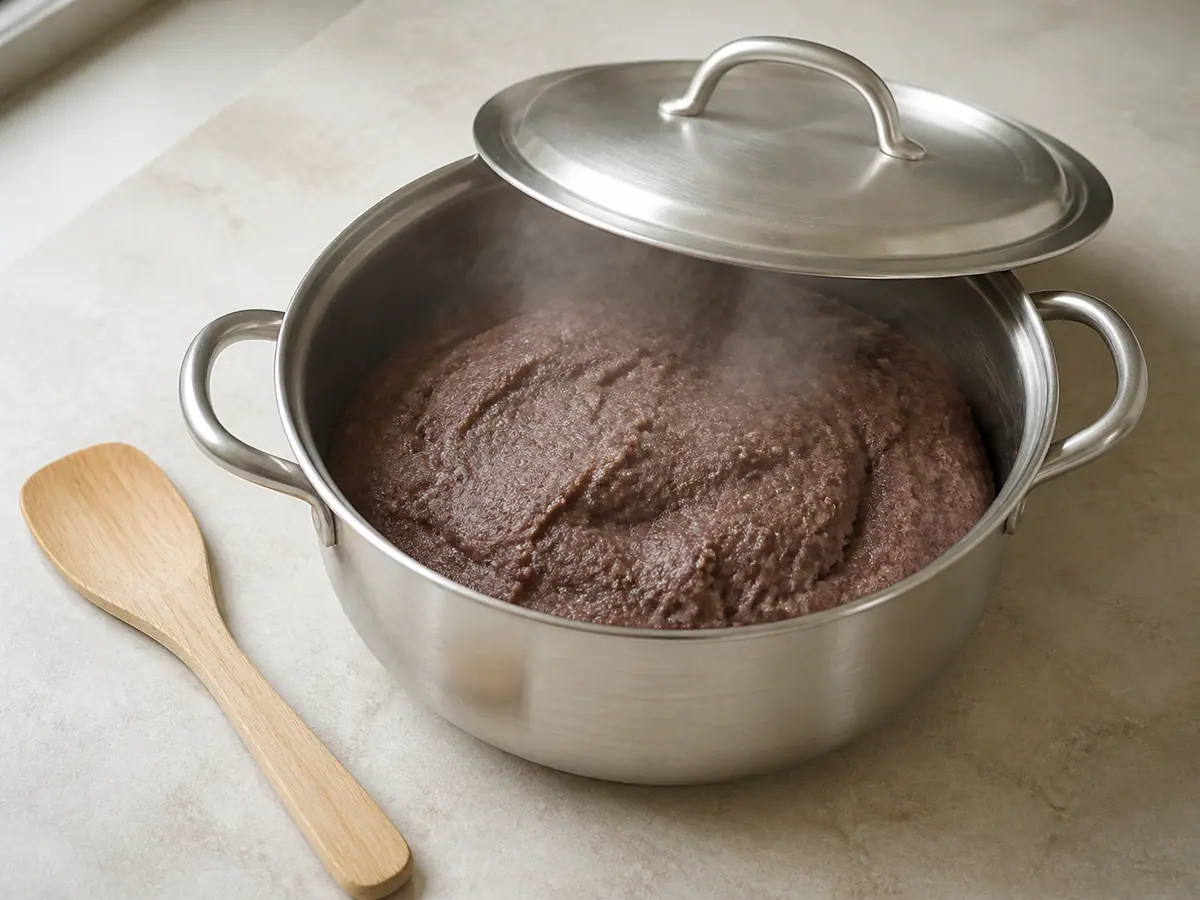
Smooth the top of the thick mixture, cover the pan, and cook over the lowest heat for 5 minutes. Keep the lid closed so the flour steams through; a heavy pan helps prevent scorching on the bottom.
05:00Beat the dough until smooth and glossy
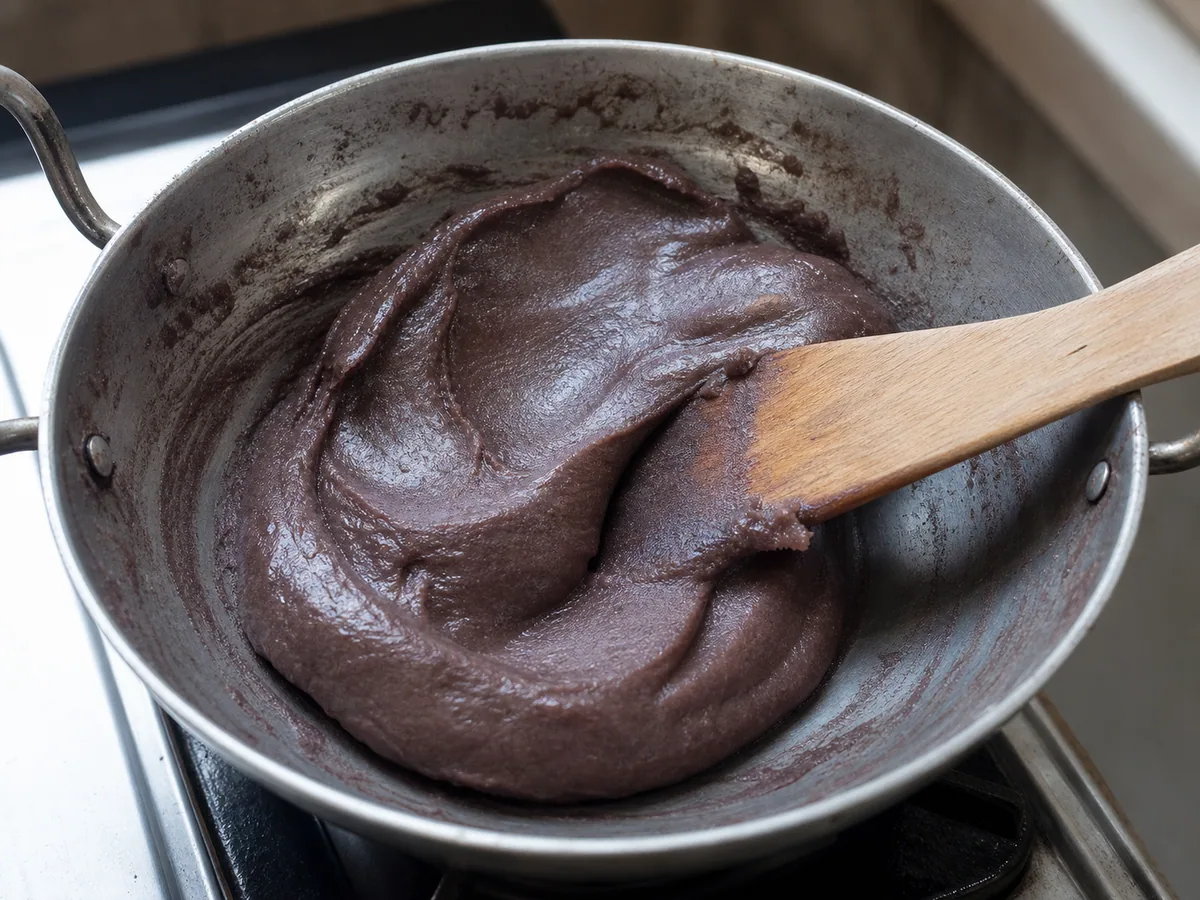
Uncover the pan and beat the dough firmly with the wooden spatula for about 4 minutes, folding from the edges toward the center and pressing out any lumps. It is ready when the dough looks glossy, forms one cohesive mass, and pulls cleanly from much of the pan without visible dry flour.
04:00Shape the mudde and serve
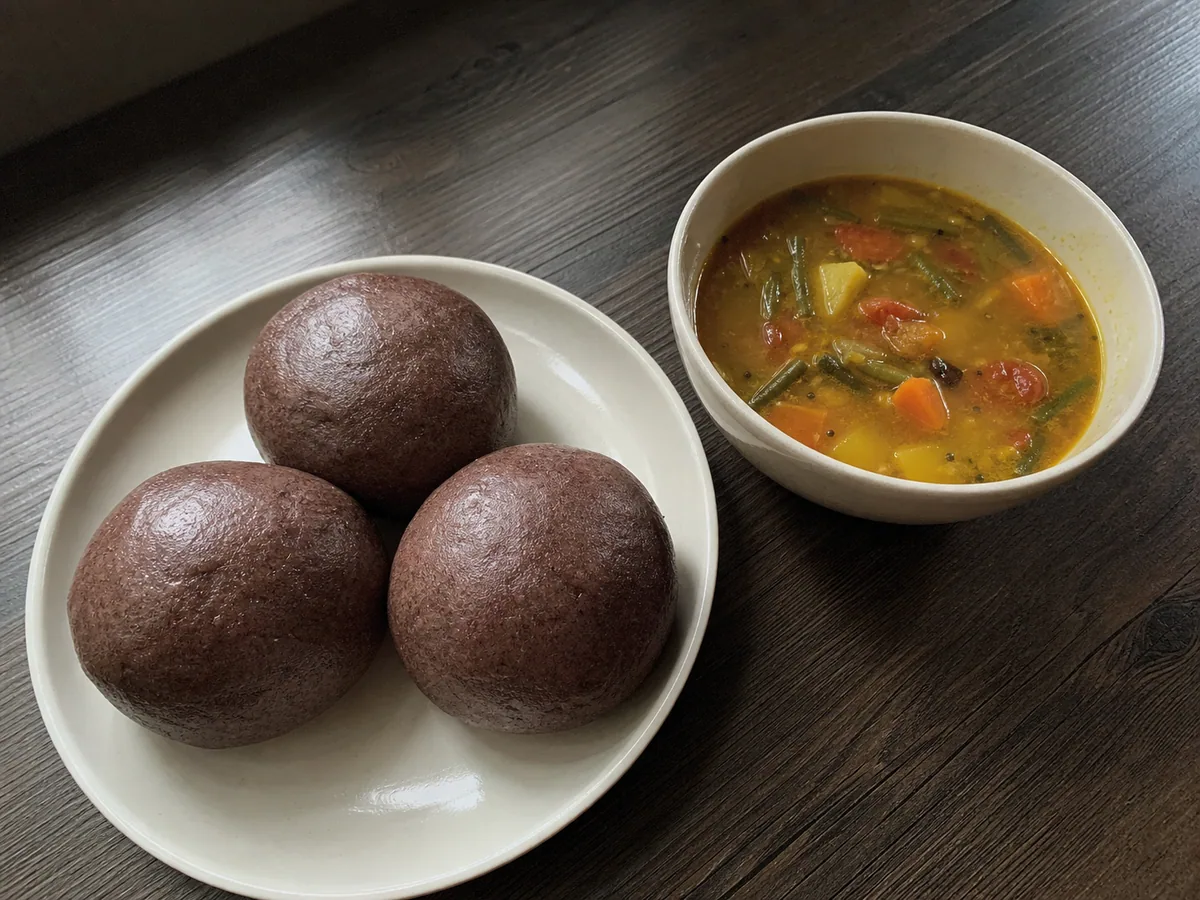
Transfer the hot dough to a lightly damp plate and let it stand for 2 minutes, just until it can be handled carefully. Dampen a small bowl, ladle, or clean hands with water. Divide the dough into one portion per serving and turn each portion into a smooth round ball without compressing it hard. Serve immediately with plenty of hot vegetable sambar for dipping and spooning over the mudde.
02:00


Smart Substitutions
- No eggplant? Use diced pumpkin, chayote, or zucchini and cook just until tender.
- No toor dal? Use yellow split mung dal; the sambar will be lighter but still smooth and satisfying.
- No tamarind pulp? Stir fresh lemon juice into the finished sambar a little at a time until it tastes lively and balanced.
- No jaggery? Use light brown sugar or leave it out when the tomatoes are naturally sweet.
Tips and Variations
- Use a wide, heavy pan and a strong wooden spatula for the mudde; the extra room makes vigorous beating much easier.
- Cut the vegetables to similar thicknesses so the carrots soften without the eggplant disappearing into the gravy.
- Taste the sambar after the dal is added, because the lentils soften both the salt and the tamarind.
What Went Wrong?
- Ragi dough is lumpy Lower the heat and press the dough firmly against the side of the pan while beating until the dry pockets disappear.
- Ragi dough is too stiff Beat in hot water one spoonful at a time until the dough is smooth and pliable rather than crumbly.
- Sambar is too sour Add a little jaggery and simmer for another minute, then check the salt before adjusting again.
- Dal is still grainy Add a small splash of water and pressure-cook it again until the lentils mash without resistance.
Nutrition Estimate
- Fiber: 16 g per serving
- Sodium: 490 mg per serving
Nutrition disclaimer:This recipe is provided for general cooking information only. Nutrition values are estimates and may vary by ingredients, brands, preparation methods, and serving sizes. Check ingredient labels and follow appropriate food-safety practices. This content is not medical, dietary, allergy, or professional food-safety advice.
FAQ
Found an error or have a suggestion?
Help us improve this recipe. Send us your feedback and include the recipe name so we can take a look.