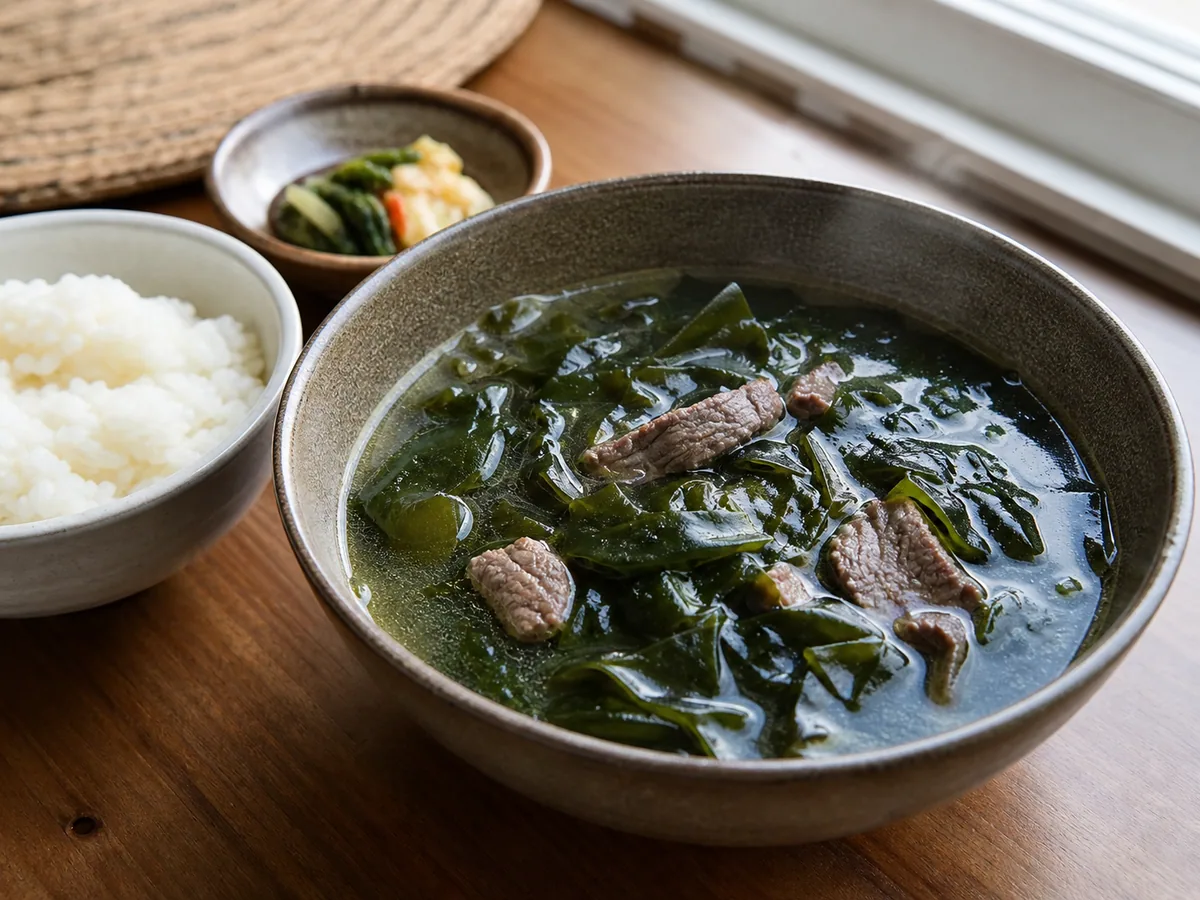
Method
Soak and cut the seaweed
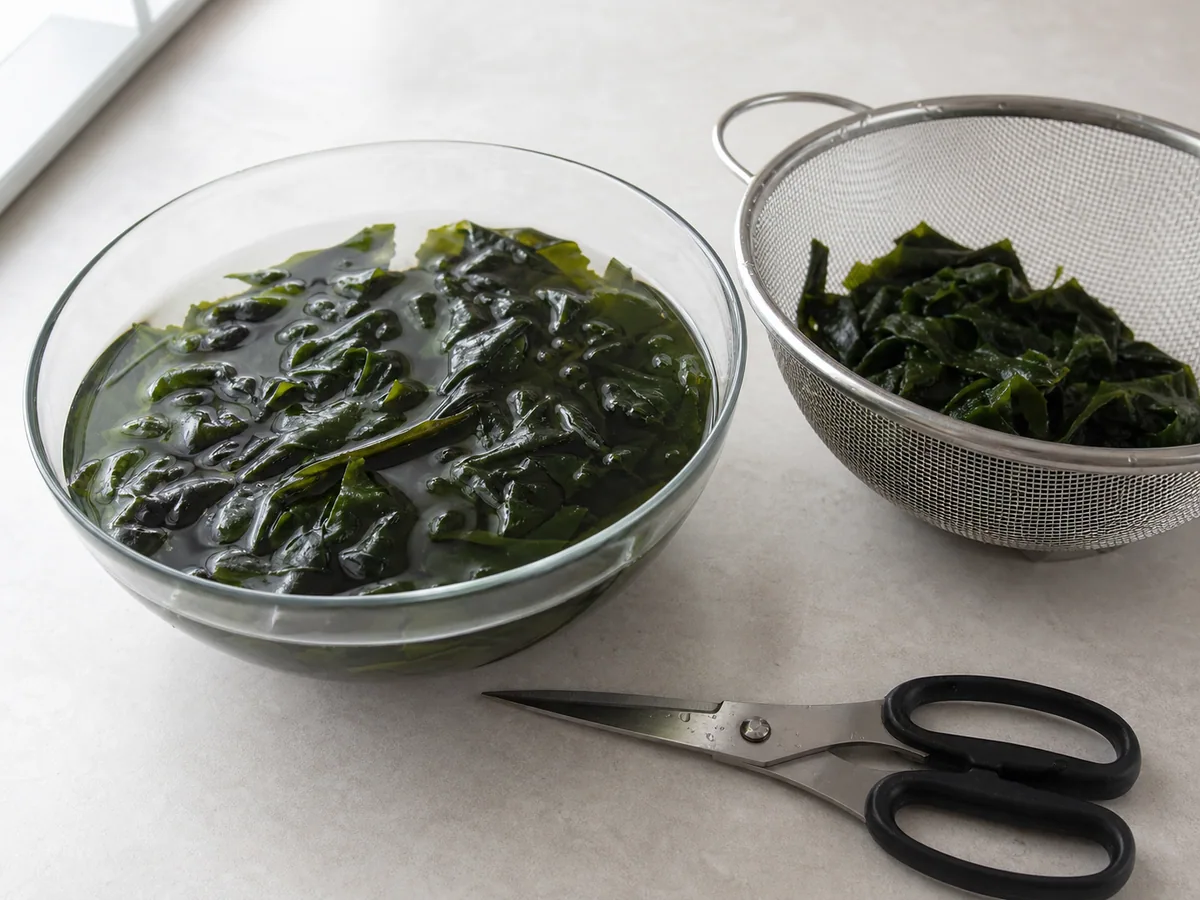
Put 20 g of dried miyeok seaweed in a large bowl and cover it generously with cool tap water. Soak for 20 minutes, until the stiff pieces have opened into flexible, broad ribbons. Drain, rinse twice, and squeeze gently to remove excess water. Cut 20 g of dried miyeok seaweed into 5 cm (2 in) lengths with clean kitchen shears.
20:00Prepare and brown the beef
Pat 227 g of lean-trimmed beef chuck dry with paper towels and cut it into thin bite-size strips on a dedicated cutting board. Wash the knife, board, and your hands with hot soapy water before touching ready-to-eat ingredients. Heat a heavy soup pot over medium heat, add 15 ml of toasted sesame oil, then add 227 g of lean-trimmed beef chuck in an even layer. Cook for 4 to 5 minutes, stirring as needed, until no raw surface remains; start checking at 4 minutes and use a clean spoon after the raw beef has been handled.
04:00Sauté the seaweed and garlic
Mince 3 garlic cloves. Add 3 garlic cloves and 20 g of dried miyeok seaweed to the pot. Stir constantly for 2 minutes, scraping across the bottom so the seaweed becomes glossy and picks up the browned beef flavor without scorching the garlic.
02:00Simmer the broth until tender
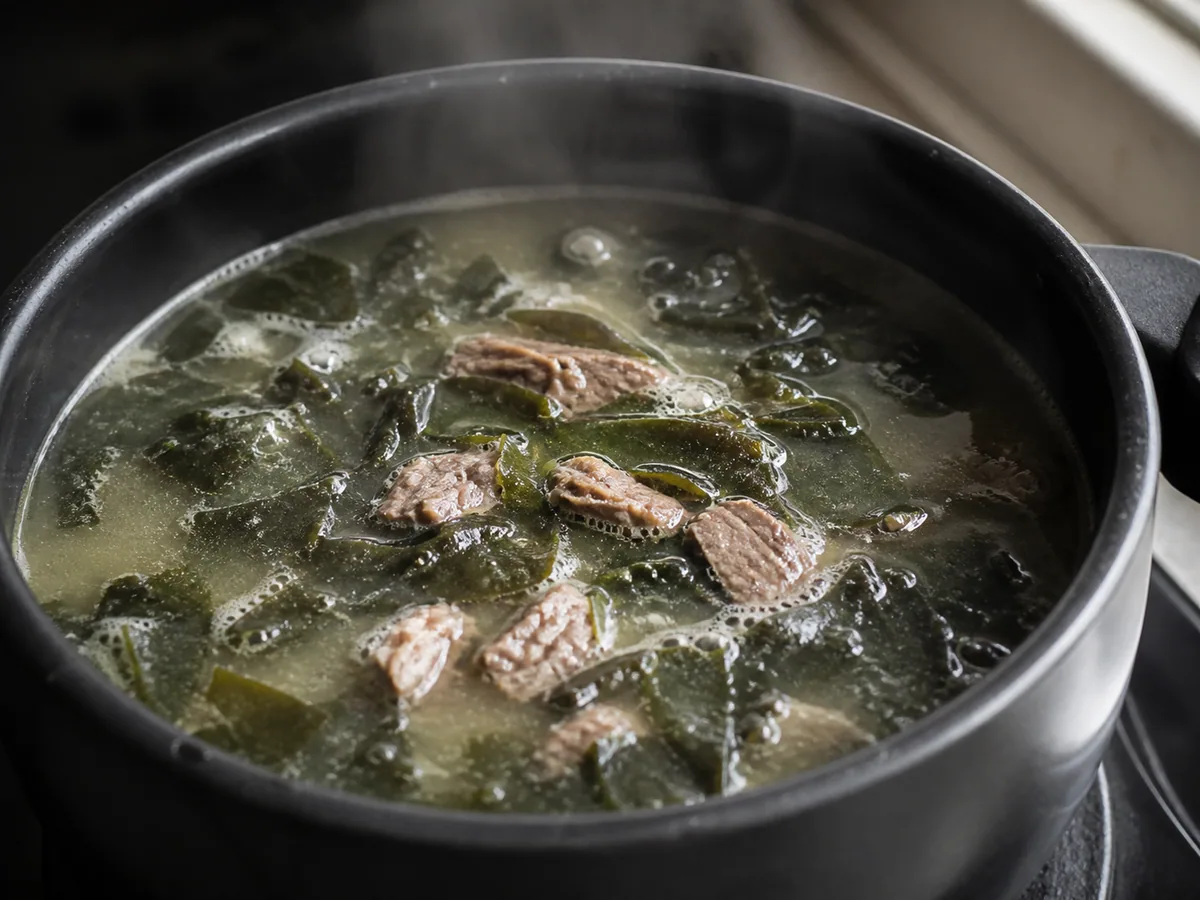
Pour in 1800 ml of water and stir in 15 ml of Korean soup soy sauce. Bring the pot to a full boil over high heat, skim off any gray foam, then reduce the heat to low. Partially cover and simmer gently for 25 to 30 minutes, stirring once or twice, until the broth is clear and savory, the seaweed is silky, and the beef is tender; start checking at 25 minutes.
25:00Check doneness and season
Use a food thermometer on the thickest beef piece; it must reach at least 63°C/145°F. Once it reaches that temperature, keep the soup at a gentle simmer for 3 additional minutes before serving. Stir in 1/2 g of black pepper, taste the broth, and add kosher salt (optional) only if needed. Ladle into bowls and serve with cooked short-grain rice (optional) alongside.
03:00


Smart Substitutions
- No Korean soup soy sauce? Use regular soy sauce, starting with 1 to 2 teaspoons because it is darker and slightly sweeter, then add salt only as needed.
- No beef chuck? Use brisket or sirloin and keep the pieces thin enough to become tender within the simmering time.
- No miyeok? Use plain dried wakame with no seasoning packet, then soak and cut it in the same way.
- No toasted sesame oil? Use a neutral cooking oil; the broth will taste cleaner and less nutty but will still cook properly.
Tips and Variations
- Squeeze the soaked seaweed gently rather than wringing it hard; a little moisture keeps the ribbons from clumping in the pot.
- Keep the simmer quiet. Vigorous boiling can make the broth cloudy and tighten the beef.
- Taste the soup with a spoonful of rice before adding extra salt, since the rice softens the broth’s seasoning.
What Went Wrong?
- Broth tastes weak Simmer uncovered for a few minutes to concentrate it, then add a small splash of soup soy sauce.
- Seaweed is still chewy Keep the soup at a gentle simmer until the thickest ribbons feel silky rather than springy.
- Beef is tough Lower the heat and continue simmering gently; hard boiling tightens the meat before connective tissue has time to soften.
- Broth is too salty Add hot water a little at a time and simmer briefly so the flavors come back into balance.
Nutrition Estimate
- Fiber: 1 g per serving
- Sodium: 430 mg per serving
Nutrition disclaimer:This recipe is provided for general cooking information only. Nutrition values are estimates and may vary by ingredients, brands, preparation methods, and serving sizes. Check ingredient labels and follow appropriate food-safety practices. This content is not medical, dietary, allergy, or professional food-safety advice.
FAQ
Found an error or have a suggestion?
Help us improve this recipe. Send us your feedback and include the recipe name so we can take a look.